Atelier — Complimentary worldwide shipping — Delivery 2–6 weeks
      Andy Warhol, 1928 – 1987

      Andy Warhol's 100 Most Famous Paintings

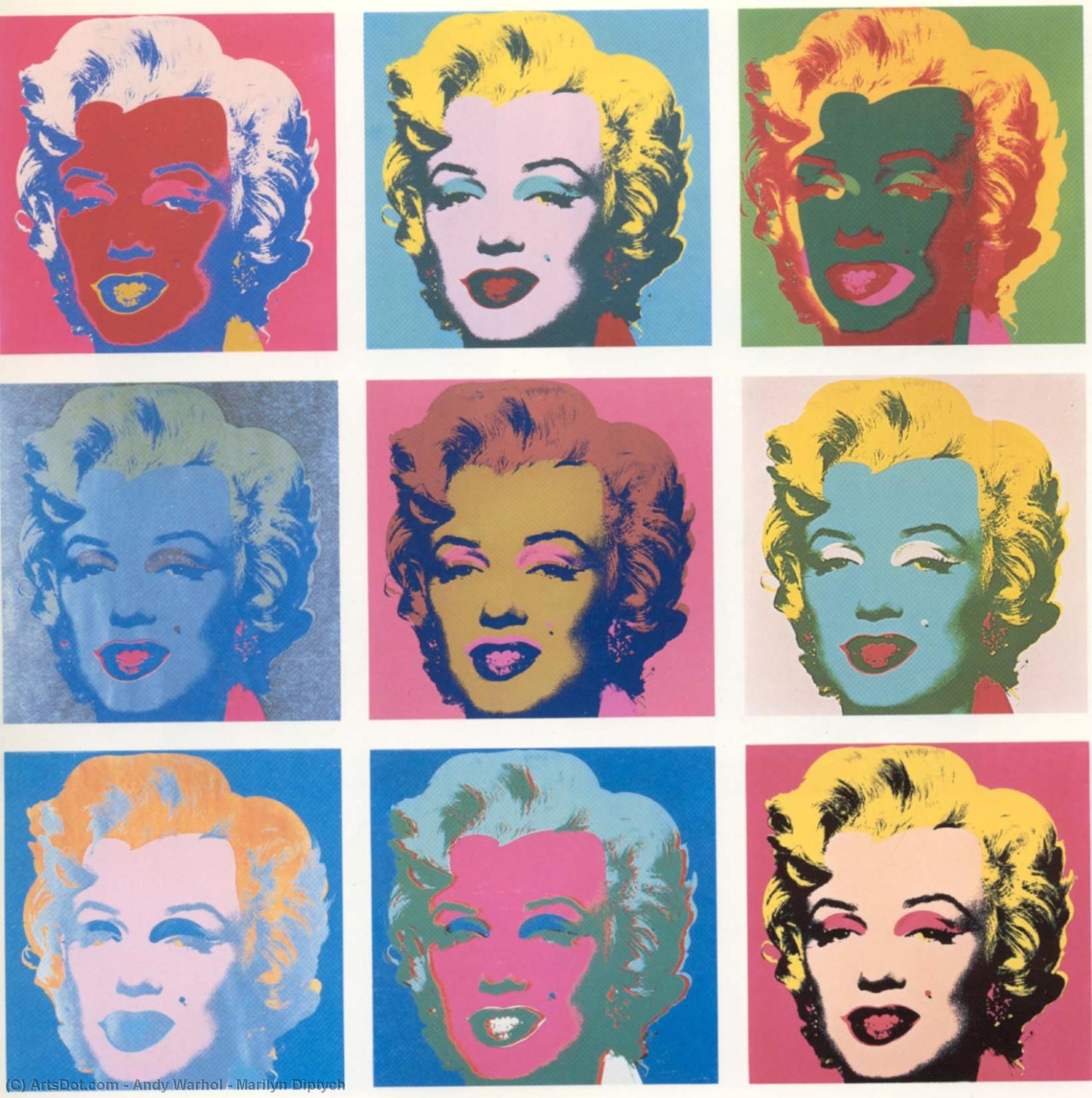
      Campbell's soup cans (1962) is the painting Andy Warhol is best remembered for; it belongs to the MOMA - Museum of Modern Art, New York City. Marilyn Diptych (1962) and White car crash 19 times, Private (1963) complete the trio of best-loved canvases. Our catalogue counts 428 works by Andy Warhol. Here are the 100 most famous, with the year, the museum and the story of each canvas.

      Ranked by our popularity score, which combines the searches, visits and orders for each work. Updated October 2026.

      Portrait of Andy Warhol
      Andy Warhol · 1928 – 1987
      Born · died
      1928 – 1987, Pittsburgh
      Movement
      Pop art
      Works in our catalogue
      428
      Most famous
      Campbell's soup cans (1962)
      Most works at
      Art Institute of Chicago

      The ten best-loved paintings by Andy Warhol

      Campbell's soup cans (1962) by Andy Warhol
      1

      Campbell's soup cans

      1962 · Oil On Canvas · MOMA - Museum of Modern Art, New York City

      Subject and Iconography This iconic artwork features a grid of thirty-two meticulously rendered Campbell’s soup cans, each representing a different flavor from the original product line. The cans are depicted frontally, emphasizing their commercial branding and familiar shapes. As a symbol of everyday consumer culture, these cans elevate mundane objects to the status of fine art, inviting viewers to reconsider the boundaries between high and low culture. The repetition of…

      Marilyn Diptych (1962) by Andy Warhol
      2

      Marilyn Diptych

      1962 · Silkscreen

      A Requiem for an Icon: Decoding Warhol’s *Marilyn Diptych* Andy Warhol's 1962 *Marilyn Diptych* isn't merely a portrait; it is a monumental statement on fame, mortality, and the burgeoning power of mass media. Created in the wake of Marilyn Monroe’s tragic death, this artwork transcends simple representation to become a poignant reflection on celebrity culture and its inherent contradictions. The sheer scale of the piece – nearly six feet tall…

      White car crash 19 times, Private (1963) by Andy Warhol
      3

      White car crash 19 times, Private

      1963 · Silkscreen

      Deconstructing Movement: An Exploration of Warhol’s ‘White Car Crash 19 Times’ ‘White Car Crash 19 Times’ (1963) by Andy Warhol is a pivotal work within the Pop Art movement, and a haunting meditation on disaster, media saturation, and the fragmented nature of modern experience. This piece isn't a single image, but rather a grid composed of repeated, almost ghostly depictions of a car crash – specifically, images sourced from police…

      Marilyn, leo castelli gallery, new york (1964) by Andy Warhol
      4

      Marilyn, leo castelli gallery, new york

      1964 · Silkscreen

      Andy Warhol's "Marilyn, leo castelli gallery, new york" is a striking portrait of the legendary actress Marilyn Monroe, capturing her essence in a bold and vibrant style. This artwork exemplifies Warhol's mastery of Pop Art, blending commercial art techniques with fine art to create a visually impactful piece that transcends time.

      Campbell'S Soup Can (tomato) by Andy Warhol
      5

      Campbell'S Soup Can (tomato)

      Ink On Paper

      The Iconic Subject: Elevating the Everyday Andy Warhol's Campbell's Soup Can (Tomato) is a quintessential example of pop art that transforms an ordinary household item into a cultural icon. The artwork features a single Campbell's Tomato Soup can, rendered with meticulous attention to detail. This seemingly mundane subject becomes a powerful commentary on consumer culture and the commodification of everyday objects. Pop Art Style: Bold and Unapologetic Warhol's distinctive pop…

      Gold marilyn monroe by Andy Warhol
      6

      Gold marilyn monroe

      Acrylic On Canvas

      Subject and Iconography This striking artwork captures the legendary Marilyn Monroe, an enduring symbol of glamour, beauty, and Hollywood allure. Through a bold, contemporary lens, the piece emphasizes her status as a cultural icon, evoking both admiration and reflection on the fleeting nature of fame. Monroe’s visage, rendered with vivid colors and sharp contrasts, invites viewers to contemplate the complex relationship between celebrity and societal perception. Stylistic Approach and Technique…

      Red Race Riot (1964) by Andy Warhol
      7

      Red Race Riot

      1964 · Collage

      Powerful Subject Matter and Social Commentary This striking artwork confronts viewers with a visceral depiction of social unrest and racial tension during the 1960s. Through a series of layered, collage-like images, it captures the chaos and confrontation of protests, symbolizing the broader struggles for civil rights and justice. The figures, rendered as stark silhouettes against a vivid red background, evoke a sense of urgency and emotional intensity, inviting viewers to…

      Triple Elvis (1963) by Andy Warhol
      8

      Triple Elvis

      1963 · Silkscreen

      Subject and Iconography This striking artwork features a triptych of Elvis Presley, the legendary King of Rock and Roll, captured in a bold, high-contrast style. The repeated image emphasizes Elvis’s status as a cultural icon, symbolizing fame, rebellion, and the transformative power of music. The central figure’s intense gaze and commanding posture evoke a sense of charisma and timeless allure, inviting viewers to reflect on the enduring impact of celebrity…

      Mickey by Andy Warhol
      9

      Mickey

      Acrylic On Canvas

      A Pop Icon Reimagined: Exploring Andy Warhol’s ‘Mickey’ Andy Warhol's 1982 painting, *Mickey*, is a quintessential example of Pop Art’s power to elevate popular culture to the realm of fine art. This vibrant and instantly recognizable work doesn’t simply depict Mickey Mouse; it dissects and re-presents an icon, prompting viewers to consider themes of consumerism, celebrity, and the very nature of image reproduction in modern society. Deconstructing a Beloved Character…

      The New Spirit (donald Duck) by Andy Warhol
      10

      The New Spirit (donald Duck)

      Oil On Canvas

      A Playful Reimagining: Warhol’s ‘The New Spirit (Donald Duck)’ Andy Warhol's *The New Spirit (Donald Duck)* is a vibrant and instantly recognizable example of Pop Art at its most compelling. Created in 1986 as part of his “Myths” series, this work doesn’t simply depict the beloved Disney character; it elevates him to the status of an icon, examining our cultural fascination with celebrity and mass-produced imagery. The artwork presents a…

      Andy Warhol: canvases 11 to 100 of the ranking

      Five deaths (1963) by Andy Warhol
      #11

      Five deaths

      1963

      A Haunting Reflection on Modernity: Decoding Andy Warhol’s ‘Five Deaths’ Andy Warhol's *‘Five Deaths’* (1963) is a stark and unsettling work that embodies the core tenets of Pop…

      Che Guevara by Andy Warhol
      #12

      Che Guevara

      Introduction to Pop Art Pop art is a visual art movement that emerged in the mid-20th century, characterized by its use of popular and mass culture as subject…

      Flowers by Andy Warhol
      #13

      Flowers

      A Blooming Revolution: Decoding Andy Warhol’s Flowers Andy Warhol's *Flowers* isn't simply a depiction of botanical beauty; it’s a vibrant emblem of Pop Art and a profound commentary…

      Self-Portrait (Camouflage) (1986) by Andy Warhol
      #14

      Self-Portrait (Camouflage)

      1986

      Andy Warhol's Self-Portrait (Camouflage): A Study in Identity and Illusion Title: Self-Portrait (Camouflage) Artist: Andy Warhol Date: 1986 Size: 203 x 203 cm Medium: Screenprint on canvas Subject…

      Zebra by Andy Warhol
      #15

      Zebra

      Andy Warhol's "Zebra," part of his ambitious “Animals in Makeup” series commissioned in 1983, transcends mere visual representation; it embodies a profound message about environmental conservation and the…

      flowers by Andy Warhol
      #16

      flowers

      Art Institute of Chicago

      A Celebration of the Everyday: Decoding Andy Warhol’s “Flowers” Andy Warhol, a titan of 20th-century art, fundamentally altered our perception of what constitutes ‘art.’ Among his most recognizable…

      Gothe (1982) by Andy Warhol
      #17

      Gothe

      1982 · The Andy Warhol Foundation for the Visual Arts

      Andy Warhol’s ‘Gothe’: A Pop Icon Reimagined In 1982, Andy Warhol turned his attention to the masters, revisiting historical figures through a distinctly contemporary lens. ‘Gothe’ is a…

      Flash-November 22, 1963 (1968) by Andy Warhol
      #18

      Flash-November 22, 1963

      1968

      A Flash of History: Decoding Andy Warhol’s ‘Flash—November 22, 1963’ Andy Warhol's ‘Flash—November 22, 1963’ is a potent and unsettling work that transcends simple representation. It isn’t merely…

      untitled (3257) by Andy Warhol
      #19

      untitled (3257)

      Ulyanovsk Oblast Art Museum

      Andy Warhol's 'Untitled (3257)' isn’t merely a painting; it’s an arresting confrontation with the anxieties and fascinations of the 1960s, a period defined by shifting social norms and…

      Frog by Andy Warhol
      #20

      Frog

      Andy Warhol, one of the most influential artists of the 20th century, is renowned for his vibrant and thought-provoking works. Among his extensive repertoire, Frog, a painting that…

      Pat Hearn (1985) by Andy Warhol
      #21

      Pat Hearn

      1985 · Art Institute of Chicago

      Andy Warhol's 1985 photograph of Pat Hearn is not merely a portrait; it’s a study in contrasts, a distillation of form and shadow that speaks volumes about beauty,…

      Debbie Harry (1980) by Andy Warhol
      #22

      Debbie Harry

      1980

      This striking portrait of Debbie Harry, lead singer of the groundbreaking band Blondie, is a quintessential example of Andy Warhol’s iconic Pop Art style. Created in 1980, at…

      Marlon Brando (1966) by Andy Warhol
      #23

      Marlon Brando

      1966

      Captivating Subject and Cultural Significance This striking artwork captures the essence of youthful rebellion and raw individuality through a powerful monochromatic portrait. The subject, a young man on…

      Vesuvius by Andy Warhol
      #24

      Vesuvius

      Vesuvius Andy Warhol, one of the most influential artists of the 20th century, is renowned for his contributions to the Pop Art movement. His works often featured everyday…

      Pat Hearn (1985) by Andy Warhol
      #25

      Pat Hearn

      1985 · Art Institute of Chicago

      Andy Warhol’s 1985 portrait of Pat Hearn is more than just an image; it’s a whispered conversation between artist and muse, a study in contrasts rendered with the…

      Coca-Cola (3) (1962) by Andy Warhol
      #26

      Coca-Cola (3)

      1962

      In the vast landscape of twentieth-century art, few images possess the immediate, visceral recognition of Andy Warhol’s Coca-Cola (3). Created in 1962, this work is far more than…

      Marilyn by Andy Warhol
      #27

      Marilyn

      A Pop Icon Reimagined: Warhol’s ‘Marilyn’ Subject & Style: This silkscreen portrait is an instantly recognizable homage to Marilyn Monroe, executed in the signature style of Andy Warhol.…

      Michael jackson by Andy Warhol
      #28

      Michael jackson

      A Pop Icon Reimagined: Andy Warhol’s Michael Jackson This vibrant artwork is a striking portrait of music legend *Michael Jackson*, rendered in the unmistakable style of Pop Art…

      Flowers by Andy Warhol
      #29

      Flowers

      Art Institute of Chicago

      Flowers by Andy Warhol: A Pop Art Icon Subject: The artwork depicts a vibrant arrangement of hibiscus flowers, rendered in a stylized and repetitive manner. Style: "Flowers" is…

      Flash--November 22, 1963 (1968) by Andy Warhol
      #30

      Flash--November 22, 1963

      1968

      Andy Warhol’s Flash—November 22, 1963 is not a painting in the traditional sense; it's a visceral echo of a nation’s collective grief. Created in 1968, five years after…

      The Shadow (1981) by Andy Warhol
      #31

      The Shadow

      1981

      A Visceral Portrait of Inner Turmoil This striking work by Andy Warhol, created in 1981, is a powerful exploration of human emotion rendered through an abstract and intensely…

      Black Lenin by Andy Warhol
      #32

      Black Lenin

      Black Lenin: A Pop Art Icon’s Silent Statement Andy Warhol's *Black Lenin* isn’t merely a portrait; it’s a carefully constructed meditation on celebrity, politics, and the very nature…

      Chanel by Andy Warhol
      #33

      Chanel

      This striking screenprint encapsulates the essence of Pop Art, transforming an everyday luxury item – the iconic Chanel No. 5 perfume bottle – into a monumental symbol of…

      The Witch (1981) by Andy Warhol
      #34

      The Witch

      1981

      Andy Warhol's 1981 screenprint, “The Witch,” is far more than a simple depiction of a fairytale villain; it’s a vibrant collision of pop culture iconography and the artist’s…

      (Untitled) from Sunset (1972) by Andy Warhol
      #35

      (Untitled) from Sunset

      1972

      A Radiant Echo of the 1970s: Warhol’s ‘(Untitled) from Sunset’ This striking artwork, created in 1972 by the master of Pop Art, Andy Warhol, offers a captivating distillation…

      Superman (1981) by Andy Warhol
      #36

      Superman

      1981

      Andy Warhol's 1981 silkscreen print, *Superman*, is far more than a vibrant depiction of a comic book hero; it’s a potent commentary on American mythology, celebrity culture, and…

      Mao (1972) by Andy Warhol
      #37

      Mao

      1972 · Lentos Kunstmuseum Linz

      Andy Warhol's 1972 silkscreen portrait of Chairman Mao Zedong is far more than just a depiction of a political figure; it’s a potent collision of Pop Art sensibilities…

      Mao by Andy Warhol
      #38

      Mao

      Andy Warhol's "Mao" is an iconic Pop Art portrait depicting Chairman Mao Zedong, the former leader of the People’s Republic of China. The artwork presents a simplified, graphic…

      Campbells by Andy Warhol
      #39

      Campbells

      Andy Warhol’s Campbell’s Soup Cans: A Revolution in Repetition Campbell’s Soup Cans by Andy Warhol stands as an emblem of Pop Art, encapsulating the spirit of mid-century America…

      Liza Minnelli (1979) by Andy Warhol
      #40

      Liza Minnelli

      1979

      A Pop Icon Reimagined: Andy Warhol’s Portrait of Liza Minnelli (1979) Subject & Style: This vibrant artwork is a quintessential example of Andy Warhol's iconic Pop Art style,…

      Sixteen Jackies (1964) by Andy Warhol
      #41

      Sixteen Jackies

      1964

      A Serialized Icon: Warhol’s ‘Sixteen Jackies’ Subject & Style: ‘Sixteen Jackies’ (1964) is a striking example of Andy Warhol's signature Pop Art style. The work presents nine photographic…

      Beethoven (1987) by Andy Warhol
      #42

      Beethoven

      1987

      Andy Warhol’s Beethoven – A Dialogue Between Iconography and Pop Art Andy Warhol's Beethoven is more than just a portrait; it’s a deliberate provocation—a masterful fusion of high…

      Ambulance Disaster (1964) by Andy Warhol
      #43

      Ambulance Disaster

      1964

      Andy Warhol's *Ambulance Disaster*, created in 1963 and 1964, isn’t merely a depiction of a car crash; it’s a profound meditation on mortality, media spectacle, and the unsettling…

      Four Mona Lisas (1978) by Andy Warhol
      #44

      Four Mona Lisas

      1978 · Art Institute of Chicago

      Four faces stare out from a 2x2 grid, each one a rhythmic echo of the last. The subject, once a singular figure of historical mystery, now exists as…

      Elvis Presley by Andy Warhol
      #45

      Elvis Presley

      Andy Warhol and the Birth of Pop Art Andy Warhol, one of the most influential artists of the 20th century, was a leading figure in the pop art…

      Portraits of the Artists (1967) by Andy Warhol
      #46

      Portraits of the Artists

      1967

      A Mosaic of Modernity: Decoding Andy Warhol’s *Portraits of the Artists* (1967) Andy Warhol's *Portraits of the Artists*, created in 1967, is a vibrant and thought-provoking exploration of…

      Campbell's Soup Cans (1962) by Andy Warhol
      #47

      Campbell's Soup Cans

      1962 · MOMA - Museum of Modern Art

      A Revolutionary Still Life: Decoding Andy Warhol’s Campbell's Soup Cans Campbell’s Soup Cans, created in 1962 by Andy Warhol, is arguably one of the most iconic and debated…

      Marilyn (1967) by Andy Warhol
      #48

      Marilyn

      1967 · Lentos Kunstmuseum Linz

      A Glimpse Behind the Icon: Andy Warhol’s ‘Marilyn’ Andy Warhol's ‘Marilyn,’ created in 1967, is more than just a portrait; it’s a cultural artifact, a shimmering reflection of…

      Velvet Underground ^ Nico by Andy Warhol
      #49

      Velvet Underground ^ Nico

      The Velvet Underground & Nico album cover, designed by Andy Warhol, is a seminal work of Pop Art that continues to fascinate art lovers and music enthusiasts alike.…

      One Hundred and Fifty Multicolored Marilyns (1979) by Andy Warhol
      #50

      One Hundred and Fifty Multicolored Marilyns

      1979 · Guggenheim Museum Bilbao

      Andy Warhol’s "One Hundred and Fifty Multicolored Marilyns," created in 1979, isn't merely a repetition of an image; it’s a profound meditation on celebrity, mass media, and the…

      Campbell's Soup Cans (1962) by Andy Warhol
      #51

      Campbell's Soup Cans

      1962 · MOMA - Museum of Modern Art

      This large-scale work of Pop Art consists of a repetitive grid of thirty-two individual rectangular panels, arranged in a precise 4x8 grid. Each panel features a centered, frontal…

      Mick Jagger by Andy Warhol
      #52

      Mick Jagger

      Andy Warhol, a towering figure in the Pop Art movement, immortalized Mick Jagger, the charismatic frontman of The Rolling Stones, in a series of screen prints that capture…

      Gun by Andy Warhol
      #53

      Gun

      A Stark Reflection of American Culture: Andy Warhol’s “Gun” Andy Warhol, a pivotal figure in the Pop Art movement, consistently challenged artistic boundaries by elevating everyday objects and…

      Mick Jagger by Andy Warhol
      #54

      Mick Jagger

      Introduction to Pop Art and Andy Warhol Pop art is an art movement that emerged in the United Kingdom and the United States during the mid- to late-1950s.…

      Judy Garland and Liza Minnelli (1979) by Andy Warhol
      #55

      Judy Garland and Liza Minnelli

      1979

      Andy Warhol's 1979 work, “Judy Garland and Liza Minnelli,” is more than just a photographic collage; it’s a poignant meditation on legacy, performance, and the enduring power of…

      Liz Taylor by Andy Warhol
      #56

      Liz Taylor

      Art Institute of Chicago

      Andy Warhol's portraits of Elizabeth Taylor are more than just iconic images; they represent a pivotal moment in the intersection of celebrity, art, and mass culture. Created in…

      Self portrait, Private (1986) by Andy Warhol
      #57

      Self portrait, Private

      1986

      Andy Warhol, a name synonymous with Pop Art, relentlessly interrogated the boundaries between high and low culture, celebrity and anonymity. His 1986 *Self-Portrait*, far from being a conventional…

      Flash--November 22, 1963 (1968) by Andy Warhol
      #58

      Flash--November 22, 1963

      1968

      Andy Warhol's "Flash—November 22, 1963" is not simply an image; it’s a haunting echo of a nation’s collective trauma. Created in 1968, five years after the assassination of…

      Mammy by Andy Warhol
      #59

      Mammy

      A Bold Portrait: Warhol’s ‘Mammy’ and the Iconography of Black Womanhood Subject & Composition: Andy Warhol's 'Mammy' is a striking portrait that immediately commands attention. The artwork centers…

      Untitled (From Marilyn Monroe) (1967) by Andy Warhol
      #60

      Untitled (From Marilyn Monroe)

      1967

      A Vibrant Echo of an Icon: Warhol’s ‘Untitled (From Marilyn Monroe)’ Andy Warhol's ‘Untitled (From Marilyn Monroe)’ from 1967 is more than just a portrait; it’s a distillation…

      Dracula by Andy Warhol
      #61

      Dracula

      Andy Warhol's striking screenprint of Dracula is not merely an illustration of Bram Stoker’s infamous vampire; it’s a bold statement on celebrity, myth, and the power of visual…

      Self-Portrait by Andy Warhol
      #62

      Self-Portrait

      A Bold Declaration: Andy Warhol’s Self-Portrait This striking self-portrait by Andy Warhol is a quintessential example of Pop Art's power to transform celebrity and image into iconic symbols.…

      Cow by Andy Warhol
      #63

      Cow

      In the pantheon of twentieth-century art, few images possess the immediate, electric charm of Andy Warhol’s Cow. Created in 1966, this masterpiece serves as a quintessential gateway into…

      Vesuvius (1985) by Andy Warhol
      #64

      Vesuvius

      1985 · Museo di Capodimonte

      Andy Warhol's "Vesuvius," painted in 1985, isn’t merely a depiction of an Italian volcano; it’s a carefully constructed explosion of color and a potent distillation of the artist’s…

      The Last Supper (1986) by Andy Warhol
      #65

      The Last Supper

      1986

      A Contemporary Reimagining of a Renaissance Masterpiece Andy Warhol’s *The Last Supper* (1986) is a striking example of Pop Art's power to deconstruct and reinterpret iconic imagery. This…

      Magazine and History (1983) by Andy Warhol
      #66

      Magazine and History

      1983

      Magazine and History: A Symphony of Reproduction Andy Warhol’s monumental collage, “Magazine and History,” stands as a testament to the pervasive influence of Pop Art on the artistic…

      The Shadow (1981) by Andy Warhol
      #67

      The Shadow

      1981

      Andy Warhol's 1981 work, simply titled ‘The Shadow’, is far more than a study in contrasts; it’s a poignant self-portrait veiled in the mystique of American folklore. Emerging…

      Ali by Andy Warhol
      #68

      Ali

      The Collision of Titans: When Pop Meets Power In the pantheon of 20th-century iconography, few images command as much immediate reverence as Andy Warhol’s Ali. This is not…

      Hand (1959) by Andy Warhol
      #69

      Hand

      1959

      A Fragment of Warhol’s Vision: Examining ‘Hand’ Andy Warhol's oeuvre is defined by repetition, appropriation, and a deliberate blurring of the lines between art and commerce—principles that are…

      Drag Queen by Andy Warhol
      #70

      Drag Queen

      Introduction to Pop Art and Andy Warhol Pop art, short for popular art, is an art movement that emerged in the United Kingdom during the mid-1950s and flourished…

      Flash--November 22, 1963 (1968) by Andy Warhol
      #71

      Flash--November 22, 1963

      1968

      Andy Warhol's ‘Flash—November 22, 1963’ is not a depiction of grief, nor a straightforward memorial. Instead, it’s a chillingly detached response to national trauma, rendered in the cool,…

      Speed Skater (1983) by Andy Warhol
      #72

      Speed Skater

      1983

      Andy Warhol's "Speed Skater," painted in 1983, isn’t merely a depiction of an athlete; it’s a carefully constructed meditation on celebrity, repetition, and the burgeoning visual culture of…

      Mao (1972) by Andy Warhol
      #73

      Mao

      1972

      Andy Warhol's 1972 silkscreen portrait of Chairman Mao Zedong is far more than just a striking image; it’s a complex cultural statement, a collision of East and West,…

      Muhammad Ali by Andy Warhol
      #74

      Muhammad Ali

      Introduction to Pop Art and Andy Warhol Pop art is a visual art movement that emerged in the mid-20th century, characterized by its use of popular and mass…

      Portrait Of Jamie Wyeth by Andy Warhol
      #75

      Portrait Of Jamie Wyeth

      Introduction to Pop Art Pop art is a visual art movement that emerged in the mid-20th century, characterized by its use of popular and mass culture as subject…

      Butterfly by Andy Warhol
      #76

      Butterfly

      A Fluttering Icon: Decoding Andy Warhol’s Butterfly Andy Warhol's *Butterfly*, a seemingly delicate work amidst his vast and often provocative oeuvre, offers a fascinating glimpse into the artist’s…

      National Velvet (1963) by Andy Warhol
      #77

      National Velvet

      1963 · San Francisco Museum of Modern Art

      A single face repeats across the surface, a ghost of 1944 captured in silver paint and graphite. The image pulls from a publicity still, where a young Elizabeth…

      Self-Portrait (1967) by Andy Warhol
      #79

      Self-Portrait

      1967 · Bavarian State Painting Collections

      The canvas presents a face rendered through the repetitive, mechanical logic of silkscreen ink. It is a construction of acrylic paint and ink on linen, where the edges…

      The Shadow (1981) by Andy Warhol
      #80

      The Shadow

      1981

      Andy Warhol, a name synonymous with Pop Art's vibrant explosion onto the 20th-century art scene, often explored the superficiality and manufactured personas of fame. However, beneath the brightly…

      Beethoven b (1987) by Andy Warhol
      #81

      Beethoven b

      1987

      A Musical Portrait: Warhol’s Beethoven Andy Warhol's 1987 series featuring Ludwig van Beethoven is a fascinating departure for an artist so readily associated with the vibrant iconography of…

      Mickey Mouse by Andy Warhol
      #82

      Mickey Mouse

      A Pop Icon Reimagined: Andy Warhol’s ‘Mickey Mouse’ Andy Warhol's vibrant reimagining of Mickey Mouse transcends mere representation; it is a potent statement on consumerism, celebrity culture, and…

      Ingrid Bergman (as Herself) by Andy Warhol
      #83

      Ingrid Bergman (as Herself)

      A Star Reimagined: Warhol’s Portrait of Ingrid Bergman This striking artwork is a quintessential example of Andy Warhol's Pop Art mastery, presenting a stylized portrait of the iconic…

      Bergman - (2405583) by Andy Warhol
      #84

      Bergman - (2405583)

      “Bergman” by Andy Warhol is a striking portrait capturing the essence of Swedish actress Ingrid Bergman. The artwork presents a frontal view of Bergman, her face dominating the…

      A Boy for Meg (1962) by Andy Warhol
      #85

      A Boy for Meg

      1962

      In the landscape of twentieth-century art, few works capture the electric tension between reality and media as poignantly as Andy Warhol's "A Boy for Meg." Created in 1962,…

      Suicide by Andy Warhol
      #86

      Suicide

      A Descent into Familiar Horror: Analyzing Warhol’s “Suicide” Andy Warhol's "Suicide," a silkscreen print depicting a man leaping from a building, transcends mere visual representation; it embodies the…

      Marilyn Diptych (1962) by Andy Warhol
      #87

      Marilyn Diptych

      1962 · Tate Modern

      Andy Warhol's "Marilyn Diptych," created in 1962, isn’t merely a portrait; it’s an interrogation. A shimmering, unsettling meditation on celebrity, mortality, and the very nature of image itself,…

      Flowers by Andy Warhol
      #88

      Flowers

      Andy Warhol's ‘Flowers,’ a series born from his fascination with mass production and the ephemeral beauty of everyday life, stands as one of the most recognizable emblems of…

      Self-Portrait (1986) by Andy Warhol
      #89

      Self-Portrait

      1986

      Andy Warhol, a name synonymous with Pop Art and the very notion of celebrity, continually turned his gaze inward throughout his prolific career. However, his 1986 Self-Portrait, measuring…

      Untitled from Sunset (1972) by Andy Warhol
      #90

      Untitled from Sunset

      1972

      Andy Warhol's “Untitled” from 1972, part of his *Sunset* series, is more than just a depiction of the sun; it’s an exploration of perception, mass production, and the…

      Superman (1961) by Andy Warhol
      #91

      Superman

      1961

      The Electric Pulse of Pop: Andy Warhol’s “Superman” Andy Warhol's 1961 silkscreen print, "Superman," isn’t merely a depiction of the iconic comic book hero; it’s a potent distillation…

      Blackglama (Judy Garland) by Andy Warhol
      #92

      Blackglama (Judy Garland)

      A Pop Icon Reimagined: Andy Warhol’s *Blackglama (Judy Garland)* Andy Warhol's *Blackglama (Judy Garland)* is a striking example of his mastery within the Pop Art movement, and a…

      Love 311 (1983) by Andy Warhol
      #93

      Love 311

      1983

      In the electric landscape of 1983, Andy Warhol captured a moment that transcends mere visual representation, offering instead a profound meditation on intimacy and the era's overwhelming sensory…

      Thirteen Most Wanted Men (1964) by Andy Warhol
      #94

      Thirteen Most Wanted Men

      1964

      Andy Warhol’s “Thirteen Most Wanted Men,” conceived for the 1964 New York World’s Fair, wasn't merely a decorative commission; it was a deliberate act of disruption and a…

      Mao by Andy Warhol
      #95

      Mao

      A Revolutionary Icon Reimagined: Andy Warhol’s ‘Mao’ Andy Warhol's series of portraits depicting Chairman Mao Zedong stands as one of the most provocative and enduring works of Pop…

      Botticelli (dettaglio) by Andy Warhol
      #96

      Botticelli (dettaglio)

      Introduction to the Artist and the Painting Andy Warhol, a leading figure in the Pop Art movement, is renowned for his exploration of consumer culture, mass media, and…

      Green Coca-Cola Bottles by Andy Warhol
      #97

      Green Coca-Cola Bottles

      Andy Warhol, arguably the most influential artist of the 20th century, irrevocably altered the landscape of art and celebrity culture with his groundbreaking approach to visual representation. Among…

      Nan Kempner (1973) by Andy Warhol
      #98

      Nan Kempner

      1973

      Andy Warhol's 1973 portrait of Nan Kempner is more than just a depiction of a New York socialite; it’s a vibrant encapsulation of the Pop Art movement and…

      Jackie Kennedy III (1966) by Andy Warhol
      #99

      Jackie Kennedy III

      1966

      Andy Warhol's 1966 silkscreen, “Jackie Kennedy III,” isn’t merely a portrait; it’s a distilled moment of profound grief and enduring iconicity. Born from a series of photographs taken…

      Self-portrait by Andy Warhol
      #100

      Self-portrait

      Art Institute of Chicago

      To stand before an image like this self-portrait by Andy Warhol is not merely to observe a likeness; it is to confront a carefully curated moment of manufactured…

      Andy Warhol's canvases, period by period

      What Andy Warhol painted most

      The four subjects that return most often on these canvases, each with its best-loved example.

      Where Andy Warhol's canvases hang

      The 8 museums that hold the most of the paintings on this page.

      Museum City Works by Andy Warhol Paintings from this list
      Art Institute of Chicago, ChicagoArt Institute of Chicago Chicago 12 flowers, Pat Hearn, Pat Hearn
      MOMA - Museum of Modern Art, New York CityMOMA - Museum of Modern Art New York City 4 Campbell's soup cans, Campbell's Soup Cans, Campbell's Soup Cans
      Lentos Kunstmuseum Linz, LinzLentos Kunstmuseum Linz Linz 2 Mao, Marilyn
      Tate Modern, LondonTate Modern London 3 Marilyn Diptych
      Bavarian State Painting Collections, MunichBavarian State Painting Collections Munich 2 Self-Portrait
      The Andy Warhol Foundation for the Visual Arts, LondonThe Andy Warhol Foundation for the Visual Arts London 1 Gothe
      Ulyanovsk Oblast Art MuseumUlyanovsk Oblast Art Museum 1 untitled (3257)
      Guggenheim Museum Bilbao, BilbaoGuggenheim Museum Bilbao Bilbao 1 One Hundred and Fifty Multicolored Marilyns

      Andy Warhol's most famous canvas, decade after decade

      1. 1950s
        Hand (1959) by Andy Warhol
        Canvas 69 of 100

        Hand

        Age 22 – 31

        A Fragment of Warhol’s Vision: Examining ‘Hand’ Andy Warhol's oeuvre is defined by repetition, appropriation, and a deliberate blurring of the lines between art and commerce—principles that are…

      2. 1960s
        Campbell's soup cans (1962) by Andy Warhol
        1 of 100

        Campbell's soup cans

        Age 32 – 41 · MOMA - Museum of Modern Art

        Subject and Iconography This iconic artwork features a grid of thirty-two meticulously rendered Campbell’s soup cans, each representing a different flavor from the original product line. The cans…

      3. 1970s
        (Untitled) from Sunset (1972) by Andy Warhol
        Ranked 35 of 100

        (Untitled) from Sunset

        Age 42 – 51

        A Radiant Echo of the 1970s: Warhol’s ‘(Untitled) from Sunset’ This striking artwork, created in 1972 by the master of Pop Art, Andy Warhol, offers a captivating distillation…

      4. 1980s
        Self-Portrait (Camouflage) (1986) by Andy Warhol
        Ranked 14 of 100

        Self-Portrait (Camouflage)

        Age 52 – 59

        Andy Warhol's Self-Portrait (Camouflage): A Study in Identity and Illusion Title: Self-Portrait (Camouflage) Artist: Andy Warhol Date: 1986 Size: 203 x 203 cm Medium: Screenprint on canvas Subject…

      Andy Warhol's canvases, question by question

      Which canvas is Andy Warhol most remembered for?Read the answer

      Campbell's soup cans (1962), MOMA - Museum of Modern Art, New York City. Marilyn Diptych (1962) and White car crash 19 times, Private (1963) follow.

      Campbell's soup cans: how old was Andy Warhol when it was painted?Read the answer

      Andy Warhol, born in 1928, was 34 years old: Campbell's soup cans dates from 1962.

      What are Andy Warhol's ten most famous canvases?Read the answer

      Campbell's soup cans, Marilyn Diptych, White car crash 19 times, Private, Marilyn, leo castelli gallery, new york, Campbell'S Soup Can (tomato), Gold marilyn monroe, Red Race Riot, Triple Elvis, Mickey and The New Spirit (donald Duck). Each canvas in the ranking above comes with its year and its museum.

      How many paintings did Andy Warhol create?Read the answer

      428 works by Andy Warhol are in our catalogue, dated 1959 to 1987.

      Where do Andy Warhol's most famous canvases hang today?Read the answer

      Mostly in Art Institute of Chicago (Chicago), MOMA - Museum of Modern Art (New York City) and Lentos Kunstmuseum Linz (Linz); the list above names each museum and its canvases.

      When did Andy Warhol paint the most famous canvases?Read the answer

      In 1960s, which gave 27 of the 100 works on this page, Campbell's soup cans among them.

      Which famous Andy Warhol canvas came first, and which came last?Read the answer

      The earliest canvas here is Hand (1959); the latest is Beethoven (1987).

      Which subjects did Andy Warhol paint most?Read the answer

      Celebrity (30), Silkscreen (15) and Mass production (14), across the 100 works on this page.

      Which medium appears most in Andy Warhol's paintings?Read the answer

      Acrylic On Canvas, used in 54 of the 100 works on this page.

      Which movement is Andy Warhol associated with?Read the answer

      Pop art, as the canvases on this page show.

      Which paintings by Andy Warhol are held by the Art Institute of Chicago?Read the answer

      The Art Institute of Chicago, Chicago holds 7 of the works on this page, among them flowers, Pat Hearn and Pat Hearn.

      Meet the painter: Andy Warhol

      The Early Life of Andy Warhol

      To understand the mechanics of the modern image, one must look back to the industrial grit of Pittsburgh, Pennsylvania. Andy Warhol was born Andrew Warhola Jr. on August 6, 1928, into a working-class environment that lacked any pretense of high culture. He was the youngest of three sons, born to Andrej Warhola and Julia Zavacky Warhola. His parents were immigrants from the European region that is now Slovakia, a background that anchored him in a specific, unvarnished American reality. This lineage provided the foundational tension between the immigrant experience and the consumerist explosion he would later document.

      The stability of his early years was cut short by the realities of industrial labor and disease. His father worked in a coal mine, a job that defined the family's economic landscape until his death in 1942 from tubercular peritonitis. This loss occurred when Warhol was only fourteen, a period that stripped away the domestic security of his youth. The household was shaped by the harshness of the Pittsburgh landscape and the sudden absence of a primary provider. These early years were not a prelude to fame, but a period of stark, material necessity.

      Childhood Illness and Early Creativity

      The visual language that would eventually define a century began with the forced stillness of a sickroom. A childhood bout with Sydenham's chorea, also known as St. Vitus’ Dance, kept him indoors for long stretches. This confinement was not a void; it was a period of intense, focused observation. He spent these days drawing and constructing scrapbooks from Hollywood magazines, absorbing the glossy, manufactured faces of a distant celebrity culture. His mother provided the essential raw material: comic books and movie magazines. These were the first images he learned to decode, establishing a preference for the mass-produced over the unique.

      This early immersion in printed media created a specific way of seeing. He did not look at the world through classical lenses but through the saturated, repetitive imagery of the magazine page. His fascination with the camera emerged alongside this visual training. He enjoyed using the family's Kodak Baby Brownie Special camera to capture his surroundings. This interest was taken seriously by his family; his father and brothers built a darkroom in the basement for him. This setup allowed him to move from mere observation to the technical manipulation of images, a skill that would later underpin his entire approach to reproduction.

      Formal Training and Commercial Success

      Warhol’s transition from a student to a professional was driven by a technical precision learned through formal education. After attending Holmes Elementary School and Schenley High School, he moved into higher studies at the Carnegie Institute of Technology. He graduated in 1949 with a Bachelor of Fine Art in Pictorial Design. This specific training provided the structural foundation for a career that would eventually dismantle the distinction between high art and commercial imagery. He moved to New York City in 1949, carrying the discipline of a designer into the competitive landscape of Manhattan.

      His early professional years were defined by high-stakes commercial illustration. He did not start by challenging the status quo; he mastered it. Working for major names like Tiffany & Co., Vogue, and Harper's Bazaar, he learned how brands manufacture desire. His client list was a map of mid-century American consumption, including The New York Times, I. Miller Shoes, Bonavit Teller, Columbia Records, Fleming-Joffe, and NBC. This period of service was not a detour. It was a rigorous apprenticeship in the mechanics of mass distribution and visual branding. He understood the lifecycle of a product before he ever attempted to deconstruct it on a canvas.

      The Rise of Pop Art and The Factory

      By the 1960s, the shift from illustrating products to treating the products themselves as subjects changed everything. Warhol stopped drawing the brand and started presenting the object. He adopted the silkscreen printing process to mirror the repetitive nature of consumer culture, a method that stripped away the traditional hand of the artist in favor of a mechanical aesthetic. This wasn't about craft; it was about the logic of the assembly line applied to the canvas.

      His studio, known as The Factory, functioned as a central point for a specific New York social circle. It was a hub for avant-garde experimentation that pulled together drag queens, poets, bohemians, musicians, and wealthy patrons. This space blurred the lines between private life and public persona, creating a controlled environment where culture was manufactured alongside the art. Between 1963 and 1968, he expanded this experimentation into film, producing over 600 works that challenged how audiences consumed moving images.

      Themes of Consumerism and Celebrity

      Warhol’s fascination with the pervasive influence of celebrity culture on American society was not a passive observation; it was a dissection of how fame is manufactured and consumed. He understood that a person could be turned into a product through repetition and media saturation. This logic applied equally to the supermarket shelf and the silver screen. By treating the faces of stars like Marilyn Monroe and Elizabeth Taylor with the same mechanical detachment used for commercial goods, he exposed the artificiality of the public persona. He did not merely paint people; he documented the construction of the modern idol.

      This obsession with the repetitive nature of consumption extended into the mundane. His depictions of Campbell’s Soup Cans from 1962 turned everyday objects into subjects of high art, mirroring the mass-produced reality of the mid-century American experience. He saw the supermarket as a landscape as significant as any gallery. However, his gaze was not always bright or colorful. He also interrogated the darker, more violent facets of the American experience, producing series that focused on car crashes and electric chairs. These works stripped away the glamour of the media age to reveal the grim reality of the sensationalism that drives public attention.

      His influence even bled into the music industry through his management of the rock band The Velvet Underground. This connection further blurred the lines between high art and the gritty, underground pulse of popular culture. He was interested in the way everything—from a soup can to a rock star—could be packaged, branded, and sold to the masses.

      Technique and Artistic Methods

      Warhol’s impact stems from his deliberate rejection of the traditional artist's hand. He embraced the silkscreen printing process to achieve a flattened, mechanical aesthetic that mirrored the mass production of the consumer goods he depicted. This method allowed for a detachment from manual brushwork, favoring a repetitive, industrial look. In his earlier work, he utilized the 'blotted line' technique, a method that emphasized the graphic quality of his drawings. His approach was never about the singular touch of a creator, but about the efficiency of the machine.

      His experimentation extended into the temporal realm through film. He utilized long, unblinking takes in works like Sleep and Empire to challenge how an audience consumes moving images. These static, extended durations forced a confrontation with the medium itself. He also moved through various photographic and cinematic methods, including 35 mm photography and single-frame cinematography. He frequently used a Polaroid Big Shot to capture his subjects, a practice that informed his visual language of immediacy and repetition.

      • Sleep (1963)
      • Empire (1964)

      The Attempted Assassination and Later Career

      The trajectory of Warhol's career shifted permanently in 1968 when Valerie Solanas entered his Manhattan studio and shot him. This violent intrusion did more than leave lasting physical injuries; it fundamentally altered the mechanics of his operation. The chaotic, social energy of the early Factory era hardened into a more structured, business-oriented enterprise. He moved away from the unpredictable fringes of the underground and toward a more calculated management of his own brand and media presence.

      His later years were defined by an aggressive expansion into publishing and television. He founded Interview magazine, a publication that focused on the intersection of film, fashion, and popular culture. This move mirrored his lifelong obsession with the mechanics of fame. He also moved into the living rooms of the public through television shows, including Andy Warhol's TV (1980–83) and Andy Warhol's Fifteen Minutes (1985–87). These projects were not mere diversions; they were extensions of his interest in how images are consumed and broadcast.

      Even as he solidified his commercial standing, he maintained a connection to the emerging avant-garde through significant collaborations. He worked alongside young artists Jean-Michel Basquiat and Keith Haring, bridging the gap between his established Pop Art legacy and the next generation of visual expression. This period proved that his influence was not a static relic of the 1960s, but a continuous, evolving force in the media landscape.

      The Final Years and Death

      By the end of his life, Warhol had long since abandoned the singular identity of a painter. He had become a multi-media entity, moving through photography, publishing, and television with the same mechanical efficiency he once applied to silkscreening. This expansion was not a departure from his interests but a logical progression of his obsession with the image. He was no longer just making art; he was managing a brand that occupied every available screen and page.

      The end came abruptly in New York City. Following surgery to remove his gall bladder, he died on February 22, 1987. The cause was cardiac arrhythmia. He was 58 years old. His death marked the conclusion of a career that had successfully merged the high-brow gallery with the mass-produced reality of the supermarket shelf and the television screen.

      The Enduring Legacy of Warhol

      Warhol remains the most important artist of the second half of the 20th century. He did not merely observe the media age; he interrogated the very nature of what it means to be seen within it. By turning the repetitive textures of consumerism into a visual language, he predicted a reality defined by digital saturation and constant visibility. He is the man who popularized the expression "15 minutes of fame," a concept that has transitioned from a prediction to a fundamental rule of modern existence. His work anticipated the way celebrity and commodity become indistinguishable in a hyper-connected society.

      The market recognizes his influence through sheer economic weight. He has been described as the bellwether of the art market, a figure whose output dictates the direction of high-stakes collecting. His ability to bridge the gap between the supermarket shelf and the gallery wall changed how value is assigned to imagery. He moved art away from the internal soul and toward the external, mass-produced object. This shift ensured that his presence would be felt in every corner of contemporary visual culture, from high-end auctions to the filtered aesthetics of social media.

      Where to See His Works Today

      To encounter the physical reality of his output, one must look to the institutions that preserved his presence. The Andy Warhol Museum in Pittsburgh holds the most significant concentration of his work, standing as the largest museum in the United States dedicated to a single artist. It remains the primary site for those seeking to understand the scale of his production. Beyond the American landscape, his influence is anchored in major international collections. The Tate Modern in London and the Museum of Modern Art in New York City each hold two works, providing essential touchpoints for the study of his visual language. In Europe, the Lentos Kunstmuseum Linz also maintains two pieces in its collection.

      These collections offer more than mere viewing; they provide the specific context of his engagement with mass media and celebrity. Seeing his work in these settings allows for a direct confrontation with the mechanical textures he utilized to mirror consumer culture. The presence of his imagery in such diverse geographic locations confirms the reach of his aesthetic. His work exists in these spaces as a record of a specific, media-saturated era.

      All 428 works by Andy Warhol →