Atelier — Complimentary worldwide shipping — Delivery 2–6 weeks
      Antonis Mor, 1519 – 1575

      Antonis Mor's 75 Most Famous Paintings

      Cardinal Granvelle's Dwarf (1560) is the painting Antonis Mor is best remembered for; it belongs to the The Louvre, Paris. Portrait of Mary, Queen of England (1554) and Queen Mary Tudor of England (1554) complete the trio of best-loved canvases. Our catalogue counts 75 works by Antonis Mor. Here are the 75 most famous, with the year, the museum and the story of each canvas.

      Ranked by our popularity score, which combines the searches, visits and orders for each work. Updated October 2026. Each painting on this page can be ordered as an oil reproduction painted by hand on linen canvas, or as a fine art print, made to the size you choose.

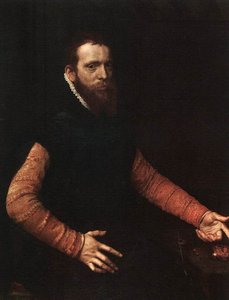
      Portrait of Antonis Mor
      Antonis Mor · 1519 – 1575
      Born · died
      1519 – 1575, Utrecht
      Movement
      Northern renaissance
      Works in our catalogue
      75
      Most famous
      Cardinal Granvelle's Dwarf (1560)
      Most works at
      Museo del Prado

      The ten best-loved paintings by Antonis Mor

      Cardinal Granvelle's Dwarf (1560) by Antonis Mor
      1

      Cardinal Granvelle's Dwarf

      1560 · Oil On Panel · The Louvre, Paris

      To stand before Anthonis Mor Van Dashorst’s Cardinal Granvelle's Dwarf is to step directly into the opulent, richly textured world of the sixteenth-century Dutch aristocracy. This oil on panel painting, executed in 1560, transcends a mere portrait; it is a meticulously crafted tableau vivant, whispering tales of power, lineage, and social standing. The subject—a young boy with dwarfism, adorned in clothing of breathtaking extravagance—is presented not just as an individual,…

      Portrait of Mary, Queen of England (1554) by Antonis Mor
      2

      Portrait of Mary, Queen of England

      1554 · Oil On Panel · Szépművészeti Múzeum, Budapest

      Anthonis Mor van Dashorst captured the likeness of Mary Tudor in 1554, a period defined by the shifting religious and political tides of the Northern Renaissance. The subject sits with a stern, direct gaze that meets the viewer without hesitation. Her red hair is framed by a structured, ruffled collar, a detail rendered with meticulous precision. Through the use of chiaroscuro, Mor employs a controlled interplay of light and shadow…

      Queen Mary Tudor of England (1554) by Antonis Mor
      3

      Queen Mary Tudor of England

      1554 · Oil On Panel · Museo del Prado, Madrid

      The portrait of Queen Mary Tudor of England, executed by Antonis Mor in 1554, captures a sovereign at a threshold of history. She sits as the sole surviving child of Henry VIII and Catherine of Aragon, a figure of singular lineage. The oil on panel preserves her likeness during a season of profound political and religious shifts. Her presence is fixed, a quiet anchor amidst the changing tides of the…

      Portrait of William of Orange (1555) by Antonis Mor
      4

      Portrait of William of Orange

      1555 · Oil On Panel · Staatliche Museen, Kassel

      To stand before this portrait of William of Orange is to encounter not merely a likeness, but an embodiment of nascent authority. Rendered in the meticulous vein of the Northern Renaissance, the work captures the sitter in a moment of profound stillness, yet one charged with palpable resolve. The composition immediately draws the eye into the three-quarter view, presenting a figure encased in elaborate armor against a background so deep…

      Joanna of Austria (1560) by Antonis Mor
      5

      Joanna of Austria

      1560 · Oil On Canvas · Museo del Prado, Madrid

      Antonis Mor's Joanna of Austria presents a formal likeness of the princess, who was the daughter of Emperor Charles V and sister to King Philip II of Spain. The subject commissioned this portrait personally, seeking a representation that reflected her specific station and history. In 1552, she married the Portuguese Prince John Manuel, a union that defined her political and personal landscape during the mid-sixteenth century.

      Portrait of a lady (1557) by Antonis Mor
      7

      Portrait of a lady

      1557 · Oil On Canvas · National Gallery of Victoria, Melbourne

      A single light source from the upper left carves the subject out of a dark, indeterminate void. She is a presence of quietude, a three-quarter length figure caught in a moment of poised introspection. The darkness behind her pushes her forward, making the pale skin of her forehead and cheek feel immediate, almost tactile. Her expression is calm, a mask of high social status that hides the pulse of the…

      Catherine of Hapsburg, the Wife of King John III of Portugal (1552) by Antonis Mor
      8

      Catherine of Hapsburg, the Wife of King John III of Portugal

      1552 · Oil On Panel · Museo del Prado, Madrid

      The gaze of Catherine of Hapsburg, the Wife of King John III of Portugal, meets the viewer from within this formal portrait. Painted by Antonis Mor, the work captures the presence of Catherine of Austria in a moment of quiet, regal composure. She occupies the space with a heavy, dignified stillness that speaks to her high station and the weight of her lineage.

      Margaret Duchess of Parma / Mary of Portugal Wife of Alessandro Farnesse (1565) by Antonis Mor
      10

      Margaret Duchess of Parma / Mary of Portugal Wife of Alessandro Farnesse

      1565 · Oil On Panel · Museo del Prado, Madrid

      Two women exist in a state of perpetual prayer, suspended within the dark, velvet silence of a Renaissance interior. Margaret, Duchess of Parma, and Mary of Portugal appear as twin pillars of piety, their profiles or three-quarter views turned toward an unseen divine presence. The air around them feels heavy, thick with the solemnity of their task. They do not look at the viewer; instead, their gazes drift downward or…

      Antonis Mor: canvases 11 to 75 of the ranking

      Portrait of a man (1550) by Antonis Mor
      #11

      Portrait of a man

      1550 · Kunsthistorisches Museum

      The gaze of the sitter in Portrait of a man meets us from across the centuries, a silent encounter captured by the hand of Antonis Mor. This work,…

      Order this canvas →
      Philip II (1555) by Antonis Mor
      #12

      Philip II

      1555 · Museo del Prado

      The air in the room seems to thicken around the figure of Philip II. He sits in a three-quarter view, his gaze meeting the viewer with a steady,…

      Have it painted by hand →
      Portrait of a Seated Woman (1565) by Antonis Mor
      #13

      Portrait of a Seated Woman

      1565 · Art Institute of Chicago

      The artwork titled Portrait of a Seated Woman was executed by the Netherlandish painter Antonis Mor. This oil on panel work dates to about 1565. The subject is…

      Order this canvas →
      Margaret, Duchess of Parma (1562) by Antonis Mor
      #14

      Margaret, Duchess of Parma

      1562 · Staatliche Museen zu Berlin

      In this portrait, we encounter Margaret, Duchess of Parma, captured in a moment of quiet, aristocratic composure. The subject is presented in a close-up view, her face and…

      Have it painted by hand →
      Lady with the Jewel (1552) by Antonis Mor
      #17

      Lady with the Jewel

      1552 · Museo del Prado

      A single woman occupies the center of this 1552 portrait, her presence defined by a quiet, aristocratic poise. She is positioned in a three-quarter length pose, her body…

      Have it painted by hand →
      Emperor Maximilian II (1550) by Antonis Mor
      #18

      Emperor Maximilian II

      1550 · Museo del Prado

      In this vertical, three-quarter length portrait from 1550, Emperor Maximilian II is presented against a dark, near-black background. The subject stands slightly off-center, positioned with a calm and…

      Have it painted by hand →
      Lady with Gold Chains (1560) by Antonis Mor
      #22

      Lady with Gold Chains

      1560 · Museo del Prado

      In this three-quarter length portrait from circa 1560, we encounter a woman who commands the space through a profound, self-possessed stillness. She is positioned slightly off-center, emerging from…

      Bring this light home →
      Portrait of a Lady (1538) by Antonis Mor
      #23

      Portrait of a Lady

      1538 · Museo del Prado

      The artwork titled Portrait of a Lady is an oil on canvas painting by the artist Antonis Mor. This portrait depicts a noblewoman, presented in a three-quarter length…

      Order this canvas →
      Sir Thomas Gresham (1560) by Antonis Mor
      #43

      Sir Thomas Gresham

      1560 · Rijksmuseum

      In this portrait, Anthonis Mor Van Dashorst captures the steady presence of Sir Thomas Gresham. The subject sits before us, a man whose influence once shaped the financial…

      Bring this light home →
      Portrait of Margaret of Parma (1559) by Antonis Mor
      #45

      Portrait of Margaret of Parma

      1559 · Philadelphia Museum of Art

      The Portrait of Margaret of Parma is a formal oil on canvas work executed by Antonis Mor in 1559. The subject is a high-status female figure, identified as…

      Order this canvas →
      Portrait of a Man by Antonis Mor
      #58

      Portrait of a Man

      Detroit Institute of Arts

      Portrait of a Man by Antonis Mor. This oil on canvas work dates to the 16th century. The Netherlandish artist Antonis Mor executed the portrait with a focus…

      Order this canvas →
      Portrait of a Man (1561) by Antonis Mor
      #65

      Portrait of a Man

      1561 · Mauritshuis

      Anthonis Mor van Dashorst came from Utrecht and specialised in portraits. He received commissions from various members of the Habsburg court, for which he travelled extensively in Europe.…

      Bring this light home →

      What Antonis Mor painted most

      The four subjects that return most often on these canvases, each with its best-loved example.

      Where Antonis Mor's canvases hang

      The 8 museums that hold the most of the paintings on this page.

      Museum City Works by Antonis Mor Paintings from this list
      Museo del Prado, MadridMuseo del Prado Madrid 13 Queen Mary Tudor of England, Joanna of Austria, Jane Dormer, Duchess of Feria (?)
      Rijksmuseum, AmsterdamRijksmuseum Amsterdam 5 Portrait of Philippe de Montmorency, Count of Horne, Admiral of the Netherlands, Member of the Council of State, Anthonis Mor (copy after), 1540 - 1650, Sir Thomas Gresham, Anne Fernel, the Wife of Sir Thomas Gresham
      Szépművészeti Múzeum, BudapestSzépművészeti Múzeum Budapest 3 Portrait of Mary, Queen of England, Knight of the Spanish St James Order, Portrait of the Philip II, King of Spain
      Kunsthistorisches Museum, ViennaKunsthistorisches Museum Vienna 3 Portrait of Anton Perrenot de Granvelle, Portrait of a man, Anne of Austria, Queen of Spain
      Mauritshuis, The HagueMauritshuis The Hague 3 Steven van Herwijck, Portrait of a Goldsmith, Portrait of a Man
      Gemäldegalerie Alte Meister im Schloss Wilhelmshöhe, KasselGemäldegalerie Alte Meister im Schloss Wilhelmshöhe Kassel 2 Portrait of a young prince, Portrait of Jean Lecocq (1559)
      Gemäldegalerie, BerlinGemäldegalerie Berlin 2 The Utrecht canons Cornelius van Horn and Anthonis Taets van Ameronghen, The Corpse of Christ
      Hispanic Society Museum - Library, New YorkHispanic Society Museum - Library New York 2 Fernando Álvarez de Toledo, Third Duke of Alba, Portrait of a Man

      Antonis Mor's most famous canvas, decade after decade

      1. 1530s
        Portrait of a Lady (1538) by Antonis Mor
        23 of 75

        Portrait of a Lady

        Age 11 – 20 · Museo del Prado

        The artwork titled Portrait of a Lady is an oil on canvas painting by the artist Antonis Mor. This portrait depicts a noblewoman, presented in a three-quarter length…

      2. 1540s
        Portrait of Anton Perrenot de Granvelle (1549) by Antonis Mor
        9 of 75

        Portrait of Anton Perrenot de Granvelle

        Age 21 – 30 · Kunsthistorisches Museum

        This portrait of Anton Perrenot de Granvelle, also known as Antoine Perrenot, called Granvelle, was executed by the Dutch Renaissance painter Antonis Mor. Painted in 1549, the work…

      3. 1550s
        Portrait of Mary, Queen of England (1554) by Antonis Mor
        2 of 75

        Portrait of Mary, Queen of England

        Age 31 – 40 · Szépművészeti Múzeum

        Anthonis Mor van Dashorst captured the likeness of Mary Tudor in 1554, a period defined by the shifting religious and political tides of the Northern Renaissance. The subject…

      4. 1560s
        Cardinal Granvelle's Dwarf (1560) by Antonis Mor
        Ranked 1 of 75

        Cardinal Granvelle's Dwarf

        Age 41 – 50 · The Louvre

        To stand before Anthonis Mor Van Dashorst’s Cardinal Granvelle's Dwarf is to step directly into the opulent, richly textured world of the sixteenth-century Dutch aristocracy. This oil on…

      5. 1570s

      Antonis Mor's canvases, question by question

      Which canvas is Antonis Mor most remembered for?Read the answer

      Cardinal Granvelle's Dwarf (1560), The Louvre, Paris. Portrait of Mary, Queen of England (1554) and Queen Mary Tudor of England (1554) follow.

      Cardinal Granvelle's Dwarf: how old was Antonis Mor when it was painted?Read the answer

      Antonis Mor, born in 1519, was 41 years old: Cardinal Granvelle's Dwarf dates from 1560.

      What are Antonis Mor's ten most famous canvases?Read the answer

      Cardinal Granvelle's Dwarf, Portrait of Mary, Queen of England, Queen Mary Tudor of England, Portrait of William of Orange, Joanna of Austria, Jane Dormer, Duchess of Feria (?), Portrait of a lady, Catherine of Hapsburg, the Wife of King John III of Portugal, Portrait of Anton Perrenot de Granvelle and Margaret Duchess of Parma / Mary of Portugal Wife of Alessandro Farnesse. Each canvas in the ranking above comes with its year and its museum.

      How many paintings did Antonis Mor create?Read the answer

      75 works by Antonis Mor are in our catalogue, dated 1538 to 1574.

      Where do Antonis Mor's most famous canvases hang today?Read the answer

      Mostly in Museo del Prado (Madrid), Rijksmuseum (Amsterdam) and Szépművészeti Múzeum (Budapest); the list above names each museum and its canvases.

      When did Antonis Mor paint the most famous canvases?Read the answer

      In 1550s, which gave 30 of the 75 works on this page, Portrait of Mary, Queen of England among them.

      Which famous Antonis Mor canvas came first, and which came last?Read the answer

      The earliest canvas here is Portrait of a Lady (1538); the latest is Portrait of Hubert Goltzius (1574).

      Which subjects did Antonis Mor paint most?Read the answer

      Woman (14), Black dress (10) and Portrait (8), across the 75 works on this page.

      Which medium appears most in Antonis Mor's paintings?Read the answer

      Oil On Canvas, used in 14 of the 75 works on this page.

      Which movement is Antonis Mor associated with?Read the answer

      Northern renaissance and Renaissance, as the canvases on this page show.

      Which paintings by Antonis Mor are held by the Museo del Prado?Read the answer

      The Museo del Prado, Madrid holds 13 of the works on this page, among them Queen Mary Tudor of England, Joanna of Austria and Jane Dormer, Duchess of Feria (?).

      Where can I buy a reproduction of a Antonis Mor painting?Read the answer

      Yes. Every painting on this page can be ordered from its own page as an oil reproduction painted by hand, or as a fine art print, in the size you choose.

      Meet the painter: Antonis Mor

      Anthonis Mor van Dashorst: The Painter of Regal Dignity

      Anthonis Mor van Dashorst (1517-1577) stands as a cornerstone of Dutch Renaissance portraiture, embodying the meticulous realism and symbolic depth characteristic of his era. Born in Utrecht, Netherlands, he emerged from a family steeped in artistic tradition – his father was a sculptor, establishing a lineage dedicated to visual representation. While biographical details remain somewhat sparse, Mor’s prolific output speaks volumes about his talent and unwavering commitment to capturing the essence of his subjects. He quickly gained renown for his ability to portray nobility with unparalleled accuracy, securing commissions from influential figures across Europe.
      • Early Life & Training: Little is known definitively about Mor's formative years beyond his Utrecht upbringing. However, he studied under Pieter Bruegel the Elder in Antwerp, absorbing Bruegel’s masterful observation of human nature and landscape—influences that would permeate Mor’s own artistic vision.
      • Antwerp Period & Artistic Development: Mor’s time in Antwerp proved pivotal for his artistic maturation. He honed his skills alongside fellow artists like Quentin Massys and Hendrik Golse, immersing himself in the vibrant artistic milieu of the Flemish Republic. This exposure fostered a sophisticated understanding of perspective and chiaroscuro—techniques he skillfully employed to illuminate his portraits with dramatic light and shadow.

      The Reign of Mary Tudor: A Masterpiece of Northern Renaissance Portraiture

      Mor’s fame ascended dramatically upon completing his portrait of Mary Tudor, Queen of England (1554). This monumental canvas exemplifies the pinnacle of Mor’s artistic prowess. Executed with painstaking detail, it captures Mary's regal bearing and inner composure—a testament to Mor’s ability to convey psychological nuance alongside physical likeness. The composition is meticulously balanced, utilizing pyramidal structure and subtle drapery folds to emphasize Mary’s stature and dignity. Furthermore, the use of chiaroscuro creates a captivating interplay of light and dark, highlighting Mary's face and conveying an aura of solemn grandeur. This portrait cemented Mor’s reputation as one of the foremost portraitists of his time and remains a celebrated exemplar of Northern Renaissance art.
      • Royal Patronage & Artistic Recognition: Mor benefited greatly from royal patronage, securing commissions from monarchs across Europe—including Philip II of Spain. These engagements allowed him to explore ambitious projects and refine his artistic style, furthering his legacy as a court artist.
      • Notable Commissions & Artistic Style: Beyond Mary Tudor’s portrait, Mor undertook numerous commissions depicting prominent statesmen, diplomats, and aristocrats. His distinctive artistic style—characterized by meticulous realism, masterful perspective, and expressive chiaroscuro—became instantly recognizable. He consistently prioritized conveying not merely physical appearance but also character and emotion, elevating his portraits beyond mere likenesses into profound statements about human dignity.

      Influence & Legacy

      Mor’s influence extended far beyond his immediate contemporaries. His meticulous approach to portraiture established a precedent for subsequent generations of artists—inspiring them to strive for greater accuracy and psychological insight. He championed the humanist ideals prevalent during the Renaissance, reflecting an unwavering belief in the power of art to illuminate human experience. Today, Mor van Dashorst’s paintings continue to captivate audiences worldwide, serving as enduring reminders of the artistic brilliance achieved during the Dutch Golden Age—a period defined by innovation, ambition, and a profound appreciation for beauty.

      All 75 works by Antonis Mor →