Atelier — Complimentary worldwide shipping — Delivery 2–6 weeks
      Joan Miró, 1893 – 1983

      The 100 Most Famous Joan Miró Paintings, Ranked

      The best-loved painting by Joan Miró is The Farm (1922). Harlequin's Carnival (1925) and Ciphers and Constellations, in Love with a Woman (1941) come next among the canvases readers know best. Our catalogue holds 428 works by Joan Miró: here are the 100 most famous, each with its year, its museum and what makes it memorable.

      Ranked by our popularity score, which combines the searches, visits and orders for each work. Updated October 2026.

      Portrait of Joan Miró
      Joan Miró · 1893 – 1983
      Born · died
      1893 – 1983, Barcelona
      Movement
      Surrealism
      Works in our catalogue
      428
      Most famous
      The Farm (1922)
      Most works at
      MOMA - Museum of Modern Art

      Top 10 Joan Miró paintings: the canvases everyone knows

      The Farm (1922) by Joan Miró
      1

      The Farm

      1922 · Oil On Canvas

      Painted in 1922, this captivating artwork by Joan Miró transcends a simple depiction of rural life, offering instead a richly symbolic and emotionally resonant vision of the Catalan countryside. Measuring 132 x 147 cm, it's a substantial work that commands attention, inviting viewers into a dreamlike world constructed from memory and imagination.

      Harlequin's Carnival (1925) by Joan Miró
      2

      Harlequin's Carnival

      1925 · Oil On Canvas · Buffalo AKG Art Museum, Buffalo

      Joan Miró's "Harlequin's Carnival" (1925) is a vibrant and intricate composition that captures the essence of surrealism. This captivating artwork invites viewers into a whimsical world where fantasy and reality intertwine, making it a perfect addition to any art collection or sophisticated interior.

      Still Life with Old Shoe (1937) by Joan Miró
      5

      Still Life with Old Shoe

      1937 · Oil On Canvas · MOMA - Museum of Modern Art, New York City

      Painted in 1937, amidst the escalating turmoil of the Spanish Civil War, this captivating still life by Joan Miró transcends a simple depiction of everyday objects. Measuring an impressive 81 x 117 cm, it's a powerful statement rendered with the artist’s signature blend of surrealism and expressive color, offering a glimpse into a world fractured by anxiety and uncertainty.

      Dutch Interior I (1928) by Joan Miró
      6

      Dutch Interior I

      1928 · Oil On Canvas · MOMA - Museum of Modern Art, New York City

      A Vibrant Exploration of Abstract Surrealism Joan Miró's "Dutch Interior I" is a captivating masterpiece that blends abstract expressionism and surrealism, creating a dynamic and dreamlike atmosphere. Painted in 1928, this artwork exemplifies Miró's unique ability to merge bold colors, intricate shapes, and imaginative symbolism into a cohesive and emotionally resonant composition. Composition and Style The artwork is a vibrant and complex composition that exudes movement and energy. At its…

      Siesta (1925) by Joan Miró
      7

      Siesta

      1925 · Oil On Canvas

      "Siesta," created in 1925 by the visionary Spanish artist Joan Miró, is a captivating example of abstract surrealism that invites viewers into a world of ethereal beauty and symbolic intrigue. This masterpiece exemplifies Miró's unique ability to blend organic and geometric forms, creating a harmonious yet dynamic composition that continues to inspire art lovers, collectors, and interior designers alike.

      Blue II (1961) by Joan Miró
      8

      Blue II

      1961 · Acrylic On Canvas

      A Masterpiece of Abstract Surrealism Joan Miró's "Blue II" is a captivating example of abstract surrealism, created in 1961 during the artist's mature period. This large-scale painting (270 x 355 cm) exemplifies Miró's unique ability to blend simplicity with profound symbolism, making it a sought-after piece for art lovers and collectors alike. Composition and Color Palette The artwork features a striking minimalist composition dominated by a vast expanse of vivid…

      Painting (1933) by Joan Miró
      9

      Painting

      1933 · Oil On Canvas · Fundació Joan Miró, Barcelona

      A Vibrant Dance of Color and Form Immerse yourself in a world of boundless creativity with this captivating abstract masterpiece from 1933. A symphony of bold colors and fluid lines, this artwork invites you to explore the depths of your imagination and experience the raw energy of abstract expressionism. Abstract Expressionism at Its Finest This dynamic composition is a testament to the power of abstract expressionism, a movement that emerged…

      Seated Woman II (1938) by Joan Miró
      10

      Seated Woman II

      1938 · Oil On Canvas · The Solomon R. Guggenheim Foundation, Venice

      A Masterpiece of Surrealist Expression Joan Miró's "Seated Woman II" (1938) is a captivating example of Surrealist art that transcends traditional boundaries. This oil on canvas masterpiece, measuring 162 x 130 cm, blends abstract forms with vibrant colors to create a dynamic and emotionally charged composition. Subject and Composition The central figure in "Seated Woman II" is a stylized representation of a seated woman. Miró's abstract approach transforms the human…

      More Joan Miró canvases, 11 to 100

      Self-Portrait (1917) by Joan Miró
      #11

      Self-Portrait

      1917

      A Bold Exploration of Identity and Expression Joan Miró's 1917 self-portrait is a striking example of early modernist art that challenges traditional portraiture norms. This captivating piece invites…

      The Birth of the World (1925) by Joan Miró
      #12

      The Birth of the World

      1925 · MOMA - Museum of Modern Art

      The Birth of the World: A Surrealist Masterpiece by Joan Miró Introduction Created in 1925, "The Birth of the World" is a seminal work by the renowned Spanish…

      The Family (1924) by Joan Miró
      #13

      The Family

      1924 · MOMA - Museum of Modern Art

      Exploring Surrealism and Symbolism This captivating artwork exemplifies Joan Miró’s mastery in blending surrealist abstraction with profound symbolism. Created in 1924, it invites viewers into a dreamlike universe…

      The Tilled Field (1924) by Joan Miró
      #14

      The Tilled Field

      1924 · Solomon R. Guggenheim Museum

      Joan Miró’s The Tilled Field (1923-1924) is a captivating masterpiece that transcends simple landscape painting, offering instead a vibrant and deeply symbolic exploration of his family's farm in…

      Dog Barking-at the Moon (1926) by Joan Miró
      #15

      Dog Barking-at the Moon

      1926

      A Catalan Reverie: Unveiling Joan Miró’s “Dog Barking at the Moon” “Dog Barking at the Moon” (1926) is more than just a painting; it's a portal into the…

      The Poetess (1940) by Joan Miró
      #16

      The Poetess

      1940

      Joan Miró, a renowned Spanish artist, is celebrated for his contributions to the Surrealist movement. One of his notable works, The Poetess, created in 1940, exemplifies his unique…

      The Smile of the Flamboyant Wings (1953) by Joan Miró
      #17

      The Smile of the Flamboyant Wings

      1953

      For art enthusiasts and collectors interested in owning a piece of Miró’s legacy, The Smile of the Flamboyant Wings is available as a handmade oil painting reproduction at…

      Dancer (1925) by Joan Miró
      #18

      Dancer

      1925

      A Dance Between Dreams and Reality Joan Miró’s *Dancer*, created in 1925, is a captivating exploration of movement and stillness rendered through the lens of Surrealism. This oil…

      Prades, the Village (1917) by Joan Miró
      #19

      Prades, the Village

      1917

      Joan Miró’s “Prades, the Village,” painted in 1917, stands as a cornerstone of early 20th-century art, embodying the burgeoning spirit of Surrealism while firmly rooted in the innovative…

      Woman and Bird in the Moonlight (1949) by Joan Miró
      #20

      Woman and Bird in the Moonlight

      1949

      Joan Miró's "Woman and Bird in the Moonlight," painted in 1949, isn’t merely a depiction of a nocturnal scene; it’s an immersion into the artist’s deeply personal and…

      Figures and Dog in Front of the Sun (1949) by Joan Miró
      #21

      Figures and Dog in Front of the Sun

      1949

      Introduction to the Artist Joan Miró was a Spanish painter, sculptor, and ceramicist born in Barcelona. He is best known for his surrealistic works, which often featured abstract…

      Para David Fernández Miró 1 by Joan Miró
      #23

      Para David Fernández Miró 1

      To encounter Joan Miró's “Para David Fernández Miró 1” is to step through a portal into the very architecture of the subconscious. Painted in 1964, this masterpiece transcends…

      The Farm by Joan Miró
      #24

      The Farm

      Joan Miró's "The Farm" isn’t merely a depiction of a rustic scene; it’s an intimate inventory, a vibrant snapshot of a Catalan farmhouse—a masia—and the life inextricably bound…

      Mujer y perro cara a la luna by Joan Miró
      #25

      Mujer y perro cara a la luna

      Joan Miró’s “Mujer y perro cara a la luna” (“Woman and Dog Facing the Moon”) transcends mere visual representation; it embodies the spirit of Surrealism and delves into…

      Self-Portrait I by Joan Miró
      #26

      Self-Portrait I

      Subject and Composition This captivating artwork presents a whimsical, abstracted face that immediately draws the viewer into a world of playful imagination. The central figure, rendered with exaggerated,…

      Blue III (1961) by Joan Miró
      #27

      Blue III

      1961

      A Blue Dreamscape: Unpacking Joan Miró’s “Blue III” Joan Miró’s “Blue III,” painted in 1961, isn't merely a painting; it’s an invitation into the artist’s subconscious. Measuring a…

      Azul III by Joan Miró
      #28

      Azul III

      Joan Miró (1893 – 1983), born in Barcelona, stands as a cornerstone of Surrealist art and arguably the most celebrated exponent of Catalan artistic expression. His oeuvre transcends…

      RED DISC IN PURSUIT OF A LARK (1953) by Joan Miró
      #29

      RED DISC IN PURSUIT OF A LARK

      1953

      Joan Miró, a Spanish artist celebrated for his contributions to the Surrealist movement, captivated audiences worldwide with his dreamlike imagery and bold colors. One of his most recognizable…

      Photo: This Is the Color of My Dreams (1925) by Joan Miró
      #30

      Photo: This Is the Color of My Dreams

      1925 · Metropolitan Museum of Art

      This work is part of a series created between 1924 and 1927 known as "peinture-poésie" (painting-poetry), which combines text with enigmatic symbols and reflects his interest in dreams…

      May 1968 (1973) by Joan Miró
      #31

      May 1968

      1973 · Fundació Joan Miró

      To stand before Joan Miró’s May 1968 is to witness a canvas caught in the throes of a revolution. This monumental work, spanning an imposing 200 x 200…

      BLUE I (1961) by Joan Miró
      #32

      BLUE I

      1961 · Centre Pompidou

      Joan Miró’s Blue I stands as a cornerstone of modern art—specifically surrealism—capturing the boundless imagination and subconscious exploration that defined Miró’s artistic vision. Created in 1961 during his…

      La poetisa by Joan Miró
      #33

      La poetisa

      Exploring the Surrealist Dreamscape of Joan Miró’s “La Poetisa” “La Poetisa,” a captivating oil painting by Catalan surrealist maestro Joan Miró, transcends mere visual representation; it's an invitation…

      Constellation: Toward the Rainbow (1941) by Joan Miró
      #34

      Constellation: Toward the Rainbow

      1941

      Joan Miró's "Constellation: Toward the Rainbow," painted in 1941, isn’t merely a depiction of stars; it’s an immersion into the artist’s subconscious, a vibrant echo of his escape…

      Untitled (1931) by Joan Miró
      #35

      Untitled

      1931

      A Window into Miró’s Inner World: Exploring an Untitled Composition from 1931 This captivating work by Joan Miró, created in 1931, offers a compelling glimpse into the artist's…

      Woman Encircled by the Flight of a Bird (1941) by Joan Miró
      #36

      Woman Encircled by the Flight of a Bird

      1941

      Woman Encircled by the Flight of a Bird – A Surrealist Vision The painting Woman Encircled by the Flight of a Bird by Joan Miró stands as a…

      The Birth of Day (1968) by Joan Miró
      #37

      The Birth of Day

      1968

      Joan Miró's "The Birth of Day," painted in 1968, isn’t merely a painting; it’s an exuberant invitation to a world brimming with childlike wonder and subconscious delight. This…

      Para David Fernández Miró by Joan Miró
      #38

      Para David Fernández Miró

      Joan Miró's 'Para David Fernández Miró', painted in 1964, isn’t merely a depiction of fish swimming through an ocean; it’s a portal into the artist’s subconscious, a vibrant…

      Personajes y perro ante el sol by Joan Miró
      #39

      Personajes y perro ante el sol

      “Personajes y Perro Ante el Sol” (Characters and Dog Before the Sun) by Joan Miró is a captivating oil on canvas painting created in 1965. This artwork exemplifies…

      Carota (1978) by Joan Miró
      #40

      Carota

      1978

      Joan Miró’s “Carota,” created around 1978, stands as a testament to the artist's unwavering commitment to abstraction and his profound connection to Catalan culture. This striking painting embodies…

      Pájaro, insecto, constelación by Joan Miró
      #41

      Pájaro, insecto, constelación

      A Surrealist Symphony of Form and Feeling In the vast landscape of twentieth-century modernism, few works capture the ethereal dance between reality and dream quite like Joan Miró’s…

      Bottle of Vine (1924) by Joan Miró
      #42

      Bottle of Vine

      1924

      Joan Miró’s “Bottle of Vine,” painted in 1924, stands as a cornerstone of surrealist art and a poignant reflection of Catalan artistic sensibilities. Produced during Miró's formative period—a…

      The Gold of the Azure (1967) by Joan Miró
      #43

      The Gold of the Azure

      1967

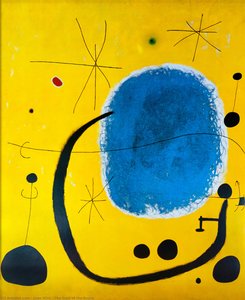
      Joan Miró’s The Gold of the Azure stands as a testament to Surrealist innovation and Abstract Expressionist boldness—a painting that transcends mere visual representation to delve into realms…

      Fiesta snob para la princesa by Joan Miró
      #44

      Fiesta snob para la princesa

      To encounter Joan Miró’s "Fiesta snob para la princesa" is to step through a portal into the boundless architecture of the subconscious. Painted in 1944, this vibrant canvas…

      Help Spain (1937) by Joan Miró
      #45

      Help Spain

      1937

      In the tumultuous landscape of 1937, as the Spanish Civil War raged across the Iberian Peninsula, Joan Miró responded with a work that transcended mere artistic expression –…

      Hair Pursued by 2 Planets (1968) by Joan Miró
      #46

      Hair Pursued by 2 Planets

      1968

      “Hair Pursued by 2 Planets,” created in 1968 by Joan Miró exemplifies the fusion of Abstract Expressionism and Surrealism—a stylistic hallmark of his prolific career. This painting transcends…

      El sol rojo roe a la araña by Joan Miró
      #48

      El sol rojo roe a la araña

      In the mesmerizing realm of Joan Miró, reality often dissolves into a dreamscape where the boundaries between the tangible and the infinite blur. His masterpiece, El sol rojo…

      Woman before the luna (1974) by Joan Miró
      #49

      Woman before the luna

      1974

      A Celestial Encounter in the Surrealist Realm In the twilight of his prolific career, Joan Miró gifted the art world with Woman Before the Luna, a masterpiece from…

      Painting (1936) by Joan Miró
      #50

      Painting

      1936 · Fundació Joan Miró

      Joan Miró's 1936 painting, often simply titled “Painting,” is not merely a visual representation; it’s an immersion into the artist’s intensely personal and profoundly evocative inner world. This…

      Dutch Interior (1928) by Joan Miró
      #51

      Dutch Interior

      1928

      A Bold Reimagining of Domesticity: Joan Miró’s *Dutch Interior* (1928) Dutch Interior by Joan Miró is a captivating example of the artist's unique approach to Surrealism and his…

      La sonrisa de las alas flameantes by Joan Miró
      #52

      La sonrisa de las alas flameantes

      In the vibrant tapestry of twentieth-century modernism, few works capture the whimsical yet profound essence of the subconscious quite like Joan Miró’s La sonrisa de las alas flameantes,…

      Maqueta per a la sèrie Els gossos 2 by Joan Miró
      #53

      Maqueta per a la sèrie Els gossos 2

      Dynamic Composition and Vibrant Palette This captivating artwork bursts with energy through its bold use of color and spontaneous forms. Featuring a lively interplay of pinks, oranges, purples,…

      La aldea y la iglesia de Mont-roig by Joan Miró
      #54

      La aldea y la iglesia de Mont-roig

      In the evocative masterpiece “La aldea y la iglesia de Mont-roig,” Joan Miró invites us into a world where the boundaries between reality and the subconscious begin to…

      A Star Caresses the Breasts of a Negro Woman (1938) by Joan Miró
      #55

      A Star Caresses the Breasts of a Negro Woman

      1938

      In the vast, swirling landscape of twentieth-century modernism, few works capture the ethereal dance between reality and the subconscious as intimately as Joan Miró’s 1938 masterpiece, "A Star…

      Man and Woman in Front of a Pile of Excrement (1936) by Joan Miró
      #56

      Man and Woman in Front of a Pile of Excrement

      1936

      Joan Miró’s “Man and Woman in Front of a Pile of Excrement,” painted in 1936, stands as an arresting emblem of Surrealist art—a visual paradox that simultaneously disturbs…

      Portrait of a Spanish Dancer (1919) by Joan Miró
      #57

      Portrait of a Spanish Dancer

      1919

      A Glimpse into Spanish Soul: Decoding Miró's Portrait of a Spanish Dancer Joan Miró’s 1919 *Portrait of a Spanish Dancer* is more than just a depiction of a…

      Perro ladrando a la luna by Joan Miró
      #59

      Perro ladrando a la luna

      Joan Miró’s “Perro ladrando a la luna” – Dog Barking at the Moon – is more than just a painting; it's an invitation into a realm where logic…

      Self Portrait II by Joan Miró
      #60

      Self Portrait II

      Detroit Institute of Arts

      A Window Into the SubconsciousJoan Miró’s Self Portrait II, executed between 1967 and 1968, is far more than a mere reflection of the artist's physical likeness; it is…

      Man with pipe by Joan Miró
      #61

      Man with pipe

      This artwork is currently off view at The Art Institute of Chicago.

      Pájaro en la noche by Joan Miró
      #62

      Pájaro en la noche

      In the vast, evocative landscape of 20th-century Surrealism, few works capture the delicate tension between chaos and cosmic order as poignantly as Joan Miró’s Pájaro en la noche.…

      Swallow,Love (1934) by Joan Miró
      #63

      Swallow,Love

      1934

      The Dreamscape of “Swallow, Love”: A Journey into Joan Miró’s Surrealist Vision Joan Miró's "Swallow, Love," painted in 1934, isn’t merely a depiction of birds and figures; it’s…

      Snail Woman Flower Star by Joan Miró
      #64

      Snail Woman Flower Star

      A Surreal Landscape of Emotion: Exploring Joan Miró’s ‘Snail Woman Flower Star’ ‘Snail Woman Flower Star’ is a captivating and enigmatic work by the celebrated Spanish artist, Joan…

      Bathing Woman (1925) by Joan Miró
      #65

      Bathing Woman

      1925

      Bathing Woman Joan Miró’s ‘Bathing Woman’, painted in 1925, stands as a cornerstone of Surrealist art—a mesmerizing exploration of the subconscious mind rendered with breathtaking simplicity and luminous…

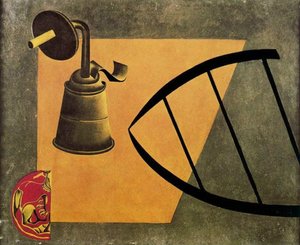
      The Carbide Lamp (1923) by Joan Miró
      #66

      The Carbide Lamp

      1923

      In the quiet, transformative years of 1923, Joan Miró captured a moment that transcends the mere depiction of an industrial object, offering instead a profound meditation on dreams,…

      Painting (1950) by Joan Miró
      #67

      Painting

      1950

      Introduction to the Artist and Painting Joan Miró, a renowned Spanish surrealist artist, created the captivating piece titled "Painting" in 1950. This oil on canvas artwork measures 99…

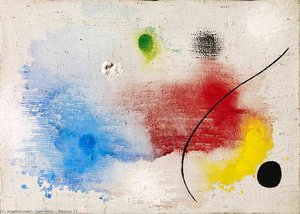
      Pintura 11 by Joan Miró
      #68

      Pintura 11

      A Dance of Dreams: Unveiling Joan Miró’s “Pintura 11” Joan Miró’s “Pintura 11,” a vibrant oil painting brimming with color and enigmatic forms, isn't merely a depiction of…

      The music-hall usher (1925) by Joan Miró
      #70

      The music-hall usher

      1925 · Fundació Joan Miró

      The music-hall usher emerges from 1925, a year when the creative energy of Joan Miró begins to pulse with a new, singular intensity. This work, titled The music-hall…

      La esperanza del condenado a muerte III by Joan Miró
      #72

      La esperanza del condenado a muerte III

      La esperanza del condenado a muerte III is an abstract artwork by Joan Miró. The composition features a large central sun surrounded by various shapes and lines that…

      Head of a Man (1935) by Joan Miró
      #73

      Head of a Man

      1935 · Centre Pompidou

      A Surreal Echo of Catalan Soul: Exploring Joan Miró’s “Head of a Man” The painting "Head of a Man" by Joan Miró, completed in 1935, isn't merely an…

      Retrato II by Joan Miró
      #75

      Retrato II

      To stand before a work by Joan Miró is to step through a portal into a vibrant, subconscious landscape. This piece, Retrato II, is not merely an arrangement…

      Bird's Flight in Moonlight (1967) by Joan Miró
      #76

      Bird's Flight in Moonlight

      1967

      In the quiet depths of 1967, Joan Miró captured a moment of cosmic equilibrium in his masterpiece, Bird's Flight in Moonlight. This work serves as a profound bridge…

      The Table (Still Life with Rabbit) (1920) by Joan Miró
      #77

      The Table (Still Life with Rabbit)

      1920

      In the transformative landscape of 1920, Joan Miró birthed a masterpiece that would become a cornerstone of Surrealist Cubism: The Table (Still Life with Rabbit). This painting is…

      Llama en el espacio y mujer desnuda by Joan Miró
      #78

      Llama en el espacio y mujer desnuda

      In the profound depths of 1932, Joan Miró birthed a masterpiece that continues to haunt and enchant the modern imagination: "Flame in Space and Nude Woman." This work…

      Pintura mural by Joan Miró
      #79

      Pintura mural

      A Visionary Dance of Color and Form: Exploring Joan Miró’s “Pintura Mural” Joan Miró's "Pintura Mural" stands as a testament to Surrealist exploration and Catalan artistic heritage. Created…

      Comedia del Arte by Joan Miró
      #80

      Comedia del Arte

      The painting Comedia del Arte is a black and white abstract art piece by Joan Miró. The composition features a large circle with an eye positioned in the…

      Portrait II (1938) by Joan Miró
      #81

      Portrait II

      1938

      A Catalan Visionary: The Life and Art of Joan Miró Joan Miró i Ferrà, born in Barcelona in 1893, stands as one of the most significant figures in…

      Barcelona Series XLVII by Joan Miró
      #82

      Barcelona Series XLVII

      Joan Miró’s “Barcelona Series XLVII” is not merely a depiction of a city; it's an immersion into the vibrant, dreamlike consciousness of its creator. Painted in 1963, during…

      The Escape Ladder (1939) by Joan Miró
      #83

      The Escape Ladder

      1939

      To gaze upon Joan Miró’s 1939 masterpiece, The Escape Ladder, is to step through a looking glass into a realm where the boundaries between dream and reality dissolve.…

      The Vegetable Garden with Donkey (1918) by Joan Miró
      #84

      The Vegetable Garden with Donkey

      1918

      Joan Miró’s 1918 painting, "The Vegetable Garden with Donkey," is more than just a depiction of a rustic scene; it's an invitation into the artist’s uniquely personal and…

      Lienzo quemado I by Joan Miró
      #85

      Lienzo quemado I

      To encounter Joan Miró's "Lienzo Quemado I" is to step through a threshold where the rigid boundaries of logic dissolve, replaced by the fluid, pulsing rhythm of the…

      Silencio by Joan Miró
      #86

      Silencio

      In the vast landscape of twentieth-century abstraction, few works command the room with as much visceral intensity as Joan Miró’s Silencio. This masterpiece eschews the traditional boundaries of…

      Nude with Mirror (1919) by Joan Miró
      #87

      Nude with Mirror

      1919

      In the realm of modern art, few pieces possess the captivating ambiguity and profound introspection of Joan Miró’s 1919 painting, *Nude with Mirror*. More than a simple depiction…

      La esperanza del condenado a muerte I by Joan Miró
      #88

      La esperanza del condenado a muerte I

      In the vast, dreamlike landscape of Joan Miró’s late career, few works resonate with as much visceral gravity as La esperanza del condenado a muerte I. Created in…

      El circo by Joan Miró
      #89

      El circo

      To step into Joan Miró’s "El Circo" is to abandon the heavy, predictable weight of the physical world and enter a realm where gravity is merely a suggestion.…

      House with Palm Tree (1918) by Joan Miró
      #90

      House with Palm Tree

      1918

      Joan Miró’s “House with Palm Tree,” painted in 1918, isn't merely a depiction of a building and a tree; it’s a portal into the artist’s subconscious, a vibrant…

      Pintura (Personajes en la noche) by Joan Miró
      #91

      Pintura (Personajes en la noche)

      A Nightly Gathering: Decoding Miró’s ‘Pintura (Personajes en la noche)’ This captivating work by Joan Miró, titled *Pintura (Personajes en la noche)* – meaning “Painting (Characters in the…

      Caballo, Pipa y Flor roja by Joan Miró
      #92

      Caballo, Pipa y Flor roja

      To stand before a work by Joan Miró is not simply to observe paint on canvas; it is to step through a portal into the vibrant, illogical landscape…

      Mujer sentada 3 by Joan Miró
      #93

      Mujer sentada 3

      The Dream Weaver’s Palette: Unpacking Joan Miró's *Mujer sentada 3* Joan Miró’s *Mujer sentada 3*, painted in 1965, isn’t merely a depiction of a seated woman; it’s an…

      Mujer, pájaro, estrella by Joan Miró
      #94

      Mujer, pájaro, estrella

      In the vast, azure expanse of Joan Miró’s Woman, Bird, Star, viewers are invited into a dreamscape where the boundaries between reality and the subconscious dissolve. Painted in…

      Composition (1925) by Joan Miró
      #96

      Composition

      1925 · Bavarian State Painting Collections

      In this 1925 oil on canvas, we encounter a moment of profound transition in the artist's development. The work, titled Composition, moves away from the literalism of his…

      Maternity (1924) by Joan Miró
      #98

      Maternity

      1924

      A Surrealist Dreamscape: Unpacking Joan Miró’s “Maternity” Joan Miró's "Maternity," painted in 1924, isn’t merely a depiction of motherhood; it’s an immersion into the artist’s intensely personal and…

      Joan Miró's canvases, period by period

      What Joan Miró painted most

      The four subjects that return most often on these canvases, each with its best-loved example.

      Where Joan Miró's canvases hang

      The 8 museums that hold the most of the paintings on this page.

      Museum City Works by Joan Miró Paintings from this list
      MOMA - Museum of Modern Art, New York CityMOMA - Museum of Modern Art New York City 5 Joan Miró- Catalan Landscape (The Hunter), Still Life with Old Shoe, Dutch Interior I
      Fundació Joan Miró, BarcelonaFundació Joan Miró Barcelona 7 Painting, May 1968, Painting
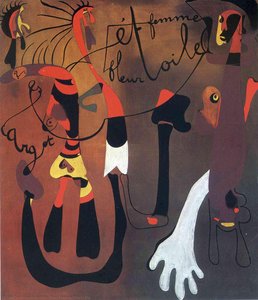
      Museo Nacional Centro de Arte Reina Sofía, MadridMuseo Nacional Centro de Arte Reina Sofía Madrid 6 Femme en transe par la fuite des étoiles filantes (Woman Entranced by the Escape of Shooting Stars), Paysage (Landscape), Oiseau dans l'espace (Bird in Space)
      Centre Pompidou, ParisCentre Pompidou Paris 3 BLUE I, Head of a Man
      Metropolitan Museum of Art, New YorkMetropolitan Museum of Art New York 7 Photo: This Is the Color of My Dreams
      Art Institute of Chicago, ChicagoArt Institute of Chicago Chicago 3 Ciphers and Constellations, in Love with a Woman
      Solomon R. Guggenheim Museum, New York CitySolomon R. Guggenheim Museum New York City 2 The Tilled Field
      The Phillips Collection, Washington, D.C.The Phillips Collection Washington, D.C. 2 The Red Sun

      Joan Miró's best-loved canvas of each decade

      1. 1910s
        Self-Portrait (1917) by Joan Miró
        Ranked 11 of 100

        Self-Portrait

        Age 17 – 26

        A Bold Exploration of Identity and Expression Joan Miró's 1917 self-portrait is a striking example of early modernist art that challenges traditional portraiture norms. This captivating piece invites…

      2. 1920s
        The Farm (1922) by Joan Miró
        1 of 100

        The Farm

        Age 27 – 36

        Painted in 1922, this captivating artwork by Joan Miró transcends a simple depiction of rural life, offering instead a richly symbolic and emotionally resonant vision of the Catalan…

      3. 1930s
        Still Life with Old Shoe (1937) by Joan Miró
        5 of 100

        Still Life with Old Shoe

        Age 37 – 46 · MOMA - Museum of Modern Art

        Painted in 1937, amidst the escalating turmoil of the Spanish Civil War, this captivating still life by Joan Miró transcends a simple depiction of everyday objects. Measuring an…

      4. 1940s
        Ciphers and Constellations, in Love with a Woman (1941) by Joan Miró
        Canvas 3 of 100

        Ciphers and Constellations, in Love with a Woman

        Age 47 – 56 · Art Institute of Chicago

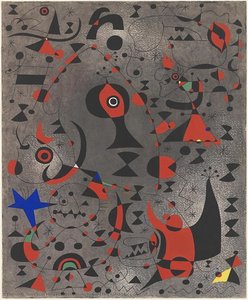
        Created in 1941, this captivating gouache and watercolor on paper is a quintessential example of Joan Miró’s mature Surrealist style. Part of his celebrated “Constellations” series, it transcends…

      5. 1950s
        The Smile of the Flamboyant Wings (1953) by Joan Miró
        Canvas 17 of 100

        The Smile of the Flamboyant Wings

        Age 57 – 66

        For art enthusiasts and collectors interested in owning a piece of Miró’s legacy, The Smile of the Flamboyant Wings is available as a handmade oil painting reproduction at…

      6. 1960s
        Blue II (1961) by Joan Miró
        Ranked 8 of 100

        Blue II

        Age 67 – 76

        A Masterpiece of Abstract Surrealism Joan Miró's "Blue II" is a captivating example of abstract surrealism, created in 1961 during the artist's mature period. This large-scale painting (270…

      7. 1970s
        May 1968 (1973) by Joan Miró
        Canvas 31 of 100

        May 1968

        Age 77 – 86 · Fundació Joan Miró

        To stand before Joan Miró’s May 1968 is to witness a canvas caught in the throes of a revolution. This monumental work, spanning an imposing 200 x 200…

      About Joan Miró's canvases: your questions answered

      What is the best-known painting by Joan Miró?Read the answer

      The Farm (1922), followed by Harlequin's Carnival (1925) and Ciphers and Constellations, in Love with a Woman (1941).

      What age was Joan Miró when The Farm was painted?Read the answer

      Joan Miró, born in 1893, was 29 years old: The Farm dates from 1922.

      What are the 10 most famous paintings by Joan Miró?Read the answer

      The Farm, Harlequin's Carnival, Ciphers and Constellations, in Love with a Woman, Joan Miró- Catalan Landscape (The Hunter), Still Life with Old Shoe, Dutch Interior I, Siesta, Blue II, Painting and Seated Woman II. Each canvas in the ranking above comes with its year and its museum.

      How many works did Joan Miró paint in all?Read the answer

      428 works by Joan Miró are in our catalogue, dated 1917 to 1978.

      Where can I see Joan Miró's most famous canvases?Read the answer

      Mostly in MOMA - Museum of Modern Art (New York City), Fundació Joan Miró (Barcelona) and Museo Nacional Centro de Arte Reina Sofía (Madrid); the list above names each museum and its canvases.

      When did Joan Miró paint the best-loved canvases?Read the answer

      In 1920s, which gave 19 of the 100 works on this page, The Farm among them.

      Which are Joan Miró's earliest and latest famous canvases?Read the answer

      The earliest canvas here is Self-Portrait (1917); the latest is Carota (1978).

      What did Joan Miró paint most often?Read the answer

      Abstract (20), Dreams (18) and Organic forms (17), across the 100 works on this page.

      Which medium did Joan Miró paint in most often?Read the answer

      Acrylic On Canvas, used in 40 of the 100 works on this page.

      Which movement is Joan Miró's painting part of?Read the answer

      Surrealism, as the canvases on this page show.

      Which Joan Miró canvases hang at the MOMA - Museum of Modern Art?Read the answer

      The MOMA - Museum of Modern Art, New York City holds 5 of the works on this page, among them Joan Miró- Catalan Landscape (The Hunter), Still Life with Old Shoe and Dutch Interior I.

      Joan Miró: a life in paint

      The Life and Art of Joan Miró

      Barcelona, April 20, 1893. Joan Miró i Ferrà enters a world of precision and gears, born into a family of watchmakers. This early environment provides a backdrop of meticulous craftsmanship that persists through his evolution as a painter, sculptor, and ceramicist. He moves through the decades not by following a set path, but by constantly shifting his focus, eventually becoming a central figure in the development of Surrealism and Abstract Art.

      His creative output resists easy categorization. While many attempt to pin him to a single movement, Miró remains fiercely independent, often expressing a desire to overturn established aesthetic hierarchies. He works with a restless energy, experimenting across various media to capture the subconscious. His practice is a constant tension between the organic and the geometric, the dreamlike and the tangible. By the time he passes away on December 25, 1983, he has left behind a visual language that challenges the very definition of artistic expression.

      Early Life, Family and Training

      Barcelona, 1893. The foundations of Joan Miró’s visual language begin in the Catalan capital. His early years are marked by a dual existence. At fourteen, he enters business school, a pragmatic path that runs parallel to his burgeoning creative impulses. He does not choose between commerce and art; he pursues both. While studying business, he concurrently enrolls in art classes at the Escuela Superior de Artes Industriales y Bellas Artes.

      The momentum builds. By 1911, Miró is already stepping into the public eye, exhibiting his first painting at the sixth Exposición Internacional de Arte in Barcelona. This early exposure marks a departure from the classroom and into the professional sphere. His formal training deepens between 1912 and 1915, as he studies under Francesc Galí at the Escola d’Art. These years of rigorous instruction provide the technical scaffolding for the radical departures that follow.

      The Formative Years in Paris

      Paris, 1920. The city pulls him in. Miró arrives in the French capital, a space where the tension between the currents of modernism and his own Catalan identity begins to pull at his creative core. He moves through these streets, encountering the presence of artists like Pablo Picasso. This is a period of intense friction and experimentation. He is not merely absorbing styles; he is navigating the space between the avant-garde and the roots of his own landscape.

      The political climate shifts. The outbreak of the Spanish Civil War forces a change in his geography. He finds himself living in involuntary exile in France until mid-1940. This period of displacement marks a departure from his earlier, more settled explorations. Between 1937 and early 1938, the work undergoes a sudden, sharp transformation. He produces two paintings that are stylistically unique, breaking away from his established patterns to create something entirely different from his previous output.

      Technique and Unique Artistic Style

      Miró rejects the safety of established methods. He views conventional painting as a tool for bourgeois society, an approach he seeks to dismantle through a restless, iconoclastic practice. His work often defies easy classification, frequently interpreted as Surrealist but driven by a deeply personal style that resists any single "ism." He moves through media with a feverish energy, experimenting with painting, pastel, printmaking, sculpture, ceramics, collage, muralism, and tapestry. This versatility allows him to escape the constraints of traditional representation.

      His biomorphic paintings emerge through rough shapes and objects that remain only marginally recognizable. There is a tension in these forms, a sense of the subconscious rendered through a unique pictorial idiom. He utilizes acrylic to build luminous, textured surfaces that give his compositions a physical presence. The shapes do not merely sit on the canvas; they exist in a state of flux, often appearing as glyphs or symbols that bridge the gap between the seen and the imagined.

      Key Works and Major Masterpieces

      The shift toward a personal, symbolic language finds its anchor in The Farm. This work marks a departure from his earlier training, acting as a cornerstone of his oeuvre by grounding his evolving abstraction in the reality of the Catalan landscape. By 1924, this connection to the earth intensified in The Tilled Field, where the boundaries between the physical world and the subconscious begin to blur. The imagery moves away from traditional representation toward a private, coded vocabulary.

      In 1925, The Birth of the World emerges, signaling a move into a more fluid, primordial space. Here, the canvas becomes a site for spontaneous creation, where shapes seem to coalesce from nothingness. This experimentation with the origins of form continues through his later years. In 1967, The wing of the lark ... demonstrates a continued mastery of his unique visual language, maintaining a sense of movement and poetic suggestion even as his style matured.

      His public presence also manifested in large-scale, monumental works. Dona i Ocell stands as a significant symbol of Catalan liberation, utilizing mosaic and irregular contours to claim space within the urban environment. This work bridges the gap between his intimate, dreamlike paintings and the public, architectural scale of his later vision.

      Legacy and Enduring Influence

      The passing of Miró at age 90 marks the end of an era; he was widely regarded as the last of the modernist stars. His restless, iconoclastic approach to the canvas did more than just challenge aesthetic hierarchies. By stripping forms to their essence, his work paved the way for abstract expressionism. His unique personages—those idiosyncratic, symbolic figures—left a mark on the trajectory of modern art, influencing later artists such as Robert Motherwell and Louise Bourgeois.

      His commitment to the future of art took physical form through the institutions he established to foster experimentation. In 1975, he founded the Fundació Joan Miró in Barcelona. This was followed by the establishment of the Fundació Pilar i Joan Miró in Palma de Mallorca in 1981. These spaces ensure his influence remains active, moving beyond the static display of objects to serve as centers for contemporary exploration.

      Where to See the Works Today

      The most concentrated encounter with his creative output occurs on the Montjuïc hill in Barcelona, Spain. Here, the Fundació Joan Miró preserves a massive collection of over 10,000 artworks. The museum environment, designed by Josep Lluís Sert, allows the viewer to move through terraces and courtyards that mirror the artist's own organic approach to space. It remains the primary site for studying the evolution of his visual language.

      Beyond Spain, his presence is felt in the major institutional hubs of the art world. In New York City, the Museum of Modern Art holds several of his works, while the Metropolitan Museum of Art also maintains pieces in its permanent collection. These collections offer a window into how his specific brand of abstraction and symbolism integrated into the broader narrative of modernism. In Paris, the Centre Pompidou provides another essential location to observe his influence on the European avant-garde.

      All 428 works by Joan Miró →