Atelier — Complimentary worldwide shipping — Delivery 2–6 weeks
      Titian, 1490 – 1576

      The 100 Most Famous Titian Paintings, Ranked

      The best-loved painting by Titian is The Venus of Urbino (1538), which hangs in the Galleria degli Uffizi, Florence. Assumption of the Virgin (1516) and Sacred and Profane Love (1514) come next among the canvases readers know best. Our catalogue holds 953 works by Titian: here are the 100 most famous, each with its year, its museum and what makes it memorable.

      Ranked by our popularity score, which combines the searches, visits and orders for each work. Updated October 2026. Each painting on this page can be ordered as an oil reproduction painted by hand on linen canvas, or as a fine art print, made to the size you choose.

      Portrait of Titian
      Titian · 1490 – 1576
      Born · died
      1490 – 1576, Pieve di Cadore
      Movement
      High renaissance
      Works in our catalogue
      953
      Most famous
      The Venus of Urbino (1538)
      Most works at
      Museo del Prado

      Top 10 Titian paintings: the canvases everyone knows

      The Venus of Urbino (1538) by Titian
      1

      The Venus of Urbino

      1538 · Oil On Canvas · Galleria degli Uffizi, Florence

      Titian’s Venus of Urbino (1538) remains one of the most celebrated and influential paintings in Western art history. This iconic depiction of a reclining nude transcends mere portraiture, becoming a powerful statement on beauty, desire, and the female gaze within the context of the High Renaissance.

      Assumption of the Virgin (1516) by Titian
      2

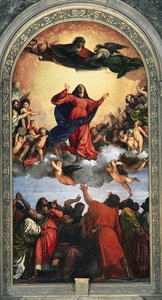
      Assumption of the Virgin

      1516 · Oil On Panel · Santa Maria Gloriosa dei Frari, Venice

      Titian’s monumental “Assumption of the Virgin,” completed between 1516 and 1518, isn't simply a painting; it is a breathtaking explosion of faith, color, and dynamic composition. Originally commissioned for the high altar of the Basilica di Santa Maria Gloriosa dei Frari in Venice – where it remains in situ today – this altarpiece cemented Titian’s position as one of Italy’s leading artists during the High Renaissance.

      Sacred and Profane Love (1514) by Titian
      3

      Sacred and Profane Love

      1514 · Oil On Canvas · Galleria Borghese, Rome

      In the grand tapestry of the Venetian Renaissance, few works capture the delicate tension between the earthly and the divine as poignantly as Titian’s Sacred and Profane Love. Completed around 1514, this breathtaking oil on canvas is far more than a mere pastoral scene; it is a profound meditation on the dual nature of human existence. As one gazes upon the two women seated by the ancient Roman sarcophagus, there…

      Bacchus and Ariadne (1523) by Titian
      4

      Bacchus and Ariadne

      1523 · Oil On Canvas · National Gallery, London

      Painted in 1523 by Titian (Tiziano Vecellio), this monumental artwork captures a pivotal moment from classical mythology – the encounter between Bacchus, the god of wine and revelry, and Ariadne, abandoned on the island of Naxos. More than just an illustration of a myth, it’s a vibrant exploration of passion, divine intervention, and the intoxicating power of emotion.

      Abduction of Europa (1562) by Titian
      5

      Abduction of Europa

      1562 · Acrylic On Canvas · Isabella Stewart Gardner Museum, Boston

      Titian Ramsay Peale II's "Abduction of Europa," completed in 1562, is not merely a depiction of a classical myth; it’s a vibrant testament to the artist’s deep engagement with Renaissance aesthetics and his unique perspective as an American painter. This monumental canvas, measuring 185 x 205 cm, transports us to a sun-drenched coastal scene brimming with both earthly drama and celestial grace. Peale skillfully blends elements of Venetian colorism –…

      The Feast of the Gods (1529) by Titian
      6

      The Feast of the Gods

      1529 · Oil On Canvas · National Gallery of Art, Washington

      A Bacchanal of Divine Revelry: Titian’s “The Feast of the Gods” Subject Matter: "The Feast of the Gods," painted in 1529 by the Venetian master Titian, captures a pivotal moment of unrestrained joy and sensual abandon. It depicts a gathering of gods and mortals indulging in a lavish feast within a verdant forest setting – a scene directly inspired by classical mythology, specifically the Bacchanals, frenzied celebrations dedicated to Dionysus,…

      Portrait of Emperor Charles V at Muhlberg by Titian
      7

      Portrait of Emperor Charles V at Muhlberg

      Oil On Canvas · Museo del Prado, Madrid

      A Triumph of Color and Calm: Titian’s Portrait of Emperor Charles V at Muhlberg The Portrait of Emperor Charles V at Muhlberg, executed between April and September 1548 by the Venetian maestro Titian Vecellio, transcends mere portraiture; it embodies the spirit of Renaissance grandeur and offers a profound meditation on power, victory, and serene contemplation. Commissioned by Mary of Austria, Queen of Hungary, this monumental oil-on-canvas painting swiftly ascended to…

      Concert Champetre by Titian
      8

      Concert Champetre

      Oil On Canvas

      A Harmonious Pastoral Masterpiece Immerse yourself in the timeless beauty of this captivating pastoral scene, where four figures gracefully interact within a lush landscape. The artwork exudes a sense of tranquility and classical elegance, reminiscent of Renaissance and Mannerist traditions. This enchanting composition is a testament to the artist's mastery, blending natural elements with human interaction in perfect harmony. Composition and Style The painting is divided into two distinct sections:…

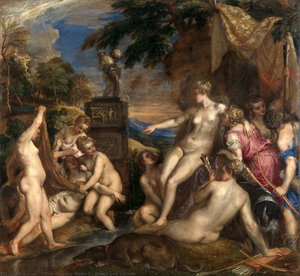
      Diana and Actaeon by Titian
      9

      Diana and Actaeon

      Oil On Canvas

      Immerse yourself in the dramatic world of Italian Renaissance mythology with this captivating depiction of the encounter between Diana and Actaeon. Painted circa 1556-1559 by the masterful Tiziano Vecellio (Titian), this work is a testament to his unparalleled skill in capturing both physical beauty and profound emotional intensity.

      The flaying of marsyas, state museum kromeriz by Titian
      10

      The flaying of marsyas, state museum kromeriz

      In the profound and harrowing depths of Titian’s masterpiece, The Flaying of Marsyas, we are not merely observers of a scene, but witnesses to a divine punishment that transcends time. This work, housed in the State Museum Kromeriz, captures one of the most brutal episodes from classical mythology: the moment the satyr Marsyas meets his gruesome end at the hands of Apollo. The composition is a masterclass in tension, where…

      More Titian canvases, 11 to 100

      Pesaros Madonna (1526) by Titian
      #11

      Pesaros Madonna

      1526 · Santa Maria Gloriosa dei Frari

      In the heart of Venice, within the hallowed walls of the Frari church, resides a masterpiece that does more than merely depict a religious event; it breathes with…

      Bring this light home →
      Venus in Front of the Mirror (1554) by Titian
      #12

      Venus in Front of the Mirror

      1554 · National Gallery of Art

      Titian Ramsay Peale II’s “Venus in Front of the Mirror,” completed in 1554, transcends mere visual representation; it embodies the spirit of the High Renaissance—a period defined by…

      Bring this light home →
      Pietà (1576) by Titian
      #13

      Pietà

      1576 · Gallerie dell'Accademia di Venezia

      In the twilight of the Venetian Renaissance, Tiziano Vecellio, known eternally as Titian, reached a pinnacle of emotional expression that few artists in history have ever matched. His…

      Bring this light home →
      Flora (1515) by Titian
      #14

      Flora

      1515 · Galleria degli Uffizi

      A Renaissance Echo in American Canvas: Exploring Titian Ramsay Peale II’s Flora Titian Ramsay Peale II stands as a singular figure within the burgeoning artistic landscape of 19th-century…

      Bring this light home →
      The Bacchanal of the Andrians (1524) by Titian
      #15

      The Bacchanal of the Andrians

      1524 · Museo del Prado

      Titian Ramsay Peale II’s “The Bacchanal of the Andrians,” completed around 1524, stands as a testament to the enduring influence of High Renaissance ideals within the burgeoning artistic…

      Bring this light home →
      Woman with a Mirror (1514) by Titian
      #17

      Woman with a Mirror

      1514 · The Louvre

      Titian’s "Woman with a Mirror," painted in 1514, isn't merely a portrait; it’s an intimate tableau brimming with psychological depth and masterful execution. Within the Louvre’s hallowed halls,…

      Bring this light home →
      Tarquin and Lucretia 1 by Titian
      #18

      Tarquin and Lucretia 1

      Fitzwilliam Museum

      The scene captures a visceral struggle within the shadowed confines of a bedroom. A man, driven by predatory intent, reaches over a woman reclining upon a bed. Her…

      Order this canvas →
      Penitent St Mary Magdalene (1565) by Titian
      #20

      Penitent St Mary Magdalene

      1565 · Hermitage Museum

      In the quiet, shadowed corners of art history, few images resonate with as much profound spiritual weight as Tiziano Vecellio’s Penitent St Mary Magdalene. Created around 1565, this…

      Have it painted by hand →
      The Fall of Man (1550) by Titian
      #21

      The Fall of Man

      1550 · Museo del Prado

      A Baroque Vision of Original Sin: Titian Ramsey Peale II’s “The Fall of Man” Titian Ramsey Peale II's "The Fall of Man" (1550) is a powerful and dramatic…

      Have it painted by hand →
      The Tribute Money (1516) by Titian
      #22

      The Tribute Money

      1516 · Gemäldegalerie

      To stand before Titian’s The Tribute Money is to witness a pivotal moment where the earthly and the divine collide through the masterful application of color. Painted in…

      Order this canvas →
      The Beauty (1536) by Titian
      #23

      The Beauty

      1536 · Palazzo Pitti

      “The Beauty,” painted in 1536 by the remarkably prescient Titian Ramsay Peale II, is more than a portrait; it’s a carefully constructed echo of Venetian High Renaissance ideals…

      Bring this light home →
      Diana and Callisto (1559) by Titian
      #24

      Diana and Callisto

      1559 · Kunsthistorisches Museum

      A Venetian Echo in American Canvas: Examining Titian Ramsay Peale II’s “Diana and Callisto” Titian Ramsay Peale II stands as a singular figure within the burgeoning artistic landscape…

      Order this canvas →
      Man with a Glove (1520) by Titian
      #25

      Man with a Glove

      1520 · The Louvre

      Titian Ramsay Peale II's "Man with a Glove," painted in 1520, is not merely a portrait; it’s a captivating enigma wrapped in the rich textures and dramatic lighting…

      Have it painted by hand →
      Assumption of the Virgin (1516) by Titian
      #26

      Assumption of the Virgin

      1516 · Santa Maria Gloriosa dei Frari

      Titian’s “Assumption of the Virgin,” completed in 1516 for the Basilica di Santa Maria Gloriosa dei Frari in Venice, remains a monumental achievement of the High Renaissance. This…

      Order this canvas →
      Diana and Actaeon (1559) by Titian
      #28

      Diana and Actaeon

      1559 · National Gallery

      In the breathtaking canvas of Diana and Actaeon, we are thrust into a pivotal moment of mythological tension, where the sacred meets the mortal with startling intensity. The…

      Have it painted by hand →
      The Supper at Emmaus (1560) by Titian
      #29

      The Supper at Emmaus

      1560 · The Louvre

      Titian’s “Supper at Emmaus,” a painting steeped in the profound drama of the Gospels, isn't merely a depiction of a biblical scene; it’s an invitation into a moment…

      Order this canvas →
      Assumption of the Virgin (1518) by Titian
      #30

      Assumption of the Virgin

      1518 · Santa Maria Gloriosa dei Frari

      Titian Ramsay Peale II's "Assumption of the Virgin," completed in 1818, is more than simply a depiction of a pivotal religious event; it’s a profound meditation on faith,…

      Have it painted by hand →
      Martyrdom of St Lawrence (1548) by Titian
      #31

      Martyrdom of St Lawrence

      1548 · Monasterio de San Lorenzo

      Tiziano Vecellio’s “Martyrdom of St. Lawrence,” painted in 1548, isn't merely a depiction of religious suffering; it’s a visceral experience. Commissioned by the powerful Emperor Charles V, this…

      Order this canvas →
      Sisyphus (1548) by Titian
      #32

      Sisyphus

      1548 · Museo del Prado

      In the grand tapestry of the Italian Renaissance, few images resonate with as much raw, visceral power as Tiziano Vecellio’s Sisyphus. Created around 1548, this oil on canvas…

      Have it painted by hand →
      Salome (1515) by Titian
      #33

      Salome

      1515

      Tiziano Vecellio’s “Salome,” painted in 1515, is more than just a portrait; it's an immersion into the heart of Renaissance Venice – a city pulsating with artistic innovation…

      Bring this light home →
      Christ Carrying the Cross (1565) by Titian
      #34

      Christ Carrying the Cross

      1565 · Museo del Prado

      Tiziano Vecellio's "Christ Carrying the Cross," painted in 1565, isn’t merely a depiction of a biblical scene; it’s an immersive experience. This monumental oil on canvas, currently residing…

      Bring this light home →
      An Allegory of Prudence (1550) by Titian
      #35

      An Allegory of Prudence

      1550 · National Gallery

      An Allegory of Prudence: A Venetian Echo in American Art “An Allegory of Prudence,” painted by Titian Ramsay Peale II in 1550, stands as a remarkable testament to…

      Have it painted by hand →
      Head of a Man (1509) by Titian
      #37

      Head of a Man

      1509 · Kelvingrove Art Gallery and Museum

      The Head of a Man, painted by the renowned artist Tiziano Vecellio (Titian) in 1509, is an exquisite example of Renaissance art. This oil on canvas painting measures…

      Order this canvas →
      Diana and Actaeon (1556) by Titian
      #38

      Diana and Actaeon

      1556 · National Gallery

      Titian Ramsey Peale II’s Diana and Actaeon stands as a cornerstone of High Renaissance art—a dramatic depiction of Greek mythology that transcends mere visual representation to convey profound…

      Bring this light home →
      Portrait of Benedetto Varchi (1540) by Titian
      #39

      Portrait of Benedetto Varchi

      1540 · Kunsthistorisches Museum

      Tiziano Vecellio's 1540 portrait of Benedetto Varchi is more than simply a likeness; it’s a carefully constructed window into the heart of the Italian Renaissance. This painting, currently…

      Bring this light home →
      St Mary Magdalene (1567) by Titian
      #41

      St Mary Magdalene

      1567 · Museo di Capodimonte

      Titian’s “St Mary Magdalene,” painted around 1567, is not merely a devotional image; it's a profound exploration of faith, repentance, and the enduring power of divine grace. This…

      Order this canvas →
      Woman in a Fur Coat (detail) (1536) by Titian
      #42

      Woman in a Fur Coat (detail)

      1536 · Kunsthistorisches Museum

      In the heart of the Venetian Renaissance, where the light of the Adriatic meets the opulence of merchant wealth, Tiziano Vecellio—known eternally as Titian—crafted a masterpiece that transcends…

      Order this canvas →
      The Tribute Money (1516) by Titian
      #43

      The Tribute Money

      1516 · Staatliche Kunstsammlungen

      To stand before Titian’s The Tribute Money is to witness a pivotal moment where the earthly and the divine collide through the masterful application of color. Painted in…

      Bring this light home →
      The Red Sultana (1550) by Titian
      #44

      The Red Sultana

      1550

      To gaze upon Titian’s “The Red Sultana” is to be transported directly into the heart of the High Renaissance, an era where the air in Venice seemed thick…

      Have it painted by hand →
      Spain Succouring Religion (1575) by Titian
      #45

      Spain Succouring Religion

      1575 · Museo del Prado

      In the twilight of his illustrious career, the Venetian master Tiziano Vecellio, known eternally as Titian, delivered one of his most profound allegorical statements: Spain Succouring Religion. Created…

      Have it painted by hand →
      Tityus (1548) by Titian
      #46

      Tityus

      1548 · Museo del Prado

      Tiziano Vecellio's "Tityus," painted in 1548, isn’t merely a depiction of a Greek myth; it’s a profound meditation on suffering, divine justice, and the inescapable consequences of arrogance.…

      Order this canvas →
      St Nicholas (1563) by Titian
      #47

      St Nicholas

      1563 · San Sebastiano

      In the hallowed atmosphere of the Cologne Cathedral, there exists a window into the late Renaissance—a moment where the spiritual and the earthly converge through the brush of…

      Have it painted by hand →
      Bacchus and Ariadne (detail) (1520) by Titian
      #48

      Bacchus and Ariadne (detail)

      1520 · National Gallery

      Titian's "Bacchus and Ariadne," painted in 1520, isn’t merely a depiction of a classical myth; it’s an immersive experience—a vibrant testament to the Venetian master’s unparalleled ability to…

      Have it painted by hand →
      Crucifixion (1558) by Titian
      #49

      Crucifixion

      1558 · Museo Civico

      Tiziano Vecellio's "Crucifixion," completed in 1558 and currently residing within the sanctuary of San Domenico in Ancona, Italy, is not merely a depiction of a biblical event; it’s…

      Order this canvas →
      Sacred and Profane Love (detail) (1514) by Titian
      #50

      Sacred and Profane Love (detail)

      1514 · Galleria Borghese

      In the heart of the Venetian Renaissance, a period defined by an explosion of artistic brilliance, Tiziano Vecellio—known universally as Titian—crafted a masterpiece that transcends the boundaries of…

      Have it painted by hand →
      Portrait of Ariosto (1508) by Titian
      #51

      Portrait of Ariosto

      1508 · National Gallery

      In the quiet corridors of the National Gallery in London, there exists a window into the soul of the High Renaissance: Titian’s Portrait of Ariosto. Painted around 1508,…

      Order this canvas →
      Noli me Tangere (1514) by Titian
      #52

      Noli me Tangere

      1514 · National Gallery

      Titian Ramsay Peale II's “Noli Me Tangere,” painted in 1514, is more than just a religious depiction; it’s a poignant meditation on faith, trust, and the delicate boundaries…

      Have it painted by hand →
      Adam and Eve (1550) by Titian
      #54

      Adam and Eve

      1550 · Museo del Prado

      In the hallowed halls of the Museo del Prado, there exists a canvas that does more than merely depict a biblical scene; it breathes with the very pulse…

      Order this canvas →
      Portrait of Jacopo Strada (1568) by Titian
      #58

      Portrait of Jacopo Strada

      1568 · Kunsthistorisches Museum

      Portrait of Jacopo Strada The Portrait of Jacopo Strada, painted by the renowned artist Titian Ramsey Peale II, is a captivating piece that showcases the artist's skill and…

      Order this canvas →
      The Trinity in Glory (1552) by Titian
      #60

      The Trinity in Glory

      1552 · Museo del Prado

      In the grand tapestry of the Venetian Renaissance, few works command the soul with such overwhelming splendor as Titian’s "The Trinity in Glory." Completed in 1552, this monumental…

      Bring this light home →
      Girl with a Fan (1556) by Titian
      #61

      Girl with a Fan

      1556 · Gemäldegalerie

      In the hallowed halls of the Gemäldegalerie Dresden, there exists a window into the soul of the High Renaissance, a luminous canvas that captures the very essence of…

      Order this canvas →
      Nicolò Zen (1515-1565) (1562) by Titian
      #66

      Nicolò Zen (1515-1565)

      1562 · Kingston Lacy

      In this three-quarter-length portrait, we encounter Nicolò Zen, a man whose very posture suggests the weight of his station. He is positioned slightly off-center, his gaze directed toward…

      Bring this light home →
      Self-Portrait (detail) (1566) by Titian
      #67

      Self-Portrait (detail)

      1566 · Museo del Prado

      Tiziano Vecellio, universally known as Titian, possessed an unparalleled ability to capture the essence of his subjects – a gift that resonated throughout his extraordinarily long and influential…

      Have it painted by hand →
      Flora (detail) (1515) by Titian
      #70

      Flora (detail)

      1515 · Galleria degli Uffizi

      Titian’s Flora (detail), painted in 1515 and currently residing within the hallowed halls of the Galleria degli Uffizi, is more than simply a portrait; it's an exquisitely rendered…

      Bring this light home →
      Ecce Homo (1547) by Titian
      #71

      Ecce Homo

      1547 · Condé Museum

      A single man occupies the center of this somber space, his body bathed in a directional light that emerges from the upper left. He is a muscular, bearded…

      Bring this light home →
      The Death of Actaeon (1559) by Titian
      #77

      The Death of Actaeon

      1559 · National Gallery

      The Death of Actaeon - A Dramatic Echo of Classical Myth Titian Ramsey Peale II’s “The Death of Actaeon” transcends mere depiction; it embodies the very essence of…

      Order this canvas →
      Madonna Aldobrandini (1530) by Titian
      #78

      Madonna Aldobrandini

      1530 · National Gallery

      Created in 1530 by the masterful Titian (Tiziano Vecellio), this iconic painting embodies the grace and emotional depth characteristic of the High Renaissance. More than a religious depiction,…

      Have it painted by hand →
      Adoration of the Magi (1560) by Titian
      #79

      Adoration of the Magi

      1560 · Cleveland Museum of Art

      The scene unfolds in a divided world. On the left, a shadowed stable holds the Holy Family in an intimate, quiet darkness. The Virgin Mary sits draped in…

      Order this canvas →
      The Healing of the Wrathful Son (1511) by Titian
      #80

      The Healing of the Wrathful Son

      1511 · Scuola del Santo

      Titian's "The Healing of the Wrathful Son," painted in 1511, isn’t merely a depiction of a miraculous event; it’s a profound meditation on compassion, faith, and the transformative…

      The Music Lesson (1535) by Titian
      #81

      The Music Lesson

      1535 · National Gallery

      Five figures are gathered around a musical performance, their attention anchored by the shared focus of the melody. The composition is tightly cropped, pulling the viewer into an…

      Have it painted by hand →
      Danaë with a Nurse (1553) by Titian
      #82

      Danaë with a Nurse

      1553 · Museo del Prado

      In the hallowed corridors of the Museo del Prado, there exists a canvas that does more than merely depict a myth; it breathes with the warmth of life…

      Order this canvas →
      The Burial of Christ (1572) by Titian
      #84

      The Burial of Christ

      1572 · Museo del Prado

      A diagonal composition directs the eye from the pale, slumped figure of Christ in the lower left toward the expressive mourners on the right. The scene captures the…

      Have it painted by hand →
      Portrait of a Woman (1560) by Titian
      #85

      Portrait of a Woman

      1560 · Museo del Prado

      Step closer to observe the quiet dignity of this sitter. She sits before us in a three-quarter length pose, her gaze steady and direct, meeting yours with an…

      Order this canvas →
      Charles V Standing with His Dog (1533) by Titian
      #87

      Charles V Standing with His Dog

      1533 · Museo del Prado

      Titian’s “Charles V Standing with His Dog,” painted in 1533, is more than just a portrait; it's a carefully constructed statement about power, nobility, and the enduring bond…

      Order this canvas →
      King Philip II of Spain (1550) by Titian
      #88

      King Philip II of Spain

      1550 · Cincinnati Art Museum

      In this 1551 oil on canvas, Titian captures King Philip II of Spain seated in a moment of heavy stillness. The monarch, the son of Emperor Charles V,…

      Order this canvas →
      Venus Anadyomene (1520) by Titian
      #89

      Venus Anadyomene

      1520 · National Gallery of Scotland

      Titian’s “Venus Anadyomene,” painted around 1520, isn't merely a depiction of the goddess; it’s an embodiment of Renaissance ideals—a vibrant celebration of beauty, mythology, and the mastery of…

      Have it painted by hand →
      The Temptation of Christ (1520) by Titian
      #90

      The Temptation of Christ

      1520 · Minneapolis Institute of Art

      The air in the painting feels heavy, thick with the silence of the wilderness. A central figure, Christ, sits caught in a moment of profound internal weight. His…

      Have it painted by hand →
      Assumption of the Virgin (detail) (1516) by Titian
      #91

      Assumption of the Virgin (detail)

      1516 · Santa Maria Gloriosa dei Frari

      A Celestial Ascent: Examining Titian’s Assumption of the Virgin The Venetian Renaissance flourished under the patronage of wealthy families like the Doges, fostering an environment where artistic ambition…

      Order this canvas →
      Venus with a Mirror (1555) by Titian
      #94

      Venus with a Mirror

      1555 · National Gallery of Art

      A Glimpse into Venetian Grandeur: Exploring Titian’s Venus with a Mirror Titian Vecellio, universally recognized as the Venetian Titan, wasn't merely an artist; he was a force of…

      Bring this light home →
      Saint John the Baptist (1550) by Titian
      #97

      Saint John the Baptist

      1550 · Museo del Prado

      A single male figure occupies the center of this vertical oil painting. He is positioned slightly off-center against a backdrop of rugged, rocky terrain. The man possesses an…

      Order this canvas →
      Salome (1550) by Titian
      #98

      Salome

      1550 · Norton Simon Museum

      The composition centers on the visceral proximity of two female figures, their forms emerging from a dark, atmospheric void. One figure, draped in crimson, holds the pale, severed…

      Bring this light home →

      Titian's canvases, period by period

      What Titian painted most

      The four subjects that return most often on these canvases, each with its best-loved example.

      Where Titian's canvases hang

      The 8 museums that hold the most of the paintings on this page.

      Museum City Works by Titian Paintings from this list
      Museo del Prado, MadridMuseo del Prado Madrid 68 Portrait of Emperor Charles V at Muhlberg, The Bacchanal of the Andrians, The Fall of Man
      National Gallery, LondonNational Gallery London 44 Bacchus and Ariadne, Allegory of Time Governed by Prudence, Diana and Actaeon
      Santa Maria Gloriosa dei Frari, VeniceSanta Maria Gloriosa dei Frari Venice 16 Assumption of the Virgin, Pesaros Madonna, Assumption of the Virgin
      National Gallery of Art, WashingtonNational Gallery of Art Washington 22 The Feast of the Gods, Venus in Front of the Mirror, Venus with a Mirror
      Kunsthistorisches Museum, ViennaKunsthistorisches Museum Vienna 41 Diana and Callisto, Portrait of Benedetto Varchi, Woman in a Fur Coat (detail)
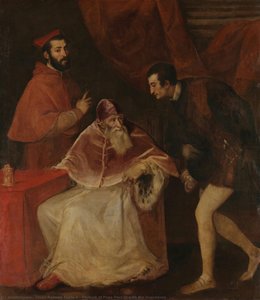
      Museo di Capodimonte, NaplesMuseo di Capodimonte Naples 22 Portrait of Pope Paul III with His Grandsons, St Mary Magdalene, Pope Paul III with his Grandsons Alessandro and Ottavio Farnese (detail)
      The Louvre, ParisThe Louvre Paris 19 Woman with a Mirror, Man with a Glove, The Supper at Emmaus
      Galleria degli Uffizi, FlorenceGalleria degli Uffizi Florence 22 The Venus of Urbino, Flora, Flora (detail)

      Titian's best-loved canvas of each decade

      1. 1500s
        Head of a Man (1509) by Titian
        37 of 100

        Head of a Man

        Age 10 – 19 · Kelvingrove Art Gallery and Museum

        The Head of a Man, painted by the renowned artist Tiziano Vecellio (Titian) in 1509, is an exquisite example of Renaissance art. This oil on canvas painting measures…

      2. 1510s
        Assumption of the Virgin (1516) by Titian
        Canvas 2 of 100

        Assumption of the Virgin

        Age 20 – 29 · Santa Maria Gloriosa dei Frari

        Titian’s monumental “Assumption of the Virgin,” completed between 1516 and 1518, isn't simply a painting; it is a breathtaking explosion of faith, color, and dynamic composition. Originally commissioned…

      3. 1520s
        Bacchus and Ariadne (1523) by Titian
        Canvas 4 of 100

        Bacchus and Ariadne

        Age 30 – 39 · National Gallery

        Painted in 1523 by Titian (Tiziano Vecellio), this monumental artwork captures a pivotal moment from classical mythology – the encounter between Bacchus, the god of wine and revelry,…

      4. 1530s
        The Venus of Urbino (1538) by Titian
        Ranked 1 of 100

        The Venus of Urbino

        Age 40 – 49 · Galleria degli Uffizi

        Titian’s Venus of Urbino (1538) remains one of the most celebrated and influential paintings in Western art history. This iconic depiction of a reclining nude transcends mere portraiture,…

      5. 1540s
        Portrait of Pope Paul III with His Grandsons (1545) by Titian
        Canvas 19 of 100

        Portrait of Pope Paul III with His Grandsons

        Age 50 – 59 · Museo di Capodimonte

        Titian Ramsay Peale II's “Portrait of Pope Paul III with His Grandsons,” though conceived in the mid-16th century by the master Venetian painter Titian, offers a captivating glimpse…

      6. 1550s
        Venus in Front of the Mirror (1554) by Titian
        Ranked 12 of 100

        Venus in Front of the Mirror

        Age 60 – 69 · National Gallery of Art

        Titian Ramsay Peale II’s “Venus in Front of the Mirror,” completed in 1554, transcends mere visual representation; it embodies the spirit of the High Renaissance—a period defined by…

      7. 1560s
        Abduction of Europa (1562) by Titian
        5 of 100

        Abduction of Europa

        Age 70 – 79 · Isabella Stewart Gardner Museum

        Titian Ramsay Peale II's "Abduction of Europa," completed in 1562, is not merely a depiction of a classical myth; it’s a vibrant testament to the artist’s deep engagement…

      8. 1570s
        Pietà (1576) by Titian
        Ranked 13 of 100

        Pietà

        Age 80 – 86 · Gallerie dell'Accademia di Venezia

        In the twilight of the Venetian Renaissance, Tiziano Vecellio, known eternally as Titian, reached a pinnacle of emotional expression that few artists in history have ever matched. His…

      About Titian's canvases: your questions answered

      What is the best-known painting by Titian?Read the answer

      The Venus of Urbino (1538), Galleria degli Uffizi, Florence. Assumption of the Virgin (1516) and Sacred and Profane Love (1514) follow.

      What age was Titian when The Venus of Urbino was painted?Read the answer

      Titian, born in 1490, was 48 years old: The Venus of Urbino dates from 1538.

      What are the 10 most famous paintings by Titian?Read the answer

      The Venus of Urbino, Assumption of the Virgin, Sacred and Profane Love, Bacchus and Ariadne, Abduction of Europa, The Feast of the Gods, Portrait of Emperor Charles V at Muhlberg, Concert Champetre, Diana and Actaeon and The flaying of marsyas, state museum kromeriz. Each canvas in the ranking above comes with its year and its museum.

      How many works did Titian paint in all?Read the answer

      953 works by Titian are in our catalogue, dated 1508 to 1576.

      Where can I see Titian's most famous canvases?Read the answer

      Mostly in Museo del Prado (Madrid), National Gallery (London) and Santa Maria Gloriosa dei Frari (Venice); the list above names each museum and its canvases.

      When did Titian paint the best-loved canvases?Read the answer

      In 1510s, which gave 19 of the 100 works on this page, Assumption of the Virgin among them.

      Which are Titian's earliest and latest famous canvases?Read the answer

      The earliest canvas here is Portrait of Ariosto (1508); the latest is Pietà (1576).

      What did Titian paint most often?Read the answer

      Mythology (20), Portraiture (16) and Man (13), across the 100 works on this page.

      Which medium did Titian paint in most often?Read the answer

      Oil On Canvas, used in 80 of the 100 works on this page.

      Which movement is Titian's painting part of?Read the answer

      High renaissance, as the canvases on this page show.

      Which Titian canvases hang at the Museo del Prado?Read the answer

      The Museo del Prado, Madrid holds 19 of the works on this page, among them Portrait of Emperor Charles V at Muhlberg, The Bacchanal of the Andrians and The Fall of Man.

      Can I buy a reproduction of a Titian canvas?Read the answer

      Yes. Every painting on this page can be ordered from its own page as an oil reproduction painted by hand, or as a fine art print, in the size you choose.

      Titian: a life in paint

      The Painter of Light and Shadow

      In the rugged, mountainous reaches of Pieve di Cadore, a boy named Tiziano Vecellio began a life that would eventually reshape the very language of oil on canvas. Born around 1490, he was the son of Gregorio Vecellio, a man of the military, and a woman named Lucia. The family lived in a region where the dramatic peaks of the Venetian Alps cast long, shifting shadows across the land, a landscape that perhaps whispered the secrets of light to a young mind. Recognizing the spark of talent in her sons, the family looked toward the great city of Venice, arranging for young Tiziano and his brother Francesco to enter the workshops of the masters. This move from the quiet mountains to the bustling, salt-scented canals of Venice changed everything.

      His early years were spent absorbing the atmosphere of a city that pulsed with trade and color. He first learned his craft under Sebastiano Zuccato, a mosaicist, before moving into the circles of Gentile Bellini and his own brother, Giovanni. Yet, it was his time spent alongside Giorgione that truly defined his path. Together, they worked on the exterior frescoes for the Fondaco dei Tedeschi, a busy trading post for German merchants. In those early days, his brush sought a certain lyricism, a way to capture the air itself through subtle tones and a gentle, poetic touch.

      The Evolution of a Venetian Style

      As the years passed, the soft, ethereal qualities of his youth gave way to something much more muscular and dramatic. He moved away from the quietude of his early training to embrace a bolder approach to color. His brushwork became a tool of immense power, shifting from smooth, blended surfaces to loose, expressive marks that seemed to pulse with life. He learned to layer thin glazes of pigment upon underpaintings, a technique that allowed him to achieve a luminosity that few could replicate. This was not merely about depicting a subject, but about capturing the weight of velvet, the glow of skin, and the very atmosphere surrounding a figure.

      His subjects were as varied as the people who walked the streets of Venice. He became a master of the portrait, capturing the psychological depth of his sitters, from the physical likeness of a man to the hidden character within. His mythological scenes and religious compositions were imbued with a sensuality and a tension that drew viewers in. In works like Venus of Urbino, he redefined how the human form was presented, using color to create a sense of presence that felt almost tactile. He was a man who understood that light does not just fall upon an object; it interacts with it, creating a drama of shadow and brilliance.

      A Life of Grandeur and Influence

      The fame of Tiziano Vecellio eventually reached the highest courts of Europe. He became a favorite of powerful men, serving as a painter to Emperor Charles V, King Philip II of Spain, and Pope Paul III. This high-level patronage allowed him to work on a monumental scale, creating massive canvases that filled the halls of palaces and the altars of great churches. He possessed a rare diplomatic finesse, adapting his style to suit the tastes of different royal courts while never losing the distinctive voice that made him a titan of his age.

      When he passed away in Venice in 1576, he left behind a legacy that would ripple through the centuries. His influence was felt by those who followed, from the heavy brushwork of Rubens to the dramatic light of Rembrandt and the bold strokes of Delacroix. He acted as a bridge between the High Renaissance and the coming Baroque era, proving that color could be just as expressive as line. His paintings remain in the great collections of the world, from the Prado in Madrid to the National Gallery in London, serving as a permanent record of a man who mastered the art of seeing.

      All 953 works by Titian →