A Poetic Vision of Edo Japan: The Life and Art of Utagawa Hiroshige
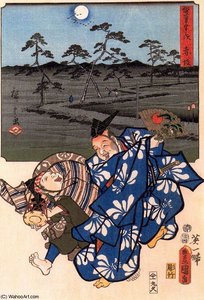
Utagawa Hiroshige, born Andō Tokutarō in 1797 in the bustling city of Edo (modern Tokyo), stands as a pivotal figure in the world of *ukiyo-e*, or “pictures of the floating world.” Though deeply rooted in the traditions of Japanese woodblock printing, Hiroshige transcended mere replication, imbuing his landscapes with a poetic sensibility that resonated profoundly both within Japan and, later, across the Western art world. His life unfolded during a period of relative peace and prosperity under the Tokugawa shogunate, yet also one marked by increasing social change and eventual westernization – forces that would ultimately contribute to the decline of *ukiyo-e* even as they amplified Hiroshige’s enduring legacy. Initially destined for a more conventional path within a samurai family—his father served as a fire warden—Hiroshige's artistic inclinations led him to apprenticeship under Utagawa Toyohiro, a master of the Utagawa school. This proved a crucial turning point, steering him away from the popular depictions of courtesans and actors favored by many *ukiyo-e* artists toward a focus on landscape, a genre he would ultimately redefine.
From Genre Scenes to Evocative Landscapes
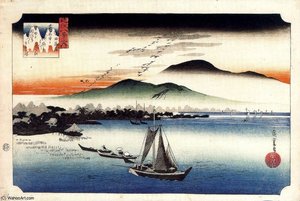
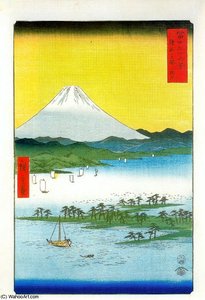
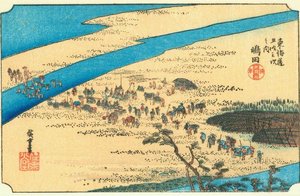
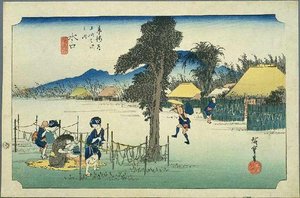
Hiroshige’s early work adhered to the conventions of his school, featuring portraits and scenes from daily life. However, it was his embrace of landscape that truly distinguished him. Influenced by earlier masters like Hokusai—whose *Thirty-six Views of Mount Fuji* had already captivated audiences—Hiroshige developed a unique style characterized by atmospheric perspective, subtle color palettes, and a profound sensitivity to the changing seasons. He didn’t merely depict places; he evoked their mood, capturing the essence of a particular moment in time. The series *The Fifty-three Stations of the Tōkaidō* (1833–1834), perhaps his most celebrated achievement, exemplifies this approach. This monumental work documented the journey along the Tōkaidō road, the main route connecting Edo to Kyoto, not as a straightforward travelogue but as a series of evocative vignettes—a sudden rain shower at Shono, a distant view of Mount Fuji from Kanaya, the bustling activity at Odawara. Each print is imbued with a sense of transience and quiet beauty, inviting viewers to experience the journey alongside the travelers. He masterfully employed *bokashi*, a technique involving multiple impressions to create subtle gradations of color, adding depth and atmosphere to his compositions.
A Master of Atmosphere and Technique
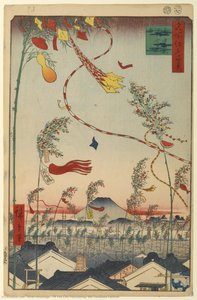
Hiroshige’s technical skill was as remarkable as his artistic vision. He wasn't simply interested in accurate representation; he sought to capture the *feeling* of a place. His use of color, though often restrained compared to some of his contemporaries, was crucial in achieving this effect. He frequently employed multiple blocks for a single color, allowing him to create nuanced shades and atmospheric effects that were incredibly difficult to replicate. The delicate washes of blue in his depictions of rain or mist, the warm hues of autumn foliage—these weren’t accidental; they were carefully considered elements designed to evoke specific emotions and sensations. Beyond *bokashi*, Hiroshige was adept at utilizing blank space – *ma* – a concept central to Japanese aesthetics, allowing areas of the print to “breathe” and enhancing the overall sense of tranquility. His series *One Hundred Famous Views of Edo* (1856–1858) further showcased his mastery, offering intimate glimpses into the life and landscapes of his beloved city.
The Enduring Legacy: Japonisme and Beyond
Though the *ukiyo-e* tradition began to wane after Hiroshige’s death in 1858—a decline accelerated by the Meiji Restoration and the subsequent influx of Western culture—his influence on the art world proved remarkably enduring. In the late 19th century, Japanese prints flooded Europe, sparking a phenomenon known as *Japonisme*. Artists like Édouard Manet, Claude Monet, and Edgar Degas were captivated by the bold compositions, flattened perspectives, and unconventional color schemes of *ukiyo-e*, incorporating these elements into their own work. Vincent van Gogh was particularly enthralled with Hiroshige’s prints, creating copies of several, including “Plum Park in Kameido,” demonstrating his deep admiration for the Japanese master's use of color and composition. Hiroshige’s influence extended beyond painting; it can be seen in architecture, design, and even literature. Today, Utagawa Hiroshige is remembered not only as a brilliant artist but also as a cultural ambassador who helped bridge the gap between East and West, leaving an indelible mark on the history of art. His serene landscapes continue to inspire awe and contemplation, reminding us of the beauty and transience of the natural world.
Notable Works
The Fifty-three Stations of the Tōkaidō: Hiroshige’s most famous series, depicting the journey along the main road between Edo and Kyoto.
One Hundred Famous Views of Edo: A captivating portrayal of life and landscapes in his beloved city.
Influence on Vincent van Gogh's Japonaiserie Series: Including “Flowering Plum Tree after Hiroshige,” demonstrating Van Gogh’s deep admiration for the Japanese master.
By the TopImpressionists.com Editorial Team
A little quiz
There is only one correct answer for each question.
Question 1:
Utagawa Hiroshige is considered the last great master of what traditional Japanese art form?
Question 2:
Which series is Utagawa Hiroshige most known for?
Question 3:
How did Hiroshige's approach to landscape prints differ from Hokusai’s?
Question 4:
What artistic technique did Hiroshige frequently employ to create unique visual effects in his prints?
Question 5:
Which Western art movement was significantly influenced by Hiroshige’s work?
What are the birthplace and birth year of Utagawa Hiroshige?
Utagawa Hiroshige was born in Edo in 1797.
When did Utagawa Hiroshige die?
Utagawa Hiroshige died in 1858, at about 61 years old.
What art movement did Utagawa Hiroshige belong to?
Utagawa Hiroshige is associated with the Ukiyo-e movement.
What subjects did Utagawa Hiroshige paint most?
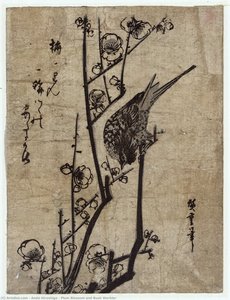
The most frequent subjects in Utagawa Hiroshige's artworks listed here are animals, landscape and edo period. See the subjects Utagawa Hiroshige painted.
Where can I order a Utagawa Hiroshige reproduction?