A Living Organism of Creativity: The Heart of Modernity
Nestled within the vibrant pulse of Paris, the Centre Pompidou stands not merely as a museum but as a bold declaration—a testament to the audacious belief that art could thrive beyond the husenced reverence of traditional galleries. Designed by the visionary architectural partnership of Richard Rogers, Renzo Piano, and Gianfranco Franchini, this iconic structure irrevocably altered our perception of what a cultural institution should embody. It is a dynamic organism pulsating with creativity, inviting visitors to engage with art in its most raw and unfiltered form. The genesis of this landmark lay in the ambitious desire to revitalize the historic Beaubeau district, transforming it into a thriving hub of artistic expression and intellectual discourse that continues to resonate across the globe today.
What truly distinguishes the Centre Pompidou is its revolutionary architectural philosophy—the “inside-out” design. Rejecting the traditional museum façade that concealed its inner workings, the building deliberately exposes its structural elements, such as pipes, ducts, and escalators, on the exterior. This daring gesture was a profound statement about transparency, accessibility, and the celebration of industrial engineering. The exposed infrastructure became an integral part of the building's aesthetic, transforming what could have been a cold, utilitarian space into a vibrant, engaging spectacle. As one ascends through its soaring atrium, bathed in natural light filtering through the glazed façade, the spirit of experimentation and boldness that characterizes both art and architecture becomes palpably felt.
A Tapestry of Modern Masterpieces
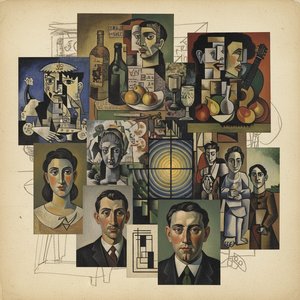
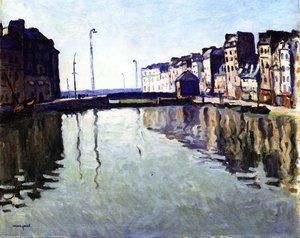
At its core resides the Musée National d’Art Moderne (MNAM) , a sprawling panorama encompassing one of Europe’s most comprehensive collections of modern and contemporary art. To step through its doors is to enter a living chronicle of artistic movements. One might find themselves lost in the explosive color palettes of Matisse or confronted by the fractured geometries of Cubism. The collection’s breadth ensures that every visit offers a fresh perspective, sparking dialogue and igniting the imagination through a rich tapestry of voices. From the Fauvist splashes that shattered conventional representation to the conceptual explorations that redefined art itself, the museum champions both established titans and the avant-garde.
For the collector and the connoisseur, the treasures housed within are unparalleled. The halls echo with the monumental canvases of Monet, Cézanne, and Picasso , while the raw energy of Pollock and the haunting presence of Bacon provide a profound emotional depth. The collection further explores the boundaries of the medium through the pop imagery of Warhol , the heavy textures of Kiefer , and the monumental presence of Rothko . This vast repository does not simply store art; it breathes life into the history of human expression, making it an essential pilgrimage for anyone seeking to understand the evolution of the modern soul.
A Multifaceted Cultural Ecosystem
The significance of the Centre Pompidou extends far beyond its impressive collection and groundbreaking architecture. It functions as a truly multifaceted cultural complex, seamlessly integrating a vast public library, the Bibliothèque publique d’information , with IRCAM —a world-renowned centre for music and acoustic research. This interconnectedness fosters an extraordinary creative synergy, bringing together artists, musicians, researchers, and the public in an environment conducive to innovation and exchange. It is a place where serendipitous encounters occur, and where the cross-pollination of ideas becomes the standard rather than the exception.
As the institution looks toward the future, it continues to expand its global footprint and refine its sanctuary for art. Currently undergoing significant renovations slated for completion in 2030, the Centre Pompidou is revitalizing its spaces to ensure it remains at the forefront of contemporary culture. With new satellite ambitions stretching into South America and beyond, the museum reaffirms its commitment to democratizing access to art. Whether one is ascending to the rooftop terrace for breathtaking panoramic views of Paris or delving into the depths of its literary resources, the Centre Pompidou remains an enduring legacy—a place where the mechanics of creativity are laid bare for all to witness.