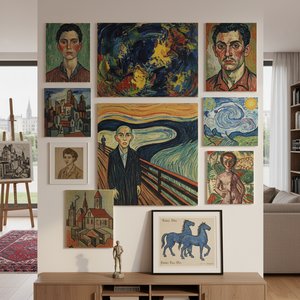
A Legacy of Passion: The Soul of Norwegian Art
In the heart of Bergen, where the mist often clings to the historic streets, lies a sanctuary of profound emotional depth and national pride: the Rasmus Meyer Collection. This is not merely a repository of canvases, but a living testament to the visionary spirit of industrialist Rasmus Meyer, whose singular devotion to his homeland’s creative pulse birthed one of Norway's most precious cultural treasures. To step into this collection is to embark on a journey through the "Golden Age" of Norwegian art, a period where the landscape was not just observed, but felt. The collection breathes with the vitality of an era defined by the search for identity, offering a window into a world where Romantic grandeur meets the intimate, psychological nuances of everyday life.
The true heartbeat of the museum, however, resides in its unparalleled connection to Edvard Munch. As one of the most significant repositories of his work, the collection allows visitors to trace the evolution of a master. From his formative explorations to the mature, hauntingly beautiful compositions that grapple with the universal themes of anxiety, mortality, and the human condition, Munch’s presence is overwhelming and transformative. Alongside his profound influence, the museum celebrates the luminous mastery of Harriet Backer. Her exquisite interior scenes serve as a masterclass in the manipulation of light and atmosphere, capturing the ethereal stillness of Bergen’s historic spaces with a precision that feels both grounded in reality and suspended in time.
Architectural Elegance and the KODE Connection
The experience of the Rasmus Meyer Collection is profoundly shaped by its architectural vessel. Housed within a structure designed by the esteemed architect Ole Landmark and completed in 1924, the building itself acts as a silent participant in the artistic dialogue. Landmark’s design was intentional, prioritizing the influx of natural light to ensure that every brushstroke and subtle color gradation is viewed in its most authentic context. This reverence for light creates an inviting, contemplative atmosphere, where the architecture fades into the background, allowing the art to command the viewer's full attention.
Beyond its individual walls, the collection is a vital organ of the larger KODE Bergen Kunstmuseum og Musikkhus ecosystem. As part of this dynamic cultural hub, the Rasmus Meyer Collection exists in a symbiotic relationship with the Bergen Picture Gallery and Troldhaugen—the legendary home of Edvard Munch. This interconnectedness offers a holistic immersion into Norway's artistic and musical heritage, inviting collectors and enthusiasts to traverse boundaries between disciplines. For the interior designer or the art lover seeking inspiration, the collection provides an endless well of texture, color, and historical narrative, making it an indispensable destination for anyone captivated by the enduring power of the Norwegian spirit.