Vista previa
 Compartir
 Compartir
 Ver detalles
 Guía
Guía

 Descargar
 Ver artículos similares
 Radiografía
 Presentación de diapositivas
 Estadísticas
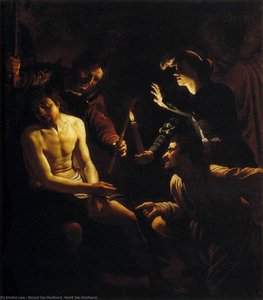
The Procuress


Admire Gerard van Honthorst’s ‘The Procuress,’ a dramatic 17th-century portrait showcasing chiaroscuro & Caravaggist style. Hand-painted reproduction available.
 Leer más
Descubre a Gerard van Honthorst (1590-1656), maestro del Siglo de Oro Neerlandés y figura clave del caravaggismo en Utrecht. Retratos, escenas bíblicas e influencia barroca.
Reproducción al óleo hecha a mano
Óleo sobre lienzo pintado a mano en el tamaño y marco de su elección, realizado por encargo por nuestros artistas. ( Cambiar a formato impreso Ver versión en imagen digital)




P118B €10

P118H €10

P118W €10

P438Z €10

P508JH €12

P508YH €12

P805H €10

P805Z €10

P919BZ €10

P919G €10

P919XJ €10

P959ZH €10

P968JZ €12

W106C €8

W218G €10

W218JH €8

W218Y €10

W307PJ €10

W316G €10

W316PJ €8

W316Y €10

W398PJ €8

W4111J €10

W500HY €15

W500JH €15

W692G €12

W849H €8

W940BG €15

W953PJ €8




Estándar
personalizado
CM
INCH
Elija entre nuestros tamaños predefinidos que respetan las proporciones originales de la obra.
Loading sizes...

ancho
altura
Type the width and the height you need, to fit your frame or your wall. This is hand-painted, so for a size with a different shape the artist can paint a bit more around the picture, or cut a bit — you choose. We send you a digital mockup to approve before the painting starts. The picture shown on this page does not show the real result — only the mockup does.
Ejemplos de lo que se puede personalizar: Reemplace el rostro con una foto del cliente; Agregue una mascota (por ejemplo, cambie un gato por un perro); Incluya un mensaje oculto en el fondo; Cambie el paisaje o los elementos del fondo.
Tras realizar el pedido, el equipo de TopImpressionists.com enviará un correo electrónico al cliente para solicitar instrucciones y proporcionarle una vista previa del boceto.
Tras realizar el pedido, el equipo de TopImpressionists.com enviará un correo electrónico al cliente para solicitar instrucciones y proporcionarle una vista previa del boceto.
Envío a todo el mundo () en 3-4 semanas en lugar de las 5 semanas estándar. (14 octubre). Sin comprometer la calidad.

Envío exprés gratuito a todo el mundo

Lienzo de lino de alta calidad

Seguro de envío completo

Garantía de reembolso de impuestos aduaneros

Garantía de fidelidad cromática exacta

Política de devolución de 100 días (solo por defectos)

Garantía de devolución del 100% del dinero

Oferta por volumen
 La opción de vidrio solo está disponible en tamaños inferiores a 110 cm.

The Procuress
Técnica de reproducción
Tamaño de la reproducción
-


Precio total
€ 233
A Nocturnal Drama Unveiled
In the flickering glow of an unseen flame, Gerard van Honthorst’s The Procuress invites the viewer into a clandestine world of whispered secrets and moral ambiguity. Painted in 1625, this masterpiece serves as a breathtaking testament to the Dutch Golden Age, capturing a moment of theatrical tension that feels almost voyeuristic. The scene unfolds within a dimly lit interior, where the boundaries between light and shadow are not merely stylistic choices but narrative protagonists. As one gazes upon the composition, the eye is immediately drawn to the interplay of figures: a young woman with a provocative allure, an older woman acting as the intermediary, and a man whose presence suggests a transaction of much more than mere currency. It is a painting that does not just depict a scene; it breathes with the heavy, humid atmosphere of a Roman night.
The emotional resonance of the work lies in its ability to evoke a sense of palpable suspense. There is an intimacy here that borders on the uncomfortable, pulling the observer into a private encounter where social graces are stripped away by the raw necessity of desire and greed. For the collector or the lover of fine art, this piece offers more than just visual beauty; it provides a window into the psychological complexities of the human condition, making it an intellectually stimulating addition to any curated collection.
The Mastery of Tenebrism and Light
To understand The Procuress is to understand the genius of the man known as Gherardo delle Notti—Gerard of the Nights. Honthorst’s technical prowess is defined by his profound command of tenebrism, a technique characterized by violent contrasts between deep, impenetrable shadows and brilliant, localized highlights. Influenced heavily by the revolutionary Caravaggio, Honthorst mastered the art of "artificial lighting," where the light source—often a candle or a small lamp hidden from view—sculpts the figures out of the darkness. This method creates a sculptural quality in the flesh tones and a luxurious texture in the fabrics, from the shimmering silks to the heavy velvets.
The technique serves a dual purpose: it directs the viewer's gaze with surgical precision and heightens the dramatic stakes of the narrative. The way light catches the edge of a porcelain bowl or illuminates a seductive smile creates a rhythmic movement across the canvas, ensuring that the eye never rests too long on one spot but instead wanders through the shadows, searching for the next revelation. For interior designers, this dramatic use of chiaroscuro offers an unparalleled sense of depth and luxury, providing a focal point that can anchor a room with its profound architectural weight and classical elegance.
Symbolism and the Moral Landscape
Beyond its technical brilliance, The Procuress is a rich tapestry of social commentary and symbolic meaning. During the 17th century, such genre paintings often functioned as moralizing tales, warning against the vices of lust and avarice. The very title suggests a transaction of questionable morality, where the "matchmaker" facilitates encounters driven by passion and profit. Every element within the frame—the way a hand rests near a purse, the specific arrangement of objects on the table, and the suggestive glances exchanged between characters—contributes to a larger discourse on the fragility of virtue in an era of burgeoning mercantile wealth.
The painting captures the tension of the Dutch Golden Age, a period where unprecedented prosperity met deep-seated religious and ethical scrutiny. By bringing these themes into a domestic setting, Honthorst makes the high drama of morality accessible and intensely personal. Owning a reproduction of such a work is an opportunity to possess a piece of history that continues to provoke thought, offering a sophisticated layer of storytelling to any living space. It is a celebration of the shadows as much as the light, reminding us that the most compelling truths are often found in the dimmest corners of our existence.
Preguntas y respuestas
¿Con qué otros nombres se conoce a Gerard van Honthorst?
Otros nombres registrados para Gerard van Honthorst, creador de "The Procuress", incluyen Gerrit van Honthorst, Gherardo delle Notti, Gerard de las Noches.
¿De qué manera el estilo de "The Procuress" se relaciona con la época de su creador?
En "The Procuress" de Gerard van Honthorst, el movimiento Baroque se encuentra con la era Edad Moderna temprana.
¿Puedo examinar "The Procuress" con más detalle?
"The Procuress" puede examinarse capa por capa en la página Rayos X de la obra, un visor inspirado en una mesa de luz de restauración que ofrece once lecturas ópticas de la imagen.
Biografía del artista
Primeros años y formación
Gerrit van Honthorst, un destacado pintor del Siglo de Oro neerlandés, nació el 4 de noviembre de 1590 en Utrecht, Países Bajos. Era hijo de un pintor decorativo y inicialmente se formó bajo la tutela de su padre. Posteriormente, continuó su educación artística con Abraham Bloemaert.Carrera e influencias
La carrera temprana de Van Honthorst incluyó una visita a Roma, donde fue fuertemente influenciado por el estilo de Caravaggio. Esta influencia es evidente en sus obras posteriores, particularmente en su uso de escenas iluminadas artificialmente, lo que le valió el apodo de "Gherardo delle Notti" o "Gerard de las noches". Tras su regreso a los Países Bajos, Van Honthorst se convirtió en un retratista líder.Patronazgo y encargos notables
El trabajo de Van Honthorst tuvo una gran demanda, con notables patronos que incluyen a Vincenzo Giustiniani, quien lo encargó para pintar "Cristo ante el sumo sacerdote", ahora alojado en la National Gallery de Londres. También trabajó para Cosimo II de' Medici, Gran Duque de Toscana, y fue un favorito entre la República Neerlandesa y en el extranjero.Legado y vida posterior
En 1620, Van Honthorst regresó a Utrecht, donde construyó una considerable reputación. Para 1623, el año de su matrimonio, se había convertido en presidente del gremio de San Lucas en Utrecht. Su éxito llevó a recomendaciones por parte de Sir Dudley Carleton para el Conde de Arundel y Lord Dorchester.Obras clave y colaboraciones
- "La toma de Cristo", una obra colaborativa inicialmente atribuida a Van Honthorst, ahora reconocida como obra de otro artista.
- "Cristo ante el sumo sacerdote", encargado por Vincenzo Giustiniani, muestra la habilidad de Van Honthorst para capturar escenas iluminadas artificialmente.
- Colaboraciones con otros artistas, como Peter Paul Rubens, demuestran su influencia en el estilo barroco flamenco.
Movimiento artístico y estilo
Van Honthorst formó parte del movimiento de los utrecht caravaggisti, caracterizado por su uso de una iluminación dramática y una profundidad emocional intensa. Su obra refleja la influencia del barroco italiano, al mismo tiempo que contribuye al desarrollo del Siglo de Oro neerlandés.
Gerard van Honthorst
1590 - 1656 , Países Bajos
Datos clave
- Artistas Influenciados:
- Rembrandt van Rijn
- Georges de la Tour
- Artistas Que Influyeron:
- Caravaggio
- Abraham Bloemaert
- Fecha De Nacimiento: 4 de noviembre de 1590
- Lugar De Nacimiento: Utrecht, Países Bajos
- Movimiento Artístico: Caravaggismo Utrechtano
- Nacionalidad: Neerlandés
- Nombre Completo: Gerard van Honthorst
- Obras Notables:
- Cristo ante el sumo sacerdote
- La toma de Cristo
- Escenas nocturnas iluminadas
Artículos relacionados

Golden Light & Dutch Skies: The Timeless Magic of Dutch Golden Age Landscapes
Discover the breathtaking beauty of Dutch Golden Age landscapes. Explore the mastery of light, chiaroscuro, and 17th-century realism through an expert art history lens, celebrating the enduring legacy of the Dutch Masters for discerning collectors and art lovers.

Mastering Light and Shadow: The Chiaroscuro Revolution of Dutch Baroque Art
Explore the dramatic world of Dutch Baroque art. Discover how masters used chiaroscuro to revolutionize light and shadow, creating timeless psychological depth and texture in every canvas. A journey through the Golden Age for true art enthusiasts.

Mastering Light & Shadow: A Journey Through the Dutch Golden Age's Luminous Legacy
Embark on a cultural journey through the Dutch Golden Age. Explore the masterful interplay of light and shadow in 17th-century masterpieces, from Rembrandt to Vermeer, and discover how this era of profound realism continues to inspire fine art collectors today.
Explore obras de arte organizadas por temas, estilos y características.