

Se muestra: · Con su marco:
 Ver en contexto

 Enviar
 Compartir
 Detalles
 Guía


 Descargar
 Similares
 Radiografía
 Presentación de diapositivas
 Preguntas y respuestas
 Estadísticas


€ 240
Reproducción al óleo hecha a mano
Óleo sobre lienzo pintado a mano en el tamaño y marco de su elección, realizado por encargo por nuestros artistas. ( Cambiar a impresiones Cambiar a imagen digital)
Tamaño
·Tamaño estándar
a medida
CM
INCH
Elija entre nuestros tamaños predefinidos que respetan las proporciones originales de la obra.
Cargando tamaños...

ancho
altura
Indique el ancho y el alto que necesite para adaptarse a su marco o pared. Al tratarse de una obra pintada a mano, si requiere un tamaño con una proporción distinta, el artista puede pintar un poco más alrededor de la imagen o recortarla ligeramente; usted elige. Le enviaremos una maqueta digital para su aprobación antes de comenzar la pintura. La imagen que se muestra en esta página no refleja el resultado real; solo la maqueta lo hace.
 Leer más información
Finalizar
·
Blanco €1

Bordes difuminados €1

Continuación de imagen €1

P118B €10

P118H €10

P118W €10

P438Z €10

P508JH €12

P508YH €12

P805H €10

P805Z €10

P919BZ €10

P919G €10

P919XJ €10

P959ZH €10

P968JZ €12

W106C €8

W218G €10

W218JH €8

W218Y €10

W307PJ €10

W316G €10

W316PJ €8

W316Y €10

W398PJ €8

W4111J €10

W500HY €15

W500JH €15

W692G €12

W849H €8

W940BG €15

W953PJ €8

H24-GOLD €30

H24-SILVER €30

H36-GOLD €45

H36-SILVER €45
Se envía en un tubo protector, listo para que lo enmarque su profesional de confianza.
Servicios adicionales
opcional¿Qué incluyen los extras?
Ejemplos de lo que se puede cambiar: Reemplazar el rostro con la foto del cliente; Añadir una mascota (por ejemplo, cambiar un gato por un perro); Incluir un mensaje oculto en el fondo; Cambiar el paisaje o los elementos del fondo.
Tras realizar el pedido, el equipo de TopImpressionists.com enviará un correo electrónico al cliente para solicitar instrucciones y proporcionar una vista previa del boceto
Tras realizar el pedido, el equipo de TopImpressionists.com enviará un correo electrónico al cliente para solicitar instrucciones y proporcionar una vista previa del boceto
Envío a todo el mundo () en 3-4 semanas en lugar de las 5 semanas estándar. (6 noviembre). Sin comprometer la calidad.
Barniz protector
Cartela
Detalles de la placa de bronce grabada
This elegant plaque features the artist's name and the title of the artwork, finely engraved for a timeless presentation.
It is made from bronze with a refined, elegant finish. The text is precisely laser-engraved for a sharp and permanent result. Measuring 9x2 cm, the plaque is compact yet easy to read. It's built to be durable and scratch-resistant, offering a professional, museum-quality look. Mounting is simple thanks to the included adhesive backing.
Detalles de la placa de acrílico transparente
The plaque includes essential engraved details such as the artist's name, the title of the artwork, the date it was created, the type of media used-like oil on canvas or watercolor-a brief description of the piece, and a QR code that links to the complete artwork information.
It is crafted from clear acrylic, offering a sleek, modern appearance. The text is UV-engraved in black to ensure strong visual contrast. With a size of 10x15 cm, it ensures optimal readability. It comes equipped with two metal hooks for secure wall mounting. The plaque is designed to be weather-resistant, making it suitable for various environments, and it includes interactive features that work seamlessly with smartphone scanning.
Detalles de la placa de acrílico negro
This elegant plaque includes engraved information such as the artist's name, the title of the artwork, the date it was created, the type of media used (like oil on canvas or watercolor), a short description of the artwork, and a QR code for quick access to more information.
The plaque itself is made from refined black acrylic with a premium finish. The text is laser-engraved in white for high contrast and readability. Its size is 10x15 cm, designed to be easy to read. It comes with two metal hooks for professional mounting. The design is sleek and fits any interior style. It is also weather-resistant and durable, with built-in digital integration for mobile compatibility.
La opción de vidrio solo está disponible en tamaños inferiores a 110 cm.
 La opción de vidrio solo está disponible en tamaños inferiores a 110 cm.
- Envío exprés gratuito a todo el mundo
- Lienzo de lino de alta calidad
- Seguro de envío total
- Garantía de reembolso de aranceles aduaneros
- Garantía de fidelidad cromática exacta
- Política de devolución de 100 días (solo por defectos)
- Garantía de devolución del 100% del dinero
- Descuento por cantidad


Descripción del objeto
Descubre 'Veleda' de Jean-Baptiste Corot, una obra maestra que captura la luz y la serenidad del paisaje francés. Reproducción a mano alzada de alta calidad para tu hogar.
Biografía del artista
Descubre Jean-Baptiste-Camille Corot (1796-1875), pintor francés clave que fusiona Neoclasicismo e Impresionismo. Explora paisajes serenos, retratos realistas y su legado artístico.
Sobre la obra
La Serenidad en la Luz: Un Retrato de Corot – *Veleda*
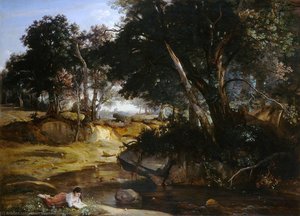
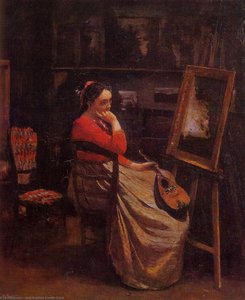
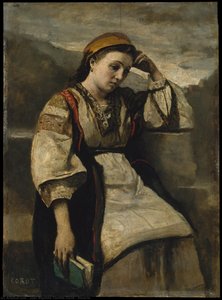
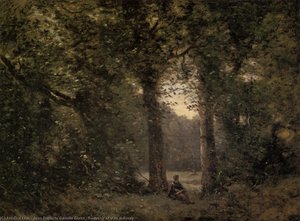
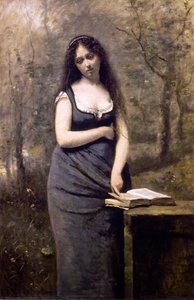
Jean-Baptiste-Camille Corot’s *Veleda*, painted in 1868, isn't merely a portrait; it’s an invitation to pause and contemplate the quiet beauty of a fleeting moment. The painting captures a woman immersed in reading beside a simple table outdoors, bathed in the soft, diffused light characteristic of Corot’s mature style. It’s a scene that whispers of rural tranquility, a deliberate departure from the grand narratives often favored by his contemporaries. This work exemplifies Corot's profound connection to nature, honed during his childhood spent largely away from the Parisian bustle – an experience that profoundly shaped his artistic sensibility and informed his approach to capturing atmospheric effects.
Corot’s technique is deliberately understated, eschewing dramatic brushstrokes or vibrant colors in favor of a subtle, almost melancholic palette. He employs a broken color style, layering thin washes of paint to create an illusion of depth and atmosphere. Notice how the greens and browns of the trees recede into the distance, blending seamlessly with the sky – a masterful demonstration of his ability to render light and shadow with remarkable sensitivity. The woman’s dress, rendered in muted blues and greys, further contributes to this sense of understated elegance and timelessness. The focus isn't on precise detail but rather on conveying the *feeling* of the scene: a profound sense of peace and contemplation.
El Contexto Histórico y la Influencia de la Escuela de Barbizon
*Veleda* was created during a pivotal moment in French art history – the rise of the School of Barbizon. This loosely organized group of artists, including Corot himself, rejected the academic traditions of the Salon and sought to paint directly from nature, often outdoors. They were deeply influenced by the Romantic landscape painters like Caspar David Friedrich, but they moved away from the overtly emotional and dramatic depictions of the German masters, opting instead for a more restrained and observational approach. Corot’s work embodies this shift; he captures not grand landscapes or heroic figures, but rather intimate moments within nature, inviting viewers to share in the quiet beauty of the natural world.
The Barbizon artists were particularly interested in depicting the effects of light on the landscape – a fascination that is vividly evident in *Veleda*. Corot’s use of atmospheric perspective, achieved through subtle variations in color and tone, creates a sense of depth and distance that is both realistic and evocative. He wasn't simply painting what he saw; he was attempting to capture the very essence of light itself – its warmth, its coolness, its ability to transform the appearance of everything it touches.
Simbolismo y la Figura de la Mujer
The woman reading in *Veleda* is more than just a subject; she represents an ideal of quiet contemplation and intellectual pursuit. While her identity remains deliberately ambiguous – a deliberate choice by Corot, perhaps – she embodies the values associated with the educated elite of 19th-century France. The book itself suggests a connection to knowledge, culture, and the enduring power of literature. The setting, an outdoor space shaded by trees, evokes a sense of refuge and seclusion, suggesting that this woman has found solace in her reading and in the beauty of nature.
Furthermore, Corot’s choice of subject matter – a solitary figure immersed in a simple activity – speaks to a broader cultural trend during this period. As industrialization transformed French society, there was a growing appreciation for rural life and a longing for connection with nature. *Veleda* can be interpreted as a nostalgic reflection on these lost values, a reminder of the beauty and tranquility that could still be found in the natural world.
Reproducción y su Impacto en el Diseño Interior
A high-quality reproduction of *Veleda* offers a remarkable opportunity to bring this serene scene into your home or office. TopImpressionists’s meticulous hand-painted reproductions capture not only the visual details of Corot's original painting but also its emotional atmosphere and subtle nuances. The textured brushstrokes and delicate color palette are faithfully reproduced, creating a piece that is both visually stunning and deeply evocative.
Beyond its aesthetic appeal, *Veleda* can serve as a powerful element in interior design, bringing a sense of calm and sophistication to any space. Its muted tones and contemplative subject matter complement a wide range of décor styles, from classic French country to minimalist modern. Consider framing it in a simple wooden frame to enhance its rustic charm or pairing it with other landscape paintings to create a cohesive gallery wall. Let *Veleda* transport you to a moment of quiet contemplation – a timeless reminder of the beauty and serenity that can be found in the simplest of things.
Preguntas y respuestas
¿Dónde puedo encontrar una guía sobre "Veleda"?
Una página de Ficha informativa está disponible para "Veleda" de Jean-Baptiste-Camille Corot: una ficha imprimible sobre la obra, diseñada para estudiantes y su uso en el aula.
¿Con qué otros nombres o alias se conoce a Jean-Baptiste-Camille Corot?
Jean-Baptiste-Camille Corot también es conocido como Corot, Camille Corot, Jean Baptiste Camille Corot.
¿Para qué se recomienda una reproducción de "Veleda" de Jean-Baptiste-Camille Corot?
Se recomienda una reproducción de "Veleda" de Jean-Baptiste-Camille Corot para Reflectante, basándose en el tema, la atmósfera y los colores de la obra.
Datos rápidos y cuestionario de arte
Sobre Jean-Baptiste-Camille Corot

Jean-Baptiste-Camille Corot
1796 - 1875, Francia
Biografía del artista
Vida Temprana y Formación
Jean-Baptiste-Camille Corot, un renombrado pintor francés de paisajes y retratos, nació el 16 de julio de 1796 en París. Su familia, perteneciente a la burguesía, le proporcionó un entorno propicio para explorar sus inclinaciones artísticas. Inicialmente, los intereses de Corot se dirigieron hacia otros campos, pero finalmente descubrió su pasión por la pintura alrededor de 1821. Esto marcó el comienzo de su prolífica carrera, que más tarde influiría en el desarrollo del impresionismo.Trayectoria Artística y Obras Notables
La trayectoria artística de Corot se caracteriza por una mezcla de tradición neoclásica e innovaciones al aire libre (plein air). Algunas de sus obras notables incluyen:- El Reposo (óleo sobre lienzo, circa 1860s), una pieza cautivadora que muestra la maestría de Corot para capturar la esencia de la serenidad.
- Lectura Interrumpida (realismo, óleo, circa 1850s), un ejemplo conmovedor de la capacidad de Corot para retratar la vida cotidiana con profundidad y emoción.
- Agostina (realismo, óleo, circa 1860s), un impresionante retrato que ejemplifica la habilidad de Corot para capturar la esencia de sus sujetos.
Influencias y Desarrollo Artístico
Corot fue influenciado por artistas como Gaspard Davidovich Poussin y Claude Lorrain, maestros del paisaje clásico francés. Sin embargo, su propio desarrollo artístico lo llevó a alejarse de las composiciones rígidas y formales del neoclasicismo para abrazar una aproximación más libre e intuitiva al paisaje. Su adopción de la pintura plein air fue revolucionaria en su época, permitiéndole capturar directamente las condiciones atmosféricas cambiantes y la luz natural. También se le considera un precursor del impresionismo debido a su enfoque en la atmósfera, el color y la pincelada suelta.Logros e Importancia Histórica
La vasta producción de Corot ha tenido un impacto duradero en el desarrollo de la pintura de paisajes. Su innovador enfoque, combinando técnicas tradicionales con innovaciones al aire libre, allanó el camino para futuras generaciones de artistas. Aunque no fue reconocido ampliamente durante su vida, su obra ganó una mayor apreciación póstumamente y ahora se le considera una figura clave en la historia del arte francés. Corot influyó directamente a muchos artistas impresionistas como Monet, Renoir y Pissarro, quienes admiraban su capacidad para capturar la atmósfera y la luz natural. Descubra más sobre las pinturas de Jean-Baptiste-Camille Corot en TopImpressionists.com: https://TopImpressionists.com/@/jean-baptiste-camille-corot Aprenda más sobre el Musée Courbet en Wikipedia: https://en.wikipedia.org/wiki/mus%c3%a9e_courbet_(ornans,_france)Datos rápidos sobre Jean-Baptiste-Camille Corot
- Estilo Artístico: Neoclasicismo y Plein Air
- Influencia En Artistas: ['Impresionismo']
- Lugar De Nacimiento: París, Francia
- Nacimiento: 16 de julio de 1796
- Nacionalidad: Francesa
- Nombre Completo: Jean-Baptiste-Camille Corot
- Obras Notables:
- El Reposo
- Lectura interrumpida
- Agostina
Obras relacionadas


Explore obras de arte organizadas por temas, estilos y características.









Jean-Baptiste-Camille Corot
Veleda
() ·
Con su marco: · Pintado a mano al óleo sobre lienzo
Total