Atelier — Envío gratuito a todo el mundo — Plazo de entrega: 2–6 semanas
De foto a pintura Lista de deseos Carrito
Vista previaVista previa Vista previa en RAVista previa en RA Pedir impresión Pedir impresiónComprar descarga Comprar descarga CompartirCompartir
Ver detallesVer detalles Añadir a favoritos Añadir a favoritos DescargarDescargar Ver similaresVer similares RadiografíaRadiografía Presentación de diapositivasPresentación de diapositivas

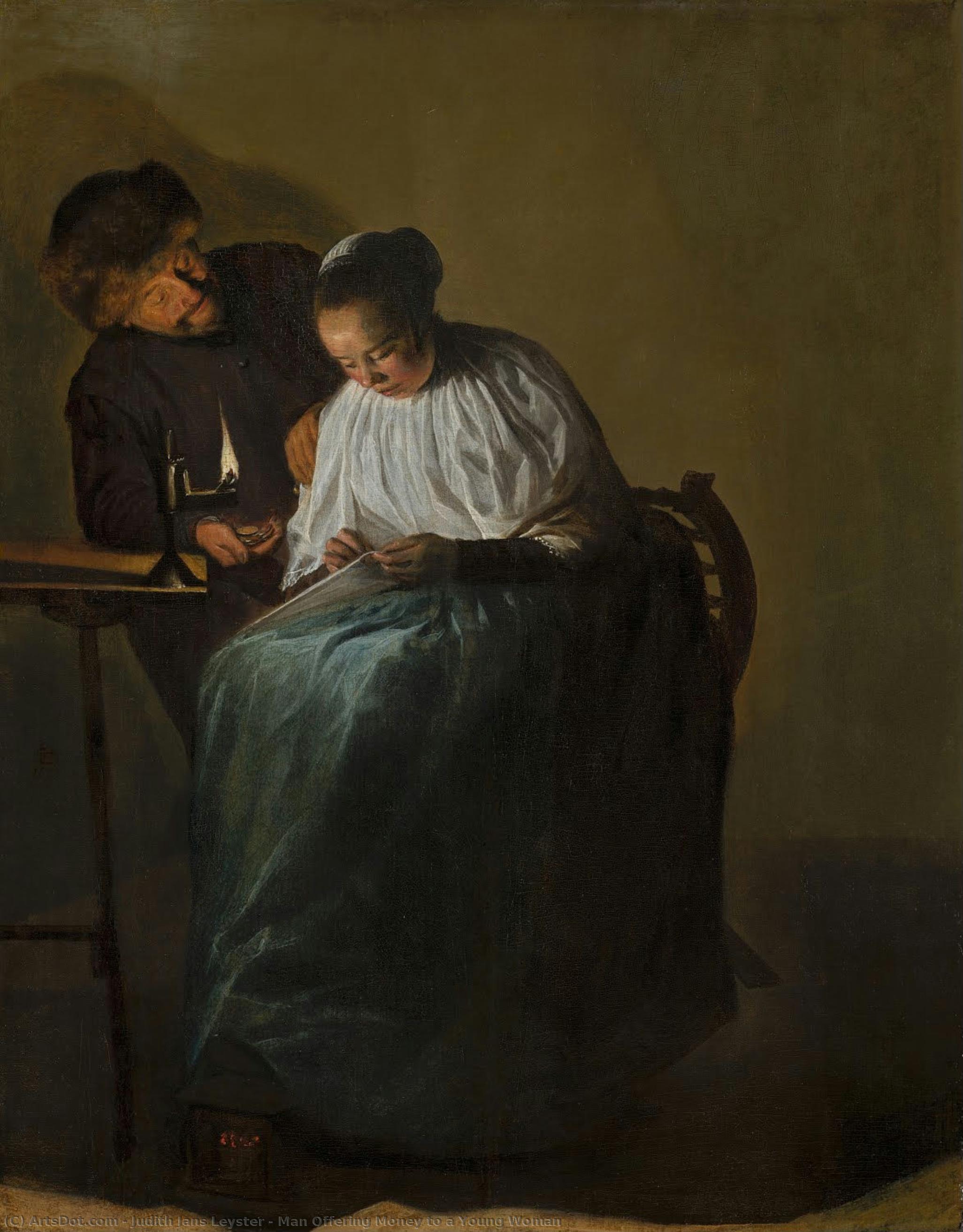
Man Offering Money to a Young Woman

Discover Judith Leyster’s "Man Offering Money," a captivating 1631 Dutch Golden Age painting. Explore its chiaroscuro style, feminist themes & intimate scene – a unique masterpiece!

Judith Jans Leyster (1609-1660) fue una artista neerlandesa pionera del Siglo de Oro conocida por escenas domésticas vibrantes, retratos y bodegones. Su obra fue redescubierta en 1893, ofreciendo una visión fascinante de la vida cotidiana.

Reproducción al óleo hecha a mano

Óleo sobre lienzo pintado a mano en el tamaño y marco de su elección, realizado por encargo por nuestros artistas. (Pedir impresión Pedir impresiónComprar descarga Comprar descarga)

P118B $10
P118H $10
P118W $10
P438Z $10
P508JH $12
P508YH $12
P805H $10
P805Z $10
P919BZ $10
P919G $10
P919XJ $10
P959ZH $10
P968JZ $12
W106C $8
W218G $10
W218JH $8
W218Y $10
W307PJ $10
W316G $10
W316PJ $8
W316Y $10
W398PJ $8
W4111J $10
W500HY $15
W500JH $15
W692G $12
W849H $8
W940BG $15
W953PJ $8

Standard
custom
CM
INCH

Elija entre nuestros tamaños predefinidos que respetan las proporciones originales de la obra.

ancho
altura

Puede ingresar sus propias dimensiones para adaptarse a un marco o espacio específico. Si el tamaño seleccionado no coincide con las proporciones de la imagen original, recortaremos la obra o extenderemos la pintura con elementos adicionales pintados a mano. Se le enviará una maqueta digital para su aprobación antes de comenzar la producción.
Tenga en cuenta que la vista previa en pantalla no refleja el recorte o la extensión reales. Solo la maqueta mostrará con precisión la composición final.
Si bien existen tamaños personalizados, recomendamos seleccionar una dimensión de la lista predefinida para preservar las proporciones originales.

Ejemplos de lo que se puede personalizar: Reemplace el rostro con una foto del cliente; Agregue una mascota (por ejemplo, cambie un gato por un perro); Incluya un mensaje oculto en el fondo; Cambie el paisaje o los elementos del fondo.
Tras realizar el pedido, el equipo de TopImpressionists.com enviará un correo electrónico al cliente para solicitar instrucciones y proporcionarle una vista previa del boceto.

Envío a todo el mundo () en 3-4 semanas en lugar de las 5 semanas estándar. (14 agosto). Sin comprometer la calidad.

why_choose_icon
Envío exprés gratuito a todo el mundo
why_choose_icon
Lienzo de lino de alta calidad
why_choose_icon
Seguro de envío completo
why_choose_icon
Garantía de reembolso de aranceles aduaneros
why_choose_icon
Garantía de fidelidad cromática exacta
why_choose_icon
Política de devolución de 60 días (solo por defectos)
why_choose_icon
Garantía de devolución del 100% del dinero
why_choose_icon
Oferta por volumen

Precio total

$ 294

reproduction

Man Offering Money to a Young Woman

Técnica de reproducción

Tamaño de la reproducción

-

Precio total

$ 294

Datos clave

  • Influences: Caravaggio
  • Subject or theme: Domestic Life; Moral Allegory
  • Artistic style: Realism
  • Year: 1631
  • Movement: Dutch Golden Age
  • Notable elements or techniques: Chiaroscuro; Subtle Pentimenti
  • Medium: Oil on Canvas

Cuestionario de arte

Cada pregunta tiene una única respuesta correcta.

Pregunta 1:
What artistic style is prominently featured in Judith Leyster’s *Man Offering Money to a Young Woman*?
Pregunta 2:
The painting depicts a scene reflecting which broader cultural concern prevalent during the Dutch Golden Age?
Pregunta 3:
What is the primary medium used by Judith Leyster in this artwork?
Pregunta 4:
The lighting technique employed in *Man Offering Money to a Young Woman* resembles that of which famous artist?
Pregunta 5:
Symbolically, what does the woman’s focus on her sewing represent in relation to the broader context of Dutch society at the time?

Descripción de la obra

Judith Jans Leyster’s “Man Offering Money to a Young Woman”: A Portrait of Quiet Resistance

The Mauritshuis in The Hague houses one of the most striking paintings from the Dutch Golden Age—Judith Jans Leyster’s *Man Offering Money to a Young Woman*, completed around 1631. This deceptively simple composition, measuring just 30 x 24 cm, transcends its diminutive size to deliver a powerful message about gender roles and moral fortitude within the societal constraints of seventeenth-century Holland. It's a painting that continues to fascinate scholars and viewers alike, prompting ongoing debate about its interpretation and significance. ### Subject Matter and Context: Domesticity Under Scrutiny Leyster’s scene depicts a young woman diligently engaged in needlework—likely embroidery—by the flickering light of an oil lamp. Her feet rest on a foot warmer filled with burning coals, a detail that speaks to the practical realities of daily life for women during this period. The man seated beside her is older and dressed in a fur hat pulled down low over his forehead; he leans over her shoulder as he presents her with a handful of coins—a gesture laden with implication. This pairing immediately establishes a familiar motif prevalent in Northern European art: the “unequal love” narrative, where men attempt to seduce women by offering monetary rewards. However, Leyster’s genius lies not merely in presenting this trope but in subtly undermining its dominant interpretation. Unlike many depictions of similar themes—brothel scenes and flirtatious encounters—this painting avoids explicit sensuality. Instead, it focuses on the woman's unwavering concentration on her task, conveying a palpable sense of defiance against unwanted advances. ### Artistic Style and Technique: Chiaroscuro’s Dramatic Embrace Leyster employed a masterful technique known as chiaroscuro – dramatic contrasts between light and dark – reminiscent of Rembrandt’s work. This stylistic choice is evident throughout the canvas, casting deep shadows that accentuate the textures of the fabrics (particularly the woman's dress) and creating an atmosphere of solemn contemplation. The artist skillfully utilizes light to illuminate key elements—the lamp, the woman’s face, and her hand—drawing the viewer’s eye directly into the scene. The brushstrokes are smooth and deliberate, contributing to a sense of realism that belies the painting's understated aesthetic. Oil paint on canvas was the preferred medium for artists of Leyster’s time, allowing for rich colors and nuanced tonal gradations – qualities that are beautifully preserved in this remarkable artwork. ### Symbolism: Virtue Versus Temptation—A Silent Dialogue Beyond its formal elements, *Man Offering Money to a Young Woman* resonates with profound symbolic meaning. The foot warmer symbolizes domesticity and virtue—the woman’s steadfast commitment to her craft represents moral integrity amidst societal pressures. Conversely, the man embodies temptation and worldly desire, his fur hat serving as a visual marker of his perceived lack of refinement. Leyster's deliberate positioning of these figures—the woman focused on her work while ignoring the man’s advances—suggests that true strength lies in resisting allurements and upholding moral principles. The painting isn’t simply illustrating a narrative; it’s posing a question: What is more valuable – outward appearance or inner virtue? Leyster's subtle gesture of defiance speaks to a broader cultural preoccupation with gender roles and the importance of maintaining ethical conduct within a society grappling with changing social norms. ### Emotional Resonance: A Moment Frozen in Time Ultimately, *Man Offering Money to a Young Woman* captivates viewers not just through its visual beauty but also through its emotional depth. The painting evokes a feeling of quiet intensity—a palpable tension between desire and restraint—that lingers long after viewing. It’s a portrait that invites contemplation about the complexities of human relationships and the enduring power of moral conviction. Leyster's masterpiece continues to inspire artists and collectors alike, reminding us that art can convey profound truths about human experience without resorting to overt melodrama. Its understated elegance and symbolic richness solidify its place as one of the most compelling images from the Dutch Golden Age—a testament to Leyster’s artistic vision and her enduring contribution to art history.

Biografía del artista

Primeros años y formación

Judith Jans Leyster, una pintora pionera, nació en julio de 1609 en Haarlem, Países Bajos. Fue la octava hija de Jan Willemsz Leyster, un fabricante de telas que más tarde se dedicó a la elaboración de cerveza. Aunque su formación no está bien documentada, se cree que aprendió pintura de Frans Pietersz de Grebber, un respetado artista con un taller en Haarlem.

Carrera artística

Los primeros trabajos firmados conocidos de Leyster, Serenade y Jolly Topper, datan de 1629, cuando ella tenía tan solo veinte años. Para 1633, se convirtió en miembro del gremio de San Lucas de Haarlem, lo que la convirtió en una de las primeras artistas femeninas en formar parte de esta prestigiosa organización.

Obras notables y colaboraciones

Entre las obras más destacadas de Leyster se encuentran:
  • El autorretrato (c. 1633), ahora en la National Gallery of Art, Washington, D.C., que pudo haber sido su pieza de presentación ante el gremio.
  • Dos ilustraciones en un libro sobre tulipanes de 1643, que muestran su versatilidad.
  • Un retrato de 1652 y un bodegón de 1654, descubiertos en una colección privada en el siglo XXI, demuestran su perdurable habilidad.
Colaboraciones con Jan Miense Molenaer: Leyster se casó con Jan Miense Molenaer, un artista más prolífico, en 1636. Trabajaron juntos, compartiendo un estudio en Haarlem, y tuvieron cinco hijos.

Legado y redescubrimiento

A pesar de haber sido muy apreciada por sus contemporáneos, la obra de Leyster fue en gran medida olvidada tras su muerte en 1660. No fue hasta 1893 que fue redescubierta, y los académicos comenzaron a atribuir correctamente sus obras. Hoy en día, sus pinturas son reconocidas como contribuciones significativas al Siglo de Oro neerlandés.

Conclusión

La carrera pionera de Judith Jans Leyster como pintora en los Países Bajos del siglo XVII ha dejado una marca indeleble en la historia del arte. Su redescubrimiento y reconocimiento sirven como testimonio de su talento perdurable y de la percepción cambiante de las mujeres en el mundo del arte. Nombre del museo: National Gallery of Art, Washington, D.C.
Judith Jans Leyster

Judith Jans Leyster

1609 - 1660 , Países Bajos

Datos clave

  • Artistic Movement Or Style: Siglo de Oro neerlandés
  • Artists Or Movements Influenced By This Artist: ['Caravaggisti']
  • Artists Who Influenced This Artist:
    • Frans Pietersz de Grebber
    • Jan Miense Molenaer
  • Date Of Birth: Julio 28, 1609
  • Full Name: Judith Jans Leyster
  • Nationality: Holandesa
  • Notable Artworks:
    • Serenade
    • Jolly Topper
    • Retrato
  • Place Of Birth: Haarlem, Netherlands
© TopImpressionists.com — Todos los derechos reservados  ·  100% Pintado a mano · Satisfacción garantizada · Envío gratuito a todo el mundo
VISA MASTERCARD