


 Vista previa
 Compartir
 Compartir
 Ver detalles
 Guía
Guía

 Descargar
 Ver artículos similares
 Radiografía
 Presentación de diapositivas
 Estadísticas
Casas en L'Estaque


Casas en L'Estaque: Una obra maestra de Cézanne que captura la belleza serena del paisaje provenzal con planos de color complejos y pinceladas pequeñas, reflejando el puente entre impresionismo y cubismo. ¡Descubre más!
 Leer más
Explora el arte revolucionario de Paul Cézanne (1839-1906), un maestro del Postimpresionismo que conectó el Impresionismo y el Cubismo. Descubre sus formas geométricas, pinceladas únicas, pinturas de bodegones e impacto duradero en el arte moderno. #Cézanne #PostImpres
Reproducción al óleo hecha a mano
Óleo sobre lienzo pintado a mano en el tamaño y marco de su elección, realizado por encargo por nuestros artistas. ( Cambiar a formato impreso Ver versión en imagen digital)




P118B $10

P118H $10

P118W $10

P438Z $10

P508JH $12

P508YH $12

P805H $10

P805Z $10

P919BZ $10

P919G $10

P919XJ $10

P959ZH $10

P968JZ $12

W106C $8

W218G $10

W218JH $8

W218Y $10

W307PJ $10

W316G $10

W316PJ $8

W316Y $10

W398PJ $8

W4111J $10

W500HY $15

W500JH $15

W692G $12

W849H $8

W940BG $15

W953PJ $8




Estándar
personalizado
CM
INCH
Elija entre nuestros tamaños predefinidos que respetan las proporciones originales de la obra.
Loading sizes...

ancho
altura
Puede ingresar sus propias dimensiones para adaptarse a un marco o espacio específico. Si el tamaño seleccionado no coincide con las proporciones de la imagen original, recortaremos la obra o extenderemos la pintura con elementos adicionales pintados a mano. Se le enviará una maqueta digital para su aprobación antes de comenzar la producción.
Tenga en cuenta que la vista previa en pantalla no refleja el recorte o la extensión reales. Solo la maqueta mostrará con precisión la composición final.
Si bien existen tamaños personalizados, recomendamos seleccionar una dimensión de la lista predefinida para preservar las proporciones originales.
Ejemplos de lo que se puede personalizar: Reemplace el rostro con una foto del cliente; Agregue una mascota (por ejemplo, cambie un gato por un perro); Incluya un mensaje oculto en el fondo; Cambie el paisaje o los elementos del fondo.
Tras realizar el pedido, el equipo de TopImpressionists.com enviará un correo electrónico al cliente para solicitar instrucciones y proporcionarle una vista previa del boceto.
Tras realizar el pedido, el equipo de TopImpressionists.com enviará un correo electrónico al cliente para solicitar instrucciones y proporcionarle una vista previa del boceto.
Envío a todo el mundo () en 3-4 semanas en lugar de las 5 semanas estándar. (25 septiembre). Sin comprometer la calidad.

Envío exprés gratuito a todo el mundo

Lienzo de lino de alta calidad

Seguro de envío completo

Garantía de reembolso de impuestos aduaneros

Garantía de fidelidad cromática exacta

Política de devolución de 100 días (solo por defectos)

Garantía de devolución del 100% del dinero

Oferta por volumen
 La opción de vidrio solo está disponible en tamaños inferiores a 110 cm.

Casas en L'Estaque
Técnica de reproducción
Tamaño de la reproducción
-


Precio total
$ 269
The Painting
“Houses at the L'Estaque,” painted by Paul Cézanne in 1880, is a cornerstone of Post-Impressionist art—a testament to the movement’s exploration of form and color beyond mere representation.
This oil on canvas captures the serene beauty of houses nestled into a hillside against a backdrop of azure sky. Two buildings dominate the scene, one larger than the other, positioned strategically before a mountainous panorama. Scattered trees punctuate the landscape, adding to its tranquil charm and reinforcing Cézanne’s dedication to portraying nature with uncompromising honesty.
Cézanne's masterful approach is evident in his use of planes of color—bold strokes that create complex fields—drawing viewers into the scene and fostering a profound connection with the natural world. The inclusion of a solitary figure near the center subtly introduces human presence, enriching the overall atmosphere and prompting contemplation about our relationship with the environment.
Artistic Elements
The painting’s aesthetic power derives from Cézanne's innovative technique—a deliberate departure from Impressionist conventions. He eschewed traditional perspective, prioritizing structural solidity and emphasizing the underlying geometric forms that constitute the visual world. This method anticipates Cubism, foreshadowing a radical simplification of form and a reduction in chromatic intensity.
The artist’s meticulous attention to detail is balanced by an overarching desire to convey emotion—a feeling of stillness and harmony achieved through careful observation and artistic interpretation. Cézanne's brushstrokes are palpable, conveying texture and depth while simultaneously capturing the essence of light and shadow.
Artistic Influence
Paul Cézanne stands as a pivotal figure in art history—a bridge between Impressionism and Cubism. His groundbreaking explorations of form and color profoundly impacted subsequent artistic movements, including Proto-Cubism.
Artists like Georges Braque, Pablo Picasso, Juan Gris, Jean Metzinger, Albert Gleizes, Henri Le Fauconnier, Robert Delaunay, Fernand Léger, and others embraced Cézanne’s principles, experimenting with geometric schemas—cubic or conic shapes—to dismantle classical perspective and reveal the fundamental structure of reality.
Guillaume Apollinaire's influential book Les Peintres Cubistes, Méditations Esthétiques provides invaluable insight into the genesis and aesthetic values of Cubism—a movement directly indebted to Cézanne’s pioneering vision.
Proto-Cubism
Proto-Cubism represents a crucial transitional phase in artistic history. Characterized by simplified geometric forms—often cubes or cones—it abandons traditional illusionistic perspective, prioritizing the constructive essence of visual experience.
This period witnessed groundbreaking experimentation by artists such as Georges Braque, Pablo Picasso, Juan Gris, Jean Metzinger, Albert Gleizes, Henri Le Fauconnier, Robert Delaunay, Fernand Léger, and others—artists who laid the groundwork for the radical geometric abstraction that would define Cubism.
Les Peintres Cubistes
Guillaume Apollinaire’s seminal work Les Peintres Cubistes, Méditations Esthétiques remains a cornerstone of Cubist scholarship—a photographic chronicle of pivotal artworks and an exploration of the movement’s philosophical underpinnings.
The book illuminates Apollinaire's intellectual engagement with artistic innovation—his conviction that art should transcend mere representation to engage in profound contemplation about beauty and existence.
Conclusion
Paul Cézanne’s “Houses at L'Estaque” embodies the spirit of Post-Impressionism—a masterpiece that encapsulates the artist’s revolutionary approach to artistic expression. Its serene landscape, meticulously crafted geometric forms, and unwavering focus on structural integrity stand as a testament to Cézanne’s enduring influence on modern art.
This painting serves as an inspiration for artists and collectors alike—a reminder of the transformative power of observation and the pursuit of authentic artistic vision. Explore high-quality reproductions at TopImpressionists.com.
Obras relacionadas


Biografía del artista
vida temprana e influencias
paul cézanne, un pintor postimpresionista francés, nació el 19 de enero de 1839 en Aix-en-Provence, Francia. Su vida temprana estuvo marcada por una fuerte conexión con la empresa bancaria de su familia, lo que le proporcionó seguridad financiera. Esto le permitió concentrarse en sus aspiraciones artísticas sin la carga del estrés financiero. les nabis, neoimpresionismo y simbolismo influyeron en el trabajo temprano de Cézanne, que se caracterizó por su énfasis en las formas geométricas y una paleta de colores limitada. Su interés en las obras de paul gauguin y georges seurat fortaleció aún más su estilo postimpresionista.estilo artístico y técnicas
El uso innovador de Cézanne de los planos de color y pequeños trazos repetitivos creó campos complejos que transmitían su intenso estudio de los temas. Su enfoque a menudo exploratorio del arte condujo al desarrollo de un nuevo lenguaje pictórico, que enfatizaba la estructura subyacente de los objetos en una composición.- características clave:
- formas geométricas y facetado
- paleta de colores reducida
- énfasis en la esencia constructiva del mundo físico
- múltiples perspectivas y simultaneidad
- obras influyentes:
- el estanque de jas de bouffan (1880)
- retrato de emile zola (1866)
- bosque (1892)
- museos que exhiben el trabajo de Cézanne:
- museo marmottan monet en París, Francia
- el museo de bellas artes en Houston, Estados Unidos
legado e impacto
El trabajo pionero de Cézanne en el postimpresionismo allanó el camino para diversos movimientos vanguardistas, incluyendo cubismo, fauvismo y surrealismo. Su influencia se puede ver en las obras de pablo picasso, henri matisse y georges braque. El legado de Cézanne continúa inspirando a artistas y entusiastas del arte por igual, consolidando su lugar como una figura fundamental en la historia del arte moderno.- movimientos artísticos relacionados:
- vea las obras de Cézanne:

Paul Cézanne
1839 - 1906 , Francia
Datos clave
- Artistas Que Influyeron:
- Paul Gauguin
- Georges Seurat
- Estilo Artístico: Postimpresionismo
- Fecha De Muerte: Octubre 22, 1906
- Fecha De Nacimiento: 19 de enero de 1839
- Influenciado A Artistas:
- Pablo Picasso
- Henri Matisse
- Georges Braque
- Lugar De Nacimiento: Aix-en-Provence, Francia
- Nacionalidad: Francés
- Nombre Completo: Paul Cézanne
- Obras Notables:
- El estanque de Jas de Bouffan
- Retrato de Émile Zola
- Bosque
- Grandes Bañistas
Artículos relacionados
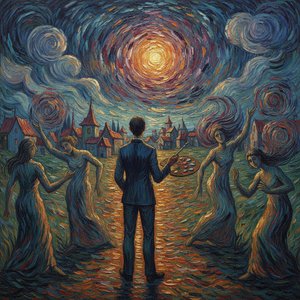
Beyond the Light: Capturing Emotion Through the Expressive Soul of Post-Impressionism
Explore the profound emotional depth of Post-Impressionism. Discover how masters like Van Gogh and Cézanne moved beyond light to capture raw feeling through color and texture. A journey into art history for the true connoisseur.
Explore obras de arte organizadas por temas, estilos y características.


