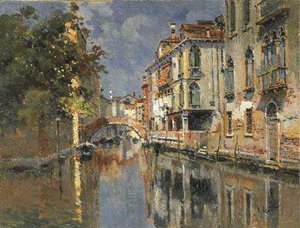
El Visionario Veneciano de Málaga
Antonio María Reyna Manescau, un nombre que evoca los reflejos trémulos de los canales italianos y las tradiciones bañadas por el sol de Andalucía, permanece como una de las figuras más cautivadoras de la Escuela Malagueña de Pintura. Nacido el 5 de diciembre de 1859 en el tranquilo pueblo de Coín, España, su vida fue un puente entre dos mundos. Si bien sus raíces estaban firmemente plantadas en suelo español, su alma artística encontró su verdadero hogar entre los laberínticos vías fluviales y la grandeza arquitectónica de Italia. Esta dualidad —un corazón español observando un paisaje italiano— imbuyó su obra con una sensibilidad única, fusionando la rigurosa formación académica de su juventud con una profunda, casi poética, devoción por la luz de Venecia.
Sus primeros años estuvieron marcados por un talento innato para el dibujo, un don cultivado en la prestigiosa Escuela de Bellas Artes de Málaga. Bajo la tutela de maestros como Joaquín Martínez de la Vega y el influyente Bernardo Ferrándiz, Manescau absorbió los principios fundamentales de la composición clásica y la precisión anatómica. Estudió junto a contemporáneos como José Moreno Carbonero, formando parte de una generación de artistas españoles que redefinirían los límites de su paisaje nacional. Sin embargo, fue su partida hacia Italia al inicio de sus veinte años lo que alteraría irrevocablemente el curso de su viaje creativo. Sumergido en la vibrante atmósfera de la escena artística italiana e influenciado por la presencia de otros artistas expatriados, comenzó a alejarse de las búsquedas puramente académicas para avanzar hacia una forma de expresión más especializada y evocadora.
Un Maestro de la Luz y la Veduta
El punto de inflexión en la carrera de Manescau llegó en 1885, tras su primera visita transformadora a Venecia. Fue aquí donde descubrió su verdadera vocación: la veduta, o el paisaje topográfico de gran detalle. Se convirtió en un especialista en capturar la belleza efímera del paisaje urbano veneciano, centrándose en el intrincado juego entre la piedra, el agua y la luz. Su técnica se caracterizó por un nivel extraordinario de precisión; no se limitaba a pintar escenas, sino que representaba meticulosamente las texturas del mármol desgastado, los delicados rizos del Gran Canal y la forma en que la luz del sol danza sobre las fachadas arquitectónicas. Esta dedicación al detalle dotó a sus lienzos de una presencia palpable, invitando al espectador a adentrarse directamente en las bulliciosas plazas y los tranquilos canales.
Más allá de la mera exactitud técnica, la obra de Manescau es celebrada por su maestría en el color y la atmósfera. Poseía una capacidad asombrosa para trasladar el aire húmedo y luminoso de Venecia al lienzo, utilizando una paleta matizada para evocar diferentes momentos del día y condiciones climáticas cambiantes. Sus pinturas suelen presentar:
- Reflejos Luminosos: La forma en que el agua espeja los colores vibrantes de los edificios circundantes, creando una sensación de profundidad infinita.
- Grandeza Arquitectónica: Un profundo respeto por el peso histórico de estructuras como la Piazza San Marco, representadas con escala e intimidad a la vez.
- Profundidad Atmosférica: El uso de transiciones suaves y cambios tonales para sugerir las mañanas brumosas o los atardeceres dorados característicos de la laguna veneciana.
Aunque gran parte de su vida transcurrió en Italia, Manescau nunca rompió verdaderamente sus vínculos con su herencia española. Su obra sigue siendo una parte vital del legado de la Escuela Malagueña, representando un periodo en el que los artistas españoles miraron hacia Europa para expandir sus horizontes estéticos. Si bien algunas de sus obras más significativas, como la escena clásica Floralia, se perdieron trágicamente durante la Guerra Civil Española, su obra superviviente continúa imponiendo respeto en prestigiosas instituciones de todo el mundo. Desde el Museo Thyssen en Málaga hasta el Museo de Arte de Boston, sus lienzos sirven como ventanas a una era desaparecida de viajes romantizados y exploración artística.
Hoy en día, Antonio María Reyna Manescau es recordado no solo como un pintor de paisajes, sino como un cronista de la luz. Su capacidad para capturar la "preciosidad" de un momento —la forma exacta en que una sombra cae sobre un canal o cómo un rayo de sol ilumina un rincón de una plaza— asegura su lugar en el panteón de los maestros del siglo XIX. Permanece como un testimonio del poder de la migración artística, demostrando que un pintor puede encontrar su voz más profunda al abrazar la belleza de una orilla extranjera mientras lleva consigo la luz de su propia tierra.
Preguntas y respuestas
¿Qué colores utilizaba con más frecuencia Antonio María Reyna Manescau?
El uso del color de Antonio María Reyna Manescau en las obras listadas en este sitio web puede estudiarse en la página ADN de la Paleta del artista.
¿Cómo se divide la trayectoria de Antonio María Reyna Manescau en periodos?
La trayectoria de Antonio María Reyna Manescau se despliega etapa por etapa en la página Trayectoria: una línea de tiempo horizontal de sus obras, agrupadas en capítulos según sus periodos creativos.
¿Puedo explorar las obras de Antonio María Reyna Manescau por técnica?
Puedes explorar las obras de Antonio María Reyna Manescau por técnica en su página de Todas las técnicas.