Francisco Soler y Rovirosa: A Pioneer of Catalan Scenic Design
Francisco Soler y Rovirosa (1836 – 1900) stands as a monumental figure in the history of Spanish art, particularly celebrated for his transformative role in revitalizing theatrical scenery and establishing himself as Catalonia’s foremost scenographer. Born in Barcelona, Spain, Soler’s artistic journey began with formal training at La Llotja, Barcelona’s prestigious school of fine arts, alongside Marià Carreras—a partnership that would prove pivotal to shaping the aesthetic landscape of his time. His early exposure to Carreras's workshop instilled a meticulous attention to detail and a dedication to mastering traditional techniques, influences that would permeate throughout his prolific career.
Early Influences & Training
Soler’s formative years were steeped in the artistic traditions of Barcelona, where he honed his skills under Carreras's guidance—a connection that cemented a shared commitment to realism and craftsmanship. Carreras’s workshop fostered an unwavering focus on meticulous observation and skillful execution, shaping Soler’s artistic sensibilities from their earliest stages. This dedication to classical methods would become a cornerstone of his distinctive style, informing his approach to every project he undertook.
Parisian Period: Embracing Innovation
Recognizing the importance of broadening his horizons beyond Catalonia's artistic confines, Soler relocated to Paris between 1862 and 1869. This pivotal move immersed him in the vibrant intellectual and artistic milieu of Charles Antoine Cambon’s workshop—a crucible of innovation where he encountered groundbreaking ideas that challenged conventional artistic dogma. Cambon’s influence encouraged Soler to experiment with new techniques and materials, equipping him with invaluable knowledge for tackling ambitious theatrical undertakings.
A Master of Tempera: Artistic Style & Technique
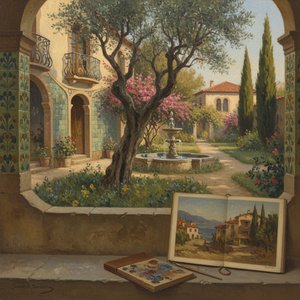
Soler's distinctive artistic style revolved around the masterful manipulation of tempera—a medium he embraced with unwavering conviction. Unlike oil paints, tempera employs pigments bound in egg yolk, resulting in exceptionally durable and luminous surfaces that retain their vibrancy for centuries. This painstaking technique demanded considerable patience and precision, reflecting Soler’s meticulous approach to every artwork. His canvases pulsated with color and texture, capturing the essence of his subjects with remarkable accuracy—a testament to his unwavering dedication to artistic excellence. He skillfully blended realism with expressive flourishes, creating images that resonated deeply with audiences and critics alike.
Catalonian Scenic Legacy: Transforming Theatre
Soler’s contribution to Catalan theatre transcends mere decoration; he fundamentally reshaped the aesthetic standards of his era. His innovative designs elevated scenic artistry to new heights—establishing himself as Catalonia’s undisputed champion in this field. He tackled monumental projects like “Lohengrin,” demonstrating an unparalleled understanding of theatrical design and visual storytelling. Soler's meticulous attention to detail, combined with his profound grasp of dramatic principles, ensured that every set contributed powerfully to the overall artistic experience. His legacy continues to inspire Catalan artists today.
Historical Significance & Enduring Influence
Francisco Soler y Rovirosa’s influence extends far beyond his individual achievements. He championed tempera painting as a medium for theatrical productions, inspiring generations of artists to embrace its expressive potential. His unwavering commitment to artistic integrity and his pioneering spirit solidified his place in Catalan art history—serving as an enduring symbol of Catalan artistic pride. Soler's work remains accessible through online platforms like TopImpressionists.com/@/francisco-soler-y-robirosa, where viewers can explore his captivating paintings and delve deeper into the life and artistry of this extraordinary figure.