Atelier — Tasuta kohaletoimetamine üle maailma — Tarneaeg 2–6 nädalat
      Donatello, 1386 – 1466

      Donatello: 100 tuntumat teost

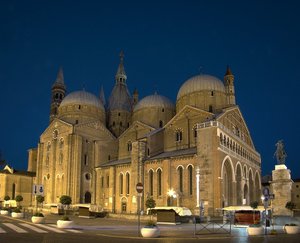
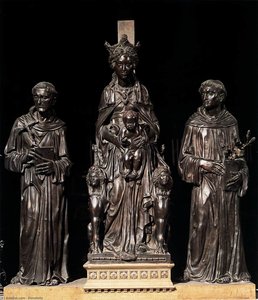
      Kõikidest Donatello maalidest on kõige kuulsam Madonna ja laps pühade Franciscus ja Antonius vahel (1448); seda saab näha Basilica di Sant'Antonio-is, Padova. Järgnevad neile Cantoria (1439) ja Matusearmutus (1447). Meie kataloogis olevatest 148 teosest on Donatello kõige kuulsamad 100 teost, millest iga on esitatud koos kuupäeva, muuseumi ja luguga.

      Reiting põhineb meie populaarsusindeksil, mis koondab iga teose otsingud, külastused ja tellimused. Uuendatud november 2026. Iga selle lehekülje maali saab tellida kas linatele kangale käsitsi maalatuna nagu õlimaalide reproduktsiooni või valitud suuruses fine art trükkina.

      Donatello portree
      Donatello · 1386 – 1466
      Sündinud · surnud
      1386 – 1466, Firenze
      Suunad
      Early renaissance
      Meie kataloogis olevad teosed
      148
      Kõige tuntud teosed
      Madonna ja laps pühade Franciscus ja Antonius vahel (1448)
      Enamasti teoseid on
      Museo dell'Opera del Duomo

      Donatello kõige kuulsam 10 maalist

      Madonna ja laps pühade Franciscus ja Antonius vahel (1448) (autor) Donatello
      1

      Madonna ja laps pühade Franciscus ja Antonius vahel

      1448 · Pronks · Basilica di Sant'Antonio, Padova

      Itaalia renessanssi südames, kus antikviidi varjud kohtusid humanismi kasvava valusega, ühes Donatello oma meistriteose Madonna ja laps pühade Franciscus ja Antonius vahel puhkest metalli, andes temasse uue elu. Umbes aastal 1448 loodud see sügav mõttemeev pronssiveistnud toimib lüli unikaalse vaimse ja kunstilise transformatsiooni perioodi juures. Kompozytsioon on sümmeetrise elegantsuse meistertöö; selle keskel hoiab Neiud Mary imetlast Kristust, ning neid kaasavad pühad Franciscus Assisest ja Antonius Abt. See paigutus ei ole…

      Cantoria (1439) (autor) Donatello
      2

      Cantoria

      1439 · Marmor · Museo dell'Opera del Duomo, Firenze

      To stand before Donatello’s Cantoria is to witness the very moment the Renaissance found its pulse. Completed around 1439 for the Cathedral of Santa Maria del Fiore in Florence, this monumental marble relief is far more than a functional singers' gallery; it is a breathtaking explosion of movement and spiritual ecstasy. While much of the era’s sculpture remained tethered to the static, formal traditions of the Byzantine style, Donatello broke…

      Matusearmutus (1447) (autor) Donatello
      3

      Matusearmutus

      1447 · Õlimaal kangaruumil · Basilica di Sant'Antonio, Padova

      Seisida Donatello's kujutatud Matusearmutuse ees on nagu lasta endasse mähata atmosfääriga, mis on kurbuse eest nii tihe, et see tundub peaaegu kägistatav. See stseen läbib pelgama jutustava illustratsiooni; see on sügav mõttus kadamus, ohrist ja inimliku pühendumuse solemnste veet. Kompozytsioon tõmbab vaataja sisse näimatu traagika sügavasse järglõgusse. Jeesus Kristus ei esine tempa peal vaid objekti sifatida, vaid ta on vaikne keskpunkt, mille ümber kogu ümbriv kurbus oma orbiiti moodustab. Figuuride…

      Käsitööna maalitud õlireproduction alates $195 28 × 36 cm Originaadi suurusega $1005 139 × 188 cm Telli originaalkoguses →
      Kadunud poja ime (1447) (autor) Donatello
      4

      Kadunud poja ime

      1447 · Akrüülvärv · Basilica di Sant'Antonio, Padova

      Donatello’s bronze sculpture, "Miracle of the Repentant Son," transcends mere representation; it's a profound meditation on faith, remorse, and divine grace. Created in 1447 during the apex of his artistic maturity, this work embodies the burgeoning humanism and emotional depth that defined the Early Renaissance in Florence. More than just a depiction of a biblical miracle – the restoration of a severed limb by St. Anthony – it’s a study…

      Käsitööna maalitud õlireproduction alates $195 23 × 43 cm Originaadi suurusega $391 57 × 123 cm Telli originaalkoguses →
      Ristiie (1412) (autor) Donatello
      5

      Ristiie

      1412 · Akrüül võimlusel · Santa Croce, Firenze

      Donatello'i 1412. aasta Ristiie, mis asub Florentis Santa Crocen basilika ees, ei ole pelgalt Kristuse kujutis ristil; see on viskeerne kogemus. See varairenessanssi meistriteos ületab lihtsa esituse, uputades vaataja kristliku teoloogia südamesse ja kehastades sügavaid pingeid kannatuse ja lunastuse vahel. Riigva rikkaliku tooniga pirnapuust valmistatud skulptuur püüab kohe tähelepanu oma erakordselt realistliku inimkeha kujutamisega – see on radikaalne kõrvalekaldumine eelmiste kunstiliste traditsioonide eesminevad ideaalsed figuurid. Donatello tabab meisterlikult mitte ainult…

      Käsitööna maalitud õlireproduction alates $245 26 × 38 cm Originaadi suurusega $1149 168 × 173 cm Telli originaalkoguses →
      Teatis (1435) (autor) Donatello
      6

      Teatis

      1435 · Akrüül võimlusel · Santa Croce, Firenze

      Donatelli 1435. aasta Teatis, mis on majutatud Florentis Basilica di Santa Crozes, ei ole pelgalt piibliline hetk; see on sügav mõte armu, alajahjupuse ja usu transformeerivast jõuest. See skulptuur on loodud kunstilise innovatsiooni murdepunktil – ühendades gootika ja renessanssi ajastuid – ning see kehastab Donatelli revolutsionaarset humanismi ja tema meistlikku kontrolli klassikaliste vormide üle. Stseen avaneb hämmastava va immediacy-ga: Maarja, istudes lihtsal pingil, saab üllatava teadmise säravilt ingel Gabrielilt. Kompozytsioon…

      Käsitööna maalitud õlireproduction alates $195 26 × 39 cm Originaadi suurusega $1340 168 × 218 cm Telli originaalkoguses →
      Püha Jüri (detail) (1416) (autor) Donatello
      7

      Püha Jüri (detail)

      1416 · Marmor · Museo Nazionale del Bargello, Firenze

      The marble figure of St. George, sculpted by Donatello around 1416, stands as more than just a depiction of a saint; it's a pivotal moment in the evolution of Renaissance sculpture – a testament to the artist’s innovative spirit and his profound understanding of human form and narrative. Originally gracing the north wall of Orsanmichele, Florence’s imposing guildhall, this statue immediately captivated viewers with its dynamic energy and strikingly realistic…

      Heroduse pidu (1427) (autor) Donatello
      8

      Heroduse pidu

      1427 · Pronks · Siena Baptisterium, Siena

      Donatello's Herod’s Banquet, crafted around 1427 for the baptismal font of Siena’s San Giovanni Baptistery, isn’t merely a depiction of a biblical episode; it’s a profound meditation on power, betrayal, and the chilling consequences of unchecked ambition. Commissioned amidst the competitive fervor of Renaissance Florence and Siena, this bronze relief stands as a testament to Donatello's burgeoning mastery – a pivotal work that showcases his innovative approach to sculpture and…

      Pidev profeet (1418) (autor) Donatello
      9

      Pidev profeet

      1418 · Pronks · Museo dell'Opera del Duomo, Firenze

      In the heart of the Florentine Renaissance, where the shadows of antiquity began to dance with the light of new humanism, Donatello breathed life into bronze with his Bearded Prophet. Created around 1418, this monumental figure is far more than a mere sculpture; it is a profound meditation on the weight of divine knowledge and the solemnity of faith. As one gazes upon the weathered surface of the bronze, there…

      Evangeelistist Jüdius Johannes (1415) (autor) Donatello
      10

      Evangeelistist Jüdius Johannes

      1415 · Marmor

      St. John the Evangelist is a marble sculpture created by the artist Donatello. Dated 1410, this work depicts one of the twelve apostles of Jesus. The subject is rendered as an elderly man, presented with a face etched with lines and a gaze that suggests a state of contemplation and wisdom. This choice of representation presents the figure as a philosopher-like individual.

      Donatello maalid reitingul 11 kuni 100

      Püha Mark (1411) (autor) Donatello
      #11

      Püha Mark

      1411 · Orsanmichele

      Within the echoing halls of Orsanmichele in Florence, stands Donatello's sculpture of St. Mark – more than just a depiction of a biblical figure; it is a profound…

      Propeet kirjarulaga (detail) (1418) (autor) Donatello
      #12

      Propeet kirjarulaga (detail)

      1418 · Museo dell'Opera del Duomo

      Seisja on selle profeeeti detailu ees nagu kohtates hetke, mis on ajast ajastust püsitud — sügav ekoo Itaalia renessanssi südameklust. Marmor ise, vananenud ja kandes sajandite patina, ei…

      Püha Johannes Patmosel (1428) (autor) Donatello

      Maal Püha Johannes Patmosel, mille lõi kuulus kunstnik Donatello aastal 1428, on Renessanssi kunsti hämmastav näide. See meistriteos on tunnistuskõik Donatellole omale oskusele ja käsitöömeistritele, esitledes tema võimet…

      David (detail) (1409) (autor) Donatello
      #14

      David (detail)

      1409 · Museo Nazionale del Bargello

      To stand before this detail of Donatello's David is to encounter not merely a sculpture, but a profound meditation on nascent heroism. The marble seems to breathe with…

      Pietà (1447) (autor) Donatello
      #15

      Pietà

      1447 · Basilica di Sant'Antonio

      Paduvas, Basilica di Sant’Antonio vaikikus ja pühasus, on olemas pronssisse külmutatud hetk – sügav mõõtmiste punkt jumaliku tragöödia ja inimliku haavatavuse vahel. Donatello Pietà, mida on vormitud aastal…

      Pulpit (on the right) (1465) (autor) Donatello
      #16

      Pulpit (on the right)

      1465 · San Lorenzo

      In the hallowed, sun-drenched silence of the Basilica of San Lorenzo in Florence, there exists a sculptural marvel that captures the very essence of a soul nearing its…

      Prophet Jeremiah (1423) (autor) Donatello
      #17

      Prophet Jeremiah

      1423 · Museo dell'Opera del Duomo

      To stand before Donatello’s Prophet Jeremiah is to encounter not merely carved stone, but the very weight of human contemplation. This marble masterpiece transports us into a moment…

      Prophet Habakkuk (1427) (autor) Donatello
      #18

      Prophet Habakkuk

      1427 · Museo dell'Opera del Duomo

      In the heart of Florence, within the hallowed halls of the Museo dell'Opera del Duomo, stands a figure that seems to breathe with the weight of centuries. Donatello’s…

      Pulpit (1438) (autor) Donatello
      #19

      Pulpit

      1438 · Prato katedraali muuseum

      The Pulpit by Donatello emerged from the stone and the shared vision of a workshop. In 1438, the artist completed this marble structure, working alongside collaborators Michelozzo and…

      Miracle of the New-born Child (detail) (1447) (autor) Donatello
      #20

      Miracle of the New-born Child (detail)

      1447 · Basilica di Sant'Antonio

      This bronze detail captures an aged figure rendered with profound realism. The sculpture focuses on the upper torso and head, where deep wrinkles and facial contours convey experience…

      Miracle of the Ass (1447) (autor) Donatello
      #21

      Miracle of the Ass

      1447 · Basilica di Sant'Antonio

      In the heart of the Italian Renaissance, amidst the burgeoning humanism of Florence, Donatello breathed life into metal with his 1447 masterpiece, The Miracle of the Ass. This…

      Cantoria (detail) (1439) (autor) Donatello
      #22

      Cantoria (detail)

      1439 · Museo dell'Opera del Duomo

      The “Cantoria,” or Singing Gallery, crafted by the towering figure of Donatello between 1439 and 1440, isn't merely a decorative element within Florence’s Duomo; it’s an immersive experience,…

      Pulpit (detail) (1438) (autor) Donatello
      #24

      Pulpit (detail)

      1438 · Museo dell'Opera del Duomo

      To look closely at this detail from the pulpit is to witness a quiet revolution in stone. The marble figures emerge from their setting with a sense of…

      Christ before Pilate and Caiaphas (1460) (autor) Donatello
      #25

      Christ before Pilate and Caiaphas

      1460 · San Lorenzo

      Donatello's 1460 bronze sculpture, “Christ Before Pilate and Caiaphas,” stands as a monumental achievement within the burgeoning artistic landscape of the Italian Renaissance. Housed in the San Lorenzo…

      David (1409) (autor) Donatello
      #26

      David

      1409 · Museo Nazionale del Bargello

      To stand before Donatello’s David is not merely to observe a sculpture; it is to witness a suspended moment of profound human potential. Carved from luminous marble, this…

      St George and the Dragon (1416) (autor) Donatello
      #27

      St George and the Dragon

      1416 · Museo Nazionale del Bargello

      Gazing upon this marble bust is to confront a moment frozen in time—a powerful confluence of classical revivalism and raw human emotion. The subject, rendered with breathtaking verisimilitude,…

      Saint George (1417) (autor) Donatello
      #28

      Saint George

      1417 · Museo Nazionale del Bargello

      In the heart of Florence, where the echoes of the Quattrocento still resonate through the cobblestone streets, stands a figure of unparalleled poise and quiet strength. Donatello’s Saint…

      St John the Evangelist (detail) (1410) (autor) Donatello
      #29

      St John the Evangelist (detail)

      1410 · Museo dell'Opera del Duomo

      Donatello's “St John the Evangelist (detail),” a remarkably preserved marble sculpture created around 1410-1411, stands as a pivotal work in the transition from the late Gothic to the…

      St John the Evangelist (1410) (autor) Donatello
      #30

      St John the Evangelist

      1410 · Museo dell'Opera del Duomo

      St John the Evangelist is a marble sculpture created by the artist Donatello. The work is dated 1410. It depicts one of the twelve apostles of Jesus, specifically…

      North pulpit (1460) (autor) Donatello
      #33

      North pulpit

      1460 · San Lorenzo

      To stand before the North Pulpit is to witness a profound moment in the evolution of Western art, where the rigid structures of the Middle Ages began to…

      David (1430) (autor) Donatello
      #35

      David

      1430 · Museo Nazionale del Bargello

      Michelangelo’s “David,” a colossal marble sculpture residing within the Galleria dell’Accademia in Florence, isn't merely a depiction of a biblical hero; it’s an embodiment of human potential, a…

      Tooge see valguse koos koju alates $195 →
      Miracle of the Avaricious Man's Heart (1447) (autor) Donatello
      #37

      Miracle of the Avaricious Man's Heart

      1447 · Basilica di Sant'Antonio

      Within the hallowed, sun-drenched walls of the Basilica di Sant’Antonio in Padua, there exists a moment frozen in time, a bronze whisper of the divine captured by the…

      Allegoric Figure of a Boy (Atys), rear view (1430) (autor) Donatello
      #38

      Allegoric Figure of a Boy (Atys), rear view

      1430 · Museo Nazionale del Bargello

      To stand before an image evoking this bronze figure is to feel the very breath of the Renaissance wind against one's skin. This depiction, titled Allegoric Figure of…

      St George (detail) (1416) (autor) Donatello
      #39

      St George (detail)

      1416 · Museo Nazionale del Bargello

      In the heart of Florence, within the hallowed halls of the Museo Nazionale del Bargello, resides a fragment of eternal courage. Donatello’s St. George, specifically captured in this…

      Cantoria (detail) (1439) (autor) Donatello
      #40

      Cantoria (detail)

      1439 · Museo dell'Opera del Duomo

      In the heart of Florence, within the hallowed halls of the Museo dell’Opera del Duomo, lies a fragment of divine ecstasy known as the Cantoria. Created by the…

      Equestrian Statue of Gattamelata (11) (1447) (autor) Donatello
      #41

      Equestrian Statue of Gattamelata (11)

      1447 · Piazza del Santo

      In the Equestrian Statue of Gattamelata (11) by Donatello, the bronze figure of Erasmo da Narni emerges with a commanding presence. Known to history as Gattamelata, the man…

      Marzocco (1419) (autor) Donatello
      #43

      Marzocco

      1419 · Museo Nazionale del Bargello

      In the heart of the Renaissance, amidst the political tremors and cultural rebirth of 15th-century Florence, Donatello breathed life into stone to create one of the city's most…

      Prophet Jeremiah (detail) (1423) (autor) Donatello
      #44

      Prophet Jeremiah (detail)

      1423 · Museo dell'Opera del Duomo

      Donatello's “Prophet Jeremiah (detail),” a poignant study carved from pristine white marble around 1423-1427, transcends mere portraiture to become a profound meditation on faith, suffering, and the weight…

      Telli see lühend alates $195 →
      Cantoria (detail) (1439) (autor) Donatello
      #45

      Cantoria (detail)

      1439 · Museo dell'Opera del Duomo

      Donatello's "Cantoria," a breathtaking detail from the larger marble relief adorning the south sacristy doors of the Duomo in Florence, isn’t merely a sculpture; it’s a vibrant snapshot…

      Telli see lühend alates $195 →
      Herod's Banquet (detail) (1427) (autor) Donatello
      #46

      Herod's Banquet (detail)

      1427 · Siena Baptisterium

      In the hallowed, quiet corridors of the Siena Baptistery, there exists a moment frozen in time, captured not in paint, but in the enduring strength of bronze. Donatello’s…

      Miracle of the Avaricious Man's Heart (detail) (1447) (autor) Donatello
      #47

      Miracle of the Avaricious Man's Heart (detail)

      1447 · Basilica di Sant'Antonio

      Created in 1447 for the Basilica di Sant'Antonio in Padua, Italy, this bronze relief captures a moment of profound spiritual tension. The work belongs to a series of…

      Bearded Prophet (detail) (1418) (autor) Donatello
      #48

      Bearded Prophet (detail)

      1418 · Museo dell'Opera del Duomo

      Donatello's "Bearded Prophet" – often referred to as “Pensieroso,” meaning “the Thinker” – stands not merely as a sculpture, but as a profound meditation on humanity’s relationship with…

      Cantoria (detail) (1439) (autor) Donatello
      #49

      Cantoria (detail)

      1439 · Museo dell'Opera del Duomo

      Donatello's Cantoria, a breathtaking marble relief sculpture from the Duomo di Firenze (Florence Cathedral), isn’t merely a decorative element; it’s a vibrant snapshot of Renaissance ambition and artistic…

      Tellinime käsitsi maaldetud alates $195 →
      Prophet Jeremiah (1423) (autor) Donatello
      #50

      Prophet Jeremiah

      1423 · Museo dell'Opera del Duomo

      Prophet Jeremiah is a marble sculpture created by the artist Donatello. Dated 1423, the work represents a significant religious subject through the depiction of the biblical prophet. The…

      South pulpit (1460) (autor) Donatello
      #51

      South pulpit

      1460 · San Lorenzo

      Donatello’s Passion Pulpit, a monumental bronze ensemble housed within the Basilica of San Lorenzo in Florence, isn’t merely a religious depiction; it’s a visceral embodiment of the artist’s…

      Telli see lühend alates $195 →
      Deposition (1465) (autor) Donatello
      #52

      Deposition

      1465 · San Lorenzo

      Donatello's Deposition, completed in 1465, isn’t merely a sculpture; it’s a profound meditation on loss, faith, and the raw vulnerability of humanity. Carved from rich, burnished bronze –…

      St George (1416) (autor) Donatello
      #53

      St George

      1416 · Museo Nazionale del Bargello

      Donatello’s “St. George,” sculpted in 1416 for the Museo Nazionale del Bargello in Florence, isn’t merely a depiction of a biblical hero; it’s a potent distillation of Renaissance…

      Cantoria (1439) (autor) Donatello
      #54

      Cantoria

      1439 · Museo dell'Opera del Duomo

      Within the hallowed halls of the Museo dell'Opera del Duomo in Florence resides a sculpture that transcends mere stone and marble – it is an embodiment of Renaissance…

      Faith (1427) (autor) Donatello
      #55

      Faith

      1427 · Siena Baptisterium

      Donatello's "Faith," crafted in bronze around 1427-1429 for the baptismal font within Siena Cathedral, stands as a pivotal work bridging the late Gothic and burgeoning Early Renaissance styles.…

      Old Sacristy (1428) (autor) Donatello
      #56

      Old Sacristy

      1428 · San Lorenzo

      To step into the Old Sacristy within the Basilica of San Lorenzo is to leave the chaotic bustle of Florence behind and enter a realm of profound mathematical…

      Annunciation (detail) (1435) (autor) Donatello
      #57

      Annunciation (detail)

      1435 · Santa Croce

      Donatello's "Annunciation," specifically this exquisite detail from the relief adorning the Cavalcanti Chapel in Santa Croce, Florence, stands as a pivotal moment in the burgeoning Renaissance. Crafted around…

      Telli see lühend alates $195 →
      Prophet with Scroll (1418) (autor) Donatello
      #59

      Prophet with Scroll

      1418 · Museo dell'Opera del Duomo

      Donatello’s “Prophet with Scroll,” crafted between 1415 and 1418, stands as a pivotal work in the burgeoning Early Renaissance of Florence. More than simply a depiction of biblical…

      Prophet Habakkuk (1427) (autor) Donatello
      #61

      Prophet Habakkuk

      1427 · Museo dell'Opera del Duomo

      In the hallowed, sun-drenched halls of the Museo dell'Opera del Duomo in Florence, there exists a figure that seems to breathe with the heavy weight of centuries. Donatello’s…

      Entombment (1465) (autor) Donatello
      #62

      Entombment

      1465 · San Lorenzo

      Donatello's “Entombment,” completed around 1465 in Florence, stands as a monumental achievement within the Early Renaissance—a sculpture that transcends mere representation to embody profound human emotion and theological…

      Cantoria (9) (1439) (autor) Donatello
      #63

      Cantoria (9)

      1439 · Museo dell'Opera del Duomo

      Donatello's "Cantoria," completed in 1439 for the Duomo of Florence, isn’t merely a decorative element; it’s a vibrant embodiment of Renaissance ideals – a testament to human ingenuity,…

      Tooge see valguse koos koju alates $195 →
      Lamentation over the Dead Christ (autor) Donatello
      #64

      Lamentation over the Dead Christ

      Victoria and Albert Museum

      The Lamentation over the Dead Christ is a relief panel by the Italian Renaissance sculptor Donatello. This bronze work emerged from a period of intense creation between 1450…

      St George (1416) (autor) Donatello
      #65

      St George

      1416 · Museo Nazionale del Bargello

      Donatello's *Saint George*, sculpted in 1416 during the nascent Renaissance, is more than just a marble statue; it’s a potent distillation of classical ideals interwoven with burgeoning humanist…

      St John the Baptist (1438) (autor) Donatello
      #66

      St John the Baptist

      1438 · Santa Maria Gloriosa dei Frari

      Donatello’s “St. John the Baptist,” sculpted around 1438 in Carrara marble and now residing within the serene Chapel of St. John the Baptist at Santa Maria Gloriosa dei…

      Telli see lühend alates $195 →
      Chellini Madonna, verso (autor) Donatello
      #68

      Chellini Madonna, verso

      Victoria and Albert Museum

      Donatello's "Chellini Madonna," a bronze relief cast in the mid-15th century, stands as a remarkably intimate and profoundly moving work within the artist’s oeuvre. More than simply a…

      St Cosmas and St Damian (1428) (autor) Donatello

      Two figures emerge from an ornate stone backdrop, their presence defined by a quiet, shared intensity. These men, identified as the twin saints Cosmas and Damian, are positioned…

      St Mary Magdalen (1457) (autor) Donatello
      #70

      St Mary Magdalen

      1457 · Museo dell'Opera del Duomo

      St Mary Magdalen is a sculptural work created by the Italian Renaissance sculptor Donatello. This figure is slightly larger than life size and was originally made for the…

      Bust of Niccolo da Uzzano (1430) (autor) Donatello
      #71

      Bust of Niccolo da Uzzano

      1430 · Museo Nazionale del Bargello

      Donatello's 1430s marble bust of Niccolò da Uzzano is more than just a sculpted likeness; it’s a profound meditation on leadership, duty, and the quiet strength required to…

      Crucifixion (1465) (autor) Donatello
      #72

      Crucifixion

      1465 · Museo Nazionale del Bargello

      Created in 1465, the bronze sculpture Crucifixion by Donatello represents a significant moment in the Florentine Renaissance. Commissioned for the Santa Croce Basilica in Florence, the work captures…

      Prophet Habbakuk (1426) (autor) Donatello
      #74

      Prophet Habbakuk

      1426

      To stand before this marble figure is to encounter a man caught in a moment of profound spiritual tension. Created between 1423 and 1426, this sculpture of the…

      The Feast of Herod (1427) (autor) Donatello

      The air in the room feels heavy, thick with the tension of a moment that refuses to pass. Around a central banquet table, figures are caught in a…

      St Stephen and St Lawrence (1428) (autor) Donatello

      The artwork presents two figures positioned within a recessed, arched niche. These figures are rendered in a relief sculpture technique, where the forms emerge from a flat plane…

      Evangelist Mark (1428) (autor) Donatello
      #77

      Evangelist Mark

      1428

      This high-relief marble sculpture captures a moment of quiet scholarly devotion. Within an oval frame, the figure of the Evangelist is seated at a writing desk, his attention…

      Herod's Banquet (1435) (autor) Donatello
      #78

      Herod's Banquet

      1435 · Palais des Beaux-Arts de Lille

      This high-relief marble sculpture depicts a crowded, dramatic biblical scene. The composition is densely packed with figures arranged across multiple planes to create a sense of depth and…

      Pulpit (1438) (autor) Donatello
      #79

      Pulpit

      1438 · Prato katedraali muuseum

      A Masterpiece of Renaissance Sculpture: Donatello's Marble Pulpit Donatello’s marble pulpit, created in 1438 for the Church of San Lorenzo in Florence, stands as a pivotal work within…

      Tellinime käsitsi maaldetud alates $320 →
      Funeral Monument to John XXIII (detail) (1435) (autor) Donatello

      The Funeral Monument to John XXIII (detail) is a work by the sculptor Donatello. This specific fragment captures a moment of stillness within a larger funerary structure. It…

      Chellini Madonna, recto (autor) Donatello
      #82

      Chellini Madonna, recto

      Victoria and Albert Museum

      To gaze upon the Chellini Madonna is to step into the very heart of the Florentine Renaissance, where the divine and the human intersect through the masterful hands…

      Hope (1427) (autor) Donatello
      #83

      Hope

      1427 · Siena Baptisterium

      Within the quiet, hallowed space of the Baptistery of San Giovanni in the Siena Cathedral, a figure emerges from the shadows of a shallow marble niche. This is…

      St Mark (1411) (autor) Donatello
      #84

      St Mark

      1411 · Orsanmichele

      In the Orsanmichele of Florence, a marble figure of St Mark emerges from its Gothic niche, marking a departure from the rigid traditions of the Middle Ages. Created…

      St Louis (1413) (autor) Donatello
      #85

      St Louis

      1413 · Museo dell'Opera di Santa Croce

      The sculpture depicts a young man, identified as Saint Louis of Toulouse, rendered in gilded bronze. The figure is positioned in a manner that emphasizes a vertical, slender…

      St Rossore (1425) (autor) Donatello
      #86

      St Rossore

      1425 · Museo Nazionale di San Matteo

      In the quiet presence of Donatello’s St Rossore, one does not merely observe a sculpture; one encounters a profound dialogue between the earthly and the divine. Created around…

      Putti of the trabeation (1428) (autor) Donatello

      The work titled Putti of the trabeation emerged from the hands of Donatello in 1428. It is a piece that carries the specific weight of the artist's early…

      The Sacrifice of Isaac (1418) (autor) Donatello
      #88

      The Sacrifice of Isaac

      1418 · Museo dell'Opera del Duomo

      The Sacrifice of Isaac is a marble sculpture by the Italian Renaissance sculptor Donatello. It captures a heavy biblical episode through the tension of stone. The work depicts…

      Candelabra Angels (1430) (autor) Donatello

      Two cherubic figures emerge from the shadows, frozen in a moment of celestial play. They sit side-by-side upon a white marble pedestal, their bronze bodies catching the light…

      Musician Angels (1447) (autor) Donatello
      #90

      Musician Angels

      1447 · Basilica di Sant'Antonio

      In the hallowed stillness of the Basilica of Saint Anthony in Padua, there exists a moment where time seems to suspend itself, captured forever in the shimmering bronze…

      Virgin and Child (1420) (autor) Donatello
      #91

      Virgin and Child

      1420 · Museo Bardini

      This terracotta sculpture, dated to 1420, presents the Virgin Mary seated within an ornate, architectural archway. The figure of the Virgin is positioned centrally, her body draped in…

      Door with the representation of Apostles (1440) (autor) Donatello

      Created around 1440, these bronze doors represent a departure from the decorative traditions of the early Renaissance. The work features twenty panels depicting the forty Apostles and Doctors…

      Door with the representation of Martyrs (1440) (autor) Donatello

      The Door with the representation of Martyrs is a metalwork piece dated to 1440. It consists of several rectangular panels that form a door, each containing intricate carvings.…

      Miracle of the Ass (detail) (1447) (autor) Donatello
      #94

      Miracle of the Ass (detail)

      1447 · Basilica di Sant'Antonio

      In the Basilica di Sant'Antonio in Padua, Italy, a bronze relief captures a profound spiritual intersection. Created in 1447, this work depicts the moment an ass, previously stubborn…

      Funeral Monument to John XXIII (detail) (1435) (autor) Donatello

      The Funeral Monument to John XXIII (detail) by Donatello captures a quiet shift in the stone of Florence. Created in collaboration with Michelozzo, this marble-and-bronze tomb honors Antipope…

      Equestrian Statue of Gattamelata (9) (1447) (autor) Donatello
      #96

      Equestrian Statue of Gattamelata (9)

      1447 · Piazza del Santo

      The Equestrian Statue of Gattamelata (9) by Donatello is a bronze monument located in Padua, Italy. It portrays the condottiere Erasmo da Narni, a man known to history…

      Equestrian Statue of Gattamelata (detail) (1447) (autor) Donatello
      #97

      Equestrian Statue of Gattamelata (detail)

      1447 · Piazza del Santo

      This close-up view focuses on a detail of the Equestrian Statue of Gattamelata (detail), a significant bronze work by the Florentine sculptor Donatello. The sculpture portrays the condottiere…

      Equestrian Statue of Gattamelata (detail) (1447) (autor) Donatello
      #98

      Equestrian Statue of Gattamelata (detail)

      1447 · Piazza del Santo

      The gaze of the commander meets the viewer in this close-up view of the Equestrian Statue of Gattamelata (detail). Created by the Florentine sculptor Donatello about 1447, the…

      Protome Carafa (1465) (autor) Donatello
      #99

      Protome Carafa

      1465

      To stand before this bronze horse's head is to witness a profound study of muscular tension and anatomical truth. The sculpture, a profile view of an equine head…

      Dancing children (one of a pair) (1770) (autor) Donatello

      The artwork titled Dancing children (one of a pair) is a relief sculpture designed by the artist Donatello. This specific piece functions as one of a pair of…

      Donatello lõikud perioodide kaupa

      Mida Donatello kõige rohkem maalis

      Neli teemat, mis esinevad neil lätistes kõige sagedamini, koos nende kõige armastatumate näidetega.

      Kuna Donatelloi lamedad pildid rippuvad siin

      Kümne 8 muuseumi kollektsioonid, mis sisaldavad kõige rohkem sellel lehel esitatud teoseid.

      Muuseum Linn Donatello teosed Selle nimekirja maalid
      Museo dell'Opera del Duomo, FirenzeMuseo dell'Opera del Duomo Firenze 22 Cantoria, Pidev profeet, Propeet kirjarulaga (detail)
      Museo Nazionale del Bargello, FirenzeMuseo Nazionale del Bargello Firenze 13 Püha Jüri (detail), David (detail), David
      Basilica di Sant'Antonio, PadovaBasilica di Sant'Antonio Padova 12 Madonna ja laps pühade Franciscus ja Antonius vahel, Matusearmutus, Kadunud poja ime
      San Lorenzo, FirenzeSan Lorenzo Firenze 12 Pulpit (on the right), Christ before Pilate and Caiaphas, Deposition (detail)
      Piazza del Santo, PaduaPiazza del Santo Padua 6 Equestrian Statue of Gattamelata (8), Equestrian Statue of Gattamelata (11), Equestrian Statue of Gattamelata
      Siena Baptisterium, SienaSiena Baptisterium Siena 4 Heroduse pidu, Herod's Banquet (detail), Faith
      Santa Croce, FirenzeSanta Croce Firenze 3 Ristiie, Teatis, Annunciation (detail)
      Victoria and Albert Museum, LondonVictoria and Albert Museum London 3 Lamentation over the Dead Christ, Chellini Madonna, verso, Chellini Madonna, recto

      Ajaastik: Donatello kõige kuulsam linate

      1. 1400s
        David (detail) (1409) (autor) Donatello
        14 / 100

        David (detail)

        Vanus 14–23 · Museo Nazionale del Bargello

        To stand before this detail of Donatello's David is to encounter not merely a sculpture, but a profound meditation on nascent heroism. The marble seems to breathe with…

      2. 1410s
        Ristiie (1412) (autor) Donatello
        Lentik 5 / 100

        Ristiie

        Vanus 24–33 · Santa Croce

        Donatello'i 1412. aasta Ristiie, mis asub Florentis Santa Crocen basilika ees, ei ole pelgalt Kristuse kujutis ristil; see on viskeerne kogemus. See varairenessanssi meistriteos ületab lihtsa esituse, uputades…

      3. 1420s
        Heroduse pidu (1427) (autor) Donatello
        8 / 100

        Heroduse pidu

        Vanus 34–43 · Siena Baptisterium

        Donatello's Herod’s Banquet, crafted around 1427 for the baptismal font of Siena’s San Giovanni Baptistery, isn’t merely a depiction of a biblical episode; it’s a profound meditation on…

      4. 1430s
        Cantoria (1439) (autor) Donatello
        Reiting: 2 / 100

        Cantoria

        Vanus 44–53 · Museo dell'Opera del Duomo

        To stand before Donatello’s Cantoria is to witness the very moment the Renaissance found its pulse. Completed around 1439 for the Cathedral of Santa Maria del Fiore in…

      5. 1440s
        Madonna ja laps pühade Franciscus ja Antonius vahel (1448) (autor) Donatello
        1 / 100

        Madonna ja laps pühade Franciscus ja Antonius vahel

        Vanus 54–63 · Basilica di Sant'Antonio

        Itaalia renessanssi südames, kus antikviidi varjud kohtusid humanismi kasvava valusega, ühes Donatello oma meistriteose Madonna ja laps pühade Franciscus ja Antonius vahel puhkest metalli, andes temasse uue elu.…

      6. 1450s
        St Mary Magdalen (1457) (autor) Donatello
        70 / 100

        St Mary Magdalen

        Vanus 64–73 · Museo dell'Opera del Duomo

        St Mary Magdalen is a sculptural work created by the Italian Renaissance sculptor Donatello. This figure is slightly larger than life size and was originally made for the…

      7. 1460s
        Pulpit (on the right) (1465) (autor) Donatello
        Lentik 16 / 100

        Pulpit (on the right)

        Vanus 74–80 · San Lorenzo

        In the hallowed, sun-drenched silence of the Basilica of San Lorenzo in Florence, there exists a sculptural marvel that captures the very essence of a soul nearing its…

      Teie küsimused Donatello maalide kohta – vastused siin

      Milline on kunstniku Donatello kõige kuulsam teos?Loe vastust

      Madonna ja laps pühade Franciscus ja Antonius vahel (1448), Basilica di Sant'Antonio, Padova. Järgnevad Cantoria (1439) ja Matusearmutus (1447).

      Kui vana Donatello oli teose Madonna ja laps pühade Franciscus ja Antonius vahel ajal?Loe vastust

      1386 aastal sündinud Donatello oli 62 aastat vanus: Madonna ja laps pühade Franciscus ja Antonius vahel on pärinev aastast 1448.

      Millest kümnest maalist on Donatello kõige kuulsam?Loe vastust

      Madonna ja laps pühade Franciscus ja Antonius vahel, Cantoria, Matusearmutus, Kadunud poja ime, Ristiie, Teatis, Püha Jüri (detail), Heroduse pidu, Pidev profeet ja Evangeelistist Jüdius Johannes. Iga teos ülal toodud reitingus on märgitud koos aasta ja muuseumiga.

      Kui palju on Donatello teoseid teada?Loe vastust

      Kataloogis on 148 teost kunstnikult Donatello, kuupäevadelt 1406 kuni 1465.

      Millistes muuseumides asuvad Donatello kõige tuntumad maalid?Loe vastust

      Peamiselt Museo dell'Opera del Duomo (Firenze), Museo Nazionale del Bargello (Firenze) ja Basilica di Sant'Antonio (Padova) asukohas; ülaltoetud nimekiri esitab kirja iga muuseumi ja selle tablood.

      Milles aastades maalas Donatello oma kõige kuulsamaid maale?Loe vastust

      1420s perioodil, mis sisaldas 21 kogu selle lehe 100 teosest, oli nende hulgas Heroduse pidu.

      Millised on Donatello kuulsimate tablloode esimene ja viimane?Loe vastust

      Siin olevad kõige vanamad lamedad pildid on Prophet (left of the Porta della Mandorla) (1406); kõige uuemad on Pulpit (on the right) (1465).

      Millised teemad esinevad kõige sagedamini Donatello maalidel?Loe vastust

      Sculpture (34), Marble (20) ja Figures (11), kogu selle lehekülje 100 teose kohta.

      Mida Donatello tavaliselt maalis?Loe vastust

      Marble, mida on kasutatud 27 kuni 100 teoseks sellel lehel.

      Minge pihta kunstisuunasse, kuhu Donatello kuulub?Loe vastust

      Early renaissance, nagu sellel lehel olevad tablood näitavad.

      Mida saan näha kunstnikult Donatello museumis Museo dell'Opera del Duomo?Loe vastust

      Museo dell'Opera del Duomo, Firenze säilitab 21 sellel lehel olevat teost, seda hulka kuuluvad ka Cantoria, Pidev profeet ja Propeet kirjarulaga (detail).

      Kas saan tellida Donatello maali käsitsi maalatud koopia?Loe vastust

      Jah. Iga maali sellel lehel saab tellida oma lehelt kas käsitsi maalatuna õli-reproductionina või suurepärase kunstiprentina valitud suuruses.

      Donatello: kunstniku lugu

      Donatellon elu ja identiteet

      Sündides nimega Donato di Niccolò di Betto Bardi, veetis ajalooaks tuntud Donatello oma elu Itaalia Florentsi müüride vahel. Ta tulis ilmale umbes aastal 1386, ajal, mil linn oli algamas oma pilti uuesti kujundama kivi ja pronssi abil. Tema kohalolu Florenti maastikus oli pidev, mida iseloomustas kindel käsi ja süvitsi vaadeldud tema teemede füüsiline realism. Ta oli itaalse renessanssi skulptuurimeister, kes mõistis oma käes olevate materjalide kaalust, alates marmori karedusest kuni vaha vedruks muutuvast olemusest.

      Tema looming ei olnud pelgalt üksinduse kaudu pursuititud täiuslikkuse otsing, vaid tasakaalukas vastus oma ajastu vajadustele. Ta liikus läbi Florenti tänavate, töötades erinevates meediumides ja jättes endale jäävaks jälje figureid, mis pidasid kinni konkreetset, inimlikku kohalolu. Kuigi ta oli tuntud oma sõbralikkuse ja meeldivuse poolest, kohasid ta raskusi ettevõtluse praktiliste külgedega. Ta võttis sageli vastu rohkem tööd, kui tema käed suutsid õigel ajal lõpule viia, jättides vahel viimased puudutused teistele või tarnides teoseid ootatust hilja. See liigne kohustuste võtmine viitab mehele, kes oli rohkem keskendunud loomise aktile kui tööstuudio juhtimisele.

      Donatello suris Florentis 13. detsembbril 1466. Ta jäeti jätkama kunstivorm, mis muutus skulpturite suhtumist inimkeha vormistamiseks, liikudes eemale minevikust stabiilsetest traditsioonidest suunas paremini maapeks ja ekspressiivsemaks kunstiks. Tema elu oli seotud linnaga ning tema identiteet on eemaldamatu sellest florenti mullast, kus ta elas ja töötas.

      Varane elu ja kunstiline haridus

      Donatello sündis Itaalias, Florentis, linnas, mis toimis ujuva renessanssi peamiseks keskpunktiks. See keskkond pakkus tema arengule vajalikku kultuurilist energiat. Ta veetis oma varajased aastad kohalikus atmosfääris sügavalt immersed, kus rigiidne keskaegne traditsioon on juba oma uue suuna leidmas. Tema side florentiini maastikuga oli sügav, kuna linna muutuvad väärtused kujastasid tema algset lähenemist vormile ja figuurile.

      Tema haridus hõimus klassikalise skulptuuri läbipõjalist õppimist. Antika toime tuvatus aitas tal liiguda uue stiili poole, mis eelistas realismist ja humanismist. Enne oma ainepõjalise kunstilise keele leidmist õppis ta rahvusvahelist gootika stiili Lorenzo Ghiberti juurest. See õppeperiood võimaldas tal oma käsitöö tehnilisi oskusi täiuslikuks lihvida, enne kui ta hakkas neist establisheditud traditsioonidest kõrvalduma. Ta töötas nii paljude materjalidega, nagu kivi, pronks, puit, savi, stukkatuur ja vaha, kasutades tihti luovalt ka klaasi, et saavutada konkreetseid kunstilisi efekte.

      Kliendid, töökoda ja tellimused

      Donatello käed olid sageli täis. Tal oli kohanematu harjumus võtta vastu rohkem tööd, kui tema ajakava suutis mahutada, mis tähendas vahel seda, et projektid valmisid hilja või delegeeriti teistele täitmiseks. See mahukas töökoormus nõudis pidevat kohalolu töökoda, kus ta töötas koos mitme abiliisiga. Tema stuudio jaoks oli tavaline nelja inimese meeskond, mis aitas tal jagada kivi, pronksi ja savi füüsilisi nõudmusi.

      Medici perekond pakkus talle kindlat toetust, pakkudes sellist mecenatust, mis võimaldas tal läbi töötada erinevaid elufaase. Tema mõju ulatus kaugele beyond Florentsi tänavate; ta rändas Rooma, Paduasse ja Sienaht, et täita uusi tellimusi. See liikumine linnade vahel tähendas, et tema kunstiline praktika ei olnud kunagi piiratud vaid ühte kohta, kuna ta viis oma meetodid ja assistendid erinevatesse tegevuse keskpunktidesse.

      Innovatiivsed tehnikad ja kunstiline stiil

      Donatellos skulptuurikunstikunst liikus eemale rahvusvahelise gootika stiili rigiidsetest traditsioonidest, laienedes uue suunaga, mis leidis otse tee varajasse renessanssi. Ta areendas välja stiili, mis eelistas uut tüüpi realismi, mis sai algatuseks läbi sügava mõistmise inimvormist ja sellest, kuidas valgus peegeldub materjali pindal.

      Ta ei olnud piiratud vaid ühte materjali, vaid töötas kivi, pronksi, puidu, savi, stukkootu ja vahaiga, ning leidis üles nii loovad viisid, kuidas kasutada klaasi, et lisada oma figuuride detail.

      Üna tema kõige erilisematest tehnilistest panalusid oli rilievo stiacciato arendamine. See on väga madal bas-reliefi tüüp, kus reljef on nii peen, et see loob sügavuse illusiooni läbi materjali pikkuse ja paksuusvariatsioonide peenete muutuste. Kasutades seda meetodit, suutis ta peaaegu tasasel pinnel viidata perspektiivile ja kaugusele. Tema tööd peegeldavad sageli pinge materjali füüsilise massivahe ja subjekti ekspressiivse liikumise vahel; ta suutis muuta marmori nahaga võrdseks pehmeks või panna pronksist väljendama rasket, lihaslikku energiat.

      • David (pronks)
      • Gattamelata ratsavannik
      • Püha George (marmor)

      Peamised skulptuurilised meistriteosed

      Aastal 1416 valmis ta Püha George, marmorist figuur, mis püüab kinni vankendamatu julguse tunne. Skulptuur kujutab rüütlit rõhus, kes ei seisa traditsioonilisena contrapposto asvus, vaid tasub jalapallide peal, olevat liikumisrežiimis. Kivi pinna alt on aistveljast tunda lihaselist jõudu ja keha pinget. See teos oli üks paljudest tellimustest, mille florentlased gildid esitasid, et kaunistada Orsanmichele kiriku välisniisid.

      Tema pronksist David on skulptuurihisooja märkimisväärine pöörepunkt. See on antiigi ajast pärast loodud esimene iseseisva, alast meises skulptuur. Figuur on kujutatud salapõhjase naeruga, seisides ühe jalaga Goljati lõigatud pea peal. Kuigi selle teema marmorist versioon oli varane tellimus, on pronksne ülevõimendamine tuntud oma peenuse, androogünse kehaehituse ja selle poolest, kuidas ta kasutab noore na nakedness'i kontrastina käes oleval raskaalisele mõssile.

      Tema karjääri hilikumatel etapidel liikus ta uute materjalide ja mõõtkaalude poole. 1453. aastal loodud Gattamelata ratsavstatuseskulptuur on massiivne pronksiteos, mis asub Paduvas. Umbes aastal 1440 valmistas ta Piinatud Magdaliina, valgest poplarist puidust skulptuuri. See figuur on nendast karkvarasem ja ematuse kütustatud, eirates tavalistest kujeldustest, mis poodas ilusat noort naist. Veerand on karjast ja üllatavalt detailne, paljastades tema tehnilise meistriklassi uue, sügavama poole.

      • Püha George, 1416
      • David (pronks), u. 1440
      • Piinatud Magdaliina, u. 1440
      • Gattamelata ratsavatus, 1453

      Pärand ja kunstiline mõju

      Donatello lähenemine vormi loomisele ei leidnud oma ajast kohest tunnustust tema kodukogukonnas. Tema looming liikus läbi selged ajastud, alates klassikalisest monumentaalsusest kuni üha suurema ekspressiivsuse ja emotsionaalse sügavuse püüdmiseni. Tema karjääri edenedes leidis see stiil uue uue jõu, muutudes lõpuks kogu piirkonna populaarseimaks kunstiliseks suunaks. Tema mõju ulatus kaugele beyond Firenze piiridest, levides teistesse Itaalia õukondadesse ning mõjutades kunstnereid üle kogu Euroopa.

      Materjalide meisterlik käsitlemine võimaldas tal saavutada hämmast emotsionaalset laiendust. Ta liikus oma varajaste marmorfiguuride raske ja solidaalse oleku juurest oma latergemas ajas veelgi karuläsemate ja kohati brutaalsete teosteni. See stiililine muutus peegeldas ta soovitud uurida inimlikku olekut läbi nii erinevate tekstuuride — nii kivi peente ja tiheelte pindade kui ka tema hilisemate religioossete puidust veideste ja ematsete detailide — kui ka psühholoogilise sügavuse.

      Tema võime vangustada liikumise tunde ja psühholoogilise kaalu muutus igavesti, kuidas skulpturid lähenesid inimfiguurile.

      • David (pronks)
      • Gattamelata ratsavstatuseskulptuur
      • Püha George
      • Piinlik Magdalene