Atelier — Tasuta kohaletoimetamine üle maailma — Tarneaeg 2–6 nädalat
      Edwin Willard Deming, 1860 – 1942

      8 kulubumatamatum Edwin Willard Deming maalistikut, järjestatud

      Edwin Willard Deming kõige armastatum teos on The Mourning Brave (1892), mis rihang Smithsonian American Art Museum-is, Washington, D.C.. Lugejate poolest kõige paremini tuntud tablaga järnevad The Indian Horse Race (1900) ja Indian Procession. Meie kataloogist löytyb 10 teost kunstnikult Edwin Willard Deming: siin on 8 kõige kuulsamat, mille juures on märgitud aasta, muuseum ja info selle kohta, mis teeb teose meeldivaks.

      Reiting põhineb meie populaarsusindeksil, mis koondab iga teose otsingud, külastused ja tellimused. Uuendatud november 2026. Iga selle lehekülje maali saab tellida kas linatele kangale käsitsi maalatuna nagu õlimaalide reproduktsiooni või valitud suuruses fine art trükkina.

      Edwin Willard Deming portree
      Edwin Willard Deming · 1860 – 1942
      Sündinud · surnud
      1860 – 1942, Ashland
      Meie kataloogis olevad teosed
      10
      Kõige tuntud teosed
      The Mourning Brave (1892)
      Enamasti teoseid on
      Smithsonian American Art Museum

      Edwin Willard Deming top 10 maalist: tablood, mille kohta kõik teavad

      Mida Edwin Willard Deming kõige rohkem maalis

      Neli teemat, mis esinevad neil lätistes kõige sagedamini, koos nende kõige armastatumate näidetega.

      Kuna Edwin Willard Demingi lamedad pildid rippuvad siin

      Muuseum, milles on kõige rohkem sellel lehel esitatud teoseid.

      Muuseum Linn Edwin Willard Deming teosed Selle nimekirja maalid
      Smithsonian American Art Museum, Washington, D.C.Smithsonian American Art Museum Washington, D.C. 2 The Mourning Brave, Blackfoot Camp Scene

      Edwin Willard Deming leekid teos, aasta-aastalt

      Sellel lehel on toodud Edwin Willard Deming kümne aastaea jooksul loodud maalid aastatest 1892 kuni 1900; vaadake läbi need aastaaegne kronoloogias.

      1. 1892
      2. 1900

      Edwin Willard Deming tablidet: vastused teie küsimustele

      Mis on Edwin Willard Deming kõige tuntum maaliamat?Loe vastust

      The Mourning Brave (1892), Smithsonian American Art Museum, Washington, D.C.. Järgnevad The Indian Horse Race (1900) ja Indian Procession.

      Kui vana Edwin Willard Deming oli, kui teos The Mourning Brave maalis?Loe vastust

      1860 aastal sündinud Edwin Willard Deming oli 32 aastat vanus: The Mourning Brave on pärinev aastast 1892.

      Kui palju teoseid Edwin Willard Deming kokku kirjoonud on?Loe vastust

      Kataloogis on 10 teost kunstnikult Edwin Willard Deming, kuupäevadelt 1892 kuni 1900.

      Kust saan näha Edwin Willard Deming kõige kuulsamaid linateid?Loe vastust

      Peamiselt Smithsonian American Art Museum (Washington, D.C.) asukohas; ülaltoetud nimekiri esitab kirja iga muuseumi ja selle tablood.

      Millised on Edwin Willard Deming tuntud esimesed ja viimased tablood?Loe vastust

      Siin olevad kõige vanamad lamedad pildid on The Mourning Brave (1892); kõige uuemad on The Indian Horse Race (1900).

      Millised Edwin Willard Deming lamedad tablavid Smithsonian American Art Museum muuseumis rihangad?Loe vastust

      Smithsonian American Art Museum, Washington, D.C. säilitab 2 sellel lehel olevat teost, seda hulka kuuluvad ka The Mourning Brave ja Blackfoot Camp Scene.

      Kas ma saan osta Edwin Willard Deming linate koos reproduktsiooni?Loe vastust

      Jah. Iga maali sellel lehel saab tellida oma lehelt kas käsitsi maalatuna õli-reproductionina või suurepärase kunstiprentina valitud suuruses.

      Edwin Willard Deming: elu värvides

      The Soul of the American West: The Life and Legacy of Edwin Willard Deming

      Edwin Willard Deming was far more than a mere chronicler of the American frontier; he was a poet of the canvas, a man who breathed life into the fading echoes of a vanishing era. Born on August 26, 1860, in the quiet landscape of Ashland, Ohio, Deming’s early years were steeped in a profound connection to the natural world. This foundational intimacy with nature would later become the heartbeat of his work, manifesting as an unwavering devotion to detail and an almost spiritual reverence for the subjects he portrayed. Though his journey took him far from the Ohio homestead, the observant eye nurtured in his youth remained his most vital tool, allowing him to capture the subtle textures of fur, the heavy atmosphere of a storm, and the dignified sorrow in a human gaze. As he ventured toward the vibrant artistic hubs of the East, specifically New York City in 1886, Deming began to weave together a complex tapestry of influences. He was not content with simple imitation; instead, he sought a synthesis of styles that could convey the profound emotional truths he perceived in life. His work became a sophisticated dialogue between Realism and Symbolism. Drawing inspiration from the delicate compositions of Japanese prints—a movement known as Japonisme—and the haunting, emotive depths of Symbolist masters like Gustave Moreau, Deming developed what many now call "Romantic Realism." He possessed a rare ability to render the physical world with meticulous accuracy while simultaneously imbuing his subjects with a sense of mythic importance and melancholic beauty.

      A Visionary of Indigenous Culture and Wild Majesty

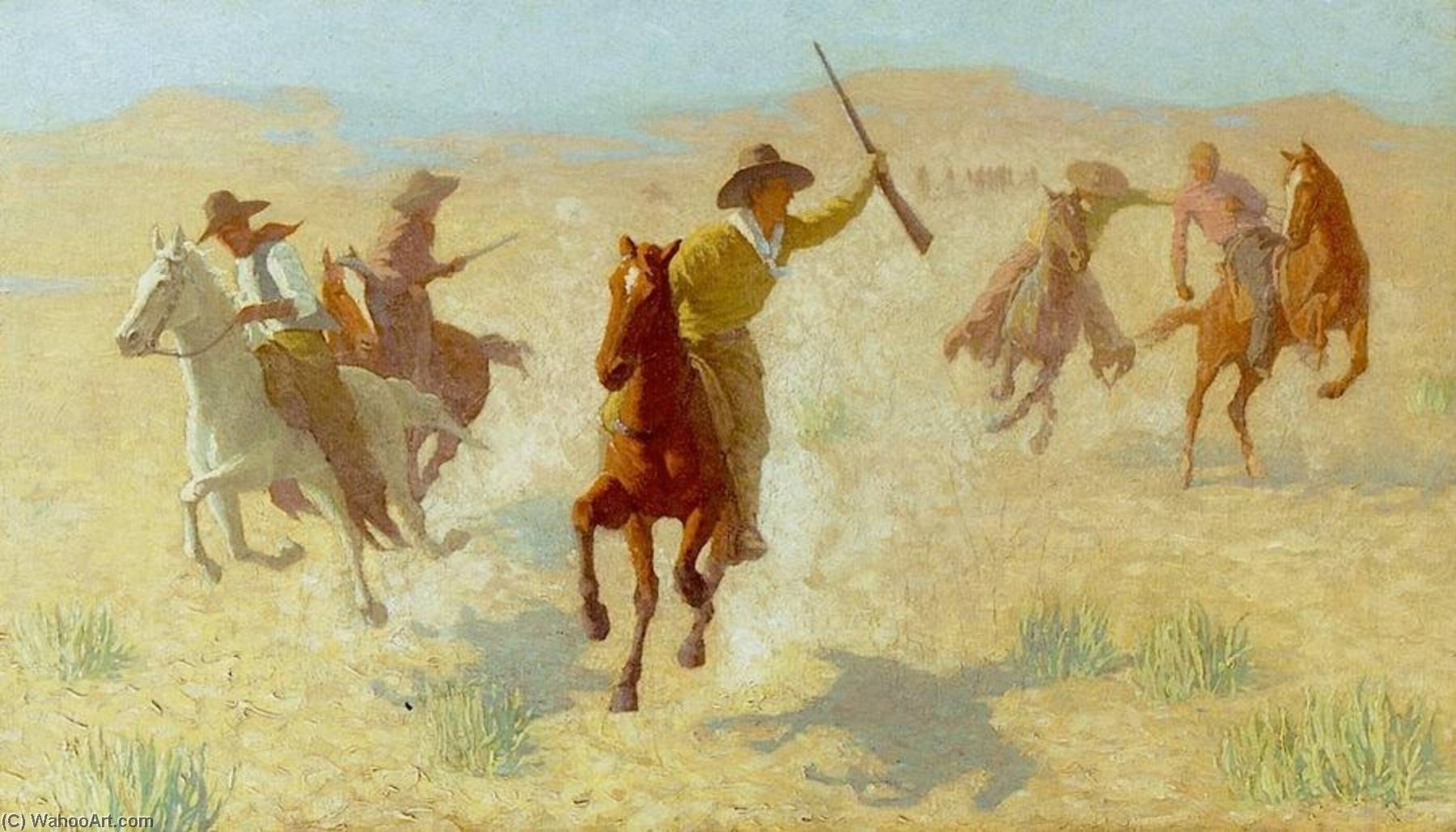
      The true essence of Deming’s genius emerged through his profound engagement with the indigenous tribes of the American West, most notably the Blackfeet. Rather than presenting mere ethnographic studies, he approached his subjects with a deep-seated respect that transcended the colonial gaze of his time. His paintings, such as the evocative Dog Travois Blackfoot Camp or the sweeping Indian Procession, are masterclasses in narrative tension and atmospheric depth. He captured the dignity of tribal life, the strength of the warriors, and the quiet, poignant moments of communal existence, often imbuing these scenes with a sense of timelessness that suggests a world existing both within and beyond the reach of modern industry. This mastery extended to his portrayals of wild animals, where he utilized his technical prowess to capture the raw, untamed spirit of the wilderness. Whether depicting a dynamic cavalry scene in The Indian Horse Race or the somber, heavy emotions found in The Mourning Brave, Deming’s brushwork served a higher purpose: to evoke the spiritual resonance of the land itself. His ability to balance tonal harmony with expressive, textured strokes allowed him to create landscapes that felt less like static images and more like living, breathing entities, often characterized by a certain haunting, solitary beauty.

      Artistic Versatility and Lasting Significance

      Deming’s creative output was remarkably diverse, reflecting an artist who refused to be confined by a single medium or discipline. While he is most celebrated for his oil paintings, his talents as a sculptor, illustrator, and muralist allowed him to leave a multifaceted mark on American art history. His skill as an illustrator brought fine art to a broader audience, and his monumental murals even reached the heights of national recognition when one of his designs was adapted for use on United States postage. This versatility ensured that his vision of the American spirit permeated both the galleries of the elite and the everyday lives of the public. The historical significance of Edwin Willard Deming lies in his role as a bridge between eras. He stood at the intersection of the 19th-century tradition of meticulous observation and the 20th-century movement toward psychological and symbolic expression. Through his work, the legends of the American West were preserved not just as historical facts, but as enduring symbols of human resilience and natural majesty. Today, his legacy continues to captivate, offering a window into a period of profound transformation through an artistic lens that remains as evocative and emotionally resonant as ever.