Atelier — Tasuta kohaletoimetamine üle maailma — Tarneaeg 2–6 nädalat
      Cimabue, 1240 – 1302

      52 kulubumatamatum Cimabue maalistikut, järjestatud

      Cimabue kõige armastatum teos on Madonna and Child Enthroned (Maesta) (1285). Lugejate poolest kõige paremini tuntud tablaga järnevad The Mocking of Christ (1280) ja Kristus (1287). Meie kataloogist löytyb 52 teost kunstnikult Cimabue: siin on 52 kõige kuulsamat, mille juures on märgitud aasta, muuseum ja info selle kohta, mis teeb teose meeldivaks.

      Reiting põhineb meie populaarsusindeksil, mis koondab iga teose otsingud, külastused ja tellimused. Uuendatud oktoober 2026. Iga selle lehekülje maali saab tellida kas linatele kangale käsitsi maalatuna nagu õlimaalide reproduktsiooni või valitud suuruses fine art trükkina.

      Cimabue portree
      Cimabue · 1240 – 1302
      Sündinud · surnud
      1240 – 1302, Firenze
      Suunata
      Protorenessanss
      Meie kataloogis olevad teosed
      52
      Kõige tuntud
      Madonna and Child Enthroned (Maesta) (1285)
      Enamasti teoseid on
      Galleria degli Uffizi

      Cimabue top 10 maalist: tablood, mille kohta kõik teavad

      Madonna and Child Enthroned (Maesta) (1285) autor Cimabue
      1

      Madonna and Child Enthroned (Maesta)

      1285 · Acrylic

      Giovanni Cimabue’s “Madonna and Child Enthroned,” painted around 1285 in Florence, isn't merely a depiction of religious piety; it’s a pivotal moment in artistic evolution—a defiant whisper against the rigid formalism of Byzantine art that heralds the glorious arrival of the Renaissance.

      The Mocking of Christ (1280) autor Cimabue
      2

      The Mocking of Christ

      1280 · Tempera On Panel · Louvre'i muuseum, Pariis

      The air within the frame feels heavy, thick with the tension of a crowd pressing inward. At the center of this small, wooden world stands Jesus, his body draped in a deep blue cloak over a red robe. He does not fight back. His arms hang limp, and his expression remains impassive, even as the figures around him surge with aggression. A man reaches upward, his fingers grasping at the…

      Kristus (1287) autor Cimabue
      3

      Kristus

      1287 · Tempera puitpaneelil · Museo dell'Opera di Santa Croce, Firenze

      Bütsantini mõjutuste meistriteos Cimabue "Ristilinei" seisab monumentaalsete 13. sajandi lõpu teostena, kehastades üleminekut bütsantinlikust ikonograafiast varajasse renessanslikku realismi. Umbes aastal 1287 valminud see suuremõõtmeline risti teos on tõend Cimabue innovaatilisest lähenemisviisist, ühendades traditsioonilise religioosuse sümbolika ulevnevate kunstitehnikatega, mis avasid tee tulevatele meistritele nagu Giotto. Teema ja kompositsioon Teos kujistab Jeesus Kristuse ristilinei tegemist, mis on kristliku kunsti keskne teema. Kompositsioon järgib traditsioonilist risti kujule, kus Jeesuse figuur on prominentne ja…

      Assisi püha Franciscus (detail) autor Cimabue
      4

      Assisi püha Franciscus (detail)

      Akrüül võimlusel

      Cimabue’s „Assisi püha Franciscus (detail)” ei ole pelgalt religioosse figuuri kujutis; see on empaatiline kokkuvõte algavast humanismist, mis määrkas peagi üles Itaalia renessanssi. Umbes aastatel 1285–1290 maalisitud intiimne stseen püüab kinni sügava helluse hetke – püha Franciscuse ja noore lapse omavahelist kättisedel oleku, mis kiirgab peaaegu käegitsetavat rahu. Teos seisab kui oluline tunnistuskasutus Cimabue rollis Lääne kunstis, suunates seda eemale Bütsantsi ikonograafia rigiidne vormilisusest pooleid, korterlikum ja emotsionaalselt resonantssem stiil.…

      Ühendatud Madonna (detail) (1285) autor Cimabue
      5

      Ühendatud Madonna (detail)

      1285 · Akrüül võimlusel · Galleria degli Uffizi, Firenze

      Pilk jumalikku suurmeediusse: Cimabue'i *Madonna in Majesty (detail)* See vapustav üksuse Cimabue'i 1285. aastal maalatud teosest *Madonna in Majesty* pakub lummavat vaadet üleminekut piisklasest traditsioonist Itaalia kunstis kukkumas Renessanssi. Mõõtmustel 91 x 7lik cm mõõtmistega see fragment kehastab oma ajastu vaimset põletust ja kunstilist uuendust. Piiskla juured ja tekelev realism Cimabue (umbik. 1240–1302), kes sündis Florencis nimega Cenni di Pepo, on ajaloo võtmefiguur. Ta mängis murrolisult rolli stabiilse Italo-Bytsantsi stiili…

      Üksildane Madonna (detail) (1285) autor Cimabue
      6

      Üksildane Madonna (detail)

      1285 · Tempera puitpaneelil · Galleria degli Uffizi, Firenze

      Pilk jumalalikku suurmeediusse: Cimabue *Madonna Majesteetsuses* (detail) See vapustav detail Cimabue 1285. aastal maalistatud teosest *Madonna Majesteetsuses* pakub lummavat vaadet üleminekut piisklasest traditsioonist avarnevad Renaissance ajastu uuele algusele. Vaatamata sellele, et see paneel mõõdetakse vaid 48 x 39 cm, peidab see oma väikuse taha tohutut kunstilist jõudu ja ajaloolist tähtsust, olles praegu säilitatud Florentsis, presteesse Galleria degli Uffizisse kuulavas muuseumis. Teema ja kompositsioon See fragment keskendub osale suuremast kompositsioonist, mis…

      Crucifix (1268) autor Cimabue
      8

      Crucifix

      1268 · Tempera On Panel · San Domenico, Arezzo

      In the heart of Italian art history, Giovanni Cimabue stands as a monumental figure, a master who skillfully navigated the artistic currents flowing from the rigid grandeur of the Byzantine Empire toward the burgeoning innovations of the early Renaissance. His Crucifix is not merely a religious icon; it is a profound testament to a period of transformative change. Painted with an unwavering determination that earned him the nickname “bull-ed,” Cimabue…

      Apocalyptical Christ (detail) (1280) autor Cimabue
      9

      Apocalyptical Christ (detail)

      1280 · Fresco

      A Glimpse into the Divine: Cimabue’s *Apocalyptical Christ (detail)* Subject & Composition: This captivating detail, taken from Cimabue's monumental fresco *Apocalyptical Christ*, focuses on three majestic angels in dynamic flight. They surge upwards, seemingly bursting forth from the wall itself, their forms imbued with a sense of urgent announcement and celestial power. The composition is powerfully vertical, drawing the viewer’s eye heavenward. Style & Historical Context: Created around 1280 in…

      Enthroned Madonna with Angels (1285) autor Cimabue
      10

      Enthroned Madonna with Angels

      1285 · Fresco

      In the quiet sanctity of the Pieve di Santa Maria in Arezzo, a masterpiece breathes with the weight of centuries. Giovanni Cimabue’s Enthroned Madonna with Angels is not merely a fresco; it is a profound threshold between two worlds. Executed around 1285, this monumental work serves as a luminous bridge between the rigid, formal elegance of the Byzantine tradition and the burgeoning humanism of the Italian Proto-Renaissance. To gaze upon…

      Veel Cimabue lamedat pinda, 11 kuni 52

      Crucifix (detail) (1268) autor Cimabue
      #13

      Crucifix (detail)

      1268 · San Domenico

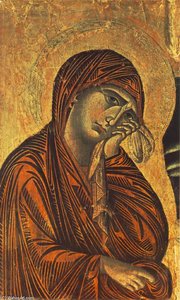
      A Glimpse into Divine Sorrow: Cimabue’s *Crucifix (detail)* This exquisite detail from Cimabue's larger *Crucifix* (circa 1268) offers a profoundly moving encounter with the Virgin Mary and infant…

      Tooge see valguse koos koju →
      The Madonna in Majesty (Maestà) (1285) autor Cimabue
      #16

      The Madonna in Majesty (Maestà)

      1285 · Galleria degli Uffizi

      Giovanni Cimabue’s *Madonna in Majesty*, painted around 1285, stands as a pivotal artwork—a testament to the burgeoning artistic spirit of Florence during its transition from Byzantine influences towards…

      Telli see lühend →
      St Luke (detail) (1280) autor Cimabue
      #18

      St Luke (detail)

      1280

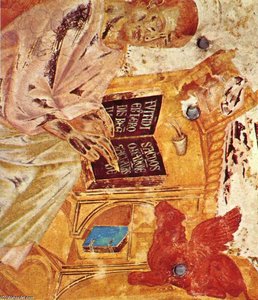
      A Glimpse into a Changing World: Cimabue’s *St Luke (detail)* This captivating detail from Cimabue's fresco of St. Luke offers a profound window into the pivotal moment when…

      Tooge see valguse koos koju →
      St Luke (detail) (1280) autor Cimabue
      #20

      St Luke (detail)

      1280

      This captivating detail from Cimabue's fresco of St. Luke offers a profound window into a pivotal moment in art. Painted around 1280, the fragment focuses on St. Luke,…

      Apocalyptical Christ (detail) (1280) autor Cimabue
      #21

      Apocalyptical Christ (detail)

      1280

      Apocalyptical Christ (detail) – A Byzantine Echo in Florentine Art The fresco depicting “Apocalyptical Christ” by Cimabue stands as an extraordinary testament to the artistic crossroads of the…

      Telli see lühend →
      Crucifix (1280) autor Cimabue
      #23

      Crucifix

      1280

      Cimabue's “Crucifix,” painted around 1283 in Florence, stands as a pivotal work not merely for its artistic merit but for its profound role in marking the transition from…

      Tooge see valguse koos koju →
      Crucifix (detail) (1268) autor Cimabue
      #24

      Crucifix (detail)

      1268 · San Domenico

      Cimabue's “Crucifix (detail),” painted in 1268, is more than just a depiction of Christ on the cross; it’s a profound meditation on suffering and faith, a pivotal work…

      Tooge see valguse koos koju →
      St Matthew (detail) (1280) autor Cimabue
      #25

      St Matthew (detail)

      1280

      A Florentine Pioneer: Exploring Cimabue’s St Matthew The painting “St Matthew,” attributed to Cimabue (c. 1240 – 1302), isn't merely a depiction of Saint Matthew; it represents a…

      Tooge see valguse koos koju →
      St John (detail) (1280) autor Cimabue
      #26

      St John (detail)

      1280

      Cimabue's "St John" (detail), painted around 1280, offers more than just a portrait; it presents a profound meditation on faith, solitude, and the nascent shift in artistic sensibilities…

      Tooge see valguse koos koju →
      St Matthew (detail) (1280) autor Cimabue
      #27

      St Matthew (detail)

      1280

      Giovanni Cimabue’s “St Matthew,” housed in detail within a monumental 450 x 900 cm tempera painting on poplar panel, represents an astonishing leap forward from the prevailing artistic…

      Tooge see valguse koos koju →
      Crucifix (detail) (1268) autor Cimabue
      #28

      Crucifix (detail)

      1268 · San Domenico

      A Beacon of Early Renaissance Emotion: Cimabue’s Crucifix (Detail) Giovanni Cimabue, born Cenni di Pepo around 1240 in Florence, represents a pivotal moment in Western artistic evolution—a courageous…

      Tooge see valguse koos koju →
      Virgin and Child autor Cimabue
      #32

      Virgin and Child

      Cimabue’s “Virgin and Child,” dating from approximately 1280, is more than just a depiction of the Madonna and Child; it’s a profound statement of artistic transition. This painting,…

      Tellinime käsitsi maaldetud →
      Virgin and Child autor Cimabue
      #34

      Virgin and Child

      A Dawn of Byzantine Grace: Exploring Cimabue’s Virgin and Child Giovanni Cimabue (c. 1240 – 1302), often hailed as “the Florentine Dawn,” stands as an undeniable cornerstone in…

      Tooge see valguse koos koju →
      Virgin Enthroned with Angels (1290) autor Cimabue
      #35

      Virgin Enthroned with Angels

      1290 · Louvre'i muuseum

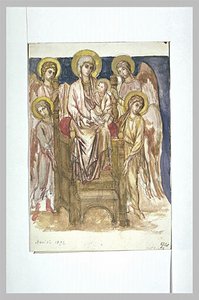
      A Dawn of Innovation: Cimabue’s Virgin Enthroned with Angels Giovanni Cimabue, born Cenni di Pepo around 1240 in Florence, represents a pivotal moment in the artistic landscape—a courageous…

      Telli see lühend →
      Saint Francis (1290) autor Cimabue
      #37

      Saint Francis

      1290

      A single standing figure occupies the vertical composition of this wooden panel. Clad in a heavy monastic habit, the saint is rendered with rhythmic, curving contours that define…

      Tellinime käsitsi maaldetud →
      Madonna with Child (1284) autor Cimabue
      #38

      Madonna with Child

      1284

      Cimabue’s “Madonna with Child,” painted in 1284, isn’t merely a depiction of the Virgin Mary and her infant son; it is a pivotal moment in the artistic evolution…

      Telli see lühend →
      Vision of the Throne (1277) autor Cimabue
      #39

      Vision of the Throne

      1277

      The composition of Vision of the Throne by Cimabue is organized through a hierarchical and symmetrical arrangement. At the center of the work, a luminous mandorla encloses a…

      Miracle of Saint Peter (1277) autor Cimabue
      #41

      Miracle of Saint Peter

      1277

      The air within the Upper Basilica in Assisi feels heavy with the weight of centuries, yet the scene unfolding on the plaster remains startlingly immediate. In this late…

      Vault of the Evangelists (1277) autor Cimabue
      #42

      Vault of the Evangelists

      1277

      To look upward within the Upper Church of San Francesco in Assisi is to encounter a ceiling that breathes with the weight of the late thirteenth century. The…

      Dormition (1277) autor Cimabue
      #43

      Dormition

      1277

      The transept of the Upper Basilica of San Francesco in Assisi holds this fragmented fresco, a scene of profound solemnity. It captures the death of the Virgin Mary,…

      Peter heals a lame man (1277) autor Cimabue
      #44

      Peter heals a lame man

      1277

      The religious fresco titled Peter heals a lame man was executed by the artist Cimabue. This work captures a moment of divine intervention, where the apostle reaches out…

      Cimabue lõikud perioodide kaupa

      Florentine Dawn

      1280 – 1284 · 3 teost selles nimekirjas

      Mida Cimabue kõige rohkem maalis

      Neli teemat, mis esinevad neil lätistes kõige sagedamini, koos nende kõige armastatumate näidetega.

      Kuna Cimabuei lamedad pildid rippuvad siin

      Kümne 8 muuseumi kollektsioonid, mis sisaldavad kõige rohkem sellel lehel esitatud teoseid.

      Muuseumid Linn Cimabue teosid Selle nimekirja maalid
      Galleria degli Uffizi, FirenzeGalleria degli Uffizi Firenze 5 Ühendatud Madonna (detail), Üksildane Madonna (detail), The Madonna in Majesty (Maestà)
      San Domenico, ArezzoSan Domenico Arezzo 4 Crucifix, Crucifix (detail), Crucifix (detail)
      Louvre'i muuseum, PariisLouvre'i muuseum Pariis 2 The Mocking of Christ, Virgin Enthroned with Angels
      Museo dell'Opera di Santa Croce, FirenzeMuseo dell'Opera di Santa Croce Firenze 1 Kristus
      Museo dell'Opera del Duomo, PisaMuseo dell'Opera del Duomo Pisa 1 Christ Enthroned between the Virgin and St John the Evangelist (detail)
      The Frick Collection, New YorkThe Frick Collection New York 1 The Flagellation of Christ
      Santa Maria dei Servi, BolognaSanta Maria dei Servi Bologna 1 Madonna Enthroned with the Child and Two Angels
      National Gallery, LondonNational Gallery London 1 The Virgin and Child Enthroned with Two Angels

      Cimabue kõige armastatum lõenatav teos iga kümnendiga

      1. 1260s
        Crucifix (1268) autor Cimabue
        Reiting: 8 / 52

        Crucifix

        Vanus 20–29 · San Domenico

        In the heart of Italian art history, Giovanni Cimabue stands as a monumental figure, a master who skillfully navigated the artistic currents flowing from the rigid grandeur of…

      2. 1270s
      3. 1280s
        Madonna and Child Enthroned (Maesta) (1285) autor Cimabue
        Lentik 1 / 52

        Madonna and Child Enthroned (Maesta)

        Vanus 40–49

        Giovanni Cimabue’s “Madonna and Child Enthroned,” painted around 1285 in Florence, isn't merely a depiction of religious piety; it’s a pivotal moment in artistic evolution—a defiant whisper against…

      4. 1290s
        Virgin Enthroned with Angels (1290) autor Cimabue
        35 / 52

        Virgin Enthroned with Angels

        Vanus 50–59 · Louvre'i muuseum

        A Dawn of Innovation: Cimabue’s Virgin Enthroned with Angels Giovanni Cimabue, born Cenni di Pepo around 1240 in Florence, represents a pivotal moment in the artistic landscape—a courageous…

      5. 1300s

      Cimabue tablidet: vastused teie küsimustele

      Mis on Cimabue kõige tuntum maaliamat?Loe vastust

      Madonna and Child Enthroned (Maesta) (1285), järglased on The Mocking of Christ (1280) ja Kristus (1287).

      Kui vana Cimabue oli, kui teos Madonna and Child Enthroned (Maesta) maalis?Loe vastust

      1240 aastal sündinud Cimabue oli 45 aastat vanus: Madonna and Child Enthroned (Maesta) on pärinev aastast 1285.

      Millised on 10 kuulsumat maali kunstniku Cimabue teosena?Loe vastust

      Madonna and Child Enthroned (Maesta), The Mocking of Christ, Kristus, Assisi püha Franciscus (detail), Ühendatud Madonna (detail), Üksildane Madonna (detail), Crucifix, Crucifix, Apocalyptical Christ (detail) ja Enthroned Madonna with Angels. Iga teos ülal toodud reitingus on märgitud koos aasta ja muuseumiga.

      Kui palju teoseid Cimabue kokku kirjoonud on?Loe vastust

      Kataloogis on 52 teost kunstnikult Cimabue, kuupäevadelt 1268 kuni 1301.

      Kust saan näha Cimabue kõige kuulsamaid linateid?Loe vastust

      Peamiselt Galleria degli Uffizi (Firenze), San Domenico (Arezzo) ja Louvre'i muuseum (Pariis) asukohas; ülaltoetud nimekiri esitab kirja iga muuseumi ja selle tablood.

      Millal maalis Cimabue oma kõige armastatumad lamedad pildid?Loe vastust

      1280s perioodil, mis sisaldas 22 kogu selle lehe 52 teosest, oli nende hulgas Madonna and Child Enthroned (Maesta).

      Millised on Cimabue tuntud esimesed ja viimased tablood?Loe vastust

      Siin olevad kõige vanamad lamedad pildid on Crucifix (1268); kõige uuemad on Christ Enthroned between the Virgin and St John the Evangelist (detail) (1301).

      Mida Cimabue kõige enam maalis?Loe vastust

      Medieval art (15), Angels (15) ja Virgin mary (14), kogu selle lehekülje 52 teose kohta.

      Millist tehnikat Cimabue kõige enam kasutas?Loe vastust

      Acrylic On Canvas, mida on kasutatud 13 kuni 52 teoseks sellel lehel.

      Millisse Millises suunas on Cimabue maal on tegutsenud?Loe vastust

      Protorenessanss, nagu sellel lehel olevad tablood näitavad.

      Millised Cimabue lamedad tablavid Galleria degli Uffizi muuseumis rihangad?Loe vastust

      Galleria degli Uffizi, Firenze säilitab 5 sellel lehel olevat teost, seda hulka kuuluvad ka Ühendatud Madonna (detail), Üksildane Madonna (detail) ja The Madonna in Majesty (Maestà).

      Kas ma saan osta Cimabue linate koos reproduktsiooni?Loe vastust

      Jah. Iga maali sellel lehel saab tellida oma lehelt kas käsitsi maalatuna õli-reproductionina või suurepärase kunstiprentina valitud suuruses.

      Cimabue: elu värvides

      The Life and Identity of Cimabue

      In the bustling streets of Florence, Italy, a man named Giovanni Cimabue began his life around 1240. He was known to many by the names Cenni di Pepo or Cenni di Pepi, names that belonged to a man destined to shape the visual language of his age. He was a painter and a designer of mosaics, a craftsman whose hands worked with both the delicate brush and the enduring stone. His spirit was said to be strong, perhaps even rebellious, earning him a nickname that suggested a bull-headed determination. This stubbornness was not a flaw, but rather the driving force that allowed him to look at the rigid traditions of the Byzantine style and seek something more human.

      His path was one of constant movement and evolving purpose. While his roots remained firmly planted in the Florentine tradition, his work carried him across the landscape of Tuscany. He did not merely replicate the icons of the past; he sought to breathe a sense of life into the figures he painted. This ambition led him to experiment with how light might fall upon a face or how a body might occupy space. He was a man caught between two worlds, honoring the spiritual formality of the old ways while reaching toward a new way of seeing the world through a more natural lens.

      The final years of his life took him away from the city of his birth, leading him toward the coast. He eventually passed away in Pisa in 1302. Though his life was marked by the quiet labor of the workshop and the grand scale of mosaic design, his presence left a permanent mark on the history of Italian art. He lived through a time of profound change, acting as a bridge for those who would follow in his footsteps.

      Early Life and Artistic Training

      Born in Florence, Italy, around 1240, the young man who would become known as Cimabue entered a world where the traditions of Byzantium still held a firm grip on the spirit of art. He was a child of the Florentine streets, growing up in a landscape where the heavy, golden formality of the East met a new, restless desire for something more human. While the exact details of his childhood remain veiled by the passage of centuries, his early years were clearly shaped by the rigorous discipline of the Florentine workshops. Here, he learned to command the delicate medium of egg tempera and the demanding art of mosaic design, skills that would define his long career as both a painter and a designer of mosaics.

      His training was not merely a matter of learning to apply pigment to wood, but a deep immersion into the sacred language of iconography. He absorbed the ways in which light was used to signify the divine, often through the application of shimmering gold leaf that seemed to radiate from the panel itself. Yet, even in these formative years, a certain strength of will began to emerge. There was a sense that he was not content to simply replicate the flat, symbolic figures of the past. Instead, he began to experiment with the way a body might occupy space, seeking to give his figures a sense of weight and presence that had been absent in the works of those who came before him. This early struggle to balance established religious tradition with a burgeoning interest in the natural world would become the defining characteristic of his hand.

      Artistic Technique and Evolving Style

      In the quiet labor of his workshop, Cimabue sought to breathe a new kind of life into the sacred figures of his age. He worked largely with egg tempera on wood panels, a medium that demanded a patient, disciplined hand. To achieve the celestial glow required for his religious subjects, he often applied this pigment over a background of shimmering gold leaf. In other instances, he utilized distemper with gold leaf to create a sense of divine light. His hands were equally adept at the grand scale of fresco and the intricate, enduring patterns of mosaic, showing a versatility that allowed him to move between the walls of a cathedral and the intimate size of a devotional panel.

      As his vision matured, a subtle change began to appear in the way he treated the human form. He moved away from the flat, two-dimensional silhouettes of the Byzantine tradition, seeking instead to capture the weight and presence of real flesh. He achieved this through a more sophisticated use of shading to suggest volume, allowing a face or a limb to appear rounded and three-dimensional rather than merely outlined. This growing interest in lifelike figural proportions meant that his saints and Madonnas possessed a physical reality that felt closer to the people who knelt before them. He was no longer content with mere symbols; he wanted to show the body as a vessel of actual weight and emotion.

      Major Commissions and Key Works

      The early years of his career reveal a man already wrestling with the weight of tradition. Around 1268, he produced a Crucifix, a work that would later be studied for its profound meditation on suffering. This was followed by the Crucifix at San Domenico in Arezzo, dating around 1270, where the body of Christ appears to buckle under the weight of his own agony. In that same period, he painted the Virgin and Child in Majesty surrounded by Six Angels, a work from 1270 that shows his hand working within the established patterns of the time. Even in these early efforts, one can sense a spirit seeking to move beyond the flat, distant figures of the past.

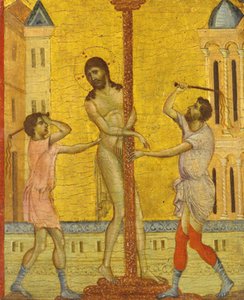
      As the decades passed, his brush grew more daring. By 1278, he had completed the Madonna Enthroned with the Child, St Francis and Four Angels, a composition that brought a new sense of presence to the sacred figures. This evolution continued into the next decade. Around 1280, he executed the Maestà, now held in the Louvre, and the Flagellation of Christ, a complex scene that suggests a growing interest in spatial relationships. He was a man of many hands, also working in the medium of mosaic, leaving his mark upon the very stones of the Baptistery of Florence.

      His later works show a refined ability to suggest volume and human emotion. A detail from his Madonna in Majesty, painted in 1285, reveals a subtle use of shading that hints at the physical reality of the Virgin. Even in smaller, more intimate pieces like the 13th-century Mocking of Christ, his ability to capture a sense of human experience remains evident. His output was vast, spanning from large altarpieces to small, devotional panels.

      The Master and His Famous Pupil

      The legacy of Cimabue lived on through the hands of those who sat at his side in the Florentine workshops. Among his most significant pupils was Giotto di Bondone, who received crucial training under Cimabue's guidance. Their relationship was marked by a dynamic that pushed the boundaries of what a painter could achieve. It is said that during his apprenticeship, the young Giotto once playfully painted a fly upon a portrait Cimabue was working, a small prank that revealed a spirit as spirited as the master's own. While Giotto would eventually move toward a more radical naturalism, his foundation was built upon the lessons learned from Cimabue's evolving approach to form and expression.

      Beyond this famous connection, Cimabue's influence reached other talented hands that operated within his artistic orbit. One such figure is the artist known as the Master of Varlungo, who has been identified as a principal pupil of Cimabue. This painter worked during the same transformative period, absorbing the stylistic shifts that Cimabue helped initiate. Through these students, the transition from the rigid Byzantine traditions toward a more humanistic style was carried forward, ensuring that the innovations of the master would ripple through the generations of Italian painters.

      Where to See His Masterpieces Today

      To follow the path of his brush is to travel across the great cities of Europe and beyond. In Paris, the Musée du Louvre holds the Maestà, a work that once graced the church of San Francesco in Pisa. The museum also recently welcomed The Mocking of Christ, which was acquired in 2023. These works allow us to see how his hand moved through the halls of such grand institutions, bridging the distance between the sacred spaces of the past and the public galleries of the present.

      The spirit of his work remains deeply rooted in the Italian landscape. In Florence, the Galleria degli Uffizi preserves a detail of the Madonna in Majesty, offering a close look at his evolving hand. Nearby, the Museo dell'Opera del Duomo in Pisa keeps a detail of Christ Enthroned between the Virgin and St John the Evangelist. If one travels to Assisi, the Madonna with Child Enthroned, Four Angels and St Francis can still be found, while the Basilica of San Domenico in Arezzo holds the Crucifix that shows his departure from older traditions.

      His reach extended far across the seas, finding homes in collections far from his Florentine origins. The Frick Collection in New York preserves The Flagellation of Christ, and the National Gallery in London holds a detail of the Crucifix. These scattered treasures remind us of the many hands that have cared for his legacy through the centuries.

      Kõik 52 teost Cimabue →