Atelier — Tasuta kohaletoimetamine üle maailma — Tarneaeg 2–6 nädalat
      Edgar Degas, 1834 – 1917

      Edgar Degas's 100 Most Famous Paintings

      The Absinthe Drinker (1876) is the painting Edgar Degas is best remembered for; it belongs to the Musée d'Orsay, Pariis. Naine endast kuivatamas and The Dance Class (1873) complete the trio of best-loved canvases. Our catalogue counts 1,074 works by Edgar Degas. Here are the 100 most famous, with the year, the museum and the story of each canvas.

      Ranked by our popularity score, which combines the searches, visits and orders for each work. Updated oktoober 2026. Each painting on this page can be ordered as an oil reproduction painted by hand on linen canvas, or as a fine art print, made to the size you choose.

      Portrait of Edgar Degas
      Edgar Degas · 1834 – 1917
      Born · died
      1834 – 1917, Pariis
      Movement
      Impressionist realism
      Works in our catalogue
      1074
      Most famous
      The Absinthe Drinker (1876)
      Most works at
      Metropolitan Museum of Art

      The ten best-loved paintings by Edgar Degas

      The Absinthe Drinker (1876) by Edgar Degas
      1

      The Absinthe Drinker

      1876 · Õlimaal kangaruumil · Musée d'Orsay, Pariis

      Édouard Manet’s “The Absinthe Drinker,” completed around 1859, stands as a pivotal work in his oeuvre and arguably the first truly significant painting born from his burgeoning artistic vision. Initially dismissed by critics who favored academic conventions, this deceptively simple composition—a café scene featuring two figures seated at a table—has since cemented its place as an icon of Impressionism and a poignant reflection on the anxieties of modern life.

      Naine endast kuivatamas by Edgar Degas
      2

      Naine endast kuivatamas

      Akrüül võimlusel · National Gallery, London

      Põhjusades Prantsusmaal 19. sajandi teises pooles, Impressionism keetas uusi kunstilisi konventsioone ja väljas kihistas traditsioonilisi norme. Kunstnikud nagu Degas lahutasid end ajaloolistest ja müütilistest teemadest, pöörates selle asemel tähelepanu kaasaegse elu stseenidele. Intimism, mis oli Impressionismi sisevool, keskendus spetsifiliselt kodindesse sisekeskkondadele ja privaatsetele hetkidele. Teos "Naine endast kuivatamas" on sellest trendist täiuslik näide. Kuigi Degas vastandus sildistamisele kui "impressionist", jagas tema looming liikumuse pühendumust ajutiste hetkede püülemisele, valguse ja värvi…

      The Dance Class (1873) by Edgar Degas
      3

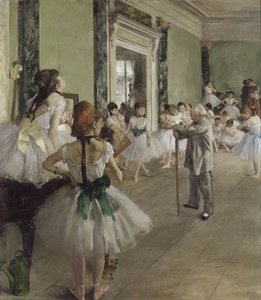
      The Dance Class

      1873 · Oil On Canvas · Musée d'Orsay, Pariis

      To step into Edgar Degas’s “The Dance Class” is to transcend the boundaries of time and enter a sanctuary of disciplined grace. Painted around 1873, this masterpiece does not merely present a scene of balletic rehearsal; it offers an intimate, almost voyeuristic window into the quiet intensity of the dance studio. Unlike the grand, staged spectacles often associated with the opera, Degas directs our gaze toward the unvarnished reality of…

      The Bellelli Family by Edgar Degas
      4

      The Bellelli Family

      Oil On Canvas · Musée d'Orsay, Pariis

      In the quiet, shadowed corners of a Parisian room, Edgar Degas captures something far more profound than a mere family gathering. The Bellelli Family, painted between 1858 and 1867, stands as an exquisite masterwork that transcends the boundaries of traditional portraiture. It is not simply a record of faces, but a psychological landscape where every gaze and posture whispers of unspoken tensions and deep-seated emotions. As one gazes upon this…

      Interior (also known as The Rape) (1868) by Edgar Degas
      5

      Interior (also known as The Rape)

      1868 · Õlimaal kangaruumil · Philadelphia Museum of Art, Philadelphia

      Edgar Degas’s “Interior,” often referred to as “The Rape,” is not merely a painting; it's an experience—a carefully constructed tableau of psychological tension and unspoken drama. Completed in 1868, this grisaille masterpiece resides within the Philadelphia Museum of Art, yet its power transcends its physical location, resonating with viewers long after they’ve turned away. It’s a work that invites speculation, prompting us to confront uncomfortable truths about human relationships and…

      Portraits in a New Orleans Cotton Office by Edgar Degas
      6

      Portraits in a New Orleans Cotton Office

      Portraits in a New Orleans Cotton Office Edgar Degas, one of the most celebrated artists of the Impressionist movement, gifted us Portraits in a New Orleans Cotton Office, an oil painting that encapsulates the very essence of his uncle’s cotton brokerage business during its calamitous bankruptcy. Completed in 1873, this masterpiece transcends mere visual representation; it stands as a testament to Degas' unparalleled skill and occupies a significant place within…

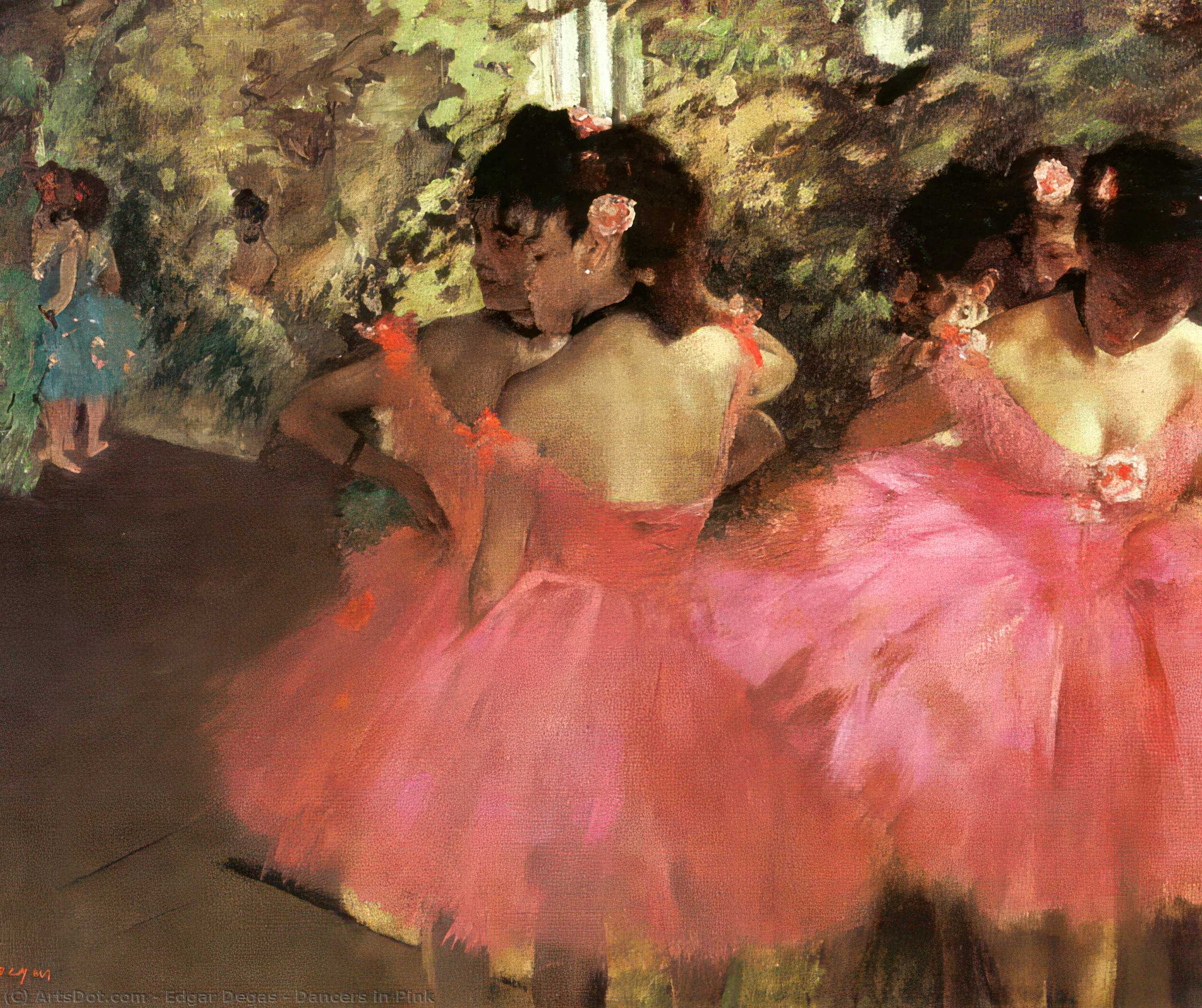
      Tantsijad pinkis (1885) by Edgar Degas
      7

      Tantsijad pinkis

      1885 · Õlimaal kangaruumil · Hill-Stead Museum, Farmington

      Balleti graatsus ja liikumine impressionistlikus säras Edgar Degase teos "Dancers in Pink" (Tantsijad roosas) on meistralikuldan esitus balletimaailmast, mis on lavastatud kunstniku iseloomuluse impressionistliku hõbedusega. See lummav teos kutsub vaatajat sisse tantsu dünaamilisse valdkonda, kus kohtuvad graatsus, liikumine ja elegants. Elav tantsikoht Maal kujutab elavat stseenit, kus balletitantsijad on liikumises ning nende roosad tutud keerlevad sooja toonide taustal. Degase võime tabada esitluseไหม ajutlikke hetki on selgelt nähtav kujude voolavuses ja…

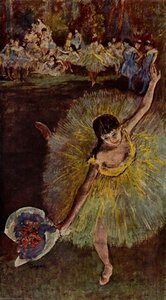
      Tantsija lilledega (1878) by Edgar Degas
      8

      Tantsija lilledega

      1878 · Akrüül võimlusel

      Ajast püjulnud hetk: Edgar Degas’i „Tantsija lilledega“ (Balletitüdrik) võlumaa Edgar Degas’i 1878. aasta meistriteos „Tantsija lilledega (balletitüdrik)“ ei ole pelgalt balletsujuna kujutis; see on ajutise hetke kokkuvõte – hangusolev hingamõrv vaeva ja graatsuse vahel. Maal tõmbab meid Pariisi balletimaailma vibratsioonikusse, mitte läbi suurestilisuse, vaid läbi intiimse tähelepanu. Noore tantsija kuju, kes on asetsitud keskmisel esitlushetkel, kallistab lillebuketti, ning tema olemus kiirgab nii jõudu kui ka haavatavust. Degas ei esita lihvitud…

      Miss Lola, tsirkus Fernando juures, NG L (1879) by Edgar Degas
      9

      Miss Lola, tsirkus Fernando juures, NG L

      1879 · Õlimaal kangaruumil

      Edgar Degase'i teos "Miss Lola, au Cirque Fernando" on rohkem kui lihtsalt maal; see on hetk, mis on jäädvustatud ajas, elava tsirkuseartistina, kes lennab õhus. 1879. aastal valminud maali keskpunktis on Miss Lola, akrobaat, kes on püütud tegevuses, tema liinid ja vormid väljendavad jõudu, graatsiat ja julgust. Degase'i oskus tabada liikumist ja hetke on siin eriti silmapaistev, luues vaatajas tunde kaasatust ja imetlust.

      Tantsijad tugireal 1 (1888) by Edgar Degas
      10

      Tantsijad tugireal 1

      1888 · Õlimaal kangaruumil · The Phillips Collection, Washington, D.C.

      Edgar Degase teos "Tantsijad tugireal 1" on rohkem kui pelgupilt; see on aknakujutis balletimaailma intiimsesse maailma, kus graatsia ja distsipliin sulavad kokku. Teose kaks ballerina, keskendunult harjutusrežiimi, kehastavad tantsukunstis peituvaid pühendumust ja elegantsi. Vaataja on kutsutud kaasa tundma sellele ainulaadsele hetkele, kus liikumine muutub ajatu kunstiks.

      Edgar Degas: canvases 11 to 100 of the ranking

      Naist vannituules (1892) by Edgar Degas
      #12

      Naist vannituules

      1892

      Intime Päevapilt – Edgar Degasi “Naise vannitu Tubas” Edgar Degasi meistriteos “Naise vannitu Tubas” (1892) on imelise pastakunstilise kujutuse näide impressionistliku intiimsusest ja vaikse uhkusega. See teos kutsub…

      Order this canvas →
      Hüve (1873) by Edgar Degas
      #13

      Hüve

      1873

      Sündinud Pildil – Edgar Degasi “Närvik” Edgar Degas’i 1873. aasta pilt “Närvik” on palju rohkem kui lihtsalt haiglas töötava naise portree. See on hetk, vangitud ajas, täis vaikset…

      Have it painted by hand →
      Kohvikus, tuntud ka nimega by Edgar Degas
      #14

      Kohvikus, tuntud ka nimega

      Grand Palais

      Hilaire-Germain-Edgar Degasi teos „Kohvikus”, mida umbes 1876. aastal maalistatud, ei ole pelgalt kujutis kahe isiku parimast õhtust Pariisis; see on hoolikalt jälgitud uuring inimeste vahelisest suhtlusest ja žestide…

      Bring this light home →
      Tantsijad (1898) by Edgar Degas
      #15

      Tantsijad

      1898

      This captivating pastel work by Edgar Degas offers a rare and intimate look beyond the dazzling spectacle of the ballet stage. Created in 1898, *Dancers* isn't about grand…

      Have it painted by hand →
      hilaire-germain-edgar degas

A Life Immersed in Movement

Born Hilaire-Germain-Edgar De Gas in Paris, 1834, Edgar Degas was an artist of fascinating contradictions. While often grouped with the Impressionists—Monet, Renoir, and others who revolutionized p (1874) by Edgar Degas
      #16

      hilaire-germain-edgar degas A Life Immersed in Movement Born Hilaire-Germain-Edgar De Gas in Paris, 1834, Edgar Degas was an artist of fascinating contradictions. While often grouped with the Impressionists—Monet, Renoir, and others who revolutionized p

      1874 · Metropolitan Museum of Art

      Tantsuklass: Edgar Degase'i Hingestatud Vaade Baleriinide Elule Edgar Degase’i "Tantsuklass" (1874) on rohkem kui pelgupilt; see on aknakaitseline vaade 19. sajandi Pariisi balletimaailma, kus graatsia ja distsipliin põimuvad…

      Order this canvas →
      Hobused Longchampis (1874) by Edgar Degas
      #17

      Hobused Longchampis

      1874 · Museum of Fine Arts

      Pilk Pariisi vabaaja kordum: Degas’i *Race Horses at Longchamp* dekodeerimine Edgar Degas’i teos *Race Horses at Longchamp* (1874) ei ole pelgalt spordisündmuse maal; see on elav hetkeline fotograaf…

      Bring this light home →
      Tantsija laval (1880) by Edgar Degas
      #18

      Tantsija laval

      1880 · Hamburger Kunsthalle

      Ühe hetke ilu: Edgar Degase „Tantsija laval” uurimine Edgar Degase vapustav pastellteos viib meid 1880. aasta Pariisi balletimaailma südamesse. Hamburgi Kunsthalle kollektsioonis paiknev „Tantsija laval” ei ole pelgalt…

      Order this canvas →
      The Star by Edgar Degas
      #20

      The Star

      Edgar Degas, a name synonymous with Impressionism, possessed a singular fascination that transcended mere artistic pursuit; he was utterly captivated by the world of ballet. Within his extensive…

      Order this canvas →
      Kahe tantsuõhtu tulevad staadiumile (1878) by Edgar Degas
      #21

      Kahe tantsuõhtu tulevad staadiumile

      1878

      Edgar Degas’i pastellimaal «Kahe tantsijat staaži sisse astudes» (1878) pole mitte ainult balleti pilt, vaid ka põimeline eelmainimise ja terava liikumise püüdmine. See teos, mis asub hinnatud kollektsioonis…

      Order this canvas →
      Head of a Woman (1874) by Edgar Degas
      #24

      Head of a Woman

      1874 · National Gallery

      Step closer, and you might find yourself caught in the stillness of this moment. There is no grand theatricality here, only the presence of an unknown woman, perhaps…

      Have it painted by hand →
      Two harlequins (1886) by Edgar Degas
      #25

      Two harlequins

      1886

      Edgar Degas, a titan of French Impressionism, stands apart from his peers not merely for stylistic innovation but also for an unyielding dedication to capturing the quiet dramas…

      Order this canvas →
      Istuv naine juukmeid kammamas (1890) by Edgar Degas
      #27

      Istuv naine juukmeid kammamas

      1890 · Musée d'Orsay

      Edgar Degas'i teos “Istuv naine kammamas juust”, mis valmis umbes 1890. aastal, ei ole pelgalt kujutis kodusest tegevusest; see on sügav uurimine naiselikkusest, haavatavusest ja igapäevase elu lendavast…

      Order this canvas →
      Yellow Dancers (In the Wings) (1875) by Edgar Degas
      #28

      Yellow Dancers (In the Wings)

      1875 · Art Institute of Chicago

      Three female figures occupy the foreground, positioned in a diagonal arrangement that leads the eye from the upper middle toward the lower right. The composition focuses on a…

      Bring this light home →
      Café Singer (1879) by Edgar Degas
      #29

      Café Singer

      1879 · Art Institute of Chicago

      A female singer occupies the center of this oil on canvas composition, her upper torso and head captured in a tight crop. The figure is positioned against a…

      Bring this light home →
      The Milliners (1882) by Edgar Degas
      #30

      The Milliners

      1882 · J. Paul Getty muuseum

      Two women sit at a worktable that cuts across the space at a sharp, unsettling angle. The room is crowded with the dark, rounded silhouettes of hat stands,…

      Bring this light home →
      Women Combing Their Hair (1876) by Edgar Degas
      #31

      Women Combing Their Hair

      1876 · The Phillips Collection

      Hilaire-Germain-Edgar Degas’s “Women Combing Their Hair,” painted circa 1876, is more than a simple depiction of domestic activity; it’s a profound meditation on movement, observation, and the fleeting…

      Have it painted by hand →
      A Roman Beggar Woman (1857) by Edgar Degas
      #33

      A Roman Beggar Woman

      1857 · Birmingham Museum and Art Gallery

      Edgar Degas oli üks impressionismi suurimaid meistreid, kes jäi maailmale hilisemas perioodis märkimiseks. Tema suurim saavutus oli balletti kujutamine, mis jäi tema kogu karjääril keskenduseks. Ta ei püsinud…

      Have it painted by hand →
      At the Ballet (1881) by Edgar Degas
      #34

      At the Ballet

      1881

      A Glimpse Behind the Curtain: Decoding Degas’s “At the Ballet” Edgar Degas's 1881 pastel work, *At the Ballet*, offers a captivating and unusually intimate view into the world…

      Have it painted by hand →
      The Blue Dancers by Edgar Degas
      #36

      The Blue Dancers

      A Glimpse Behind the Curtain: Degas’s “The Blue Dancers” Edgar Degas's “The Blue Dancers,” painted in 1897, is more than just a depiction of ballerinas; it’s an intimate…

      Order this canvas →
      Tantsija oma gaabrikambris (1879) by Edgar Degas
      #38

      Tantsija oma gaabrikambris

      1879 · Norton Simoni muuseum

      Edgar Degas'e "Dancer in her Dressing Room", maalitud 1879. aastal, ei ole lihtsalt balleriina kuvustus; see on sügav meditatioon hetkiliikuvastuse, kunstlikku loomise üksildus ja Pariisi baletimaailma teateristliku tausta…

      Order this canvas →
      Orchestra of the Opera (1869) by Edgar Degas
      #40

      Orchestra of the Opera

      1869

      Edgar Degas' "Orchestra of the Opera," painted in 1869, isn’t merely a depiction of musicians; it’s a meticulously observed slice of Parisian life, a backstage tableau brimming with…

      Order this canvas →
      The Bather (La Baigneuse) (1895) by Edgar Degas
      #41

      The Bather (La Baigneuse)

      1895 · Reading Public Museum

      The painting depicts a woman reclining on her side in a bathtub filled with water. She is positioned centrally within the frame, bathed in diffused natural light filtering…

      Have it painted by hand →
      Russian Dancers (1899) by Edgar Degas
      #42

      Russian Dancers

      1899

      A Glimpse into Movement and Modernity: Degas’s “Russian Dancers” Edgar Degas, a master of capturing fleeting moments and modern life, presents us with a captivating scene in “Russian…

      Bring this light home →
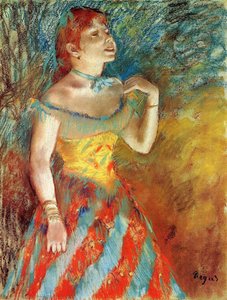
      Singer in Green (1884) by Edgar Degas
      #46

      Singer in Green

      1884 · Metropolitan Museum of Art

      In the heart of 1884 Paris, amidst the gaslit glow of cabarets and the rhythmic pulse of urban nightlife, Edgar Degas captured a moment that transcends time. Singer…

      Order this canvas →
      Naist kammib juukseid (1894) by Edgar Degas
      #48

      Naist kammib juukseid

      1894 · Metropolitan Museum of Art

      A Moment of Intimate Reflection: Degas’s *Woman Combing Her Hair* Edgar Degas's 1894 pastel, *Woman Combing Her Hair*, is a captivating study in quiet intimacy and the beauty…

      Bring this light home →
      Woman at a Window (1872) by Edgar Degas
      #51

      Woman at a Window

      1872 · Courtauld Gallery

      Edgar Degas's “Woman at a Window,” painted in 1872, is more than just a depiction of a figure observing the world outside; it’s a masterful exploration of light,…

      Order this canvas →
      Ballet Scene (1880) by Edgar Degas
      #52

      Ballet Scene

      1880 · Dixon Gallery and Gardens

      Ballet Scene is a painting by Edgar Degas. The composition focuses on a single female dancer positioned toward the front right of the stage. This figure is rendered…

      Order this canvas →
      Four Dancers (1902) by Edgar Degas
      #53

      Four Dancers

      1902

      To stand before Four Dancers is to step directly into a moment suspended in time—a breath held just before the music swells, or perhaps, the perfect echo after…

      Order this canvas →
      A Carriage at the Races (1872) by Edgar Degas
      #54

      A Carriage at the Races

      1872 · Museum of Fine Arts

      The painting depicts a horse-drawn carriage situated on a grassy field. Several horses are visible within the scene; some are positioned in the foreground while others are further…

      Have it painted by hand →
      Lady with a Parasol (1871) by Edgar Degas
      #55

      Lady with a Parasol

      1871 · Courtauld Gallery

      The scene unfolds through Lady with a Parasol, a work painted by Edgar Degas in 1871. This piece captures a fleeting moment of existence, frozen in time through…

      Order this canvas →
      Singer with a glove (1878) by Edgar Degas
      #57

      Singer with a glove

      1878

      To gaze upon Degas's depiction of "Singer with a glove" is to be instantly transported into the vibrant, yet fleeting, atmosphere of a Parisian cabaret in the late…

      Order this canvas →
      Mme Jacques Fourchy (1883) by Edgar Degas
      #58

      Mme Jacques Fourchy

      1883

      Edgar Degas's "Mme Jacques Fourchy," painted in 1883, isn’t merely a portrait; it’s a carefully constructed tableau vivant—a captured moment brimming with subtle observation and quiet intensity. This…

      Have it painted by hand →
      Field of Flax (1892) by Edgar Degas
      #59

      Field of Flax

      1892

      The artwork is a pastel depiction of a landscape featuring a field of flax. In the foreground, there are bright yellow flowers scattered throughout the scene. A diamond-shaped…

      Order this canvas →
      The Return of the Herd (1896) by Edgar Degas
      #60

      The Return of the Herd

      1896 · New Walk Museum - Art Gallery

      The painting depicts a rural scene featuring two horses positioned on a road in front of a house. One horse is situated toward the left side of the…

      Bring this light home →
      Group of Dancers (1905) by Edgar Degas
      #64

      Group of Dancers

      1905

      The painting Group of Dancers is an oil on canvas that captures three women dancing together within a room. The scene is characterized by a sense of energy…

      Order this canvas →
      Conversation (1895) by Edgar Degas
      #67

      Conversation

      1895 · Yale University Art Gallery

      Edgar Degas's "Conversation," housed within the hallowed halls of the Yale University Art Gallery, isn’t merely a painting; it’s a meticulously crafted snapshot of Parisian social life at…

      Bring this light home →
      Two Dancers (1898) by Edgar Degas
      #69

      Two Dancers

      1898 · Staatliche Kunstsammlungen Dresden

      The scene unfolds through the delicate, layered application of pastel and charcoal, capturing a fleeting moment of grace. In this work, titled Two Dancers, the artist Edgar Degas…

      Have it painted by hand →
      Spanish dance (2018) by Edgar Degas
      #70

      Spanish dance

      2018 · Asociación Española de Pintores y Escultores

      In this sculpture, titled Spanish dance, we encounter the quiet intensity of Edgar Degas. Created in France during the 1880s, the work captures a specific, fleeting moment of…

      On the Stage (1880) by Edgar Degas
      #71

      On the Stage

      1880

      The stage lights seem to flicker even now as the eye wanders across the cream laid paper. A young woman holds the center of the frame, her body…

      Have it painted by hand →
      Horses and Jockeys (1886) by Edgar Degas
      #72

      Horses and Jockeys

      1886

      To gaze upon this depiction of horses and jockeys is to witness time itself captured in a fleeting, exhilarating instant. It is more than just a sporting scene;…

      Order this canvas →
      The Dancers (1885) by Edgar Degas
      #73

      The Dancers

      1885 · Metropolitan Museum of Art

      The air in the rehearsal space feels heavy with the scent of dust and tulle. In this 1885 pastel work, several ballerinas occupy a crowded, asymmetrical stage, caught…

      Bring this light home →
      Four dancers, ca National Galler (1899) by Edgar Degas
      #74

      Four dancers, ca National Galler

      1899 · National Gallery of Art

      To stand before this depiction of four dancers is to witness time suspended in a moment of pure, unbridled artistry. Hilaire-Germain-Edgar Degas captured not merely figures on pointe,…

      Order this canvas →
      Dancer Tilting (1883) by Edgar Degas
      #75

      Dancer Tilting

      1883

      Created in 1883, Dancer Tilting is a pastel drawing by Edgar Degas that captures a fleeting moment of movement. The composition centers on a young woman poised mid-leap,…

      Bring this light home →
      Ballet Scene by Edgar Degas
      #76

      Ballet Scene

      Dixon Gallery and Gardens

      In the quiet, focused moments before the curtain rises, there exists a unique tension—a blend of exhaustion and anticipation that Hilaire-Germain-Edgar Degas captured with unparalleled intimacy. Ballet Scene…

      Have it painted by hand →
      Meloogia (1874) by Edgar Degas
      #77

      Meloogia

      1874

      Edgar Degas, a name synonymous with Impressionism yet profoundly resistant to easy categorization, offers us in "Melancholy" (1874) a work that transcends simple portraiture. Housed within the esteemed…

      Order this canvas →
      Dancer's Dressing Room (1878) by Edgar Degas
      #78

      Dancer's Dressing Room

      1878

      Edgar Degas’ “Dancer’s Dressing Room,” created in 1878, offers an intimate and captivating glimpse into the world of ballet. This pastel work exemplifies the Impressionist movement's focus on…

      Bring this light home →
      Dancers Practicing at the Barre (1877) by Edgar Degas
      #81

      Dancers Practicing at the Barre

      1877 · Metropolitan Museum of Art

      In the quiet, sun-drenched corners of a Parisian rehearsal studio, Edgar Degas captured something far more profound than a mere ballet rehearsal. “Dancers Practicing at the Barre,” painted…

      Order this canvas →
      Woman in a Café (1877) by Edgar Degas
      #82

      Woman in a Café

      1877

      In the heart of late 19th-century Paris, amidst the rhythmic pulse of urban life, Edgar Degas captured a scene that transcends the mere boundaries of a casual afternoon.…

      Order this canvas →
      Dancers (1895) by Edgar Degas
      #83

      Dancers

      1895

      Edgar Degas, a figure perpetually shadowed by the brilliance of Monet and Renoir yet undeniably pivotal to the Impressionist movement, possessed an artistic vision that defied easy categorization.…

      Bring this light home →
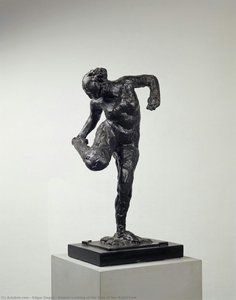
      Dancer Looking at the Sole of Her Right Foot (1921) by Edgar Degas
      #84

      Dancer Looking at the Sole of Her Right Foot

      1921 · Tel Aviv Museum of Art

      The quietude of a private moment settles over the bronze figure known as Dancer Looking at the Sole of Her Right Foot. Created by Edgar Degas, this work…

      Nelja tantsija (1900) by Edgar Degas
      #87

      Nelja tantsija

      1900 · National Gallery of Art

      A Glimpse into Fleeting Movement: Decoding Degas’s *Four Dancers* Edgar Degas's *Four Dancers*, painted in 1900, is more than just a depiction of ballerinas; it’s a masterful study…

      Order this canvas →
      The Tub (1889) by Edgar Degas
      #88

      The Tub

      1889

      Edgar Degas’ “The Ballet Class,” completed around 1874-1876, stands as a cornerstone of Impressionist art and a poignant glimpse into the world of ballet during its formative years.…

      Order this canvas →
      Woman with a Bandage (1873) by Edgar Degas
      #91

      Woman with a Bandage

      1873 · Detroit Institute of Arts

      A Moment of Quietude: Exploring Degas’ *Woman with a Bandage* Edgar Degas' *Woman with a Bandage*, painted in 1873, is more than just a portrait; it’s an intimate…

      Bring this light home →
      Dancers (8) (1900) by Edgar Degas
      #92

      Dancers (8)

      1900

      To stand before this depiction of Dancers (8) is to step directly into the vibrant, breathless atmosphere backstage—a moment suspended between performance and memory. Hilaire-Germain-Edgar Degas captured not…

      Have it painted by hand →
      Cafe-Concert Singer (1878) by Edgar Degas
      #93

      Cafe-Concert Singer

      1878

      To gaze upon Degas's Cafe-Concert Singer is to step directly into the smoky, vibrant heart of late nineteenth-century Paris. This painting captures more than just a moment; it…

      Have it painted by hand →
      The Rehearsal (1878) by Edgar Degas
      #94

      The Rehearsal

      1878 · Dumbarton Oaks

      To gaze upon The Rehearsal is to step directly into a moment suspended in time—a breath held just before the curtain rises, or perhaps, just after the applause…

      Have it painted by hand →
      Russian Dancer (1895) by Edgar Degas
      #96

      Russian Dancer

      1895

      In the delicate dance between light and shadow, Edgar Degas captures a moment of pure, unadulterated vitality in Russian Dancer. Created in 1895, this masterpiece serves as a…

      Order this canvas →
      View of Saint-Valery-sur-Somme (1898) by Edgar Degas
      #98

      View of Saint-Valery-sur-Somme

      1898 · Metropolitan Museum of Art

      Edgar Degas, a renowned French Impressionist painter, captivated audiences with his evocative landscape View of Saint-Valéry-sur-Somme in 1898. Now residing within the esteemed collection at the Metropolitan Museum…

      Bring this light home →
      Leon Bonnat (1863) by Edgar Degas
      #99

      Leon Bonnat

      1863

      In 1863, Edgar Degas turns his gaze toward a man who shares his devotion to the craft of seeing. This half-length portrait captures Léon-Joseph-Florentin Bonnat, not as a…

      Bring this light home →

      Edgar Degas's canvases, period by period

      What Edgar Degas painted most

      The four subjects that return most often on these canvases, each with its best-loved example.

      Where Edgar Degas's canvases hang

      The 8 museums that hold the most of the paintings on this page.

      Museum City Works by Edgar Degas Paintings from this list
      Metropolitan Museum of Art, New YorkMetropolitan Museum of Art New York 52 hilaire-germain-edgar degas A Life Immersed in Movement Born Hilaire-Germain-Edgar De Gas in Paris, 1834, Edgar Degas was an artist of fascinating contradictions. While often grouped with the Impressionists—Monet, Renoir, and others who revolutionized p, Fan Mount: Ballet Girls, Three Dancers Preparing for Class
      Musée d'Orsay, PariisMusée d'Orsay Pariis 55 The Absinthe Drinker, The Dance Class, The Bellelli Family
      National Gallery, LondonNational Gallery London 18 Naine endast kuivatamas, Two Dancers in Their Dressing Room, Head of a Woman
      Norton Simoni muuseum, PasadenaNorton Simoni muuseum Pasadena 5 Tantsija oma gaabrikambris, Tantsusaal stuudios Operatsioon, Naist kammib juukseid seinaga ees
      National Gallery of Art, WashingtonNational Gallery of Art Washington 28 Four dancers, ca National Galler, Nelja tantsija
      Museum of Fine Arts, BostonMuseum of Fine Arts Boston 10 Hobused Longchampis, A Carriage at the Races
      Art Institute of Chicago, ChicagoArt Institute of Chicago Chicago 8 Yellow Dancers (In the Wings), Café Singer
      Courtauld Gallery, LondonCourtauld Gallery London 7 Woman at a Window, Lady with a Parasol

      Edgar Degas's most famous canvas, decade after decade

      1. 1850s
        A Roman Beggar Woman (1857) by Edgar Degas
        Canvas 33 of 100

        A Roman Beggar Woman

        Age 16 – 25 · Birmingham Museum and Art Gallery

        Edgar Degas oli üks impressionismi suurimaid meistreid, kes jäi maailmale hilisemas perioodis märkimiseks. Tema suurim saavutus oli balletti kujutamine, mis jäi tema kogu karjääril keskenduseks. Ta ei püsinud…

      2. 1860s
        Interior (also known as The Rape) (1868) by Edgar Degas
        Canvas 5 of 100

        Interior (also known as The Rape)

        Age 26 – 35 · Philadelphia Museum of Art

        Edgar Degas’s “Interior,” often referred to as “The Rape,” is not merely a painting; it's an experience—a carefully constructed tableau of psychological tension and unspoken drama. Completed in…

      3. 1870s
        The Absinthe Drinker (1876) by Edgar Degas
        Ranked 1 of 100

        The Absinthe Drinker

        Age 36 – 45 · Musée d'Orsay

        Édouard Manet’s “The Absinthe Drinker,” completed around 1859, stands as a pivotal work in his oeuvre and arguably the first truly significant painting born from his burgeoning artistic…

      4. 1880s
        Tantsijad pinkis (1885) by Edgar Degas
        Canvas 7 of 100

        Tantsijad pinkis

        Age 46 – 55 · Hill-Stead Museum

        Balleti graatsus ja liikumine impressionistlikus säras Edgar Degase teos "Dancers in Pink" (Tantsijad roosas) on meistralikuldan esitus balletimaailmast, mis on lavastatud kunstniku iseloomuluse impressionistliku hõbedusega. See lummav teos…

      5. 1890s
        Naist vannituules (1892) by Edgar Degas
        12 of 100

        Naist vannituules

        Age 56 – 65

        Intime Päevapilt – Edgar Degasi “Naise vannitu Tubas” Edgar Degasi meistriteos “Naise vannitu Tubas” (1892) on imelise pastakunstilise kujutuse näide impressionistliku intiimsusest ja vaikse uhkusega. See teos kutsub…

      6. 1900s
        Kolme tantsu, sinised meesõud, punased pluusid (1903) by Edgar Degas
        Ranked 47 of 100

        Kolme tantsu, sinised meesõud, punased pluusid

        Age 66 – 75

        Three Dancers, Blue Skirts, Red Blouses The world of art is replete with masterpieces that continue to inspire and awe us. One such masterpiece is Three Dancers, Blue…

      Edgar Degas's canvases, question by question

      Which canvas is Edgar Degas most remembered for?Read the answer

      The Absinthe Drinker (1876), Musée d'Orsay, Pariis. Naine endast kuivatamas and The Dance Class (1873) follow.

      The Absinthe Drinker: how old was Edgar Degas when it was painted?Read the answer

      Edgar Degas, born in 1834, was 42 years old: The Absinthe Drinker dates from 1876.

      What are Edgar Degas's ten most famous canvases?Read the answer

      The Absinthe Drinker, Naine endast kuivatamas, The Dance Class, The Bellelli Family, Interior (also known as The Rape), Portraits in a New Orleans Cotton Office, Tantsijad pinkis, Tantsija lilledega, Miss Lola, tsirkus Fernando juures, NG L and Tantsijad tugireal 1. Each canvas in the ranking above comes with its year and its museum.

      How many paintings did Edgar Degas create?Read the answer

      1,074 works by Edgar Degas are in our catalogue, dated 1857 to 1905.

      Where do Edgar Degas's most famous canvases hang today?Read the answer

      Mostly in Metropolitan Museum of Art (New York), Musée d'Orsay (Pariis) and National Gallery (London); the list above names each museum and its canvases.

      When did Edgar Degas paint the most famous canvases?Read the answer

      In 1870s, which gave 40 of the 100 works on this page, The Absinthe Drinker among them.

      Which famous Edgar Degas canvas came first, and which came last?Read the answer

      The earliest canvas here is A Roman Beggar Woman (1857); the latest is Group of Dancers (1905).

      Which subjects did Edgar Degas paint most?Read the answer

      Ballet (22), Dance (15) and Woman (12), across the 100 works on this page.

      Which medium appears most in Edgar Degas's paintings?Read the answer

      Oil On Canvas, used in 27 of the 100 works on this page.

      Which movement is Edgar Degas associated with?Read the answer

      Impressionist realism, as the canvases on this page show.

      Which paintings by Edgar Degas are held by the Metropolitan Museum of Art?Read the answer

      The Metropolitan Museum of Art, New York holds 9 of the works on this page, among them hilaire-germain-edgar degas A Life Immersed in Movement Born Hilaire-Germain-Edgar De Gas in Paris, 1834, Edgar Degas was an artist of fascinating contradictions. While often grouped with the Impressionists—Monet, Renoir, and others who revolutionized p, Fan Mount: Ballet Girls and Three Dancers Preparing for Class.

      Where can I buy a reproduction of a Edgar Degas painting?Read the answer

      Yes. Every painting on this page can be ordered from its own page as an oil reproduction painted by hand, or as a fine art print, in the size you choose.

      Meet the painter: Edgar Degas

      Edgar Degasi elu

      Pariis, 1834. Hilaire-Germain-Edgar De Gasi juures sündis keskmiselt jõukasse perhe laps. Nimi, mille ta hiljem lihtsustas nimeks Edgar Degas, tähistab algust elule, mida isendab pinge sotsiaalse ootuse ja kunstilise obsesiooni vahel. Ta kasvab Prantsuse pe capital sofikeeritud atmosfääris, mis serveerib hiljem ta vaatlusepunktina kaasaegse elu kulissina.

      Aastad möduvad õppimise ja muutuva huvide virvel.

      Ta liigub oma kasvatusi struktuurilisest keskkonnast lähemale linna töölise riidele ja ebakindlale reaalsusele. Ta ei otsi päikesekuult välisruumis, eelistades stuudio ja teatri kontrollitud, kunstlikku valgust. Tema pilk jääb kinni Pariisi tantsijannadele, pesukali ja võiduhobustele, püüates kinni nii raska töö füüsilist ohverdamist kui ka lavakunstide lendavaid liikumusi. Ta jääb vastuolude meheks, kes vastandab sageli oma kaasaeglaste poolt talle rakendatavatele nimetustele, nõudes selle asemel oma identiteedi kinnitamist realistina.

      Lõpp saab Pariisis 27. septembril 1917. Ta jätab jätkuna tohutu teoseloomu, mis ulatub üle mitme kümnend, sealhulgas:

      Varane elu, pere ja haridus

      Pariis, 1834. Pangandaja ja New Orleansi, Louisiana kreoolist Célestine Musson De Gasi poeg Hilaire-Germain-Edgar De Gas astub sisse burguulise stabiilsuse maailma. Onükteises eas registreeritakse ta Lycée Louis-le-Grand'i. Akadeemiline tee on ette määratud, kuid poisi tähelepanu pöörab pigem Louvre'i hallide poole. Kuni 1953. aastani, kui ta on lõpetanud Lycée'i kirjandusega bakalaureaat, eirab ta oma isa ootusi õigusteadusliku karjääri kohta. Selle asemel registreerib ta Louvre'i muuseumis koopistina, veetides tundid meistrite joonide jäljendamisega.

      Harjutamine intensyvaneb Pariisi École des Beaux-Arts'is. Ta läbivad klassikalise õpetuse rangastuse, teravatsenedes täpsust, mis määraks tema hilisema töö iseloomu. 1855. aastal toimub kohtumine, mis jätab tema arenduslikule leiole permanentse jälje: ta kohtab Jean-Auguste-Dominique Ingrest. See kohtumine kinnistab austust joonistustöö ja joone olulisuse vastu, isegi kui ta hakkab liikuma poole modernsete teemade poole, mis lõpuks tema karjääri määraks.

      Tehnika ja kunstiline stiil

      Degas lükkab jä้etavaks impressionisti nimetuse. Ta eelistab terminit "realist" – valik, mis määrab kogu tema lähenemise linale. Ta vältib õues asuvaid maastikke ja oma kaasaeglaste poolt eelistatud lõhnasid ning pööblisid. Selle asemel ta eeraneb kontrollitud stuudio keskkonda, kus ta täibendab inimkeha vormi läbi rangelt täpselt hoidud joonituse. Ta on suurepärane joonistaja, kellel on eriline, tehniline kontroll liikumuse esitamisel. Ta ei oota päikesekuirt, mis tabaks tema objekti; ta ehitab oma stseenid läbi hoolika õppimise pliiatsiga või pastelliga. See ettevalmistus võimaldab tal jäädada kinni liikumuse hetkesele pülgile anatomilise täpsusega.

      Degasi kompositsioonides on valgus harval juhul loomulik. Ta kasutab kunstlikku valgust figureerivatele figuuridele rõhuvedamiseks, luues teatraalseid sügavusi. Üks märkimisväärne meetod on contre-jour, kus ta paneb oma objekti varju, samal ajal kui taust jääb eredalt valgustatud. See tehnika eristab figuuri ja tõmbab seda esile keskkonnast. Tulemuseks on pinge objekti ja ruumi vahel, paljastades sageli füüsilise koormuse või modernsel elu vaikse, püžikudeta reaalsuse.

      Peamised teosed ja motiivid

      Tema visuaalset maailma domineerivad lavalised ning ratsaradatad. Rohkem kui pool tema loomingust on pühendatud tantsijatele, kelleid ta jäädaks kinni nii proovide vahetul hetkes kui suuremas esinemises. Ta liigub sujuvalt pirueti graatsika ja tantsutunni füüsilise pinguse vahel. Teatripiidu väljas pöörab ta pilgu vastu ratsaradade kiirust, dokumenteerides võidusõiduroodasid ja neid jooksujõuvalveid, kes neid ratsud juhtivad. Need motiivid ei ole pelgalt dekoratiivsed; need on süvitsi mõeldud uuringud pinge ja liikumise kohta.

      Tema kunstiline ulatus ulatub sügavamale, puudutades nii privaatset kui psühholoogilist maailma. Ta loob portreid, mis paljastavad keeruka siseelma, kasutades sageli ebatavalisi vaate anglesid, et oma tegelasi isoleerida. See inimkeha uuring ei piirdu vaid õli-lõendiga liaisel. Ta tegutseb nii grafiika, joonistuste kui ka vax-skulptuuride kaudu. Tema võime inimfiguuril kuju anda on selgelt nähtav tema paljudes naiste uuringutes, kus ta keskendub sageli kehale privaatses, vaatlemata hetkes.

      • The Dancing Class, uimatu 1874
      • The Dance Class, 1874
      • The Ballet Class, 1874–1876
      • Interior, 1868–1869
      • Stihipõlve koose stseen: The Fallen Jockey, 1866

      Pärand ja peristav mõju

      19. sajandi lõpus toimunud kunstiline murre leidis oma keskse figuuri Edgar Degasi juurest. Kuigi ta vastas kunstinimile, tema kohalolu azoo pärgas Impressionismi vundamendi kinnistamist. Ta eemale kirjanduslikust ja rigiidsustest, eirates akadeemilisi ajaloolisi teemasid, eelistades dokumenteerida modernse Pariisi elu ebakindlust ja elegantsi. See traditsioonidest kõrvalminemine avas uusi teid tulevased kunstnikke, võimaldades neil uurida inimlikkuse paljaat ja ehtmatut tegelikkust.

      Tema mõju ulatub kaugele kaugemale algsetest impressionistlikest ringidest. Struktuursed innovatsioonid ja ebatavapäised kompositsioonid, mida ta arenikas, jäid oma jälje kaasaegse kunsti liikumissuunale. Täpsemalt öelda võib, et tema lähenemist vormile ja liikumisele on nähtav Pablo Picasso ja Henri Matisse hilikumates teemetes. Ta õpetas kunstimaailmale vaatama maailma asümmeetristelt nurkadelt ja ootamatutelt avatud kaadritelt, muudates tantsija või pesukonna privaatsed, hetkipaigsed hetked liikumise püsivaks uurinud.

      • The Dance Class
      • The Ballet Class
      • Interior

      Kus näha tema teoseid täna

      Edgar Degasi vaatlemisandmed on hajutanud üle maailma suuremate institutsioonide, säilitades tema pärandi Pariisi vaiketes hoolisades ja kaugemal. Prantsusmaal hoiab Musée d'Orsay olulisi kogelusi tema tööst, püüdes kinni liikumise, mida ta veetis kogu oma elu uurides. Louvre'i muuseumis on samuti tema kunst, samas kui Pariisis asuv Bibliothèque Nationale de France säilitab tema teosed oma arhiivides. Need kolkeld pakuvad otsese pilgu tehnilisele täpsusele ja vormi uuringule, mis määrkas tema karjääri.

      Atlanti üle ulatub tema visiooni jõud, jõrmuides Ameerika Ühendusriikidesse. New Yorkis asub Metropolitan Museum of Art, mis hoiab tema maale, pakkudes aken modernile ellu, mida ta kirjastas nii täpselt ja põhjalikult. Philadelphias on Philadelphia Museum of Art tema teoseid, tagades, et tema mõju on kättesaadav ka rahvusvahelistele vaatajatele. Need kohad toimivad tema pärandi füüsiliste ankuridena, kus tema mestripereeritud jooned ja valgus on endiselt nähtavad ka tänapäeva silmale.

      All 1074 works by Edgar Degas →