Atelier — Tasuta kohaletoimetamine üle maailma — Tarneaeg 2–6 nädalat
      Egon Schiele, 1890 – 1918

      Egon Schiele kõige kuulsam 100 maalist

      Portree Wally (1912) on teos, millega Egon Schiele on kõige tuntum; see kuulub museumi Leopold Museum, Viin. Surremõis ja Neiu Surremõis (1915) ja Vaatajad II (Surma ja Mehe) (1911) täiendavad kõige armastatumate tablodeid moodustavat triooti. Meie kataloogis on 649 teost kunstnikult Egon Schiele. Siin on 100 kõige kuulsamat koos aasta, muuseumi ja iga linate veebilehe loo kohta.

      Reiting põhineb meie populaarsusindeksil, mis koondab iga teose otsingud, külastused ja tellimused. Uuendatud oktoober 2026. Iga selle lehekülje maali saab tellida kas linatele kangale käsitsi maalatuna nagu õlimaalide reproduktsiooni või valitud suuruses fine art trükkina.

      Egon Schiele portree
      Egon Schiele · 1890 – 1918
      Sündinud · surnud
      1890 – 1918, Tulln an der Donau
      Suunata
      Ekspressionism
      Meie kataloogis olevad teosed
      649
      Kõige tuntud
      Portree Wally (1912)
      Enamasti teoseid on
      Leopold Museum

      Egon Schiele populaarseimad kümneks teost

      Portree Wally (1912) autor Egon Schiele
      1

      Portree Wally

      1912 · Õlimaal kangaruumil · Leopold Museum, Viin

      Egon Schiele'i 1912. aastal valminud maal "Valli portree" on rohkem kui pelgalt naise kujutamine; see on sügav psühholoogiline uurimus, mis peegeldab sajandivahetuse Austria ajastu ärevust ja muutusi. Maal jääb silma oma raudsusega, intensiivsusega ning julgega käsitusse, millega Schiele traditsioonilist portreekonventsiooni lahti murrab. Walburga "Vally" Neuzil, kunstniku armuke ja muse, vaatab otse vaatajale otsa – pilk on väljakutsuv, peaaegu ähvardav, mis paneb küsimusi esitama ning loob intiimse, kuid samas distantsi tunde.

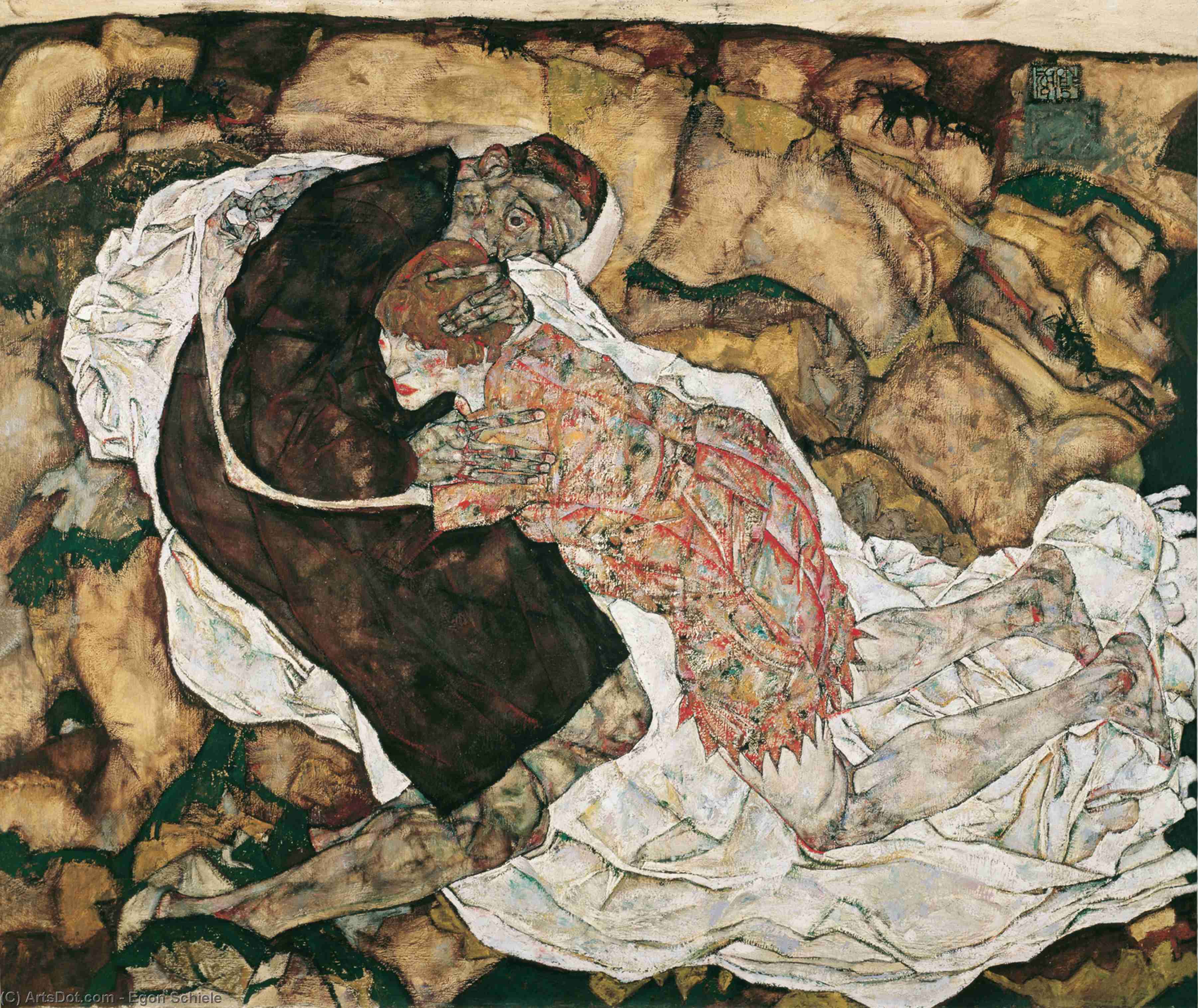
      Surremõis ja Neiu Surremõis (1915) autor Egon Schiele
      2

      Surremõis ja Neiu Surremõis

      1915 · Akrüül võimlusel · Österreichische Galerie Belvedere, Viin

      Egon Schiele's "Death and the Maiden": A Descent into Emotional Intensity Egon Schiele’s “Death and the Maiden,” painted in 1915, isn’t merely a depiction of two figures; it’s a visceral plunge into the heart of human emotion – a raw, unsettling exploration of vulnerability, mortality, and the profound connection between life and death. Created during a period of immense societal upheaval, marked by the looming shadow of World War I,…

      Vaatajad II (Surma ja Mehe) (1911) autor Egon Schiele
      3

      Vaatajad II (Surma ja Mehe)

      1911 · Õlimaal kangaruumil · Leopold Museum, Viin

      1911. aastal valminud Egon Schiele’i “Enesevaatajad II (Surm ja Mees)” on varajase ekspressionismi võtmetöö, mis kujutab elulise jõuga surma teemat ning inimolude keerukust. See pole pelgalt portree; see on sügav psühholoogiline uurimus sisemist rahutust, esitatud ülima aususega. Vaataja silmaringi langeb figuurile, kes kannab ametlikku rõivaid, kuid kelle kehahäbi ja maskitaoline nägu viitavad vaimsele häirele. Tema ees seisab luukäsi pimedusest kerkiv sümbol – hirmutav mälestus surevusest.

      Vanem ja kaks lapsi (1917) autor Egon Schiele
      4

      Vanem ja kaks lapsi

      1917 · Õlimaal kangaruumil · Österreichische Galerie Belvedere, Viin

      Egon Schiele's Mother with Two Children (1917) is far more than just a painting; it’s a raw, unflinching glimpse into the heart of human experience. This iconic work, currently residing in the Österreichische Galerie Belvedere in Vienna, embodies the core tenets of Expressionism – a movement defined by its intense emotionality and distorted perspectives. Schiele's ability to capture not just physical likeness but also profound psychological states is strikingly evident…

      Pere (1917) autor Egon Schiele
      5

      Pere

      1917 · Akrüül võimlusel · Österreichische Galerie Belvedere, Viin

      Egon Schiele's The Family, painted in 1917, is far more than just a portrait of three individuals; it’s a profoundly moving and unsettling exploration of the human condition during a time of immense upheaval. This masterpiece, born from the anxieties of World War I, reveals a raw vulnerability and psychological depth that continues to resonate with viewers today. Schiele's distinctive style—characterized by jagged lines, thick impasto, and a deliberate rejection…

      Lovers: Man and Woman I (1914) autor Egon Schiele
      6

      Lovers: Man and Woman I

      1914 · Oil On Canvas

      Egon Schiele's 1914 painting, *Lovers: Man and Woman I*, isn’t merely a depiction of two figures; it’s a visceral exploration of human connection, vulnerability, and the unsettling beauty of mortality. Created during a period of intense personal struggle for the artist – marked by illness, loss, and a profound awareness of his own precarious existence – this work embodies the core tenets of Expressionism, translating raw emotion directly onto the…

      Self Portrait with Hands on Chest (1910) autor Egon Schiele
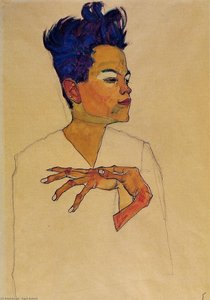
      7

      Self Portrait with Hands on Chest

      1910 · Akrüül võimlusel

      A Window into the Soul: Egon Schiele’s ‘Self Portrait with Hands on Chest’ (1910) This striking self-portrait by Austrian Expressionist master Egon Schiele is more than just a likeness; it's a raw and unflinching exploration of inner turmoil, vulnerability, and the search for identity. Created in 1910, at a pivotal moment in both his artistic development and personal life, this work embodies the core tenets of Expressionism while establishing Schiele’s…

      Kallistus (Armastajad II) - - , (1917) autor Egon Schiele
      8

      Kallistus (Armastajad II) - - ,

      1917 · Akrüül võimlusel

      A Tangled Embrace: Decoding Schiele’s ‘Lovers II’ Egon Schiele's ‘Embrace (Lovers II)’ (1917) is not merely a depiction of intimacy; it’s a visceral exploration of the human condition, rendered with the raw emotionality that defines Expressionism. This powerful work, measuring 100 x 170 cm, transcends simple representation to become a symbolic landscape of vulnerability, desire, and perhaps even anxiety. Subject & Composition: A Study in Intertwined Forms The painting presents…

      Kaduv naine (1912) autor Egon Schiele
      9

      Kaduv naine

      1912 · Leopold Museum, Viin

      Astuge sammu lähemale ja võite ennast leida olevat kukkumas selle naise rasketesse, pisarates silmadesse. Siin valitseb sügav vaikus, kuid see ei ole kaugimagi rahulik. Nägu on vahet, peaaegu skeletlik, ning silmade ümber kogunevad tumedad varjud, viidates sügavat füüsilist kurnatust. Tema pea on mähitud tumeda kanga sisse – detail, mis tõmbab vaatajat tema privaatse kurbuse sisse. Tema taga, hämarast taustast, ilmub esile teine, kaugelem, spektralne nägu; mees, kelle kohusus tundub kui…

      Iseloomustus Konstantinususele kirjakunstnikuna (1914) autor Egon Schiele
      10

      Iseloomustus Konstantinususele kirjakunstnikuna

      1914 · Trükivõtte

      Egon Schiele’s Haunting ‘Self Portrait as St. Sebastian’ This striking poster reproduction vangib Egon Schiele'i 1914. aasta suurimat meistritööd *Self Portrait as St. Sebastian*. See ei ole mitte ainult kujundus, vaid jõuline avaldus kannatusest, kunstniku tundlikkusest ja maailma hukkamise eeldatavast tulemustest. Schiele ei kujuta St. Sebastiani lihtsalt endast; ta muutub temaks, muutes isikliku ärevuse universaalsemaks kujuks. Kunstiliku Ekspresssionismi Meisterklass Kunstiteos on kindlalt kinnitatud ekspresssionistlikku liikmeid. Seda karakteriseerivad deformeerunud vormid, elavad…

      Egon Schiele: lõeneksad, reitingi 11 kuni 100 koht

      Moa (1911) autor Egon Schiele
      #12

      Moa

      1911 · Leopold Museum

      Egon Schiele’s ‘Moa’: A Dance of Shadows and Emotion Egon Schiele’s *Moa*, painted in 1911, isn't merely a portrait; it’s a profound exploration of the human psyche rendered…

      Telli see lühend →
      Agony (1912) autor Egon Schiele
      #13

      Agony

      1912

      Egon Schiele, an Austrian Expressionist painter, is renowned for his intense and emotionally charged works. One such painting that exemplifies his unique style and thematic focus is "Agony",…

      Tellinime käsitsi maaldetud →
      Itsasellujuhis triko (1910) autor Egon Schiele
      #15

      Itsasellujuhis triko

      1910 · Leopold Museum

      Self-Portrait with Striped Shirt: A Window Into Schiele’s Soul Egon Schiele'i "Self-Portrait with Striped Shirt" (1910), ületab lihtsat esindamist; see ilmendab Ekspressionismi iseloomulikke ärevust ja sisepinnavõtteid – liikumist,…

      Telli see lühend →
      Mother and Child (Madonna) (1908) autor Egon Schiele
      #17

      Mother and Child (Madonna)

      1908

      In the realm of early twentieth-century modernism, few works capture the raw, psychological intimacy of human connection as poignantly as Egon Schiele’s “Mother and Child (Madonna).” Created in…

      Telli see lühend →
      Two Women Embracing (1915) autor Egon Schiele
      #18

      Two Women Embracing

      1915 · Szépművészeti Múzeum

      In the hauntingly beautiful realm of Austrian Expressionism, few works capture the raw, pulsating essence of human intimacy quite like Egon Schiele’s Two Women Embracing. This masterpiece serves…

      Tooge see valguse koos koju →
      Iseloomustus (1912) autor Egon Schiele
      #20

      Iseloomustus

      1912

      Tänapäeval jätkub “Self Portrait” (“Enamikupildi”) jõudsalt resonatsiooniga maailma üle kogu maailma. Selle kriimelise tunne ja innovaatiline stiililiselt orienteeritud valik on kestev tõestus Schiele’ kunstilise päeva kohta. Reprodutsioonid pakuvad…

      Tooge see valguse koos koju →
      Couple Embracing autor Egon Schiele
      #21

      Couple Embracing

      In the quiet, trembling lines of “Couple Embracing,” we encounter more than just a depiction of human intimacy; we witness a profound psychological excavation. Created in 1911, this…

      Tellinime käsitsi maaldetud →
      Rasedame naise ja surm (1911) autor Egon Schiele
      #26

      Rasedame naise ja surm

      1911 · Praga Riiklik galerii

      Egon Schiele’s “Pregnant Woman and Death,” painted in 1911, is a profoundly unsettling yet captivating work that exemplifies the core tenets of Expressionism. Housed within the National Gallery…

      Telli see lühend →
      Schiele Gerti Schiele autor Egon Schiele
      #29

      Schiele Gerti Schiele

      Egon Schiele'i portree Gerti Schiele'ile on rohkem kui lihtsalt sarnasust; see on karismaalne ja ilus uurimus noorpruunast, haavatavusest ning kiiresti muutuva aja kasvavatest muredest. Maalitud aastal 1909, kriitilisel…

      Telli see lühend →
      Mäejõgi (1918) autor Egon Schiele
      #31

      Mäejõgi

      1918

      Egon Schiele’i 1918. aasta teos "Mäejõgi" ei ole pelgalt kiiresti voolava jõe pildistus; see on kunstniku sügavalt tundeeritud ärevuse ja surma ineviteetlikkuse voolamine. See on loodud intonsteisena isikliku…

      Tellinime käsitsi maaldetud →
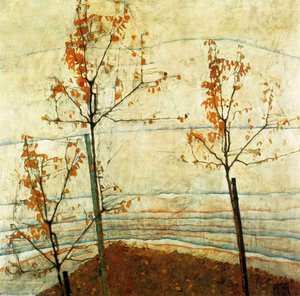
      Autumn Trees (1911) autor Egon Schiele
      #32

      Autumn Trees

      1911

      Egon Schiele's "Autumn Trees," created in 1911, is a striking example of Austrian Expressionism, showcasing the artist’s unique ability to convey intense emotion through distorted forms and vibrant…

      Telli see lühend →
      Eduard Kosmacki trükkaja portreit (1910) autor Egon Schiele
      #33

      Eduard Kosmacki trükkaja portreit

      1910 · Österreichische Galerie Belvedere

      Viini Belvedere galeriis, need pühikus kohas asuvates hoolis, avaneb akna turbulentsesse XX sajandi alguse psühhike. Egon Schiele’i "Eduard Kosmacki trükkaja portreet", mida on maalitud 1910. aastal, on palju…

      Telli see lühend →
      untitled (938) autor Egon Schiele
      #34

      untitled (938)

      Egon Schiele's "Untitled (938)," a captivating oil on canvas, isn’t merely a depiction of two figures embracing; it’s an intensely personal exploration of vulnerability, desire, and the precariousness…

      Tellinime käsitsi maaldetud →
      Schiele's Room in Neulengbach (1911) autor Egon Schiele
      #35

      Schiele's Room in Neulengbach

      1911 · Kunsthistorisches Museum

      Egon Schiele, a prominent figure in the Expressionist movement, is renowned for his intense and emotionally charged works. One of his notable pieces, Schiele's Room in Neulengbach, offers…

      Telli see lühend →
      Street in Krumau (1917) autor Egon Schiele
      #45

      Street in Krumau

      1917

      The narrow street of this Austrian provincial town functions as a distillation of internal tension. Painted in 1917, the work moves beyond mere topography to map a sense…

      Telli see lühend →
      self-portrait (1913) autor Egon Schiele
      #49

      self-portrait

      1913

      Egon Schiele’s 1913 self-portrait is not a comfortable image. It’s a visceral, almost brutal depiction of an interior world grappling with uncertainty and perhaps even despair. Rendered in…

      Tellinime käsitsi maaldetud →
      schiele agonia 1912 autor Egon Schiele
      #51

      schiele agonia 1912

      In the hauntingly intimate masterpiece Agonia, painted in 1912, Egon Schiele invites the viewer into a psychological landscape where the boundaries between physical struggle and existential dread dissolve.…

      Tooge see valguse koos koju →
      schiele sebastian autor Egon Schiele
      #53

      schiele sebastian

      Egon Schiele's "Schiele Sebastian," a pivotal work within his extensive body of nude portraits, stands as a haunting testament to the artist’s unique vision and the turbulent emotional…

      Tooge see valguse koos koju →
      pregnant woman death autor Egon Schiele
      #54

      pregnant woman death

      In the visceral landscape of early twentieth-century Expressionism, few works possess the unsettling psychological depth found in Egon Schiele’s “Pregnant Woman and Death.” Painted in 1911, this masterpiece…

      Tellinime käsitsi maaldetud →
      Sunflowers (1911) autor Egon Schiele
      #56

      Sunflowers

      1911

      The painting Sunflowers is a watercolor by Egon Schiele created in 1911. The composition features a variety of sunflowers depicted in different stages of bloom, with some flowers…

      Telli see lühend →
      untitled (2447) autor Egon Schiele
      #59

      untitled (2447)

      Egon Schiele's "Untitled (2447)" is not merely a depiction of two figures; it’s a raw, intensely personal exploration of vulnerability, connection, and the unsettling beauty of human emotion.…

      Tooge see valguse koos koju →
      Poika käega näga (1910) autor Egon Schiele
      #60

      Poika käega näga

      1910

      Teineko teinäolekuadolestsentsse nõundlikkus: Egon Schiele'de „Poika käega näoga“ Egon Schiele'de 1910. aastane akvarell, *Poika käega näoga*, on rohkem kui lihtsalt portreet; see on viskeraalne uurimine sisemise keeruluse ja…

      Tellinime käsitsi maaldetud →
      Self Portrait (1911) autor Egon Schiele
      #61

      Self Portrait

      1911

      The artwork is a watercolor painting titled Self Portrait, created in 1911. It depicts a nude figure positioned centrally against a muted background. The figure's arms are outstretched…

      Tellinime käsitsi maaldetud →
      Study of hands (1913) autor Egon Schiele
      #65

      Study of hands

      1913

      Two hands emerge from a vast, pale void, locked in a grip that feels both desperate and tender. The skin appears thin, almost translucent, revealing the delicate architecture…

      Tellinime käsitsi maaldetud →
      scornful woman 1910 autor Egon Schiele
      #66

      scornful woman 1910

      Egon Schiele’s “Scornful Woman,” painted in 1910, isn't merely a portrait; it’s a raw distillation of psychological turmoil and the unsettling beauty of human vulnerability. This arresting image,…

      Tooge see valguse koos koju →
      Reclining Female Nude (1917) autor Egon Schiele
      #68

      Reclining Female Nude

      1917

      Egon Schiele's “Reclining Female Nude,” painted in 1917, stands as a poignant emblem of Expressionism—a movement characterized by raw emotion and unflinching honesty. More than just a depiction…

      Tellinime käsitsi maaldetud →
      Autumn Sun (1912) autor Egon Schiele
      #69

      Autumn Sun

      1912

      Egon Schiele, an Austrian artist known for his bold and emotive works, created the captivating painting "Autumn Sun" in 1912. This piece is a quintessential representation of the…

      Tooge see valguse koos koju →
      Conversion (1912) autor Egon Schiele
      #70

      Conversion

      1912

      In the realm of early 20th-century art, few works capture the essence of human intimacy and emotional depth as profoundly as Egon Schiele's "Conversion." Painted in 1912, this…

      Telli see lühend →
      Prostitute (Dirne) autor Egon Schiele
      #72

      Prostitute (Dirne)

      Egon Schiele’s “Prostitute (Dirne)” stands as a haunting testament to the artist’s unflinching exploration of human psychology and sexuality, firmly rooted in the Expressionist movement that gripped Vienna…

      Tellinime käsitsi maaldetud →
      Levitation (1915) autor Egon Schiele
      #74

      Levitation

      1915

      Egon Schiele’s ‘Levitation,’ painted in 1915 during the height of Expressionism, isn't merely a depiction of two figures; it’s an invitation into a realm where rationality yields to…

      Tellinime käsitsi maaldetud →
      Two young girls autor Egon Schiele
      #75

      Two young girls

      An Intimate Embrace: Exploring Egon Schiele’s ‘Two Young Girls’ This captivating watercolor painting by Austrian Expressionist master, Egon Schiele, offers a profoundly intimate and emotionally charged depiction of…

      Telli see lühend →
      Woman Undressing (1914) autor Egon Schiele
      #76

      Woman Undressing

      1914

      In 1914, the artist Egon Schiele captured a singular moment of transition in Vienna, Austria. The work, titled Woman Undressing, presents a female nude in a state of…

      Telli see lühend →
      Lovemaking (1915) autor Egon Schiele
      #78

      Lovemaking

      1915 · Leopold Museum

      Egon Schiele's "Lovemaking," painted in 1915, is not a celebration of romantic bliss; rather, it’s a brutally honest and profoundly unsettling exploration of human connection – a moment…

      Telli see lühend →
      Reclining Female Nude (1908) autor Egon Schiele
      #79

      Reclining Female Nude

      1908

      is a watercolor and paper work created by the Austrian Expressionist Egon Schiele in 1908. This nude painting (nu) reflects the artist's departure from academic traditions toward a…

      Telli see lühend →
      Moa (1911) autor Egon Schiele
      #81

      Moa

      1911

      Egon Schiele’s “Moa”: A Study in Vulnerability and Expressionist Boldness The painting "Moa" by Egon Schiele, created in 1911, stands as a haunting testament to the artist's preoccupation…

      Telli see lühend →
      untitled (5287) autor Egon Schiele
      #82

      untitled (5287)

      In the quiet, unsettling depths of Egon Schiele’s Untitled (5287), one encounters more than just a figure study; one enters a profound psychological landscape. This work, a hauntingly…

      Tellinime käsitsi maaldetud →
      The Bridge (1913) autor Egon Schiele
      #83

      The Bridge

      1913

      Egon Schiele’s “The Bridge,” painted in 1913, stands as a cornerstone of early 20th-century Expressionist art—a movement that sought to convey raw emotion and psychological intensity rather than…

      Tellinime käsitsi maaldetud →
      untitled (7272) autor Egon Schiele
      #84

      untitled (7272)

      Egon Schiele's "Untitled (7272)" is not merely a depiction of a reclining figure; it’s an immersion into the raw, unsettling heart of the Expressionist soul. Painted in 1918,…

      Tooge see valguse koos koju →
      Reclining Girl, with Round Head autor Egon Schiele
      #85

      Reclining Girl, with Round Head

      A Study in Vulnerability: Egon Schiele’s ‘Reclining Girl, with Round Head’ Egon Schiele's *Reclining Girl, with Round Head* is a profoundly moving watercolor that encapsulates the core tenets…

      Telli see lühend →
      untitled (6044) autor Egon Schiele
      #88

      untitled (6044)

      A man stares directly at the viewer, his expression caught in a moment of intense, perhaps even grotesque, animation. He wears a white shirt and tie, the formality…

      Telli see lühend →
      Seated Couple, 1915 (1915) autor Egon Schiele
      #92

      Seated Couple, 1915

      1915 · Albertina

      A Moment Frozen in Time: Exploring Egon Schiele’s “Seated Couple” The painting "Seated Couple," completed in 1915 by Austrian Expressionist Egon Schiele, transcends mere depiction; it embodies a…

      Telli see lühend →
      Nude Self-Portrait (1910) autor Egon Schiele
      #93

      Nude Self-Portrait

      1910 · Leopold Museum

      A Portrait of Vulnerability: Exploring Egon Schiele’s ‘Nude Self-Portrait’ The painting “Nude Self-Portrait” by Austrian Expressionist Egon Schiele stands as a haunting testament to the artist's preoccupation with…

      Tooge see valguse koos koju →
      Krumau Town Crescent I (1915) autor Egon Schiele
      #94

      Krumau Town Crescent I

      1915 · Israel Muuseum

      Egon Schiele's *Krumau Town Crescent I*, painted in 1915, isn’t merely a depiction of a provincial Austrian town; it’s a raw, intensely personal exploration of mortality, isolation, and…

      Tellinime käsitsi maaldetud →
      untitled (1348) autor Egon Schiele
      #96

      untitled (1348)

      In the hauntingly beautiful monochrome sketch untitled (1348), Egon Schiele invites us into a profound confrontation with the human psyche. Created around 1918, during the twilight of his…

      Tellinime käsitsi maaldetud →
      Female nude (1910) autor Egon Schiele
      #97

      Female nude

      1910

      Egon Schiele’s Intimate Exploration of the Human Form This captivating work on paper by Egon Schiele, created in 1910, offers a poignant glimpse into the artist's exploration of…

      Tellinime käsitsi maaldetud →
      Procession (1911) autor Egon Schiele
      #99

      Procession

      1911

      In the hauntingly beautiful masterpiece "Procession," created in 1911, Egon Schiele invites us into a psychological landscape where the boundaries between reality and inner turmoil dissolve. This seminal…

      Telli see lühend →

      Egon Schiele lõikud perioodide kaupa

      Mida Egon Schiele kõige rohkem maalis

      Neli teemat, mis esinevad neil lätistes kõige sagedamini, koos nende kõige armastatumate näidetega.

      Kuna Egon Schielei lamedad pildid rippuvad siin

      Kümne 8 muuseumi kollektsioonid, mis sisaldavad kõige rohkem sellel lehel esitatud teoseid.

      Muuseumid Linn Egon Schiele teosid Selle nimekirja maalid
      Leopold Museum, ViinLeopold Museum Viin 46 Portree Wally, Vaatajad II (Surma ja Mehe), Kaduv naine
      Österreichische Galerie Belvedere, ViinÖsterreichische Galerie Belvedere Viin 10 Surremõis ja Neiu Surremõis, Vanem ja kaks lapsi, Pere
      Albertina, ViinAlbertina Viin 10 Girl Nude with Folded Arms, 1910, I Will Gladly Endure for Art and My Loved Ones, 1912, Seated Couple, 1915
      Kunsthistorisches Museum, ViinKunsthistorisches Museum Viin 4 Schiele's Room in Neulengbach
      Wien Museum, ViinWien Museum Viin 2 Gustav Klimt on his deathbed
      Szépművészeti Múzeum, BudapestSzépművészeti Múzeum Budapest 1 Two Women Embracing
      Staatsgalerie Stuttgart, StuttgardiStaatsgalerie Stuttgart Stuttgardi 1 Prophets (also known as Double Self Portrait)
      Praga Riiklik galerii, PragaPraga Riiklik galerii Praga 1 Rasedame naise ja surm

      Egon Schiele kõige kuulsamad lamedad, aasta-aastaga

      Aastate 1907 kuni 1918 vahel on esitletud 12 aastat Egon Schiele maalide loomist, mis avanevad aasta-aastalt tema kuulsimate linate kaudu.

      1. 1907
        Portrait of Leopold Czihaczek (1907) autor Egon Schiele
        Lentik 52 / 100

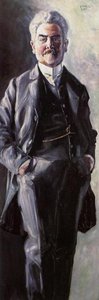
        Portrait of Leopold Czihaczek

        Vanus 17

        Egon Schiele's 1907 “Portrait of Leopold Czihaczek” is more than just a likeness; it’s a raw, intensely personal exploration of the human condition. This oil on canvas painting,…

      2. 1907
        Portrait of Leopold Czihaczek, Standing (1907) autor Egon Schiele
        55 / 100

        Portrait of Leopold Czihaczek, Standing

        Vanus 17

        In the hauntingly beautiful Portrait of Leopold Czihaczek, Standing, Egon Schiele invites us into a space where the boundaries between physical representation and psychological truth dissolve. Created in…

      3. 1908
        Mother and Child (Madonna) (1908) autor Egon Schiele
        17 / 100

        Mother and Child (Madonna)

        Vanus 18

        In the realm of early twentieth-century modernism, few works capture the raw, psychological intimacy of human connection as poignantly as Egon Schiele’s “Mother and Child (Madonna).” Created in…

      4. 1908
        Kneeling Young Man (1908) autor Egon Schiele
        Lentik 71 / 100

        Kneeling Young Man

        Vanus 18

        Created in 1908, Kneeling Young Man is a significant work by the Austrian artist Egon Schiele. This piece emerged from the creative atmosphere of Vienna, Austria, during a…

      5. 1909
        Man with Blue Headband and Hand on Cheek (1909) autor Egon Schiele
        Lentik 57 / 100

        Man with Blue Headband and Hand on Cheek

        Vanus 19

        A Window into the Soul: Egon Schiele’s ‘Man with Blue Headband and Hand on Cheek’ This captivating drawing by Egon Schiele, created in 1909, is a powerful example…

      6. 1909
        Autumn Tree with Fuchsias (1909) autor Egon Schiele
        Reiting: 86 / 100

        Autumn Tree with Fuchsias

        Vanus 19

        In the heart of the early twentieth century, amidst the intellectual ferment of Vienna, Egon Schiele captured a moment of profound emotional resonance in his 1909 masterpiece, Autumn…

      7. 1910
        Self Portrait with Hands on Chest (1910) autor Egon Schiele
        Lentik 7 / 100

        Self Portrait with Hands on Chest

        Vanus 20

        A Window into the Soul: Egon Schiele’s ‘Self Portrait with Hands on Chest’ (1910) This striking self-portrait by Austrian Expressionist master Egon Schiele is more than just a…

      8. 1910
        Kolm Mehelik Kehapildi Kokteelis (1910) autor Egon Schiele
        Lentik 14 / 100

        Kolm Mehelik Kehapildi Kokteelis

        Vanus 20 · Leopold Museum

        A Fragile Dance of Form: Exploring Egon Schiele’s ‘Composition with Three Male Nudes’ Egon Schiele's 1910 *Composition with Three Male Nudes* on arhhislik umbepädev töö, mis sisaldab kunstniku…

      9. 1911
        Vaatajad II (Surma ja Mehe) (1911) autor Egon Schiele
        Lentik 3 / 100

        Vaatajad II (Surma ja Mehe)

        Vanus 21 · Leopold Museum

        1911. aastal valminud Egon Schiele’i “Enesevaatajad II (Surm ja Mees)” on varajase ekspressionismi võtmetöö, mis kujutab elulise jõuga surma teemat ning inimolude keerukust. See pole pelgalt portree; see…

      10. 1911
        Moa (1911) autor Egon Schiele
        12 / 100

        Moa

        Vanus 21 · Leopold Museum

        Egon Schiele’s ‘Moa’: A Dance of Shadows and Emotion Egon Schiele’s *Moa*, painted in 1911, isn't merely a portrait; it’s a profound exploration of the human psyche rendered…

      11. 1912
        Portree Wally (1912) autor Egon Schiele
        Lentik 1 / 100

        Portree Wally

        Vanus 22 · Leopold Museum

        Egon Schiele'i 1912. aastal valminud maal "Valli portree" on rohkem kui pelgalt naise kujutamine; see on sügav psühholoogiline uurimus, mis peegeldab sajandivahetuse Austria ajastu ärevust ja muutusi. Maal…

      12. 1912
        Kaduv naine (1912) autor Egon Schiele
        Lentik 9 / 100

        Kaduv naine

        Vanus 22 · Leopold Museum

        Astuge sammu lähemale ja võite ennast leida olevat kukkumas selle naise rasketesse, pisarates silmadesse. Siin valitseb sügav vaikus, kuid see ei ole kaugimagi rahulik. Nägu on vahet, peaaegu…

      13. 1912
        Portrait of a Woman (1912) autor Egon Schiele
        Reiting: 11 / 100

        Portrait of a Woman

        Vanus 22

        Egon Schiele's Portrait of a Woman, painted in 1912, stands as a cornerstone of Austrian Expressionism and a poignant exploration of psychological depth. More than just a depiction…

      14. 1913
        The truth unveiled - - (1913) autor Egon Schiele
        Reiting: 43 / 100

        The truth unveiled - -

        Vanus 23

        Egon Schiele's "The Truth Unveiled," painted in 1913, isn’t merely a depiction of figures; it’s an excavation of the human psyche, a raw and unsettling exploration of mortality,…

      15. 1913
        Wally with a Red Blouse (1913) autor Egon Schiele
        Lentik 46 / 100

        Wally with a Red Blouse

        Vanus 23

        In the turbulent landscape of early 20th-century Vienna, few images capture the fractured psyche of an era as poignantly as Egon Schiele’s “Wally with a Red Blouse.” Painted…

      16. 1914
        Lovers: Man and Woman I (1914) autor Egon Schiele
        Lentik 6 / 100

        Lovers: Man and Woman I

        Vanus 24

        Egon Schiele's 1914 painting, *Lovers: Man and Woman I*, isn’t merely a depiction of two figures; it’s a visceral exploration of human connection, vulnerability, and the unsettling beauty…

      17. 1914
        Iseloomustus Konstantinususele kirjakunstnikuna (1914) autor Egon Schiele
        10 / 100

        Iseloomustus Konstantinususele kirjakunstnikuna

        Vanus 24

        Egon Schiele’s Haunting ‘Self Portrait as St. Sebastian’ This striking poster reproduction vangib Egon Schiele'i 1914. aasta suurimat meistritööd *Self Portrait as St. Sebastian*. See ei ole mitte…

      18. 1915
        Surremõis ja Neiu Surremõis (1915) autor Egon Schiele
        2 / 100

        Surremõis ja Neiu Surremõis

        Vanus 25 · Österreichische Galerie Belvedere

        Egon Schiele's "Death and the Maiden": A Descent into Emotional Intensity Egon Schiele’s “Death and the Maiden,” painted in 1915, isn’t merely a depiction of two figures; it’s…

      19. 1915
        Two Women Embracing (1915) autor Egon Schiele
        Reiting: 18 / 100

        Two Women Embracing

        Vanus 25 · Szépművészeti Múzeum

        In the hauntingly beautiful realm of Austrian Expressionism, few works capture the raw, pulsating essence of human intimacy quite like Egon Schiele’s Two Women Embracing. This masterpiece serves…

      20. 1916
        Portrait of an Old Man (also known as Johann Harms) (1916) autor Egon Schiele
        Lentik 48 / 100

        Portrait of an Old Man (also known as Johann Harms)

        Vanus 26 · Solomon R. Guggenheimi muuseum

        Egon Schiele's “Portrait of an Old Man (also known as Johann Harms),” painted in 1916, is not merely a likeness; it’s a profound meditation on aging, mortality, and…

      21. 1917
        Vanem ja kaks lapsi (1917) autor Egon Schiele
        Lentik 4 / 100

        Vanem ja kaks lapsi

        Vanus 27 · Österreichische Galerie Belvedere

        Egon Schiele's Mother with Two Children (1917) is far more than just a painting; it’s a raw, unflinching glimpse into the heart of human experience. This iconic work,…

      22. 1917
        Pere (1917) autor Egon Schiele
        5 / 100

        Pere

        Vanus 27 · Österreichische Galerie Belvedere

        Egon Schiele's The Family, painted in 1917, is far more than just a portrait of three individuals; it’s a profoundly moving and unsettling exploration of the human condition…

      23. 1917
        Kallistus (Armastajad II) - - , (1917) autor Egon Schiele
        Lentik 8 / 100

        Kallistus (Armastajad II) - - ,

        Vanus 27

        A Tangled Embrace: Decoding Schiele’s ‘Lovers II’ Egon Schiele's ‘Embrace (Lovers II)’ (1917) is not merely a depiction of intimacy; it’s a visceral exploration of the human condition,…

      24. 1918
        Secession 49. Exhibition (1918) autor Egon Schiele
        Reiting: 23 / 100

        Secession 49. Exhibition

        Vanus 28

        In the hauntingly beautiful Secession 49. Exhibition, Egon Schiele invites us into a moment of profound stillness amidst the social currents of 1918 Vienna. This evocative work serves…

      25. 1918
        Mäejõgi (1918) autor Egon Schiele
        Lentik 31 / 100

        Mäejõgi

        Vanus 28

        Egon Schiele’i 1918. aasta teos "Mäejõgi" ei ole pelgalt kiiresti voolava jõe pildistus; see on kunstniku sügavalt tundeeritud ärevuse ja surma ineviteetlikkuse voolamine. See on loodud intonsteisena isikliku…

      Egon Schiele puuvangad, küsimus küsimusel

      Millist maalatist Egon Schiele kõige rohkem mäletatakse?Loe vastust

      Portree Wally (1912), Leopold Museum, Viin. Järgnevad Surremõis ja Neiu Surremõis (1915) ja Vaatajad II (Surma ja Mehe) (1911).

      Portree Wally: kui vana oli Egon Schiele, kui see maalisiti?Loe vastust

      1890 aastal sündinud Egon Schiele oli 22 aastat vanus: Portree Wally on pärinev aastast 1912.

      Millised on Egon Schiele kümneks kuulsamat maalatud lakan?Loe vastust

      Portree Wally, Surremõis ja Neiu Surremõis, Vaatajad II (Surma ja Mehe), Vanem ja kaks lapsi, Pere, Lovers: Man and Woman I, Self Portrait with Hands on Chest, Kallistus (Armastajad II) - - ,, Kaduv naine ja Iseloomustus Konstantinususele kirjakunstnikuna. Iga teos ülal toodud reitingus on märgitud koos aasta ja muuseumiga.

      Kui palju maali Egon Schiele lõi?Loe vastust

      Kataloogis on 649 teost kunstnikult Egon Schiele, kuupäevadelt 1907 kuni 1918.

      Kuhu on Egon Schiele kõige kuulsamad tablood täna jäetud?Loe vastust

      Peamiselt Leopold Museum (Viin), Österreichische Galerie Belvedere (Viin) ja Albertina (Viin) asukohas; ülaltoetud nimekiri esitab kirja iga muuseumi ja selle tablood.

      Millal maalas Egon Schiele oma kuulsamad linateid?Loe vastust

      1911 perioodil, mis sisaldas 13 kogu selle lehe 100 teosest, oli nende hulgas Vaatajad II (Surma ja Mehe).

      Milline kuvaleht Egon Schiele on kõige vanem ja milline kõige uuem?Loe vastust

      Siin olevad kõige vanamad lamedad pildid on Portrait of Leopold Czihaczek (1907); kõige uuemad on Secession 49. Exhibition (1918).

      Mille teemadele Egon Schiele kõige rohkem pühendus?Loe vastust

      Mortality (26), Vienna (18) ja Anxiety (15), kogu selle lehekülje 100 teose kohta.

      Milline tehnika esineb kõige rohkem Egon Schiele maalides?Loe vastust

      Acrylic On Canvas, mida on kasutatud 29 kuni 100 teoseks sellel lehel.

      Millise suunaga on Egon Schiele seotud?Loe vastust

      Ekspressionism, nagu sellel lehel olevad tablood näitavad.

      Millised Egon Schiele teosed on Leopold Museum kogumuses?Loe vastust

      Leopold Museum, Viin säilitab 17 sellel lehel olevat teost, seda hulka kuuluvad ka Portree Wally, Vaatajad II (Surma ja Mehe) ja Kaduv naine.

      Kust saan osta Egon Schiele maali reproduktsiooni?Loe vastust

      Jah. Iga maali sellel lehel saab tellida oma lehelt kas käsitsi maalatuna õli-reproductionina või suurepärase kunstiprentina valitud suuruses.

      Tutvuge kunstnikuga: Egon Schiele

      The Life of Egon Schiele

      Tulln, Lower Austria, provides the setting for the beginning of Egon Schiele’s life. Born on 12 June 1890, he enters a world defined by the rigid structures of the Austro-Hungarian Empire. His father, Adolf Schiele, manages the local station as the station master for the Austrian Federal Railways. His mother, Marie, is known by her maiden name, Soukup. Within the family, Egon grows alongside his three sisters: Elvira, Melanie, and Gertrude.

      The stability of this domestic life fractures early. The shadow of illness moves through the household, leaving a permanent mark on the young artist's psyche. These personal disruptions do not merely pass; they settle into the marrow of his future work. He moves through the world with a sensitivity to mortality that will eventually define his place in Austrian Expressionism. His existence becomes a struggle to translate internal tension onto the surface of the canvas.

      His path leads him toward the center of a shifting European landscape. He navigates the tension between traditional academic expectations and a burgeoning need for raw, psychological truth. The life of Egon Schiele is a series of intense, often uncomfortable confrontations with the human condition. He does not seek to depict the world as it appears to the eye, but as it vibrates within the nervous system.

      Early Life, Family and Training

      The stability of Schiele's youth fractures in 1904. His father, Adolf Schiele, a station master, succumbs to syphilis. This illness, contracted during a honeymoon in Trieste, leaves the family impoverished and the young artist's psyche marked by the shadow of his father's mental confusion and rage. Egon grows up alongside his three sisters, Elvira, Melanie, and Gertrude, under the guardianship of his uncle-in-law, Leopold Czihaczek. Even in these turbulent years, a fascination with trains persists, a motif that would later surface in his work.

      Formal training begins under the guidance of tutor Ludwig Karl Strauch. By 1906, Schiele moves to Vienna to study at the Academy of Fine Arts (Akademie der bildenden Künste). The atmosphere is rigid. He finds himself increasingly at odds with the ultra-conservative teaching of Professor Christian Griepenkerl. The friction becomes unsustainable. After three years of navigating these strict academic traditions, Schiele abandons the Academy altogether to forge an independent path.

      A shift occurs when he encounters Gustav Klimt. The established artist becomes a mentor, providing the young painter with models and introducing him to the circles of the Vienna Secession. This connection marks the transition from a student struggling against tradition to a central figure in the burgeoning avant-garde.

      Artistic Development in Vienna

      Vienna becomes the center of Schiele's creative friction. He moves through the city's artistic circles, eventually meeting Gustav Klimt. This encounter marks a significant shift in his trajectory. While he absorbs the influence of his mentor, Schiele does not simply replicate the decorative patterns of the Secession. Instead, he begins to strip away the ornamentation. He seeks a more visceral truth. By 1909, he is actively challenging the established order, co-founding the Neues Wiener Kunstgruppe and the Neukunstgruppe. These movements signal his break from tradition.

      His presence in the city is marked by a restless movement between urban centers and quieter outskirts. He works across Vienna, Krems, Klosterneuburg, Neulengbach, and Prague. This geographic spread mirrors a psychological expansion. His art moves from the formal constraints of his early training toward a raw, unshielded exploration of the human condition. The tension of the era is visible in his evolving sketches and compositions.

      Technique and Expressionist Style

      The line is the primary engine of Schiele’s vision. It does not merely outline a form; it vibrates with a nervous, restless energy. He employs expressive lines to map out psychological tension, often resulting in contorted poses and twisted body shapes. Figures appear elongated, their limbs stretched beyond natural proportions to convey a sense of unease. This is not a pursuit of anatomical perfection but an attempt to expose the internal state of the subject. Skin tones often appear emaciated or sickly-coloured, emphasizing a sense of fragility and physical vulnerability.

      His technical approach varies by medium, yet the intensity remains constant. In his watercolors, he utilizes loose washes of color to create depth and mood, often leaving much of the paper bare to heighten the sense of isolation. When working in oil on canvas, the brushwork carries the same jagged urgency found in his drawings. Beyond the two-dimensional plane, he also explored form through sculpture, working in clay and plaster to capture the weight of the human presence.

      Key Works and Subject Matter

      The canvas becomes a site of psychological excavation. Schiele confronts the heavy presence of death, sexuality, anxiety, and isolation through a lens of unflinching honesty. In 1915, he produces Death and the Maiden, a work where the presence of mortality intersects with eros. The figures exist in a state of tension, reflecting the internal struggles that define his vision. He often returns to the human form to map these invisible states, using the body as a vessel for the complexities of existence.

      Self-portraiture acts as a recurring method of introspection. He does not seek to present a polished image but rather a vulnerable one, often appearing in contorted or emaciated states. In Self-Portrait with Physalis, he utilizes the Physalis plant as a recurring motif. The plant, with its delicate and papery husk, symbolizes transience and the fragility of life. This botanical element anchors his preoccupation with decay and the fleeting nature of the human condition.

      His intimate connections also find their way into his compositions. In 1915, he paints Portrait of Edith Schiele, capturing his wife in a way that reflects his specific expressive language. His subjects are rarely static; they pulse with a nervous energy that mirrors the shifting social and psychological landscapes of the era. The following works represent significant points in his exploration of these themes:

      Later Years and Death

      The landscape of Schiele's life shifts as the First World War approaches. He marries Edith Harms, a union that marks a significant personal transition. However, the stability of marriage is quickly interrupted by the demands of the conflict. He is drafted into military service, a period that places him within the chaos of the war's reach.

      The end arrives with sudden, biological ferocity. In 1918, the Spanish flu pandemic sweeps through Vienna. The virus claims Schiele at the age of 28. He dies on 31 October 1918. His passing occurs shortly after the death of his wife, Edith, who succumbed to the same disease. The artist's life ends abruptly, leaving behind a body of work that captures the tension of a world in collapse.

      Legacy and Artistic Influence

      Schiele emerges from the early 20th century as a leading figure in Austrian Expressionism. His departure from the decorative gold of the Secession movement toward a more visceral, psychological exploration of the human form changed the trajectory of figurative painting. He stripped away the surface to map the nervous system, using jagged, restless lines to capture the tremors of anxiety and desire. This focus on the internal landscape rather than idealized beauty established him as a major figurative painter of the era.

      The impact of his work extends far beyond the borders of Vienna. Subsequent generations of artists find a precedent in his radical honesty, particularly those drawn to the darker, more complex layers of the human psyche. His ability to translate personal trauma and existential tension into a universal visual language ensures his presence in the discourse of modern art. Today, his paintings are held in major museum collections worldwide, preserved as essential records of the psychological shifts of his time.

      Where to See the Works Today

      The weight of Schiele’s output is felt most heavily in Vienna. The Leopold Museum holds a vast concentration of his works, preserving the raw energy of his sketches and paintings. Nearby, the Österreichische Galerie Belvedere houses significant canvases, including Death and the Maiden (1915). The city’s institutional landscape continues to guard his legacy through the Kunsthistorisches Museum and the Albertina, both of which contain essential pieces of his oeuvre.

      Beyond the Austrian capital, the Egon Schiele Art Centrum in Český Krumlov, Czech Republic, offers a dedicated space for his work. This museum traces his evolution through a permanent collection that includes watercolors and ink drawings. Visitors can encounter the specific intensity of his linework in this setting, which focuses on the development of his expressive style.

      Kõik 649 teost Egon Schiele →