Atelier — Tasuta kohaletoimetamine üle maailma — Tarneaeg 2–6 nädalat
      Emanuel De Witte, 1617 – 1692

      Emanuel De Witte: 99 tuntumat teost

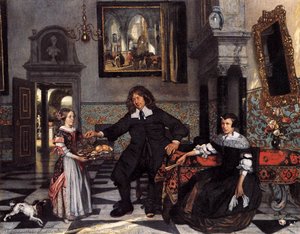
      Kõikidest Emanuel De Witte maalidest on kõige kuulsam Portrait of a Family in an Interior (detail) (1678); seda saab näha Alte Pinakothek-is, München. Järgnevad neile The Interior of a Dutch Church (1680) ja Interior of the Nieuwe Kerk in Delft (1664). Meie kataloogis olevatest 99 teosest on Emanuel De Witte kõige kuulsamad 99 teost, millest iga on esitatud koos kuupäeva, muuseumi ja luguga.

      Reiting põhineb meie populaarsusindeksil, mis koondab iga teose otsingud, külastused ja tellimused. Uuendatud oktoober 2026. Iga selle lehekülje maali saab tellida kas linatele kangale käsitsi maalatuna nagu õlimaalide reproduktsiooni või valitud suuruses fine art trükkina.

      Emanuel De Witte portree
      Emanuel De Witte · 1617 – 1692
      Sündinud · surnud
      1617 – 1692, Alkmaar
      Suunata
      Dutch golden age
      Meie kataloogis olevad teosed
      99
      Kõige tuntud
      Portrait of a Family in an Interior (detail) (1678)
      Enamasti teoseid on
      Museum Boijmans Van Beuningen

      Emanuel De Witte kõige kuulsam 10 maalist

      Portrait of a Family in an Interior (detail) (1678) autor Emanuel De Witte
      1

      Portrait of a Family in an Interior (detail)

      1678 · Oil On Canvas · Alte Pinakothek, München

      Emanuel de Witte's “Portrait of a Family in an Interior” (1678) isn’t merely a depiction of a wealthy household; it’s a carefully constructed tableau vivant, a frozen moment brimming with quiet dignity and subtle narrative. Painted during the height of the Dutch Golden Age, this oil on canvas offers a rare glimpse into the lives of a prosperous family within their richly appointed home—a space designed to project status, comfort,…

      The Interior of a Dutch Church (1680) autor Emanuel De Witte
      2

      The Interior of a Dutch Church

      1680 · Oil On Canvas · Scottish National Gallery, Edinburgh

      The Interior of a Dutch Church is an oil on canvas by Emanuel de Witte. Created about 1680, the work reflects the artist's specialization in the architectural spaces of the Netherlands. De Witte, who was born in Alkmaar, Netherlands, spent much of his career capturing the specific atmosphere and light within these sacred environments.

      Interior of the Nieuwe Kerk in Delft (1664) autor Emanuel De Witte
      3

      Interior of the Nieuwe Kerk in Delft

      1664 · Oil On Canvas · Residenzgalerie, Salzburg

      To stand before an interior scene like this depiction of the Nieuwe Kerk in Delft is to step across a threshold, leaving the clamor of the outside world behind. The artwork does not merely show us a church; it envelops us within its monumental silence. Emanuel de Witte masterfully captures that unique atmosphere found only in grand, aged sacred architecture—a place where history seems palpable in the very dust motes…

      The Interior of the Oude Kerk, Amsterdam, during a Sermon (1658) autor Emanuel De Witte
      5

      The Interior of the Oude Kerk, Amsterdam, during a Sermon

      1658 · Oil On Canvas · National Gallery, London

      To stand before this depiction of The Interior of the Oude Kerk in Amsterdam is to step across the threshold of time itself. This painting, executed in 1658 by Emanuel de Witte, is far more than a mere record of an architectural space; it is a meticulously crafted meditation on faith, community, and the sublime interplay between human life and divine structure. The high-angle perspective immediately envelops the viewer, drawing…

      Portrait of a woman (1648) autor Emanuel De Witte
      6

      Portrait of a woman

      1648 · Oil On Canvas · Museum Boijmans Van Beuningen, Rotterdam

      A single female figure occupies the center of this oval vignette, presented in a bust-length view. She wears a dark garment, accented by a prominent white collar with scalloped edges and a small black bow. The composition draws the eye directly to her face, where a calm and composed expression suggests a dignified emotional tone. Light originates from the upper left, casting gentle shadows across the right side of her…

      Portrait of a man (1648) autor Emanuel De Witte
      7

      Portrait of a man

      1648 · Oil · Museum Boijmans Van Beuningen, Rotterdam

      is an oil painting by the Dutch artist Emanuel de Witte. Executed about 1648, the work represents a significant example of the artist's early engagement with portraiture before his later specialization in church interiors. The sitter is presented in a bust-length composition, positioned slightly off-center to create a sense of depth and presence.

      Interior of a Protestant Gothic Church (1669) autor Emanuel De Witte
      8

      Interior of a Protestant Gothic Church

      1669 · Oil On Canvas · Rijksmuseum, Amsterdam

      Emanuel de Witte's "Interior of a Protestant Gothic Church," painted in 1669, isn’t merely a depiction of a sacred space; it’s an immersive experience. This remarkable work transcends the simple act of recording architecture, instead capturing the very *feeling* of being within a grand, dimly lit cathedral – a testament to de Witte's unique artistic vision. Unlike his contemporary Pieter Saenredam, who meticulously documented architectural details with photographic precision, de…

      Emanuel De Witte maalid reitingul 11 kuni 99

      Interior of the Oude Kerk, Delft (1650) autor Emanuel De Witte
      #38

      Interior of the Oude Kerk, Delft

      1650 · Metropolitan Museum of Art

      Despite its profusion of realistic details, de Witte’s interior view of Delft’s Oude Kerk (Old Church) takes considerable liberties with the actual architecture of the church—omitting, for example,…

      Telli see lühend →
      Old Church in Delft (1642) autor Emanuel De Witte
      #71

      Old Church in Delft

      1642 · Hermitage muuseum

      In the quiet corners of the Dutch Golden Age, where light performs its most delicate dances, Emanuel de Witte captured something far more profound than mere architecture. His…

      Telli see lühend →
      Interior of the Oude Kerk, Delft (1650) autor Emanuel De Witte
      #73

      Interior of the Oude Kerk, Delft

      1650 · Metropolitan Museum of Art

      Emanuel de Witte's “Interior of the Oude Kerk, Delft” isn’t merely a depiction of a church; it’s an immersive experience. Painted in 1650, this remarkable work transports us…

      Telli see lühend →
      Interior of a Baroque Church (1660) autor Emanuel De Witte
      #74

      Interior of a Baroque Church

      1660 · Berliini Riigimuseumid

      To step into Emanuel de Witte’s Interior of a Baroque Church is to leave the clamor of the physical world behind and enter a realm of profound, whispered…

      Telli see lühend →
      Interior of a Church (1660) autor Emanuel De Witte
      #81

      Interior of a Church

      1660 · Hermitage muuseum

      Emanuel de Witte's "Interior of a Church," painted around 1669, isn’t merely a depiction of a sacred space; it’s an immersive experience, a carefully constructed invitation to contemplate…

      Tellinime käsitsi maaldetud →
      Interior of a Gothic church autor Emanuel De Witte
      #86

      Interior of a Gothic church

      Museum Boijmans Van Beuningen

      The scene unfolds within the quiet, soaring reaches of an Interior of a Gothic church. This work, painted by Emanuel de Witte, captures a moment of stillness amidst…

      Telli see lühend →

      Mida Emanuel De Witte kõige rohkem maalis

      Neli teemat, mis esinevad neil lätistes kõige sagedamini, koos nende kõige armastatumate näidetega.

      Kuna Emanuel De Wittei lamedad pildid rippuvad siin

      Kümne 8 muuseumi kollektsioonid, mis sisaldavad kõige rohkem sellel lehel esitatud teoseid.

      Muuseumid Linn Emanuel De Witte teosid Selle nimekirja maalid
      Museum Boijmans Van Beuningen, RotterdamMuseum Boijmans Van Beuningen Rotterdam 11 Portrait of a woman, Portrait of a man, Vertumnus and Pomona
      Rijksmuseum, AmsterdamRijksmuseum Amsterdam 8 Interior of a Protestant Gothic Church, Interior of a Protestant Gothic Church, Interior of the Portuguese Synagogue in Amsterdam
      National Gallery, LondonNational Gallery London 4 The Interior of the Oude Kerk, Amsterdam, during a Sermon, The Interior of the Oude Kerk, Amsterdam, The Interior of the Oude Kerk, Amsterdam, during a Sermon
      Amsterdam Museum, AmsterdamAmsterdam Museum Amsterdam 3 Interior of the Oude Kerk in Amsterdam, Interior of the Oude Kerk in Amsterdam, Interior of the Oude Kerk in Amsterdam
      Gemäldegalerie, BerliinGemäldegalerie Berliin 3 Interior View of a Synagogue, Interior of a Gothic Church, Interior of the Nieuwe Kerk in Amsterdam
      Hermitage muuseum, StiiitlinburgHermitage muuseum Stiiitlinburg 3 Square in front of the Palace in an Italian Town, Old Church in Delft, Interior of a Church
      Metropolitan Museum of Art, New YorkMetropolitan Museum of Art New York 3 Interior of the Oude Kerk, Delft, Interior of the Oude Kerk, Delft (detail), Interior of the Oude Kerk, Delft
      Detroit Institute of Arts, DetroitDetroit Institute of Arts Detroit 3 The Nieuwe Kerk at Delft with the Tomb of Willem the Silent, Interior of a Protestant Church, Interior of the Oude Kerk in Amsterdam

      Ajaastik: Emanuel De Witte kõige kuulsam linate

      1. 1640s
        Portrait of a woman (1648) autor Emanuel De Witte
        Lentik 6 / 99

        Portrait of a woman

        Vanus 23–32 · Museum Boijmans Van Beuningen

        A single female figure occupies the center of this oval vignette, presented in a bust-length view. She wears a dark garment, accented by a prominent white collar with…

      2. 1650s
        Rest During the Flight (1654) autor Emanuel De Witte
        Lentik 4 / 99

        Rest During the Flight

        Vanus 33–42 · Bavaria riiklikud maalidema kogumikud

        The oil painting titled Rest During the Flight by Emanuel de Witte depicts a specific narrative from religious history. Created about 1654, the work presents a scene likely…

      3. 1660s
        Interior of the Nieuwe Kerk in Delft (1664) autor Emanuel De Witte
        3 / 99

        Interior of the Nieuwe Kerk in Delft

        Vanus 43–52 · Residenzgalerie

        To stand before an interior scene like this depiction of the Nieuwe Kerk in Delft is to step across a threshold, leaving the clamor of the outside world…

      4. 1670s
        Portrait of a Family in an Interior (detail) (1678) autor Emanuel De Witte
        Reiting: 1 / 99

        Portrait of a Family in an Interior (detail)

        Vanus 53–62 · Alte Pinakothek

        Emanuel de Witte's “Portrait of a Family in an Interior” (1678) isn’t merely a depiction of a wealthy household; it’s a carefully constructed tableau vivant, a frozen moment…

      5. 1680s
        The Interior of a Dutch Church (1680) autor Emanuel De Witte
        Lentik 2 / 99

        The Interior of a Dutch Church

        Vanus 63–72 · Scottish National Gallery

        The Interior of a Dutch Church is an oil on canvas by Emanuel de Witte. Created about 1680, the work reflects the artist's specialization in the architectural spaces…

      6. 1690s

      Teie küsimused Emanuel De Witte maalide kohta – vastused siin

      Milline on kunstniku Emanuel De Witte kõige kuulsam teos?Loe vastust

      Portrait of a Family in an Interior (detail) (1678), Alte Pinakothek, München. Järgnevad The Interior of a Dutch Church (1680) ja Interior of the Nieuwe Kerk in Delft (1664).

      Kui vana Emanuel De Witte oli teose Portrait of a Family in an Interior (detail) ajal?Loe vastust

      1617 aastal sündinud Emanuel De Witte oli 61 aastat vanus: Portrait of a Family in an Interior (detail) on pärinev aastast 1678.

      Millest kümnest maalist on Emanuel De Witte kõige kuulsam?Loe vastust

      Portrait of a Family in an Interior (detail), The Interior of a Dutch Church, Interior of the Nieuwe Kerk in Delft, Rest During the Flight, The Interior of the Oude Kerk, Amsterdam, during a Sermon, Portrait of a woman, Portrait of a man, Interior of a Protestant Gothic Church, Danaë and the Shower of Gold ja Vertumnus and Pomona. Iga teos ülal toodud reitingus on märgitud koos aasta ja muuseumiga.

      Kui palju on Emanuel De Witte teoseid teada?Loe vastust

      Kataloogis on 99 teost kunstnikult Emanuel De Witte, kuupäevadelt 1641 kuni 1692.

      Millistes muuseumides asuvad Emanuel De Witte kõige tuntumad maalid?Loe vastust

      Peamiselt Museum Boijmans Van Beuningen (Rotterdam), Rijksmuseum (Amsterdam) ja National Gallery (London) asukohas; ülaltoetud nimekiri esitab kirja iga muuseumi ja selle tablood.

      Milles aastades maalas Emanuel De Witte oma kõige kuulsamaid maale?Loe vastust

      1650s perioodil, mis sisaldas 27 kogu selle lehe 99 teosest, oli nende hulgas Rest During the Flight.

      Millised on Emanuel De Witte kuulsimate tablloode esimene ja viimane?Loe vastust

      Siin olevad kõige vanamad lamedad pildid on Danaë and the Shower of Gold (1641); kõige uuemad on The Nieuwe Vismarkt (New Fish Market) in Amsterdam, Emanuel de Witte, 1655 - 1692 (1692).

      Millised teemad esinevad kõige sagedamini Emanuel De Witte maalidel?Loe vastust

      Church interior (16), 17th century (10) ja Architecture (10), kogu selle lehekülje 99 teose kohta.

      Mida Emanuel De Witte tavaliselt maalis?Loe vastust

      Oil On Canvas, mida on kasutatud 22 kuni 99 teoseks sellel lehel.

      Minge pihta kunstisuunasse, kuhu Emanuel De Witte kuulub?Loe vastust

      Dutch golden age ja Baroque, nagu sellel lehel olevad tablood näitavad.

      Mida saan näha kunstnikult Emanuel De Witte museumis Museum Boijmans Van Beuningen?Loe vastust

      Museum Boijmans Van Beuningen, Rotterdam säilitab 11 sellel lehel olevat teost, seda hulka kuuluvad ka Portrait of a woman, Portrait of a man ja Vertumnus and Pomona.

      Kas saan tellida Emanuel De Witte maali käsitsi maalatud koopia?Loe vastust

      Jah. Iga maali sellel lehel saab tellida oma lehelt kas käsitsi maalatuna õli-reproductionina või suurepärase kunstiprentina valitud suuruses.

      Emanuel De Witte: kunstniku lugu

      Perspektiivis elus: Emanuel de Wittete maailm

      Emanuel de Witte, nimi, mis võib olla vähem kohelt tunnistamiskohal kui mõned tema hollandi kultusajastööjadatased, täitub samas olulist ja faskinat teematika 17. sajanni mestrite rida. Alkmaaris 1617 aastal sündinud De Witte'i kunstiline saik oli piiratud nii hämmastavalt talentiga kui ka märkimisväärsel isiklikorras, dualiteet, mis tundub subtilselt sisenev tema maalide atmosfääri. Ta ei olnud mõjutatud hoolika arhitektuurilise dokumenteerimisega nagu Pieter Saenredam; pigem ta otsiti vangistada ruumi *tund*, valguse kvaliteet ja sakraadte sisemiste osade hulgas arenev subtiline draama. Tema kanvaadid pole lihtsalt kirikute esindusi; need on sügavalt kaasatulevad kogemused, mis kutevad vaatajad vaikse meditatiooni ja hengellise resonantsi maailmas.

      Delft koolitusest Amsterdami ombrasse

      De Witte'i varane elu andis tugeva alusta tema kunstlikule arengule. Tema isa, koolitaja, paigutas temas hindamise õppele ja intellektuaalse uudishmvuse – kvaliteete, mis ilmnevasid hiljem tema hoolika perspektiivi ja valguse jälgimisel. Ta registreeris end ametlikult kunstimaailmas Alkmaaris 1636 aastal St Luke'i laugi liikmenä, kuid eriti vormiva oli tema edaspidine õppimine Evert van Aelsti juures Delftis. Van Aelst, tuntud still-life maaler, andis De Wittetele terava silma detailide ja valgu ning varju mestripärase kontrolli – oskused, mis saavad tema arenenud stiili tunnusmaksaks. Alguses uuriti De Witte erinevaid žanre – portrete, mitoloogilised kohtad, uskonnollised narratiivid – kuid just 1651 aastal Amsterdamisse pindumine oli see hetk, mil ta tõeliselt leidnud oma kutsumuse. Linna rikas kogumik iidustavalt kirikustel pakkus enduga alluvate inspiratsiooni allika, ja ta alustas spetsialiseerima nende imetiivsete sisemiste osade esitamisel.

      Atmosfääri ja inimelugu ruumide meester

      Amsterdam tõestus oluliseks De Witte'i kunstliku arengu jaoks. Ta ei lihtsalt kordastanud olemasolevaid kirikute ruume; pigem ta oskuslikult süendas erinevatest ehnadest elemente, luues ideaalne sisemiste osade, mis tundus nii tuttavlikud kui ka subtilselt maagilised. Amsterdami Oude Kerk sai sageli teematiks, ilmudes tema kanvaadidel kordubavalt erinevat vaatepunktist. Kuid need ei olnud lihtsad esindused. De Witte manipuleeris perspektiiviga, mängis valgu ja varjuga ning täitis ruumid hoolikalt paigutatud inimfigurest, et võidakse luua küsimus mood või atmosfäär. Kui Walter Liedtke mainis, oli tema peamine huvi mitte arhitektuuris endal, vaid „ruumis endal – selle valgusel, värvil, puhas ulatusel ja meeleolu“. See rõhutatav atmosfääri mõju eristab teda era ajastööjadatastest maastikust. Ta ei olnud muretsemus täpses täpsuse suhtes; ta oli huvitatud luuest *tund* suuruse, austuse ja hengellise sügavuse kohta.

      Elu varjostatud

      Tema kunstliku edu vaatamata oli De Witte'i isiklik elu piiratud raskustega. Tema esimese naosa sure tõi sügava kaotuse, ning edaspidised õiguslikud probleemid tema teise naasa ja tarette seoses viskas pikka varjuga tema hilisematel aastatel. Finantsolulised vaikead viisid teda häbistavale olule teenindusle kunstikaupparile, Joris de Wijsile, olukord, mida ta lõpuks rikkus, põhjustades edasisi keerukusi. Samajaegsed kirjutused maalivad pildi võitlikust temperamentist – mees, kes oli taipuv klientidega skonda ja vaidlustel osalemiseni. See sisemine segaduse võib-olla katkestas tema hilisemat tööd, kuid see lisab ka uue kompleksi vaatajatele kunstnikusta ja tema loomest. Tragediliselt viis De Witte'i elu katastroofilisse lõppu 1692 aastal, kui ta väidetavalt proovis end kanaluurvelt kordustada; köög hakkas ja ta upus. See oli karikane lõpp kunstnikuks, kes oli oma elu pühendanud sakraadte ruumide kauneuse ja rahuga vangistamisele.

      Mõju ja püsiv mõju

      Emanuel de Witte seisab olulise isiku hulgas Hollandi arhitektuuriliku maalingu viimase faasis, sillutades vahele hoolika dokumenteerimise ja atmosfäärile põhineva tõlgenduse. Tema valgus- ja perspektiivi innovatiivne kasutamine mõjutas edaspidisi kunstnike põlvkondi, ja tema maalised jätkavad pakkuma väärtuslikku ülevaadet 17. sajanni hollandi uskonnollisest elust ja sotsiaalsete tavade kohta. Needkülapäeval on De Witte'i teosed säilitatud prestižiuliste kogudes üle maailma – Metropolitan Museum of Artis, National Gallery of Artis ja Rijksmuseumis ning paljudes teolistel – tõestades tema püsivat enda isikuna perspektiivi, atmosfääri ja emotsionaalse resonantsi meester. Ta vaadata enam kui lihtsalt sellega, mida näeme, vaid kuidas *tundime*, kui vaatame.

      Kõik 99 teost Emanuel De Witte →
