Atelier — Tasuta kohaletoimetamine üle maailma — Tarneaeg 2–6 nädalat
      Georges Braque, 1882 – 1963

      100 kulubumatamatum Georges Braque maalistikut, järjestatud

      Georges Braque kõige armastatum teos on Mandola (1910), mis rihang Tate Gallery-is, London. Lugejate poolest kõige paremini tuntud tablaga järnevad Mees kitarriga (1914) ja Majad L'estaque'is. Meie kataloogist löytyb 700 teost kunstnikult Georges Braque: siin on 100 kõige kuulsamat, mille juures on märgitud aasta, muuseum ja info selle kohta, mis teeb teose meeldivaks.

      Reiting põhineb meie populaarsusindeksil, mis koondab iga teose otsingud, külastused ja tellimused. Uuendatud oktoober 2026.

      Georges Braque portree
      Georges Braque · 1882 – 1963
      Sündinud · surnud
      1882 – 1963, Argenteuil
      Suunata
      Kubism
      Meie kataloogis olevad teosed
      700
      Kõige tuntud
      Mandola (1910)
      Enamasti teoseid on
      The Phillips Collection

      Georges Braque top 10 maalist: tablood, mille kohta kõik teavad

      Mandola (1910) autor Georges Braque
      1

      Mandola

      1910 · Õlimaal kangaruumil · Tate Gallery, London

      Georges Braque'i "Mandola", valminud aastal 1910, seisab kui oluline teos analüütilise kubismi arengus – revolutsioonilises stiilis, mis murdis traditsioonilisi kunstipärande konventsioone. See õlimaal lõuendile (71 x 56 cm) ei ole pelgalt muusikariista kujutamine; see on sügav uurimine vormi, vaatamise ja isegi nägemisakti ise. Braque ei esita siin otsetõestust, vaid dekonstrueerib mandolat (lüübisarnase keelpill), fragmentideks jagades selle kujuks keeruliseks geomeetriliste tasandite koosluseks. See maal on rohkem kui lihtsalt objekt; see on…

      Mees kitarriga (1914) autor Georges Braque
      2

      Mees kitarriga

      1914 · Õlimaal kangaruumil

      "Mehe kitarriga": Kubismi revolutsiooniline pilk Georges Braque'i "Mees kitarriga" (1914) seisab kui oluline verstapost kubismi arengus, kunstivoolu, mis muutis radikaalselt esituse varasel 20. sajandil. See pole pelgalt muusiku kujutamine; see on sügav uurimine vormi, ruumi ja tajude olemust, hoolikalt maalitud lõuendile intellektuaalse rangusega, mida varem harva nähtud. Teos, mis on kollektsionääride seas väga soovitav ja silmapaistev sisustusdetail, kehastab kunstilise eksperimenteerimise vaimu, mis iseloomustas seda ajastut. Braque ei püüdnud luua realistlikku…

      Majad L'estaque'is autor Georges Braque
      3

      Majad L'estaque'is

      Õlimaal kangaruumil

      Georges Braque’i maal “Majad L'estaque” on hingestatud vaade Prantsuse rannakülasse, mis kehastab varase kubismi revolutsioonilist lähenemist. See ei ole pelgalt maalimise teos; see on pilgu sümbol muutuvusse, väljakutsele traditsioonilisele perspektiivile ja uue visuaalse keele sünnile. Vaataja silme ees avaneb vaade L'estaque’i majadena tuntud paikadesse, kuid need ei ole tavapärased hoonete kujutised. Need on fragmentideks jagunenud geomeetrilised vormid, mis moodustavad dünaamilise ja harmoonilise kompositsiooni.

      Pargi Põhjamaal (1909) autor Georges Braque
      4

      Pargi Põhjamaal

      1909 · Õlimaal kangaruumil · Art Institute of Chicago, Chicago

      Kubistliku innovatsiooni meistriteos Georges Braque'i "Pargi Põhjamaal" (1909) on lummav varajase kubismi näide, mis demonstreerib kunstniku murdilist lähenemist vormile ja perspektiivile. See elav teos tabab tiheda sadama atmosfääri fragmentaarsete kujude ja julgete joonede kaudu, kutsumat vaatajat maailma, kus traditsioon kohtub innovatsiooniga. Dynaamiline kompositsioon ja elavad värvid Kompositsioon on ühendatud geomeetristest vormidest koosnev sümfoonia, mis loob sügavust ja keerukust. Nurkjust täpsusega kujutatud purjelaevad näivad tuules tantsivat, samas kui tornid või tuletornid…

      Naeratav naine (1911) autor Georges Braque
      5

      Naeratav naine

      1911 · Õlimaal kangaruumil

      Kubistliku innovatsiooni meistriteos Georges Braque'i teos "Naine lugemas" (1911) on lummav näide varajase kubismi tippkunstist – revolutsioonilisest suunast, mis muutis igavesi kunstimaailma. See keeruline kompositsioon demonstreerib Braque'i täiuslikkust vormi ja perspektiivi enda valdkonnas, kutsumdes vaatajat avastama modernse elu fragmentaarset ilu. Teema ja kompositsioon Teos kujistab naist, kes on süvenenud lugemisse, kuigi tema kuju on abstraheeritud keeruliseks geomeetriliste kujude ja üleidvate pindade kogumiks. See teadlik fragmentaarne lähenemine murdab traditsioonilist esitust, peegeldades…

      Fiolin ja palett (1910) autor Georges Braque
      6

      Fiolin ja palett

      1910 · Õlimaal kangaruumil · Solomon R. Guggenheimi muuseum, New York

      Teema ja kompositsiooni uurimine See võlustav teos esitab dünaamilise verstabiilse stseenist, mis sisaldab tõenäoliselt muusikainstrumente, nagu viiul ja värvipalett, ühendades need fragmentaarsetes ja abstraktsetes kujundites. Kompositsioon kutsub vaatajat avastama vormide kihilist koosmängu, kus tuttavade esemete struktuur on dekonstrukteeritud geomeetilisteks tahkeideks. Teema tähistab kunstilist ja muusikalist loovust, sümboliseerides harmooniat, loovusvoogusid ja kunstiliste elementide omavahelist seost. Selle põnevalt üles ehitatud asetsioon soodustab süvitsi vaatamist ning paljastab igapäevaste anumite ilu modernne pilk. Stiil…

      The Musician (1918) autor Georges Braque
      7

      The Musician

      1918 · Õlimaal kangaruumil

      Georges Braque's "The Musician": A Window into Cubist Innovation Georges Braque’s “The Musician” (1918) isn't merely a depiction of a man playing the cello; it’s a profound statement about perception, fragmentation, and the very nature of artistic representation. Created during the tumultuous years following World War I, this painting embodies the revolutionary spirit of Synthetic Cubism – a movement that fundamentally altered the course of modern art. Braque, alongside Pablo…

      Duett (Le Duo) (1937) autor Georges Braque
      8

      Duett (Le Duo)

      1937 · Õlimaal kangaruumil · Centre Pompidou, Pariis

      Geometria ja gracileks nimetatav sümfoonia 1937. aasta vaikuses tabas Georges Braque rohkem kui vaid muusika hetke; ta tabas harmoonilise dialoogi olemust. Duett (Le Duo) kutsub vaatajat sisse intiimsesse pühakoda, kus kaks inimest on ühendatud klaveri rütmilise pulssiga. Esmapilgul näib stseen õrna seltsikluse vignetina, kuid selle pindala all peitub kubistliku suunuse sügav intellektuaalne rangus. Braque dekonstrueerib hoolikalt füüsilist maailma, purustades teemad ja nende ümbritsevus kompleksse fragmenteeritud tasandite korduvaid kompozytsioone. See tehnika…

      Naine kitriga (1913) autor Georges Braque
      9

      Naine kitriga

      1913 · Akrüül võimlusel

      Revolutsionäärne sulamismine: Georges Braque’i Naine kitriga (1913) uuring Georges Braque’i 1913. aastal maalis Naine kitriga seisab kui murdmutegev teos, mis sildab fauvismi vibratil energiat ja kubismi radikaalseid uuendusi. See ei ole pelgalt muusiku portree, vaid vormi ja perseptsiooni radikaalne dekonstruktsioon, mis muutus üuniarmatult kaasaegse kunsti suuna. Maal on näide Braque’i unikaalsest võimest sünteesida kunstilisi mõjudusi, luues kompositsiooni, mis on nii intellektuaalselt stimuleeriv kui emotsionaalselt kütkestav. Realiteedi dekonstruktsioon: kompositsioon ja tehnika…

      Heracles autor Georges Braque
      10

      Heracles

      Lithograph

      The Deconstruction of Heroism In the dawn of the twentieth century, Georges Braque embarked on a visual revolution that would forever alter the trajectory of modern art. His work, Heracles, stands as a profound testament to this era of radical reimagining. Executed around 1910, this monochrome lithograph does not merely recount the legendary exploits of the Greek hero; instead, it embodies the very essence of Cubism’s departure from traditional representation.…

      Veel Georges Braque lamedat pinda, 11 kuni 100

      Majad L'Estaque's, Berni kunstimuuseum (1908) autor Georges Braque
      #11

      Majad L'Estaque's, Berni kunstimuuseum

      1908

      Prouvance'i vaikuslikest kukkidest, kus Vahetuse mere tuul kohtab L'Estaque'i karmid maastikud, püksis Georges Braque rohkem kui lihtsalt maastiku; ta püksis hetke, mil traditsioonilise kunsti peegel purunes. 1908. aastal…

      Violin and candlestick (1910) autor Georges Braque
      #12

      Violin and candlestick

      1910

      Georges Braque's "Violin and Candlestick," painted in 1910, isn’t merely a depiction of objects; it’s an architectural exploration of perception itself. This pivotal work, rendered in the heart…

      Lagi, Les Lecques (1906) autor Georges Braque
      #13

      Lagi, Les Lecques

      1906 · Centre Pompidou

      Kaasaegse kunsti annals on vähegi hetki, mis tabavad stiililise revolutsiooni rahutut ja vabadut energiat nii hästi kui Georges Braque’i The Gulf, Les Lecques. See 1906. aastal maaldud meistriteos…

      Guitar and Sheet Music (1919) autor Georges Braque
      #14

      Guitar and Sheet Music

      1919

      In the quiet revolution of early 20th-century modernism, few works capture the delicate tension between structure and soul as poignantly as Georges Braque’s “Guitar and Sheet Music.” Painted…

      Viaduct at L_Estaque (1908) autor Georges Braque
      #15

      Viaduct at L_Estaque

      1908

      In the sun-drenched landscapes of southern France, a revolution was quietly brewing, captured forever in the vibrant strokes of Georges Braque’s Viaduct at L’Estaque. Painted during a pivotal…

      Mees kitriga (1911) autor Georges Braque
      #16

      Mees kitriga

      1911 · MoMA - Museum of Modern Art

      Georges Braque’i teos „Mees kitriga“, mis valmis 1914. aastal, seisab analüütilise kubismi nurgakivina — liikumisel, mis muutus kunstiloo kulgu tegelikult igavesti. See maali on olnud palju enesest rohkem…

      Still-life with Guitar (Still-life with Mandolin) (1912) autor Georges Braque
      #17

      Still-life with Guitar (Still-life with Mandolin)

      1912 · Museo del Novecento

      Georges Braque's "Still Life with Guitar (Still-life with Mandolin)," painted in 1912, is more than just a depiction of musical instruments; it’s a pivotal snapshot of the burgeoning…

      Still life with harp and violin (1911) autor Georges Braque
      #18

      Still life with harp and violin

      1911

      To gaze upon Georges Braque’s Still Life with Harp and Violin is to witness the very moment the mirror of traditional art was shattered and reassembled into something…

      Fox autor Georges Braque
      #19

      Fox

      In the quiet, monochromatic depths of Georges Braque’s Fox, we encounter a profound moment in the evolution of modern vision. Created in 1911 and published the following year,…

      Violin and pitcher, Kunstmuseum Basel (1910) autor Georges Braque
      #20

      Violin and pitcher, Kunstmuseum Basel

      1910

      In the quiet halls of the Kunstmuseum Basel, a profound dialogue between light and shadow unfolds within Georges Braque’s 1910 masterpiece, Violin and Pitcher. To gaze upon this…

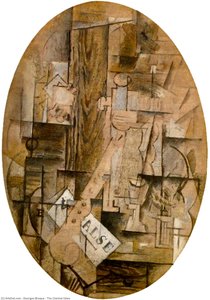
      The Clarinet Valse (1912) autor Georges Braque
      #21

      The Clarinet Valse

      1912

      To gaze upon Georges Braque’s 1912 masterpiece, The Clarinet Valse, is to step into a world where the boundaries between sound and sight begin to dissolve. This is…

      Stiilione: harpa ja viiul (1912) autor Georges Braque
      #22

      Stiilione: harpa ja viiul

      1912

      Kaotatud modernsete elukerakade visioon Georges Braque’i 1912. aastal maalis Stiilione: harpa ja viiul on mur turningpoint, mis isendab analüütilise kubismi kuldegümnastika. See ei ole traditsiooniline stiilione, mille eesmärk…

      Suur alast (1908) autor Georges Braque
      #23

      Suur alast

      1908

      Vaadeilmamine varasemajoodse sensuaalsuse kohta: Georges Braque'i *Suur alast* (1908) See võotav maaling, mille Georges Braque loodi 1908. aastal, pakub veetavat vaadet 20. sajabose alguse kunstlikule fermentile. Kuigi seda…

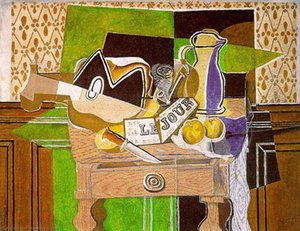
      Still-Life Le Jour (1929) autor Georges Braque
      #24

      Still-Life Le Jour

      1929

      Georges Braque’s “Still Life Le Jour,” painted in 1929, stands as a cornerstone of Fauvist art—a movement that irrevocably altered the course of twentieth-century painting. More than just…

      Metronoom (1909) autor Georges Braque
      #25

      Metronoom

      1909 · Statens Museum For Kunst

      Metronoom asub vasakpoolses ülaos, okerkellast ja siianastast piramidilaadse kaaluna. Selle puidust korpus on purunenud trapezoidseks tahkudeks, mis overlapuvad mandola servadega. Paksu ja kumerdatud X märgib keerevõti – see…

      Bottle, Glass, and Newspaper (1914) autor Georges Braque
      #26

      Bottle, Glass, and Newspaper

      1914

      In Georges Braque’s 1914 masterpiece, Bottle, Glass, and Newspaper, the boundaries between reality and representation dissolve into a captivating visual conversation. This work is not merely a depiction…

      Plums, Pears, Nuts and Knife (1926) autor Georges Braque
      #27

      Plums, Pears, Nuts and Knife

      1926 · The Phillips Collection

      In this 1926 oil on canvas, we find a composition that feels remarkably intimate, as if we have just stepped into a private moment of stillness. The subject…

      L'Estaque (1906) autor Georges Braque
      #28

      L'Estaque

      1906

      In the sun-drenched landscape of 1906, Georges Braque captured something far more profound than a mere Mediterranean vista; he captured the very moment art began to break free…

      Bottle and Fishes (1910) autor Georges Braque
      #29

      Bottle and Fishes

      1910

      In the quiet revolution of early twentieth-century modernism, few works capture the intellectual tension between reality and perception as poignantly as Georges Braque’s “Bottle and Fishes.” Executed around…

      Still Life with Guitar (1935) autor Georges Braque
      #30

      Still Life with Guitar

      1935

      In the quietude of 1935, Georges Braque captured a moment of profound stillness that transcends the simple arrangement of domestic objects. Still Life with Guitar is not merely…

      Still Life with Grapes (1918) autor Georges Braque
      #31

      Still Life with Grapes

      1918

      A Fragmented Reflection of Modernity In 1918, as the world emerged from the profound shadows of the Great War, Georges Braque was busy redefining the very essence of…

      Kaks lindu (1955) autor Georges Braque
      #32

      Kaks lindu

      1955 · Tel Aviv Museum of Art

      Georges Braque’s “Two Birds,” completed in 1955, isn't merely a depiction of avian forms; it’s a distilled essence of the artistic revolution brewing within early to mid-20th century…

      Fruitdish and Glass (1912) autor Georges Braque
      #33

      Fruitdish and Glass

      1912

      Georges Braque’s Fruitdish and Glass stands as a pivotal work in the history of art, marking a significant milestone in the development of Cubism. Created in 1912, this…

      Still Life: The Table (1928) autor Georges Braque
      #34

      Still Life: The Table

      1928

      Georges Braque’s “Still Life: The Table,” painted in 1928, isn't merely a depiction of objects; it’s an invitation into a carefully constructed world of fragmented perception and deliberate…

      Portrait of a Woman (1911) autor Georges Braque
      #35

      Portrait of a Woman

      1911

      In the annals of modern art, few moments are as transformative as the birth of Cubism, and few works capture this seismic shift with such intimate grace as…

      Still Life with a Guitar (1919) autor Georges Braque
      #36

      Still Life with a Guitar

      1919

      Georges Braque's "Still Life with a Guitar," painted in 1919, isn’t merely a depiction of objects; it’s a profound exploration of perception and the very nature of representation.…

      Laulikas salaat, klübaase viit (1913) autor Georges Braque
      #37

      Laulikas salaat, klübaase viit

      1913

      Kubistlikus still-life: Rea dekonstruktsioon Braqu’s „Laatastell, Klubikuningas“ teoses Georges Braqu’s *Fruit Dish, Ace of Clubs*, maalitud 1913. aastal, on analüütliku kubismi tüüpiline näide – revolutsiooniline stiil, mis laitis…

      Leaves in color of light (1953) autor Georges Braque
      #38

      Leaves in color of light

      1953

      A Symphony of Verdant Light To gaze upon Georges Braque’s Leaves, Color, Light is to step into a quiet sanctuary of color and form. Created during the artist's…

      Portuguese (1911) autor Georges Braque
      #39

      Portuguese

      1911

      In the quiet, fractured landscape of 1911, Georges Braque achieved something far more profound than a mere depiction of a musician; he captured the very vibration of sound…

      Persephone autor Georges Braque
      #40

      Persephone

      The Fragmented Echo of Myth In the quiet, striking depths of Georges Braque’s Persephone, we encounter more than just a depiction of a Greek deity; we witness the…

      Landscape autor Georges Braque
      #41

      Landscape

      A Pivotal Moment in Modernity In 1906, the tranquil hills of L’Estaque became the stage for a quiet revolution that would forever alter the trajectory of Western art.…

      At Sunset, Bird XVI (1958) autor Georges Braque
      #42

      At Sunset, Bird XVI

      1958

      In the quiet, evocative depths of Georges Braque’s "At Sunset, Bird XVI," we encounter a moment where the boundaries between the physical world and abstract emotion begin to…

      Klaasliljad autor Georges Braque
      #43

      Klaasliljad

      Et tõeliselt mõistaks ja väärtustaks teost "Klaasliljad", on hädavajalik uurida selle kunstilist päritolu. Georges Braque'i kunstiline teekond oli sügavalt juurdunud Paul Cézanne'i tööd, kelle rõhk geomeetrilistele vormidele ja…

      Nature Morte (1926) autor Georges Braque
      #44

      Nature Morte

      1926 · Art Gallery of Hamilton

      Georges Braque’s “Nature Morte,” painted in 1926, stands as a cornerstone of Cubist exploration and a testament to the artist's profound engagement with visual perception. More than just…

      Dead nature autor Georges Braque
      #45

      Dead nature

      To gaze upon Georges Braque’s “Dead Nature” is to witness a profound moment of stillness within the turbulent currents of modern art history. Created in 1930, this work…

      Still Life on a Table Gillette (1914) autor Georges Braque
      #48

      Still Life on a Table Gillette

      1914

      Georges Braque’s Still Life on a Table Gillette: A Fragmented Reflection of Modern Consciousness Still Life on a Table Gillette by Georges Braque stands as a cornerstone of…

      Portrait of a woman 1 autor Georges Braque
      #49

      Portrait of a woman 1

      To stand before Georges Braque’s "Portrait of a Woman 1" is to witness the very moment the mirror of traditional art was shattered and reassembled into something far…

      Big Nude (1908) autor Georges Braque
      #50

      Big Nude

      1908

      In the annals of modern art, few moments are as transformative as the birth of Cubism, and few works capture this seismic shift as viscerally as Georges Braque’s…

      Still Life with a Violin (1911) autor Georges Braque
      #51

      Still Life with a Violin

      1911

      To gaze upon Georges Braque’s “Still Life with a Violin,” painted in the transformative year of 1911, is to witness the very moment the mirror of traditional art…

      Factory of Rio Tinto in the L'estanque autor Georges Braque
      #52

      Factory of Rio Tinto in the L'estanque

      To gaze upon Georges Braque’s Factory of Rio Tinto in the L'estanque is to witness the very moment the mirror of traditional art was shattered and reassembled into…

      Ceiling: The Birds (1953) autor Georges Braque
      #53

      Ceiling: The Birds

      1953

      High above the floor of the Salle Henri II in the Louvre, a monumental vision unfolds within an oval frame. The air feels thick with the weight of…

      Seated woman 1 autor Georges Braque
      #54

      Seated woman 1

      The studio overlooks the Normandy coast, yet the view is broken into shards. A woman sits at her easel, her form caught in a web of grey planes…

      Guitar ''Program statue d'epouvante'' (1913) autor Georges Braque
      #55

      Guitar ''Program statue d'epouvante''

      1913

      A Cubist Still Life: Deconstructing Form in Braque’s ‘Guitar ''Program statue d'epouvante''’ Georges Braque’s *Guitar ''Program statue d'epouvante''* (1913) is a pivotal example of Analytical Cubism, showcasing the…

      Sidrunid, õrad ja kompotier (1927) autor Georges Braque
      #56

      Sidrunid, õrad ja kompotier

      1927 · The Phillips Collection

      Valgus tabab puuvilialaati, paljastades maailma, kus esemed eksisteerivad vaikliku fragmentatsiooniseisundis. Selles 1927. aasta kompositsioonis puhkavad sidrunid, õrad ja kompotier ruumis, mis keeldub seisma paigal. Siin ei ole ühe…

      Ceiling: The Birds (1953) autor Georges Braque
      #58

      Ceiling: The Birds

      1953

      To stand beneath this oval expanse is to witness a moment where the heavy weight of architecture dissolves into something far more fluid. Created between 1952 and 1953,…

      Louvre katuse jaoks uuring autor Georges Braque
      #59

      Louvre katuse jaoks uuring

      Georges Braque’i teos „Uurimus Louvre katuse jaoks” on lummav linnustega ja taevasliku imelise maailmaga uurinemine, mis läheb kaugele pelgast esitlusest, muutudes sügavaks meditaatioksi ruumi, valguse ja looduse omaises…

      Churth at Carrieres Saint-Denis (1909) autor Georges Braque
      #60

      Churth at Carrieres Saint-Denis

      1909

      The painting is a depiction of a village with buildings and stairs. The scene features a muted palette dominated by earthy tones—greens, yellows, and browns—creating an atmosphere of…

      The Round Table (1929) autor Georges Braque
      #61

      The Round Table

      1929

      Georges Braque’s “The Round Table”: A Dialogue Between Tradition and Innovation Subject Matter and Composition: Cubist Style and Technique: Historical Context – The Birth of Cubism: Symbolic Resonance…

      Glass, Pipe and Playing Cards (1918) autor Georges Braque
      #62

      Glass, Pipe and Playing Cards

      1918 · Des Moines Art Center

      A Study in Fragmented Reality Glass, Pipe and Playing Cards presents us with a quiet, intellectual puzzle. At first glance, one might see only the remnants of a…

      Landscape at L'Estaque (1907) autor Georges Braque
      #63

      Landscape at L'Estaque

      1907

      In the annals of modern art, few moments capture the raw, unbridled energy of a revolution quite like Georges Braque’s Landscape at L'Estaque. Painted in 1907, this oil…

      Yellow Seacoast autor Georges Braque
      #64

      Yellow Seacoast

      In the quiet evolution of modern art, few works capture the delicate balance between structural revolution and serene observation as masterfully as Georges Braque’s Yellow Seacoast. This evocative…

      Pedestal Table (1913) autor Georges Braque
      #66

      Pedestal Table

      1913

      The painting Pedestal Table is a collage that presents a seemingly chaotic arrangement of various objects. Within the composition, a vase is positioned in the middle of the…

      Still Life with Grapes and Clarinet (1927) autor Georges Braque
      #67

      Still Life with Grapes and Clarinet

      1927 · The Phillips Collection

      The eye wanders across a surface where wood grain and marble appear to ripple through layers of oil paint. A clarinet rests within this arrangement, its dark, slender…

      Woman with a Mandolin (1910) autor Georges Braque
      #68

      Woman with a Mandolin

      1910

      In the quiet revolution of early twentieth-century modernism, few works capture the seismic shift in human perception as profoundly as Georges Braque’s Woman with a Mandolin. Created in…

      Cards and Dice (1914) autor Georges Braque
      #69

      Cards and Dice

      1914 · Museo Nacional Centro de Arte Reina Sofía

      Õlupõhjaliselt linale tabatud kunstiteos Cards and Dice avab vaataja eest kompositsiooni, mis on piiratud ovaalsümboliga, mis on asetatud tumeda, püstjult triibidega täidetud musta, dikdörtkulaadse taustaga. Pind on struktureeritud…

      White Bird autor Georges Braque
      #70

      White Bird

      In the vast landscape of early twentieth-century modernism, few works possess the quiet, arresting power of Georges Braque’s “White Bird.” To gaze upon this piece is to witness…

      Port of La Ciotat (1907) autor Georges Braque
      #71

      Port of La Ciotat

      1907

      A Harbor in Fragments The water at La Ciotat holds a heavy, fractured light. In this 1907 scene, sailboats and yachts drift through a landscape broken into geometric…

      Tithonos autor Georges Braque
      #72

      Tithonos

      In the quiet evolution of modernism, few moments are as profound as the emergence of Analytical Cubism, and few works capture this seismic shift with such poetic restraint…

      Bottle (1914) autor Georges Braque
      #73

      Bottle

      1914

      In this 1914 work, we find ourselves looking at a scene that has been carefully dismantled and reassembled. The composition centers on a bowl and various bottles, yet…

      Still Life with a Pair of Banderillas (1911) autor Georges Braque
      #74

      Still Life with a Pair of Banderillas

      1911

      In this 1911 oil on canvas, the surface is occupied by a collection of everyday items arranged upon a dining table and near a chair. Two banderillas, used…

      A Table Grise autor Georges Braque
      #75

      A Table Grise

      A Window Into Cubist Still Life: Georges Braque’s “A Table Grise” Georges Braque's "A Table Grise" (1930) isn’t merely a depiction of an arrangement; it’s a carefully constructed…

      Violin and Glass (1913) autor Georges Braque
      #76

      Violin and Glass

      1913 · Kunstmuseum Basel

      In this 1913 composition, we find ourselves observing a quiet arrangement of everyday objects that have been carefully deconstructed. A violin rests upon a wooden bow, positioned near…

      Nature Morte a la Guitare (1938) autor Georges Braque
      #77

      Nature Morte a la Guitare

      1938

      The scene unfolds through a fractured lens, where the boundaries between objects and space dissolve into a rhythmic dance of planes. A guitar neck and body emerge from…

      Saint-Pol Roux autor Georges Braque
      #78

      Saint-Pol Roux

      The composition is defined by a stark, graphic tension between deep black silhouettes and a cream-colored ground. A profile face, rendered as a solid dark form, is integrated…

      The Violin Valse (1913) autor Georges Braque
      #79

      The Violin Valse

      1913

      Created in 1913, The Violin Valse is a still life painting that utilizes charcoal, oil, and canvas. The artwork features the contour of a violin, including its f-holes…

      Viaduct At L'estaque. Le Viadue De L'estaque autor Georges Braque
      #80

      Viaduct At L'estaque. Le Viadue De L'estaque

      Georges Braque’s “Viaduct At L’Estaque,” painted in 1907, stands as a pivotal moment in the burgeoning Cubist movement—a bold assertion of artistic innovation that simultaneously honors and departs…

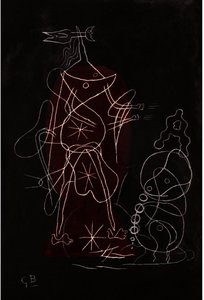
      untitled autor Georges Braque
      #81

      untitled

      In the quiet revolution that redefined the boundaries of modern vision, Georges Braque’s “untitled (7718)” emerges as a profound meditation on the nature of sight itself. This seminal…

      untitled (928) autor Georges Braque
      #83

      untitled (928)

      In the realm of modern art, few moments are as profoundly transformative as the birth of Cubism, and Georges Braque’s “untitled (928)” stands as a breathtaking testament to…

      The Painter and His Model (1939) autor Georges Braque
      #84

      The Painter and His Model

      1939

      In the quiet, contemplative atmosphere of 1939, Georges Braque captured more than just a moment in time; he captured the very essence of perception itself. The Painter and…

      embattled head autor Georges Braque
      #85

      embattled head

      In the quiet intensity of Georges Braque’s embattled head, we encounter a profound meditation on the human condition, captured through the radical lens of Cubist innovation. Executed in…

      Pitchet, Glass And Lemons autor Georges Braque
      #86

      Pitchet, Glass And Lemons

      Georges Braque’s 1942 painting, “Pitchet, Glass and Lemons,” isn’t merely a depiction of everyday objects; it’s a profound exploration of perception itself. Born in Argenteuil, France, in 1882,…

      untitled (3508) autor Georges Braque
      #87

      untitled (3508)

      The painting features a guitarist playing an instrument set against a red background. The scene depicts a crowd, with several individuals visible throughout the composition.

      L'Estaque (1906) autor Georges Braque
      #88

      L'Estaque

      1906

      In the quiet landscape of 1906, a profound transformation was taking place within the confines of a canvas. Georges Braque’s L'Estaque is far more than a mere depiction…

      Terrace Of Hotel Mistral autor Georges Braque
      #89

      Terrace Of Hotel Mistral

      The painting Terrace Of Hotel Mistral captures a sunlit scene featuring a group of trees positioned in front of the hotel. Some trees appear closer to the foreground,…

      Still Life with Ace of Hearts (1914) autor Georges Braque
      #90

      Still Life with Ace of Hearts

      1914

      To stand before Georges Braque’s Still Life with Ace of Hearts is to step directly into the crucible of early 20th-century modernism. This painting, executed in 1914, is…

      The large trees autor Georges Braque
      #91

      The large trees

      In the quiet, sun-dappled groves of the French countryside, Georges Braque captured something far more profound than a mere landscape; he captured the very pulse of nature. “The…

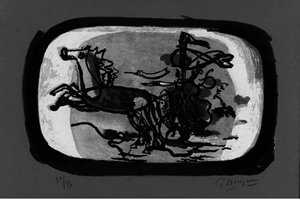
      The Chariot II autor Georges Braque
      #92

      The Chariot II

      In The Chariot II, we encounter a profound exploration of movement and structural deconstruction, a piece that serves as a window into the radical shifts of early twentieth-century…

      Head Of A Woman autor Georges Braque
      #93

      Head Of A Woman

      A Fragmented Gaze: Exploring Braque’s “Head of a Woman” Georges Braque’s “Head of a Woman” is a compelling example of Analytical Cubism, a revolutionary style he pioneered alongside…

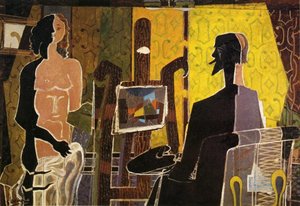
      The Studio (III) (1949) autor Georges Braque
      #94

      The Studio (III)

      1949

      The painting The Studio (III), executed by Georges Braque in 1949, presents a room viewed through a fractured lens. The composition is built from geometric planes, primarily rectangular…

      Landscape at L'Estaque (1906) autor Georges Braque
      #95

      Landscape at L'Estaque

      1906

      In the quiet coastal reaches of Provence, where the Mediterranean sun warms the earth, Georges Braque captured a moment that would forever alter the trajectory of Western art.…

      The Bottle of Rum (1914) autor Georges Braque
      #96

      The Bottle of Rum

      1914

      In the quiet, revolutionary atmosphere of 1914, Georges Braque captured more than just a still life; he captured the very fracturing of modern perception. The Bottle of Rum…

      The Birds (1953) autor Georges Braque
      #97

      The Birds

      1953

      Georges Braque’s “The Birds”: A Symphony of Geometric Abstraction “The Birds,” completed in 1953, stands as a testament to Georges Braque's unwavering commitment to Cubist principles even amidst…

      untitled (9288) autor Georges Braque
      #98

      untitled (9288)

      Georges Braque’s “untitled (9288)” stands as a testament to the transformative power of artistic experimentation during the early years of the 20th century. Executed in 1974, this photolithograph…

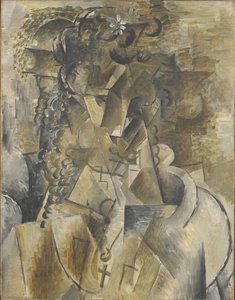
      Girl with a Cross (1911) autor Georges Braque
      #99

      Girl with a Cross

      1911 · Kimbell Art Museum

      In the quiet, fractured landscape of Georges Braque’s 1911 masterpiece, Girl with a Cross, the viewer is invited into a world where reality is not merely observed, but…

      Guitar and Still Life on a Guéridon (1922) autor Georges Braque
      #100

      Guitar and Still Life on a Guéridon

      1922

      A Moment Frozen in Time: Georges Braque’s “Guitar and Still Life on a Guéridon” Georges Braque's "Guitar and Still Life on a Guéridon" isn’t merely a depiction of…

      Georges Braque lõikud perioodide kaupa

      Cubist Synthesis

      1911 – 1914 · 4 teost selles nimekirjas

      Mida Georges Braque kõige rohkem maalis

      Neli teemat, mis esinevad neil lätistes kõige sagedamini, koos nende kõige armastatumate näidetega.

      Kuna Georges Braquei lamedad pildid rippuvad siin

      Kümne 8 muuseumi kollektsioonid, mis sisaldavad kõige rohkem sellel lehel esitatud teoseid.

      Muuseumid Linn Georges Braque teosid Selle nimekirja maalid
      The Phillips Collection, Washington, D.C.The Phillips Collection Washington, D.C. 11 Plums, Pears, Nuts and Knife, Sidrunid, õrad ja kompotier, Still Life with Grapes and Clarinet
      Centre Pompidou, PariisCentre Pompidou Pariis 4 Duett (Le Duo), Lagi, Les Lecques, Little Bay at La Ciotat (also known as Cove at La Ciotat)
      Art Institute of Chicago, ChicagoArt Institute of Chicago Chicago 5 Pargi Põhjamaal, Still Life with Glass, Dice, Newspaper and Playing Card
      Statens Museum For Kunst, KooberemaaStatens Museum For Kunst Kooberemaa 8 Metronoom
      Kunstmuseum Basel, BaselKunstmuseum Basel Basel 5 Violin and Glass
      Kunstsammlung Nordrhein-Westfalen, DüsseldorfKunstsammlung Nordrhein-Westfalen Düsseldorf 2 Still life with fruit bowl, bottle and mandolin (Nature morte au compotier, bouteille et mandoline)
      Tate Gallery, LondonTate Gallery London 1 Mandola
      Solomon R. Guggenheimi muuseum, New YorkSolomon R. Guggenheimi muuseum New York 1 Fiolin ja palett

      Georges Braque kõige armastatum lõenatav teos iga kümnendiga

      1. 1900s
        Pargi Põhjamaal (1909) autor Georges Braque
        Lentik 4 / 100

        Pargi Põhjamaal

        Vanus 18–27 · Art Institute of Chicago

        Kubistliku innovatsiooni meistriteos Georges Braque'i "Pargi Põhjamaal" (1909) on lummav varajase kubismi näide, mis demonstreerib kunstniku murdilist lähenemist vormile ja perspektiivile. See elav teos tabab tiheda sadama atmosfääri…

      2. 1910s
        Mandola (1910) autor Georges Braque
        Reiting: 1 / 100

        Mandola

        Vanus 28–37 · Tate Gallery

        Georges Braque'i "Mandola", valminud aastal 1910, seisab kui oluline teos analüütilise kubismi arengus – revolutsioonilises stiilis, mis murdis traditsioonilisi kunstipärande konventsioone. See õlimaal lõuendile (71 x 56 cm)…

      3. 1920s
        Still-Life Le Jour (1929) autor Georges Braque
        Reiting: 24 / 100

        Still-Life Le Jour

        Vanus 38–47

        Georges Braque’s “Still Life Le Jour,” painted in 1929, stands as a cornerstone of Fauvist art—a movement that irrevocably altered the course of twentieth-century painting. More than just…

      4. 1930s
        Duett (Le Duo) (1937) autor Georges Braque
        Reiting: 8 / 100

        Duett (Le Duo)

        Vanus 48–57 · Centre Pompidou

        Geometria ja gracileks nimetatav sümfoonia 1937. aasta vaikuses tabas Georges Braque rohkem kui vaid muusika hetke; ta tabas harmoonilise dialoogi olemust. Duett (Le Duo) kutsub vaatajat sisse intiimsesse…

      5. 1940s
        The Studio (III) (1949) autor Georges Braque
        Reiting: 94 / 100

        The Studio (III)

        Vanus 58–67

        The painting The Studio (III), executed by Georges Braque in 1949, presents a room viewed through a fractured lens. The composition is built from geometric planes, primarily rectangular…

      6. 1950s
        Kaks lindu (1955) autor Georges Braque
        32 / 100

        Kaks lindu

        Vanus 68–77 · Tel Aviv Museum of Art

        Georges Braque’s “Two Birds,” completed in 1955, isn't merely a depiction of avian forms; it’s a distilled essence of the artistic revolution brewing within early to mid-20th century…

      Georges Braque tablidet: vastused teie küsimustele

      Mis on Georges Braque kõige tuntum maaliamat?Loe vastust

      Mandola (1910), Tate Gallery, London. Järgnevad Mees kitarriga (1914) ja Majad L'estaque'is.

      Kui vana Georges Braque oli, kui teos Mandola maalis?Loe vastust

      1882 aastal sündinud Georges Braque oli 28 aastat vanus: Mandola on pärinev aastast 1910.

      Millised on 10 kuulsumat maali kunstniku Georges Braque teosena?Loe vastust

      Mandola, Mees kitarriga, Majad L'estaque'is, Pargi Põhjamaal, Naeratav naine, Fiolin ja palett, The Musician, Duett (Le Duo), Naine kitriga ja Heracles. Iga teos ülal toodud reitingus on märgitud koos aasta ja muuseumiga.

      Kui palju teoseid Georges Braque kokku kirjoonud on?Loe vastust

      Kataloogis on 700 teost kunstnikult Georges Braque, kuupäevadelt 1906 kuni 1958.

      Kust saan näha Georges Braque kõige kuulsamaid linateid?Loe vastust

      Peamiselt The Phillips Collection (Washington, D.C.), Centre Pompidou (Pariis) ja Art Institute of Chicago (Chicago) asukohas; ülaltoetud nimekiri esitab kirja iga muuseumi ja selle tablood.

      Millal maalis Georges Braque oma kõige armastatumad lamedad pildid?Loe vastust

      1910s perioodil, mis sisaldas 37 kogu selle lehe 100 teosest, oli nende hulgas Mandola.

      Millised on Georges Braque tuntud esimesed ja viimased tablood?Loe vastust

      Siin olevad kõige vanamad lamedad pildid on Lagi, Les Lecques (1906); kõige uuemad on At Sunset, Bird XVI (1958).

      Mida Georges Braque kõige enam maalis?Loe vastust

      Geometric forms (20), Geometric (13) ja Geometric shapes (11), kogu selle lehekülje 100 teose kohta.

      Millist tehnikat Georges Braque kõige enam kasutas?Loe vastust

      Oil On Canvas, mida on kasutatud 49 kuni 100 teoseks sellel lehel.

      Millisse Millises suunas on Georges Braque maal on tegutsenud?Loe vastust

      Kubism, nagu sellel lehel olevad tablood näitavad.

      Millised Georges Braque lamedad tablavid The Phillips Collection muuseumis rihangad?Loe vastust

      The Phillips Collection, Washington, D.C. säilitab 3 sellel lehel olevat teost, seda hulka kuuluvad ka Plums, Pears, Nuts and Knife, Sidrunid, õrad ja kompotier ja Still Life with Grapes and Clarinet.

      Georges Braque: elu värvides

      Varajärgi ja kunstiline alus

      Georges Braque, kes sündis 1882. aastal Prantsusmaal Argenteuilis, astus ette teele, mis oli sügavalt seotud moderniseeruva kunstimaastikuga. Tema kasvupõlved majaülesehajatest ja dekoratoridest pärines enough tehniline meisterlikkus materjalide suhtes, kuid ka varajane arusaatus vormist ja struktuurist. Kuigi alguses järgnes ta oma isa kutsetööle, viisid Braque loomulikud kunstilised kalduseid teda kiiresti Le Havre'i École des Beaux-Arts koolituse juurde, tähistades algust teekonnal, mille lõpus sai temast üks 20. sajandi mõjuvaimaid maalareid. See alus – praktilise käsitöö ja akadeemilise õppimise kooslus – osutuks määravaks, kui ta hiljem dekonstrueeris ja re-imagineeris traditsioonilisi kunstiline konventsioone.

      Pärast Pariisi asumist 1902. aastal jätkas Braque oma õpinguid Académie Humbertis, süvenedes linna vibratil kunstilisse keskkonda. Just siin kohtus ta Marie Laurencin ja Francis Picabia sarnasuste ja sidemetega kunstnikega, mis kujundasin tema varajast arengut. Tema esialgsed teosed peegeldasid valitsevaid mõjudest impressionismi ja postimpressionismi, kuid 1eks võtupunktiks sai 1905. aastal toimunud kohtumine fauvismiga, mille julge värvikasus ja ekspressiivne vabadus süütele uue suunale tema kunstilises uurimistöös.

      Fauvismi omaksimine ja kubismi koit

      Braque võtmine fauvistlikud printipeed – mida iseloomustavad intensiivne, mitte-naturalistlik värv ja emotsionaalne avaldus – on selgelt nähtav nii nagu maalides The Patience. Sel perioodil töötas ta koos Henri Matisse ja André Derainiga, eksperimenteerides kirevate palettide ja lihtsustatud vormidega. Kuid Braque kaasamine fauvismis ei olnud pelgalt imiteerimine; ta infuseeris seda unikaalse tundlikkusega, pehmendades liikumise piiramatu lopsakuse kontrollitudma ja analüütilisema lähenemise.

      Murdepunkt saabus 1907. aastal, kui ta puutus Paul Cézanne'i retrospektiivsembaga. Cézanne'i rõhuasetus geomeetrilistele vormidele ja mitmele perspektiivile mõjutas Braque'i sügavalt, ette valmistades lavast tema murdiliku koostöö Pablo Picasso'ga. Alates 1908. aastast alustasid need kaks kunstilist titaanit intensiivset intellektuaalset vahetust, mis andis elu kubismile – revolutsioonile, mis purustas traditsioonilised esituse mõisted.

      Koos arendasid Braque ja Picasso analüütilist kubismi, lahendades objektid fragmenteritud geomeetilisteks kujudeks ja esitades mitmeid vaatepunktid korraga. Teosed nagu Houses at L'Estaque demonstreerivad seda varajast faasi, näidates radikaalset kõrvalekaldet tavalistest perspektiividest ja keskendumist vormide alusstruktuurile. Nende palett muutus teadlikult vaigendatudks, eelistades vormi värvi üle, kuna nad püüdisid esitada objekti oleku tervikut rather enn vaid selle välimust.

      Innovatsioon fragmentatsiooni ja kollaasite kaudu

      Braque'i ja Picasso partnerlus jätkas kunstilise avalduse piiride laiendamist, viies umbes 1912. aastal sündinud sümmeetrilise kubismi arenguni. See faas tõi kaasa kollaasi – reaalsetest materjalidest koosneva elemendi lisamise maalidele, nagu ajalehefragmentid, tapeet ja kangas. See innovatsioon väljakutsus traditsioonilist hierarhiat maali ja skulptuuri vahel, hämarustades piire kunsti ja elu vahel.

      Braque'i uuenduslik *papier collé* (liimatud paber) tähistas olulist pöördet tema kunstilises evolutsioonis. Integreerides igapäevaste esemete fragmente oma kompositsioonidesse, rikkus ta traditsioonilise maali illusioonilist ruumi ja lisas uue taseme materjaalsusele ja tekstuurile. See tehnika ei laiendanud mitte ainult kunsti vormilisi võimalusi, vaid peegeldas ka kasvavat huvi esituse ja reaalsuse vahelise suhte vastu.

      Esmase maailmasõja puhkemine 1914. aastal tõi selle intensiivse koostöö lõpu, kuna Braque kutsuti sõjalisele teenistusele. Tema sõjakogemused mõjutasid sügavalt tema kunstilist visiooni, suunates teda pärast sõda uurima isiklikumaid ja lyrilisemaid teemasid.

      Hilised aastad ja püsiv pärand

      Pärast sõda arenes Braque'i stiil kaugemale kubismi rangest piiridest, sisaldades klassikalise kompositsiooni elemente ja uuenenud huvi hüviku (still life) vastu. Hoides kõrgil geomeetrilisi mõjud, mis olid tema varasemaid teoseid iseloomustanud, arendas ta peenetuma ja mõttelise lähenemise maalile. Tema hilisema ajastu maastikud ja interjöörid on tuntud oma rahustava atmosfääri ja värvide peenete harmooniate poolest.

      Kogu oma karjääri jooksul püüdles Braque uurima vormi, ruumi ja esituse põhimõlikke väärtusi. Ta jätkas eksperimenteerimist erinevate materjalide ja tehnikatega, lükates kunstilise avalduse piire kuni oma suremiseni 1963. aastal. Tema mõju järgnevatele kunstnikutest on mõõdamatu, kujustades modernkunsti suunda ning inspireerides lugematuid maalareid, skulptoreid ja kollaazkunstnikke.

      Georges Braque pärand ulatub kaugemale kui tema üksikud teosed; ta muutis fundamentaalselt meie arusaamat, kuidas me ümbritsevat maailma tajume ja esitame. Tema koostöös Pirricoega, koos tema enda unikaalse kunstilise visiooniga, kinnitas tema koha tõelise modernkunsti pioneerina – meistrina, kes julges väljakutsuda konventsioone ja määrata maalimise uusi võimalusi.

      Mõjud ja olulised teosed

      • Mõjutajad: Henri Matisse, André Derain, Paul Cézanne
      • Olulised teosed: Houses at L'Estaque, The Patience, Violin and Palette, Mandola
      • Mõju kunstile: Revolutsioneeruts teaduslikult 20. sajandi kunstis kubismi kaudu; väljakutsus traditsioonilistele perspektiivile ja esituse mõidele.

      Kõik 700 teost Georges Braque →