
Atelier — Tasuta kohaletoimetamine üle maailma — Tarneaeg 2–6 nädalat
      Maria Prõmatšenko, 1908 – 1997

      Maria Prõmatšenko: 97 tuntumat teost

      Kõikidest Maria Prõmatšenko maalistest on kõige kuulsam Three Parrots on a Soldier's Grave (1982). Järgnevad neile I Give My Little Stars to Children (1983) ja The Little Elephant Who Wanted to Be a Sailor (1973). Meie kataloogis olevatest 97 teosest on Maria Prõmatšenko kõige kuulsamad 97 teost, millest iga on esitatud koos kuupäeva, muuseumi ja luguga.

      Reiting põhineb meie populaarsusindeksil, mis koondab iga teose otsingud, külastused ja tellimused. Uuendatud oktoober 2026.

      Maria Prõmatšenko portree
      Maria Prõmatšenko · 1908 – 1997
      Sündinud · surnud
      1908 – 1997
      Suunata
      Naive art / primitivism
      Meie kataloogis olevad teosed
      97
      Kõige tuntud
      Three Parrots on a Soldier's Grave (1982)

      Maria Prõmatšenko kõige kuulsam 10 maalist

      Let Us Go to the Betrothal Party (1968) autor Maria Prõmatšenko
      7

      Let Us Go to the Betrothal Party

      1968 · Gouache

      In the vibrant tapestry of twentieth-century Naive Art, few works radiate as much warmth and cultural vitality as Maria Primachenko’s 1968 masterpiece, "Let Us Go to the Betrothal Party." This gouache painting is far more than a mere depiction of a festive occasion; it is an immersive window into the heart of Ukrainian folklore. At its center, a man and a woman stand in a tender embrace, their figures rendered…

      Flax Blooms and a Cossack Goes to a Girl (1982) autor Maria Prõmatšenko
      8

      Flax Blooms and a Cossack Goes to a Girl

      1982 · Acrylic On Canvas

      In the enchanting realm of Maria Primachenko’s artistry, the boundaries between reality and folklore dissolve into a vibrant tapestry of color and cultural memory. Her masterpiece, Flax Blooms and a Cossack Goes to a Girl, serves as a breathtaking window into the soul of Ukraine. At first glance, the viewer is swept up in a whirlwind of saturated hues and whimsical forms that evoke the joyous spirit of a traditional…

      Maria Prõmatšenko maalid reitingul 11 kuni 97

      My Flowers To Those Who Love Peace (1983) autor Maria Prõmatšenko
      #11

      My Flowers To Those Who Love Peace

      1983

      In this 1983 work, Maria Primachenko offers a quiet, colorful meditation on the concept of tranquility. The composition centers on a stylized, ornamental structure, reminiscent of a central…

      Wild Bull and Raven Are Friends (1983) autor Maria Prõmatšenko
      #14

      Wild Bull and Raven Are Friends

      1983

      In the enchanting realm of Maria Primachenko’s 1983 masterpiece, "Wild Bull and Raven Are Friends," the boundaries between reality and folklore dissolve into a vibrant tapestry of color…

      Crane Makes Friends with a Fox (1979) autor Maria Prõmatšenko
      #15

      Crane Makes Friends with a Fox

      1979

      The Maria Primachenko painting, "Crane Makes Friends with a Fox", is a captivating example of Naive Art/Primitivism, a style characterized by its simplicity, flat rendering, and lack of…

      Lovely Spring, What Did You Bring. (1977) autor Maria Prõmatšenko
      #16

      Lovely Spring, What Did You Bring.

      1977

      In the vibrant masterpiece "Lovely Spring, What Did You Bring," the legendary Ukrainian artist Maria Primachenko invites us into a world where nature and myth intertwine with breathtaking…

      Two-Headed Chicken (1977) autor Maria Prõmatšenko
      #17

      Two-Headed Chicken

      1977

      In this 1977 composition, two large yellow birds occupy the central space of a 62 x 85 cm canvas. These avian figures possess elongated necks and are positioned…

      Ukrainian Wedding (1966) autor Maria Prõmatšenko
      #18

      Ukrainian Wedding

      1966

      In the vibrant tapestry of twentieth-century Naive Art, few threads are as luminous and emotionally resonant as those woven by Maria Primachenlyko. Her 1966 masterpiece, Ukrainian Wedding, serves…

      Ukraine Blooming (1979) autor Maria Prõmatšenko
      #19

      Ukraine Blooming

      1979

      In the enchanting realm of Naive Art, few works capture the pure, unadulterated joy of nature quite like Maria Primachenko’s Ukraine Blooming. Created in 1979, this masterpiece serves…

      Flax Blooms, a Bride Goes to Her Groom (1983) autor Maria Prõmatšenko
      #20

      Flax Blooms, a Bride Goes to Her Groom

      1983

      In the enchanting realm of Maria Primachenko’s imagination, reality dissolves into a tapestry of myth and memory. Flax Blooms, a Bride Goes to Her Groom serves as a…

      Do I Love Orchards, Do I Love Forests (1968) autor Maria Prõmatšenko
      #21

      Do I Love Orchards, Do I Love Forests

      1968

      In the vibrant masterpiece Do I Love Orchards, Do I Love Forests, created in 1968, the legendary Ukrainian artist Maria Primachenko invites us into a world where the…

      Wild and Big-Eared (1977) autor Maria Prõmatšenko
      #22

      Wild and Big-Eared

      1977

      The Naive Art/Primitivism style has always been a fascinating genre, and one artist who embodies its spirit is Maria Primachenko. Her painting, Wild and Big-Eared, created in 1977,…
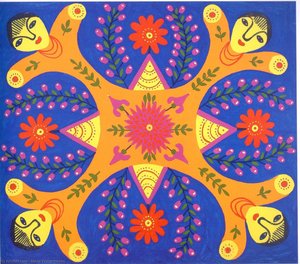
      Tablecloth (1976) autor Maria Prõmatšenko
      #23

      Tablecloth

      1976

      Created in 1976, this gouache work by Maria Primachenko utilizes a flattened perspective to organize a complex visual field. The composition centers on a large circle, which is…

      Ukrainian Dancers (1983) autor Maria Prõmatšenko
      #24

      Ukrainian Dancers

      1983

      In the vibrant tapestry of twentieth-century Ukrainian art, few works capture the pure, unadulterated joy of nature quite like Maria Primachenko’s Ukrainian Dancers. Created in 1983, this masterpiece…

      Monkey Riding a Four-Headed Beast (1982) autor Maria Prõmatšenko
      #25

      Monkey Riding a Four-Headed Beast

      1982

      The painting Monkey Riding a Four-Headed Beast by Maria Primachenko is a vibrant and captivating example of Naive Art/Primitivism, a style characterized by its simplicity, flat rendering, and…

      Dumplings on the Shelf (1979) autor Maria Prõmatšenko
      #26

      Dumplings on the Shelf

      1979

      In the tender, vibrant strokes of "Dumplings on the Shelf," we encounter the enchanting world of Maria Primachenko, a master of Naive Art who transformed the mundane into…
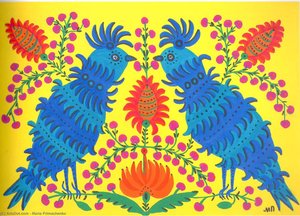
      Two Kites (1982) autor Maria Prõmatšenko
      #27

      Two Kites

      1982

      In the vibrant realm of Naive Art, few works capture the whimsical essence of nature as tenderly as Maria Primachenko’s 1982 masterpiece, Two Kites. This enchanting gouache painting…

      Red Poppies (1982) autor Maria Prõmatšenko
      #29

      Red Poppies

      1982

      Red Poppies is a work by Maria Prymachenko, executed in 1982. Measuring 85 x 61 cm, the piece belongs to the Naive Art and Primitivism movements. It reflects…

      Poppy (1983) autor Maria Prõmatšenko
      #52

      Poppy

      1983

      In the enchanting realm of Naive Art, few works capture the rhythmic pulse of life as tenderly as Maria Primachenko’s Poppy. Created in 1983, this masterpiece serves as…

      This Bear Wants to Have Some Flour Milled (1972) autor Maria Prõmatšenko
      #54

      This Bear Wants to Have Some Flour Milled

      1972

      In the enchanting realm of Maria Primachenko’s imagination, the boundaries between the mundane and the magical dissolve into a vibrant tapestry of color and folklore. Her captivating gouache…

      Tiger Laughs (1982) autor Maria Prõmatšenko
      #66

      Tiger Laughs

      1982

      Here are the cantos, eighteen of them, each one different in form, mood, color, beat, scale, and key. There are no cadenzas. Each is separate. Each can stand…

      Pigeons (1968) autor Maria Prõmatšenko
      #75

      Pigeons

      1968

      In the vast landscape of twentieth-century art, few voices resonate with as much pure, unadulterated joy as that of Maria Primachenko. Her 1968 masterpiece, "Pigeons," serves as a…

      A Cow Like That Gives 5,000 Liters a Day (1978) autor Maria Prõmatšenko
      #76

      A Cow Like That Gives 5,000 Liters a Day

      1978

      The painting "A Cow Like That Gives 5,000 Liters a Day" by Maria Primachenko is a stunning example of Naive Art/Primitivism, a style characterized by its simplicity, flat…

      Ukrainian Dough Looks Into Every House (1977) autor Maria Prõmatšenko
      #77

      Ukrainian Dough Looks Into Every House

      1977

      In the enchanting realm of Maria Primachenko’s 1977 masterpiece, "Ukrainian Dough Looks Into Every House," the boundaries between reality and myth dissolve into a vibrant, dreamlike landscape. This…

      My Bouquet to Grain Growers (1983) autor Maria Prõmatšenko
      #78

      My Bouquet to Grain Growers

      1983

      In the vibrant tapestry of twentieth-century Ukrainian art, few works capture the whimsical essence of life quite like Maria Primachenko’s My Bouquet to Grain Growers. Created in 1983,…

      Our Army, Our Protectors (1978) autor Maria Prõmatšenko
      #79

      Our Army, Our Protectors

      1978

      The painting "Our Army, Our Protectors" by Maria Primachenko is a stunning example of Naive Art/Primitivism, a style characterized by its simplicity, flat rendering, and lack of formal…

      Savage Hump-Shaker (1977) autor Maria Prõmatšenko
      #80

      Savage Hump-Shaker

      1977

      The Naive Art/Primitivism style has always been a fascinating genre, and one artist who embodies its spirit is Maria Primachenko. Her painting, Savage Hump-Shaker, created in 1977, is…

      Maiden and Cossack Enjoying a Ride on Horseback (1982) autor Maria Prõmatšenko
      #81

      Maiden and Cossack Enjoying a Ride on Horseback

      1982

      The painting Maiden and Cossack Enjoying a Ride on Horseback by Maria Primachenko is a stunning example of Naive Art, a style characterized by its simplicity, flat rendering,…

      A Hare's Birthday Party (1977) autor Maria Prõmatšenko
      #82

      A Hare's Birthday Party

      1977

      The Naive Art/Primitivism style has always been a fascinating genre, and one artist who embodies its spirit is Maria Primachenko. Her painting, "A Hare's Birthday Party", created in…

      A Coward Went A-Hunting (1983) autor Maria Prõmatšenko
      #83

      A Coward Went A-Hunting

      1983

      The Naive Art/Primitivism movement has long been a source of fascination for art enthusiasts, and Maria Primachenko's work is a stunning example of this style. Her painting, A…

      A Bunch of Red Flowers on Read Army Day (1970) autor Maria Prõmatšenko
      #84

      A Bunch of Red Flowers on Read Army Day

      1970

      The painting A Bunch of Red Flowers on Read Army Day is a stunning example of Naive Art/Primitivism, a style characterized by its simplicity, flat rendering, and lack…

      October Flowers (1968) autor Maria Prõmatšenko
      #85

      October Flowers

      1968

      The painting October Flowers is a stunning example of Naive Art/Primitivism, a style characterized by its simplicity, flat rendering, and lack of formal training. Created in 1968 by…

      This Beast is Making Magic (1983) autor Maria Prõmatšenko
      #86

      This Beast is Making Magic

      1983

      The painting "This Beast is Making Magic" by Maria Primachenko is a captivating example of Naive Art/Primitivism, a style characterized by its simplicity, flat rendering, and lack of…

      Menagerie (1977) autor Maria Prõmatšenko
      #87

      Menagerie

      1977

      The Menagerie by Maria Primachenko is a captivating example of Naive Art/Primitivism, a style characterized by its simplicity, flat rendering, and lack of formal training. Created in 1977,…

      An Outer Space Memory (1977) autor Maria Prõmatšenko
      #88

      An Outer Space Memory

      1977

      The Maria Primachenko painting, An Outer Space Memory, is a fascinating example of Naive Art/Primitivism. Created in 1977, this piece showcases the artist's unique style and perspective. The…
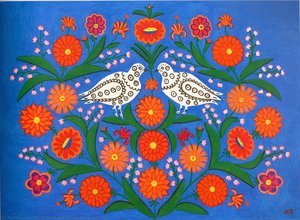
      Pigeon and Dove (1982) autor Maria Prõmatšenko
      #89

      Pigeon and Dove

      1982

      The painting "Pigeon and Dove" by Maria Primachenko is a stunning example of Naive Art/Primitivism, a style characterized by its simplicity, flat rendering, and lack of formal training.…

      Blue Birds in Flowers (1983) autor Maria Prõmatšenko
      #90

      Blue Birds in Flowers

      1983

      The painting Blue Birds in Flowers by Maria Primachenko is a stunning example of Naive Art, a style characterized by its simplicity, flat rendering, and lack of formal…

      Dear Cosmonauts, I Give You These Red Poppies (1983) autor Maria Prõmatšenko
      #91

      Dear Cosmonauts, I Give You These Red Poppies

      1983

      The painting Dear Cosmonauts, I Give You These Red Poppies is a stunning example of Naive Art/Primitivism, a style characterized by its simplicity, flat rendering, and lack of…

      Wild Cat (1977) autor Maria Prõmatšenko
      #92

      Wild Cat

      1977

      The Wild Cat painting by Maria Primachenko is a stunning example of Naive Art/Primitivism, a style characterized by its simplicity, flat rendering, and lack of formal training. Created…

      Red Snowball Tree Blooms Over a Well (1982) autor Maria Prõmatšenko
      #93

      Red Snowball Tree Blooms Over a Well

      1982

      The painting "Red Snowball Tree Blooms Over a Well" by Maria Primachenko is a stunning example of Naive Art/Primitivism, a style characterized by its simplicity, flat rendering, and…

      A Dove Has Spread Her Wings and Asks for Peace (1982) autor Maria Prõmatšenko
      #94

      A Dove Has Spread Her Wings and Asks for Peace

      1982

      The painting A Dove Has Spread Her Wings and Asks for Peace by Maria Primachenko is a stunning example of Naive Art/Primitivism, a style characterized by its simplicity,…

      Ukrainian Milkmaids Work Hard Like Miners (1970) autor Maria Prõmatšenko
      #95

      Ukrainian Milkmaids Work Hard Like Miners

      1970

      The Ukrainian Milkmaids Work Hard Like Miners painting by Maria Primachenko is a stunning example of Naive Art/Primitivism, a style characterized by its simplicity, flat rendering, and lack…

      Ola Man and Old Woman Carry a Turnip (1983) autor Maria Prõmatšenko
      #96

      Ola Man and Old Woman Carry a Turnip

      1983

      The painting "Ola Man and Old Woman Carry a Turnip" by Maria Primachenko is a stunning example of Naive Art/Primitivism, a style characterized by its simplicity, flat rendering,…

      The Lark (1976) autor Maria Prõmatšenko
      #97

      The Lark

      1976

      The Maria Primachenko painting, The Lark, is a stunning example of Naive Art/Primitivism, a style characterized by its simplicity, flat rendering, and lack of formal training. Created in…

      Maria Prõmatšenko lõikud perioodide kaupa

      Mida Maria Prõmatšenko kõige rohkem maalis

      Neli teemat, mis esinevad neil lätistes kõige sagedamini, koos nende kõige armastatumate näidetega.

      Ajaastik: Maria Prõmatšenko kõige kuulsam linate

      1. 1930s
      2. 1960s
        Let Us Go to the Betrothal Party (1968) autor Maria Prõmatšenko
        7 / 97

        Let Us Go to the Betrothal Party

        Vanus 52–61

        In the vibrant tapestry of twentieth-century Naive Art, few works radiate as much warmth and cultural vitality as Maria Primachenko’s 1968 masterpiece, "Let Us Go to the Betrothal…

      3. 1970s
      4. 1980s

      Teie küsimused Maria Prõmatšenko maalide kohta – vastused siin

      Milline on kunstniku Maria Prõmatšenko kõige kuulsam teos?Loe vastust

      Three Parrots on a Soldier's Grave (1982), järglased on I Give My Little Stars to Children (1983) ja The Little Elephant Who Wanted to Be a Sailor (1973).

      Kui vana Maria Prõmatšenko oli teose Three Parrots on a Soldier's Grave ajal?Loe vastust

      1908 aastal sündinud Maria Prõmatšenko oli 74 aastat vanus: Three Parrots on a Soldier's Grave on pärinev aastast 1982.

      Millest kümnest maalist on Maria Prõmatšenko kõige kuulsam?Loe vastust

      Three Parrots on a Soldier's Grave, I Give My Little Stars to Children, The Little Elephant Who Wanted to Be a Sailor, Corncob Horse in Outer Space, Lamd Has Harnesed a Wolf, Magpie in Roses, Let Us Go to the Betrothal Party, Flax Blooms and a Cossack Goes to a Girl, Black Beast ja Taras Hryhorovych Shevchenko Arrives From His Exile to Flowering Ukraine. Iga teos ülal toodud reitingus on märgitud koos aasta ja muuseumiga.

      Kui palju on Maria Prõmatšenko teoseid teada?Loe vastust

      Kataloogis on 97 teost kunstnikult Maria Prõmatšenko, kuupäevadelt 1936 kuni 1983.

      Milles aastades maalas Maria Prõmatšenko oma kõige kuulsamaid maale?Loe vastust

      1980s perioodil, mis sisaldas 46 kogu selle lehe 97 teosest, oli nende hulgas Three Parrots on a Soldier's Grave.

      Millised on Maria Prõmatšenko kuulsimate tablloode esimene ja viimane?Loe vastust

      Siin olevad kõige vanamad lamedad pildid on Black Beast (1936); kõige uuemad on I Give My Little Stars to Children (1983).

      Millised teemad esinevad kõige sagedamini Maria Prõmatšenko maalidel?Loe vastust

      Animals (30), Flowers (23) ja Birds (14), kogu selle lehekülje 97 teose kohta.

      Mida Maria Prõmatšenko tavaliselt maalis?Loe vastust

      Gouache, mida on kasutatud 24 kuni 97 teoseks sellel lehel.

      Minge pihta kunstisuunasse, kuhu Maria Prõmatšenko kuulub?Loe vastust

      Naive art / primitivism, nagu sellel lehel olevad tablood näitavad.

      Maria Prõmatšenko: kunstniku lugu

      Ukraina mulda juurt Juurdunud elu

      Maria Aksentievna Primachenko, kes sündis 1908. aastal Kiie lähedal asuvas väikeses Bolotnja külas, tõuseb esile kui üks Ukraina kuulsimaid ja eraksemaid kunstnereid — tõeline visjonäär, kelle looming ületab kõiki klassifikatsioone. Tema elu oli sügavalt sissehelistatud maaelu rütmidesse, maailma, mis on täidetud iidsete folkloori, kirevate traditsioonide ja intimitusega loodusega. Alates noore<\text{age}>st erines Maria tee tavalistest ootustest; lapsepoksus polioon võimaldas talle püsida pikka aega siseruumides, kuid see isolatsioon tõusus ootamatult viljakaks mulds, millel kunstiline õitsemine võis toimuda. Tema ema ja vanaema, oskuslikud nukanid, õpetasid talle Ukraina rahvamaailma keerulisi tehnikaid ja sümbolikat — pärandit, millest sai tema unikaalse stiili vundament. Need varajased õpetused ei olnud pelgalt tehnilised; need olid kultuurilise mälu edastamine, viis näha maailma täidetuna tähendusega ja maagialla. Just needemetel aastatel, ümbrituna värviliste niitide ja muistsete mustritega, hakkas Maria arendama oma erakordset visuaalset keelt.

      Naivistlik ilmutus: Piirideta stiil

      Primachenule kunsti kirjeldatakse sageli kui "naivset", mis on termin, mis võib olla petlikult piirav. Kuigi ta ei saanud kunsti akadeemilist haridust, omab tema töö sügavat sofistikatsiooni — toores, metsikus energiat, mis on koos olem meisterliku kompositsiooni ja värvikasusega. 1930. aastatel, pärast kunstnik Tetiana Floru avastamist, liitus Maria Kiie koostöövormi nukanite assotsiatsiooniga, kus tema talent muutis kiiresti nähtavaks. See viis kutsele osaleda eksperimentaalsetel töökutses Kiie Ukraina kunsti muuseumis, tähistades murdepunktid tema kunstilisel teekonnal. Just siin hakkas ta tõlkima nukanite motiive ja tehnikuid maalideks — laiapindseteks lendavateks kätendusteks, mis olid täidetud fantaasiakaste olendite, kirevate lillede ja uudistatud igapäevaelu stseenidega. Tema teemad ei tulnud ainult nimekirjast vaatlemisest; need said alguse unedest, mälestustest ja kuj कल्पना (kujutelmast) sügavast allikast. Inimnäoga lõvid, mängulistest kurtsudest koos olevad linnud, keeruliste mustritega kaunistatud hobused — need ei olnud lihtsalt esitused, vaid lootuste, hirmude ja Ukraina igavene vaimu kehastus.

      Iga pintooniga sissehelistatud sümbolika

      Primachenko kunsti jõud peitub mitte ainult selle visuaalses kirevuses, vaid ka rikkalikus sümbolikas. Tema maalid on täis Ukraina folkloori motiive — iidsed päikeserataste, mis sümboliseerivad elu ja taastumist, linnud, mis tähistavad vabadust ja rahu, ning hobused, kes toimivad kaitsetena kurjade vaimude vastu. Need sümbolid ei olnud teadlikult kasutatud kooditud sõnumina; pigem ilmusid need orgaaniliselt tema kultuuripagast ja loomaruumi intuitiivsest arusaatust. Tema maalidel võtavad loomad sageli inimlikke omadusi vastu — osalededes pulmadel, sünnipäevadel ja teistel sotsiaalsetel üritustel — hävitades piirid looma- ja inimmaailma vahel. See antropomorfism ei ole lihtsalt naljaklik, vaid peegeldab sügavat austust kogu elavate olendite vastu ja usku nende sisemisesse väärikusse. Samuti oluline on tema värvikasutus — julged, küllastunud toonid, mis tekitavad rõõmu, elujõlu ja maailmast väljaspool oleva ilu tunde. Mustrite ja tekstuuride kihid loovad dünaamilise visuaalse pinna, mis tõmbab vaataja tema fantaasiamaailma sisse.

      Tunnustus ja igavene pärand

      Maria Primachenko talent ei jäänud tähelepanuta. 1937. aastal eksponeeriti tema töid Pariisi Maail выставka (Maailmaekspozytsioonis), kus need võlustasid publikut — ja võitsid isegi Pablo Picassoi imetlust, kes kuulustas, et kui Maria oleks elanud Prantsusmaal, võiks ta olla olnud veelgi kuulusum kui tema ise. Ta sai näitusel kuldmedali ja saavutas rahvusvahelise tunnustuse oma unikaalse stiili eest. Vaatamata raskusi ja poliitilistest muutustest, jätkas Primachenko kogu elu maalimist, luues üle 800 teost, mis tähistavad Ukraina ilu ja vastupidavust. Tema kunst sai rahvusliku identiteedi sümboliks — tõestuseks folktraditsioonide ja inimvaimu püsivusest. Täna austatakse Maria Primachenkot kui üht Ukraina olulisemat kunstnikku, tema näod ilmuvad isegi postmarkidele ja kolenditele. Hiljutine rünnak Ivankivi ajaloomuuseumile, kus paljud tema maalid säilisid, rõhutas vaid vajadust tema pärandi säilitamiseks — kultuurilise harta, mis kehastab rahva südant ja hinget.

      Kõigist vabaduse hüüe: Primachenko tänapäeva maailmas

      Pärast 2022. aasta Venemaa invasiooni Ukrainasse on Maria Primachenko kunst saanud uue tähendusega. Tema kirevad maalid, mis kujutavad sageli inimeste ja loomade vahelist harmooniat, on muutunud rahu ja vastupanu võimsate sümbolid. Mõne tema teose hävitamine Ivankivi rünnakute käigus toimus karmina meeldetuletus kultuuripärandi haavatavusele konfliktide ajal. Kuid see tõi ka kaasa uue tänulikkuse tema kunstile — kinnitusena selle igavale jõule ja universaalsele sõnumile. Primachenko maalid ei ole pelgalt esteetilised objekdid; need on lootuse, vastupidavuse ja sügava armastuse Ukraina vastu avaldused. Tema pärand inspireerib kunstnikke ja publikut üle maailma, meelestades meid kultuuripärandi säilitamise ja inimloovuse ilu tähistamise olulisus vastu seisemisel.

      Kõik 97 teost Maria Prõmatšenko →