Atelier — Tasuta kohaletoimetamine üle maailma — Tarneaeg 2–6 nädalat
      Paul Klee, 1879 – 1940

      Paul Klee: The 100 Best-Known Paintings

      Of all Paul Klee's paintings, Uus ingel (1920) is the most famous; it hangs in the Israel Muuseum, Jeruusalemma. Close behind come Twittering Machine and Parnassusele (1932). Among the 669 works by Paul Klee in our catalogue, these 100 are the most celebrated, each shown with its date, its museum and its story.

      Ranked by our popularity score, which combines the searches, visits and orders for each work. Updated oktoober 2026. Each painting on this page can be ordered as an oil reproduction painted by hand on linen canvas, or as a fine art print, made to the size you choose.

      Portrait of Paul Klee
      Paul Klee · 1879 – 1940
      Born · died
      1879 – 1940, Münchenbuchsee
      Movement
      Ekspressionism
      Works in our catalogue
      669
      Most famous
      Uus ingel (1920)
      Most works at
      Metropolitan Museum of Art

      Paul Klee's 10 most celebrated paintings

      Uus ingel (1920) by Paul Klee
      1

      Uus ingel

      1920 · Monotiip · Israel Muuseum, Jeruusalemma

      1920. aastal loodud Uus ingel kunstnik Paul Klee'il pakub lennukat pilku tema erakordsele visioonile. See teos on monotüüpprint, valik, mis peegeldab Klee'i huvi ühe impressioni unikaadsete ja kordumatute omaduste vastu. See on vaikne teos, mis tugineb rangale mustvalgele palettrale, et luua oma kohalolu. Kompozytsioon keskendub linnu peale – motiiivile, kuhu Klee pöörduks korduvalt, ja mis on positioneeritud nii, nagu see vaatleks vaatajat intelligentse uudishimuga.

      Twittering Machine by Paul Klee
      2

      Twittering Machine

      Mustepaberil teosed · MoMA - Museum of Modern Art, New York

      Umbes 1922. aastal valminud Paul Klee lummav teos kehastab varajase modernismi vaimu, ühendades mängulise kujunduse sügava sümbolilise tähendusrikkusega. Sageli nimetatuna teost nimega „Linnulaululine masin“, on see Klee unikaalse kunstikeele oluline näidis – keel, mis sillutab sildid abstraksiooni, ekspressionismi ja lapselikku imetlust.

      Parnassusele (1932) by Paul Klee
      3

      Parnassusele

      1932 · Akrüül võimlusel · Kunstmuseum Bern, Bern

      Lummav teema ja sügav sümbolism See silmapaistev teos avab vaataja silmade ette vibrantse ja kihutite rikkaliku maastiku, mis kutsub meid astuma ette kuj कल्पना ja mõttemõistuse maailma. Kompositsiooni keskpunktis on luminests oranž ring, mis meenutab päikest või kuud, sümboliseerides energiat, valgust ja aja kulumist. Selle taevakehadest tulnud elemendi all ilmub silmapaistvalt kolmnurkjas kuju, mis viitab mäele või pyramidile, tekitades tunde stabiilsusest, ambitsioonidest ja vaimust ascensionist. Lisatud kaar või portaal aga…

      Niili legend (1937) by Paul Klee
      4

      Niili legend

      1937 · Õlimaal kangaruumil · Kunstmuseum Bern, Bern

      Rikka teema ja kultuurilise sümbolismi uurimine Selle lummava teose kaudu saab sukelduda kultuurilise lugemisoskuse ja müüdilise sümbolismi vibrantsetse kangaasse. Nimestatud legendarse Niilist, kootab teos läbi abstraktsete motiivide ja sümboliliste vormide üles lugu veest, elust ja vaimsusest. Kompositsioon vihjab vabanemisele tsaadide teemadest, kasutades hieroglifilaadneid sümboleid, stiliseeritud taimi ja akvaatilisi olendeid, mis peegeldavad ajatumat seost Niili jõe ja tsivilisatsiooni koodi vahel. See kunstiteos kutsub vaatajat tõlgima selle kihutatud pildikeelt, pakkudes pilgu müütilisse…

      Flora on sand (1927) by Paul Klee
      5

      Flora on sand

      1927 · Õlimaal kangaruumil

      Flora on Sand: A Symphony of Color and Geometric Form Paul Klee, a Swiss-born German painter, was renowned for his unique blend of expressionism, cubism, and surrealism. His impact on modern art is evident in his theoretical writings, notably his 'Paul Klee Notebooks.' One of his notable works, Flora on Sand, created in 1927, exemplifies his abstract style and showcases his fascination with children's art. This painting isn’t merely a…

      Maastik kollaste lindudega (1923) by Paul Klee
      6

      Maastik kollaste lindudega

      1923 · Akrüül võimlusel

      Maastik kollaste lindudega Paul Klee teos Maastik kollaste lindudega on kunstniku unikaalse ekspressionismi ja sürrealismi segu kirelik klassik. See 1923. aastal valminud teos demonstreerib Kleei innovaatilist lähenemist värvile, vormile ja kompositsioonile, luues visuaalse maailma, kus reaalne ja imeline põimuvad. Kunstiline kontekst Šveitsis sündinud saksa kunstnik Paul Klee mängis murebat rolli kaasaegse kunsti arengus. Tema loomingut mõjutsid mitmed erinevad suunad, sealhulgas ekspressionism, kubism ja sürrealism. Kleei kunstiline teekond oli pidev värvi,…

      Kaladpilt (1925) by Paul Klee
      7

      Kaladpilt

      1925 · Akrüül võimlusel

      Pinge suspende: Paul Klee'd *Loo Art* (1925) dešifreerimine Paul Klee'de *Loo Art*, loodud 1925. aastal, on rohkem kui lihtsalt akvaatilse elu esindus; see on võotav uurimine liikumisest, sümboolistikkust ja piirkonnast reaalsuse ning unist vahel. Mõõtmetega 40 x 61 cm õnnestub see õrn maaling pole Klee'de ainulaadse kunstniku hääle näide – üks, mis on sügavalt juurdunud ekspressionismi selles, kuid samas subtilselt mõjutatud kubismist ja surrealismist. See kutsub vaatajad eteerilisse allvesemaalasse, kus…

      With the eagle by Paul Klee
      8

      With the eagle

      Painting · Paul Klee keskus, Bern

      In the vast, kaleidoscopic landscape of twentieth-century modernism, few artists possess the ability to translate the invisible rhythms of the soul onto canvas as masterfully as Paul Klee. His work, With the Eagle, serves as a profound testament to this unique gift, acting not merely as a painting, but as a window into a psychological realm where color and form dance in a delicate, often mysterious, equilibrium. Created during the…

      In the Style of Kairouan (1914) by Paul Klee
      9

      In the Style of Kairouan

      1914

      In the annals of modern art, few moments are as transformative as Paul Klee’s 1914 masterpiece, "In the Style of Kairouan." This work serves as a profound declaration of independence from the constraints of representational art, marking Klee's pivotal transition toward an abstract expressionism that would redefine the twentieth century. The painting is not merely a composition of shapes; it is a visual manifestation of a spiritual and artistic epiphany.…

      Roosapüha (1920) by Paul Klee
      10

      Roosapüha

      1920 · Segatehnika · Lenbachhaus, München

      Müncheni Lenbachhaus vaiketiikus ootab Paul Klee teos “Roosapülg” (1920), pakkudes visuaalset kogemust, mis ületab puhtalt maali piire. Selle meistriteose vaatlemine on kui astumine maailma, kus orgaaniline ja arhitektuuriline tantsivad täiuslikus, rütmikas ühtluses. See teos, mis loodi Klee elu murdelaval hetkel — varsti pärast tema teenistust Esimeses maailmasõjas ja ligikaudu sel ajal, kui ta liitus legendaarse Bauhaus eesistajaga — toimib vormi ja värvi sügavana uurimuse. See ei ole pelgalt taimestiku kujundus,…

      Paul Klee paintings ranked 11 to 100

      Koolimaja (1920) by Paul Klee
      #11

      Koolimaja

      1920 · Art Institute of Chicago

      Aste tulemas ja vaata, kuidas ruum näib endasse kokku vabanemist. Teoses Koolimaja kohtame maailma, mis ei järgi meie harjunud perspektiivireegleid. Selle asemel on tekkinud unenäoline, veidi tumblane atmosfäär,…

      Order this canvas →
      Komikute reklaamikindel (1938) by Paul Klee
      #12

      Komikute reklaamikindel

      1938 · Metropolitan Museum of Art

      Introduction to Paul Klee and Comedians' Handbill Paul Klee, a Swiss-born German painter (1879-1940), was celebrated for his unique blend of expressionism, cubism, and surrealism. A master draftsman…

      Have it painted by hand →
      May Picture (1925) by Paul Klee
      #13

      May Picture

      1925 · Metropolitan Museum of Art

      May Picture: A Fragmented Landscape of Color and Rhythm Paul Klee’s “May Picture,” painted in 1925, stands as a testament to the artist's unwavering commitment to abstraction while…

      Bring this light home →
      Arktiline kaste (1920) by Paul Klee
      #16

      Arktiline kaste

      1920 · Sezon Museum of Modern Art

      Paul Klee “Arktilise kaste” eeterlises maailmas sulanduvad piirid reaalsuse ja kujutluse vahel luminatsioonse värvi ja rütmi tantsuks. See vapustav teos, mis on loodud aastal 1920, toimib kutsesena unenäomaastikku,…

      Bring this light home →
      Untitled (1914) by Paul Klee
      #17

      Untitled

      1914 · Metropolitan Museum of Art

      There is a quiet, rhythmic pulse within this 1914 watercolor that suggests a world composed entirely of light and geometry. The piece presents an arrangement of overlapping rectangular…

      Bring this light home →
      Serpent (1926) by Paul Klee
      #18

      Serpent

      1926 · Museum of Fine Arts

      In the quiet, monochromatic realm of Paul Klee’s 1926 masterpiece, Serpent (also known as Schlangenbeute), a primal drama unfolds with breathtaking subtlety. This graphite drawing is far more…

      Bring this light home →
      Tuliõhtu (1929) by Paul Klee
      #19

      Tuliõhtu

      1929

      Paul Klee 1929. aastal loodud teos "Tuliõhtu" on hülgav näide abstraktsest kunstist, mis ei püüda jäljendada reaalset –, vaid keskendub pigem geeriliste kujundite, peamiselt agaastsete ristikujuliste vormide, dünaamilisele…

      Order this canvas →
      The messenger of autumn (1922) by Paul Klee
      #20

      The messenger of autumn

      1922

      The Messenger of Autumn Paul Klee’s “The Messenger of Autumn” stands as an emblem of artistic innovation—a painting that transcends mere representation to embody a profound exploration of…

      Have it painted by hand →
      La Kash-Ne (1933) by Paul Klee
      #21

      La Kash-Ne

      1933 · Metropolitan Museum of Art

      Aastal 1933, perioodil, mida isvestas sügav poliitiline murre ja isiklik ebakindlus, lõi kunstnik teose La Kash-Ne. See teos on monokroomne uuring, kus värvi puudumine suleb meie tähelepanu täielikult…

      Have it painted by hand →
      Wallflower by Paul Klee
      #23

      Wallflower

      In the quiet, contemplative realm of Paul Klee’s 1938 masterpiece, 'Wallflower,' we encounter a work that transcends mere botanical depiction to become a profound meditation on existence. At…

      Order this canvas →
      Flora kividel Päike (1940) by Paul Klee
      #24

      Flora kividel Päike

      1940 · Kunstsammlung Nordrhein-Westfalen

      Olles oma erakordse karjääri õhtus, kingis Paul Klee kunstimaailmale 'Flora kividel Päike', 1940. aasta meistriteose, mis toimib sügav mõtteena orgaanilise ja matemaatilise ristumiskohas. See akvarellitöö on palju enema…

      Bring this light home →
      Botaanikateater (1934) by Paul Klee
      #25

      Botaanikateater

      1934 · Lenbachhaus

      Flora ja vormi unustustunud maailm Paul Klee Botanical Theater vaikses ja emotsionaalses maailmas sulanduvad piirid reaalsuse ja kujutluse vahel värvide ja jooniste hülgavasse tantsu. See 1934. aastal maaldud…

      Bring this light home →
      Woman in Peasant Dress (1940) by Paul Klee
      #26

      Woman in Peasant Dress

      1940

      Paul Klee, a Swiss-born German painter whose legacy extends far beyond his artistic output, remains an enigma to many. Born December 18, 1879, he defied categorization, forging a…

      Bring this light home →
      Figuriinide kollektsioon (1926) by Paul Klee
      #27

      Figuriinide kollektsioon

      1926 · Metropolitan Museum of Art

      Sissejuhatus Paul Klee'e ja ekspressionismi maailma Paul Klee, Šveitsis sündinud saksa maalari (1879–1940), sai tunnustatud oma ainulaadse ekspressionismi, kubismi ja sürrealismi segamise eest. See oli meisterlik joonistaja, kellel…

      Have it painted by hand →
      Dancing Girl (1940) by Paul Klee
      #28

      Dancing Girl

      1940 · Art Institute of Chicago

      A single, dark figure moves across a textured field. This humanoid form, rendered with thick and gestural lines, suggests a skeletal grace. It is a stick-figure shape that…

      Have it painted by hand →
      Naine kudimas (1915) by Paul Klee
      #29

      Naine kudimas

      1915 · Boca Raton Museum of Art

      Woman Knitting – A Fragment of Geometric Harmony Paul Klee’s “Woman Knitting” stands as a deceptively simple yet profoundly resonant exploration of domesticity and abstraction, born from the…

      Order this canvas →
      Black prince by Paul Klee
      #30

      Black prince

      A Fragmented Soul Emerging from the Void In the haunting depths of Paul Klee’s Black Prince, the viewer is not merely observing a portrait but witnessing a psychological…

      Order this canvas →
      Tugev unistus (1929) by Paul Klee
      #31

      Tugev unistus

      1929

      A Window into the Subconscious: Exploring Paul Klee’s “Strong Dream” Paul Klee's "Strong Dream," created in 1929, is a captivating example of modern art that delves deep into…

      Have it painted by hand →
      With the Egg (1917) by Paul Klee
      #32

      With the Egg

      1917

      Introduction to Paul Klee and His Artistic Style Paul Klee, a Swiss-born German painter (1879-1940), was celebrated for his unique blend of expressionism, cubism, and surrealism. A master…

      Have it painted by hand →
      Seventeen (1923) by Paul Klee
      #33

      Seventeen

      1923

      Paul Klee's “Seventeen,” created in 1927, stands as a cornerstone of Surrealist art—a testament to his singular ability to translate inner vision onto canvas. More than just an…

      Have it painted by hand →
      Mask of Fear by Paul Klee
      #35

      Mask of Fear

      MoMA - Museum of Modern Art

      Introduction to Paul Klee and Expressionism Paul Klee, a Swiss-born German painter (1879-1940), was celebrated for his unique blend of expressionism, cubism, and surrealism. A master draftsman with…

      Bring this light home →
      Hot Pursuit (1939) by Paul Klee
      #36

      Hot Pursuit

      1939 · Fogg Museum

      The canvas breathes with a primitive energy, as if we are witnessing a ritual frozen in a moment of frantic motion. Dark, heavy black lines slash across the…

      Order this canvas →
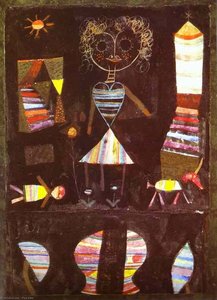
      Puppet theater (1923) by Paul Klee
      #37

      Puppet theater

      1923

      Puppet Theater: A Surrealist Dance of Forms by Paul Klee Paul Klee’s “Puppet Theater,” painted in 1923, isn't merely a depiction of theatrical imagery; it’s an embodiment of…

      Order this canvas →
      Temple Gardens (1920) by Paul Klee
      #38

      Temple Gardens

      1920 · Metropolitan Museum of Art

      Paul Klee's “Three Panels,” painted circa 1920, isn’t merely a collection of landscapes; it’s a carefully constructed meditation on perception, memory, and the fractured nature of experience. Emerging…

      Have it painted by hand →
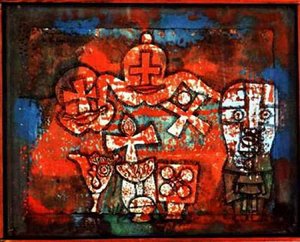
      Chinese porcelain (1940) by Paul Klee
      #39

      Chinese porcelain

      1940

      A Symphony of Geometric Abstraction In the twilight of his life, Paul Klee composed a visual masterpiece that transcends mere pigment on canvas. The Four Faces, painted in…

      Order this canvas →
      Eksootika (1939) by Paul Klee
      #40

      Eksootika

      1939 · Art Institute of Chicago

      Silm eksib üksteisega seotud kujundite maastikus, kus sügav terracotta ja põletikuline sienna kokku põrguvad sinisega, mis meenutab liaskivist ja sinapjasadast kollist. Siin ei ole horisonti, vaid vaid tasapaneetlik,…

      Have it painted by hand →
      Remembrance of a Garden (1914) by Paul Klee
      #41

      Remembrance of a Garden

      1914

      A Visionary Landscape of MemoryIn Paul Klee’s 1914 masterpiece, Remembrance of a Garden, the viewer is not merely presented with a landscape, but invited into a profound meditation…

      Bring this light home →
      Kummaline pilk (1930) by Paul Klee
      #42

      Kummaline pilk

      1930 · Art Institute of Chicago

      Muidatust ja sügavust pakub vaatajale tume, tekstuurne pind, mille keskel asub ovaalne vorm, mis minimalistilise geomeetria kaudu vihjab inimkeelele. Kompozytsioon tugineb melankooliale, kus domineerivad kesküöe sinine, antrasiit ja…

      Have it painted by hand →
      Boy in Fancy Dress (1931) by Paul Klee
      #43

      Boy in Fancy Dress

      1931 · Metropolitan Museum of Art

      A single figure emerges from a dense, rhythmic grid of color, appearing less like a solid person and more like a delicate arrangement of tiny, rectangular patches. This…

      Bring this light home →
      The Pathos of Fertility (1921) by Paul Klee
      #44

      The Pathos of Fertility

      1921 · Metropolitan Museum of Art

      The artwork consists of a centered, seated humanoid figure rendered through delicate black outlines on paper. The figure possesses a large, rounded belly that is decorated with organic…

      Bring this light home →
      Heroiline viiulimäng by Paul Klee
      #45

      Heroiline viiulimäng

      MoMA - Museum of Modern Art

      Sissejuhatus: Paul Klee, Šveitsis sündinud saksa maalari (1879-1940), sai tunnustatud oma ainulaadse ekspressionismi, kubismi ja surrealismi segamise eest. See meisterlik joonistaja, kellel oli sügav arusaatus värviteo kohta, on…

      Order this canvas →
      Arab Song (1932) by Paul Klee
      #46

      Arab Song

      1932 · The Phillips Collection

      In 1932, Paul Klee composed a visual arrangement that translates the atmosphere of North Africa into a simplified, rhythmic language. The work utilizes oil on burlap to create…

      Bring this light home →
      Flower Family V. (1922) by Paul Klee
      #48

      Flower Family V.

      1922 · Solomon R. Guggenheimi muuseum

      Three stylized figures, possessing qualities of both human forms and botanical life, occupy a dark, textured space. A larger figure with an orange-toned body and a circular white…

      Order this canvas →
      Forgetful angel by Paul Klee
      #49

      Forgetful angel

      Paul Klee's “Forgetful Angel,” painted in 1939 amidst the gathering storm clouds of war, is not merely a depiction of an angel; it’s a profound meditation on memory,…

      Have it painted by hand →
      Singer of the Comic Opera (1927) by Paul Klee
      #50

      Singer of the Comic Opera

      1927 · Bavaria riiklikud maalidema kogumikud

      Step closer to observe the way the light seems to emerge from within the figure itself. In Singer of the Comic Opera, we encounter a form that feels…

      Bring this light home →
      A Couple of Gods (1924) by Paul Klee
      #51

      A Couple of Gods

      1924 · Scharf-Gerstenberg Collection

      Step closer to observe these two figures. They emerge from a dark, textured void, appearing less like painted subjects and more like relics unearthed from a forgotten era.…

      Have it painted by hand →
      Walpurgis Night (1935) by Paul Klee
      #53

      Walpurgis Night

      1935

      The surface of Walpurgis Night consists of gouache applied to fabric stretched over plywood. A monochromatic blue palette dominates the visual field, ranging from deep navy and near-black…

      Bring this light home →
      Static-Dynamic Gradation by Paul Klee
      #54

      Static-Dynamic Gradation

      Metropolitan Museum of Art

      # Introduction to Expressionism and Paul Klee Expressionism is an art movement that emerged in the early 20th century, characterized by its emphasis on emotional experience and individual…

      Bring this light home →
      Colorful Architecture (1917) by Paul Klee
      #55

      Colorful Architecture

      1917 · Metropolitan Museum of Art

      A City Born of Dreams: Unveiling Paul Klee’s “Colorful Architecture” Paul Klee's 1917 watercolor, “Colorful Architecture,” is not a rendering of any identifiable place, but rather an evocation—a…

      Have it painted by hand →
      Possibilities at Sea (1932) by Paul Klee
      #56

      Possibilities at Sea

      1932 · Norton Simoni muuseum

      A white-outlined diamond holds red grid lines against a dark grey background. On the right, this structure dominates the space. A single, bright white arrow points toward a…

      Have it painted by hand →
      Rose Wind by Paul Klee
      #57

      Rose Wind

      A Symphony in Color: Exploring Paul Klee’s Rose Wind The moment one encounters Rose Wind, there is an immediate sense of being swept into a rhythmic, breathing landscape…

      Bring this light home →
      Angel in the Making by Paul Klee
      #59

      Angel in the Making

      Paul Klee's ‘Angel in the Making’, painted around an unspecified date, is not merely a visual composition; it’s a whispered meditation on potentiality, a glimpse into the nascent…

      Order this canvas →
      Dying Down (1940) by Paul Klee
      #60

      Dying Down

      1940 · Scharf-Gerstenberg Collection

      The composition presents an arrangement of calligraphic, black lines that weave through patches of saturated color. These thick, fluid strokes intersect with deep crimson, burnt sienna, and ochre,…

      Bring this light home →
      Tighter rhythms and freer by Paul Klee
      #61

      Tighter rhythms and freer

      In the vibrant realm of Expressionist abstraction, Paul Klee’s Tighter rhythms and freer stands as a captivating exploration of color and structure. The painting presents an intricate composition…

      Bring this light home →
      The rumors (1939) by Paul Klee
      #62

      The rumors

      1939 · Barnes Foundation

      In the quiet, evocative depths of Paul Klee’s 1939 watercolor masterpiece, "The Rumors," we encounter a visual language that speaks far more than words ever could. Created during…

      Bring this light home →
      Rose garden (1920) by Paul Klee
      #63

      Rose garden

      1920

      A Garden of Geometric Dreams: Unveiling Paul Klee’s ‘Rose Garden’ Paul Klee's *Rose Garden*, painted in 1920, is far more than a depiction of flowers; it’s a pivotal…

      Bring this light home →
      Ad marginem (1930) by Paul Klee
      #64

      Ad marginem

      1930 · Kunstmuseum Basel

      Step closer to observe the quiet tension held within this 1930 composition. At first glance, the eye is drawn to a central, deep terracotta red orb, a circular…

      Bring this light home →
      Untitled (Reconstruction) (1926) by Paul Klee
      #65

      Untitled (Reconstruction)

      1926 · KODE Art museums and composer homes

      A Labyrinth of Form Step closer to observe the density of this 1926 composition. There is no single point for the eye to rest; instead, one finds oneself…

      Have it painted by hand →
      Tree Nursery (1929) by Paul Klee
      #67

      Tree Nursery

      1929 · The Phillips Collection

      A rhythmic, horizontal composition defines this 1929 work, utilizing layered bands of pale blue, soft pink, light yellow, sage green, and earthy ochre. The surface is marked by…

      Order this canvas →
      Fire in the Evening (1929) by Paul Klee
      #68

      Fire in the Evening

      1929 · MoMA - Museum of Modern Art

      To look closely at this small work is to encounter a quiet, structured energy. Created in 1929, the piece presents itself through an arrangement of horizontal bands and…

      Bring this light home →
      The rumors (1939) by Paul Klee
      #69

      The rumors

      1939

      In the quiet, evocative depths of Paul Klee’s 1939 masterpiece, “The Rumors,” we encounter a visual language that speaks far more than words ever could. Created during one…

      Bring this light home →
      Rünnakule läinud linn (1936) by Paul Klee
      #71

      Rünnakule läinud linn

      1936 · Metropolitan Museum of Art

      See kompositsioon avab vaataja silmale abstraktse, raskaalt tekstuurse pindas, mis viitab fragmenteeritud ja skeletlikule linnakeskkonnale. Kompozytsiooni keskpunktist, ülemalt, laskub alla suur ja massiivne must nool, suunates fookuse tihedasse…

      Order this canvas →
      Rahvlik seinamaal (1922) by Paul Klee
      #72

      Rahvlik seinamaal

      1922 · Metropolitan Museum of Art

      Paberi keskpunktis asub üks pikkunenud figuur, mille kohalolu tunde sünnib kujude ja joonide peen säarranõunõu. Ta vaatab otse ette suurte, mandliotsakujuliste silmadega, mis seema hoovavad vaikset ja kindlat…

      Have it painted by hand →
      Punakasane ja lilla-kollane rütmid (1920) by Paul Klee
      #73

      Punakasane ja lilla-kollane rütmid

      1920 · Metropolitan Museum of Art

      Paul Klee'i 1920. aastal loodud teos "Punakasane ja lilla-kollane rütmid" on palju enesest varem kui lihtsalt maali; see on süvav uurimus värviteooriast, geomeetrilisest abstraktsioonist ja näib olevate lihtsate…

      Have it painted by hand →
      Värvid kauguselt (1932) by Paul Klee
      #76

      Värvid kauguselt

      1932 · Israel Muuseum

      Selle kompositsiooni keskpunktis on tihe, esindusvaba ruutude ja rõhuastude võrgustik, mis on üksteisele overlapeeritud. Pindadel liigub peen ja tume joonide võrk, luues väikeseid, rakulaadneid kuju, mis annab töödelt…

      Bring this light home →
      View into the Fertile Country (1932) by Paul Klee
      #77

      View into the Fertile Country

      1932 · Städel Museum

      The Nile flows as a single, wavy line across the foreground. Behind this blue thread, geometric shapes rise like silent buildings. Rows of multicolored horizontal stripes stretch toward…

      Bring this light home →
      Polyphony (1932) by Paul Klee
      #78

      Polyphony

      1932 · Kunstmuseum Basel

      Small squares of deep blue, forest green, and ochre settle into a dense, rhythmic grid. Each rectangle rests against its neighbor like a note placed upon a staff.…

      Bring this light home →
      Bust of a Child by Paul Klee
      #80

      Bust of a Child

      Bust of a Child: An Expressionist Exploration by Paul Klee A Glimpse into Childhood Through Abstract Forms Paul Klee's "Bust of a Child" is a captivating artwork that…

      Order this canvas →
      The Lamb (1920) by Paul Klee
      #81

      The Lamb

      1920 · Städel Museum

      In the quiet, transformative landscape of early twentieth-century modernism, few works capture the intersection of spiritual devotion and geometric innovation as poignantly as Paul Klee’s “The Lamb,” completed…

      Bring this light home →
      Interior with the Clock (1913) by Paul Klee
      #82

      Interior with the Clock

      1913 · National Gallery of Art

      The paper holds a soft, ethereal world where shapes drift like clouds through an unseen room. Pale yellows and light blues mingle with lavender and dusty rose, creating…

      Have it painted by hand →
      Girl with Doll by Paul Klee
      #84

      Girl with Doll

      In the vast landscape of modern art, few works possess the intimate, rhythmic charm found in Paul Klee’s "Girl with Doll Carriage" (Mädchen mit Puppenwagen). Painted in 1923,…

      Bring this light home →
      Municipal Jewel (1917) by Paul Klee
      #85

      Municipal Jewel

      1917 · Metropolitan Museum of Art

      The painting Municipal Jewel presents an intricate cityscape composed of various shapes and colors. The palette features a vibrant mix of red, blue, yellow, green, and purple. Within…

      Have it painted by hand →
      Diana in the Autumn Wind (1934) by Paul Klee
      #87

      Diana in the Autumn Wind

      1934

      Paul Klee's “Diana in the Autumn Wind,” painted in 1934, stands as a cornerstone of surrealist art—a mesmerizing exploration of form and color that transcends mere representation. Created…

      Order this canvas →
      Fruits on Red (1930) by Paul Klee
      #88

      Fruits on Red

      1930 · Lenbachhaus

      The composition presents a delicate network of thin stems and rounded geometric forms set against a warm copper-red ground. Rather than a traditional arrangement of harvested produce, the…

      Bring this light home →
      Linnas aia värav (1926) by Paul Klee
      #89

      Linnas aia värav

      1926 · Kunstmuseum Bern

      Koosolek sügava, melankoolise atmosfääri ja tekstuuride rütmikaalse tantsu vahel avab vaataja silma uue maailma. Vaade suletakse koheselt vasakult ülaos asuvasse vormi, kus oranžid ja punased ühirad pulseerivad ning…

      Order this canvas →
      Captive (1940) by Paul Klee
      #91

      Captive

      1940

      A Portrait of Resilience: Paul Klee’s “Captive” Paul Klee's "Captive," painted in 1940 during the twilight years of his life and just months before his passing, is far…

      Bring this light home →
      Sunset (1930) by Paul Klee
      #92

      Sunset

      1930 · Art Institute of Chicago

      The oil on canvas, measuring 46.1 x 70.5 cm, presents an abstract arrangement of geometric and organic shapes. A neutral background is covered by a dense, layered pattern…

      Have it painted by hand →
      In Position (1939) by Paul Klee
      #93

      In Position

      1939

      Step closer to observe the delicate balance within this 1939 watercolor. There is a certain stillness here, an arrangement that feels both intentional and fragile. The composition rests…

      Order this canvas →
      Enclosure for Pachyderms (1940) by Paul Klee
      #94

      Enclosure for Pachyderms

      1940 · KODE Art museums and composer homes

      Created in 1940, this oil on canvas presents a structured network of thick, black, irregular lines that traverse the surface in a grid-like pattern. These dark strokes vary…

      Order this canvas →
      Crystal Gradation by Paul Klee
      #95

      Crystal Gradation

      Kunstmuseum Basel

      In the vast landscape of twentieth-century abstraction, few works possess the hypnotic, rhythmic quality found in Paul Klee’s "Crystal Gradation." Created during the artist's profound period in Murnau,…

      Order this canvas →
      El conquistador by Paul Klee
      #96

      El conquistador

      “The Great Bear,” painted in 1938 during Klee’s prolific period at Bauhaus Dessau, stands as a cornerstone of his artistic legacy. More than just a depiction of an…

      Order this canvas →
      Landscape with yellow church tower (1920) by Paul Klee
      #97

      Landscape with yellow church tower

      1920 · Bavaria riiklikud maalidema kogumikud

      A complex, grid-like structure defines this 1920 landscape, utilizing a mosaic of geometric shapes to suggest a village setting. Horizontal lines traverse the canvas, establishing a rhythmic, layered…

      Have it painted by hand →
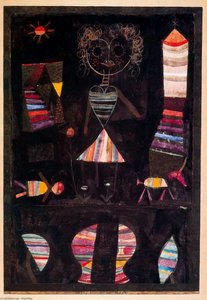
      Puppet Theatre by Paul Klee
      #98

      Puppet Theatre

      Paul Klee's "Puppet Theater" is far more than a mere depiction of figures; it serves as a profound invitation to delve into the realm of subconscious thought and…

      Have it painted by hand →

      Paul Klee's canvases, period by period

      What Paul Klee painted most

      The four subjects that return most often on these canvases, each with its best-loved example.

      Where Paul Klee's canvases hang

      The 8 museums that hold the most of the paintings on this page.

      Museum City Works by Paul Klee Paintings from this list
      Metropolitan Museum of Art, New YorkMetropolitan Museum of Art New York 56 Komikute reklaamikindel, May Picture, Untitled
      Art Institute of Chicago, ChicagoArt Institute of Chicago Chicago 10 Koolimaja, Dancing Girl, Eksootika
      MoMA - Museum of Modern Art, New YorkMoMA - Museum of Modern Art New York 9 Twittering Machine, Mask of Fear, Heroiline viiulimäng
      Kunstmuseum Basel, BaselKunstmuseum Basel Basel 8 Ad marginem, Polyphony, Crystal Gradation
      Lenbachhaus, MünchenLenbachhaus München 6 Roosapüha, Botaanikateater, Fruits on Red
      Bavaria riiklikud maalidema kogumikud, MünchenBavaria riiklikud maalidema kogumikud München 20 Singer of the Comic Opera, Landscape with yellow church tower
      The Phillips Collection, Washington, D.C.The Phillips Collection Washington, D.C. 8 Arab Song, Tree Nursery
      Scharf-Gerstenberg Collection, BerlinScharf-Gerstenberg Collection Berlin 6 A Couple of Gods, Dying Down

      Decade by decade: Paul Klee's most celebrated canvas

      1. 1910s
        In the Style of Kairouan (1914) by Paul Klee
        9 of 100

        In the Style of Kairouan

        Age 31 – 40

        In the annals of modern art, few moments are as transformative as Paul Klee’s 1914 masterpiece, "In the Style of Kairouan." This work serves as a profound declaration…

      2. 1920s
        Uus ingel (1920) by Paul Klee
        1 of 100

        Uus ingel

        Age 41 – 50 · Israel Muuseum

        1920. aastal loodud Uus ingel kunstnik Paul Klee'il pakub lennukat pilku tema erakordsele visioonile. See teos on monotüüpprint, valik, mis peegeldab Klee'i huvi ühe impressioni unikaadsete ja kordumatute…

      3. 1930s
        Parnassusele (1932) by Paul Klee
        Ranked 3 of 100

        Parnassusele

        Age 51 – 60 · Kunstmuseum Bern

        Lummav teema ja sügav sümbolism See silmapaistev teos avab vaataja silmade ette vibrantse ja kihutite rikkaliku maastiku, mis kutsub meid astuma ette kuj कल्पना ja mõttemõistuse maailma. Kompositsiooni…

      4. 1940s
        Flora kividel Päike (1940) by Paul Klee
        Ranked 24 of 100

        Flora kividel Päike

        Age 61 · Kunstsammlung Nordrhein-Westfalen

        Olles oma erakordse karjääri õhtus, kingis Paul Klee kunstimaailmale 'Flora kividel Päike', 1940. aasta meistriteose, mis toimib sügav mõtteena orgaanilise ja matemaatilise ristumiskohas. See akvarellitöö on palju enema…

      Your questions on Paul Klee's paintings, answered

      Which is the most celebrated painting by Paul Klee?Read the answer

      Uus ingel (1920), Israel Muuseum, Jeruusalemma. Twittering Machine and Parnassusele (1932) follow.

      How old was Paul Klee at the time of Uus ingel?Read the answer

      Paul Klee, born in 1879, was 41 years old: Uus ingel dates from 1920.

      Which ten paintings is Paul Klee most famous for?Read the answer

      Uus ingel, Twittering Machine, Parnassusele, Niili legend, Flora on sand, Maastik kollaste lindudega, Kaladpilt, With the eagle, In the Style of Kairouan and Roosapüha. Each canvas in the ranking above comes with its year and its museum.

      How many paintings by Paul Klee are known?Read the answer

      669 works by Paul Klee are in our catalogue, dated 1910 to 1940.

      Which museums hold Paul Klee's best-known canvases?Read the answer

      Mostly in Metropolitan Museum of Art (New York), Art Institute of Chicago (Chicago) and MoMA - Museum of Modern Art (New York); the list above names each museum and its canvases.

      In which years did Paul Klee paint the most celebrated canvases?Read the answer

      In 1920s, which gave 36 of the 100 works on this page, Uus ingel among them.

      What are the first and the last of Paul Klee's famous canvases?Read the answer

      The earliest canvas here is Flower stand with watering can and bucket (1910); the latest is Flora kividel Päike (1940).

      Which subjects return most often in Paul Klee's paintings?Read the answer

      Geometric shapes (43), Color theory (11) and Landscape (9), across the 100 works on this page.

      What did Paul Klee usually paint with?Read the answer

      Watercolor, used in 21 of the 100 works on this page.

      To which art movement does Paul Klee belong?Read the answer

      Ekspressionism, as the canvases on this page show.

      What can I see by Paul Klee at the Metropolitan Museum of Art?Read the answer

      The Metropolitan Museum of Art, New York holds 17 of the works on this page, among them Komikute reklaamikindel, May Picture and Untitled.

      Can I order a hand-painted copy of a painting by Paul Klee?Read the answer

      Yes. Every painting on this page can be ordered from its own page as an oil reproduction painted by hand, or as a fine art print, in the size you choose.

      Paul Klee: the painter's story

      Värvide ja Vormi Elu: Paul Klee

      Paul Klee, kelle nimega seostub mänguline abstraktsioon ja sügav emotsionaalne jõud, hõivab ainulaase koha 20. sajandi kunstnike seas. Sündinud 18. detsembril 1879 Münchenbuchsees, Šveitsis, oli tema kunstnikuteekond pideva uurimise tee, mis põlgas lihtsaid klassifikatsioone ja lõi tee, mis segas Ekspressionismi, Kubismi ja Sürrealismi mõjudid omaette erandliku visuaalse keelega. Klee kasvatus edendas varakult kunsti väärtustamist; tema isa, saksa muusikaõpetaja, ja ema, šveitsi laulja, sisseistutasid temas tundlikkust nii heliliste kui ka visuaalsete harmooniate vastu. See aluspõhi seos muusika ja maalimisega sai tema loomingut määravaks iseloomujooksuks, kujundades mitte ainult tema kompositsioonilist lähenemist, vaid ka tema teoreetilist arusaamist kunstist abstraktse väljendusvormina, mis sarnaneb muusikalise korraldusega. Esialgu joonestamisele pühendunud Klee loobus peagi realistliku esituse jälgitamisest, teades selle piiratusi sisemaailma emotsioonide ja ideede edastamisel, mida ta väljendada püüdis. Ta astus Müncheni Kunstiakadeemiasse aastatel 1898–1901, perioodiks, mis oli märgitud katsetamise ja tema ainulaadse kunstilise hääle arendamisega.

      Kunstniku Visiooni Kujunemine

      Klee varajane töö näitab Art Nouveau ja Sümbolismi mõju, kuid isegi nende raamides hakkasid ilmnema vihjed tema tulevase stiili kohta. Põnev hetk tema kunstilise arengus oli reis Tuneesia 1914. aastal. Lõuna-Aafrika intensiivne valgus ja elav atmosfäär mõjutasid oluliselt tema värvide kasutamist, inspireeris teda liikuma mööda tuhmide toonide pealt julgemate, väljendusrikkamate palettide suunas. See kogemus märgistaski murdepunktiks, kinnitades tema pühendumust abstraktsioonile vahendina tajundi olemuse püüdmiseks pigem kui selle pinna välimuse lihtsalt reprodutseerimiseks. Ta ei näinud lihtsalt Tuneesiat; ta tõlgitses selle emotsionaalset resonantsi visuaalseks vormiks. Selle perioodi jooksul suhtus Klee erinevatesse kunstisuundadesse, omandades nende põhimõtted ja vältides samas täielikku kinnitumist ühtegi kindlat ideoloogiat. Tema huvi muusika vastu jäi peamiseks ning ta rääkis sageli maalist protsessina, mis on analoogne muusikaliste tükkide helindamisega – elementide hoolikas korraldus harmoonia terviku loomiseks. See sünesteetiline lähenemine ilmneb tema joonte rütmis, värvide õrna tasakaalus ja üldises liikumise tunde hulgas, mis läbivad paljusid tema teoseid.

      Bauhaus ja Peale: Õitsemise Aeg

      Aastatel 1931–1933 asendas Klee mõjukas Bauhaus'i kunstide, disaini ja arhitektuuri koolis õpetaja positsiooni Wassily Kandinsky kõrval. See periood osutus tema kunstilise arengule märkimisväärselt viljakaks. Innovatiivsete mõtlejate ja kaasartistidega ümbritsetuna õitses ta keskkonnas, mis julgustas katsetamist ja teoreetilist uurimistööd. Selle aastate jooksul süvenesid tema tööd värviteooriasse ja vormisõltuvustesse, uurides abstraktselt vormide ja emotsionaalse väljenduse vahelist koosmängu. Kuid see loominguline pelgupaik purunes natsismi tõusu Saksamaal. Aastal 1933 vabastati Klee Bauhaus'ist tema kunsti peatumise tõttu „degeneraadi“ kunstina – külmavõitu tunnistus poliitilise ideoloogia ohu kohta, mis pärssib kunstivabadust. Šveitsi tagasipöördudes jätkas ta maalimist, kuid tema tervis halvenes kasvava poliitilise rahutuse ja isikliku kannatuse varjus. Neile väljakutsetele vaatamata jäi Klee pühendunuks oma kunstilisele visioonile, tootes teoseid, mis kajastasid nii ajastu ärevust kui ka tema kordumist uskumuses, et kunstil on võime ületada vastupidisusi.

      Teemad, Stiil ja Püsiv Pärand

      Paul Klee töö iseloomustab mängulise ja sügava kaalumise põnev segu. Ta kasutas sageli lapsepõlliste pilte ja õõtsuvat kompositsiooni, andes neile sümbolilise tähenduse kihte. Tema kunstis korduvad teemad on aiad, maastikud, portreed ja abstraktsed paigutused – igaüks neist teenib vahendina inimese kogemuste keerukust uurimiseks. Tema „Paul Klee märkmed“ avaldati posthumselt ja pakuvad väärtuslikku sissevaadet tema laialdastele teoreetilistele uuringutele värviteoorias ja disainis, näidates hoolikat ja intellektuaalset lähenemist kunstilisele loomisele. Ta ei maalind lihtsalt; ta ehitas visuaalset keelt harmoonia, tasakaalu ja emotsionaalse resonantsi põhimõtete põhjal. Hamamet, Vendade ja En la corriente seis umbrales on vaid mõned näited, mis demonstreerivad tema värvi ja vormi valdajust. Paul Klee suri 29. juunil 1940 Muraltos, Šveitsis, jättes maha pärandi, mis jätkuvalt inspireerib kunstnikke ja lumjab publikke kogu maailmas. Tema kohta on õigustatult öeldud, et ta on üks olulisemaid 20. sajandi kunstnike hulka, kes sillutas figuurse ja abstraktselt väljenduse vahet ja kinnitas oma positsiooni ikoonilise innovaatorina, kelle töö jääb igijätkuva.

      Muuseumid & Täiendav Uurimine

      • Zentrum Paul Klee (Bern): Koduks maailma suurimale Klee teoste kogule, mis pakub tema kunstilise tee ülevaadet.
      • Berli Kunstimuuseum: Sisaldab olulisi palasid Klee loomingust Picasso ja Hodleri meistriteoste kõrval.
      • Kunstmuseum Bern: Šveitsi vanim kunstimuuseum, mis esitleb mitmekesist kollektsiooni, sealhulgas Klee teoseid ja muid kaasaegse meistri töid.
      Tema mõju ulatub kaugemale maalimisest, mõjutades valdkondi nagu disain, arhitektuur ja muusika. Paul Klee töö küttevõime peitub selle võimes ärgata imetlust ja kutsuda vaatajaid kunstiga suhtlema emotsionaalsel ja intellektuaalsel tasandil – tõestus tema geeniusest ja püsivast panusest visuaalse kultuuri maailma.

      All 669 works by Paul Klee →