Atelier — Tasuta kohaletoimetamine üle maailma — Tarneaeg 2–6 nädalat
      Paul Nash, 1889 – 1946

      100 kulubumatamatum Paul Nash maalistikut, järjestatud

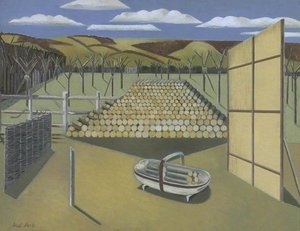
      Paul Nash kõige armastatum teos on The Separation of Light from Darkness (1924). Lugejate poolest kõige paremini tuntud tablaga järnevad The Stackyard (1925) ja Sunflower and sun (1942). Meie kataloogist löytyb 111 teost kunstnikult Paul Nash: siin on 100 kõige kuulsamat, mille juures on märgitud aasta, muuseum ja info selle kohta, mis teeb teose meeldivaks.

      Reiting põhineb meie populaarsusindeksil, mis koondab iga teose otsingud, külastused ja tellimused. Uuendatud oktoober 2026. Iga selle lehekülje maali saab tellida kas linatele kangale käsitsi maalatuna nagu õlimaalide reproduktsiooni või valitud suuruses fine art trükkina.

      Paul Nash portree
      Paul Nash · 1889 – 1946
      Sündinud · surnud
      1889 – 1946, Kensington
      Suunata
      Surrealism
      Meie kataloogis olevad teosed
      111
      Kõige tuntud
      The Separation of Light from Darkness (1924)
      Enamasti teoseid on
      Kanada Rahvusgalerii

      Paul Nash top 10 maalist: tablood, mille kohta kõik teavad

      The Separation of Light from Darkness (1924) autor Paul Nash
      1

      The Separation of Light from Darkness

      1924 · Woodcut

      We are looking at The Separation of Light from Darkness, a work created by Paul Nash in 1924. This piece emerged during a significant period in the artist's development, following his formative years in the United Kingdom. Nash was born in Kensington, United Kingdom, in 1889, and his perspective was shaped by the landscapes and environments of his home country.

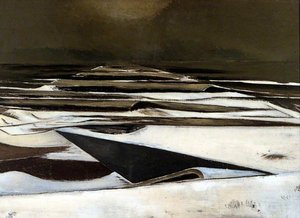
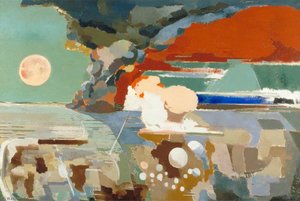
      Landscape of the Moon's Last Phase (1944) autor Paul Nash
      4

      Landscape of the Moon's Last Phase

      1944 · Oil On Canvas · Walker Art Gallery, Liverpool

      Paul Nash’s Landscape of the Moon's Last Phase transports the viewer to a moment suspended between night and dawn, a breathtaking tableau dominated by the soft, yet profound, luminescence of a waning moon. This painting is more than a mere depiction of nature; it is an atmospheric meditation on cycles—the ebb and flow of light, life, and time itself. The composition draws the eye across a sweeping vista where foreground…

      Circle of the Monoliths (1938) autor Paul Nash
      5

      Circle of the Monoliths

      1938 · Oil On Canvas · Leeds Art Gallery, Leeds

      Paul Nash's “Circle of the Monoliths,” painted in 1938, isn’t merely a landscape; it’s a meticulously constructed dreamscape, a potent distillation of memory, myth, and the unsettling beauty of the British countryside. This remarkable work, housed at Leeds Museums and Galleries, invites viewers into a realm where familiar forms are fractured, perspectives shift, and an ancient, almost primeval energy permeates every detail. Nash, deeply influenced by William Blake’s visionary poetry…

      The Creation of the Firmament (1924) autor Paul Nash
      6

      The Creation of the Firmament

      1924 · Woodcut

      In this 1924 woodcut, we witness a moment of profound, almost violent transition. The work, part of a series of illustrations for the book Genesis, moves away from the figurative to explore the very mechanics of existence. It is a stark, monochromatic vision where the separation of light from darkness is rendered not as a gentle dawn, but as a rhythmic, angular tension. The composition is dominated by a series…

      The Creation of Land (1924) autor Paul Nash
      7

      The Creation of Land

      1924 · Woodcut

      The Creation of Land emerges from the shadows of a profound transformation. Created by Paul Nash in 1924, this work exists as a singular moment within a larger, rhythmic sequence. It belongs to a series of woodcuts that draw their strength from the biblical Genesis, capturing the very instant when the world begins to take shape through a jerky, frightening cataclysm. The landscape does not merely appear; it erupts.

      Oxford During the War (1942) autor Paul Nash
      8

      Oxford During the War

      1942 · Oil On Canvas · Worcester College, Oxford

      Paul Nash’s "Oxford During the War," painted in 1942, is far more than a mere depiction of an English landscape; it is a profound meditation on endurance. The canvas captures a scene steeped in the palpable tension of wartime, yet simultaneously breathes with an almost defiant tranquility. One gazes upon the foreground, drawn immediately to the imposing presence of the parked tank—a stark emblem of military reality—which anchors the composition.…

      The Diving Stage (1928) autor Paul Nash
      9

      The Diving Stage

      1928 · Oil On Canvas · British Council Collection, London

      The Haunting Stillness of “The Diving Stage” Paul Nash’s “The Diving Stage,” painted in 1928, isn't merely a depiction of a seaside structure; it’s a meticulously crafted tableau of isolation, anticipation, and the unsettling beauty of suspended time. Emerging from the British Council Collection, this work transcends its subject matter to become a profound meditation on human presence within a vast, indifferent landscape. The painting immediately commands attention with its…

      The Creation of the Starry Firmament (1924) autor Paul Nash
      10

      The Creation of the Starry Firmament

      1924 · Woodcut

      The Creation of the Starry Firmament is a significant woodcut by the British artist Paul Nash. Created in 1924, this work emerged from a period of intense creative development for the artist. It was produced as part of a series of illustrations for the book Genesis, a project that sought to visualize the biblical narrative through a modern, abstracted lens. The piece captures a moment of cosmic emergence, translating the…

      Veel Paul Nash lamedat pinda, 11 kuni 100

      Coronilla (recto) (1929) autor Paul Nash
      #12

      Coronilla (recto)

      1929 · Fitzwilliam College

      A Realm of Silent Geometry: Paul Nash’s “Coronilla (recto)” Paul Nash's "Coronilla (recto)," painted in 1929, isn’t merely a depiction of a landscape; it’s an immersion into a…

      Tooge see valguse koos koju →
      November Moon (1942) autor Paul Nash
      #88

      November Moon

      1942 · Fitzwilliam College

      In the quietude of 1942, amidst a world gripped by the profound tensions of global conflict, Paul Nash captured a moment of profound stillness in his evocative masterpiece,…

      Telli see lühend →
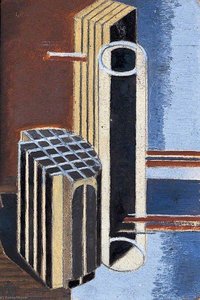
      Telecommunications (1934) autor Paul Nash
      #89

      Telecommunications

      1934 · Walker Art Gallery

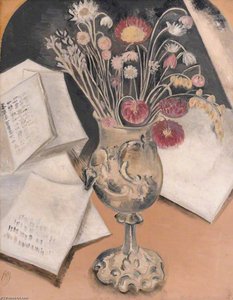
      Paul Nash’s 1934 painting, “Telecommunications,” isn’t merely a still life; it’s a carefully constructed visual argument about the burgeoning anxieties and promises of modernity. Rendered in a restrained…
      Tellinime käsitsi maaldetud →
      Druid Landscape (1938) autor Paul Nash
      #91

      Druid Landscape

      1938 · British Council Collection

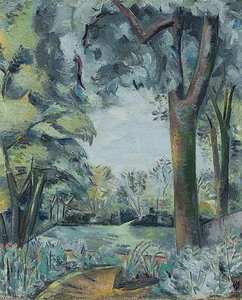
      Paul Nash’s Druid Landscape, painted in 1938, isn't merely a depiction of a landscape; it’s an immersion into a carefully constructed dreamscape. Created during a period of profound…
      Tellinime käsitsi maaldetud →
      Dymchurch Steps autor Paul Nash
      #93

      Dymchurch Steps

      Kanada Rahvusgalerii

      The oil on canvas titled Dymchurch Steps is a work by the British artist Paul Nash. This piece was painted and re-worked between 1924 and 1944. It measures…

      Telli see lühend →
      Chestnut Waters autor Paul Nash
      #94

      Chestnut Waters

      Kanada Rahvusgalerii

      Paul Nash presents Chestnut Waters, an oil on canvas that captures a specific, quiet moment in the English landscape. The work originated in 1923 and was later reworked…

      Tellinime käsitsi maaldetud →
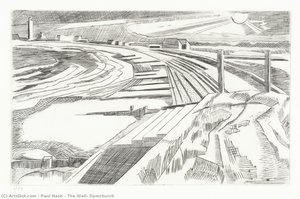
      The Wall, Dymchurch (1923) autor Paul Nash
      #95

      The Wall, Dymchurch

      1923 · Tate Britain

      Paul Nash’s “The Wall, Dymchurch”: A Monument to Isolation in Geometric Precision Paul Nash's "The Wall, Dymchurch," created in 1923, stands as a quintessential example of British Modernism—a…

      Tooge see valguse koos koju →
      Landscape (verso) autor Paul Nash
      #100

      Landscape (verso)

      Fitzwilliam College

      In the quiet corners of art history, few works capture the delicate equilibrium between the tangible world and the ethereal spirit quite like Paul Nash’s Landscape (verso). This…

      Telli see lühend →

      Paul Nash lõikud perioodide kaupa

      Mida Paul Nash kõige rohkem maalis

      Neli teemat, mis esinevad neil lätistes kõige sagedamini, koos nende kõige armastatumate näidetega.

      Kuna Paul Nashi lamedad pildid rippuvad siin

      Kümne 8 muuseumi kollektsioonid, mis sisaldavad kõige rohkem sellel lehel esitatud teoseid.

      Muuseumid Linn Paul Nash teosid Selle nimekirja maalid
      Kanada Rahvusgalerii, OttawaKanada Rahvusgalerii Ottawa 9 A Night Bombardment, Void, Night Fighter
      Government Art Collection, LondonGovernment Art Collection London 5 Pink Hyacinth, Riviera Window, Cros de Cagnes, Landscape
      British Council Collection, LondonBritish Council Collection London 4 The Diving Stage, Eclipse of the Sunflower, Druid Landscape
      Leeds Art Gallery, LeedsLeeds Art Gallery Leeds 3 Circle of the Monoliths, Still Life with Bog Cotton, The Shore
      Fitzwilliam College, CambridgeFitzwilliam College Cambridge 3 Coronilla (recto), November Moon, Landscape (verso)
      Imperial War Museum, LondonImperial War Museum London 6 Follow the Fuhrer Above the Clouds, Battle of Germany
      Art Gallery of New South Wales, SydneyArt Gallery of New South Wales Sydney 2 Sunflower and sun, Mimosa Wood
      Walker Art Gallery, LiverpoolWalker Art Gallery Liverpool 2 Landscape of the Moon's Last Phase, Telecommunications

      Paul Nash kõige armastatum lõenatav teos iga kümnendiga

      1. 1910s
      2. 1920s
        The Separation of Light from Darkness (1924) autor Paul Nash
        Lentik 1 / 100

        The Separation of Light from Darkness

        Vanus 31–40

        We are looking at The Separation of Light from Darkness, a work created by Paul Nash in 1924. This piece emerged during a significant period in the artist's…

      3. 1930s
        Circle of the Monoliths (1938) autor Paul Nash
        5 / 100

        Circle of the Monoliths

        Vanus 41–50 · Leeds Art Gallery

        Paul Nash's “Circle of the Monoliths,” painted in 1938, isn’t merely a landscape; it’s a meticulously constructed dreamscape, a potent distillation of memory, myth, and the unsettling beauty…

      4. 1940s

      Paul Nash tablidet: vastused teie küsimustele

      Mis on Paul Nash kõige tuntum maaliamat?Loe vastust

      The Separation of Light from Darkness (1924), järglased on The Stackyard (1925) ja Sunflower and sun (1942).

      Kui vana Paul Nash oli, kui teos The Separation of Light from Darkness maalis?Loe vastust

      1889 aastal sündinud Paul Nash oli 35 aastat vanus: The Separation of Light from Darkness on pärinev aastast 1924.

      Millised on 10 kuulsumat maali kunstniku Paul Nash teosena?Loe vastust

      The Separation of Light from Darkness, The Stackyard, Sunflower and sun, Landscape of the Moon's Last Phase, Circle of the Monoliths, The Creation of the Firmament, The Creation of Land, Oxford During the War, The Diving Stage ja The Creation of the Starry Firmament. Iga teos ülal toodud reitingus on märgitud koos aasta ja muuseumiga.

      Kui palju teoseid Paul Nash kokku kirjoonud on?Loe vastust

      Kataloogis on 111 teost kunstnikult Paul Nash, kuupäevadelt 1914 kuni 1945.

      Kust saan näha Paul Nash kõige kuulsamaid linateid?Loe vastust

      Peamiselt Kanada Rahvusgalerii (Ottawa), Government Art Collection (London) ja British Council Collection (London) asukohas; ülaltoetud nimekiri esitab kirja iga muuseumi ja selle tablood.

      Millal maalis Paul Nash oma kõige armastatumad lamedad pildid?Loe vastust

      1920s perioodil, mis sisaldas 35 kogu selle lehe 100 teosest, oli nende hulgas The Separation of Light from Darkness.

      Millised on Paul Nash tuntud esimesed ja viimased tablood?Loe vastust

      Siin olevad kõige vanamad lamedad pildid on The Orchard (1914); kõige uuemad on Solstice of the Sunflower (1945).

      Mida Paul Nash kõige enam maalis?Loe vastust

      Landscape (20), Geometric shapes (8) ja British art (8), kogu selle lehekülje 100 teose kohta.

      Millist tehnikat Paul Nash kõige enam kasutas?Loe vastust

      Oil On Canvas, mida on kasutatud 8 kuni 100 teoseks sellel lehel.

      Millisse Millises suunas on Paul Nash maal on tegutsenud?Loe vastust

      Surrealism, nagu sellel lehel olevad tablood näitavad.

      Millised Paul Nash lamedad tablavid Kanada Rahvusgalerii muuseumis rihangad?Loe vastust

      Kanada Rahvusgalerii, Ottawa säilitab 9 sellel lehel olevat teost, seda hulka kuuluvad ka A Night Bombardment, Void ja Night Fighter.

      Kas ma saan osta Paul Nash linate koos reproduktsiooni?Loe vastust

      Jah. Iga maali sellel lehel saab tellida oma lehelt kas käsitsi maalatuna õli-reproductionina või suurepärase kunstiprentina valitud suuruses.

      Paul Nash: elu värvides

      Varajane elu ja mõjud

      • Sündinud: Kensington, Ühendatud Kuningriik (1889)
      • Surnud: 1946
      • Paul Nash sündis 11. mail 1889 Londonis. Tema isa, William Harry Nash, oli advokaat ning tema ema, Caroline Maude, näitas juba varajases eas märke vaimsetest häiretest. Kui Paul oli noor, kolis inimene Iver Heathi, Buckinghamshire'i, et parandada ema tervist.
      • Haridus: Ta õppis Parsons School of Art'is ja hiljem Slade School of Fine Art'is. Kuigi ta oli meisterlik maastikupintlemises, püüdis ta raskustel hallata iselooni joonistamist.
      • Varajased mõjud: Nash oli tugevalt mõjutatud William Blake'ist ja J.M.W. Turnerist, mis on selgelt nähtav tema varajates teostes. Ta kogus inspiratsiooni ka maastikutest, kus esinesid ajaloolised elemendid nagu haudekuhjad ja rauaaja hillfortid.

      Kunstiline stiil ja areng

      • Stiil: Paul Nashi stiil ühendas modernismi traditsiooniliste tehnikatega. Ta kasutas julgeid värve, geomeetrilisi kujusid ja abstrakteeritud vorme, mis eristas teda tema ajastikumist.
      • Surrealistlikud kalduvused: Kuigi Nash ei olnud rangelt surrealist, mõjutas teda see suundumus, eriti pärast 1928. aastal Giorgio de Chirico näituse vaatamist. Tema töödes ühendusid sümbolistlikud maastikud igapäevaste esemetega.
      • Sõja kunst: Esimese ja teise maailmasõja ajal teenis Nash ametlikku sõnikunstnikku rolli. Tema lahinguväljade kujutused olid märkimistavad oma kummitusliku ilu ja uurimuse poolest, kuidas konflikt mõjutab maastikku. Tuntud teosteks on "The Menin Road".
      • Teos seeria ajal II maailmasõja jooksul, mis sisaldas antropomorfseid kujutusi maastikku kukkunud lennukidest, demonstreerides tema arenevat stiili ja sümbolikat.

      Olulised saavutused ja tunnustus

      • Briti modernismi pioneer: Nash mängis kriitilist rolli Briti modernkunsti kujundamisel, sillutades sildid traditsioonilise maastikupintlemise ja modernistliku esteetika vahel.
      • Sõja kunsti pärand: Tema sõjakunstiteosed on peetud ikoonilisteks esitusteks konfliktide mõjustest nii sõduritele kui ka keskkonnale.
      • Unit One grupp: Ta asutas 1933. aastal koos Ben Nicholsoni ja Barbara Hepworthiga grupi Unit One, mis oli oluline osa Briti kunstimaastikust.
      • Kirjanik ja disainer: Lisaks maalidile oli Nash austatud kunstikirjanik ning ta kujundas ka rakendavat kunsti, nagu lavakujundusi, tekstiile ja plakateid.

      Mõjud ja pärand

      • Mõju järgmistele kunstnikestele: Nashi unikaalne stiil ja värvikasutus mõjutas terveid põlvkonnasid, kes tema jälgijad olid.
      • Side romantismiga: Tema töud on sageli seotud inglise romantilise traditsiooniga, eriti läbi tema sidemete William Blake'i ja J.M.W. Turneriga.
      • Uurimine teema "Inimene vs Loodus": Korduv teema Nashi hilisemas loomingus oli inimkonna ja looduse suhe, mida uuriti sümbolistliku pildikeele kaudu.
      • Jätkuv asjakohasus: Tema maalid on jätkuvalt austatud oma ilu, sümbolika ja ajaloolise tähtsuse tõttu, säilitades oma tähenduslikkuse ka tänapäevase publikule.

      Näitused ja kogumikud

      • Ruskin Gallery: Nashi töud on näitlustatud Ühendatud Kuningriigi Ruskin Gallery's.
      • Tate Britain: Tema teoseid on leitav Tate Britaini kogumikus.
      • Imperial War Museum: Paljusid tema sõjakunstiteoseid hoiustatakse Imperial War Museumis.
      • York Art Gallery: Tema töud on osa ka York Art Gallery kogumikust.
      • Government Art Collection: Valik Nashi teostest on esitatud Government Art Collection'is.

      Kõik 111 teost Paul Nash →