Atelier — Tasuta kohaletoimetamine üle maailma — Tarneaeg 2–6 nädalat
      Simon Vouet, 1590 – 1649

      100 kulubumatamatum Simon Vouet maalistikut, järjestatud

      Simon Vouet kõige armastatum teos on Venus and Adonis (1642), mis rihang J. Paul Getty muuseum-is, Los Angeles. Lugejate poolest kõige paremini tuntud tablaga järnevad The Muses of Urania and Calliope (1634) ja Annunciation (1640). Meie kataloogist löytyb 166 teost kunstnikult Simon Vouet: siin on 100 kõige kuulsamat, mille juures on märgitud aasta, muuseum ja info selle kohta, mis teeb teose meeldivaks.

      Reiting põhineb meie populaarsusindeksil, mis koondab iga teose otsingud, külastused ja tellimused. Uuendatud oktoober 2026. Iga selle lehekülje maali saab tellida kas linatele kangale käsitsi maalatuna nagu õlimaalide reproduktsiooni või valitud suuruses fine art trükkina.

      Simon Vouet portree
      Simon Vouet · 1590 – 1649
      Sündinud · surnud
      1590 – 1649, Pariis
      Suunata
      Baroque
      Meie kataloogis olevad teosed
      166
      Kõige tuntud
      Venus and Adonis (1642)
      Enamasti teoseid on
      Louvre'i muuseum

      Simon Vouet top 10 maalist: tablood, mille kohta kõik teavad

      Venus and Adonis (1642) autor Simon Vouet
      1

      Venus and Adonis

      1642 · Acrylic On Canvas · J. Paul Getty muuseum, Los Angeles

      Simon Vouet’s “Venus and Adonis,” painted in 1642, is a striking example of French Baroque art, showcasing the artist’s mastery of color, composition, and his assimilation of Italian artistic trends. This evocative scene depicts the poignant moment from Ovid's *Metamorphoses* where the mortal Adonis, captivated by hunting, rejects Venus’s advances, foreshadowing his tragic demise. The painting isn't merely a depiction of mythology; it's an exploration of love, desire, and mortality…

      The Muses of Urania and Calliope (1634) autor Simon Vouet
      2

      The Muses of Urania and Calliope

      1634 · Acrylic On Canvas · National Gallery of Art, Washington

      Simon Vouet’s “The Muses Urania and Calliope”: A Symphony of Baroque Grace Simon Vouet (1590-1649) stands as a pivotal figure in the artistic landscape of 17th-century France, marking the decisive transition from Mannerism to the opulent grandeur of the Baroque style. His legacy resides not merely in his prolific output but also in his unwavering dedication to mastering Italian influences—a pursuit that fundamentally reshaped French painting and cemented Vouet’s place…

      Annunciation (1640) autor Simon Vouet
      3

      Annunciation

      1640 · Oil On Canvas · Galleria degli Uffizi, Firenze

      Simon Vouet's "Annunciation," painted in 1640, is more than just a religious depiction; it’s a masterful orchestration of light, shadow, and human emotion. This captivating work transports the viewer to an intimate interior space, where the momentous announcement of Mary’s divine conception unfolds with breathtaking drama. The painting immediately draws the eye to the kneeling figure of the Virgin Mary, bathed in a warm, golden glow emanating from the right…

      The Fortuneteller (detail) (1617) autor Simon Vouet
      4

      The Fortuneteller (detail)

      1617 · Oil On Canvas · Galleria Nazionale d'Arte Antica, Rooma

      In the heart of 1617, amidst the vibrant and transformative atmosphere of Roman artistic circles, Simon Vouet captured a moment of profound human connection in his masterpiece, The Fortuneteller. This work, particularly when viewed in its intimate details, serves as much more than a mere portrait; it is an emblem of the burgeoning Baroque style that was beginning to reshape the visual landscape of Europe. The scene unfolds with a…

      Sleeping Venus (1630) autor Simon Vouet
      5

      Sleeping Venus

      1630 · Acrylic On Canvas · Szépművészeti Múzeum, Budapest

      Simon Vouet's "Sleeping Venus," painted around 1630, is not merely a depiction of a reclining nude; it’s an exquisite distillation of Renaissance ideals and the burgeoning Baroque aesthetic. This captivating work transcends simple portraiture, offering instead a profound meditation on beauty, repose, and the delicate balance between earthly pleasure and spiritual contemplation. The painting immediately draws the viewer into a world of hushed tranquility, inviting us to share in the…

      Allegory of Virtue (1634) autor Simon Vouet
      6

      Allegory of Virtue

      1634 · Acrylic On Canvas · Louvre'i muuseum, Pariis

      Simon Vouet’s “Allegory of Virtue,” completed around 1634, stands as a testament to the burgeoning Baroque aesthetic infiltrating French artistic circles during Louis XIII's reign. More than just a portrait—though it undeniably depicts a woman radiating grace and authority—the painting delves into profound philosophical concepts rooted in humanist ideals prevalent at the time.

      The Entombment (1638) autor Simon Vouet
      7

      The Entombment

      1638 · Oil On Canvas · Fitzwilliam College, Cambridge

      Simon Vouet's "The Entombment," painted in 1635–1638, is not merely a depiction of a biblical scene; it’s an exquisitely rendered meditation on grief, faith, and the profound dignity of sacrifice. This monumental work, currently residing within the collection of the Fitzwilliam Museum in Cambridge, transcends its subject matter to become a powerful testament to the Baroque era's ability to evoke intense emotion through masterful technique and carefully considered symbolism. Vouet,…

      Angels with Attributes of the Passion: Angel Holding the Vessel and Towel for washing the hands of Pontius Pilate (1624) autor Simon Vouet
      8

      Angels with Attributes of the Passion: Angel Holding the Vessel and Towel for washing the hands of Pontius Pilate

      1624 · Oil · Minneapolis Institute of Art, Minneapolis

      A single celestial figure emerges from a deep, near-black void, commanding the space with an intimate and monumental presence. This angel, caught in a moment of profound spiritual devotion, gazes upward with eyes full of soulful contemplation or sorrow. The light descends from the upper left, carving the figure out of the darkness and casting soft, tender shadows across a face etched with emotion. Every detail feels immediate, from the…

      Saint John (1623) autor Simon Vouet
      9

      Saint John

      1623 · Oil On Canvas · Philadelphia Museum of Art, Philadelphia

      A young man turns his face toward a light that remains unseen. His eyes, wide and searching, catch a glimmer that pulls his gaze upward, away from the dark, murky depths of the background. Thick, dark curls frame a pale face, creating a sharp contrast against the heavy shadows that swallow the space around him. He is caught in a moment of sudden, quiet realization. The light does not merely…

      Virgin and Child, with an Angel (1642) autor Simon Vouet
      10

      Virgin and Child, with an Angel

      1642 · Oil On Panel · Philadelphia Museum of Art, Philadelphia

      The light falls softly upon the skin of the Virgin Mary, catching the curve of her cheek and the small, smooth hands of the Christ Child. They sit within a triangular arrangement that anchors the composition, surrounded by the deep shadows of a dense woodland. An angel leans into this intimate circle, its robes glowing with warm yellows and golds that contrast against the heavy, dark trees behind them. At…

      Veel Simon Vouet lamedat pinda, 11 kuni 100

      Madonna with Child (1625) autor Simon Vouet
      #11

      Madonna with Child

      1625 · Hermitage muuseum

      The room falls away into a deep, near-black shadow, leaving only two figures bathed in a soft, directional light. From the upper left, a gentle glow spills across…

      Telli see lühend →
      Heavenly Charity (1640) autor Simon Vouet
      #14

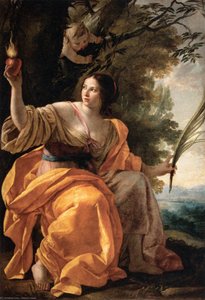
      Heavenly Charity

      1640 · Louvre'i muuseum

      A Beacon of Baroque Virtue: Simon Vouet’s Heavenly Charity Simon Vouet's "Heavenly Charity," completed around 1640, stands as a cornerstone of French Baroque painting—a testament to Louis XIII’s…

      Tooge see valguse koos koju →
      Allegory (1640) autor Simon Vouet
      #15

      Allegory

      1640 · Musei Capitolini

      Simon Vouet executed Allegory during his residency in Rome, a period spanning from 1614 to 1627. The work was commissioned by Marcello Sacchetti, a 17th-century Italian merchant and…

      Tooge see valguse koos koju →
      Sacrifice of Isaac (1642) autor Simon Vouet
      #17

      Sacrifice of Isaac

      1642 · Milwaukee Art Museum

      The painting titled Sacrifice of Isaac is a work of religious art. It is attributed to the French artist Simon Vouet (1590-1649) and Pierre Patel, the Elder (1605-1676).…

      Telli see lühend →
      Suicide of Lucrece (1625) autor Simon Vouet
      #21

      Suicide of Lucrece

      1625 · Rahvuslik Galerii Praha

      The heavy silence of a tragic end hangs in the air within Suicide of Lucrece. In this dramatic oil painting, the artist Simon Vouet captures the precise, harrowing…

      Tooge see valguse koos koju →
      The Muse Clio (1640) autor Simon Vouet
      #22

      The Muse Clio

      1640 · Staatliche Kunsthalle Karlsruhe

      The Muse Clio is an oil on canvas painting by the artist Simon Vouet. Created about 1640, this work depicts the mythological figure Clio, who is recognized as…

      Telli see lühend →
      Vanitas (1621) autor Simon Vouet
      #24

      Vanitas

      1621 · Rahvusmuuseum Varssavis

      In Vanitas, Simon Vouet centers the composition on a tight, intimate encounter between two figures. A young woman and an older man emerge from a deep, near-black background…

      Tooge see valguse koos koju →
      The Muses Urania and Calliope (1634) autor Simon Vouet
      #55

      The Muses Urania and Calliope

      1634 · National Gallery of Art

      Simon Vouet's "The Muses Urania and Calliope," painted in 1634, isn’t merely a portrait; it’s an immersive experience—a vibrant tableau vivant capturing the essence of classical inspiration. This…

      Tooge see valguse koos koju →
      POLYMNIE, MUSE DE L'ELOQUENCE autor Simon Vouet
      #58

      POLYMNIE, MUSE DE L'ELOQUENCE

      Louvre'i muuseum

      Within the hallowed halls of the Louvre resides a captivating portrait – *Polymnie, Muse of Eloquence* by Simon Vouet, a pivotal work that embodies the burgeoning spirit of…

      Telli see lühend →
      Mary Adoring the Christ child (1623) autor Simon Vouet
      #61

      Mary Adoring the Christ child

      1623 · Museum Boijmans Van Beuningen

      Mary Adoring the Christ child is a religious oil painting by the French artist Simon Vouet. Executed in 1623, the work belongs to the Baroque tradition, focusing on…

      Telli see lühend →
      Toilet of Venus (1628) autor Simon Vouet
      #64

      Toilet of Venus

      1628 · Cincinnati Art Museum

      To gaze upon Simon Vouet’s Toilet of Venus is to step directly into a moment suspended in opulent leisure—a scene dripping with the sensuality and refined drama characteristic…

      Telli see lühend →
      Self-Portrait (1615) autor Simon Vouet
      #65

      Self-Portrait

      1615 · Musée Réattu

      To stand before this self-portrait is to encounter not merely paint on canvas, but a direct conduit to the vibrant, ambitious spirit of early 17th-century Paris. Painted around…

      Tooge see valguse koos koju →
      LA VICTOIRE autor Simon Vouet
      #66

      LA VICTOIRE

      Louvre'i muuseum

      To stand before this depiction of La Victoire is to encounter pure, unbridled apotheosis. It is not merely a painting; it is a dramatic narrative captured in oil,…

      Tooge see valguse koos koju →
      The Rape of Europa (1640) autor Simon Vouet
      #67

      The Rape of Europa

      1640 · Thyssen-Bornemisza Museum

      To gaze upon Simon Vouet's depiction of The Rape of Europa is to step directly into the charged, dramatic heart of the Baroque era. This canvas is not…

      Telli see lühend →
      Sophonisba vastu müüa tass (1623) autor Simon Vouet
      #68

      Sophonisba vastu müüa tass

      1623 · Staatliche Museen

      Simon Vouet's “Sophonisba Receiving the Poisoned Chalice,” completed around 1623, stands as a cornerstone of French Baroque painting and a masterful depiction of biblical drama. Executed in Classicism…

      Tellinime käsitsi maaldetud →
      St Catherine (1614) autor Simon Vouet
      #69

      St Catherine

      1614 · Quirinale Palace

      To stand before Simon Vouet's depiction of St Catherine is to step directly into the vibrant, emotionally charged atmosphere of early seventeenth-century Paris. This portrait captures more than…

      Tellinime käsitsi maaldetud →
      Prince Marcantonio Doria (1621) autor Simon Vouet
      #70

      Prince Marcantonio Doria

      1621 · Louvre'i muuseum

      In the hallowed halls of the Musée du Louvre, there exists a window into the soul of the seventeenth century, captured through the masterful brushstrokes of Simon Vouet.…

      Telli see lühend →
      Virgin and Child autor Simon Vouet
      #76

      Virgin and Child

      Musée des Beaux-Arts de Lyon

      Simon Vouet’s “The Virgin and Child (of the Column),” completed around 1640, stands as a cornerstone of French Baroque painting—a testament to artistic ambition and masterful execution that…

      Tooge see valguse koos koju →
      The Holy Family (1630) autor Simon Vouet
      #79

      The Holy Family

      1630 · Kunsthalle Bremen

      In the heart of the seventeenth century, as the rigid structures of Mannerism began to dissolve under the weight of a new, more visceral era, Simon Vouet emerged…

      Tellinime käsitsi maaldetud →
      Madonna and Child (1633) autor Simon Vouet
      #80

      Madonna and Child

      1633 · National Gallery of Art

      In the intimate embrace of Simon Vouet’s Madonna and Child, we are invited into a moment of profound, quiet tenderness that transcends the centuries. Painted in 1633, this…

      Tooge see valguse koos koju →
      Allegory of Peace (1627) autor Simon Vouet
      #82

      Allegory of Peace

      1627 · Galleria Nazionale d'Arte Antica

      Completed in 1627, Allegory of Peace by Simon Vouet offers a profound look into the intellectual fervor and humanist aspirations of the seventeenth century. This work emerged during…

      Telli see lühend →
      Allegory of Wealth (1630) autor Simon Vouet
      #83

      Allegory of Wealth

      1630 · Louvre'i muuseum

      Simon Vouet's 1630 *Allegory of Wealth* is not merely a painting; it’s an immersive experience, a meticulously crafted tableau that speaks volumes about the values and aspirations of…

      Telli see lühend →
      The Fortune Teller (1618) autor Simon Vouet
      #87

      The Fortune Teller

      1618 · Kanada Rahvusgalerii

      The Fortune Teller, painted in 1618 by the masterful Simon Vouet, offers a captivating glimpse into the social and artistic currents of early 17th-century France. This portrait, measuring…

      Tooge see valguse koos koju →
      Caritas Romana autor Simon Vouet
      #92

      Caritas Romana

      Rahvusmuuseum Varssavis

      In Caritas Romana, Simon Vouet presents a quiet, emotionally charged encounter between two figures. The composition centers on a woman cradling an older, bearded man, creating an intimate…

      Telli see lühend →
      St Jerome and the Angel (1622) autor Simon Vouet
      #93

      St Jerome and the Angel

      1622 · National Gallery of Art

      Simon Vouet’s “St. Jerome and the Angel,” painted in 1622, is more than just a depiction of a biblical scene; it's a carefully constructed meditation on divine guidance,…

      Telli see lühend →
      The Fortune Teller (1617) autor Simon Vouet
      #94

      The Fortune Teller

      1617 · Galleria Nazionale d'Arte Antica

      Simon Vouet's "The Fortune Teller," painted in 1617, isn’t merely a portrait; it’s a carefully constructed tableau brimming with intrigue and a palpable sense of the mystical. Housed…

      Tellinime käsitsi maaldetud →
      LE CHRIST EN CROIX autor Simon Vouet
      #95

      LE CHRIST EN CROIX

      Louvre'i muuseum

      is a significant work by the French Baroque painter Simon Vouet. The composition centers on the crucifixion of Jesus Christ, a central event of the New Testament. The…

      Telli see lühend →

      Simon Vouet lõikud perioodide kaupa

      Mida Simon Vouet kõige rohkem maalis

      Neli teemat, mis esinevad neil lätistes kõige sagedamini, koos nende kõige armastatumate näidetega.

      Kuna Simon Voueti lamedad pildid rippuvad siin

      Kümne 8 muuseumi kollektsioonid, mis sisaldavad kõige rohkem sellel lehel esitatud teoseid.

      Muuseumid Linn Simon Vouet teosid Selle nimekirja maalid
      Louvre'i muuseum, PariisLouvre'i muuseum Pariis 20 Allegory of Virtue, Heavenly Charity, POLYMNIE, MUSE DE L'ELOQUENCE
      Szépművészeti Múzeum, BudapestSzépművészeti Múzeum Budapest 5 Sleeping Venus, Parnassus or Apollo and the Muses, Parnassus or Apollo and the Muses (detail)
      National Gallery of Art, WashingtonNational Gallery of Art Washington 4 The Muses of Urania and Calliope, The Muses Urania and Calliope, Madonna and Child
      Galleria Nazionale d'Arte Antica, RoomaGalleria Nazionale d'Arte Antica Rooma 4 The Fortuneteller (detail), Allegory of Peace, The Fortune Teller
      Rahvusmuuseum Varssavis, VarssaviRahvusmuuseum Varssavis Varssavi 4 Vanitas, Caritas Romana
      Los Angeles County Museum of Art, Los AngelesLos Angeles County Museum of Art Los Angeles 3 Model for Altarpiece in St. Peter's, Model for Altarpiece in St. Peter's
      Minneapolis Institute of Art, MinneapolisMinneapolis Institute of Art Minneapolis 2 Angels with Attributes of the Passion: Angel Holding the Vessel and Towel for washing the hands of Pontius Pilate, Angels with Attributes of the Passion, the Superscription from the Cross
      Philadelphia Museum of Art, PhiladelphiaPhiladelphia Museum of Art Philadelphia 2 Saint John, Virgin and Child, with an Angel

      Simon Vouet kõige armastatum lõenatav teos iga kümnendiga

      1. 1610s
        The Fortuneteller (detail) (1617) autor Simon Vouet
        Lentik 4 / 100

        The Fortuneteller (detail)

        Vanus 20–29 · Galleria Nazionale d'Arte Antica

        In the heart of 1617, amidst the vibrant and transformative atmosphere of Roman artistic circles, Simon Vouet captured a moment of profound human connection in his masterpiece, The…

      2. 1620s
      3. 1630s
        The Muses of Urania and Calliope (1634) autor Simon Vouet
        Lentik 2 / 100

        The Muses of Urania and Calliope

        Vanus 40–49 · National Gallery of Art

        Simon Vouet’s “The Muses Urania and Calliope”: A Symphony of Baroque Grace Simon Vouet (1590-1649) stands as a pivotal figure in the artistic landscape of 17th-century France, marking…

      4. 1640s
        Venus and Adonis (1642) autor Simon Vouet
        1 / 100

        Venus and Adonis

        Vanus 50–59 · J. Paul Getty muuseum

        Simon Vouet’s “Venus and Adonis,” painted in 1642, is a striking example of French Baroque art, showcasing the artist’s mastery of color, composition, and his assimilation of Italian…

      Simon Vouet tablidet: vastused teie küsimustele

      Mis on Simon Vouet kõige tuntum maaliamat?Loe vastust

      Venus and Adonis (1642), J. Paul Getty muuseum, Los Angeles. Järgnevad The Muses of Urania and Calliope (1634) ja Annunciation (1640).

      Kui vana Simon Vouet oli, kui teos Venus and Adonis maalis?Loe vastust

      1590 aastal sündinud Simon Vouet oli 52 aastat vanus: Venus and Adonis on pärinev aastast 1642.

      Millised on 10 kuulsumat maali kunstniku Simon Vouet teosena?Loe vastust

      Venus and Adonis, The Muses of Urania and Calliope, Annunciation, The Fortuneteller (detail), Sleeping Venus, Allegory of Virtue, The Entombment, Angels with Attributes of the Passion: Angel Holding the Vessel and Towel for washing the hands of Pontius Pilate, Saint John ja Virgin and Child, with an Angel. Iga teos ülal toodud reitingus on märgitud koos aasta ja muuseumiga.

      Kui palju teoseid Simon Vouet kokku kirjoonud on?Loe vastust

      Kataloogis on 166 teost kunstnikult Simon Vouet, kuupäevadelt 1614 kuni 1645.

      Kust saan näha Simon Vouet kõige kuulsamaid linateid?Loe vastust

      Peamiselt Louvre'i muuseum (Pariis), Szépművészeti Múzeum (Budapest) ja National Gallery of Art (Washington) asukohas; ülaltoetud nimekiri esitab kirja iga muuseumi ja selle tablood.

      Millal maalis Simon Vouet oma kõige armastatumad lamedad pildid?Loe vastust

      1620s perioodil, mis sisaldas 31 kogu selle lehe 100 teosest, oli nende hulgas Angels with Attributes of the Passion: Angel Holding the Vessel and Towel for washing the hands of Pontius Pilate.

      Millised on Simon Vouet tuntud esimesed ja viimased tablood?Loe vastust

      Siin olevad kõige vanamad lamedad pildid on Lovers (1614); kõige uuemad on Allegory of Prudence (1645).

      Mida Simon Vouet kõige enam maalis?Loe vastust

      Woman (15), Renaissance (12) ja Man (9), kogu selle lehekülje 100 teose kohta.

      Millist tehnikat Simon Vouet kõige enam kasutas?Loe vastust

      Oil On Canvas, mida on kasutatud 40 kuni 100 teoseks sellel lehel.

      Millisse Millises suunas on Simon Vouet maal on tegutsenud?Loe vastust

      Baroque, nagu sellel lehel olevad tablood näitavad.

      Millised Simon Vouet lamedad tablavid Louvre'i muuseum muuseumis rihangad?Loe vastust

      Louvre'i muuseum, Pariis säilitab 12 sellel lehel olevat teost, seda hulka kuuluvad ka Allegory of Virtue, Heavenly Charity ja POLYMNIE, MUSE DE L'ELOQUENCE.

      Kas ma saan osta Simon Vouet linate koos reproduktsiooni?Loe vastust

      Jah. Iga maali sellel lehel saab tellida oma lehelt kas käsitsi maalatuna õli-reproductionina või suurepärase kunstiprentina valitud suuruses.

      Simon Vouet: elu värvides

      Simon Vouet: Prantsilinejadaja Prantsuse Barokika Maalegi

      • Sündinud: 9. janel, 1590, Pariis, Prantsus
      • Survenud: 30. juuni, 1649, Pariis, Prantsus

      Simon Vouet oli keeruline isik Prantsuse maaliku süutmises Mannerismist Barokika stiilima. Sündides kunstlikusse perere – tema isa Laurent oli maaler ja tema vend Aubin püüdis ka kunsti – sai Vouet varajase koolituse, mis loomis alusta tema tulevikule edukusele. Tema lapselaps, Ludovico Dorigny, jätkas pereli kunstlikku pärandi.

      Varane Karjääri ja Itaalia Vaikus (1608–1627)

      • Varane Portreteerimine: Vouet alustas oma karjääri portreteerijana, näites varajase talendi.
      • Säiled Inglismaalasse (1608): Noore ning 14-näeldesel aastal reisis ta Inglismaale tellitud portreedi maalima, näites oma kasvava maine.
      • Ottomaania Imperium ja Venetsia: 1611. aastal liitus Vouet Baron de Sancy rühmaga, Prantsuse ambassjaor Ottomaania imperiumis, uuesti portreteerimise tööga. See reis viis ta Konstantinopelisse ja seejärel 1612. aastal Venetsia.
      • Rooma (1614–1627): Tema ajal Roomas tõldi muuta. Ta jäi sinna kolmte aasta jooksul, süvenemata end kasvava Barokika perioodi elujõulisse kunstlikusse arengule.

      Tema Itaalia ajajal absorbeeris Vouet mitmeid erinevaid mõjuallusid. Ta õppis Caravaggio poolt pioneeritud dramaatilisi valgusvõte tehnikaid, omaks võttis Itaalia Mannerismi elemente ja süvenelt analüüsis Paolo Veronese kasutatavaid värvipalette ja di sotto in su (vahekülik perspektiivi). Ta sai inspiratsiooni ka Carracci, Guercinost, Lanfrancost ja Guido Renist teostest, sünteesides need erinevad stiilid ainulaadse kunstliku visiooni.

      Voueti Unikaalse Stiili Arendus

      • Valimine Accademia di San Luca jäksel (1624): Tema edukus Roomas viis teda prestižiilisse Accademia di San Luca presidendiks, mis oli tõestus tema oskusest ja tunnustamisest Itaalia kunstmaailmas.
      • Mõjualluste Süntees: Voueti stiili iseloomustas tema võime absorbeerda ja destilleerida erinevaid kunstlikke mõjuallusi. Ta ei lihtsalt kopeerinud; ta integreeris need elemendid kooskõlasse ja selgelt itaalia sündmuste Barokika esteetika.
      • Barokika Tuvedmine Prantsuses: 1627. aastal Prantsuse tagasi saabudes mängis Vouet kriitilist rolli Itaalia Barokika stiili tuvedmisel Prantsuse maalile, mõjutades märkimisväärselt riigi kunstlikku maastikku.

      Peamised Saavutused ja Pärand

      • Premier Peintre du Roi: Vouet sai titteli Premier peintre du Roi (Kuninga esimene maalaja) – kohaks, mis oli märkimisväärne prestiži ja mõju.
      • Üleabundav Tegemiskoht: Ta hoitis suurte ja aktiivse tegemiskohtu, koolitades paljut kunstnike, kes vormidasid edaspidist Prantsuse maalijaputke.
      • Märkimisväärsed Oppilased: Tema mõjuvivaimad oppilased olid Charles Le Brun (kes hiljem korraldas Versailles'de kogu dekoratiivse maalingat), Valentin de Boulogne, Charles Alphonse du Fresnoy, Pierre Mignard, Eustache Le Sueur ja Claude Mellan.
      • Mõju Prantsuse Kunstil: Voueti mõju ulestus tema oma teostest; tema õpilased võtsid tema stiili ja tehnikaid üle kogu Prantsuse, luues selgelt Barokika maaliku kooli. Tema mõju on eriti nähtav Louis XIV tellitud suurtes dekoratiivsetes skeemides.

      Histooriline Tähtsus

      Simon Voueti pärand põhineb tema keerulisel rollil Itaalia ja Prantsuse kunsti vahel sillana. Ta võttis edukalt Itaalia Barokika dünaamika ja grandioosi, muuta selle stiiliks, mis kõnetas Prantsuse hovi ja aristokraatia maitseid. Tema mõju on eikaartlik 17. sajanni Prantsuse maaliku arengu jooksul, ja tema panused jäävad kunstihistoorikute jaoks tänapäeval tunnustatud.

      Kõik 166 teost Simon Vouet →