

Bivega on teos, millega Victor Vasarely on kõige tuntetud. Quadrature ja ORION-MC täiendavad kõige armastatumate tablodeid moodustavat triooti. Meie kataloogis on 776 teost kunstnikult Victor Vasarely. Siin on 100 kõige kuulsamat koos aasta, muuseumi ja iga linate veebilehe loo kohta.
Reiting põhineb meie populaarsusindeksil, mis koondab iga teose otsingud, külastused ja tellimused. Uuendatud oktoober 2026.


Victor Vasarely's *Quadrature* isn't merely a painting; it’s an invitation – an invitation to question the very nature of visual reality. Created by a visionary who anticipated the digital age, this work embodies the core tenets of Op Art, a movement that sought to manipulate perception through carefully constructed geometric forms and vibrant color fields. Painted in 1960s, *Quadrature* showcases Vasarely’s mastery of optical illusion, transforming two dynamic spheres into…

Victor Vasarely's ORION-MC is not merely a painting; it’s an invitation to experience the world through a radically altered lens. This captivating work, rendered in a vibrant palette of red, yellow, green, blue, purple, orange, and black, exemplifies the core tenets of Op Art – Optical Art – pioneered by Vasarely himself. Born Károly Vaszary in 1906 in Pécs, Croatia, his artistic trajectory began with an unexpected detour into medicine…

The artwork titled Zebras (white on black) was created by the artist Victor Vasarely. This piece features two zebras positioned against a black background. The composition includes smaller figures of animals in the background, such as two birds and three additional zebras, which contribute to the depth of the image. The visual structure utilizes geometric shapes and patterns to form the figures.

Vega-Wa-3: A Dance of Geometric Illusion Victor Vasarely’s “Vega-Wa-3” isn't merely a painting; it’s an invitation to experience visual perception in a radically new way. Created in 1968, this artwork embodies the spirit of Op Art – Optical Art – a movement that sought to challenge our senses and explore the subconscious through meticulously crafted geometric patterns. The image itself depicts a striking composition: a dominant red circle surrounded by…

To stand before Victor Vasarely’s Kaglo II is to enter a realm where the boundaries between the static and the kinetic dissolve into a rhythmic dance of light and color. Created in 1986, this masterful print serves as a profound testament to the enduring power of geometric abstraction. At first glance, the eye is drawn to a central, commanding red sphere, which acts as the sun within a private cosmos.…

Victor Vasarely’s *Vega 1* isn't merely a painting; it’s an invitation. An invitation to step outside the confines of traditional representation and into a world governed by perception itself. Born in 1906 in Pécs, Croatia – then part of Austria-Hungary – Vasarely’s artistic trajectory was initially rooted in medicine before he decisively embraced the burgeoning field of visual abstraction. This pivotal shift, fueled by his studies at the Podolini-Volkmann Academy…

Victor Vasarely’s “NB 22 Caope” is more than just an abstract painting; it's a meticulously crafted portal into the heart of Op Art, a movement that sought to redefine our perception of reality. This striking work, dominated by a precisely arranged grid of black and white circles, exemplifies Vasarely’s pioneering approach to visual illusion – a technique he developed with mathematical rigor and an almost obsessive attention to detail. The…

To stand before a work by Victor Vasarely is not merely to observe paint on canvas; it is to engage in a sophisticated dialogue with perception itself. This piece, characterized by its vibrant, almost pulsating geometric network, draws the viewer into a mesmerizing optical labyrinth. It speaks directly to the intellectual curiosity of the modern collector and the design sensibility of those who appreciate art as an architectural element. The…

To stand before Harmas is to step directly into the mind of its creator, Victor Vasarely. This piece is not merely an arrangement of color and pattern; it is a vibrant intellectual puzzle, a visual meditation on structure itself. The eye is immediately drawn into the intricate dance between the bold red checks and the myriad small circles that populate the background. It possesses the undeniable energy characteristic of Op…

Victor Vasarely's Pal-Ket, painted in 1974, isn’t merely a visual experience; it’s an invitation to reconsider the very nature of perception. This vibrant acrylic on canvas piece, measuring…

Victor Vasarely's "Vonal-2" is more than just a colorful pattern; it’s a meticulously crafted portal into the heart of Op Art and a testament to the revolutionary ideas…

In this 1957 work, titled Vega II, Victor Vasarely explores the fundamental mechanics of sight. The piece is a purely abstract composition, eschewing any recognizable subject matter in…

To stand before Victor Vasarely's Axo 99 is not merely to observe a painting; it is to engage in a visual dialogue with the very mechanics of sight…

Victor Vasarely's “Abstract Composition 9” is more than just a painting; it’s an invitation to experience the world through the lens of perception itself. Created by one of…

The artwork titled Zebras was created by the artist Victor Vasarely. This piece, dated 1938, emerged from a period of intense graphic experimentation. It is considered one of…

To encounter Victor Vasarely’s Kezdi-Ga is to step away from the stillness of traditional viewing and enter a realm where the canvas breathes, pulses, and vibrates with an…

Victor Vasarely’s ‘SIR-RIS,’ a captivating sculpture rendered in meticulous black and white, stands as a cornerstone of Op Art – a movement that fundamentally challenged our understanding of…

To stand before Victor Vasarely’s "Torony-Nagy" is not merely to observe paint on canvas; it is to engage in a sophisticated dialogue with perception itself. This vibrant 1969…

Victor Vasarely's 'Quasar' is not merely a painting; it’s an invitation into the very fabric of perception, a testament to the revolutionary impact of Op Art and the…

To stand before Victor Vasarely's Zett-Ka is not merely to observe a painting; it is to step into a meticulously constructed optical puzzle. This masterful piece, a quintessential…

Victor Vasarely's "Vega-Kontosh-Va" is not merely a painting; it’s an invitation to experience the world through a radically altered lens. This vibrant composition, dominated by a pulsating red…

We are looking at Vèga 3, a significant work by the artist Victor Vasarely. Created about 1968, this piece belongs to the Op Art movement, a style that…

Zoeld V, 1967 – Victor Vasarely’s Geometric Revelation Victor Vasarely (1906–1997) stands as an undisputed titan of Op Art—a movement that revolutionized visual perception in the mid-20th century.…

Victor Vasarely (1906–1997) stands as an undisputed titan of Op Art – Optical Art – a movement that irrevocably altered the landscape of 20th-century art and design. Born…

Sir-Ris - A Geometric Symphony of Color and Illusion Victor Vasarely’s “SIR-RIS” is more than just a painting; it's an invitation into a realm where perception bends to…

In the realm of Op Art, few works capture the hypnotic essence of visual disruption as masterfully as Victor Vasarely’s Zebras (full body white on blue-black). This striking…

Victor Vasarely's "Kezdi-All," a captivating exploration of optical illusion and geometric abstraction, stands as a cornerstone of Op Art – a movement that fundamentally challenged our understanding of…

To stand before Harmas is to step directly into the mind of its creator, Victor Vasarely. This piece is not merely an arrangement of color and pattern; it…

To encounter Victor Vasarely’s 1951 masterpiece, “Terek,” is to step away from the static world of traditional representation and enter a realm where the canvas itself seems to…

To stand before this piece is to step through a portal built entirely of color and calculated form. It is an immediate confrontation with perception itself. The composition,…

To encounter Victor Vasarely's 'Folklore' is to step away from the stillness of traditional viewing and enter a realm where the canvas begins to breathe, pulse, and vibrate…

Victor Vasarely’s “O N D - I I - V A” is more than just a painting; it's an invitation to experience the world through a radically altered…

The artwork is a grid-based abstract composition dominated by concentric circles of varying sizes and shades of red and green. It presents a highly geometric and symmetrical design,…

Victor Vasarely's "F-VERT-BLEU" is not merely a puzzle; it’s a meticulously crafted portal into the heart of Op Art, a movement that fundamentally altered our perception of space…

Victor Vasarely: A Pioneer of Geometric Abstraction and Optical Illusion Victor Vasarely (1906-1997), born Károly Vaszary in Pécs, Hungary – now Croatia – embarked on an artistic journey…

The painting Dia-Tuz-Neg is a blue and white composition characterized by a circular pattern. At the center of the work, a large circle is prominently featured, surrounded by…

Victor Vasarely’s “Caopeo” isn’t merely a painting; it’s an invitation, a carefully constructed illusion designed to challenge and delight the viewer. Created in 1962, this seminal work exemplifies…

Sorata-T is a painted glass triptych executed in 1953. The work is composed of three panels:

The artwork Triond features three colorful balls presented in various shades of blue, purple, pink, and green. These spheres are arranged in a triangular formation, with one ball…

Step closer to observe how the eye begins to move across the surface of Domb-B. At first glance, your attention is drawn to that central blue and yellow…

VP-115 by Victor Vasarely exists as a precise study in the mechanics of sight. The work operates through a calculated arrangement of geometric shapes, specifically a sphere and…

Victor Vasarely's 'Jong,' completed in 1968, is more than just an image; it’s an invitation to question the very nature of reality. This arresting work, a cornerstone of…

The artwork consists of four circles arranged in a square configuration. Each circle is assigned a specific color: blue, orange, yellow, and purple. These shapes are positioned at…

To encounter Victor Vasarely’s “Obor” is to step away from the stillness of traditional viewing and enter a realm where the canvas itself seems to breathe, pulse, and…

Victor Vasarely’s “Ion-DR” stands as a cornerstone of Op Art, an artistic movement that revolutionized perception in the mid-1960s. More than just a painting; it's an invitation to…

A Dance of Circles on Crimson: Exploring Victor Vasarely's "Untitled 16" Victor Vasarely, a name synonymous with Op Art and kinetic abstraction, gifted the world a visual language…

Tridem K – A Geometric Revelation by Victor Vasarely Victor Vasarely (1906-1997) stands as an undisputed titan of Op Art, a movement that revolutionized visual perception in the…

The artwork Louisiana features a symmetrical, circular design composed of numerous small, overlapping circles in varying shades of red, orange, and brown. A blue grid subtly underlies the…

A Symphony of Geometry: Exploring Victor Vasarely's "Sikra-Z" Victor Vasarely, a name synonymous with Op Art and kinetic art, dedicated his life to unraveling the mysteries of perception…

Victor Vasarely: A Dynamic Exploration of Optical Illusion in "Kalota-MC" Victor Vasarely oli revolutsiooni tegija kunstilisel maalil. Tema töö ei jäi traditsioonilise värvimise piirele vaid pakkus silmale dünaamilist…

Victor Vasarely (1906-1997), born Győző Vásárhelyi in Pécs, Croatia, stands as a monumental figure in the history of 20th-century art. More than just an artist, he was arguably…

Victor Vasarely ja Kvadratuuri "X" kaleidoskoopiline maailm Kvadratuuri “X” on Viktor Vasarely suurim ja üks vaikimatumteguslikum tööde kogu maailmas, mis jäi kunstniku enda käe alla 1963. aastal. See…

A Dance of Light and Geometry: Unveiling Victor Vasarely’s “Untitled 18” Victor Vasarely's "Untitled 18" isn’t merely a painting; it’s an invitation to step into a world where…

Victor Vasarely (1906–1997) stands as an undisputed titan of Op art, a movement that irrevocably altered the landscape of 20th-century visual culture. Born Győző Vásárhelyi in Pécs, Hungary…

KALOTA T is an artwork created by the artist Victor Vasarely. Born in 1906 and passing away in 1997, the French/Hungarian artist developed a visual language centered on…

Victor Vasarely's "Sikra," painted in 1966, is more than just a colorful composition; it’s a meticulously crafted portal into the heart of Op Art and a testament to…

Victor Vasarely's "Dia-Or" is not merely a painting; it’s an invitation into the very fabric of perception. This captivating work, rendered in oil with meticulous attention to detail,…

To encounter Victor Vasarely's “Mahn” is to step into a realm where the canvas ceases to be a static surface and begins to breathe, pulse, and vibrate with…

Victor Vasarely ja Cheyt - L: Ühe Geomeetrilise Nähtuse Päev Victor Vasarely oli üks maailma suurimatest kunstnike vaatamata sellele, et tema töö ei olnud alati lihtsasti mõistetav. Tema…

To encounter Victor Vasarely’s Caribe Negatif is to step away from the stillness of traditional viewing and enter a realm where the canvas breathes, vibrates, and dances before…

To encounter Victor Vasarely's “Tomor” is to step away from the static world of traditional imagery and enter a realm where the canvas itself seems to breathe, pulse,…

Victor Vasarely's Rhombus-B is more than just a painting; it’s an invitation to question the very nature of visual perception. Created by one of the foremost figures in…

Victor Vasarely's "Sreeh" is more than just a painting; it’s an invitation into the heart of Op Art, a visual exploration of perception itself. This striking work, dominated…

Victor Vasarely's "Hetta," a deceptively simple composition of four vibrant circles – red, orange, green, and blue – is far more than just an abstract arrangement. It’s a…

Victor Vasarely's *Opus 2604* is not merely a painting; it’s an invitation to question the very nature of visual reality. This mesmerizing work, dominated by a vibrant blue…

This vibrant artwork, designated VY-47-C, is a captivating embodiment of Victor Vasarely's groundbreaking contributions to Op Art and his pioneering exploration of geometric abstraction. Executed with a masterful…

Victor Vasarely ja Tema Ülemaailmeline Vega-EG Kunstiteos Victor Vasarely oli Ungari kunstniku Károly Vaszary, kes elas aastatel 1906–1997. Tema looming oli täielikult keskendunud geometrilisele abstraktsioonile ning ta jõudis…

Guimen: A Dance of Geometry and Illusion Victor Vasarely’s “Guimen” stands as an emblem of Op Art – Optical Art – a movement that irrevocably altered the landscape…

Victor Vasarely's "Molnar" is more than just a painting; it’s an invitation into the mesmerizing world of Op Art, a realm where perception itself becomes the subject. This…

Victor Vasarely's Folkokta is more than just a colorful arrangement of squares; it’s a meticulously crafted portal into the heart of Op Art and a testament to the…

Victor Vasarely (1906–1997), a Hungarian-born artist who emigrated to France later in his life, stands as one of the most influential figures in Op Art – Optical Art…


Victor Vasarely's "Andromeda" isn't merely a painting; it’s an invitation into a realm where perception itself becomes the subject. This striking composition, dominated by a meticulously rendered geometric…

Victor Vasarely ja Tema Ülemaailmeline Geommeetriline Nähtus Victor Vasarely oli üks maailma suurimatest kunstnike vaatamata sellele, et tema töö ei olnud alati avalikult tuntud. Ta sündis aastal 1906…
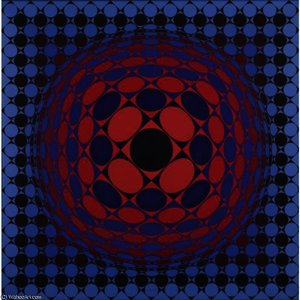
Victor Vasarely's "Versakk" is not merely a painting; it’s an invitation, a carefully constructed illusion that challenges our very perception of space and form. Created by the Hungarian…

Victor Vasarely's DVA-DVA is more than just a colorful square; it’s a meticulously crafted portal into the heart of Op Art and a testament to the revolutionary approach…

Sphere: A Geometric Revelation by Victor Vasarely Victor Vasarely’s “Sphere” stands as an emblem of Op Art – Optical Art – a movement that fundamentally challenged our perception…

Victor Vasarely ja Koska Kar – Ülemaailmse Geomeetria Täielik Ekspressiooni Nähtus Victor Vasarely (1906–1997) oli üks maailma suurimatest kunstnike vaheldühmast, kes jäi truuks geomeetriale ning püsis selle põhimõtetele…


Koentoesh – A Geometric Dance of Color Victor Vasarely’s “Koentoosh” isn't merely a painting; it’s an invitation into a realm where perception bends and shapes itself according to…

To encounter Victor Vasarely’s Tridim is to step into a realm where the boundaries of the two-dimensional canvas dissolve, replaced by a pulsating, architectural depth that defies the…

Victor Vasarely ja Koska-Pint – Ülemaailmse Geomõni Põgusus Koska-Pint on Viktor Vasarely suurim töö, mis jäi hiljemalt 1975. aastal tehtud ning mida tänapäeval müüakse Pamono kaupluses. See silkkirjastatud…


Victor Vasarely ja Ühtlased Nr. 22 – Geomeetrilise Dekoratsiooniga Täielik Ühesuuna Ühtlased Nr. 22 on Viktor Vasarely suurim töö, mis jäi hiljemalt lõppenud kunstniku elu lõpuks aastal 1997.…

Illik: A Kaleidoscope of Geometric Harmony Illik (1971) by Victor Vasarely stands as a testament to the enduring fascination with geometric abstraction and its ability to evoke profound…

“MEH2,” a captivating work by Hungarian artist Victor Vasarely, is more than just a painting; it's an invitation to explore the very nature of visual perception. Executed in…

Victor Vasarely's Vega-Fel is not merely a painting; it’s an invitation to experience the world through a radically altered lens. This captivating work, dominated by a monumental blue…

Victor Vasarely's "Attam" is more than just a painting; it’s an invitation into the very heart of perception, a testament to the revolutionary impact of Op Art and…

To encounter Victor Vasarely’s “Sikra” is to step away from the stillness of traditional viewing and enter a realm where the canvas breathes, pulses, and vibrates with an…

Victor Vasarely's "Atelier Arcay" isn’t merely a painting; it’s an invitation to a perceptual adventure. Created in the heart of the Op Art movement, this vibrant geometric abstraction…

Victor Vasarely ja Tema Ühendatud Ümmarguste Maalimine – Op Arti Põgusus Victor Vasarely oli üks maailma suurimatest kunstnike vaheldühmast, kes jäi truuks geometriile ja selle mõjule inimeste nägemisele.…

Victor Vasarely's Composition 7 is more than just a colorful painting; it’s a portal into the heart of Op Art and a testament to the revolutionary ideas of…

Victor Vasarely’s "Variációk" (Variations), created in 1989, is more than just an arrangement of circles; it's a vibrant exploration of perception and the underlying mathematical order that governs…

A Dance of Geometry and Color: Exploring Victor Vasarely's "Abstract Composition 13" Victor Vasarely, a name synonymous with Op Art and kinetic art, gifted the world a visual…

Victor Vasarely's Firaxo II is more than just a colorful textile; it’s a meticulously constructed portal into the heart of Op Art and a testament to the revolutionary…

A Symphony in Black: Exploring Victor Vasarely's Serigraph Victor Vasarely’s serigraphy in black is more than just an image; it’s an experience, a visual puzzle that invites the…

“Vonal-Fegn,” created by Victor Vasarely, is more than just an abstract painting; it's a meticulously crafted exploration of perception itself. Painted in hues of orange, yellow, blue, gray,…

Victor Vasarely's "Ouivar," a captivating exploration of geometric abstraction, invites the viewer into a world where perception itself becomes the subject. This artwork, characterized by its precisely arranged…

Victor Vasarely's "Abstract Composition 17" is more than just an image; it’s an invitation to experience the world anew. Born in 1906 in Pécs, Croatia – then part…
Neli teemat, mis esinevad neil lätistes kõige sagedamini, koos nende kõige armastatumate näidetega.
Kümne 3 muuseumi kollektsioonid, mis sisaldavad kõige rohkem sellel lehel esitatud teoseid.
| Muuseumid | Linn | Victor Vasarely teosid | Selle nimekirja maalid |
|---|---|---|---|
 Bechtler Museum of Modern Art |
Charlotte | 4 | NB 22 Caope, SIR-RIS, Tridem K |
 Inter-American Development Bank |
Washington, D.C. | 2 | Kaglo II |
 Bilbao Fine Arts Museum |
Bilbao | 1 | Pal-Ket |
The artwork titled Zebras was created by the artist Victor Vasarely. This piece, dated 1938, emerged from a period of intense graphic experimentation. It is considered one of…
In this 1957 work, titled Vega II, Victor Vasarely explores the fundamental mechanics of sight. The piece is a purely abstract composition, eschewing any recognizable subject matter in…

Vega-Wa-3: A Dance of Geometric Illusion Victor Vasarely’s “Vega-Wa-3” isn't merely a painting; it’s an invitation to experience visual perception in a radically new way. Created in 1968,…
Victor Vasarely's Pal-Ket, painted in 1974, isn’t merely a visual experience; it’s an invitation to reconsider the very nature of perception. This vibrant acrylic on canvas piece, measuring…

To stand before Victor Vasarely’s Kaglo II is to enter a realm where the boundaries between the static and the kinetic dissolve into a rhythmic dance of light…
Bivega, järglased on Quadrature ja ORION-MC.
Bivega, Quadrature, ORION-MC, Zebras (white on black), Vega-Wa-3, Kaglo II, Vega 1, NB 22 Caope, Yon ja Harmas. Iga teos ülal toodud reitingus on märgitud koos aasta ja muuseumiga.
Kataloogis on 776 teost kunstnikult Victor Vasarely, kuupäevadelt 1938 kuni 1986.
Peamiselt Bechtler Museum of Modern Art (Charlotte), Inter-American Development Bank (Washington, D.C.) ja Bilbao Fine Arts Museum (Bilbao) asukohas; ülaltoetud nimekiri esitab kirja iga muuseumi ja selle tablood.
1960s perioodil, mis sisaldas 10 kogu selle lehe 100 teosest, oli nende hulgas Vega-Wa-3.
Siin olevad kõige vanamad lamedad pildid on Zebras (1938); kõige uuemad on Kaglo II (1986).
Visual perception (35), Geometric abstraction (31) ja Color field (28), kogu selle lehekülje 100 teose kohta.
Acrylic On Canvas, mida on kasutatud 42 kuni 100 teoseks sellel lehel.
Optical art, nagu sellel lehel olevad tablood näitavad.
Bechtler Museum of Modern Art, Charlotte säilitab 3 sellel lehel olevat teost, seda hulka kuuluvad ka NB 22 Caope, SIR-RIS ja Tridem K.
9. aprillil 1906. aastal sündinud Károly Vaszary, kes sai hiljem tuntud nimega Victor Vasarely, alustas oma teekonda täiesti teisest valdkonnast. 1925. aastal astus ta Budapeestis asuvasse Eötvös Lorándi ülikoolu, et õppida meditsiini. Inimeseloma ja teaduse loogika täis oli tema elu kaks aastat, kuid visuaalse väljenduse kutse võitis lõpuks üle. Kuni 1927. aastani püsis ta meditsiiniõppimisel, kuid otsustas seejäpärast suunata oma huvid traditsioonilise akadeemilise maaliide õppimisele Podolini-Volkmanni Akadeemias.
Tema kunstiline haridus jäi jätkuma, kui ta liikus Sándor Bortnyiki műhelysse. See töökoht oli koht, kus Bauhaus' liikumuse põhimõtted said juurduda, keskendudes funktsionaalse disaini ja geomeetrilise abstraktsiooni ristandile. Siin pöörati tähelepanu struktuurile ja süsteemsusele. Need stuudioõppimised andisid aluse tema hilisemale uurimisele, kuidas kujundid ja värvid veetlevad vaataja silmaga.
Aastatel 1929 kuni 1944 keskendus Victor Vasarely graafilisele tööle. Need aastad pidasid ta veideldades, kuidas valgus ja vari kokku mõjuvad lihtsate vormidega. Tema varajane graafiline periood sünnitas teoseid nagu Chess Board (1935) ja Girl-power (1934). 1937. aastal töötles ta ka teosega Zebras. Need teosed peitavad endas kasvavat huvi selle vastu, kuidas vaataja tajub lame pinda. Ta liikus eemale traditsioonilisest maalikunstist suunasid paremini struktureeritud ja graafilise lähenemise poole.
Aastatel 1944 kuni 1947 muutus tema kunstiline suund. Ta läbis mitmeid stiile, sealhulgas kubistilisi, futuristilisi, ekspressionistilisi, symbolistilisi ja surrealistlikke lähenemisi. Lõpuks astus ta üle sellest eksperimenteerimisest, otsides täpsemat viisi ruumi organiseerimiseks. See uue loogika otsing viis ta koostama oma Kollase Manifesti. Tema töö keskpunktis ei olnud enam isiklik väljendus, vaid pigem nägemise mehaanika. See süstemaatiline meetod kinnitas ta staatuse Op Art'i liikumise juhtena.
Victor Vasarely lähenemine tugineb geomeetria süstemaatilisel kasutamisele, et pälata vaatajas füüsilist vastust. Ta ei tugenud vormi loomisel traditsioonilistele valgusallikatele ega klassikalisele chiaroscurolile. Selle asemel kasutas ta kõrge kontrastiga pigmentide keerukast koosmängu, et simuleerida sügavust ja liikumist. Manipuleerides värvi tihedust, suutis ta silma petma, tekitades tasasel pinnas eeskujuliku sügavuse ja väljaulatuva efekti. See meetod muudab staatilise pinna ruumiks, mis näib paisuma või taanduma.
Tema meetod, mida ta nimetas visuaalse kineetika või plastique cinétique nimel, hõlmab kujude täpset ja kontrollitud ülesasetamist. Ta kasutas tekstuuriefekte, perspektiivi, varju ja valgust, et ehitada need illusioonid. Töö toime pääle paneb sageli viis, kuidas silm tõlgendab rütmilist, sisemaist sära statt välisest valgusest. Võrgukonstruktsioonide ja matemaatiliste printsiimide abil lõi ta visuaalse vibratsiooni ja keerlevaid efekte, mille tulemus on liikumise tunne, mis eksisteerib täielikult vaid vaataja tajus.
Tema tehnika täpsus on ilmselt nähtav måttes, kuidas ta värvi ja joonega arhitektuurilist sügavust loob. Teosetena Torony-Nagy kohtuvad teravad valged jooned sügavaid siniseid ja smaragdgrääne, tekitades rütmilise optilise vibratsiooni. Need elemendid töötavad koos, et luua pulsava valguse tunde. Ta kasutas neid tööriistu, et liikuda üle lihtsa esinduslikkuse ja keskenduda sellele, kuidas meie nägemisprotsess tegelikult toimib.
1937. aastal tähistas teose Zebra loomine murdu, mida paljud peavad Op Art'i üheks varaksemaks näideks. See teos pöördugi eemale traditsioonilisest esinduslikkusest, keskendudes selle asemel sellele, kuidas silm tõlgendab lihtsaid vorme. 1960ndad aastad viisid tema ritmi ja valguse eksperimentide piirrajangu, mis kohtus 1969. aasta teoses Torony-Nagy. See kompositsioon kasutab nelja stiilideeritud torni ning kõrge kontrastiga sinist, rohelist ja oranžist palettr, et tekitada sisemaise sära tunne. Teos tugub ristsihilistele valgetele joontele ja värvi tihedusele, et muuta lame pind pulsiredevaks ja eemale tõmbavaks.
Tema huvi liikumisele laienes ka koldimensiivsesse ruumi ja igapäevaste esemete maailma. Ta lõi suure kinemaatika objekti Georges Pompidou, mis integreeris tema visuaalsed teooriad füüsilisse, liikuvasse vormi. See huvi oma geomeetria praktilises rakendamises viis ka koostöösini Rosenthal Studio Line'iga. Selle partnerluse tagajärjeks oli Suomi nõukate seeria – 500-elementne kolLECTION, mis tõi tema geomeetrilised mustrid sisse kodukeskkonda.
1966. aastal alustas Victor Vasarely Fondation Vasarely asutamise protsessi. See projekt tuganes tema spetsiifilistele ideedele "kunst kõigile" kontseptsiooni kohta ning tema visioonile "hommikune linnast". Ta soovis luua ruumi, mis lä would läbi traditsioonilise galeriikogemuse, et peegeldada neid põhimõtteid. Hoone füüsiline ehitamine algas 1973. aastal.
Fondatsioon avati ametlikult 14. veebruaril 1976. aastal Aix-en-Provence'is, Prantsusmaal. See paik loodi tema teoste säilitamiseks ja tema teooriate edendamiseks selle kohta, kuidas kunst ja linnapildid võivad omavahel suhelda. Ise ruumi arhitektuur oli osa sellest visioonist, kus hoone paigutus oli mõeldud toetama viisi, kuidas avalik on tema geomeetrilisi vorme kogeda.
Tema visuaalse keele ulatus käis kaugele Beyond galerii seinade piiridest. Tema mustrid ja geomeetrilised struktuurid leidsid tee igapäevase elu tekstuuridesse, mõjutades moodi, interjööri disaini ja graafilise vormingu loogikat. Isegi arvutigraafika varajased arengud kannavad endas tema süstemaatilist lähenemist vormile ja tajule. Tema ideed ei olnud piiratud vaid kambda pindele; need liikusid edasi funktsionaalsete esemete maailma ja järglasteks tulnud digitaalsetesse struktuuridesse.
1982. aastal jõudis tema kunst ka kosmosesse, kui serigraafiad lisati Prantsus-Nõukogude kosmoselaeva Salyut 7. See hetk rõhutas seost tema matemaatilise täpsuse ja laia inimliku avastushimul vahel. Ta jäi kaasaegse kunstiajaloo keskseks figuuriks kuni oma surmani Prantsus, Pariisis, 15. märtsil 1997.
Tema visuaalse pärandi jälgamine nõuab rasket teekonda läbi Prantsuse ja Ungari maastike, kus tema kunstiline jalajälje on jäänud igavesti elavaks. Prantsus, Aix-en-Provence'is, asub Fondation Vasarely, mis hoiab endas märkimisväärset osa tema kogu loomingulisest pärandist. See muuseum loodis kunstniku enda algatusel, et viia tema visioon "kunst kõigile" reaalsusesse. Ruum on jaotatud seitsmeks kuusnurkliiseks celldeks, milline on 14 meetrit lai ja 11 meetrit kõrge, ning need on loodud, et mahutada endasse üheksatekümmend kahe massiivset teost, mille mõõtmed on 6 viis meetrit.
Ungaris on tema kohalolu tundlikult ja väärivalt märgata spetsiaalselt pühendatud kultuurikeskuste kaudu. Vasarely Muuseum asub tema sünnukinnis, Pécsis, ning samuti on tema teoseid säilitatud Budapești Óbudas, Zichy palatsis asuvas Vasarely Muzeumis. Need asukohad pakuvad vaatajale võimalust kogeda otseselt neid geomeetrilisi vorme ja optilisi efekte, mis määrkasid tema ainulaadset kunstilist keelekuju. Prantsus on veel üks tema loomingulise maailma pühapaik, Vasarely Muuseum Saint-Firmini palatsis Gordes'is.
Kuid tema mõju ei piirdu vaid nende spetsiifiliste muuseumide piiridele, vaid see on levinud laialt läbi erinevate institutsioonide kogumiste. Mõned tema teosed kuuluvad Bilbao Fine Arts Museum kogumusse, samas kui teised on osa Washingtoni D.C. Inter-American Development Bank ja Charlotte Bechtler Museum of Modern Art kollektioonidest. Need laialdane levik tagab, et tema hipnotiseerivad visuaalsed eksperimentid jäävad edasi kättesaadavaks nii erinevatele kultuurilistele kogukondadele kui ka globaalsele vaatajale.


