Atelier — Ilmainen toimitus ympäri maailman — Toimitusaika 2–6 viikkoa
      Elioth Gruner, 1882 – 1939

      Elioth Grunern 72 tunnetuinta maalausta

      Murrumbidgee Ranges, Canberra on teos, josta Elioth Gruner tunnetaan parhaiten. Weetangera, Canberra ja A Summer's Day täydentävät suosituimpien taideteosten kolmikon. Katalogissamme on 75 teosta taiteilijalta Elioth Gruner. Tässä ovat 72 tunnetuinta teosta vuosiluvun, museon ja jokaisen maalauksen tarinan kera.

      Sijoitus perustuu suosiotulokseemme, joka yhdistää kunkin teoksen hakuja, vierailuja ja tilauksia. Päivitetty lokakuu 2026. Jokainen tämän sivun maalauksista on tilattavissa joko käsin maalatun öljyreproduktiona pellavalle tai valitun kokoisena taideprinttinä.

      Elioth Gruner muotokuva
      Elioth Gruner · 1882 – 1939
      Syntynyt · kuollut
      1882 – 1939, Gisborne
      Taidesuuntaus
      Impressionism
      Teokset valikoimassamme
      75
      Tunnetuimmat
      Murrumbidgee Ranges, Canberra
      Eniten teoksia kohteessa
      Art Gallery of New South Wales

      Elioth Gruner -taiteilijan kymmenen rakastetuinta maalausta

      Elioth Gruner: kankaat, sijoitukset 11–72

      Spring frost (1919) tekijä Elioth Gruner
      #71

      Spring frost

      1919 · Art Gallery of New South Wales

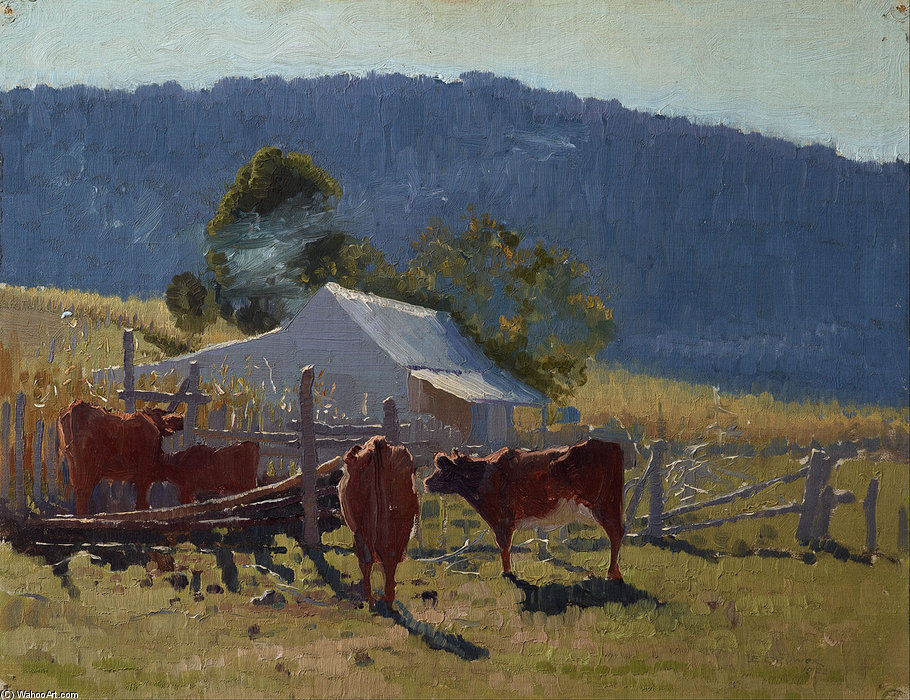
      Elioth Gruner's "Spring Frost," painted in 1919, isn’t merely a depiction of a rural scene; it’s an immersion into the very essence of Australian light and landscape. This…

      Saatko käsinmaalattuna alkaen $178 →

      Mitä Elioth Gruner maalasi eniten

      Nämä neljä aihetta toistuvat näissä maalauksissa useimmin, ja jokaisesta on esitetty suosituin esimerkki.

      Missä Elioth Grunern kankaat riippuvat

      Tämän sivun teoksista eniten sisältävät 2 museota.

      Museo Kaupunki Elioth Gruner teokset Tämän listan maalaukset
      Art Gallery of New South Wales, SydneyArt Gallery of New South Wales Sydney 10 Weetangera, Canberra, Savana, Bondi Beach
      Canberra Museum and Gallery, CanberraCanberra Museum and Gallery Canberra 1 Landscape

      Elioth Grunern kuuluisimmat teokset, vuosi toisensa jälkeen

      Elioth Gruner’n aikakauden kankaat tällä sivulla ulottuvat vuodesta 1915 vuoteen 1921, vain 7 vuoden ajalta: tässä ne ovat, vuosi vuodelta.

      1. 1915
        Afternoon, Bondi (1915) tekijä Elioth Gruner
        Sijoitus 24 / 72

        Afternoon, Bondi

        Ikä 33 vuotta · Art Gallery of New South Wales
      2. 1917
        Frosty sunrise (1917) tekijä Elioth Gruner
        Kangas 23 / 72

        Frosty sunrise

        Ikä 35 vuotta · Art Gallery of New South Wales
      3. 1919
        Spring frost (1919) tekijä Elioth Gruner
        Kangas 71 / 72

        Spring frost

        Ikä 37 vuotta · Art Gallery of New South Wales

        Elioth Gruner's "Spring Frost," painted in 1919, isn’t merely a depiction of a rural scene; it’s an immersion into the very essence of Australian light and landscape. This…

      4. 1921

      Elioth Grunern kankaat, kysymys kerrallaan

      Mistä maalauksesta Elioth Gruner tunnetaan parhaiten?Lue vastaus

      Murrumbidgee Ranges, Canberra, jota seuraavat Weetangera, Canberra ja A Summer's Day.

      Mitkä ovat Elioth Gruner'n kymmenen kuuluisinta taulua?Lue vastaus

      Murrumbidgee Ranges, Canberra, Weetangera, Canberra, A Summer's Day, Snapdragons, Savana, The Fountain, Cotter And Murrumbidgee Rivers, Bellingen Pastoral, Scene At Maiden Head, New England ja Mingoola Valley. Jokaisessa yllä olevassa sijoituksessa olevassa kankaassa on ilmoitettu sen vuosi ja museo.

      Kuinka monta maalausta Elioth Gruner loi?Lue vastaus

      Luettelossamme on 75 teosta taiteilijalta Elioth Gruner, aikaväliltä 1915–1921.

      Missä Elioth Gruner'n kuuluisimmat kankaat riippuvat nykyään?Lue vastaus

      Pääasiassa kohteissa Art Gallery of New South Wales (Sydney) ja Canberra Museum and Gallery (Canberra); yllä oleva lista nimeää jokaisen museon ja sen teokset.

      Mikä kuuluisa Elioth Gruner -maalaus on tehty ensin ja mikä viimeisenä?Lue vastaus

      Varhaisin tässä kokoelmassa oleva kangas on Afternoon, Bondi (1915); uusin on Valley of the Tweed (1921).

      Mitä aiheita Elioth Gruner maalasi eniten?Lue vastaus

      Landscape (8), Beach (6) ja Rural landscape (5), yhteensä 72 teosta tällä sivulla.

      Mihin taidesuuntaukseen Elioth Gruner kuuluu?Lue vastaus

      Impressionism, kuten tämän sivun teokset osoittavat.

      Mitkä Elioth Gruner -taiteilijan teokset kuuluvat Art Gallery of New South Wales -museon kokoelmiin?Lue vastaus

      Art Gallery of New South Wales, Sydney -museossa on 10 tämän sivun teoksista, mukaan lukien Weetangera, Canberra, Savana ja Bondi Beach.

      Mistä voin ostaa Elioth Gruner -taiteilijan maalauksen reproduktiota?Lue vastaus

      Kyllä. Jokainen tämän sivun maalauksista voidaan tilata omalta sivultaan joko käsin maalatun öljyreprodusktion tai taideprintinina valitsemassasi koossa.

      Tapaa taiteilija: Elioth Gruner

      Elioth Gruner – Australian Landscape Painter Celebrated for Serene Depictions & Record Seven Wynne Prize Wins

      Elioth Lauritz Leganyer Gruner, born December 16, 1882, in Gisborne, New Zealand, emerged from a family rooted in resilience and connection to the land—qualities that would profoundly shape his artistic vision. His father, Elliott Grüner, a Norwegian-born bailiff, instilled in him a steadfast spirit of determination alongside Mary Ann Brennan, his Irish mother, who nurtured his appreciation for beauty and observation. Their relocation to Sydney shortly after Elioth’s birth exposed him to an environment brimming with artistic fervor—a formative experience that ignited his lifelong passion for capturing the essence of the Australian landscape. Even as a young boy, Gruner demonstrated an innate talent for drawing, diligently cultivated by his mother who ensured he received instruction from Julian Ashton around twelve years old. However, fate dealt a cruel blow when both his father and older brother succumbed to illness, placing immense responsibilities upon him at just fourteen—a period marked by unwavering dedication to supporting his family while simultaneously pursuing his artistic pursuits with quiet perseverance.

      Early Life & Artistic Beginnings – A Foundation of Observation

      Gruner’s formative years were characterized by a deep immersion in the traditions of rural New Zealand and Australia. His father's practical experience as a bailiff instilled in him a grounded perspective, complementing Mary Ann Brennan’s nurturing influence—a combination that fostered his sensitivity to natural beauty and fueled his desire to translate it onto canvas. Recognizing his burgeoning talent, Ashton provided invaluable guidance, shaping Gruner’s artistic sensibilities and establishing a cornerstone for his future endeavors. The tragic loss of his family members underscored the importance of perseverance and reinforced his commitment to honoring their legacy through his art. From an early age, Gruner exhibited a remarkable aptitude for drawing—a passion nurtured by his mother who proactively arranged for lessons with Julian Ashton around twelve years old—demonstrating a dedication that would define his artistic journey.

      Developing an Impressionistic Vision – Light and Atmosphere as Inspiration

      Gruner’s artistic style is undeniably Impressionistic, though it evolved over time and absorbed influences from diverse sources. He possessed an extraordinary ability to capture the fleeting effects of light and atmosphere in the Australian bush—a skill that distinguishes his work from many contemporaries. This fascination with luminosity stemmed partly from Ashton's encouragement, bolstering his confidence and refining his artistic vision. Norman Lindsay’s admiration for Gruner’s artistry served as a catalyst for further growth—affirming his talent and reinforcing his commitment to pursuing excellence. A pivotal moment arrived between 1923 and 1925 when Gruner embarked on an extended journey to Europe—a transformative experience that broadened his artistic horizons and instilled in him a deeper understanding of European art traditions. During this period, he consciously simplified his compositions, prioritizing pattern and brushwork—reflecting the influence of Sir William Orpen’s constructive feedback. This deliberate stylistic shift underscored Gruner's willingness to adapt and refine his technique based on insightful observation.

      Recognition & Major Achievements – Seven Wynne Prize Victories

      Gruner’s unwavering dedication to his craft yielded remarkable results, culminating in seven prestigious Wynne Prizes—the most awarded by any Australian artist besides Hans Heysen—a feat that cemented his place as a titan of landscape painting and secured his enduring legacy within the annals of Australian art history. His triumphant paintings captivated audiences with their serene beauty and masterful rendering of light—establishing him as one of Australia’s foremost artistic voices. Notably, “Morning Light” (1916)—depicting a tranquil farmhouse scene bathed in golden sunlight—became Gruner's most celebrated work—a testament to his ability to convey the profound emotional resonance of the Australian landscape. Similarly, “Spring Frost” (1919)—capturing the delicate beauty of a frosty dawn over cattle pastures—earned him widespread acclaim and solidified his reputation as an artist who excelled at capturing ephemeral moments of natural splendor. The Art Gallery of New South Wales acquired "Morning Light," recognizing its artistic merit and enshrining it as a cornerstone of Australian landscape painting. Furthermore, Gruner’s commission by the AGNSW to paint “The Valley of the Tweed”—a monumental undertaking that showcased his technical prowess and artistic ambition—underscored his significance as a cultural icon.

      Legacy & Enduring Appeal – A Timeless Vision

      Elioth Gruner's influence extends far beyond his own lifetime, inspiring subsequent generations of artists and captivating audiences with his timeless vision of the Australian bush. His paintings continue to resonate deeply with viewers—evoking feelings of serenity, contemplation, and appreciation for the sublime beauty of nature. Gruner’s unwavering commitment to observation, coupled with his masterful technique—particularly his ability to capture light and atmosphere—established him as a singular figure in Australian art history. Recent scholarly research has reaffirmed his importance as a pioneer of Impressionism in Australia—demonstrating that his artistic legacy persists today. His paintings are not merely representations of places; they are evocative expressions of emotion and experience—a testament to Gruner’s profound understanding of the human condition and his enduring contribution to Australian culture.