Atelier — Ilmainen toimitus ympäri maailman — Toimitusaika 2–6 viikkoa
      Berthe Morisot, 1841 – 1895

      Berthe Morisot: The 100 Best-Known Paintings

      Of all Berthe Morisot's paintings, Kylväjä (The Cradle) (1872) is the most famous; it hangs in the Musée d'Orsay, Pariisi. Close behind come "A Corner of the Rose Garden" - Kukan keskellä oleva pieni nurkka (1885) and Thatched Cottage in Normandy (1865). Among the 361 works by Berthe Morisot in our catalogue, these 100 are the most celebrated, each shown with its date, its museum and its story.

      Sijoitus perustuu suosiotulokseemme, joka yhdistää kunkin teoksen hakuja, vierailuja ja tilauksia. Päivitetty lokakuu 2026. Each painting on this page can be ordered as an oil reproduction painted by hand on linen canvas, or as a fine art print, made to the size you choose.

      Berthe Morisot muotokuva
      Berthe Morisot · 1841 – 1895
      Syntynyt · kuollut
      1841 – 1895, Bourges
      Taidesuuntaus
      Impressionist style
      Teokset valikoimassamme
      361
      Tunnetuimmat
      Kylväjä (The Cradle) (1872)
      Eniten teoksia kohteessa
      Musée Marmottan Monet

      Berthe Morisot's 10 most celebrated paintings

      Kylväjä (The Cradle) (1872) tekijä Berthe Morisot
      1

      Kylväjä (The Cradle)

      1872 · Öljyväri kankaalle · Musée d'Orsay, Pariisi

      Berthe Morisot, syntynyt Bourgesissa vuonna 1841, ei ollut pelkästään Impressionismin merkittävä hahmo, vaan myös nainen, joka loi taidetta poikkeuksellisen rohkeasti ja omaperäisesti. Hänen tarinansa ulottuu paljon yksinkertaisen "naisten maalin" roolista pidemmälle – Morisotin taiteellinen näkemys oli syvällinen ja hänen intohimonsa modernin elämän hetkien vangitsemiseen oli loputon. Hän kuului taiteilijoiden piiriin Pariisissa, joka tunnetaan Impressionisteinä, mutta hänen tarinansa ei rajoitu vain tähän ryhmään. Hänen perimänsä oli merkittävä – hän oli Jean-Honoré…

      "A Corner of the Rose Garden" - Kukan keskellä oleva pieni nurkka (1885) tekijä Berthe Morisot
      2

      "A Corner of the Rose Garden" - Kukan keskellä oleva pieni nurkka

      1885 · Öljyväri kankaalle

      Vilaus impressionistista tyynyyttä Berthe Morisotin "A Corner of the Rose Garden" kutsuu katsojan rauhalliseen puutarhanäkymään, jota peittää auringonlaskun pehmeä ja lämmin hohde. Tämä lumoava teos on todiste Morisotin mestaruudesta impressionistisessa tyylissä; se vangitsee luonnon katoavan kauneuden vapailla siveltimenvedoilla ja eloisalla väripaletilla. Luonnon olemuksen vangitseminen Maalaus esittää rehevää puutarhaa, joka kukkii täynnä vaaleanpunaisia, valkoisia ja keltaisia ruusuja vehreän kasvuston taustalla. Puutarhakalusteiden läsnäolo tuo teokseen ripauksen inhimillistä läsnäoloa, viitaten rauhalliseen pakopaikkaan rentoutumista…

      Thatched Cottage in Normandy (1865) tekijä Berthe Morisot
      3

      Thatched Cottage in Normandy

      1865 · Oil On Canvas

      To stand before Berthe Morisot’s depiction of a Thatched Cottage in Normandy is to step through a veil and into the gentle embrace of a bygone French afternoon. This painting, executed in 1865, is far more than a mere record of rural architecture; it is an immersion into the very spirit of life lived at the rhythm of the seasons. Morisot captures that quintessential joie de vivre found in the…

      Study, The Water's Edge (1864) tekijä Berthe Morisot
      4

      Study, The Water's Edge

      1864 · Oil On Canvas

      Berthe Morisot’s “Study, The Water’s Edge,” painted in 1864, is more than just a depiction of a serene lakeside scene; it’s an intimate glimpse into the heart of Impressionism. This small canvas – measuring 60 x 73 cm – vibrates with a delicate energy, capturing not just what Morisot saw but also the fleeting emotions and sensations of that particular moment. The painting immediately draws the viewer in with its…

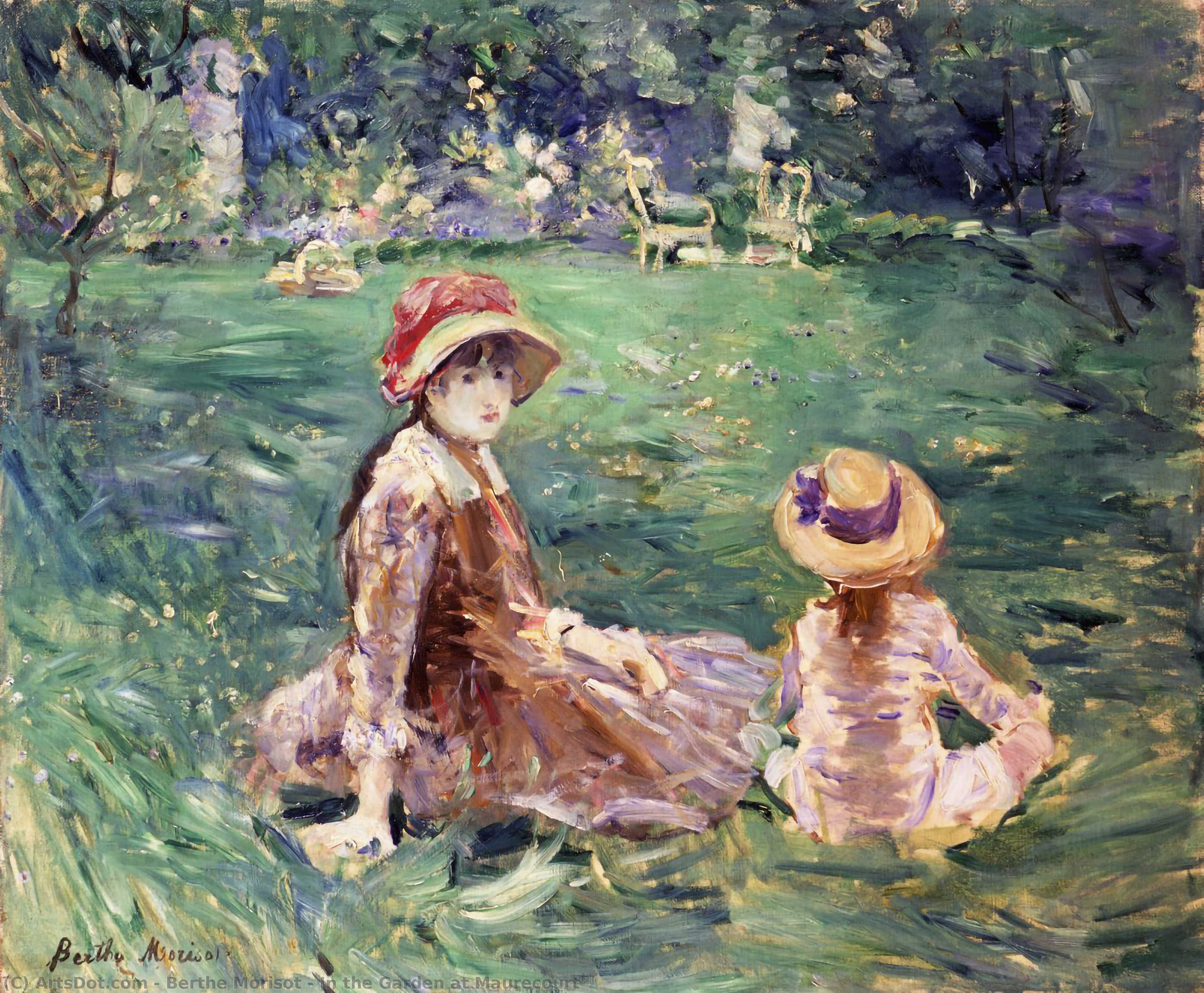
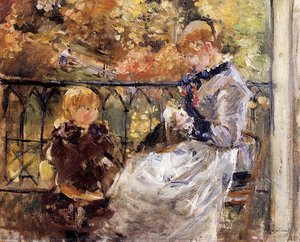
      In the Garden at Maurecourt (1884) tekijä Berthe Morisot
      5

      In the Garden at Maurecourt

      1884 · Oil On Canvas · Toledon taidemuseo, Toledo

      In the soft, dappled sunlight of a French afternoon, Berthe Morisot’s “In the Garden at Maurecourt” invites the viewer into a sanctuary of profound stillness. Completed in 1884, this masterpiece serves as a window into the Belle Époque, capturing a moment that feels both fleeting and eternal. The scene unfolds within a lush, verdant garden—likely the Morisot estate near Maurecourt—where two young figures, including the artist’s daughter Julie, are nestled…

      Portrait of Edma (1870) tekijä Berthe Morisot
      6

      Portrait of Edma

      1870 · Oil On Canvas · Courtauld Gallery, Lontoo

      In the soft, flickering light of a Parisian afternoon, Berthe Morisot captures more than just a likeness in her 1871 masterpiece, Portrait of Edma. This painting serves as a profound window into the intimate domesticity that defined much of the Impressionist movement’s early explorations. The subject, Edma Pontillon—Morisot’s own sister-in-law—is not presented with the stiff, formal grandeur typical of academic portraiture. Instead, she is nestled within a private, quiet moment,…

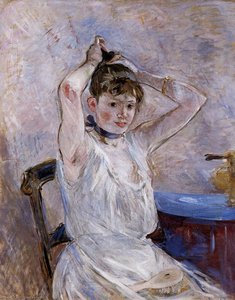
      The Bath (1886) tekijä Berthe Morisot
      7

      The Bath

      1886 · Oil On Canvas

      To stand before Berthe Morisot’s The Bath is to step into a moment suspended in time—a breath held within the soft glow of an afternoon indoors. This painting, executed in 1886, transcends a mere depiction of daily routine; it captures the very essence of private contemplation. The scene unfolds with remarkable delicacy: a woman seated amidst the quiet rituals of self-care, brushing her hair. Morisot does not merely record what…

      The Quay at Bougival (1883) tekijä Berthe Morisot
      8

      The Quay at Bougival

      1883 · Oil On Canvas · Nasjonalgalleriet, Oslo

      To gaze upon Berthe Morisot’s “The Quay at Bougival” is to step through a portal into the heart of French Impressionism, where the boundaries between reality and perception begin to dissolve. Completed in 1883, this exquisite oil on canvas serves as much more than a mere landscape; it is a rhythmic, breathing snapshot of life along the Seine. The scene captures the bustling waterfront of Bougival, a serene suburb of…

      Daffodils (1885) tekijä Berthe Morisot
      9

      Daffodils

      1885 · Oil On Canvas

      To stand before Berthe Morisot’s Daffodils is not merely to observe a still life; it is to step directly into a sun-drenched, breathlessly beautiful moment captured by the brush. Painted in 1885, this work radiates the delicate spirit of Impressionism, inviting the viewer into an intimate contemplation of nature’s cyclical promise. The composition centers on a simple arrangement: vibrant yellow daffodils gathered within a vase accented with cool blue hues,…

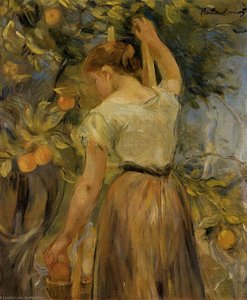
      Young Woman Picking Oranges (1889) tekijä Berthe Morisot
      10

      Young Woman Picking Oranges

      1889 · Oil On Canvas

      To stand before Berthe Morisot's Young Woman Picking Oranges is to step directly into a sun-dappled moment suspended in time. This exquisite oil on canvas, dating from 1889, is not merely a depiction of an afternoon chore; it is a lyrical meditation on leisure, femininity, and the very nature of light itself. Morisot, a central figure whose genius blossomed within the vibrant currents of Impressionism, captures life with an almost…

      Berthe Morisot paintings ranked 11 to 100

      The Garden at Bougival (1884) tekijä Berthe Morisot
      #11

      The Garden at Bougival

      1884 · Musée Marmottan Monet

      Berthe Morisot’s “The Garden at Bougival,” painted in 1884, is more than just a depiction of a sun-drenched garden; it's an intimate glimpse into the heart of the…

      Bring this light home →
      Woman in Black (1878) tekijä Berthe Morisot
      #12

      Woman in Black

      1878 · National Gallery of Ireland

      To stand before Berthe Morisot's Woman in Black is to step directly into the luminous, fleeting moments of late nineteenth-century Parisian life. This portrait, painted in 1878, transcends…

      Have it painted by hand →
      Little Dancer (1885) tekijä Berthe Morisot
      #14

      Little Dancer

      1885

      To stand before Berthe Morisot's Little Dancer is not merely to observe a painting; it is to step into a suspended moment of quiet contemplation. This exquisite oil…

      Order this canvas →
      Roses (1894) tekijä Berthe Morisot
      #15

      Roses

      1894

      In this 1894 oil on canvas, Berthe Morisot presents us with Roses, a quiet study within the flower painting genre. This work emerged during a period when the…

      Have it painted by hand →
      Mother and Sister of the Artist (1869) tekijä Berthe Morisot
      #17

      Mother and Sister of the Artist

      1869 · National Gallery of Art

      In the quiet corners of art history, few works capture the ephemeral beauty of domestic life as tenderly as Berthe Morisot’s 1869 masterpiece, "Mother and Sister of the…

      Order this canvas →
      Young Girl with Basket (1892) tekijä Berthe Morisot
      #18

      Young Girl with Basket

      1892 · Philadelphia Museum of Art

      In this 1892 oil on canvas, we find ourselves in a private, intimate space, observing a young girl seated in a wicker chair. She is captured in profile,…

      Have it painted by hand →
      Portrait of a Child (1894) tekijä Berthe Morisot
      #19

      Portrait of a Child

      1894 · Philadelphia Museum of Art

      A Luminous Encounter with Innocence Portrait of a Child unfolds in a soft, golden glow that seems to emanate from within the canvas itself. A young subject sits…

      Have it painted by hand →
      Young Girl with Hat (1891) tekijä Berthe Morisot
      #23

      Young Girl with Hat

      1891 · Art Institute of Chicago

      A young girl is captured in a moment of quietude, her form emerging from a dark, indistinct background. She is positioned slightly off-center, viewed from the waist up…

      Order this canvas →
      The Port of Nice (1882) tekijä Berthe Morisot
      #33

      The Port of Nice

      1882

      Painted during a pivotal moment in art history, “The Port of Nice” reflects the burgeoning Impressionist movement’s challenge to traditional academic painting. Berthe Morisot, alongside artists like Monet…

      Have it painted by hand →
      Port of Gorey (1886) tekijä Berthe Morisot
      #34

      Port of Gorey

      1886

      The Port of Gorey is a stunning oil on canvas painting by the renowned French artist Berthe Morisot, created in 1886. This beautiful representation of the ocean, measuring…

      Bring this light home →
      Leimukuori (1890) tekijä Berthe Morisot
      #35

      Leimukuori

      1890

      Berthe Morisotin ”Kahvi Kuppi”, jonka vuosi oli 1890, on mestariteos impressionistiselle taidekielelle. Tämä öljyväri maalauksessa näkyvä kuva yksinkertaisesta hetkestä – nuoren tyttön kahvin pidossa luonnon keskellä – vangitsee…

      Have it painted by hand →
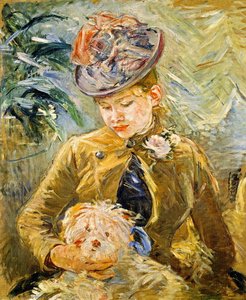
      Girl with a Dog (1887) tekijä Berthe Morisot
      #65

      Girl with a Dog

      1887

      Berthe Morisot's "Girl with a Dog," painted in 1887, is a captivating portrait that showcases her unique style and skill as an artist. This oil on canvas painting…

      Have it painted by hand →
      Hide and Seek (1873) tekijä Berthe Morisot
      #68

      Hide and Seek

      1873

      “Hide and Seek” is an oil on canvas painting created by Berthe Morisot in 1873, showcasing a beautiful depiction of everyday life in the 19th century. This artwork…

      Have it painted by hand →
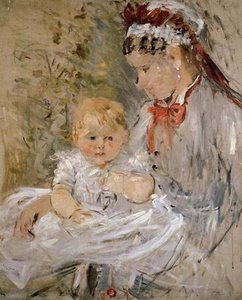
      Julie with Her Nurse (1880) tekijä Berthe Morisot
      #75

      Julie with Her Nurse

      1880 · Ny Carlsberg Glyptotek

      Berthe Morisot's Julie with Her Nurse, painted in 1880, is more than just a portrait; it’s a tender exploration of motherhood and domestic life within the burgeoning Impressionist…

      Have it painted by hand →
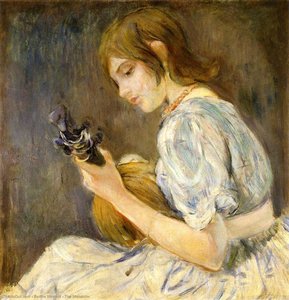
      The Mandolin (1889) tekijä Berthe Morisot
      #78

      The Mandolin

      1889

      In the delicate brushstrokes of Berthe Morisot’s The Mandolin, we find ourselves transported to a private, melodic moment captured within the fleeting essence of the Impressionist era. The…

      Order this canvas →
      Haying at Mezy (1891) tekijä Berthe Morisot
      #79

      Haying at Mezy

      1891

      Berthe Morisot's "Haying at Mezy," painted in 1891, is a captivating example of Impressionist art that transports viewers to the serene landscapes of rural France. This oil on…

      Have it painted by hand →
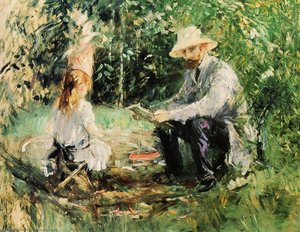
      Julie and Eugene Manet (1883) tekijä Berthe Morisot
      #80

      Julie and Eugene Manet

      1883

      To gaze upon Berthe Morisot’s Julie and Eugene Manet is to step directly into the luminous, fleeting moments of late nineteenth-century Parisian life. This oil on canvas, dating…

      Order this canvas →
      Rosbras (Finistere) (1866) tekijä Berthe Morisot
      #81

      Rosbras (Finistere)

      1866

      Berthe Morisot was a French painter and one of the leading figures in the Impressionist movement. Her painting, Rosbras (Finistère), created in 1866, is a beautiful representation of…

      Order this canvas →
      Child in the Rose Garden (1881) tekijä Berthe Morisot
      #86

      Child in the Rose Garden

      1881 · Wallraf-Richartz-Museum

      Berthe Morisot's Child in the Rose Garden, painted in 1881, is a quintessential example of Impressionism, capturing a fleeting moment of childhood innocence within a tranquil garden setting.…

      Have it painted by hand →
      The Basket Chair (1882) tekijä Berthe Morisot
      #87

      The Basket Chair

      1882 · Museum of Fine Arts

      The Basket Chair is an oil on canvas created by Berthe Morisot. This work emerged in 1882, capturing a quiet moment within the garden. The paint settles upon…

      Have it painted by hand →
      Peasant Girl among Tulips (1890) tekijä Berthe Morisot
      #88

      Peasant Girl among Tulips

      1890

      To gaze upon this depiction, Peasant Girl among Tulips, is to step directly into a sun-dappled moment suspended in time. The scene unfolds with an exquisite intimacy, centering…

      Order this canvas →
      Portrait of Jeanne Pontillon (1894) tekijä Berthe Morisot
      #89

      Portrait of Jeanne Pontillon

      1894 · Musée d'Art et d'Histoire de Genève

      The Portrait of Jeanne Pontillon is a stunning oil on canvas painting created by the renowned French artist Berthe Morisot in 1894. This beautiful piece of art measures…

      Order this canvas →

      Berthe Morisot's canvases, period by period

      Mature Impressionism

      1874 – 1890 · 3 teosta tässä luettelossa

      Impressionist period

      1865 – 1889 · 3 teosta tässä luettelossa

      What Berthe Morisot painted most

      The four subjects that return most often on these canvases, each with its best-loved example.

      Where Berthe Morisot's canvases hang

      Tämän sivun teoksista eniten sisältävät 8 museota.

      Museo Kaupunki Berthe Morisot teokset Tämän listan maalaukset
      Musée Marmottan Monet, PariisiMusée Marmottan Monet Pariisi 15 The Garden at Bougival, On the edge of the lake, In the apple tree
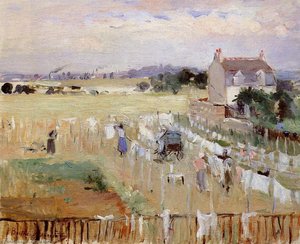
      National Gallery of Art, WashingtonNational Gallery of Art Washington 13 Two Sisters on a Couch (also known as The Sisters), Mother and Sister of the Artist, Hanging the Laundry out to Dry
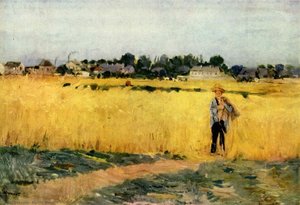
      Musée d'Orsay, PariisiMusée d'Orsay Pariisi 10 Kylväjä (The Cradle), On a Bench in the Bois de Boulogne, In the Wheatfield at Gennevilliers
      Wallraf-Richartz-Museum, KölnWallraf-Richartz-Museum Köln 3 Child among the Hollyhocks, Child in the Rose Garden
      Philadelphia Museum of Art, PhiladelphiaPhiladelphia Museum of Art Philadelphia 2 Young Girl with Basket, Portrait of a Child
      Museum of Fine Arts, HoustonMuseum of Fine Arts Houston 2 Young Woman, The Basket Chair
      Yale University Art Gallery, New HavenYale University Art Gallery New Haven 2 Young Woman and Child, The Harbor at Cherbourg
      Art Institute of Chicago, ChicagoArt Institute of Chicago Chicago 4 Young Girl with Hat

      Decade by decade: Berthe Morisot's most celebrated canvas

      1. 1860s
        Thatched Cottage in Normandy (1865) tekijä Berthe Morisot
        3 of 100

        Thatched Cottage in Normandy

        Ikä 19–28

        To stand before Berthe Morisot’s depiction of a Thatched Cottage in Normandy is to step through a veil and into the gentle embrace of a bygone French afternoon.…

      2. 1870s
        Kylväjä (The Cradle) (1872) tekijä Berthe Morisot
        Ranked 1 of 100

        Kylväjä (The Cradle)

        Ikä 29–38 · Musée d'Orsay

        Berthe Morisot, syntynyt Bourgesissa vuonna 1841, ei ollut pelkästään Impressionismin merkittävä hahmo, vaan myös nainen, joka loi taidetta poikkeuksellisen rohkeasti ja omaperäisesti. Hänen tarinansa ulottuu paljon yksinkertaisen "naisten…

      3. 1880s
      4. 1890s
        Roses (1894) tekijä Berthe Morisot
        Canvas 15 of 100

        Roses

        Ikä 49–54

        In this 1894 oil on canvas, Berthe Morisot presents us with Roses, a quiet study within the flower painting genre. This work emerged during a period when the…

      Your questions on Berthe Morisot's paintings, answered

      Which is the most celebrated painting by Berthe Morisot?Read the answer

      Kylväjä (The Cradle) (1872), Musée d'Orsay, Pariisi. "A Corner of the Rose Garden" - Kukan keskellä oleva pieni nurkka (1885) and Thatched Cottage in Normandy (1865) follow.

      How old was Berthe Morisot at the time of Kylväjä (The Cradle)?Read the answer

      Berthe Morisot, born in 1841, was 31 years old: Kylväjä (The Cradle) dates from 1872.

      Which ten paintings is Berthe Morisot most famous for?Read the answer

      Kylväjä (The Cradle), "A Corner of the Rose Garden" - Kukan keskellä oleva pieni nurkka, Thatched Cottage in Normandy, Study, The Water's Edge, In the Garden at Maurecourt, Portrait of Edma, The Bath, The Quay at Bougival, Daffodils ja Young Woman Picking Oranges. Each canvas in the ranking above comes with its year and its museum.

      How many paintings by Berthe Morisot are known?Read the answer

      361 works by Berthe Morisot are in our catalogue, dated 1863 to 1894.

      Which museums hold Berthe Morisot's best-known canvases?Read the answer

      Mostly in Musée Marmottan Monet (Pariisi), National Gallery of Art (Washington) ja Musée d'Orsay (Pariisi); the list above names each museum and its canvases.

      In which years did Berthe Morisot paint the most celebrated canvases?Read the answer

      In 1880s, which gave 35 of the 100 works on this page, "A Corner of the Rose Garden" - Kukan keskellä oleva pieni nurkka among them.

      What are the first and the last of Berthe Morisot's famous canvases?Read the answer

      The earliest canvas here is Memory of the Banks of l'Oise (1863); the latest is Roses (1894).

      Which subjects return most often in Berthe Morisot's paintings?Read the answer

      Portrait (14), Women (12) ja Domestic scene (10), across the 100 works on this page.

      What did Berthe Morisot usually paint with?Read the answer

      Oil On Canvas, used in 39 of the 100 works on this page.

      To which art movement does Berthe Morisot belong?Read the answer

      Impressionist style, as the canvases on this page show.

      What can I see by Berthe Morisot at the Musée Marmottan Monet?Read the answer

      The Musée Marmottan Monet, Pariisi holds 4 of the works on this page, among them The Garden at Bougival, On the edge of the lake ja In the apple tree.

      Can I order a hand-painted copy of a painting by Berthe Morisot?Read the answer

      Yes. Every painting on this page can be ordered from its own page as an oil reproduction painted by hand, or as a fine art print, in the size you choose.

      Berthe Morisot: the painter's story

      Varhaisluonnon, perheen ja taiteellisen koulutuksen muotokuva

      Berthe Morisot syntyi 14. tammikuuta 1841 Bourgesissa, Ranskassa. Hän kasvoi varakkaassa porvarisperheessä, jossa kodin arkinen elämä ja taiteen maailma kietoutuivat usein toisiinsa tavalla, joka hämärsi rajat yksityisen ja luovan välillä. Hänen isänsä, Edmé Tiburce Morisot, toimi Cher’n departementin prefektinä, kun taas äiti Marie-Joseph-Cornélie Thomas toi perheeseen syvän yhteyden rokokoo-perinteeseen ollen Jean-Honoré Fragonardin sisarentytär. Tämä sukulaisuus loi taiteellisen jatkumon ja tuttuuden ilmapiirin, joka ympäröi häntä jo hänen varhaisista vuosistaan lähtien.

      Hänen taiteellinen polkunsa sai alkunsa yksityisopetuksista, joita antoivat Geoffroy-Alphonse Chocarne ja Joseph Guichard. Vuoteen 1858 mennessä hän vietti suuren osan ajastaan Louvressa, missä hän opetteli maalaamisen mekaniikkaa ja värien hallintaa kopioimalla vanhoja mestareita. Tätä syventävää opiskelujaksoa täydensivät Jean-Baptiste-Camille Corot ja Achille-Francois Oudinot, joiden ohjaus muovasi hänen näkemystään. Talvella 1863–64 hän suuntasi katseensa myös fyysiseen muotoon ja kolmiulotteisuuteen opiskellen kuvanveistoa Aimé Milletin johdolla.

      Impressionistiliike ja näyttelyt

      Vuonna 1864 Morisot esitteli teoksensa ensimmäistä kertaa Pariisin Salongissa. Se oli merkittävä askel, sillä Salon toimi taidemaailman virallisena portinvartijana. Hän ei kuitenkaan jäänyt vangiksi näihin perinteisiin tiloihin. Sen sijaan hänestä tuli osa Pariisin taidemaalaajien piiriä, joka tulisi lopulta tuntemaan nimellä impressionistit. Hänen läsnäolonsa tässä ryhmässä oli jatkuvaa; vuosien 1874 ja 1886 välisenä aikana hän osallistui kahdeksasta impressionistien näyttelystä seitsemään.

      Näistä kokoontumisista ensimmäinen järjestettiin valokuvaaja Nadarin studiolla. Näyttely avattiin 15. huhtikuuta ja se jatkui 15. toukokuuta 1974 asti. Tämä näyttely oli merkittävä poikkeama ajan vakiintuneista normeista. Morisot oli paikalla muiden taiteilijoiden rinnalla, auttaen määrittelemään uutta tapaa nähdä maailma. Hän jatkoi näyttelyyn osallistumista ryhmän kanssa, tuoden oman ainutlaatuisen näkökulmansa lukuisin eri esityksiin, joita järjestettiin seuraavan vuosikymmenen aikana.

      Henkilökohtainen elämä ja yhteys Manetiin

      Berthe Morisotin yksityisen elämän ja taiteen väliset rajat olivat usein hämärtyneet. Hän kasvoi kodissa, jossa oli kaksi vanhempaa sisarta, Yves ja Edma, sekä nuorempi veli, Tiburce. Vuonna 1868 hän tutustui Édouard Manetiin, ja tästä kohtaamisesta kasvoi syvä, keskinäinen vaikutus. Manet maalasi häntä useita kertoja vangiten hänet erilaisissa asuissa ja mielentiloissa, kun taas Morisot löysi oman polkunsa Pariisin jatkuvasti muuttuvan valon keskellä. Heidän suhteensa oli älyllisen vaihdon ja yhteisen taiteellisen päämäärän täyttämä liitto.

      Vuonna 1874 Morisot avioitui Édouardin veljen, Eugène Manetin, kanssa. Tämä liitto syvensi entisestään hänen asemiaan taiteilijapiirissä, joka oli parhaillaan määrittelemässä modernin maalaustaiteen uudelleen. Vuonna 1878 Pariisissa syntyi tytär, Julie Manet. Julie kasvoi kodissa, jossa arjen kotiympäriston ja avantgarden radikaalien väittelyiden väliset rajat olivat ohuet; hän oli usein läsnä juuri niissä huoneissa, joissa taidetta luotiin ja siitä keskusteltiin.

      Tekniikka ja taiteellinen tyyli

      Berthe Morisotin lähestymistapa kankaaseen perustuu kosketuksen keveyteen ja ilmavuuteen. Hän työskenteli usein ulkona hyödyntäen plein air -menetelmää, jotta hän voisi vangita valon ja ilmakehän jatkuvasti muuttuvan luonteen suoraan luonnosta. Tämä ulkoilmassa työskentelyn tapa mahdollisti värien ohimenevien vivahteiden kääntämisen kankaalle löysillä ja itsevarmoilla vedoilla. Hänen siveltimenjälkensä on sulavaa, liikkuen pinnalla välittömyyden tuntua luoden, välttäen raskaita ja työläisesti kerrostettuja maalipintoja. Hän ei luottanut ainoastaan öljyväreihin; hänen taiteellinen harjoittelunsa sisälsi myös vesivärin ja pastellin käytön, jotta hän saattoi tutkia erilaisia tekstuureja ja valon vaikutuksia.

      Hänen tavansa käsitellä aiheidensa reunoja on ainutlaatuinen. Jyrkkien ja selkeiden ääriviivojen sijaan hän käyttää rikkonutta väriä ja pieniä pigmenttivetoja muodon rakentamiseen. Tämä tekniikka luo kimaltelevan vaikutelman, joka tekee kohteiden välisestä ilmasta yhtä käsin kosketeltavan kuin itse kohteet. Kotielämän kuvauksissaan tämä menetelmä vangitsee ihon pehmeän hehkun tai tavan, jolla valo siivilöityy puutarhan läpi. Lopputuloksena on spontaaniuden tuntu, kuin kohtaus olisi tallennettu yhdellä, kiireettömällä havainnon hetkellä.

      Keskeiset teokset ja ikoniset maalaukset

      Vuonna 1872 Morisot maalasi The Cradle -teoksen, öljyvärimaalauksen, joka vangitsee hänen sisarensa Edman valvomassa nukkuvaa tytärtään, Blanchea. Sommitelma hyödyntää äidin katseen ja kehdossa olevan kankaan muodostamaa diagonaalista linjaa ohjatakseen katsojan silmän suoraan vastasyntyneeseen. Tämä teos merkitsee ensimmäistä kertaa, kun hän tutki äitiyden teemaa; hän käytti pelkistettyä väripalettia ja sulavaa siveltimenjälkeä luodakseen hiljaisen, suojelevan rakkauden ilmapiirin.

      Morisotin läsnäolo toistuu usein muiden taiteilijoiden teoksissa, mutta merkittävin hetki koottiin vuonna 1872, kun Édouard Manet maalasi Berthe Morisot with a Bouquet of Violets -muotokuvan. Tässä teoksessa hän on pukeutunut mustaan suruvaatteeseen, ja hänen kaulansa läheisyydessä näkyy tuskin huomaamatta violettikimppu. Valo lankeaa häneen sivulta, jättäen kasvot puoliksi syvään varjoon. Tämä mustien sävyjen tutkimus korostaa voimakkaasti kontrastia tumman vaatetuksen ja vaaleamman taustan välillä.

      Muita merkittäviä teoksia ovat:

      Uran myöhemmässä vaiheessa hän loi The Hydrangea -teoksen vuonna 1894. Hänen kykynsä kääntää valon ja värin vivahteet vapailla, itsevarmoilla vedoilla pysyi muuttumattomana läpi koko hänen pitkän maalausuransa.

      Missä hänen teoksiaan voi nähdä tänään

      Jos haluat todella kohdata Berthe Morisotin ainutlaatuisen siveltimen jäljen, matka kannattaa aloittaa Pariisista. Musée d'Orsay kätkee sisäänsä kuusi hänen maalaustaan, joista yksi on koskettava The Cradle. Tämä vuonna 1872 syntynyt teos vangitsee hetken, jossa hänen sisarensa Edma valvoo nukkuvaa lastaan. Myös Musée Marmottan Monet on säilyttänyt kokoelmissaan viisi hänen teostaan, tarjoten syvällisen kurkistuksen hänen taiteelliseen maailmaansa.

      Ranskan rajojen ulkopuolella Morisotin taiteellinen perintö elää voimakkaasti Washington D.C.:ssä. National Gallery of Art on koti kuudelle hänen maalauksilleen. Tämän arvokkaan kokoelman loistona toimii vuonna 1869 maalattu Mother and Sister of the Artist. Washingtonin kokoelmista löytyy myös muita kiehtovia teoksia, kuten vuonna 1875 luodut In the Dining Room ja Hanging the Laundry out to Dry, jotka molemmat heijastavat hänen kykynsään vangita arjen intiimejä hetkiä.

      Muutamat hänen teoksistaan ovat löytäneet tiensä kauemmas, kuten Madridin Thyssen-Bornemisza Museum ja Tukholman Nationalmuseum. Nämä teokset tarjoavat mahdollisuuden hiljaiseen ja pohdiskelevaan kohtaamiseen sen kanssa, kuinka Morisot hallitsi valon leikin ja kodinomaiset kohtaukset hyvin erilaisissa ympäristöissä.

      Kaikki 361 teosta taiteilijalta Berthe Morisot →