Atelier — Ilmainen toimitus ympäri maailman — Toimitusaika 2–6 viikkoa
      Joaquín Sorolla, 1863 – 1923

      The 100 Most Famous Joaquín Sorolla Paintings, Ranked

      The best-loved painting by Joaquín Sorolla is Walk on the Beach (Paseo a orillas del mar) (1909), which hangs in the Sorolla Museum, Madrid. Valencia beach in the morning light (1908) and Yo soy el pan de la vida (also known as I am the Bread of Life) (1897) come next among the canvases readers know best. Our catalogue holds 969 works by Joaquín Sorolla: here are the 100 most famous, each with its year, its museum and what makes it memorable.

      Sijoitus perustuu suosiotulokseemme, joka yhdistää kunkin teoksen hakuja, vierailuja ja tilauksia. Päivitetty lokakuu 2026. Each painting on this page can be ordered as an oil reproduction painted by hand on linen canvas, or as a fine art print, made to the size you choose.

      Joaquín Sorolla muotokuva
      Joaquín Sorolla · 1863 – 1923
      Syntynyt · kuollut
      1863 – 1923, Valencia
      Taidesuuntaus
      Impressionistinen maisema
      Teokset valikoimassamme
      969
      Tunnetuimmat
      Walk on the Beach (Paseo a orillas del mar) (1909)
      Eniten teoksia kohteessa
      Hispanic Society Museum - Library

      Top 10 Joaquín Sorolla paintings: the canvases everyone knows

      Walk on the Beach (Paseo a orillas del mar) (1909) tekijä Joaquín Sorolla
      1

      Walk on the Beach (Paseo a orillas del mar)

      1909 · Oil On Canvas · Sorolla Museum, Madrid

      A Sun-Drenched Moment: Joaquín Sorolla’s “Walk on the Beach” Joaquín Sorolla y Bastida, a name synonymous with the vibrant luminosity of Spanish light and life, gifted us with countless canvases brimming with joy and an almost palpable sense of summer. Among his most beloved works stands "Walk on the Beach" (Paseo a la orilla del mar), painted in 1909, a captivating tableau that transcends mere representation to become a profound…

      Valencia beach in the morning light (1908) tekijä Joaquín Sorolla
      2

      Valencia beach in the morning light

      1908 · Oil On Canvas · Hispanic Society Museum - Library, New York

      In the soft, burgeoning glow of a Mediterranean dawn, Joaquín Sorolla y Bastida captures more than just a landscape; he captures the very breath of life. Valencia Beach in the Morning Light, completed in 1908, stands as a breathtaking testament to Spanish Impressionism, inviting the viewer to step into a world where the boundary between sea and sky dissolves into pure luminosity. As one gazes upon this masterpiece, there is…

      Yo soy el pan de la vida (also known as I am the Bread of Life) (1897) tekijä Joaquín Sorolla
      3

      Yo soy el pan de la vida (also known as I am the Bread of Life)

      1897 · Oil On Canvas

      Joaquín Sorolla y Bastida's "Yo soy el pan de la vida," also known as "I am the Bread of Life," is a monumental oil on canvas painting completed in 1897. Measuring an impressive 415 x 533 cm, this artwork depicts a pivotal moment from the New Testament – Jesus Christ addressing a large crowd near the Sea of Galilee. The scene is dynamic and bustling, filled with numerous figures rendered…

      The Pink robe tekijä Joaquín Sorolla
      4

      The Pink robe

      Oil On Canvas

      To step into the world of Joaquín Sorolla y Bastida is to step directly into the radiant warmth of a Mediterranean afternoon. His masterpiece, "The Pink Robe," transcends mere depiction; it embodies the very essence of Impressionism, capturing a moment suspended in time—a quiet dialogue between two women bathed in the golden glow of sunlight. Painted circa 1908-1909, this artwork offers an unparalleled glimpse into Sorolla's masterful vision, where light…

      Extremadura, The Market (1917) tekijä Joaquín Sorolla
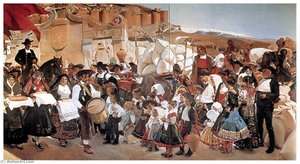
      5

      Extremadura, The Market

      1917 · Oil On Canvas · Hispanic Society Museum - Library, New York

      In the grand tapestry of Spanish Impressionism, few works capture the pulse of a nation as vibrantly as Joaquín Sorolla y Bastida’s “Extremadura, The Market.” Completed in 1917, this monumental oil on canvas is far more than a mere depiction of commerce; it is a breathtaking window into the soul of rural Spain. As part of his celebrated Vision of Spain series, Sorolla transcends the boundaries of traditional genre painting…

      Kävely rannikolla (1909) tekijä Joaquín Sorolla
      6

      Kävely rannikolla

      1909 · Öljyväri kankaalle · Sorolla Museum, Madrid

      Joaquín Sorolla y Bastidan ”Rantatöihin”, joka on maalattu vuonna 1909, ei ole pelkkä kuvaus kesäisestä iltapäivästä; se on valon, liikkeen ja arjen katoavan kauneuden hienostunut tiivistymä. Teos syntyi espanjalaismaalarille valtavan taiteellisen menestyksen aikana – hänen kuuluisien näyttelyidensä jälkeen Amerikassa – ja se edustaa käännekohtaa Sorollan tyylissä. Maalari siirtyi kohti impressionistisempaa ja herättävämpää lähestymän tapaa säilyttäen kuitenkin ainutlaatuisen mestaruutensa vangita eloisia värejä ja ilmakehän syvyyttä. Maalaus kuljettaa meidät aurinkoiseen valencialaiselle rannalle,…

      The Smugglers (1919) tekijä Joaquín Sorolla
      7

      The Smugglers

      1919 · Oil On Canvas

      To gaze upon Joaquín Sorolla y Bastida’s 1919 masterpiece, "The Smugglers," is to step directly into the radiant embrace of a Spanish summer. This expansive canvas, measuring an impressive 84 x 165 cm, does far more than merely depict a coastal scene; it serves as a profound sensory experience, capturing the very soul of the Mediterranean coast near Ibiza. Sorolla, often revered as the "Master of Light," utilizes the shimmering…

      Lighthouse walk at Biarritz (1906) tekijä Joaquín Sorolla
      8

      Lighthouse walk at Biarritz

      1906 · Oil On Canvas · Museum of Fine Arts, Boston

      In the luminous masterpiece Lighthouse Walk at Biarritz, Joaquín Sorolla y Bastida invites us into a world where the boundaries between reality and impression dissolve into a golden haze. Completed in 1906, this breathtaking canvas is far more than a mere depiction of a seaside stroll; it is a profound celebration of the Spanish Belle Époque, captured with an unparalleled mastery of light. As we gaze upon the scene, we…

      Clotilde on the Beach (1904) tekijä Joaquín Sorolla
      9

      Clotilde on the Beach

      1904 · Acrylic On Canvas · Sorolla Museum, Madrid

      Joaquín Sorolla’s “Clotilde on the Beach,” painted in 1904, isn't merely a depiction of a seaside scene; it’s an immersion into the heart of Spanish summer – a vibrant distillation of light, color, and the quiet joy of family life. Sorolla, a master of *plein air* painting, captures a fleeting moment with breathtaking immediacy, transporting the viewer to the warm sands of Valencia's Playa de El Cabanyal. The canvas breathes…

      Messalina in the Arms of the Gladiator (1886) tekijä Joaquín Sorolla
      10

      Messalina in the Arms of the Gladiator

      1886 · Oil

      The ground is a bed of scattered flora and heavy silence. A woman lies motionless, her hair woven with blossoms that seem to hold the weight of her stillness. She is a pale shape against the earth, appearing either lost in a deep unconsciousness or surrendered to death. Above her, a man looms, his presence defined by the sharp edge of a knife held in his hand. The outdoor setting…

      More Joaquín Sorolla canvases, 11 to 100

      The Cry of El Palleter (1884) tekijä Joaquín Sorolla
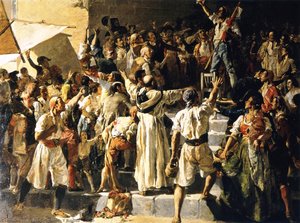
      #12

      The Cry of El Palleter

      1884 · Palau de la Generalitat

      To step into the world of Joaquín Sorolla y Bastida is to surrender oneself to the radiant warmth of the Mediterranean sun. In his 1884 masterpiece, "The Cry…

      Order this canvas →
      Promenade by the Sea (1909) tekijä Joaquín Sorolla
      #13

      Promenade by the Sea

      1909

      A Symphony of Light and Leisure: Exploring Joaquín Sorolla’s Promenade by the Sea Joaquín Sorolla y Bastida stands as one of Spain's most beloved Impressionist painters, celebrated for…

      Bring this light home →
      Self-portrait (1909) tekijä Joaquín Sorolla
      #16

      Self-portrait

      1909 · Sorolla Museum

      Joaquín Sorolla y Bastida's 1909 self-portrait is more than just a likeness; it’s a potent distillation of the artist’s life, his spirit, and the very essence of Spain…

      Have it painted by hand →
      Iltapäivän lepo (1911) tekijä Joaquín Sorolla
      #20

      Iltapäivän lepo

      1911 · Sorolla Museum

      Joaquín Sorolla y Bastida (1863–1923) seisoo yhtenä Espanjan arvostetuimmista impressionisteista, maalarina, jonka kankaat vangitsevat välimerellisen elämän olemuksen vertaansa vailla olevalla valoisuudella ja välittömyydellä. Hänen tuotantoaan leimaa pakkomielle ohikiitävien…

      Bring this light home →
      Rocks of the Cape, Javea (1905) tekijä Joaquín Sorolla
      #23

      Rocks of the Cape, Javea

      1905 · Hispanic Society Museum - Library

      To gaze upon Joaquín Sorolla y Bastida’s 1905 masterpiece, "Rocks of the Cape, Javea," is to step directly into the radiant embrace of a Spanish summer. This oil…

      Bring this light home →
      Valencian Fisherwomen (1915) tekijä Joaquín Sorolla
      #27

      Valencian Fisherwomen

      1915

      This oil on canvas painting by Joaquín Sorolla depicts a bustling scene on the coast, where a group of women stands in the water near several boats. The…

      Order this canvas →
      Kalastusverkkoja (1893) tekijä Joaquín Sorolla
      #28

      Kalastusverkkoja

      1893

      Joaquin Sorolla y Bastida – nimi, joka on synonyymi Espanjan kirkkaudelle ja eloisuudelle – oli paljon enemmän kuin pelkkä maalaaja; hän oli tarkkaan dokumentoinut kansansa sielun. Syntynyt Valencian…

      Have it painted by hand →
      Swimmers, Javea (1905) tekijä Joaquín Sorolla
      #32

      Swimmers, Javea

      1905

      The painting depicts two people swimming in the ocean. The first person is positioned on the left side of the canvas, while the second person is on the…

      Order this canvas →
      My Kids (1897) tekijä Joaquín Sorolla
      #39

      My Kids

      1897

      Joaquín Sorolla y Bastida’s "My Kids" is not merely a depiction of three children; it is an effusion of pure, untainted joy captured on canvas. Completed in 1897,…

      Have it painted by hand →
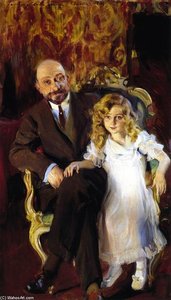
      Manuel B. Cossio (1908) tekijä Joaquín Sorolla
      #40

      Manuel B. Cossio

      1908

      Subject and Composition The canvas presents a dignified figure, Manuel B. Cossio, rendered in a crisp suit and tie that speaks of early twentieth‑century Spanish professionalism. His stern…

      Have it painted by hand →
      Tipos de Salamanca (1912) tekijä Joaquín Sorolla
      #41

      Tipos de Salamanca

      1912

      A Study in Spanish Identity Three figures are arranged within a shallow, formal space, dressed in traditional Spanish attire. The composition centers on these individuals, utilizing organic lines…

      Bring this light home →
      Valenciavälaattori (1916) tekijä Joaquín Sorolla
      #42

      Valenciavälaattori

      1916

      Joaquin Sorollan "Valencian Fisherman" ei ole pelkästään maisemamaalaus; se on syvä sukellus Espanjan valoon ja elämään. Vuonna 1895 luotu teos vangitsee hetken Valencian rannalta – kalastajan, joka pysähtyy…

      Have it painted by hand →
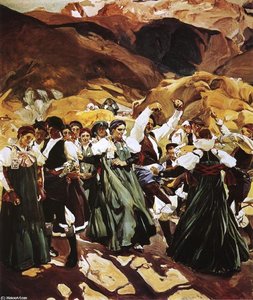
      The Jota (Aragon) (1914) tekijä Joaquín Sorolla
      #43

      The Jota (Aragon)

      1914 · Hispanic Society Museum - Library

      A Symphony of Light and Spanish Spirit: Joaquín Sorolla’s “The Jota (Aragon)” Joaquín Sorolla y Bastida, a painter inextricably linked with the radiant heart of Spain, gifted us…

      Have it painted by hand →
      The Painter's Studio (1888) tekijä Joaquín Sorolla
      #50

      The Painter's Studio

      1888

      To stand before Joaquín Sorolla y Bastida's The Painter's Studio is to step directly into a moment suspended in golden light, a breath held within the vibrant tapestry…

      Bring this light home →
      After a Bathe tekijä Joaquín Sorolla
      #53

      After a Bathe

      Hispanic Society Museum - Library

      Joaquin Sorolla y Bastida stands as one of Spain’s most beloved painters, celebrated for his luminous canvases that effortlessly blend realism with an ethereal quality—a hallmark of his…

      Order this canvas →
      The Two Sisters (1909) tekijä Joaquín Sorolla
      #54

      The Two Sisters

      1909 · Art Institute of Chicago

      In the luminous realm of Joaquín Sorolla y Bastida, light is not merely an element of the landscape; it is the very soul of the canvas. His 1909…

      Bring this light home →
      Fiesta Gallega tekijä Joaquín Sorolla
      #57

      Fiesta Gallega

      Joaquín Sorolla y Bastida's *Fiesta Gallega* (1907) is more than just a depiction of a rural Spanish gathering; it’s an embodiment of the vibrant spirit of Spain itself.…

      Have it painted by hand →
      La bendicion de Isaac tekijä Joaquín Sorolla
      #58

      La bendicion de Isaac

      In the profound stillness of La bendición de Isaac, Joaquín Sorolla y Bastida captures a pivotal moment from Hebrew tradition. The painting depicts the patriarch Isaac, now aged…

      Order this canvas →
      At the Pool in the Artist (1898) tekijä Joaquín Sorolla
      #60

      At the Pool in the Artist

      1898 · Museo de Arte de Ponce

      Joaquín Sorolla y Bastida’s “At the Pool in the Artist’s Garden,” painted in 1898, isn’t merely a depiction of a summer afternoon; it’s an immersion into the very…

      Have it painted by hand →
      The Siesta (1911) tekijä Joaquín Sorolla
      #62

      The Siesta

      1911

      Joaquin Sorolla y Bastida’s “The Siesta,” completed in 1911, transcends mere depiction; it embodies a philosophy – the deliberate embrace of stillness and beauty found within the simplest…

      Bring this light home →
      Maria la guapa (1914) tekijä Joaquín Sorolla
      #64

      Maria la guapa

      1914

      Joaquín Sorolla's 1914 painting, *Maria la Guapa*, isn't merely a portrait; it’s an immersion into the heart of Spain’s golden age. This captivating work, depicting a young woman…

      Order this canvas →
      Sea Idyll (1908) tekijä Joaquín Sorolla
      #65

      Sea Idyll

      1908 · Hispanic Society Museum - Library

      Joaquin Sorolla y Bastida, a pivotal figure in late 19th and early 20th century Spanish art, possessed an extraordinary gift for capturing the ephemeral beauty of light and…

      Order this canvas →
      The Kiss (1899) tekijä Joaquín Sorolla
      #66

      The Kiss

      1899

      The Kiss by Joaquín Sorolla Y Bastida: A Moment of Spanish Light Subject Matter: Joaquin Sorolla’s “The Kiss” is an exquisite portrayal of intimacy and reverence, depicting a…

      Have it painted by hand →
      My Children (1904) tekijä Joaquín Sorolla
      #67

      My Children

      1904 · Museo Sorolla

      Joaquín Sorolla’s “My Children,” painted in 1904, isn't merely a portrait; it’s an immersion into the heart of a sun-drenched Spanish afternoon. The scene unfolds within a modest…

      Have it painted by hand →
      Children on the Seashore (1903) tekijä Joaquín Sorolla
      #68

      Children on the Seashore

      1903 · Philadelphia Museum of Art

      The Painting's Essence Joaquín Sorolla y Bastida's Children on the Seashore, created in 1903, is a beautiful depiction of children playing on the beach near the ocean. The…

      Have it painted by hand →
      Maria Planas de Gil (1906) tekijä Joaquín Sorolla
      #69

      Maria Planas de Gil

      1906

      Joaquín Sorolla's ‘Maria Planas de Gil,’ painted in 1906, is more than simply a portrait; it’s an exquisite distillation of the Spanish light that defined his oeuvre and…

      Have it painted by hand →
      Ramón Pérez de Ayala (1920) tekijä Joaquín Sorolla
      #71

      Ramón Pérez de Ayala

      1920 · Hispanic Society Museum - Library

      In the luminous realm of Spanish Impressionism, few works capture the intersection of human character and atmospheric brilliance as profoundly as Joaquín Sorolla y Bastida’s 1920 masterpiece, Ramón…

      Order this canvas →
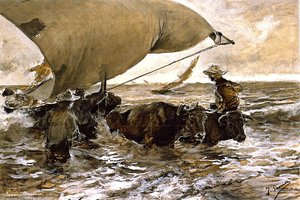
      The Return from the Fishing (1898) tekijä Joaquín Sorolla
      #73

      The Return from the Fishing

      1898 · National Museum of Fine Arts

      Joaquín Sorolla y Bastida's “The Return from the Fishing,” completed in 1898, isn’t merely a depiction of a seaside scene; it’s an embodiment of Impressionism at its finest—a…

      Have it painted by hand →
      Under the awning, Zarauz (1910) tekijä Joaquín Sorolla
      #74

      Under the awning, Zarauz

      1910 · Saint Louis Art Museum

      Joaquin Sorolla y Bastida's "Under the Awnings, Zarauz," painted in 1910, is a captivating Impressionist work that transports viewers to a sun-drenched beach scene in Spain. Housed within…

      Have it painted by hand →
      Fisherwomen (1911) tekijä Joaquín Sorolla
      #75

      Fisherwomen

      1911

      Introduction to the Artist and Painting Joaquín Sorolla y Bastida, a renowned Spanish painter, is celebrated for his vivid depictions of everyday life in Spain. One of his…

      Order this canvas →
      Penitents, Holy Week, Seville (1914) tekijä Joaquín Sorolla
      #76

      Penitents, Holy Week, Seville

      1914 · Hispanic Society Museum - Library

      Joaquín Sorolla y Bastida's "Penitents, Holy Week, Seville," painted in 1914, is a captivating oil on canvas that transports viewers to the heart of Spain’s deeply rooted religious…

      Bring this light home →
      Swimmers, Jávea (1905) tekijä Joaquín Sorolla
      #77

      Swimmers, Jávea

      1905 · Sorolla Museum

      Joaquin Sorolla y Bastida's "Swimmers, Jávea," painted in 1905, isn’t merely a depiction of two women enjoying the Mediterranean Sea; it’s an exquisite distillation of light, movement, and…

      Bring this light home →
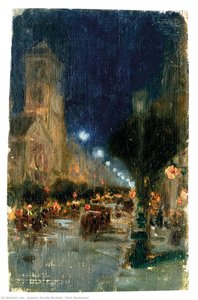
      Paris Boulevard (1885) tekijä Joaquín Sorolla
      #79

      Paris Boulevard

      1885 · Sorolla Museum

      Joaquin Sorolla y Bastida’s “Paris Boulevard,” painted in 1885, isn’t merely a depiction of a city street at night; it’s an immersive experience. Captured during his formative years…

      Have it painted by hand →
      Joaquín (1917) tekijä Joaquín Sorolla
      #80

      Joaquín

      1917 · Sorolla Museum

      Joaquín Sorolla’s 1917 painting, “Joaquín,” isn't merely a likeness; it’s a carefully constructed tableau vivant, capturing the essence of early 20th-century Spanish society and the burgeoning spirit of…

      Bring this light home →
      La siesta (1912) tekijä Joaquín Sorolla
      #82

      La siesta

      1912

      Joaquín Sorolla’s “La Siesta,” painted in 1912, is more than just a depiction of women resting outdoors; it's an embodiment of the Spanish spirit – a celebration of…

      Have it painted by hand →
      Wounded foot (1909) tekijä Joaquín Sorolla
      #84

      Wounded foot

      1909

      Joaquín Sorolla y Bastida's “Wounded Foot,” painted in 1909, transcends mere depiction; it embodies the very essence of Impressionism and offers a poignant glimpse into the spirit of…

      Order this canvas →
      Seville, the Bullfighters (1915) tekijä Joaquín Sorolla
      #85

      Seville, the Bullfighters

      1915 · Hispanic Society Museum - Library

      Seville, the Bullfighters is a captivating oil on panel painting created in 1915 by the renowned Spanish artist Joaquín Sorolla y Bastida. Measuring an impressive 350 x 231…

      Order this canvas →
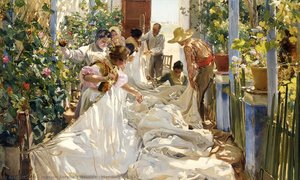
      Mending the Sail (1896) tekijä Joaquín Sorolla
      #86

      Mending the Sail

      1896

      Joaquín Sorolla Y Bastida, a name synonymous with the radiant light and vibrant energy of Spain, was more than just a painter; he was a chronicler of his…

      Order this canvas →
      La vuelta de la pesca (1894) tekijä Joaquín Sorolla
      #88

      La vuelta de la pesca

      1894

      Introduction Joaquín Sorolla y Bastida, a renowned Spanish painter, created the captivating oil on canvas painting titled La Vuelta de la Pesca. This artwork is a testament to…

      Have it painted by hand →
      Maria in a Red Blouse (1910) tekijä Joaquín Sorolla
      #90

      Maria in a Red Blouse

      1910

      Joaquin Sorolla’s “Maria in a Red Blouse,” painted in 1910, is more than just a portrait; it's an exquisite distillation of light, emotion, and the Spanish spirit. This…

      Order this canvas →
      On the coast of Biarritz (1906) tekijä Joaquín Sorolla
      #91

      On the coast of Biarritz

      1906

      The painting depicts a lively seaside scene, capturing the essence of leisure and summertime joy. At its core is a group of figures – three prominent individuals standing…

      Order this canvas →
      Beneath the Canopy tekijä Joaquín Sorolla
      #93

      Beneath the Canopy

      Joaquín Sorolla y Bastida's "Beneath the Canopy" is more than just a depiction of a sun-drenched beach; it’s an embodiment of the Spanish spirit – vibrant, joyful, and…

      Order this canvas →
      untitled (2616) tekijä Joaquín Sorolla
      #95

      untitled (2616)

      In this breathtaking untitled masterpiece by the legendary Spanish Impressionist Joaquín Sorolla y Bastida, the viewer is invited to step into a sun-drenched sanctuary where time seems to…

      Bring this light home →
      Running along the beach (1908) tekijä Joaquín Sorolla
      #96

      Running along the beach

      1908

      Joaquín Sorolla y Bastida's "Running along the beach," painted in 1908, is more than just a picturesque depiction of seaside leisure; it’s a masterful distillation of light, movement,…

      Order this canvas →
      Don Rafael Altamira y Crevea (1913) tekijä Joaquín Sorolla
      #97

      Don Rafael Altamira y Crevea

      1913 · Hispanic Society Museum - Library

      Don Rafael Altamira y Crevea sits in a centered, three-quarter length pose, his presence defined by a heavy, luminous red mozzetta that anchors the composition. The portrait captures…

      Have it painted by hand →
      On the Coast of Valencia (1898) tekijä Joaquín Sorolla
      #99

      On the Coast of Valencia

      1898 · National Museum of Fine Arts

      The painting On the Coast of Valencia by Joaquin Sorolla Y Bastida is a beautiful depiction of people on the beach with boats in the water. Created in…

      Bring this light home →
      The Alcazar at Seville tekijä Joaquín Sorolla
      #100

      The Alcazar at Seville

      Joaquín Sorolla y Bastida's “The Alcazar at Seville” is more than just a depiction of a magnificent building; it’s an immersive experience, a palpable distillation of light and…

      Bring this light home →

      Joaquín Sorolla's canvases, period by period

      What Joaquín Sorolla painted most

      The four subjects that return most often on these canvases, each with its best-loved example.

      Where Joaquín Sorolla's canvases hang

      Tämän sivun teoksista eniten sisältävät 8 museota.

      Museo Kaupunki Joaquín Sorolla teokset Tämän listan maalaukset
      Hispanic Society Museum - Library, New YorkHispanic Society Museum - Library New York 113 Valencia beach in the morning light, Extremadura, The Market, Rocks of the Cape, Javea
      Sorolla Museum, MadridSorolla Museum Madrid 72 Walk on the Beach (Paseo a orillas del mar), Kävely rannikolla, Clotilde on the Beach
      National Museum of Fine Arts, Buenos AiresNational Museum of Fine Arts Buenos Aires 8 The Return from the Fishing, On the Coast of Valencia
      Museo del Prado, MadridMuseo del Prado Madrid 10 Aureliano de Beruete y Moret, Jr.
      J. Paul Getty Museum, Los AngelesJ. Paul Getty Museum Los Angeles 6 Courtyard of the Dances, Alcazar of Sevilla
      Musée d'Orsay, PariisiMusée d'Orsay Pariisi 4 The Return from Fishing: Hauling the Boat (study)
      Art Institute of Chicago, ChicagoArt Institute of Chicago Chicago 2 The Two Sisters
      Museum of Fine Arts, BostonMuseum of Fine Arts Boston 1 Lighthouse walk at Biarritz

      Joaquín Sorolla's best-loved canvas of each decade

      1. 1880s
        Messalina in the Arms of the Gladiator (1886) tekijä Joaquín Sorolla
        Ranked 10 of 100

        Messalina in the Arms of the Gladiator

        Ikä 17–26

        The ground is a bed of scattered flora and heavy silence. A woman lies motionless, her hair woven with blossoms that seem to hold the weight of her…

      2. 1890s
      3. 1900s
        Walk on the Beach (Paseo a orillas del mar) (1909) tekijä Joaquín Sorolla
        Canvas 1 of 100

        Walk on the Beach (Paseo a orillas del mar)

        Ikä 37–46 · Sorolla Museum

        A Sun-Drenched Moment: Joaquín Sorolla’s “Walk on the Beach” Joaquín Sorolla y Bastida, a name synonymous with the vibrant luminosity of Spanish light and life, gifted us with…

      4. 1910s
        Extremadura, The Market (1917) tekijä Joaquín Sorolla
        Canvas 5 of 100

        Extremadura, The Market

        Ikä 47–56 · Hispanic Society Museum - Library

        In the grand tapestry of Spanish Impressionism, few works capture the pulse of a nation as vibrantly as Joaquín Sorolla y Bastida’s “Extremadura, The Market.” Completed in 1917,…

      5. 1920s
        Ramón Pérez de Ayala (1920) tekijä Joaquín Sorolla
        71 of 100

        Ramón Pérez de Ayala

        Ikä 57–60 · Hispanic Society Museum - Library

        In the luminous realm of Spanish Impressionism, few works capture the intersection of human character and atmospheric brilliance as profoundly as Joaquín Sorolla y Bastida’s 1920 masterpiece, Ramón…

      About Joaquín Sorolla's canvases: your questions answered

      What is the best-known painting by Joaquín Sorolla?Read the answer

      Walk on the Beach (Paseo a orillas del mar) (1909), Sorolla Museum, Madrid. Valencia beach in the morning light (1908) and Yo soy el pan de la vida (also known as I am the Bread of Life) (1897) follow.

      What age was Joaquín Sorolla when Walk on the Beach (Paseo a orillas del mar) was painted?Read the answer

      Joaquín Sorolla, born in 1863, was 46 years old: Walk on the Beach (Paseo a orillas del mar) dates from 1909.

      What are the 10 most famous paintings by Joaquín Sorolla?Read the answer

      Walk on the Beach (Paseo a orillas del mar), Valencia beach in the morning light, Yo soy el pan de la vida (also known as I am the Bread of Life), The Pink robe, Extremadura, The Market, Kävely rannikolla, The Smugglers, Lighthouse walk at Biarritz, Clotilde on the Beach ja Messalina in the Arms of the Gladiator. Each canvas in the ranking above comes with its year and its museum.

      How many works did Joaquín Sorolla paint in all?Read the answer

      969 works by Joaquín Sorolla are in our catalogue, dated 1881 to 1920.

      Where can I see Joaquín Sorolla's most famous canvases?Read the answer

      Mostly in Hispanic Society Museum - Library (New York), Sorolla Museum (Madrid) ja National Museum of Fine Arts (Buenos Aires); the list above names each museum and its canvases.

      When did Joaquín Sorolla paint the best-loved canvases?Read the answer

      In 1910s, which gave 34 of the 100 works on this page, Extremadura, The Market among them.

      Which are Joaquín Sorolla's earliest and latest famous canvases?Read the answer

      The earliest canvas here is Seascape, Ships in the Port (1881); the latest is Ramón Pérez de Ayala (1920).

      What did Joaquín Sorolla paint most often?Read the answer

      Sunlight (18), Spain (17) ja Beach scene (14), across the 100 works on this page.

      Which medium did Joaquín Sorolla paint in most often?Read the answer

      Oil On Canvas, used in 85 of the 100 works on this page.

      Which movement is Joaquín Sorolla's painting part of?Read the answer

      Impressionistinen maisema, as the canvases on this page show.

      Which Joaquín Sorolla canvases hang at the Hispanic Society Museum - Library?Read the answer

      The Hispanic Society Museum - Library, New York holds 11 of the works on this page, among them Valencia beach in the morning light, Extremadura, The Market ja Rocks of the Cape, Javea.

      Can I buy a reproduction of a Joaquín Sorolla canvas?Read the answer

      Yes. Every painting on this page can be ordered from its own page as an oil reproduction painted by hand, or as a fine art print, in the size you choose.

      Joaquín Sorolla: a life in paint

      Varhaiset vuodet, perhe ja taiteellinen kasvu

      Joaquín Sorolla Y Bastida saapui maailmaan 27. helmikuuta 1863 Espanjan Valenciassa. Hän oli käsityöläisen Joaquín Sorolla ja hänen vaimonsa Concepción Bastidan vanhin lapsi. Nuoren pojan elämää leimasi kuitenkin äkillinen ja raskas hiljaisuus, kun koleraepidemia vei molemmat vanhemmat mennessään elokuussa 1865. Tämä tragedia jätti Joaquínin ja hänen sisarensa Conchan orvoiksi. Heidät ottivat syliinsä äidinpuoleiset tädit ja enon, lukonseppä, joka tarjosi sisarukselle tarvittavan vakauden kasvaakseen.

      Taiteellinen lahjakkuus syttyi palamaan jo varhain hänen nuoruudessaan Valenciassa. Hän sai ensimmäiset taideopintonsa kotikaupungissaan, ja hänen luontainen taipumuksensa taiteeseen oli niin vahva, ettei sitä voinut sivuuttaa. Tämä varhainen opastus loi pohjan muodolliselle koulutukselle arvostettujen mestareiden, kuten Cayetano Capuzin ja José Benlliuren, johdolla. Nämä mentorit auttoivat muovaamaan tekniset taidot, jotka mahdollistivat hänelle lopulta siirtymisen paikallisen taiteen piiristä kohti laajempia ja kaukaisempia horisontteja.

      Elämä ja ura Madridissa

      Vuonna 1888 Joaquín avioitui Clotilde García del Castillon kanssa, naisen, jonka hän oli tuntenut jo nuoruudestaan saakka työskennellessään tämän isän ateljeessa. Heidän yhteinen elämänsä siirtyi Madridiin vuonna 1890, siirtymä, joka merkitsi merkittävää lukua hänen henkilökohtaisessa ja ammatillisessa kehityksessään. Kun he asettuivat pääkaupunkiin, perhe kasvoi; Maria, Joaquín ja Elena olivat tulleet perheeseen vuoteen 1895 mennessä. Nämä vuodet olivat aikaa, jolloin rakennettiin sekä kotia että mainetta, joka ulottuisi lopulta kauas Espanjan rajojen ulkopuolelle.

      Madridiin muuton jälkeisen vuosikymmenen aikana Sorollan painopiste siirtyi kohti valtavien kokoluokan kankaiden luomista. Hän vietti suuren osan ajastaan työskennellen monumentaalisten aiheiden parissa, jotka ulottuivat mytologisista ja historiallisista kohtauksista orientalistisiin teemoihin ja sosiaalisiin tutkimuksiin. Hänen kunnianhimonsa heijastui hänen työnsä mittakaavassa, kun hän pyrki käsittelemään monimutkaisia narratiiveja siveltimellään. Tämä intensiivisen tuotannon aikakausi laajensi hänen mainettaan useiden kansainvälisten näyttelyiden kautta. Hän esitteli teoksiaan salongeissa ympäri Eurooppaa ja Amerikkaa, mukaan lukien kaupungeissa kuten Pariisi, Venetsia, München, Berliini ja Chicago.

      Keskeiset teokset ja suuret saavutukset

      Merkittävä käännekohta Joaquín Sorolla Y Bastida -taiteilijan uralla koitti vuonna 1899, kun hän loi mestariteoksensa Sad Inheritance. Tämä suuren mittakaavan kangas, joka kuvasi meressä kylpiä lapsia, esiteltiin Pariisin maailmannäyttelyssä. Teos toi hänelle tunnustusta, joka muutti hänen elämänsä peruuttamattomasti, ja johti siihen, että hänet nimitettiin Ranskan Kunnialegioonan ritariksi vuonna 1900. Samana vuonna hän sai Pariisin näyttelyssä Grand Prix -palkinnon ja kunniamitalin, mikä sinetöi hänen läpimurtonsa kansainvälisellä taiteen näyttämöllä.

      Hänen menestyksensä jatkui kasvavalla voimalla uuden vuosisadan alkuvuosina. Vuonna 1901 hänet palkittiin kunniamitalilla Madridin kansallisessa näyttelyssä. Nämä tunnustukset heijastivat hänen ainutlaatuista kykyään liikkua raskasluontoisten sosiaalisten teemojen ja kirkkaiden, auringon kylvettämien kohtauksien välillä – tyylin, josta hänet lopulta tunnettiin maailmalla. Hänen vaikutusvaltansa ulottui kauas Espanjan rajojen ulkopuolelle, sillä maine valon ja elämän vangitsemisessä toi hänelle arvostettuja tilauksia suurilta kansainvälisiltä instituutioilta.

      Yksi hänen kunnianhimoisimmista projekteistaan oli Hispanic Society of Americalle tehty tilaus luoda Vision of Spain. Tämä monumentaalisten teosten sarja antoi hänelle mahdollisuuden ilmaista syvää yhteyttään kotimaahansa suuren mittakaavan tarinankerronnan kautta. Hänen uraansa leimasivat nämä korkeiden saavutusten hetket, joissa tekninen taituruus kohtasi syvän elämän tarkoituksenmukaisuuden.

      • Sad Inheritance (1899)
      • Vision of Spain

      Tekniikka ja taiteellinen tyyli

      Sorollan työskentelytapa tuntui yhtä levottomalta ja eläväiseltä kuin Välimeri itse. Hän oli taiteilija, joka suosi ulkoilman välitöntä läsnäoloa ja valitsi lähes kaikkien teostensa maalaamisen en plein air -tekniikalla. Tämä omistautuminen avoimessa tilassa työskentelylle antoi hänelle mahdollisuuden kohdata muuttuvat elementit suoraan ja voimakkaasti. Hänen tavoitteensa ei ollut ainoastaan tallentaa näkymää, vaan hän pyrki vangitsemaan valon ja maailman välisen vuorovaikutuksen – erityisesti sen tavan, jolla valo tanssii auringon valaisemalla veden pinnalla ja hehkuu ihmishahmojen iholla. Hänen siveltimenjälkensä oli vapaata ja energistä; hän käytti paksuja, ilmeikkäitä vetoja kääntääkseen auringonvalon katoavan liikkeen eläväksi pinnaksi kankaalle.

      Teknisesti hänen keskittymisensä jakautui usein intiimin ja monumentaalisen välillä. Hän hallitsi yhtä vaivattomasti hiljaisen muotokuvan vangitsemisen kuin laajaatekoiset sosiaaliset tai historialliset teemat. Maisemien käsittelyssä oli havaittavissa tiettyä ketteryyttä, kun hän sijoitti ihmiset kirkkaan, espanjalaisen auringon keskelle, joka tuntui sulauttavan meren ja taivaan väliset rajat toisiinsa. Tämä lähestymistapa muutti tavalliset hetket jotain välitöntä ja hengittävää muistuttavaksi. Hän keskittyi arjen tekstuureihin ja käytti valoa määrittelemään sekä ihmisten muotoja että ympäristöjä, joissa he elivät.

      Myöhemmät vuodet ja kuolema

      Joaquín Sorolla Y Bastida elämän viimeisiä vuosia leimasi valtava ja merkittävä urakka, joka vaati häneltä valtavaa fyysistä ja henkistä kestävyyttä. Hän vietti suuren osan tästä ajanjaksosta työskennellen monumentaalisten seinämaalauksensa parissa – projektin, joka vei häneltä kaiken huomion ja voiman. Hän onnistui viimeistelemään näiden massiivisten teosten viimeisen paneelin heinäkuussa 1919, mikä merkitsi merkittävää päätöstä hänen luovalle tuotannolleen.

      Taiteellinen intohimo ja kyky jatkaa maalaamista kohtasivat kuitenkin pian terveysongelmat. Vuonna 1920 häntä koitti aivoinfarkti, tapahtuma, joka rajoitti hänen maalaustyötään ja muutti hänen elämäntapaansa pysyvästi. Tämä toipumisen aika oli hiljainen ja verkkainen poikkeama niistä energisistä, ulkoilmassa tapahtuneista maalaussessioista, jotka olivat määrittäneet hänen aikaisempia vuosiaan. Joaquín Sorolla Y Bastida kuoli 10. elokuuta 1923. Hänet laskettiin lepoon Valencian hautausmaalle Espanjaan, palaten lopulta alueelle, joka oli aina ollut niin keskeinen osa hänen elämäänsä ja taiteeseensa.

      Perintö ja kestävä vaikutus

      Joaquín Sorolla Y Bastida -taiteilijan vaikutus ulottui kauas hänen syntymämaan, Espanjan, rannikoille. Hänen asemansa kansainvälisessä taideyhteisössä vahvistui jäsenyyden myötä useisiin arvostettuihin instituutioihin, kuten Pariisin Académie des Beaux-Arts, Lissabonin kansalliseen taideakatemiaan sekä Valencian Real Academia de Bellas Artes de San Carlosiin. Nämä kunnianosoitukset heijastivat uraa, joka onnistui siltaamaan kuilun paikallisen identiteetin ja globaalin tunnustuksen välillä. Häntä juhlistettiin Valencian suosikkipoikana, tittelinä, joka kertoi syvästä yhteydestä maalariin ja hänen kotiseutunsa valoon.

      Nykyään hänen kankaansa löytyvät kokoelmistista ympäri Espanjaa, Eurooppaa ja Amerikkaa. Hänen kykynsä kääntää meren liike ja auringon lämpö kaksiulotteiselle pinnalle varmisti, että hänen visioonsa jäi osaksi yhteistä taidehistoriaa. Hänen teoksiaan tutkitaan ja ihaillaan edelleen suurissa museoissa, ja ne säilyttävät läsnäolonsa mantereiden yli. Hänen vaikutuksensa tuntuu siinä tavassa, jolla hän vangitsi tietynlaisen paikan ja valon tunnun, jättäen jälkeensä teoskokoelman, joka on edelleen elintärkeä osa taiteellista maisemaa.

      • Sad Inheritance (1899)
      • Children on the Seashore (1903)
      • The Return from Fishing; Hauling the Boat (1894)

      Missä teoksia voi nähdä tänään

      Niille, jotka haluavat kulkea läpi tilojen, jotka muovasivat hänen elämäänsä, Madridin Museo Sorolla tarjoaa harvinaisen kurkistuksen hänen yksityiseen maailmaansa. Tämä vain yhtä taiteilijaa esittelevä museo sijaitsee hänen entisessä kodissaan ja ateljeessaan, säilyttäen tunnelman, jossa hän eli ja työskenteli. Näiden seinien sisällä voi kohdata intiimejä teoksia, kuten My Children, jotka tarjoavat näkymän hänen henkilökohtaisiin ihmissuhteisiinsa kaukana uran suurista tilaustöistä.

      Hänen vaikutuksensa ulottuu kauas Espanjan rajojen yli, tavoittaen merkittäviä kansainvälisiä kokoelmia. New Yorkissa Hispanic Society Museum - Library säilyttää monia hänen teoksistaan, vaalaten merkittävää osaa hänen tuotannostaan niille, jotka matkustavat Yhdysvaltoihin. Hänen läsnäolonsa Euroopassa on yhtä voimakas, erityisesti Pariisissa, jossa Musée d'Orsay pitää esillä teoksen The Return from Fishing; Hauling the Boat.

      • My Children, Museo Sorolla, Madrid
      • The Return from Fishing; Hauling the Boat, Musée d'Orsay, Paris

      Kaikki 969 teosta taiteilijalta Joaquín Sorolla →