Atelier — Ilmainen toimitus ympäri maailman — Toimitusaika 2–6 viikkoa
      Marc Chagall, 1887 – 1985

      The 100 Most Famous Marc Chagall Paintings, Ranked

      The best-loved painting by Marc Chagall is Minä ja kylä (1911), which hangs in the MoMA - Museum of Modern Art, New York. Valkoinen ristiinnaulitseminen (1938) and Syntymäpäivä (1915) come next among the canvases readers know best. Our catalogue holds 936 works by Marc Chagall: here are the 100 most famous, each with its year, its museum and what makes it memorable.

      Sijoitus perustuu suosiotulokseemme, joka yhdistää kunkin teoksen hakuja, vierailuja ja tilauksia. Päivitetty lokakuu 2026.

      Marc Chagall muotokuva
      Marc Chagall · 1887 – 1985
      Syntynyt · kuollut
      1887 – 1985, Ljozna
      Teokset valikoimassamme
      936
      Tunnetuimmat
      Minä ja kylä (1911)
      Eniten teoksia kohteessa
      MoMA - Museum of Modern Art

      Top 10 Marc Chagall paintings: the canvases everyone knows

      Minä ja kylä (1911) tekijä Marc Chagall
      1

      Minä ja kylä

      1911 · Öljyväri kankaalle · MoMA - Museum of Modern Art, New York

      Marc Chagallin vuonna 1911 luoma öljyvärimaalaus “Minä ja Kylä” on varhaisen tuotantonsa kulmakivi, joka merkitsee ratkaisevaa hetkeä modernin taiteen kehityksessä. Kooltaan huomattava (191 x 150 cm) teos vangitsee katsojan välittömästi ja vie hänet maailmaan, joka on täynnä henkilökohtaisia muistoja ja universaaleja symboleita. Maalaus ei ole niinkään kirjaimellinen esitys kuin tunteiden uudelleenrakennelma – unenomainen maisema, jossa hajanaiset hahmot ja kohtaukset elävät rinnakkain.

      Valkoinen ristiinnaulitseminen (1938) tekijä Marc Chagall
      2

      Valkoinen ristiinnaulitseminen

      1938 · Öljyväri kankaalle · Art Institute of Chicago, Chicago

      Kankaan keskipisteessä kohoaa kalpea hahmo valkoisessa ristissä. Tämä Kristus on kietonut ylleen rukoushuivin, tallitin, joka laskeutuu hänen vartalolleen. Hänen päänsä yläpuolella näkyy INRI-teksti sekä sen arameankielinen käännös heprealaisilla kirjaimilla. Väripaletti on lähes väritön, jättäen jäljelle vain hillityt harmaan ja valkoisen sävyt, jotka muodostavat unenomaisen maiseman.

      Syntymäpäivä (1915) tekijä Marc Chagall
      3

      Syntymäpäivä

      1915 · Öljyväri kankaalle

      Vuonna 1915 syntynyt Marc Chagallin teos "Syntymäpäivä" on paljon enemmän kuin pelkkä juhlapöytä. Se on syvästi henkilökohtainen, intohimoinen ja modernin taiteen varhaisen ilmaisun huikea yhdistelmä. Maalaus kuvaa artistia itseään, kellon viipyessä hänen rakastettunsa, Bella Rosenfeldin yläpuolella juuri ennen heidän avioliittoaan – todiste rakkaudesta, joka muutti Chagallin taiteellista näkemystä peruuttamattomasti. Tämä teos ei ole vain kuvaus, vaan tunteiden ja ajatusten virta, vangittu kankaalle.

      Ylöpässä (1918) tekijä Marc Chagall
      4

      Ylöpässä

      1918 · Öljyväri kankaalle

      Vuonna 1918 syntynyt "Kaupungin yläpuolella" on Marc Chagallin lumoava ja syvästi tunteisiin vetoava teos, joka vie katsojan unelmanomaiseen maailmaan. Tämä surrealistinen maalauksensa ei ole pelkästään visuaalinen kokemus; se on henkilökohtainen kertomus, täynnä muistoja, uskomuksia ja intohimoa. Maalaus esittää kahta hahmoa leijumassa yläpuolella stylisoitun kaupungin yllä, ja se on mestariteos Chagallin ainutlaatuisen taiteellisen tyylin ilmentymä – yhdistelmä henkilökohtaisia symboleja, kirkkaita värejä ja unenomaista tunnelmaa. Teoksen pohjana on voimakkaasti modernismin vaikutus, erityisesti…

      Vihreäsävyinen huilisti (1924) tekijä Marc Chagall
      5

      Vihreäsävyinen huilisti

      1924 · Öljyväri kankaalle

      Astukaa Marc Chagallin Vihreäsävyisen huilistin unenomaiseen valtakuntaan, mestariteokseen, joka tavoittaa juutalaisen kansanperinteen olemuksen ja 1900-luvun alun modernismin eloisan energian. Tämä ikoninen vuonna 1924 valmistunut maalaus on todistus Chagallin ainutlaatuisesta kyvystä yhdistää surrealismi, kubismi ja symboliikka yhtenäiseksi ja emotionaalisesti resonoivaksi kokonaisuudeksi.

      Putouva enkeli (1947) tekijä Marc Chagall
      6

      Putouva enkeli

      1947 · Öljyväri kankaalle · Kunstmuseum Basel, Basel

      Aihe ja kompositio Tämä pysäyttävä mestariteos esittää monimutkaisen, symbolisen taulukon, joka on täynnä eloisia kuvia ja dynaamista liikettä. Teoksen keskiössä on tulinen, siivekäs hahmo, joka näyttää joko putoavan tai nousevan, herättäen teemoja hengellisestä konfliktista, muodonmuutoksesta ja jumalallisesta väliintulosta. Tämän polttopisteen ympärillä on allegorisia hahmoja – itsetutkiskeleva vihreäkasvoinen yksilö, vakava parrakas hahmo, joka pitelee nuottia tai tekstiä, sekä surrealistisia eläimellisiä kasvoja – joista jokainen vaikuttaa kerrokselliseen kerrontaan. Kohtaus on tiheä ja…

      Asettunut sotilas (1912) tekijä Marc Chagall
      7

      Asettunut sotilas

      1912 · Akryyli kankaalle · Solomon R. Guggenheimin museo, New York

      Marc Chagallin ”Soldaatti Juo” – Surrealismi ja Aikansa Ääni Tämä vaikuttava maalauksesta ”Soldaatti Juo”, jonka Marc Chagall loi vuonna 1912 Pariisissa, ei ole pelkästään kaunis näky; se on syvästi tunteisiin vetoava kokemus, joka tuo esiin modernin taiteen aikakauden erityisen tunnelman. Maalauksessa kuvataan yksinäinen sotilas henkilökohtaisen pohdinnan keskellä, mutta myös ympäristön yksityiskohtien kautta tapahtuvaa maailmanhavaintoa. Chagallin tyyli on vahvasti vaikutuksen alla sekä kubismi että ekspressionismi, mikä näkyy maalauksen geometrisesti jäykässä muodossa…

      Abraham ja kolme enkeliä (1966) tekijä Marc Chagall
      8

      Abraham ja kolme enkeliä

      1966 · Akryyli kankaalle

      Abraham ja kolme enkelistä – Marc Chagall Marc Chagallin Abraham ja kolme enkelistä, jonka hän maalasi vuonna 1966, on vaikuttava esimerkki Naivistiselle taiteelle (Primitivismille), joka tuo eloon keskeisen kohtauksen Raamatun tarinaan. Tämä maalaus, jonka koko on 190 x 292 cm, on öljyväriöljy maalauksena mestariteos, joka osoittaa Chagallin ainutlaatuisen tyylin ja hänen kyvynsä yhdistää uskonnollisia teemoja kirkkaisiin väreihin ja unenomaiseen kuvastoon. **Kompositio ja Symbolismi** Maalauksen kompositio perustuu etualalla olevaan vaakasuoraan istuvaan…

      Adam and Eve expelled from Paradise (1961) tekijä Marc Chagall
      9

      Adam and Eve expelled from Paradise

      1961 · Oil On Canvas

      A Dreamscape of Divine Disobedience In the luminous realm of Marc Chagall’s 1961 masterpiece, Adam and Eve Expelled from Paradise, the boundaries between the earthly and the ethereal dissolve into a vibrant tapestry of color and myth. This monumental work, part of his profound Biblical Message cycle, is far more than a mere illustration of Genesis; it is a poetic meditation on loss, memory, and the enduring human spirit. As…

      Liberation (1952) tekijä Marc Chagall
      10

      Liberation

      1952 · Öljyväri kankaalle

      Liberation – A Symphony of Faith and Surrealist Vision Marc Chagall’s “Liberation,” completed in 1952, transcends mere representation; it embodies the artist's profound engagement with Jewish tradition and his masterful synthesis of artistic movements. This monumental canvas—measuring 168 x 88 cm—commands attention not only for its size but also for its breathtaking vibrancy and layered complexity. Situated within the Surrealist landscape of the time, “Liberation” stands as a testament to…

      More Marc Chagall canvases, 11 to 100

      Sininen lintu (1968) tekijä Marc Chagall
      #11

      Sininen lintu

      1968

      Portti Chagallin unimaailmaan Katsoa Marc Chagallin Sininen lintu -teosta on astua kynnyksen yli, jossa todellisuuden ja mielikuvituksen rajat sulautuvat yhdeksi valoisaksi kokemukseksi. Vuonna 1968 syntynyt tämä mestarillinen litografia…

      Madonna kylässä (1942) tekijä Marc Chagall
      #12

      Madonna kylässä

      1942

      Madonna kylässä on erinomainen esimerkki Chagallin ainutlaatuisesta surrealismista. Hän ei pyri valokuvamaiseen realismiin, vaan käyttää symboliikkaa ja fantastista kuvastoa välittääkseen syvempiä emotionaalisia totuuksia. Hänen siveltimenvetonsa ovat vapaita ja…

      A wheatfield on a summer's afternoon (1942) tekijä Marc Chagall
      #13

      A wheatfield on a summer's afternoon

      1942

      Marc Chagall, born Moishe Shagal in 1887 in the Belarusian town of Liozna near Vitebsk, wasn't merely a painter; he was a poet of color, a weaver of…

      Konsertti (1957) tekijä Marc Chagall
      #14

      Konsertti

      1957

      Vuosisadan 1900 modernismin valtavassa ja puhuttelevassa maisemassa harva teos tavoittaa eteerisen rajan todellisuuden ja unelmien välillä yhtä syvästi kuin Marc Chagallin vuoden 1957 mestariteos, "Konsertti." Tämä öljy maalaus…

      Solitude (1933) tekijä Marc Chagall
      #15

      Solitude

      1933

      Marc Chagall’s “Solitude,” painted in 1933, isn't merely a depiction of a man seated on the ground; it’s a profound meditation on Jewish identity, cultural displacement, and the…

      Kävelykatu (1918) tekijä Marc Chagall
      #16

      Kävelykatu

      1918

      A Celebration of Love and Liberation: Decoding Marc Chagall’s *The Promenade* Marc Chagallin *The Promenade*, vuonna 1918 maalattu, on paljon muutakin kuin pariskunnan kuvaus; se on eloisasti iloinen,…

      Moosesa lakiäänteiden vastaanotto (1966) tekijä Marc Chagall
      #17

      Moosesa lakiäänteiden vastaanotto

      1966

      Marc Chagallin Jumalan Antamat Taolukset – Näyttävä Naive Art -Maalaus Juhlavaisen Marc Chagallin vuoden 1966 teoksen *Jumalan Antamat Taolukset* voi katsoa syvällisenä hengellisenä kertomuksena ja vaikuttavana taiteellisena ilmaisuuna.…

      Song of Songs III (8) (1960) tekijä Marc Chagall
      #18

      Song of Songs III (8)

      1960

      In the vast landscape of twentieth-century modernism, few artists possessed the ability to weave the fabric of memory and myth as seamlessly as Marc Chagall. His 1960 masterpiece,…

      Kimppu lentäviä rakastajia (1947) tekijä Marc Chagall
      #19

      Kimppu lentäviä rakastajia

      1947

      Rakkauden unelma: Tutkimus Marc Chagallin teoksesta Kimppu lentäviä rakastajia Tämä Marc Chagallin vangitseva maalaus, joka on luotu vuonna 1947, on paljon enemmän kuin vain kaunis kuva; se on…

      Laid Table with View of Saint-Paul de Vance (1968) tekijä Marc Chagall
      #20

      Laid Table with View of Saint-Paul de Vance

      1968

      In the vast, luminous tapestry of modern art, few threads are as vibrant or as emotionally resonant as those woven by Marc Chagall. His 1968 masterpiece, Laid Table…

      The Myth of Orpheus (1977) tekijä Marc Chagall
      #21

      The Myth of Orpheus

      1977

      In the twilight of his long and luminous career, Marc Chagall gifted the world with The Myth of Orpheus, a 1977 masterpiece that serves as a profound window…

      Resurrection (1952) tekijä Marc Chagall
      #22

      Resurrection

      1952

      Marc Chagallin ”Resurkatio” – Syvästi liikuttava surrealistinen mestariteos Marc Chagallin maalattu vuonna 1952, *Resurkatio*, on syvästi liikuttava työ, joka kattaa taiteilijan tunnusomaisen sekoituksen unenomaista kuvastoa, kirkkaan väriä ja…

      A red horse (1938) tekijä Marc Chagall
      #23

      A red horse

      1938

      Marc Chagall, a renowned Russian-French artist, is celebrated for his captivating and dreamlike paintings that blend elements of surrealism with deep emotional resonance. One of his most intriguing…

      Betrothed and Eiffel Tower (1913) tekijä Marc Chagall
      #24

      Betrothed and Eiffel Tower

      1913

      Marc Chagall, syntynyt Moishe Shagal vuonna 1887 Lioznassa, Belorussissa, ei ollut pelkästään maalari; hän oli unien runoilija, muistojen kutoja ja aikansa tapahtumien tarkka ilmentäjä. Hänen elämänsä, joka kattoi…

      Moses with the Burning Bush (1966) tekijä Marc Chagall
      #25

      Moses with the Burning Bush

      1966

      A Symphony of Color and Myth: Exploring Marc Chagall’s “Moses with the Burning Bush” Marc Chagall's "Moses with the Burning Bush," completed in 1966, isn’t simply a painting;…

      Blue Lovers (1914) tekijä Marc Chagall
      #26

      Blue Lovers

      1914

      Marc Chagall’s “Blue Lovers,” completed in 1914 during his formative years as a Cubist innovator, transcends mere visual representation; it embodies the very essence of romantic connection. Measuring…

      The Wedding (1944) tekijä Marc Chagall
      #27

      The Wedding

      1944

      A Celebration of Joy and Tradition: Exploring Marc Chagall’s “The Wedding” Marc Chagall's “The Wedding is a captivating oil on canvas painting that embodies the essence of joy,…

      Uskova Juutalainen (Vitebskin Rabbi) (1914) tekijä Marc Chagall
      #28

      Uskova Juutalainen (Vitebskin Rabbi)

      1914

      Marc Chagallin vuonna 1914 syntynyt teos "Vitebskin rabbin" (”The Praying Jew (Rabbi of Vitebsk)”) ei ole pelkästään muotokuva, vaan se on syväsukellus uskonnolliseen omistautumiseen ja juutalaisen identiteetin ytimeen.…

      The Three Candles (1940) tekijä Marc Chagall
      #29

      The Three Candles

      1940

      The Three Candles: A Dreamscape of Hope Amidst Darkness Marc Chagall’s *The Three Candles* stands as a poignant emblem of resilience and spiritual yearning—a testament to the artist's…

      Kesäyön unelma (1939) tekijä Marc Chagall
      #30

      Kesäyön unelma

      1939

      Unelmien Värit ja Rakkauden Salaisuus: Marc Chagallin "Kesäyön Unelma" Marc Chagallin vuonna 1939 maalattu "Kesäyön Unelma" ei ole pelkästään romanttisen kohtauksen kuvaus, vaan syvä sukellus taiteilijan henkilökohtaiseen ja…

      Hääkynttilät (1945) tekijä Marc Chagall
      #31

      Hääkynttilät

      1945

      Marc Chagallin vuoden 1945 maalaus ”Hääkynttilät” ei ole pelkkä kuvaus häistä; se on upottava matka taiteilijan syvän henkilökohtaiseen ja voimakkaan symboliseen maailmaan. Hänen rakastamansa vaimon Bellan kuoleman jälkimainingeissa…

      Nude Lying Down (1914) tekijä Marc Chagall
      #32

      Nude Lying Down

      1914

      In his 1914 masterpiece, Nude Lying Down, Marc Chagall invites the viewer into a realm where the boundaries between reality and the subconscious dissolve. This striking black and…

      Synttärit, Moma NY (1915) tekijä Marc Chagall
      #33

      Synttärit, Moma NY

      1915

      Chagallin Syntia – "Birthday, Moma NY" - Unelmien ja Muistojen Väripilvi Marc Chagallen ”Birthday, Moma NY” (1915) ei ole pelkästään maalauksesta koostuva kuva, vaan syväluotaava matka taiteilijan sisäiseen…

      Musa muovaamassa lain laattoja (1963) tekijä Marc Chagall
      #34

      Musa muovaamassa lain laattoja

      1963

      Jumalallinen Valaistus: Tutkimassa Marc Chagallin teosta *Musaat ottamassa Lakikivistä* Marc Chagall, värien ja tunteiden mestari, palasi jatkuvasti Raamatun kertomuksiin koko tuotteliassa urallaan. Teos *Musaat ottamassa Lakikivistä*, luotu vuonna…

      Lumi, talvi Vitebskissä (1911) tekijä Marc Chagall
      #35

      Lumi, talvi Vitebskissä

      1911 · Metropolitan Museum of Art

      Lumi, talvi Vitebskissä -teoksen äärelle asettuminen on kuin astuisi muistoon, jota aika on pehmentänyt ja tunne on värjännyt. Kohtaus vangitsee hiljaisen, lumisen hetken taiteilijan lapsuudenkodista, mutta se välttää…

      'Antilopa'-matkustajat (1969) tekijä Marc Chagall
      #36

      'Antilopa'-matkustajat

      1969

      Värikäs unimaailma: Marc Chagallin 'Antilopa'-matkustajat paljastuvat Marc Chagallin eteerisessä valtakunnassa todellisuus on vain ehdotus, ja muisti toimii muodon todellisena arkkitehtina. Hänen vuoden 1969 litografiansa, 'Antilopa'-matkustajat, kutsuu katsojan leikkisyyden…

      Kunniaa Gogolille. Suunnitelma Gogolin festivaalin verhoon. (1917) tekijä Marc Chagall
      #37

      Kunniaa Gogolille. Suunnitelma Gogolin festivaalin verhoon.

      1917 · MoMA - Museum of Modern Art

      Marc Chagallin ”Kunnianosoitus Gogolille”, joka on luotu verhon kuvitukseksi Gogolin festivaalia varten, ei ole pelkkä koriste-elementti; se on elävä tiivistymä muistista, uskonnosta ja taiteilijan syvään juurtuneesta juutalaisesta identiteetistä.…

      Ikkuna Pariisiin (1913) tekijä Marc Chagall
      #38

      Ikkuna Pariisiin

      1913

      A Window into Chagall’s Soul: Decoding ‘Paris Through the Window’ Marc Chagall'n 1913 mestaritilanne, *Paris Through the Window*, on enemmän kuin pelkkä kaupunkikuva – se on syvällinen ja…

      Exodus (1966) tekijä Marc Chagall
      #39

      Exodus

      1966

      Uskon unimaailma: Marc Chagallin ”Exodus” tulkinta Heti kun katsoja kohtaa Marc Chagallin vuoden 1966 mestariteoksen, Exodus, todellisuuden ja alitajunnan väliset rajat alkavat hälvetä. Tämä monumentaalinen kangas, jonka koko…

      Lepäävä Runoilija (1915) tekijä Marc Chagall
      #40

      Lepäävä Runoilija

      1915

      ”The Poet Reclining”: Unraveling Chagallin Unohdettavan Unelman Sydän Marc Chagallin 1915 maalauksessa ”The Poet Reclining”, eli Le Poète allongé, ei ole kyse pelkästään visuaalisesta esityksestä; se on intiimi…

      Sota (1966) tekijä Marc Chagall
      #41

      Sota

      1966

      Marc Chagallin vuonna 1966 valmistunut ”Sota” seisoo koskettavana todistuksena niille ahdistuksille, jotka kytevät pinnan alla sodan jälkeisessä Euroopassa. Teos on paljon enemmän kuin pelkkä kuvaus eläinten selässä kulkevista…

      Bella and Ida by the Window (1916) tekijä Marc Chagall
      #42

      Bella and Ida by the Window

      1916

      A Window Into Chagall’s Dreamscape Marc Chagall's “Bella and Ida by the Window,” painted in 1916, isn’t merely a depiction of a domestic scene; it’s an immersion into…

      Dans mon pays tekijä Marc Chagall
      #43

      Dans mon pays

      Galleria Civica di Arte Moderna e Contemporanea Torino

      Dans Mon Pays: A Dreamscape of Memory and Symbol “Dans Mon Pays,” painted in 1943 during Chagall’s exile in Cranberry Lake, New York State, stands as a poignant…

      The Jacob's Dream (1966) tekijä Marc Chagall
      #44

      The Jacob's Dream

      1966

      A Vision of Faith and Ascent: Exploring Marc Chagall’s *The Jacob's Dream* The Jacob's Dream*, painted in 1966, is a monumental work (195 x 278 cm) by the…

      Talossa vihreä silmä (1944) tekijä Marc Chagall
      #45

      Talossa vihreä silmä

      1944

      Marc Chagallin Unohdetun Kesän Symbooli – ”Taloonvihreä Silmä” Marc Chagallin maalauksesta ”Taloonvihreä Silmä”, vuodelta 1944, huokuu yksilöllinen fantasia ja syvästi juurtunut muisto. Tämä surrealistinen teos ei ole pelkästään…

      Uudet hääparit Eiffel-tornin takana (1983) tekijä Marc Chagall
      #46

      Uudet hääparit Eiffel-tornin takana

      1983

      Pariisin unelma: Tutkimassa Marc Chagallin teosta ”Uudet sulhanen Eiffel-tornin taustalla” Marc Chagall, lyyrisen abstraktion ja koskettavan symbolismin mestari, loi ”Uudet sulhanen Eiffel-tornin taustalla” vuonna 1983 – kaksi vuotta…

      Lovers in pink (1916) tekijä Marc Chagall
      #47

      Lovers in pink

      1916

      A Dreamscape of Tenderness In the quiet, evocative depths of Marc Chagall’s 1916 masterpiece, Lovers in Pink, we find a world where the boundaries between reality and memory…

      Talven laidut (1917) tekijä Marc Chagall
      #48

      Talven laidut

      1917

      ”Maalaistalon Unelma”: Marc Chagallin ”Karjatilan” Syväluotaus Marc Chagallin ”Karjatila”, maalattu vuonna 1917, on paljon enemmän kuin pelkkä maaseudun kuvaus; se on voimakas tunteiden ja muistojen tiivistelmä, joka heijastaa…

      To Russia, with Asses and Others (1912) tekijä Marc Chagall
      #49

      To Russia, with Asses and Others

      1912

      In the vibrant tapestry of early twentieth-century modernism, few works capture the whimsical intersection of reality and fantasy as poignantly as Marc Chagall's 1912 masterpiece, "To Russia, with…

      The Lovers (1929) tekijä Marc Chagall
      #50

      The Lovers

      1929 · Tel Aviv Museum of Art

      Painted during Chagall's formative years in Vitebsk—a city pulsating with cultural diversity—the artwork reflects the artist’s engagement with both Jewish tradition and Russian Orthodox spirituality. Vitebsk served as…

      Moses and the burning bush (1966) tekijä Marc Chagall
      #51

      Moses and the burning bush

      1966

      In the ethereal realm of Marc Chagall’s "Moses and the Burning Bush," the boundaries between the earthly and the divine do not merely blur; they dissolve entirely. Created…

      The dream (The rabbit) (1927) tekijä Marc Chagall
      #52

      The dream (The rabbit)

      1927

      A Surrealist Reverie: Marc Chagall’s “The Dream (The Rabbit)” Marc Chagall's "The Dream (The Rabbit)," painted in 1927, isn’t merely a depiction of an image; it’s an immersion…

      Still Life with Lamp (1910) tekijä Marc Chagall
      #53

      Still Life with Lamp

      1910

      The Threshold of Dreams In 1910, Marc Chagall crafted a work that transcends the boundaries of mere representation, inviting us into a world where memory and imagination intertwine.…

      Suuren Ciruksen Näyttämö (1968) tekijä Marc Chagall
      #54

      Suuren Ciruksen Näyttämö

      1968

      Marc Chagallin vuonna 1968 maalaama Suuren Ciruksen Näyttämö on paljon enemmän kuin pelkkä eläväinen esitys; se on elävä tislaus muistoista, fantasiasta ja taiteilijan syvälle henkilökohtaisesta ikonografiasta. Tämä lumoava…

      The Creation of Man (1958) tekijä Marc Chagall
      #55

      The Creation of Man

      1958

      Created in 1958, this dynamic work by Marc Chagall – measuring a captivating 45 x 28 cm – is a quintessential example of his mature style. It's not…

      The flying clown (1981) tekijä Marc Chagall
      #56

      The flying clown

      1981

      In the ethereal realm of Marc Chagall’s “The Flying Clown,” the boundaries between the tangible world and the boundless landscape of dreams dissolve into a vibrant, kinetic dance.…

      Taivas syttyy palamaan (1954) tekijä Marc Chagall
      #57

      Taivas syttyy palamaan

      1954

      Marc Chagallin vuonna 1954 maalaama ”Taivas syttyy palamaan” ei ole pelkkä esitys tietystä näkymästä; se on uppoutuminen taiteilijan intensiivisen henkilökohtaiseen ja syvän symboliseen maailmaan. Tämä 47 x 56…

      White crucifixion, The Art Institute of Chicag (1938) tekijä Marc Chagall
      #58

      White crucifixion, The Art Institute of Chicag

      1938

      Marc Chagall’s “White Crucifixion,” painted in 1938 amidst the escalating horrors of Europe, is not merely a depiction of Christ's sacrifice; it’s a searing indictment of injustice and…

      Juhlan aika (1916) tekijä Marc Chagall
      #59

      Juhlan aika

      1916

      Marc Chagall's The Feast of the Tabernacles is a vibrant and captivating painting that showcases the artist's unique blend of Cubism and Jewish heritage. Created in 1916, this…

      Rakastavaiset sillan lähellä (1948) tekijä Marc Chagall
      #60

      Rakastavaiset sillan lähellä

      1948

      Itse kohtaus on täynnä syvää symboliikkaa. Silta, joka on toistuva motiivi Chagallin teoksissa, ei ole pelkkä fyysinen rakennelma; se edustaa yhteyttä, siirtymää ja kenties jopa polkua tuntemattomaan. Tässä…

      Sirkus (1964) tekijä Marc Chagall
      #61

      Sirkus

      1964

      Kuvaus: Maalaus on värikäs esitys sirkuskohtauksesta, jossa on erilaisia esiintyjiä ja eläimiä. Kuvassa on useita ihmisiä; osa seisoo paikallaan, kun taas toiset tekevät temppuja tai ovat vuorovaikutuksessa keskenään.…

      Song of Songs II (10) (1957) tekijä Marc Chagall
      #62

      Song of Songs II (10)

      1957

      To stand before Marc Chagall’s Song of Songs II is not merely to observe a painting; it is to step directly into the vibrant, intoxicating current of a…

      Sirkus (1980) tekijä Marc Chagall
      #64

      Sirkus

      1980

      Marc Chagallin vuonna 1980 maalaama ”Sirkus” ei ole pelkkä kuvaus kiertävästä esityksestä; se on uppoutuminen maailmaan, jossa todellisuus ja fantasia kietoutuvat toisiinsa. Teos on todistus taiteilijan elinikäisestä lumoutumisesta…

      Nukke Vitebskissä (1933) tekijä Marc Chagall
      #65

      Nukke Vitebskissä

      1933

      Johdanto Taiteilijaan: Mark Chagall Mark Chagall, oikealta nimeltään Moishe Segal (jiddišiksi מאַרק שאַגאַל‎, ven. Марк Захарович Шага́л, Mark Zaharovitš Šagal, valkoven. Мойша Захаравіч Шагалаў, Mojša Zacharavič Šahałaŭ; 7.…

      Vihreät rakastajat (1915) tekijä Marc Chagall
      #67

      Vihreät rakastajat

      1915

      Maalattu taiteellisen murroksen aikakaudella, "Vihreät rakastajat" ilmentää synteettisen kubismin henkeä – reaktiona analyyttisen kubismin tavalle purkaa esineet geometrisiksi fragmenteiksi. Taiteilijat, kuten Chagall, haastoivat aktiivisesti vallitsevia konventioita ja kokeilivat…

      The Carnival, scene II of the Ballet ''Aleko'' (1942) tekijä Marc Chagall
      #68

      The Carnival, scene II of the Ballet ''Aleko''

      1942

      The artwork titled The Carnival, scene II of the Ballet ''Aleko'' is a surrealist piece created by Marc Chagall in 1942. The composition presents a dynamic and energetic…

      The Fiddler, National Gallery of Art at Was (1913) tekijä Marc Chagall
      #69

      The Fiddler, National Gallery of Art at Was

      1913

      Marc Chagall’s “The Fiddler,” painted in 1913 during his formative years in Paris, isn't merely a depiction of a musician; it’s a vibrant distillation of memory, folklore, and…

      The rooster in love (1947) tekijä Marc Chagall
      #70

      The rooster in love

      1947

      The Rooster in Love Marc Chagall's The Rooster in Love is a captivating surrealist painting that embodies the artist’s unique blend of fantasy and symbolism. Created in 1947,…

      Lehmä ja aurinkovarjo (1946) tekijä Marc Chagall
      #71

      Lehmä ja aurinkovarjo

      1946

      Cow with Parasol: A Surrealist Dreamscape Unfolding Marc Chagall’s “Cow with Parasol,” painted in 1946, transcends mere depiction; it's an invitation into the artist’s subconscious—a testament to his…

      The Vision of Ezekiel (Ezekiel, I, 4-14) (1956) tekijä Marc Chagall
      #72

      The Vision of Ezekiel (Ezekiel, I, 4-14)

      1956

      In the profound depths of Marc Chagall’s 1956 masterpiece, “The Vision of Ezekiel,” viewers are invited to step beyond the boundaries of the physical world and into a…

      Kolme enkeliä vierailee Abrahamilla (Genesis, XVIII, 1–8) (1956) tekijä Marc Chagall
      #73

      Kolme enkeliä vierailee Abrahamilla (Genesis, XVIII, 1–8)

      1956

      Jumalinen kohtaaminen: Tutkimassa Chagallin ”Kolme enkeli vierasta Abrahamilta” Marc Chagallin vuonna 1956 tehty etsaus, *Three Angels Visit Abraham*, on koskettava tiivistelmä uskomuksesta, isännöllisyydestä ja kertomuksen kestävältä voimalta. Tämä…

      Mounting the ebony horse (1948) tekijä Marc Chagall
      #74

      Mounting the ebony horse

      1948

      A Surreal Journey: Exploring Marc Chagall’s *Mounting the Ebony Horse* Marc Chagall's *Mounting the Ebony Horse*, created in 1948, is a captivating and enigmatic work that exemplifies his…

      Birth (1910) tekijä Marc Chagall
      #75

      Birth

      1910

      Marc Chagall's “Birth,” painted in 1910, stands as a cornerstone of Expressionism and an enduring testament to the artist’s unparalleled ability to translate emotion into visual form. Measuring…

      In the night (1943) tekijä Marc Chagall
      #76

      In the night

      1943

      In the quietude of 1943, amidst a world gripped by the shadows of global conflict, Marc Chagall captured a moment of profound intimacy that transcends time. In the…

      Field of Mars (1955) tekijä Marc Chagall
      #77

      Field of Mars

      1955

      Marc Chagall’s “Field of Mars,” painted in 1955, isn't merely a depiction of a landscape; it’s an immersion into a deeply personal and profoundly symbolic dreamscape. Born Moishe…

      The War (1943) tekijä Marc Chagall
      #78

      The War

      1943

      The canvas unfolds as a turbulent dream where gravity has lost its grip on reality. Figures float through a heavy, somber atmosphere, drifting amidst broken buildings and a…

      The walk (1973) tekijä Marc Chagall
      #80

      The walk

      1973

      To encounter Marc Chagall’s 1973 masterpiece, “The Walk,” is to step through a veil separating the tangible world from the ethereal realm of memory. This evocative work does…

      The Father (1911) tekijä Marc Chagall
      #81

      The Father

      1911 · Musée d'Art et d'Histoire du Judaïsme

      A vertical close-up focuses on an elderly man, his face and upper torso filling the frame. He possesses a prominent, heavy beard that descends toward his chest. The…

      Le Quai de Bercy tekijä Marc Chagall
      #82

      Le Quai de Bercy

      In the ethereal realm of Marc Chagall’s Le Quai de Bercy, the boundaries between the Parisian cityscape and the artist's Belarusian soul dissolve into a luminous, nocturnal dance.…

      Lovers tekijä Marc Chagall
      #83

      Lovers

      Marc Chagall's "Lovers," rendered in a captivating monochrome palette, isn’t merely a depiction of an intimate moment; it’s a portal into the artist’s deeply personal world—a realm where…

      Grey Lovers (1917) tekijä Marc Chagall
      #85

      Grey Lovers

      1917

      The Intimacy of Shadows In Grey Lovers, Marc Chagall invites the viewer into a world where the boundaries between personal connection and global upheaval dissolve into a hauntingly…

      Bercy Embankment (1953) tekijä Marc Chagall
      #86

      Bercy Embankment

      1953

      A Luminous Voyage Through a Surrealist Dream In 1953, amidst the heavy shadows of the Cold War era, Marc Chagall gifted the world Bercy Embankment, a masterpiece that…

      Feast Day (Rabbi with Lemon) (1914) tekijä Marc Chagall
      #87

      Feast Day (Rabbi with Lemon)

      1914

      In the luminous realm of Marc Chagall’s "Feast Day (Rabbi with Lemon)," created in 1914, the boundaries between reality and dream dissolve into a breathtaking display of color.…

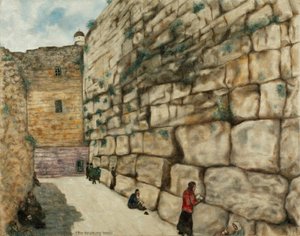
      The Wailing Wall (1932) tekijä Marc Chagall
      #88

      The Wailing Wall

      1932 · Tel Aviv Museum of Art

      In the quiet, textured expanse of Marc Chagall’s 1932 masterpiece, The Wailing Wall, the viewer is not merely looking at a depiction of a historical site, but is…

      Portrait of Brother David with Mandolin (1914) tekijä Marc Chagall
      #89

      Portrait of Brother David with Mandolin

      1914

      A Glimpse into Chagall’s Soul: Brother David with Mandolin Marc Chagall's *Portrait of Brother David with Mandolin*, painted in 1914, is more than just a depiction of a…

      Lovers for Berggruen (The offering) (1965) tekijä Marc Chagall
      #90

      Lovers for Berggruen (The offering)

      1965

      In the ethereal realm of Marc Chagall’s "Lovers for Berggruen (The offering)," the boundaries between reality and the subconscious dissolve into a breathtaking dance of form and feeling.…

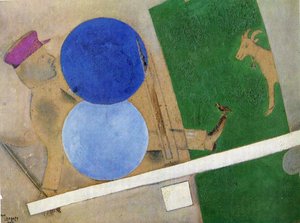
      Composition with Circles and Goat (1920) tekijä Marc Chagall
      #91

      Composition with Circles and Goat

      1920

      In the ethereal realm of Marc Chagall’s “Composition with Circles and Goat,” painted in 1920, the boundaries between the tangible world and the subconscious dissolve into a luminous…

      Suuri Circus (1984) tekijä Marc Chagall
      #93

      Suuri Circus

      1984

      Marc Chagall (1887-1985) oli yksi maailman tunnetuimmista taiteilijoista, jonka työ jatkoi surrealistisen taidevirran vaikutuksia ja joka pysyi uskollisena henkilökohtaiselle näkemykselleen. Hänen elämänsä kuvasi kaoottiset tapahtumat 20-vuosisataa, mutta hänen…

      Marching (1915) tekijä Marc Chagall
      #94

      Marching

      1915

      Ultimately, Chagall’s “I Am Alone” transcends its historical origins to resonate with viewers across generations. It's a hauntingly beautiful meditation on solitude, loss, and the enduring quest for…

      Yö (1953) tekijä Marc Chagall
      #95

      Yö

      1953

      Vuoden 1953 hiljaisissa syvyyksissä Marc Chagall loi vision, joka uhmaa todellisuuden rajoja ja kutsuu meidät maailmaan, jossa fysiikan lait antautuvat alitajunnan mieliteoille. Hänen mestariteoksensa, Yö, ei ole pelkkä…

      The Holy Coachman (1912) tekijä Marc Chagall
      #96

      The Holy Coachman

      1912

      In the profound depths of Marc Chagall’s 1912 masterpiece, The Holy Coachman, viewers are not merely observing a canvas but are invited into a shimmering tapestry woven from…

      Song of Songs I (1960) tekijä Marc Chagall
      #97

      Song of Songs I

      1960

      In the vast landscape of twentieth-century modernism, few works possess the ethereal, dreamlike magnetism of Marc Chagall’s "Song of Songs I." Created in 1960, this monumental canvas serves…

      The Praying Jew, oil on canvas, The Art Instit (1923) tekijä Marc Chagall
      #98

      The Praying Jew, oil on canvas, The Art Instit

      1923 · Art Institute of Chicago

      The Praying Jew: A Meditation on Faith and Form Marc Chagall’s *The Praying Jew*, painted in 1923, transcends mere representation; it embodies the artist's profound engagement with Jewish…

      The return of the prodigal son (1975) tekijä Marc Chagall
      #99

      The return of the prodigal son

      1975

      The Return of the Prodigal Son: A Symphony of Emotion in Chagall’s Naive Vision Marc Chagall's "The Return of the Prodigal Son," created in 1975, transcends mere representation;…

      Marc Chagall's canvases, period by period

      What Marc Chagall painted most

      The four subjects that return most often on these canvases, each with its best-loved example.

      Where Marc Chagall's canvases hang

      Tämän sivun teoksista eniten sisältävät 8 museota.

      Museo Kaupunki Marc Chagall teokset Tämän listan maalaukset
      MoMA - Museum of Modern Art, New YorkMoMA - Museum of Modern Art New York 4 Minä ja kylä, Kunniaa Gogolille. Suunnitelma Gogolin festivaalin verhoon.
      Art Institute of Chicago, ChicagoArt Institute of Chicago Chicago 4 Valkoinen ristiinnaulitseminen, The Praying Jew, oil on canvas, The Art Instit
      Tel Aviv Museum of Art, Tel AvivTel Aviv Museum of Art Tel Aviv 2 The Lovers, The Wailing Wall
      Metropolitan Museum of Art, New YorkMetropolitan Museum of Art New York 2 Lumi, talvi Vitebskissä
      Kunstmuseum Basel, BaselKunstmuseum Basel Basel 1 Putouva enkeli
      Solomon R. Guggenheimin museo, New YorkSolomon R. Guggenheimin museo New York 1 Asettunut sotilas
      Galleria Civica di Arte Moderna e Contemporanea Torino, TorinoGalleria Civica di Arte Moderna e Contemporanea Torino Torino 1 Dans mon pays
      Szépművészeti Múzeum, BudapestSzépművészeti Múzeum Budapest 1 Sommitelmatutkielma teokseen ‘Venäjälle, aaseille ja muille’

      Marc Chagall's best-loved canvas of each decade

      1. 1910s
        Minä ja kylä (1911) tekijä Marc Chagall
        Ranked 1 of 100

        Minä ja kylä

        Ikä 23–32 · MoMA - Museum of Modern Art

        Marc Chagallin vuonna 1911 luoma öljyvärimaalaus “Minä ja Kylä” on varhaisen tuotantonsa kulmakivi, joka merkitsee ratkaisevaa hetkeä modernin taiteen kehityksessä. Kooltaan huomattava (191 x 150 cm) teos vangitsee…

      2. 1920s
        Vihreäsävyinen huilisti (1924) tekijä Marc Chagall
        Ranked 5 of 100

        Vihreäsävyinen huilisti

        Ikä 33–42

        Astukaa Marc Chagallin Vihreäsävyisen huilistin unenomaiseen valtakuntaan, mestariteokseen, joka tavoittaa juutalaisen kansanperinteen olemuksen ja 1900-luvun alun modernismin eloisan energian. Tämä ikoninen vuonna 1924 valmistunut maalaus on todistus Chagallin…

      3. 1930s
        Valkoinen ristiinnaulitseminen (1938) tekijä Marc Chagall
        Ranked 2 of 100

        Valkoinen ristiinnaulitseminen

        Ikä 43–52 · Art Institute of Chicago

        Kankaan keskipisteessä kohoaa kalpea hahmo valkoisessa ristissä. Tämä Kristus on kietonut ylleen rukoushuivin, tallitin, joka laskeutuu hänen vartalolleen. Hänen päänsä yläpuolella näkyy INRI-teksti sekä sen arameankielinen käännös heprealaisilla…

      4. 1940s
        Putouva enkeli (1947) tekijä Marc Chagall
        6 of 100

        Putouva enkeli

        Ikä 53–62 · Kunstmuseum Basel

        Aihe ja kompositio Tämä pysäyttävä mestariteos esittää monimutkaisen, symbolisen taulukon, joka on täynnä eloisia kuvia ja dynaamista liikettä. Teoksen keskiössä on tulinen, siivekäs hahmo, joka näyttää joko putoavan…

      5. 1950s
        Liberation (1952) tekijä Marc Chagall
        Ranked 10 of 100

        Liberation

        Ikä 63–72

        Liberation – A Symphony of Faith and Surrealist Vision Marc Chagall’s “Liberation,” completed in 1952, transcends mere representation; it embodies the artist's profound engagement with Jewish tradition and…

      6. 1960s
        Abraham ja kolme enkeliä (1966) tekijä Marc Chagall
        8 of 100

        Abraham ja kolme enkeliä

        Ikä 73–82

        Abraham ja kolme enkelistä – Marc Chagall Marc Chagallin Abraham ja kolme enkelistä, jonka hän maalasi vuonna 1966, on vaikuttava esimerkki Naivistiselle taiteelle (Primitivismille), joka tuo eloon keskeisen…

      7. 1970s
        The Myth of Orpheus (1977) tekijä Marc Chagall
        21 of 100

        The Myth of Orpheus

        Ikä 83–92

        In the twilight of his long and luminous career, Marc Chagall gifted the world with The Myth of Orpheus, a 1977 masterpiece that serves as a profound window…

      8. 1980s
        Uudet hääparit Eiffel-tornin takana (1983) tekijä Marc Chagall
        Canvas 46 of 100

        Uudet hääparit Eiffel-tornin takana

        Ikä 93–98

        Pariisin unelma: Tutkimassa Marc Chagallin teosta ”Uudet sulhanen Eiffel-tornin taustalla” Marc Chagall, lyyrisen abstraktion ja koskettavan symbolismin mestari, loi ”Uudet sulhanen Eiffel-tornin taustalla” vuonna 1983 – kaksi vuotta…

      About Marc Chagall's canvases: your questions answered

      What is the best-known painting by Marc Chagall?Read the answer

      Minä ja kylä (1911), MoMA - Museum of Modern Art, New York. Valkoinen ristiinnaulitseminen (1938) and Syntymäpäivä (1915) follow.

      What age was Marc Chagall when Minä ja kylä was painted?Read the answer

      Marc Chagall, born in 1887, was 24 years old: Minä ja kylä dates from 1911.

      What are the 10 most famous paintings by Marc Chagall?Read the answer

      Minä ja kylä, Valkoinen ristiinnaulitseminen, Syntymäpäivä, Ylöpässä, Vihreäsävyinen huilisti, Putouva enkeli, Asettunut sotilas, Abraham ja kolme enkeliä, Adam and Eve expelled from Paradise ja Liberation. Each canvas in the ranking above comes with its year and its museum.

      How many works did Marc Chagall paint in all?Read the answer

      936 works by Marc Chagall are in our catalogue, dated 1910 to 1984.

      Where can I see Marc Chagall's most famous canvases?Read the answer

      Mostly in MoMA - Museum of Modern Art (New York), Art Institute of Chicago (Chicago) ja Tel Aviv Museum of Art (Tel Aviv); the list above names each museum and its canvases.

      When did Marc Chagall paint the best-loved canvases?Read the answer

      In 1910s, which gave 30 of the 100 works on this page, Minä ja kylä among them.

      Which are Marc Chagall's earliest and latest famous canvases?Read the answer

      The earliest canvas here is Still Life with Lamp (1910); the latest is Suuri Circus (1984).

      What did Marc Chagall paint most often?Read the answer

      Folklore (23), Dreams (17) ja Jewish folklore (14), across the 100 works on this page.

      Which medium did Marc Chagall paint in most often?Read the answer

      Öljyväri kankaalle, used in 34 of the 100 works on this page.

      Which Marc Chagall canvases hang at the MoMA - Museum of Modern Art?Read the answer

      The MoMA - Museum of Modern Art, New York holds 2 of the works on this page, among them Minä ja kylä ja Kunniaa Gogolille. Suunnitelma Gogolin festivaalin verhoon..

      Marc Chagall: a life in paint

      Early Life, Family and Training

      Marc Chagall enters the world on July 7, 1887, in Vitebsk, Russian Empire, born Moishe Segal. He is the first of nine children in a modest Jewish family. Life is defined by the rhythms of labor and small-scale commerce. His father, Khatskel Segal, works as a herring pickler at a warehouse, while his mother, Feïga-Ita Tchernina, manages a small grocery store. These early years are rooted in the specific textures of a provincial town, where the boundaries of his world are shaped by the needs of a large household and the traditions of his community.

      Education begins within the walls of the heder, a traditional Jewish elementary school. Here, the focus remains on religious instruction and the foundational texts of his upbringing. By age thirteen, the scope of his learning shifts toward the secular. He enters Vitebsk’s official middle school to pursue a Russian education, a move that marks a departure from the strictly religious sphere of his childhood. This dual existence—between the sacred traditions of the heder and the secular requirements of the state school—creates a tension that defines his early development.

      Artistic impulse finds its first formal outlet in Vitebsk. Chagall receives his initial training at a local art school operated by Iouri Pen. It is here that the raw instinct for visual expression begins to coalesce into a disciplined practice. He moves from the structured lessons of the classroom toward a more profound engagement with the act of seeing, setting the stage for a life spent translating memory into form.

      The Formative Years in St. Petersburg

      The transition from the provincial quiet of Vitebsk to the imperial scale of Saint-Petersburg is marked by struggle. Between 1907 and 1909, the capital offers little in the way of comfort. Poverty is a constant companion; there are moments of hunger so severe that physical collapse becomes a reality. To survive, he takes to the streets, earning a meager living by drawing shop signs. These commercial tasks provide the necessary rubles to sustain a presence in the city while he navigates the complexities of being a Jewish student in a vast, shifting empire.

      The academic pursuit is relentless. He enrolls in several academies, seeking a formal structure for his burgeoning visual language. The atmosphere of the capital is heavy with the influence of the avant-garde, a tension that pulls him away from classical training. He finds himself in the studio of Léon Bakst, a designer for the Ballets Russes, where the theatricality of set design begins to seep into his perception of space and form. This period is a collision of necessity and ambition, a time of sketching for survival while simultaneously absorbing the radical shifts occurring in the Russian art scene.

      The Paris Years and Avant-Garde Influence

      Paris arrives in 1910 or 1911, a sudden shift from the provincial constraints of the Russian Empire. The city offers a sensory shock. He finds light, color, and liberty in the streets of Montparnasse. This is no longer the world of the herring merchant or the traditional heder school; it is a landscape of radical possibility. He settles in La Ruche, the famous artist's residence, where the air is thick with the presence of the new avant-garde. He shares this space with Amedeo Modigliani and Fernand Léger, figures who are redefining the boundaries of modern expression. The influence of the era is inescapable, yet he remains an outlier, absorbing the discoveries of Fauvism and Cubism without surrendering his own internal logic.

      The work produced during this period begins to reflect a departure from literal representation. He moves toward a style that prioritizes emotional and poetic associations over the strict rules of pictorial logic. The colors brighten, fueled by the exposure to the Parisian scene. He navigates the tension between the formal training of his past and the experimental freedom of the present. This period of intense creative friction continues until the political upheavals of the war pull him back toward the East. It is not until 1923 that he returns to Paris with his family, re-establishing his presence in the city that first unlocked his visual language.

      The Russian Years and Revolution

      The revolution pulls Chagall back to Vitebsk. He does not merely observe the upheaval; he attempts to shape its cultural landscape. He takes on the mantle of Vitebsk Commissioner of Fine Arts and assumes the directorship of a local Fine Arts School. His vision is one of community and education, yet the political climate shifts beneath his feet. The rise of Suprematism creates a fracture. Figures like Malevitch and Lissitzky push for a radical, non-objective abstraction that clashes with Chagall’s more lyrical, figurative approach. The tension is unsustainable. He is forced out of his positions, his dream of a localized artistic renaissance colliding with the rigid demands of the new regime.

      By 1920, the focus shifts to Moscow. He works on the decoration of the Jewish theatre, a project that captures the intersection of his personal identity and the public stage. His lines are confident, his colors strong and pale, even as the world around him fractures. He navigates a period of intense creative output and profound material struggle, moving between the memory of the shtetl and the demands of a changing state. The era is defined by this friction: the attempt to build a cultural home while the very foundations of his world are being rewritten.

      Life in the United States

      The outbreak of World War II forces a sudden shift in geography. In 1941, Chagall and his family seek refuge in the United States, fleeing the instability of occupied France. He settles in and around New York City, a period of residence that lasts until 1948. The city provides a backdrop of profound emotional upheaval. Amidst the anxieties of the war years, his brush captures the tension of a world in flux. The work reflects the uncertainty of the era, translating personal and global unrest into a visual language of suffering and hope.

      During these seven years, the artist finds a way to engage with large-scale institutional projects. He undertakes major commissions for the United Nations headquarters, translating his poetic vision into the architectural fabric of a global institution. This period in America marks a significant chapter of experimentation and survival, bridging his European roots with a new, intense reality. He remains a man between worlds, his heart still pulling him toward France even as he navigates the complexities of his American exile.

      Technique and Artistic Style

      Logic yields to emotion. Chagall rejects the rigid rules of pictorial logic, choosing instead to compose images through poetic association. His canvases operate on the mechanics of a dream. Figures float through the air, defying gravity, while colors pulse with a non-naturalistic intensity. This approach allows him to capture the essence of feeling rather than the literal appearance of the world. He moves beyond mere imitation, using a bold palette to translate memory into a visual language.

      His aesthetic is a collision of influences. He absorbs the fragmented structures of Cubism and the intense color of Fauvism, yet he filters these avant-garde movements through a deeply personal lens. The result is a style that bridges Expressionism and abstraction. He weaves together the sacred and the mundane, populating his scenes with symbolic and surreal imagery. Jewish folktales and the quiet, lived-in details of shtetl life become the building blocks of a private mythology. The familiar becomes fantastic.

      The imagery often centers on recurring motifs: flying lovers, fiddlers, and massive bouquets. These elements are not mere decorations but symbols of a spiritual and emotional landscape. In works like The Lovers (1929), the sense of weightlessness and the use of intense color create a space where the physical laws of the world no longer apply. His work remains a constant negotiation between the tangible reality of his upbringing and the boundless possibilities of the imagination.

      Patrons, Workshop and Commissions

      The mid-1920s find Chagall in Paris, navigating the influential circles of the art market. He enters the orbit of Ambroise Vollard, a dealer whose influence shapes the trajectory of many avant-garde artists. Vollard commissions a series of engravings from Chagall, tasking him with illustrating the works of Nikolay Gogol, specifically Dead Souls. This period marks a shift toward the precision of printmaking, moving away from the fluid spontaneity of his earlier canvases.

      In 1931, the focus shifts toward the Middle East. The Mayor of Tel Aviv extends an invitation to Chagall to travel to Palestine. The objective is ambitious: the founding of a Jewish Art Museum. This period deepens his engagement with religious and cultural symbolism, a theme that would persist through his later, large-scale architectural works. His ability to translate personal and communal memory into physical space becomes a defining aspect of his professional output.

      As his reputation grows, the scale of his work expands from the intimate page to the monumental. He moves into the realm of light and architecture, designing stained-glass windows for the Cathedral of Metz and the United Nations building in New York. These works demand a mastery of how color interacts with sunlight. In 1964, he reaches a peak of public recognition with a commission for the ceiling of the Paris Opera, a massive undertaking that brings his dreamlike imagery into one of Europe's most significant cultural venues.

      Where to See the Works Today

      The legacy of his vision remains anchored in several key institutions across the globe. In Nice, France, the Musée National Marc Chagall houses an extensive collection of his works, preserving the core of his creative output. This museum offers a concentrated look at the imagery that defined his long career. Meanwhile, the State Russian Museum in Saint-Petersburg, Russia, maintains a significant presence of his art, holding pieces that connect back to his early years and his time in the Russian Empire.

      The reach of his work extends across the Atlantic to the United States. The Museum of Modern Art in New York City holds works that reflect his complex relationship with the city during his years of exile. In the American Midwest, the Art Institute of Chicago features his art, ensuring his presence in major international collections. These locations provide the primary physical touchpoints for those seeking to encounter his specific use of color and form.

      Kaikki 936 teosta taiteilijalta Marc Chagall →