Atelier — Ilmainen toimitus ympäri maailman — Toimitusaika 2–6 viikkoa
      William Hogarth, 1697 – 1764

      William Hogarth's 100 Most Famous Paintings

      Levy 1, osateos A Rake's Progressista is the painting William Hogarth is best remembered for. Levy kuusi, A Rake's Progressista and Gin Lane (1750) complete the trio of best-loved canvases. Our catalogue counts 307 works by William Hogarth. Here are the 100 most famous, with the year, the museum and the story of each canvas.

      Sijoitus perustuu suosiotulokseemme, joka yhdistää kunkin teoksen hakuja, vierailuja ja tilauksia. Päivitetty lokakuu 2026. Each painting on this page can be ordered as an oil reproduction painted by hand on linen canvas, or as a fine art print, made to the size you choose.

      William Hogarth muotokuva
      William Hogarth · 1697 – 1764
      Syntynyt · kuollut
      1697 – 1764, Lontoo
      Teokset valikoimassamme
      307
      Tunnetuimmat
      Levy 1, osateos A Rake's Progressista
      Eniten teoksia kohteessa
      Sir John Soane's Museum

      The ten best-loved paintings by William Hogarth

      Levy 1, osateos A Rake's Progressista tekijä William Hogarth
      1

      Levy 1, osateos A Rake's Progressista

      Kaiverrus

      William Hogarthin "Plate one, from A Rake's Progress" on enemmän kuin pelkkä taideteos; se on aikakauden vangitseva hetki, tarkka kuvaus 1800-luvun Englantilaisen yhteiskunnan pinnan alla piilevistä ongelmista. Tämä monimutkainen kaiverrus ei tarjoa vain visuaalista nautintoa, vaan myös syvällistä pohdintaa ihmisluonnosta, moraalisesta rappiosta ja sosiaalisen nousun illuusioista. Hogarthin mestariteos on kuin ikkuna menneisyyteen, joka avautuu tarjoten katsojalle sekä huvituksen että huolestuneen tarkastelun.

      Levy kuusi, A Rake's Progressista tekijä William Hogarth
      2

      Levy kuusi, A Rake's Progressista

      Kaiverrus

      Immersio yourself in the vibrant chaos of “Plate six, from A Rake’s Progress,” a masterful engraving by William Hogarth. This intricate black-and-white scene captures the frenetic energy of a bustling tavern, offering a vivid snapshot of 18th-century social life and moral commentary. Hogarthin teoksen sydämessä on paitsi tekninen mestariteos myös syvästi ajatuksia herättävä kuva ihmisluonnosta ja sen heikkouksista. Tämä ei ole pelkästään taideteos, vaan ikkuna menneisyyteen, joka tarjoaa arvokkaita näkökulmia…

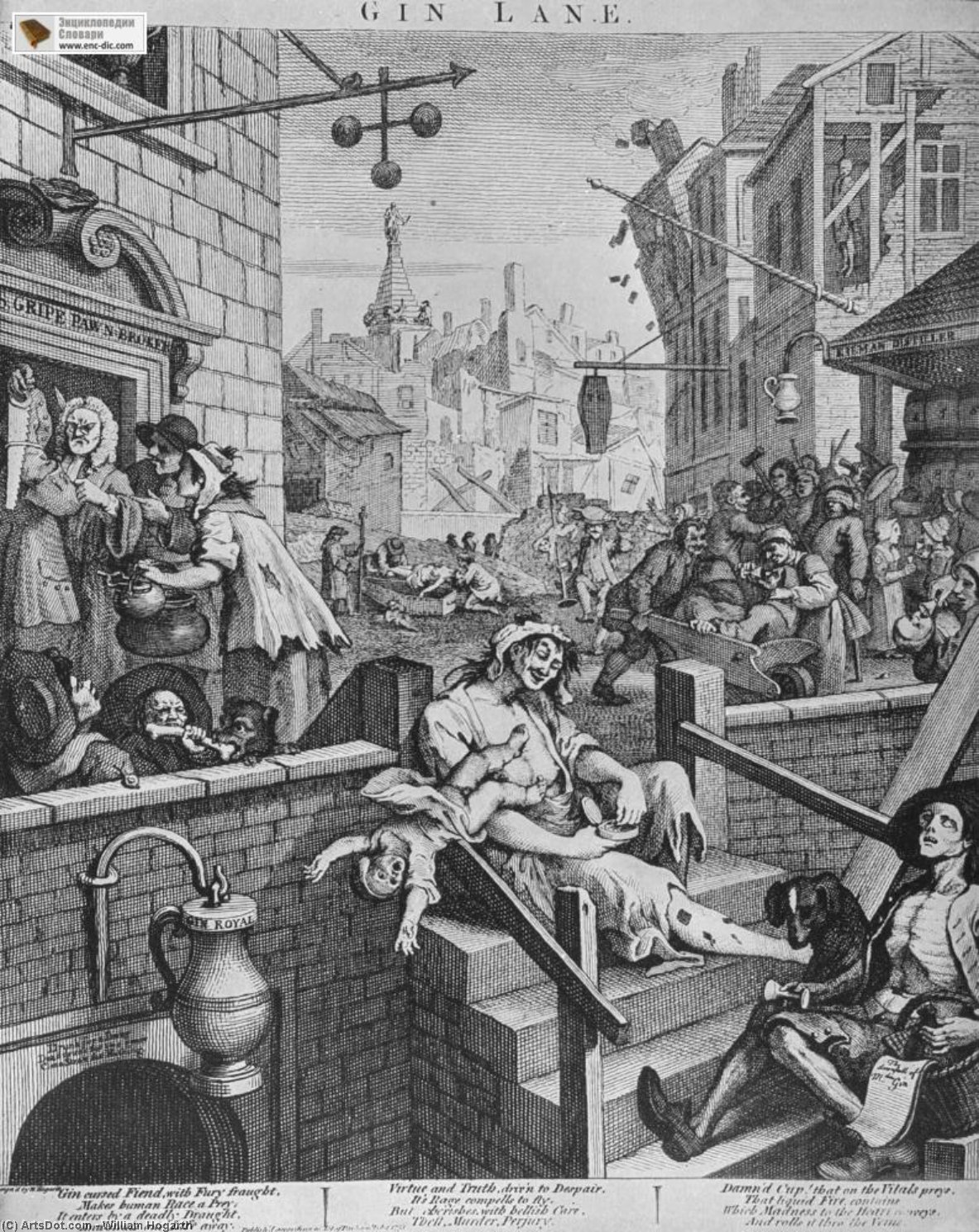
      Gin Lane (1750) tekijä William Hogarth
      3

      Gin Lane

      1750 · Engraving

      In the heart of 18th-century London, amidst the swirling fog and the growing shadows of social upheaval, William Hogarth captured a moment of profound human tragedy that continues to haunt the viewer centuries later. His masterpiece, Gin Lane, is far more than a mere engraving; it is a visceral, breathing chronicle of a city in the throes of moral and physical decay. Completed in 1751, this work serves as a…

      The Marriage Contract (1745) tekijä William Hogarth
      4

      The Marriage Contract

      1745 · Acrylic On Canvas

      A Window Into Georgian Society In the heart of 1745, William Hogarth captured more than a mere domestic arrangement; he froze a pivotal moment of social negotiation in "The Marriage Contract." This meticulously crafted tableau invites the viewer into a room thick with the palpable anxieties and lofty aspirations of Georgian England. As we gaze upon the central table where a man proposes to his prospective bride, we are not…

      Pöytäkutsu (1755) tekijä William Hogarth
      5

      Pöytäkutsu

      1755 · Öljyväri kankaalle · Sir John Soane's Museum, Lontoo

      1700-luvun elämän riehakas kohtaus: William Hogarthin Pöytäkutsu (1755) analysoituna William Hogarthin Pöytäkutsu, joka on maalattu vuonna 1755, on eläväinen ja tiheästi täytetty öljymaalaus, joka tarjoaa kiehtovan vilauksen Georgian Englannin sosiaalisiin tapoihin. Tämä 101 x 127 cm kokoinen suurenomainen teos ei ole pelkkä kuvaus juhla-ateriasta; se on huolellisesti rakennettu kommentaari yhteiskunnasta, nautinnonhalusta ja ihmisten välisen vuorovaikutuksen usein kaoottisesta luonteesta.Aihe ja narratiivi Maalaus avaa silmää avartavan ja vilkkaan juhla-ateriaisen kohtauksen, joka on…

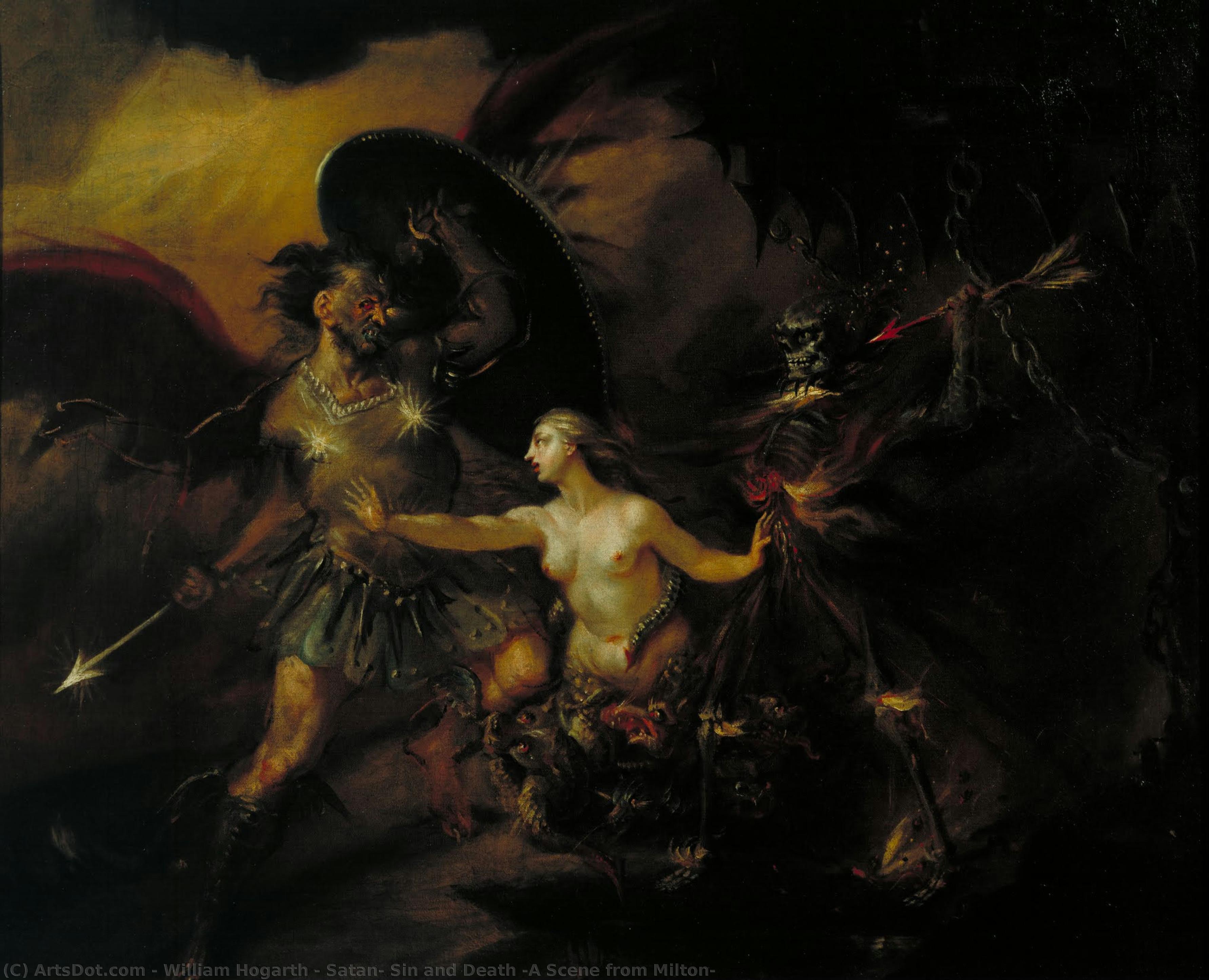
      Sataana, synti ja kuolema (Kohtaus Miltonilta) (1735) tekijä William Hogarth
      6

      Sataana, synti ja kuolema (Kohtaus Miltonilta)

      1735 · Öljyväri kankaalle · Tate Britain, Lontoo

      William Hogarthin vuonna 1735 maalaama ”Satan, Sin, and Death” on paljon enemmän kuin pelkkä kuvitus John Miltonin eeppisestä runosta, Kadotetusta paratiisista; se on huolellisesti rakennettu moraalinen allegoria, joka upottaa katsojan houkutusten, seurausten ja ikuisen konfliktin maailmaan. Tämä öljymaalaus kangasta, joka sijaitsee nykyään Tate Britainissa Lontoossa, on kooltaan 74 x 61 cm ja tarjoaa poikkeuksellisen intiimin näkymän Hogarthin syvään ymmärrykseen miltonilaisista teemoista – synnin houkuttelevasta voimasta, kuoleman vääjäämättömyydestä ja jatkuvasta kamppailusta…

      The Painter and his Pug (1745) tekijä William Hogarth
      7

      The Painter and his Pug

      1745 · Oil On Canvas · Tate Gallery, Lontoo

      A Portrait of Intimacy: William Hogarth’s ‘The Painter and his Pug’ Subject & Composition: This captivating 1745 portrait by William Hogarth offers a charmingly informal glimpse into the artist's personal life. It depicts Hogarth himself, seated and gazing directly at the viewer, accompanied by his beloved pug, Trump. The composition is remarkably balanced; Hogarth occupies the central space while Trump rests comfortably to his right, creating an intimate and relaxed…

      Roudausku Katleen kuolemaksi tekijä William Hogarth
      8

      Roudausku Katleen kuolemaksi

      Öljyväri kankaalle

      William Hogarthin ”Kuoleman Tuomio” – Yhteiskunnan Korruptio Valon Kuultamana William Hogarthin ”Kuoleman Tuomio”, jonka hän maalasi vuosina 1743–1745, on mestariteos brittiläisen valistuksen aikakaudella. Tämä osa hänen tunnetusta sarjastaan ”Avioliitto Maailmaan” ei ole pelkästään kaunis näky; se on syvästi kriittinen yhteiskunnallista moraalia kohtaan ja tarkka kuvaus ihmisen luonteesta 1700-luvun Englannissa. Hogarthin työ tuo esiin keskeisiä kysymyksiä rakkauden ja taloudellisen hyödyn välillä sekä yksilön vastuusta yhteiskunnallisesti hyväksyttävän toiminnan suhteen. Hän oli erityisesti…

      The Four Times of Day: Night (1738) tekijä William Hogarth
      9

      The Four Times of Day: Night

      1738 · Acrylic On Canvas · Clevelandin taidemuseo, Cleveland

      William Hogarth's "The Four Times of Day: Night," painted in 1738, isn’t merely a depiction of a London street scene; it’s a meticulously crafted window into the social and moral landscape of eighteenth-century England. This remarkable work, now immortalized through WahooArt’s hand-painted reproductions, captures a moment of revelry – or perhaps reckless abandon – with an unparalleled level of detail and satirical observation that defines Hogarth's unique artistic legacy. The…

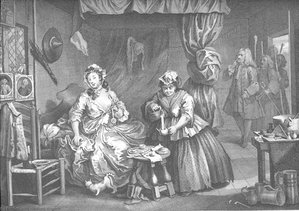
      A Harlot's Progress: Quarrels with her Jewish Protector (1743) tekijä William Hogarth
      10

      A Harlot's Progress: Quarrels with her Jewish Protector

      1743 · Oil On Canvas · Ascott House, Leighton Buzzard

      The room holds a sudden, sharp noise. A tea-table tilts, porcelain clatters, and the heavy weight of an argument settles over the fine fabrics. Mary, known as Moll Hackabout, moves with a violent intent, her arm a decisive line against the opulent interior. She kicks at the furniture to draw eyes away from the doorway, where a lover slips quietly into the shadows. A black serving boy stands near, a…

      William Hogarth: canvases 11 to 100 of the ranking

      Itsekuva (1757) tekijä William Hogarth
      #11

      Itsekuva

      1757 · National Portrait Gallery

      William Hogarthin Itsekuva, joka on maalattu vuonna 1757, tarjoaa lumoavan ikkunan yhden Britannian merkittävimmän taiteilijan elämään ja taiteelliseen työhön. Tämä öljymaalaus kankaalle (45 x 42 cm) ilmentää klassismia…

      Bring this light home →
      Soliciting Votes (1754) tekijä William Hogarth
      #12

      Soliciting Votes

      1754 · Sir John Soane's Museum

      William Hogarth's "Soliciting Votes," completed in 1754, stands as a masterful distillation of Enlightenment satire and a poignant reflection on the burgeoning political landscape of London. More than…

      Bring this light home →
      The heir (1735) tekijä William Hogarth
      #13

      The heir

      1735 · Sir John Soane's Museum

      William Hogarth’s “The Heir,” completed in 1735, is more than simply a depiction of a domestic scene; it’s a meticulously crafted social commentary rendered with the precision and…

      Bring this light home →
      A Scene from The Beggar's Opera (1729) tekijä William Hogarth
      #14

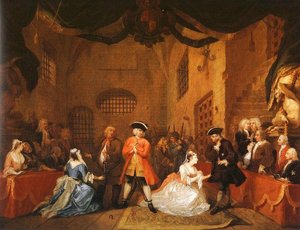
      A Scene from The Beggar's Opera

      1729 · National Gallery of Art

      William Hogarth's "A Scene from The Beggar’s Opera," painted in 1729, isn’t merely a depiction of a theatrical performance; it’s a meticulously crafted snapshot of 18th-century London life…

      Have it painted by hand →
      South Sea Scheme tekijä William Hogarth
      #15

      South Sea Scheme

      In the swirling currents of 1721 London, amidst a fever of unbridled greed and financial delirium, William Hogarth unleashed a visual critique that would forever etch itself into…

      Order this canvas →
      Marriage à la Mode (1743) tekijä William Hogarth
      #16

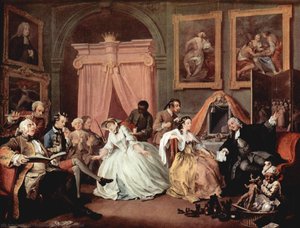
      Marriage à la Mode

      1743 · National Gallery

      1700-luvun brittiläisen taiteen suuressa kudelmassa vain harvat teokset omaavat saman purevan älykkyyden ja kerronnallisen syvyyden kuin William Hogarthin Marriage à la Mode. Vuonna 1743 valmistunut tämä poikkeuksellinen sarja…

      Bring this light home →
      Hudibras tekijä William Hogarth
      #19

      Hudibras

      William Hogarth's *Hudibras*, specifically the frontispiece and related engravings from Samuel Butler’s satirical poem, offers far more than a simple illustration; it’s a meticulously crafted social commentary frozen…

      Have it painted by hand →
      Käynti lääkärin luona (1745) tekijä William Hogarth
      #20

      Käynti lääkärin luona

      1745

      1700-luvun Lontoon eläväisessä mutta purevassa maailmassa William Hogarthin ”Käynti lääkärin luona” nousee esiin syvällisenä, maaliin vangittuna teatraalisena esityksenä. Noin vuonna 1745 maalattu rokokoon aikakauden mestariteos on paljon enemmän…

      Order this canvas →
      The Times, plate 2 (1763) tekijä William Hogarth
      #22

      The Times, plate 2

      1763

      The Pulse of an Era: London Unveiled In the year 1763, as the gears of the Industrial Revolution began to turn and the streets of London swelled with…

      Order this canvas →
      Itsekuva (1745) tekijä William Hogarth
      #24

      Itsekuva

      1745

      William Hogarthin vuoden 1745 itsekuva ei ole pelkkä muotokuva; se on huolellisesti valmisteltu ikkuna yhden Englannin oivaltavimmista ja satiirisimmista tarkkailijoista mielen syövereihin. Tämä teos, joka on maalattu syvän…

      Order this canvas →
      Miss Mary Edwards (1742) tekijä William Hogarth
      #25

      Miss Mary Edwards

      1742 · The Frick Collection

      A Portrait of Privilege and Virtue: Examining William Hogarth’s Miss Mary Edwards William Hogarth's "Miss Mary Edwards," completed in 1742, stands as an emblem of Enlightenment England—a meticulously…

      Have it painted by hand →
      The Battle of the Pictures (1743) tekijä William Hogarth
      #26

      The Battle of the Pictures

      1743

      William Hogarth's "The Battle of the Pictures," completed in 1743, isn’t merely an engraving; it’s a vibrant, chaotic microcosm of 18th-century London’s art world – a scene brimming…

      Order this canvas →
      Suicide of the Countess (1745) tekijä William Hogarth
      #27

      Suicide of the Countess

      1745

      Georgian England was gripped by a fervor for moral reform following the Enlightenment. Writers like Jonathan Swift satirized aristocratic excesses and championed reason over superstition, influencing artists like…

      Bring this light home →
      Canvassing for Votes tekijä William Hogarth
      #28

      Canvassing for Votes

      William Hogarth’s “Canvassing for Votes” isn't merely a painting; it’s a meticulously crafted social commentary, a vibrant snapshot of corruption and manipulation embedded within the seemingly convivial atmosphere…

      Have it painted by hand →
      The Countess's Morning Levee (1745) tekijä William Hogarth
      #29

      The Countess's Morning Levee

      1745

      William Hogarth’s “The Countess’s Morning Levee,” completed around 1745, stands as a cornerstone of Rococo art and a masterful distillation of Enlightenment observation. More than just a depiction…

      Bring this light home →
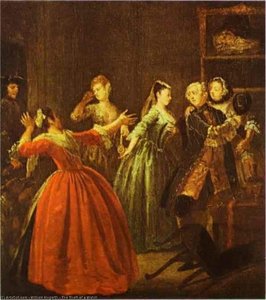
      The Ball (1745) tekijä William Hogarth
      #30

      The Ball

      1745

      To stand before William Hogarth's depiction of "The Ball" is to be instantly transported across the threshold of time, directly into the glittering heart of an 18th-century London…

      Order this canvas →
      The Bench (1758) tekijä William Hogarth
      #31

      The Bench

      1758

      A Gathering of Characters: Decoding Hogarth’s ‘The Bench’ Subject & Narrative: William Hogarth's 1758 engraving, ‘The Bench’, presents a tightly composed group of six men, each meticulously rendered…

      Order this canvas →
      The Denunciation (1729) tekijä William Hogarth
      #33

      The Denunciation

      1729

      A Scene of Accusation: Unveiling Hogarth’s ‘The Denunciation’ William Hogarth's *The Denunciation*, painted in 1729, is far more than a depiction of a social gathering; it’s a meticulously…

      Bring this light home →
      Self-Portrait tekijä William Hogarth
      #36

      Self-Portrait

      National Gallery of Ireland

      A middle-aged man gazes directly from an oval vignette, his expression calm and steady. He wears a soft red cap and a patterned blue robe, the heavy silk…

      Have it painted by hand →
      The triumph of Representatives (1755) tekijä William Hogarth
      #38

      The triumph of Representatives

      1755 · Sir John Soane's Museum

      A Window Into Georgian Society: Examining William Hogarth’s “The Triumph of Representatives” William Hogarth's "The Triumph of Representatives," completed in 1755, isn’t merely a depiction of an event;…

      Bring this light home →
      Second stage of cruelty (1751) tekijä William Hogarth
      #42

      Second stage of cruelty

      1751

      This powerful engraving, created by William Hogarth in 1751, offers a chilling glimpse into the realities of 18th-century England. Far from idealized landscapes or flattering portraits, this work…

      Have it painted by hand →
      The Reward of Cruelty (1751) tekijä William Hogarth
      #45

      The Reward of Cruelty

      1751

      The Reward of Cruelty William Hogarth’s “The Reward of Cruelty,” published in 1751 as part of his monumental *Four Stages of Cruelty*, stands as a chilling indictment of…

      Bring this light home →
      Simon Lord Lovat tekijä William Hogarth
      #46

      Simon Lord Lovat

      Simon Lord Lovat – Näköinen Kuva ja Taiteilijan Tietoa Simon Lord Lovatin yksityiskohtainen kuva on valmistettu William Hogarthin varhaisesta kaiverruskuvasta, joka tuo esiin 1700-luvun englantilaista muotokuvaa. Kuvassa näkyy…

      Order this canvas →
      Scholars at a Lecture tekijä William Hogarth
      #48

      Scholars at a Lecture

      A Window Into Enlightenment: Examining William Hogarth’s “Scholars at a Lecture” The etching by William Hogarth, "Scholars at a Lecture," transcends mere depiction; it's an exquisitely crafted snapshot…

      Have it painted by hand →
      Sarah Malcolm in Prison tekijä William Hogarth
      #50

      Sarah Malcolm in Prison

      Sarah Malcolm in Prison: A Portrait of Crime and Vulnerability William Hogarth’s *Sarah Malcolm in Prison* stands as a chilling testament to the moral anxieties of Georgian England,…

      Bring this light home →
      Gin Lane (1751) tekijä William Hogarth
      #52

      Gin Lane

      1751

      In the heart of 18th-century London, amidst the swirling fog and the growing shadows of social upheaval, William Hogarth captured a moment of profound human tragedy that continues…

      Have it painted by hand →
      The murder of the count (1745) tekijä William Hogarth
      #53

      The murder of the count

      1745

      William Hogarth’s “The Murder of the Count,” completed in 1745, is not merely a depiction of violence; it’s a meticulously constructed moral fable, a searing indictment of societal…

      Bring this light home →
      The Enraged Musician (1741) tekijä William Hogarth
      #54

      The Enraged Musician

      1741

      In the heart of 1741 London, amidst the burgeoning energy of the Enlightenment, William Hogarth captured a moment of pure, unadulterated sensory overload. The Enraged Musician is not…

      Bring this light home →
      The Bathos tekijä William Hogarth
      #55

      The Bathos

      William Hogarth's *The Bathos*, a powerfully unsettling engraving created towards the end of his life, is not merely an artwork; it’s a visual lament—a darkly satirical reckoning with…

      Bring this light home →
      The Beggar's Opera (1729) tekijä William Hogarth
      #59

      The Beggar's Opera

      1729 · Yale Center for British Art

      A Window Into Georgian Society: Exploring Hogarth's "The Beggar's Opera" William Hogarth’s “The Beggar’s Opera,” completed in 1729, transcends mere visual representation; it serves as a meticulously crafted…

      Order this canvas →
      Lame theater tekijä William Hogarth
      #62

      Lame theater

      William Hogarth’s “Lame Theater,” completed around 1730, stands as a cornerstone of English Rococo satire and a remarkably astute observation of the social landscape of Georgian London. More…

      Order this canvas →
      Southwark Fair tekijä William Hogarth
      #63

      Southwark Fair

      Step into the swirling, sensory overload of William Hogarth’s Southwark Fair, a masterpiece that serves as a vivid, unvarnished window into the heart of 1730s London. This is…

      Order this canvas →
      Self Portrait tekijä William Hogarth
      #64

      Self Portrait

      In the quiet intimacy of his studio, William Hogarth presents us with more than just a likeness; he offers a profound window into the very essence of Enlightenment…

      Bring this light home →
      Tyburn Large tekijä William Hogarth
      #72

      Tyburn Large

      “Tyburn Large,” painted by William Hogarth in 1746, isn't merely a depiction of an execution; it’s a meticulously rendered snapshot of 18th-century London life, brimming with social commentary…

      Order this canvas →
      The Mackinen Children (1747) tekijä William Hogarth
      #77

      The Mackinen Children

      1747 · National Gallery of Ireland

      “The Mackinen Children,” painted by William Hogarth in 1747, stands as a cornerstone of British Rococo art and exemplifies the artist’s masterful command of classical principles. More than…

      Order this canvas →
      Engraving of John Wilkes tekijä William Hogarth
      #78

      Engraving of John Wilkes

      A Portrait of Moral Decay: Examining Hogarth’s Engraving of John Wilkes William Hogarth's "Engraving of John Wilkes" stands as a cornerstone of 18th-century British art and satire, capturing…

      Bring this light home →
      Richard Mouteney (1746) tekijä William Hogarth
      #83

      Richard Mouteney

      1746 · Bavarian State Painting Collections

      The Weight of Presence A man sits in the center of a dark void. He wears a heavy black robe that swallows the light, its folds thick and…

      Order this canvas →
      Times of the Day: Morning tekijä William Hogarth
      #86

      Times of the Day: Morning

      William Hogarth’s “Times of the Day – Morning,” a cornerstone of his celebrated series, isn’t merely a depiction of a London street; it’s a meticulously crafted observation of…

      Order this canvas →
      Satire on False Perspective tekijä William Hogarth
      #87

      Satire on False Perspective

      Satire on False Perspective William Hogarth’s *Satire on False Perspective*, created in 1754 for Joshua Kirby's pamphlet *Method of Perspective*, stands as a masterful demonstration of artistic critique…

      Order this canvas →
      Kauneuden Analyysi tekijä William Hogarth
      #89

      Kauneuden Analyysi

      Analysiin kauneudesta – William Hogarthin mestariteos William Hogarth oli enemmän kuin yksinkertaisesti taidehistorioitsija; hän oli tarkka havaintoeläin ihmisen luonteelle, satiirinen kommentaattori oman aikansa yhteiskunnallisille virroille ja erityisesti englantilaisen…

      Order this canvas →
      Thomas Pellett, M.D. (1737) tekijä William Hogarth
      #93

      Thomas Pellett, M.D.

      1737

      An elderly gentleman, Thomas Pellett, M.D., occupies the center of this 1737 oil portrait. The composition utilizes a dark, oval vignette to focus attention on the subject's face…

      Bring this light home →
      Self-Portrait (1735) tekijä William Hogarth
      #95

      Self-Portrait

      1735 · Yale Center for British Art

      In this 1735 self-portrait, we encounter the artist not as a distant figure, but in an intimate, eye-level encounter. The composition focuses on a bust-length view of a…

      Order this canvas →
      The Lottery tekijä William Hogarth
      #96

      The Lottery

      The image is a black and white painting of a theater scene featuring a group of people gathered around a stage. The main focus of the painting is…

      Have it painted by hand →
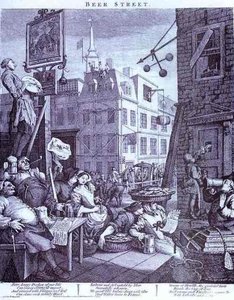
      Beer Street (1751) tekijä William Hogarth
      #99

      Beer Street

      1751

      Beer Street, an iconic engraving created by William Hogarth in 1751, is a masterpiece that showcases the artist's ability to blend social commentary with artistic finesse. This work…

      Bring this light home →
      Rake's Progress' The Gaming House (1735) tekijä William Hogarth
      #100

      Rake's Progress' The Gaming House

      1735 · Sir John Soane's Museum

      A Window into Georgian Society: Examining Hogarth’s “Rake’s Progress” William Hogarth's "Rake's Progress," completed in 1735, stands as a cornerstone of British Baroque art and a searing indictment…

      Order this canvas →

      William Hogarth's canvases, period by period

      What William Hogarth painted most

      The four subjects that return most often on these canvases, each with its best-loved example.

      Where William Hogarth's canvases hang

      Tämän sivun teoksista eniten sisältävät 8 museota.

      Museo Kaupunki William Hogarth teokset Tämän listan maalaukset
      Sir John Soane's Museum, LontooSir John Soane's Museum Lontoo 14 Pöytäkutsu, Soliciting Votes, The heir
      Yale Center for British Art, New HavenYale Center for British Art New Haven 11 The Beggar's Opera, The Family of John, 2nd Duke of Montagu and an attendant, William Augustus, Duke of Cumberland
      National Gallery of Ireland, DublinNational Gallery of Ireland Dublin 7 Self-Portrait, The Mackinen Children
      Upton House, BanburyUpton House Banbury 3 The Four Times of Day: Night, Gerard Anne Edwards Hamilton (1732–1773) in his Cradle
      Ascott House, Leighton BuzzardAscott House Leighton Buzzard 2 A Harlot's Progress: Quarrels with her Jewish Protector, An Unknown Lady, possibly Miss Woodley, later Mrs Henry Vaughan (not Mrs Jane Hogarth)
      National Gallery of Art, WashingtonNational Gallery of Art Washington 2 A Scene from The Beggar's Opera, A Scene from the Beggar's Opera
      National Gallery, LontooNational Gallery Lontoo 9 Marriage à la Mode
      Fitzwilliam MuseumFitzwilliam Museum 9 A prisoner of the Fleet being examined before a committee of the House of Commons

      William Hogarth's most famous canvas, decade after decade

      1. 1720s
        A Scene from The Beggar's Opera (1729) tekijä William Hogarth
        Canvas 14 of 100

        A Scene from The Beggar's Opera

        Ikä 23–32 · National Gallery of Art

        William Hogarth's "A Scene from The Beggar’s Opera," painted in 1729, isn’t merely a depiction of a theatrical performance; it’s a meticulously crafted snapshot of 18th-century London life…

      2. 1730s
        Sataana, synti ja kuolema (Kohtaus Miltonilta) (1735) tekijä William Hogarth
        6 of 100

        Sataana, synti ja kuolema (Kohtaus Miltonilta)

        Ikä 33–42 · Tate Britain

        William Hogarthin vuonna 1735 maalaama ”Satan, Sin, and Death” on paljon enemmän kuin pelkkä kuvitus John Miltonin eeppisestä runosta, Kadotetusta paratiisista; se on huolellisesti rakennettu moraalinen allegoria, joka…

      3. 1740s
        The Marriage Contract (1745) tekijä William Hogarth
        Ranked 4 of 100

        The Marriage Contract

        Ikä 43–52

        A Window Into Georgian Society In the heart of 1745, William Hogarth captured more than a mere domestic arrangement; he froze a pivotal moment of social negotiation in…

      4. 1750s
        Gin Lane (1750) tekijä William Hogarth
        Canvas 3 of 100

        Gin Lane

        Ikä 53–62

        In the heart of 18th-century London, amidst the swirling fog and the growing shadows of social upheaval, William Hogarth captured a moment of profound human tragedy that continues…

      5. 1760s
        The Times, plate 2 (1763) tekijä William Hogarth
        22 of 100

        The Times, plate 2

        Ikä 63–67

        The Pulse of an Era: London Unveiled In the year 1763, as the gears of the Industrial Revolution began to turn and the streets of London swelled with…

      William Hogarth's canvases, question by question

      Which canvas is William Hogarth most remembered for?Read the answer

      Levy 1, osateos A Rake's Progressista, followed by Levy kuusi, A Rake's Progressista and Gin Lane (1750).

      What are William Hogarth's ten most famous canvases?Read the answer

      Levy 1, osateos A Rake's Progressista, Levy kuusi, A Rake's Progressista, Gin Lane, The Marriage Contract, Pöytäkutsu, Sataana, synti ja kuolema (Kohtaus Miltonilta), The Painter and his Pug, Roudausku Katleen kuolemaksi, The Four Times of Day: Night ja A Harlot's Progress: Quarrels with her Jewish Protector. Each canvas in the ranking above comes with its year and its museum.

      How many paintings did William Hogarth create?Read the answer

      307 works by William Hogarth are in our catalogue, dated 1721 to 1763.

      Where do William Hogarth's most famous canvases hang today?Read the answer

      Mostly in Sir John Soane's Museum (Lontoo), Yale Center for British Art (New Haven) ja National Gallery of Ireland (Dublin); the list above names each museum and its canvases.

      When did William Hogarth paint the most famous canvases?Read the answer

      In 1740s, which gave 18 of the 100 works on this page, The Marriage Contract among them.

      Which famous William Hogarth canvas came first, and which came last?Read the answer

      The earliest canvas here is Emblematical print of the South Sea Scheme (1721); the latest is The Times, plate 2 (1763).

      Which subjects did William Hogarth paint most?Read the answer

      Social commentary (29), 18th century (26) ja Satire (25), across the 100 works on this page.

      Which medium appears most in William Hogarth's paintings?Read the answer

      Acrylic On Canvas, used in 29 of the 100 works on this page.

      Which paintings by William Hogarth are held by the Sir John Soane's Museum?Read the answer

      The Sir John Soane's Museum, Lontoo holds 5 of the works on this page, among them Pöytäkutsu, Soliciting Votes ja The heir.

      Where can I buy a reproduction of a William Hogarth painting?Read the answer

      Yes. Every painting on this page can be ordered from its own page as an oil reproduction painted by hand, or as a fine art print, in the size you choose.

      Meet the painter: William Hogarth

      William Hogarthin elämä

      Lontoo, 1697. Bartholomew Closen ilma on täynnä kasvavan metropolin hälyä. Täällä William Hogarth astuu maailmaan, jota leimaa epävarma vakaus. Hänen isänsä, Richard Hogarth, kamppailee toimeentulostaan latinankoulun opettajana ja oppikirjojen kirjoittajana. Perheen taloudellinen tilanne aaltoilee; yhdessä vaiheessa Richard kohtaa karun todellisuuden ja päätyy velkaansa Fleetin vankilaan. Tämä varhainen altistuminen kaupunkielämän epävakaudelle jättää pysyvän jäljen. William Hogarth kasvaa katsellen sosiaalisten luokkien välistä kuilua, näkökulmasta, joka tulee lopulta määrittelemään hänen uransa maalari, kaivertajana, satiirikkona, sarjakuvataiteilijana ja kirjailijana.

      Pojan polku ei ole perittyä rikkautta tai helppoa suojelusta. Sen sijaan se on kaupungin karuuden muovaama elämä. Hän kulkee Lontoon kaduilla havainnoiden hahmoja, jotka täyttävät kahvilat ja markkinat. Hänen äitinsä, Anne Gibbons, tarjoaa kodin ankkurin elämään, jota usein leimaavat aikakauden taloudelliset muutokset. Kun hän alkaa tehdä nimeään, hän on jo monialaistunut mestari, joka käyttää mustetta ja värejä purkaakseen juuri sitä yhteiskuntaa, joka hänet kasvatti.

      • A Harlot's Progress (1731/1732)
      • A Rake's Progress (1735)
      • Marriage A-la-Mode (1743–1745)

      Varhaisluonnos, perhe ja oppivuus

      Lontoo, 1697. William kasvaa latinalaisen koulun opettajan ja satunnaisen kirjailijan Richard Hogarthin poikana, keskellä miehen jatkuvaa kamppailua löytääkseen jalansijansa suurkaupungin vilinässä. Kodin epävakaus saa dramaattisen käänteen, kun Richard joutuu viideksi vuodeksi Fleetin vankilaan maksamattomien velkojen vuoksi. Tämä koettelemusten aika, jota leimaa perheen taloudellinen epävarmuus, jättää pysyvän jäljen metropolin nuoreen tarkkailijaan.

      Vuoteen 1714 tultaessa huomio siirtyy käsityötaidon teknisiin yksityiskohtiin. Hogarth aloittaa oppisopimuksen Ellis Gamblen, Leicester Fieldsillä toimivan kulta- ja hopeakaivertajan, luona. Hän oppii mainoskorttien ja muiden vastaavien tuotteiden valmistukseen vaadittavan äärimmäisen tarkkuuden, kehittäen samalla perustavanlaatuisen hallinnan kuparilevyyn. Tämä tekninen perusta antaa hänelle työkalut uraan, joka nousee lopulta pelkän kaupallisen kopioinnin yläpuolelle.

      Hänen elämänpolkunsa muuttuu, kun hän siirtyy kohti virallista taideopiskelua. Vuonna 1720 hän ilmoittautuu St Martin’s Lane Academyyn. Hänen koulutuksensa laajenee entisestään Sir James Thornhillin, kuningas Yrjö I:n hovimaalarin, johdolla. Thornhillin alaisuudessa painopiste siirtyy kaiverruksen pienimuotoisesta tarkkuudesta kohti maalauksen ja sommittelun laajempia monimutkaisuuksia. Hän siirtyy käsityöläisen huolellisesta työstä kohti korkeataiteen suuria mittasuhteita.

      Tekniikka ja taiteellinen tyyli

      William Hogarth liikkuu taiturimaisesti realistisen muotokuvataiteen tarkkuuden ja sarjakuvasarjamaisen, nopean ja dynaamisen energian välillä. Hän ei ainoastaan maalaa; hän rakentaa narratiiveja. Tämä lähestymistapa saavuttaa huippunsa "modernien moraaliaiheiden" kehittämisessä – menetelmässä, jossa hän hyödyntää visuaalista tarinankerrontaa yhteiskunnallisen rakenteen kritisoimiseen. Hän kohtelee kangasta ja kuparilevyä näyttämöinä, joilla draama avautuu katsojan edessä, hyödyntäen usein huumorin ja purevan satiirin liittoa viestinsä tehokkaaseen välittämiseen.

      Hänen työnsä tekninen perusta lepää kaiverrustekniikan mestarillisessa hallinnassa. Hän ymmärtää viivan painon ja vedoksen valtavan voiman tavoittaa laaja yleisö. Vuonna 1753 hän siirtyy visuaalisesta tarkastelusta teoreettiseen pohdiskeluun julkaistuaan Analysis of Beauty -teoksensa. Tässä hän nousee pelkän havainnoinnin yläpuolelle ja pyrkii koodaamaan omia esteettisiä teorioitaan, korostaen erityisesti "serpentiiniviivan" merkitystä kauneuden ja liikkeen perustavanlaatuisena periaatteena.

      • A Harlot's Progress (1731/1732)
      • A Rake's Progress (1735)
      • Marriage A-la-Mode (1743–1745)

      Keskeiset teokset ja sarjat

      Hogarthin teosten kerronnallinen voima saavuttaa huippunsa ”moderneissa moraaliaiheissa”, jotka ovat maalauksia, jotka on suunniteltu toimimaan kuin visuaaliset romaanit. Vuosina 1731–1732 syntynyt A Harlot's Progress seuraa traagista tuhoa nuorella naisella, joka saapuu Lontooseen toiveikasta, mutta joutuu nopeasti kaupungin houkutusten ja vaarojen uhriksi. Tämä yhteiskunnallisen rappion kaava jatkuu vuonna 1735 teoksessa A Rake's Progress, joka kuvaa Tom Rakewellin lankeemusta, kun hän tuhlata perintönsä uhkailuun ja elämän nautintoihin. Nämä teokset eivät ainoastaan esitä kohtauksia, vaan ne kartoittavat moraalisen rappeutumisen seurauksia äärimmäisen yksityiskohtaisilla yksityiskohdilla ja symbolisilla elementeillä.

      Vuosien 1743 ja 1745 välisenä aikana syntynyt sarja Marriage A-la-Mode siirtää painopisteen yksilön tuhosta sosiaalisten luokkien väliseen törmäykseen. Tässä teoksessa taiteilija pistää kevennettynä mutta purevasti pilkkaamaan järjestettyjen avioliittojen ja statuksen tavoittelun katastrofaalisia seurauksia. Varakkaiden loistokkaiden sisätilojen ja köyhien kurjuuden välinen jännite nousee toistuvaksi teemaksi. Vaikka vuodet vierivät, Hogarthin kommentaari säilyy terävänä. Vuonna 1748 O the Roast Beef of Old England käsittelee kansallista identiteettiä, kun taas vuoden 1750 teos The March of the Guards to Finchley esittää sotilaallisen elämän kaoottisena ja meluisana näkymänä, asettaen vastakkain kaukaisuudessa näkyvät kurinalaiset rivit ja etualalla vallitsevan sotilaiden riehukkaan käytöksen.

      • A Harlot's Progress (1731/1732)
      • A Rake's Progress (1735)
      • Marriage A-la-Mode (1743–1745)
      • O the Roast Beef of Old England (1748)
      • The March of the Guards to Finchley (1750)

      Perintö ja pysyvä vaikutus

      1700-luku todistaa selkeästi brittiläisen taidekoulun syntymisen, liikkeen, jonka nousuun vaikutti merkittävästi William Hogarthin kieltäytyminen tukeutumasta manner-Euroopan malleihin. Hän siirtyi pelkästä vieraiden tyylien jäljittelystä luomaan visuaalisen kielen, joka oli juurtunut syvälle Lontoon kaduille. Tämä muutos oli merkittävä; hänestä tuli sukupolvensa tärkein englantilainen taiteilija. Hänen vaikutusvaltansa on niin läpitävää, että termi "hogarthilainen" on vakiintunut sanastoon kuvaamaan hänen ainutlaatuista, satiirista havainnointitapaansa.

      Hänen menestyksensä kaupallinen todellisuus toi tullessaan uudenlaista konfliktia. Kun hänen grafiikkansa saavutti valtavan suosion, se houkutteli mukanaan myös aallon luvattomia kopioita. Plagiointi muuttui jatkuvaksi uhaksi hänen toimeentulolleen. Tämä jännite johti oikeudelliseen kamppailuun, joka muutti tekijänoikeuksien maiseman pysyvästi. Hän oli keskeinen vaikuttaja vuoden 1735 tekijänoikeuslain (Copyright Act) taustalla, mikä turvasi luovien tekijöiden oikeudet niitä vastaan, jotka pyrkivät hyötymään heidän työstään ilman lupaa.

      Hänen metodinsa kertoa tarinoita peräkkäisten kuvien avulla loi pohjan tuleville mediamuodoille. Hän toimi suorana esimuotona nykyaikaiselle poliittiselle karikatuurille ja sarjakuvalle. Käyttämällä kuvasarjoja yhteiskunnallisen käyttäytymisen purkamiseen, hän loi mallin visuaalisille narratiiveille, jotka vaativat katsojalta lukemista pelkän katselun sijaan. Hänen vaikutuksensa ulottuu 1700-luvun satiirisista grafiikoista aina nykyisen populaarikulttuurin perusteisiin saakka.

      Missä teoksia voi nähdä tänään

      William Hogarthin yhteiskuntakritiikin fyysiset jäljet ovat säilyneet hajallaan suurissa instituutioissa ympäri maailmaa. Lontoossa National Gallery kätkee sisäänsä osia Marriage à la Mode -sarjasta, jossa sosiaalisen rappeutumisen visuaalinen kertomus on säilynyt elävänä. Lähellä sijaitseva Tate Britain puolestaan säilyttää teoksen Satan, Sin and Death (A Scene from Milton, joka korostaa hänen kykynsä muuntaa monimutkaisia kirjallisia teemoja visuaaliseen muotoon. Myös Foundling Museum on läsnä kaupungin taidehistoriassa esittelemällä The March of the Guards to Finchley -teoksen, joka vangitsee 1700-luvun sotilaallisen elämän kaoottisen energian.

      Hänen työnsä vaikutus ulottuu Yhdistyneen kuningaskunnan rajojen yli. New Yorkissa the Frick Collection säilyttää teoksen Miss Mary Edwards, muotokuvan, joka heijastaa hänen taitoaan vangita yksilöllinen luonne. Nämä kokoelmat tarjoavat mahdollisuuden kohdata hänen kaiverrustensa ja maalauksensa hienovaraiset yksityiskohdat niiden alkuperäisessä kontekstissa. Vierailijat voivat havaita hänen vaikutuksensa siinä tavassa, jolla nämä instituutiot hallitsevat korkeataiteen ja suositun satiirin välistä jännitettä.

      Kaikki 307 teosta taiteilijalta William Hogarth →