Atelier — Ilmainen toimitus ympäri maailman — Toimitusaika 2–6 viikkoa
      William Nicholson, 1872 – 1949

      William Nicholson's 100 Most Famous Paintings

      Sara Bernhardt (1844–1923) (1897) is the painting William Nicholson is best remembered for. Chairing the Feathers The Eynsham Morris at the Gates of Blenheim Palace (1902) and Album Copies of Old Masters and other Paintings (no.28, p.13) complete the trio of best-loved canvases. Our catalogue counts 242 works by William Nicholson. Here are the 100 most famous, with the year, the museum and the story of each canvas.

      Sijoitus perustuu suosiotulokseemme, joka yhdistää kunkin teoksen hakuja, vierailuja ja tilauksia. Päivitetty lokakuu 2026. Each painting on this page can be ordered as an oil reproduction painted by hand on linen canvas, or as a fine art print, made to the size you choose.

      William Nicholson muotokuva
      William Nicholson · 1872 – 1949
      Syntynyt · kuollut
      1872 – 1949, Newark
      Taidesuuntaus
      Impressionistic realism
      Teokset valikoimassamme
      242
      Tunnetuimmat
      Sara Bernhardt (1844–1923) (1897)
      Eniten teoksia kohteessa
      Royal Scottish Academy of Art - Architecture

      The ten best-loved paintings by William Nicholson

      Sara Bernhardt (1844–1923) (1897) tekijä William Nicholson
      1

      Sara Bernhardt (1844–1923)

      1897 · Woodcut

      In this evocative monochrome portrait from 1897, Sir William Nicholson captures the magnetic presence of the incomparable Sara Bernhardt. The painting transcends a mere photographic likeness, offering instead a soulful meditation on fame, elegance, and the ephemeral nature of performance. As Bernhardt stands poised upon the stage, draped in an exquisite long dress and crowned with a sophisticated hat, the viewer is transported to the height of the Belle Époque.…

      Chairing the Feathers The Eynsham Morris at the Gates of Blenheim Palace (1902) tekijä William Nicholson
      2

      Chairing the Feathers The Eynsham Morris at the Gates of Blenheim Palace

      1902 · Oil On Canvas · English Folk Dance And Song Society, London

      This captivating scene, "Chairing the Feathers The Eynsham Morris at the Gates of Blenheim Palace," transports the viewer directly into a moment of genteel celebration from the early twentieth century. One can almost hear the murmur of conversation and the rustle of fine fabrics surrounding this gathering. At the heart of the composition sits a distinguished gentleman, his attire suggesting an occasion of considerable importance or festive revelry. The magnificent…

      Album Copies of Old Masters and other Paintings (no.28, p.13) tekijä William Nicholson
      3

      Album Copies of Old Masters and other Paintings (no.28, p.13)

      Sir William Newzam Prior Nicholson, a name perhaps less familiar than some of his contemporaries, nevertheless possessed an extraordinary artistic vision. His "Album Copies" – intimate renderings of masterworks created for private collections – offer a unique window into his meticulous technique and profound understanding of light, composition, and the human form. This particular piece, depicting a man standing beside a dog, is not merely a reproduction; it’s a distillation…

      Album Copies of Old Masters and other Paintings (no.5, p.5) tekijä William Nicholson
      4

      Album Copies of Old Masters and other Paintings (no.5, p.5)

      Sir William Newzam Prior Nicholson's "Album Copies of Old Masters and other Paintings" represent a fascinating intersection of artistic reverence and accessible art production. This particular piece, an exquisite rendition of Anthony van Dyck’s iconic portrait “Charles I with M. de St Antoine,” offers a captivating glimpse into the Victorian era’s fascination with classical art while simultaneously showcasing Nicholson's remarkable skill as both a painter and a keen observer of…

      Glass and Fruit (1938) tekijä William Nicholson
      5

      Glass and Fruit

      In this 1938 oil on canvasboard, titled Glass and Fruit, the British artist William Nicholson explores a highly distilled approach to the still life. The work represents a departure from his more representational tendencies, leaning toward a significant degree of abstraction. It is a piece that demands a quiet, focused attention to understand its formal qualities.

      Sir William Henry Bragg (1862–1942) (1932) tekijä William Nicholson
      7

      Sir William Henry Bragg (1862–1942)

      1932 · Oil On Canvas · The Royal Institution, Lontoo

      The room feels still, held in a moment of profound contemplation. Seated in a chair against a wall of subtle, textured plaster, an older gentleman meets the viewer's gaze with a directness that feels both heavy and light. There is a quiet dignity in his posture, a sense of a mind that has spent decades untangling the invisible structures of the universe. The light, streaming in from the upper left,…

      Field Marshal J. C. Smuts (1923) tekijä William Nicholson
      8

      Field Marshal J. C. Smuts

      1923 · Oil On Canvas · Fitzwilliamin museo, Kambria

      In the quiet, commanding presence of Sir William Nicholson’s 1923 masterpiece, Field Marshal J. C. Smuts, one finds much more than a mere historical record; one encounters a profound meditation on the weight of leadership and the grace of experience. This evocative oil painting captures the essence of a man who stood at the crossroads of history, portraying the South African statesman not just as a military strategist, but as…

      Lord Horder (1871–1955), FCVC, MD, FRCP, Physician to Five Successive British Monarchs (Edward VII to Elizabeth II) (1938) tekijä William Nicholson
      9

      Lord Horder (1871–1955), FCVC, MD, FRCP, Physician to Five Successive British Monarchs (Edward VII to Elizabeth II)

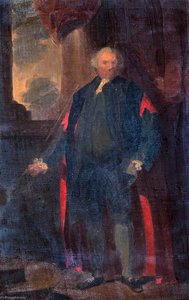
      In this 1938 portrait, we encounter Lord Horder, a man whose life was defined by a quiet, steadfast proximity to the British monarchy. He sits with a composed, almost guarded posture, legs crossed in a manner that suggests both comfort and a disciplined restraint. His gaze is directed away from the viewer, fixed upon a distant point that implies a mind preoccupied with matters of state or the heavy weight…

      Title (Original): A Reduced Chart of Bombay Harbour, to form as an Index for the large one of Eight Sheets, by William Nichelson, Master of his Majesty’s Ship Elizabeth. (1763) tekijä William Nicholson
      10

      Title (Original): A Reduced Chart of Bombay Harbour, to form as an Index for the large one of Eight Sheets, by William Nichelson, Master of his Majesty’s Ship Elizabeth.

      1763 · Print · Kalakriti Archives, Hyderabad

      To gaze upon "A Reduced Chart of Bombay Harbour" is to embark on a voyage through time, transported back to the mid-1760s when the tides of the Indian Ocean carried the weight of colonial ambition and maritime discovery. This exquisite piece of cartography, derived from the meticulous surveys of Captain William Nichelson around 1763, serves as much more than a mere navigational tool; it is a profound historical document that…

      William Nicholson: canvases 11 to 100 of the ranking

      An Old Glass Bottle (1920) tekijä William Nicholson
      #18

      An Old Glass Bottle

      1920 · Leeds Art Gallery

      In this 1920 composition, we find ourselves in a space of profound quietude. The subject is a humble glass bottle, its surface marked by age and a slight…

      Bring this light home →
      Hampstead Heath, Flagstaff (1908) tekijä William Nicholson
      #28

      Hampstead Heath, Flagstaff

      1908 · Bristol Museum - Art Gallery

      William Nicholson's "Hampstead Heath, Flagstaff," painted in 1908, isn’t merely a depiction of a London landscape; it’s a carefully constructed tableau brimming with quiet observation and subtle emotional…

      Have it painted by hand →
      Mushrooms (1927) tekijä William Nicholson
      #30

      Mushrooms

      1927 · Nottingham Castle Museum And Art Gallery

      To gaze upon Sir William Nicholson’s depiction of mushrooms is to encounter a moment suspended between the wild forest floor and the cultivated elegance of a dining table.…

      Order this canvas →
      Santa Lucia, Malaga (1935) tekijä William Nicholson
      #32

      Santa Lucia, Malaga

      1935

      In the quietude of 1935, Sir William Nicholson captured a moment of profound stillness in his evocative landscape, Santa Lucia, Malaga. This exquisite piece invites the viewer into…

      Have it painted by hand →
      William Henry Davies (1928) tekijä William Nicholson
      #33

      William Henry Davies

      1928

      In this evocative 1928 portrait, Sir William Nicholson captures more than just the likeness of a man; he captures a profound sense of quietude and introspection. The painting,…

      Bring this light home →
      Music (1890) tekijä William Nicholson
      #34

      Music

      1890 · Newark Town Hall Museum And Art Gallery

      To stand before "Music" is to be enveloped in a moment suspended between sound and silence. This exquisite portrait, dating from 1890, captures not merely the act of…

      Have it painted by hand →
      Sutton Veny in Snow (1924) tekijä William Nicholson
      #35

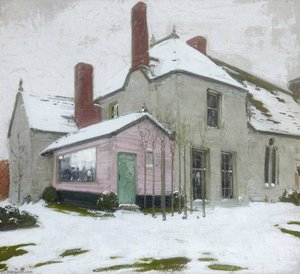
      Sutton Veny in Snow

      1924 · Royal Scottish Academy of Art - Architecture

      In the quietude of a frozen landscape, Sir William Nicholson captures a moment of profound stillness in Sutton Veny in Snow. Painted in 1924, this evocative oil on…

      Have it painted by hand →
      Still Life (1885) tekijä William Nicholson
      #38

      Still Life

      1885 · Newark Town Hall Museum And Art Gallery

      In the quiet corners of art history, few masters captured the profound beauty of the mundane as gracefully as Sir William Nicholson. His 1885 masterpiece, Still Life, serves…

      Order this canvas →
      Hawking (1902) tekijä William Nicholson
      #39

      Hawking

      1902 · National Trust

      William Nicholson’s “Hawking,” painted in 1902, isn't merely a portrait; it’s a carefully constructed tableau of Victorian sensibilities layered with subtle anxieties and burgeoning modernity. The subject, a…

      Have it painted by hand →
      The stack, Hoar's Fields (1927) tekijä William Nicholson
      #49

      The stack, Hoar's Fields

      1927 · Uuden Etelä-Walesin taidemuseo

      The stack, Hoar's Fields is a painting by Sir William Nicholson. Executed in 1927, the work reflects the artist's established approach to form and composition during the interwar…

      Order this canvas →
      Portrait of an Unidentified Gentleman tekijä William Nicholson
      #53

      Portrait of an Unidentified Gentleman

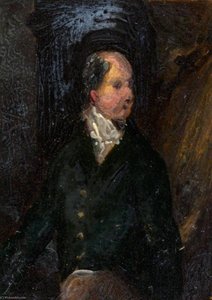
      Royal Scottish Academy of Art - Architecture

      Sir William Nicholson’s “Portrait of an Unidentified Gentleman,” painted circa 1868, is more than just a likeness; it's a carefully constructed tableau of understated elegance and contemplative melancholy.…

      Bring this light home →
      The Rose crested Cockatoo (1917) tekijä William Nicholson
      #55

      The Rose crested Cockatoo

      1917 · Ashmolean-museo

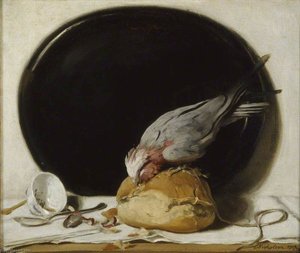
      Sir William Nicholson's 1917 painting, “The Rose-Crested Cockatoo,” isn’t merely a depiction of an exotic bird; it’s a carefully constructed meditation on observation, illusion, and the subtle interplay…

      Have it painted by hand →
      The Paper Poppies (1919) tekijä William Nicholson
      #57

      The Paper Poppies

      1919 · The National Trust For Scotland

      In the quietude of “The Paper Poppies,” painted in 1919, Sir William Nicholson invites the viewer into a sanctuary of stillness that belies the profound turbulence of its…

      Bring this light home →
      Thomas Hamilton (1784–1858), RSA tekijä William Nicholson
      #59

      Thomas Hamilton (1784–1858), RSA

      Royal Scottish Academy of Art - Architecture

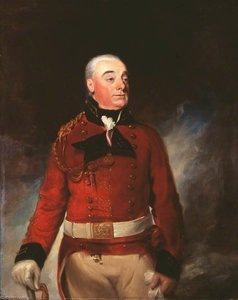
      Sir William Nicholson’s “Thomas Hamilton (1784–1858), RSA” is more than a mere likeness; it's a carefully constructed tableau of 19th-century British identity, imbued with the quiet strength and…

      Have it painted by hand →
      Matadero, Segovia (1935) tekijä William Nicholson
      #64

      Matadero, Segovia

      1935 · Fitzwilliamin museo

      William Newzam Prior Nicholson’s “Matadero, Segovia” isn't merely a depiction of a building; it’s a portal. Painted in 1935, this oil on panel captures the essence of a…

      Bring this light home →
      Armistice Night (1918) tekijä William Nicholson
      #86

      Armistice Night

      1918 · Fitzwilliamin museo

      Sir William Nicholson's "Armistice Night," painted in 1918, isn’t merely a depiction of a wartime scene; it’s a visceral embodiment of the complex emotions swirling within a nation…

      Have it painted by hand →

      William Nicholson's canvases, period by period

      What William Nicholson painted most

      The four subjects that return most often on these canvases, each with its best-loved example.

      Where William Nicholson's canvases hang

      Tämän sivun teoksista eniten sisältävät 8 museota.

      Museo Kaupunki William Nicholson teokset Tämän listan maalaukset
      Royal Scottish Academy of Art - Architecture, EdinburghRoyal Scottish Academy of Art - Architecture Edinburgh 102 Album Copies of Old Masters and other Paintings (no.28, p.13), Album Copies of Old Masters and other Paintings (no.5, p.5), Album Copies of Old Masters and other Paintings (no.98, p.43)
      National Trust, LontooNational Trust Lontoo 8 Master Anthony Bacon, Aged 3 (Anthony W. Bacon, Son of Thomas W. Bacon, 1873–1950, of Ramsden Hall, Essex), La Place du Petit Enfer, Dieppe, Hawking
      Fitzwilliamin museo, KambriaFitzwilliamin museo Kambria 7 Field Marshal J. C. Smuts, Matadero, Segovia, Armistice Night
      Newark Town Hall Museum And Art Gallery, NewarkNewark Town Hall Museum And Art Gallery Newark 4 Music, Still Life, Boy with the Caroline Mug
      National Gallery of Canada, OttawaNational Gallery of Canada Ottawa 3 Glass and Fruit, The Blue Gloves
      Fitzwilliam MuseumFitzwilliam Museum 3 Armistice Night, 1918, Still-life, fruit on a dish
      Nottingham Castle Museum And Art Gallery, NottinghamNottingham Castle Museum And Art Gallery Nottingham 3 Mushrooms, Miss Wish Wynne (1882–1931), Actress, in the Character of Janet Cannot for the Play 'The Great Adventure'
      Fenton House, LondonFenton House London 2 Hawking (La chasse au falcon), Francis and Christopher Bacon (Sons of Thomas Walter Bacon (1873-1950) of Ramsden Hall, Essex)

      William Nicholson's most famous canvas, decade after decade

      1. 1880s
        Still Life (1885) tekijä William Nicholson
        38 of 100

        Still Life

        Ikä 8–17 · Newark Town Hall Museum And Art Gallery

        In the quiet corners of art history, few masters captured the profound beauty of the mundane as gracefully as Sir William Nicholson. His 1885 masterpiece, Still Life, serves…

      2. 1890s
        Sara Bernhardt (1844–1923) (1897) tekijä William Nicholson
        Ranked 1 of 100

        Sara Bernhardt (1844–1923)

        Ikä 18–27

        In this evocative monochrome portrait from 1897, Sir William Nicholson captures the magnetic presence of the incomparable Sara Bernhardt. The painting transcends a mere photographic likeness, offering instead…

      3. 1900s
      4. 1910s
      5. 1920s
        Field Marshal J. C. Smuts (1923) tekijä William Nicholson
        8 of 100

        Field Marshal J. C. Smuts

        Ikä 48–57 · Fitzwilliamin museo

        In the quiet, commanding presence of Sir William Nicholson’s 1923 masterpiece, Field Marshal J. C. Smuts, one finds much more than a mere historical record; one encounters a…

      6. 1930s
        Glass and Fruit (1938) tekijä William Nicholson
        5 of 100

        Glass and Fruit

        Ikä 58–67 · National Gallery of Canada

        In this 1938 oil on canvasboard, titled Glass and Fruit, the British artist William Nicholson explores a highly distilled approach to the still life. The work represents a…

      William Nicholson's canvases, question by question

      Which canvas is William Nicholson most remembered for?Read the answer

      Sara Bernhardt (1844–1923) (1897), followed by Chairing the Feathers The Eynsham Morris at the Gates of Blenheim Palace (1902) and Album Copies of Old Masters and other Paintings (no.28, p.13).

      Sara Bernhardt (1844–1923): how old was William Nicholson when it was painted?Read the answer

      William Nicholson, born in 1872, was 25 years old: Sara Bernhardt (1844–1923) dates from 1897.

      What are William Nicholson's ten most famous canvases?Read the answer

      Sara Bernhardt (1844–1923), Chairing the Feathers The Eynsham Morris at the Gates of Blenheim Palace, Album Copies of Old Masters and other Paintings (no.28, p.13), Album Copies of Old Masters and other Paintings (no.5, p.5), Glass and Fruit, The Front Door and Porch of Chartwell, Sir William Henry Bragg (1862–1942), Field Marshal J. C. Smuts, Lord Horder (1871–1955), FCVC, MD, FRCP, Physician to Five Successive British Monarchs (Edward VII to Elizabeth II) ja Title (Original): A Reduced Chart of Bombay Harbour, to form as an Index for the large one of Eight Sheets, by William Nichelson, Master of his Majesty’s Ship Elizabeth.. Each canvas in the ranking above comes with its year and its museum.

      How many paintings did William Nicholson create?Read the answer

      242 works by William Nicholson are in our catalogue, dated 1885 to 1938.

      Where do William Nicholson's most famous canvases hang today?Read the answer

      Mostly in Royal Scottish Academy of Art - Architecture (Edinburgh), National Trust (Lontoo) ja Fitzwilliamin museo (Kambria); the list above names each museum and its canvases.

      When did William Nicholson paint the most famous canvases?Read the answer

      In 1910s, which gave 24 of the 100 works on this page, Walter Greaves (1846–1930) among them.

      Which famous William Nicholson canvas came first, and which came last?Read the answer

      The earliest canvas here is Still Life (1885); the latest is Glass and Fruit (1938).

      Which subjects did William Nicholson paint most?Read the answer

      Portrait (22), Victorian era (10) ja British art (9), across the 100 works on this page.

      Which medium appears most in William Nicholson's paintings?Read the answer

      Oil On Canvas, used in 19 of the 100 works on this page.

      Which movement is William Nicholson associated with?Read the answer

      Impressionistic realism, as the canvases on this page show.

      Which paintings by William Nicholson are held by the Royal Scottish Academy of Art - Architecture?Read the answer

      The Royal Scottish Academy of Art - Architecture, Edinburgh holds 13 of the works on this page, among them Album Copies of Old Masters and other Paintings (no.28, p.13), Album Copies of Old Masters and other Paintings (no.5, p.5) ja Album Copies of Old Masters and other Paintings (no.98, p.43).

      Where can I buy a reproduction of a William Nicholson painting?Read the answer

      Yes. Every painting on this page can be ordered from its own page as an oil reproduction painted by hand, or as a fine art print, in the size you choose.

      Meet the painter: William Nicholson

      Early Life and Artistic Beginnings

      Sir William Newzam Prior Nicholson, syntyi Newark-on-Trentissa, Nottinghamshiressa, vuonna 1872. Hänen taustansa oli yhdistelmä teollisuuden käytännöllisyyttä ja taiteellista herkkyyttä. Hänen isänsä, menestyksekäs insinööri ja konservatiivinen parlamentarikku, opetti hänelle kurinalaisuutta, kun taas hänen äitinsä sukulinjojen kautta Nicholson yhdistyi Oxfordin estetiikkaan. Jo nuorena aikuana Nicholson osoitti lahjakkuutta taiteessa, joka oliidullistettu William Cubleyn, paikallisen maalarin, opetuksella, joka itse perusti juurensa Sir Joshua Reynoldsiin. Tämä varhainen altistuminen asetti pohjan uralle, joka ulottui monipuolisiin mediaihin ja tyyleihin. Lyhyt aika Hubert von Herkomerin taideskolissa osoittautui ratkaisevaksi paitsi taitojensa hienosäätöön myös Mabel Pryden tapaamiseen, jonka hän myöhemmin vaimoksi otti ja joka oli keskeinen osallistuja hänen nousujohteisessa taiteellisessa matkassaan. Mabelin kautta hän tapasi veljensä, taiteilijan James Pryden, kumppanuus, joka pian mullisti graafisen suunnittelun maailmaa.

      The Beggarstaffs and a Revolution in Poster Art

      William Nicholsonin ja James Pryden yhteistyö, tunnettu nimellä “J. & W. Beggarstaff,” merkitsi käännekohtaa brittiläisessä visuaalisessa kulttuurissa. He hylkasivat Victorian aikakauden koristeellisen julistetaiteen vallitsevan estetiikan ja omaksuivat rohkean yksinkertaisuuden, joka oli tunnusomaista näyttävälle siluetille, tasaisille värikerroksille ja perinteisen perspektiivin harkittuun hylkäämiseen. Heidän suunnitelmansa eivät olleet pelkästään mainoksia; ne olivat lausuntoja – voimakkaita, graafisia komposiitioita, jotka vangitsivat yleisön mielikuvituksen. Don Quixoten ja Harper’s Magazine -kuten tuotantoihin suunnitellut julisteet muuttuivat välittömästi tunnistettaviksi, vaikuttivat monien taiteilijoiden ja suunnittelijoiden sukupolveen. Tämä aikakausi ei ollut pelkästään kaupallista taidetta; se oli visuaalisen viestinnän uudelleenmäärittelyä. Beggarstaffin työ haastoi konventiot, avasi tien modernille graafiselle suunnittelulle ja vakiinnutti Nicholsonin maineen innovaattoriksi. Heidän vaikutuksensa ulottui julistetaiteen ulkopuolelle, vaikuttivat myös kuvanveistoon ja taidemaalaukseen sen vahvan muodon ja harkitun komposition ansiosta.

      From Woodcuts to Portraits: A Developing Style

      Beggarstaff-kumppanuuden päätyttyä Nicholson aloitti tyylillisen tutkimusmatkan. Hän kääntyi puupiirustuksen ja puuvaluveiston suuntaan, tekniikoita, jotka mahdollistivat hänen taitojensa hienosäädön linjassa ja muodossa. James McNeill Whistlerin kannustaessa hän omaksui nämä menetelmät, tuottaen monimutkaisia ​​ja herättäviä printtejä, jotka osoittivat hänen kasvavaa taiteellista kypsyyttään. Nämä teokset osoittivat hämmästyttävää taitoa vangita essenssi minimaalisella yksityiskohdalla, ominaisuus, joka tuli tunnusmerkiksi hänen tyylilleen. Samanaikaisesti Nicholson vakiinnutti asemansa muotokuvaajana ja sai komissioita merkittävien aikalaisten harjoituksista. Hänen muotokuvansa eivät olleet pelkästään ulkoisia kuvauksia; ne olivat syvällisiä tutkimuksia hahmojen sisäelämästä hienovaraisten ilmeiden ja asennon kautta. *Lady in Furs, Mme. P.* -teos on esimerkki tästä taidosta, joka vangitsee ei vain fyysisen ulkonäön vaan myös persoonallisuuden ja sosiaalisen aseman.

      Still Life, Landscape, and Lasting Legacy

      Nicholsonin myöhemmässä urassaan hän keskittyi yhä enemmän maisema- ja asetelma-maalaukseen. Hänen asetelmistaan, kuten *The Lowestoft Bowl*, on tunnettu heidän taitonsa vangita valon ja tunnelman hienovaraisuudet, harmoniset väripaletit ja hiljainen intiimius. Hän kohdeli arkipäiväiset esineet runolliseksi symboliksi, nostaen ne yli pelkän edustuksen ja muuttuen kauneuden ja pohdiskelun symboleiksi. Hänen maisemansa, usein kuvaten matkojaan Espanjasta ja Italiasta, vangitsevat paikan essenssin huomattavalla taidolla. Nicholson pysyi monipuolisena taiteilijana koko elämänsä ajan, kokeillen jatkuvasti uusia tekniikoita ja lähestymistapoja. Hän kirjoitti lastenkirjoja, suunnitteli teatteria ja tuotti printtejä myös hänen miehensä Robert Gravesin kanssa, joka tuli myöhemmin tunnetuksi historiallisten romaaniensa ansiosta *I, Claudius* ja *The Golden Fleece*. Sir William Nicholsonin vaikutus ulottuu hänen oman tuotantonsa ulkopuolelle; hän inspiroi monia taiteilijoita sitoutumisellaan käsityöhön, innovatiiviseen ajatteluunsa ja kykyynsä löytää kauneutta arkisesta. Hänen työnsä on todiste taiteen voimasta valaista ihmiskokemusta ja muuttaa maailman ympärillämme havaintoa. *Hän kuoli vuonna 1949*.

      Kaikki 242 teosta taiteilijalta William Nicholson →