Atelier — Livraison offerte dans le monde entier — Livraison sous 2 à 6 semaines
Transformer une photo en peinture Ma liste de souhaits Panier

Aperçu en situationAperçu en situation Visualiser en RAVisualiser en RA Commander l'impression Commander l'impressionCommander la reproduction peinte à la main Commander la reproduction peinte à la mainTélécharger l'image haute résolution Télécharger l'image haute résolution EnvoyerEnvoyer
Ajouter aux favoris Ajouter aux favoris TéléchargerTélécharger Articles similairesArticles similaires RadiographieRadiographie DiaporamaDiaporama

Self-Portrait

John Opie (1761 – 1807)

John Opie RA (1761-1807) était un peintre cornique renommé pour ses portraits de personnalités importantes et son style rappelant Rembrandt. Académicien royal et écrivain artistique.

Galerie nationale d’Écosse (Édimbourg, Royaume-Uni)

Découvrez les chefs-d'œuvre de la Scottish National Gallery à Édimbourg ! Peintures italiennes, écossaises et modernes dans un bâtiment néoclassique exceptionnel. Visitez gratuitement !

The Enigmatic Gaze: Unveiling John Opie’s Self-Portrait

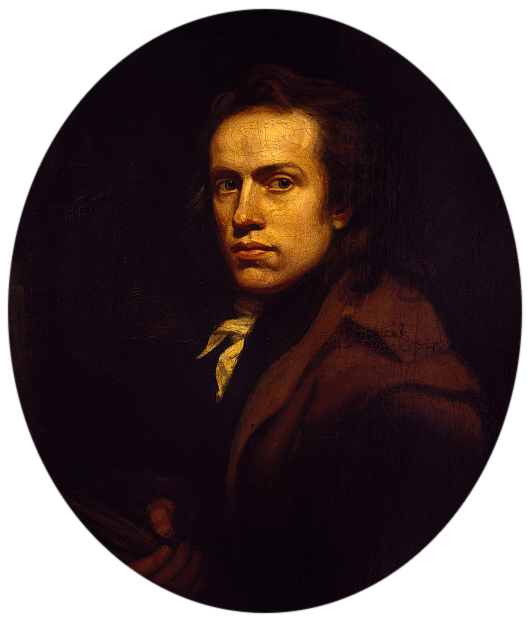
John Opie's 1789 “Self-Portrait” isn’t merely a likeness; it’s a carefully constructed window into the soul of a burgeoning artistic talent. Painted in oil on canvas, this oval composition immediately commands attention with its dramatic chiaroscuro – a masterful manipulation of light and shadow that plunges the viewer into an atmosphere of profound introspection. The portrait depicts Opie himself, not as a triumphant figure, but as a contemplative man, his gaze fixed directly upon the observer, inviting us to share in his thoughts and emotions. The choice of this particular pose—a slight turn of the head, a subtle furrowing of the brow—suggests a mind wrestling with ideas, a quiet intensity that belies the young artist’s burgeoning fame.

Self-Portrait by John Opie

Baroque Drama and Cornish Roots

Opie’s style is deeply rooted in the Baroque tradition, a movement known for its theatricality, emotional intensity, and dramatic use of light. The influence of Caravaggio and Rembrandt—artists who were masters of chiaroscuro—is readily apparent in Opie's work. The stark contrast between the illuminated areas of the face and clothing and the deep shadows that envelop the background creates a sense of depth and volume, drawing our attention to the central figure. This technique wasn’t simply aesthetic; it was a deliberate choice to convey a powerful emotional state – here, a blend of seriousness, intelligence, and perhaps even melancholy. Born in Trevellas, Cornwall, Opie's artistic sensibility was profoundly shaped by his Cornish heritage, evident in the ruggedness of his features and the earthy tones that dominate the palette.

A Study in Form and Texture

Beyond the dramatic lighting, a closer examination reveals Opie’s meticulous attention to detail. The artist skillfully employs lines to define the contours of the face, clothing, and hair, creating a sense of solidity and form. The layering of paint—a technique known as impasto—adds texture to the surface, particularly in the rendering of the fabric draped over his shoulders and the delicate details of his hands. Note the subtle variations in color and tone that suggest the play of light on different surfaces. This careful observation and execution demonstrate Opie’s commitment to realism, a hallmark of his style.

Symbolism and the Portraiture of the Mind

The portrait transcends a simple likeness; it's a symbolic representation of the artist’s inner world. The direct gaze invites engagement, suggesting that Opie is not simply presenting himself but offering an invitation to share in his thoughts. The serious expression—a hallmark of many self-portraits from this period—hints at intelligence, introspection, and perhaps even a touch of melancholy. Considering the historical context – the late 18th century was a time of intellectual ferment and social change – Opie’s portrait can be interpreted as an exploration of identity in a rapidly evolving world. The choice to depict himself alone reinforces this sense of internal reflection, suggesting that the artist is grappling with profound questions about his place in society and his role as a creative force.

Further Exploration


À propos de cette œuvre

Informations clés

  • Influences:
    • Caravaggio
    • Velazquez
  • Medium: Oil on canvas
  • Title: Self-Portrait
  • Notable elements or techniques: Chiaroscuro, dramatic lighting
  • Artistic style: Portraiture, realistic
  • Artist: John Opie
  • Movement: Baroque

Code QR

Code QR
© TopImpressionists.com — Tous droits réservés  ·  100% Peint à la main · Satisfaction garantie · Livraison gratuite dans le monde entier
VISA MASTERCARD