Atelier — Livraison offerte dans le monde entier — Livraison sous 2 à 6 semaines
Transformer une photo en peinture Ma liste de souhaits Panier
Aperçu en situationAperçu en situation Visualiser en RAVisualiser en RA Commander l'impression Commander l'impressionTélécharger l'image haute résolution Télécharger l'image haute résolution EnvoyerEnvoyer
Détails de l'œuvreDétails de l'œuvre Ajouter aux favoris Ajouter aux favoris TéléchargerTélécharger Articles similairesArticles similaires RadiographieRadiographie DiaporamaDiaporama

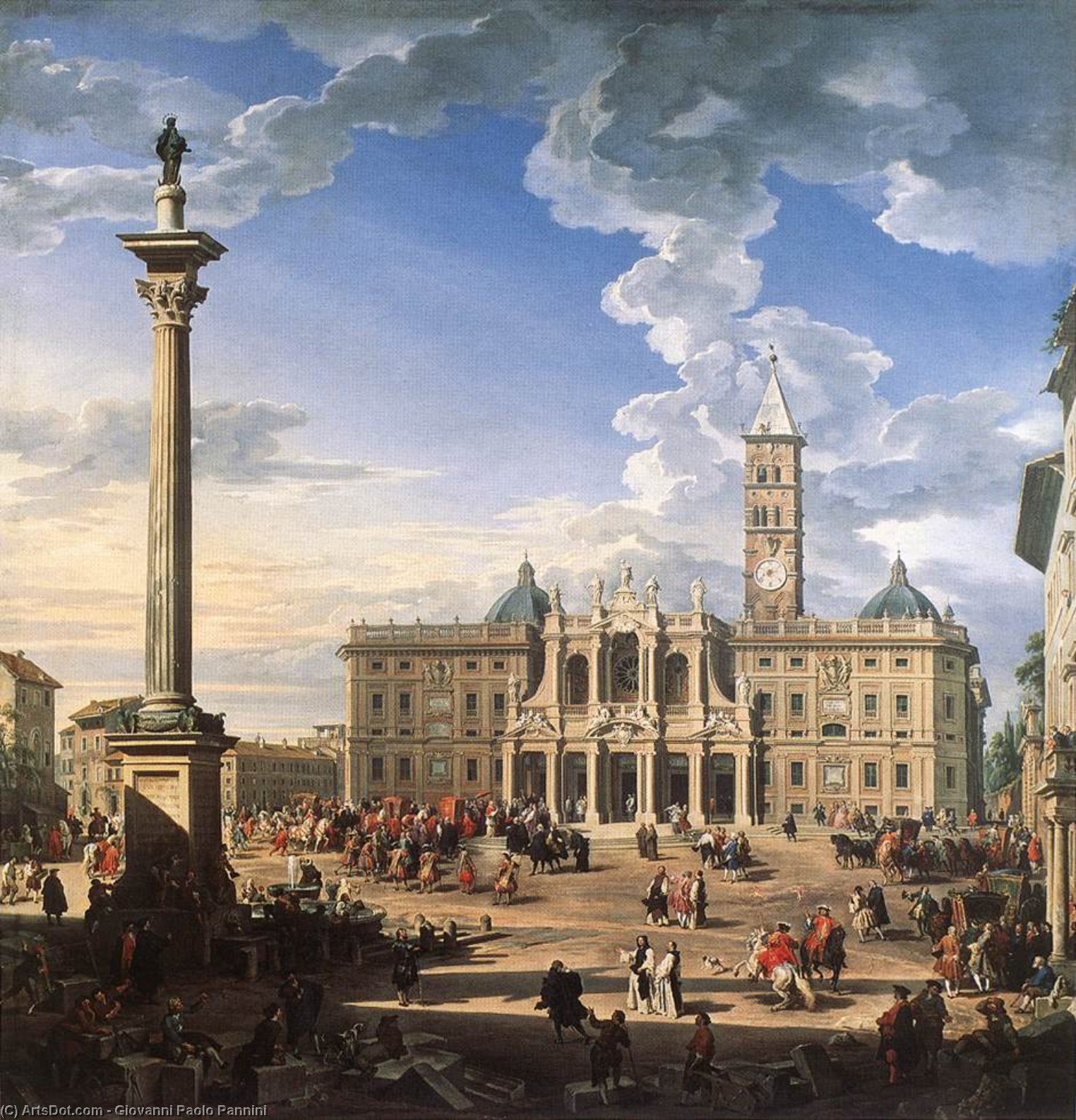
La Place et l'Église de Santa Maria Maggiore

Découvrez le paysage romain vibrant à travers la « Galerie de Vues » de Giovanni Paolo Panini, capturant des monuments emblématiques avec un détail illusionniste magistral — un pilier de l'art baroque.

Giovanni Paolo Panini (1691-1765): Maître des vues romaines et de l'architecture fantastique. Découvrez son dessin précis, ses capricci et son influence sur les artistes comme Canaletto! Une beauté italienne du XVIIIe siècle.

Reproduction à l'huile faite à la main

Huile sur toile peinte à la main, avec cadre et dimensions personnalisés, réalisée sur commande par nos artistes. (Commander l'impression Commander l'impressionTélécharger l'image haute résolution Télécharger l'image haute résolution)

P118B $10
P118H $10
P118W $10
P438Z $10
P508JH $12
P508YH $12
P805H $10
P805Z $10
P919BZ $10
P919G $10
P919XJ $10
P959ZH $10
P968JZ $12
W106C $8
W218G $10
W218JH $8
W218Y $10
W307PJ $10
W316G $10
W316PJ $8
W316Y $10
W398PJ $8
W4111J $10
W500HY $15
W500JH $15
W692G $12
W849H $8
W940BG $15
W953PJ $8

Standard
custom
CM
INCH

Choisissez parmi nos formats prédéfinis qui respectent les proportions originales de l’œuvre.

largeur
hauteur

Vous pouvez saisir vos propres dimensions pour l'adapter à un cadre ou à un espace spécifique. Si la taille sélectionnée ne correspond pas aux proportions de l'image d'origine, nous recadrerons l'œuvre ou prolongerons la peinture avec des éléments peints à la main supplémentaires. Une maquette numérique vous sera envoyée pour approbation avant le début de la production.
Veuillez noter que l'aperçu à l'écran ne reflète pas le recadrage ou l'extension réels. Seule la maquette montrera fidèlement la composition finale.
Bien que des tailles personnalisées soient disponibles, nous vous recommandons de sélectionner une dimension dans la liste prédéfinie afin de préserver les proportions d'origine.

Exemples de personnalisation possibles : remplacer un visage par la photo du client ; ajouter un animal de compagnie (par exemple, remplacer un chat par un chien) ; inclure un message caché en arrière-plan ; modifier le paysage ou les éléments de l'arrière-plan.
Après la commande, l’équipe TopImpressionists.com contactera le client par e-mail pour recueillir ses instructions et lui fournira une maquette d’aperçu

Livraison dans le monde entier () en 3 à 4 semaines au lieu des 5 semaines habituelles. (14 août). Aucun compromis sur la qualité.

why_choose_icon
Livraison express gratuite dans le monde entier
why_choose_icon
Toile de lin de qualité supérieure
why_choose_icon
Assurance transport complète
why_choose_icon
Garantie de remboursement des droits de douane
why_choose_icon
Garantie de fidélité des couleurs
why_choose_icon
Politique de retour de 60 jours (uniquement en cas de défaut)
why_choose_icon
Garantie de remboursement à 100%
why_choose_icon
Offre de tarifs dégressifs

Prix total

$ 269

reproduction

La Place et l'Église de Santa Maria Maggiore

Technique de reproduction

Format de la reproduction

-

Prix total

$ 269

Informations clés

  • Location: Private Collection
  • Artist: Giovanni Paolo Panini
  • Artistic style: Veduta
  • Year: 1744
  • Dimensions: Large Scale
  • Subject or theme: Roman Landscape
  • Influences: Francesco Galli-Bibiena

Quiz d'art

Chaque question ne comporte qu'une seule bonne réponse.

Question 1:
What is Giovanni Paolo Panini primarily known for?
Question 2:
In what year was 'The Piazza and Church of Santa Maria Maggiore' painted?
Question 3:
What architectural style characterizes Panini’s work, as exemplified by this painting?
Question 4:
The painting depicts a bustling scene featuring horses. What does this detail suggest about the time period in which Panini created it?
Question 5:
What is the significance of the clock visible in the upper right corner of the painting?

Description de l'œuvre

Giovanni Paolo Panini: A Vision of Roman Splendor

Giovanni Paolo Panini’s “The Piazza and Church of Santa Maria Maggiore” isn't merely a depiction of Rome; it’s an embodiment of the Baroque spirit—a testament to how artists sought to capture not just what was seen, but what felt. Completed in 1744, this monumental canvas transports viewers back to a bustling Roman piazza dominated by the magnificent Basilica of Saint Mary Major, one of Christendom's oldest churches and a beacon of Marian devotion.

A Masterstroke of Veduta Technique

Panini’s genius lay in his mastery of *veduta*, Italian for “view,” a genre that flourished during the Enlightenment. Unlike traditional portraiture or mythological scenes, vedute aimed to faithfully reproduce urban landscapes with astonishing accuracy. Panini achieved this feat through meticulous observation and painstaking drawing—a process that involved countless sketches and preparatory studies. He employed atmospheric perspective—the subtle blending of colors to simulate distance—creating a convincing illusion of depth and conveying the hazy glow of Roman sunlight. The artist skillfully utilized chiaroscuro, dramatic contrasts between light and shadow, to sculpt forms and heighten emotional impact, emphasizing the grandeur of the basilica’s façade and the energy of the surrounding crowd.

More Than Just Paint: Illusionistic Space

The painting's brilliance extends beyond mere technical prowess; it operates on a psychological level. Panini deliberately manipulated perspective—creating converging lines that draw the eye towards the central church—to guide the viewer’s gaze and immerse them in the scene. This technique wasn’t simply about replicating reality; it was about shaping perception, conveying a sense of awe and reverence for religious tradition. The inclusion of horses – likely representing papal processions – reinforces this symbolic dimension, highlighting Rome's role as the spiritual heart of Christendom.

Historical Context: Patronage and Enlightenment Idealism

“The Piazza and Church of Santa Maria Maggiore” was commissioned by Francesco Algarotti, a prominent Neapolitan art critic and diplomat serving under Louis XV. This patronage reflects the broader cultural currents of the era—the Enlightenment’s fascination with reason and observation alongside its yearning for beauty and grandeur. Panini's work exemplifies this synthesis, presenting Rome as both a historical monument and an idealized vision of civilized society.

A Legacy of Romantic Vision

Today, reproductions of Panini’s masterpiece continue to inspire artists and designers alike. Its enduring appeal lies in its ability to evoke the spirit of Baroque Rome—a city brimming with history, faith, and artistic innovation. It serves as a powerful reminder that art can transcend time, transporting us back to a moment of sublime beauty and capturing the essence of human experience.

Biographie de l'artiste

Giovanni Paolo Panini (1691–1765): Master of Roman Vedute & Architectural Fantasies

Giovanni Paolo Panini, a name synonymous with the grandeur and romantic allure of 18th-century Rome, was more than just a painter; he was a visual architect of memory. Born in Piacenza in 1691, his artistic journey began under the tutelage of Giuseppe Natali and Andrea Galluzzi, but it was his exposure to the theatrical designs of Francesco Galli-Bibiena that truly ignited his imagination. This early immersion in stagecraft would profoundly influence his later work, imbuing it with a sense of dramatic composition and illusionistic space. In 1711, Panini relocated to Rome, a city already steeped in artistic history, where he honed his skills under the guidance of Benedetto Luti, mastering the art of drawing and laying the foundation for his future mastery of perspective.
  • Early Training & Influences: Panini’s formative years were marked by instruction from Giuseppe Natali and Andrea Galluzzi in Piacenza, shaping his initial artistic sensibilities. Crucially, he absorbed the theatrical flair of Francesco Galli-Bibiena, whose stage designs instilled in him a fascination with dramatic perspective and illusionistic space—influences that would permeate his subsequent oeuvre.
  • Rome & The Academy: Moving to Rome in 1711, Panini enrolled at the Accademia di San Luca and subsequently joined the Académie de France, where he cultivated connections with fellow artists like Jean-Honoré Fragonard. These collaborations fostered intellectual exchange and contributed to the dissemination of innovative artistic ideas.

From Frescoes to Vedute: The Evolution of an Artistic Style

Panini’s initial success wasn't as a canvas painter but as a decorator of palaces. His frescoes adorned the walls of prominent Roman residences, including the Villa Patrizi (1719–1725), Palazzo de Carolis (1720) and Seminario Romano (1721–1722). These early commissions allowed him to develop his technical prowess and establish a reputation within Rome’s artistic circles. He meticulously studied drawing techniques, diligently practicing under Benedetto Luti, perfecting the craft of rendering form and capturing subtle tonal variations—skills that would prove invaluable in his later exploration of *veduta* painting.
  • The Venetian Influence: Like many artists of his time, Panini initially drew inspiration from Jan van Goyen’s masterful landscapes, adopting a similar approach to tonal rendering and capturing the atmospheric qualities of Dutch riverside scenes. This stylistic connection underscores the broader artistic currents circulating throughout Europe during the Baroque period.
  • The Birth of Vedutismo: However, Panini swiftly transcended mere imitation, forging his own distinctive path as a *vedutista*. Rejecting the conventions of topographical art—which prioritized accurate documentation—he embraced a more imaginative vision. He didn’t merely record what he saw; he reconstructed it, blending existing structures with fragments of ancient ruins and fantastical architectural elements.

The Allure of Ruins & The Panini Projection

Panini’s fascination with ruins wasn't simply an aesthetic preference; it reflected a deeper intellectual preoccupation—a burgeoning interest in classical antiquity and a poignant awareness of its inevitable decay. He meticulously depicted iconic landmarks like the Pantheon, Colosseum, and Roman Forum, framing them within dramatic lighting and atmospheric effects that evoked a sense of melancholy grandeur. This approach distinguished him from his contemporaries and cemented his reputation as one of Rome’s foremost artists.
  • Innovative Perspective: Panini revolutionized artistic representation by pioneering what became known as the “Panini Projection.” Unlike traditional perspective systems that relied on mathematical calculations, Panini devised a method for achieving convincing illusionistic depth—a technique instrumental in rendering panoramic views with remarkable accuracy. This breakthrough dramatically expanded the possibilities of architectural painting and influenced subsequent generations of artists.
  • A Legacy of Imagination: His canvases are imbued with an extraordinary sense of atmosphere and emotion, capturing not just visual details but also the psychological impact of Roman spaces. Panini’s work continues to inspire admiration for its artistic ingenuity and its ability to convey a profound appreciation for Rome's cultural heritage.

Influence & Recognition: Shaping Artistic Discourse

Panini exerted considerable influence on his peers, serving as a respected teacher at both the Accademia di San Luca and the Académie de France in Rome. He fostered intellectual exchange among artists from across Europe, disseminating innovative ideas about composition and perspective—contributing to the artistic dynamism of the era. His fame soared during the Grand Tour, attracting the attention of wealthy patrons eager to acquire his paintings—demonstrating the enduring prestige he commanded within the art world.
  • Notable Works: Among Panini’s most celebrated achievements are *The Temple of Diana*, a monumental fresco commissioned for Palazzo Barberini, and *Interior of Saint Peter's*, Rome—works that exemplify his mastery of perspective and his ability to convey the grandeur of Roman architecture. His depictions of ruins—particularly *The Ruins of Pompeii*—became emblematic of the vedutist style.
  • A Lasting Impression: Panini’s legacy extends beyond individual artworks; he established a paradigm for panoramic painting that continues to resonate with artists today. His pioneering technique remains a cornerstone of architectural representation, ensuring his place as one of Rome's most influential artistic figures.
## Historical Significance & Enduring Appeal Giovanni Paolo Panini’s contribution to art history transcends mere stylistic innovation; he embodies the spirit of intellectual curiosity and imaginative exploration that characterized the Baroque period. His work serves as a testament to the transformative power of observation—combined with artistic vision—to capture not only the physical appearance of places but also their emotional resonance. Today, Panini’s paintings are housed in major museums worldwide—a tangible reminder of his enduring influence on Western art and culture.

Giovanni Paolo Panini

Giovanni Paolo Panini

1691 - 1765 , Italie

L'essentiel de l'artiste

  • Artistic Movement Or Style: Vedutismo
  • Artists Or Movements Influenced By This Artist: ['Hubert Robert']
  • Artists Who Influenced This Artist:
    • Giuseppe Natali
    • Andrea Galluzzi
    • Francesco Galli-Bibiena
  • Date Of Birth: 1691
  • Date Of Death: 1765
  • Full Name: Giovanni Paolo Panini
  • Nationality: Italien
  • Notable Artworks:
    • Le Temple de Diane
    • Intérieur du Panthéon
    • Intérieur de Saint Pierre
  • Place Of Birth: Piacenza, Italie
Explorez des œuvres d'art classées par thèmes, styles et caractéristiques.
© TopImpressionists.com — Tous droits réservés  ·  100% Peint à la main · Satisfaction garantie · Livraison gratuite dans le monde entier

VISA MASTERCARD