Garnet Ruskin Wolseley: A Cornish Visionary of Light and Landscape
Born in London in 1884, Garnet Ruskin Wolseley’s artistic journey was deeply intertwined with the vibrant cultural currents of his time. Descended from the renowned art critic and philosopher John Ruskin, Wolseley inherited a legacy of aesthetic scrutiny and a profound appreciation for the natural world – a lineage that profoundly shaped his distinctive style and subject matter. His early training at Hubert von Herkomer’s art school in Bushey provided a solid foundation, culminating in a prestigious scholarship to the Slade School of Fine Art under the guidance of Henry Tonks and Fred Brown. This formative period instilled within him a rigorous approach to observation and technique, while simultaneously exposing him to the burgeoning ideals of modern art.
A pivotal moment in Wolseley’s career arrived in 1908 when he relocated to Newlyn, a small fishing village nestled on the rugged Cornish coast. This move proved transformative, immersing him within an already established artist's community – a haven for painters seeking inspiration from the dramatic landscapes and authentic working life of Cornwall. The influence of his new companions, particularly Laura and Harold Knight, who had previously found their artistic voice in the Yorkshire fishing village of Staithes, is readily apparent in Wolseley’s early works. Their shared fascination with capturing fleeting moments of light, atmosphere, and the simple joys of rural existence resonated deeply within him, resulting in paintings characterized by a luminous quality and an emphasis on the beauty of everyday life.
The Cornish Influence: Light, Color, and Subject Matter
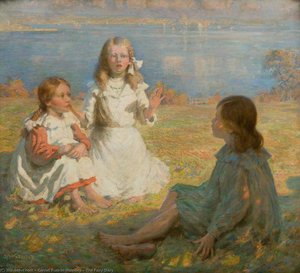
Wolseley’s artistic vision was fundamentally shaped by the unique environment of Cornwall. The region's dramatic coastline, ever-changing weather patterns, and vibrant hues of light created a constant source of inspiration. He skillfully translated these sensory experiences onto canvas, employing a technique that blended elements of Impressionism with a distinctly British sensibility. His palette leaned towards delicate washes of color – blues, greens, and yellows – capturing the ephemeral effects of sunlight on water, stone, and foliage. Unlike many landscape painters who sought to depict grand vistas, Wolseley frequently focused on intimate scenes: fishing boats bobbing in harbors, weathered cottages nestled amongst rolling hills, and solitary figures engaged in quiet pursuits.
The influence of Ruskin’s aesthetic philosophy is also evident in Wolseley's work. He shared Ruskin’s belief in the restorative power of nature and his conviction that art should serve as a means of understanding and appreciating the beauty of the natural world. This commitment to truthfulness and sincerity informed his approach to subject matter, leading him to depict scenes with remarkable detail and emotional resonance.
A Career Beyond Cornwall: Portraits and Continued Exhibitions
Following his years in Newlyn, Wolseley continued to exhibit his work at prestigious venues such as the Royal Academy. He also established a successful career as a portrait painter, capturing the likenesses of prominent figures from various walks of life. His portraits were characterized by their sensitivity and ability to convey both outward appearance and inner character. During World War I, Wolseley served in the navy, an experience that undoubtedly broadened his perspective and informed his artistic sensibilities.
In 1925, he was elected a member of the Royal West of England Academy (RWA), solidifying his position as a respected figure within the British art world. He remained active as an artist and exhibitor until his death in 1967, leaving behind a substantial body of work that continues to be admired for its beauty, sensitivity, and evocative portrayal of Cornish life.
Notable Works and Legacy
Among Wolseley’s most celebrated paintings are “Seascape,” a masterful depiction of the Cornish coast rendered in shimmering light and atmospheric haze; and "The Fairy Story," a charming portrait capturing the innocence and wonder of childhood friendship. These works, along with numerous other landscapes and portraits, offer a glimpse into the artist's unique vision and his profound connection to both the natural world and the human experience.
Wolseley’s legacy extends beyond his individual achievements. He played an active role in the Newlyn Society of Artists, contributing to the vibrant artistic community that flourished in Cornwall during the early 20th century. His work serves as a testament to the enduring power of landscape painting and its ability to capture the essence of place and time.
Where to Find More Information
- Christie’s Auction Records: Lot Essay
- James Alder Fine Art: Garnet Ruskin Wolseley (1884-1967)
- Facebook Group Discussion: Garnet Ruskin Wolseley, A.R.W.A. (1884-1913) “Reading on the ...
- Tutt'Art Pittura Scultura Poesia Musica:Garnet Ruskin Wolseley (1884-1967)