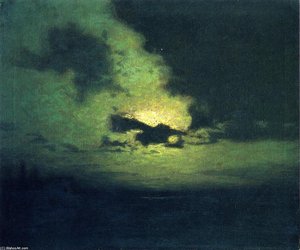
L'Architecte de l'Atmosphère : La Vie et l'Héritage de Lowell Birge Harrison
Lowell Birge Harrison (1854–1929) était bien plus qu'un simple peintre de paysages ; il était un poète de l'éphémère, un maître ayant compris que la véritable essence de la nature ne réside pas dans ses limites physiques, mais dans le voile invisible d'air qui les unit. Né à Philadelphie au sein d'une lignée artistique — frère cadet de Thomas Alexander Harrison — le parcours de Lowell fut celui d'une profonde évolution esthétique. Sa formation initiale à la Pennsylvania Academy of Fine Arts le plaça sous l'influence transformatrice de John Singer Sargent, un mentorat qui lui inculqua un dévouement rigoureux à l'observation et une finesse technique qui allait plus tard servir de fondement à ses explorations atmosphériques.
La trajectoire de la carrière de Harrison changea irrévocablement lorsqu'il se rendit à Paris en 1874. Imprégné par le prestige de l'École des Beaux-Arts, il chercha les conseils de Charles-Édouard Duran et Jean Le Bretton Cabanel, absorbant la rigueur académique de la tradition française tout en ressentant simultanément l'attrait de mouvements plus émotifs. C'est durant cette période que Harrison commença à s'éloigner de la clarté brute du réalisme pour tendre vers les nuances subtiles et évocatrices du Tonalisme. Ses débuts au Salon de 1881 avec le tableau « Novembre » marquèrent une introduction internationale triomphante ; l'œuvre fut si profondément émouvante qu'elle devint l'une des premières œuvres d'art américaines achetées par le gouvernement français, signalant l'arrivée d'une nouvelle voix américaine sur la scène mondiale.
Une Symphonie de Tons Feutrés et de Lumière Hivernale
Le style mature de Harrison se définit par ce qu'il appelait « la grande vision » — une philosophie centrée sur le pouvoir de rendre l'ensemble d'une scène comme un motif unique et unifié plutôt que comme une collection de parties disparates. Il possédait une capacité rare à supprimer l'inessentiel, se concentrant plutôt sur la vibration et la réfraction de la lumière au sein du paysage. Sa palette était souvent sobre, privilégiant les harmonies tranquilles de l'école de Barbizon aux couleurs intenses, parfois discordantes, des Impressionnistes. Cette retenue lui permettait de capturer l'essence spirituelle de ses sujets, particulièrement à travers ses célèbres scènes hivernales.
Dans des œuvres telles que « The Red Mill » et « Winter Twilight », Harrison invite le spectateur dans un monde de contemplation sereine. Il utilisait la lumière douce et diffuse des scènes côtières enneigées et des heures crépusculaires pour créer un sentiment de profonde immobilité. Sa technique reposait largement sur la capture de « l'atmosphère qui entoure les objets plutôt que les objets eux-mêmes », une méthode qui transformait les paysages en espaces psychologiques. Qu'il s'agisse de dépeindre l'activité rythmique d'un moulin ou la beauté spectrale d'une prairie couverte de givre, son coup de pinceau cherchait à évoquer le souffle même de la terre.
Le Maître Enseignant et l'Importance Historique
Au-delà de la toile, l'impact de Harrison sur l'art américain fut consolidé par son rôle d'éducateur et de théoricien. En tant que premier directeur de l'école de paysage de la colonie d'un été de l'Art Students League à Woodstock, New York, il a façonné les mains et l'esprit d'une nouvelle génération de peintres. Sa publication de 1909 sur la peinture de paysage est devenue un texte de référence, propageant ses principes d'harmonie tonale et de perception atmosphérique à travers les États-Unis. Il enseignait à ses élèves à regarder au-delà de la surface de la nature pour y trouver sa résonance spirituelle sous-jacente.
Bien que l'ascension ultérieure de mouvements modernes plus agressifs ait conduit certains critiques à rejeter son travail comme étant un sentimentalisme de « clair de lune et de brume », l'histoire s'est montrée bien plus clémente envers Harrison. Aujourd'hui, il est reconnu comme une pierre angulaire du mouvement Tonaliste, un artiste qui a réussi à fusionner la formation académique des Beaux-Arts avec les sensibilités transcendantalistes américaines. Son héritage reste gravé dans ces paysages calmes et évocateurs qui continuent de toucher les observateurs, nous rappelant une époque où l'art cherchait à capturer l'âme même de l'atmosphère.