Early Life and Education
Sava Šumanović, born in Vinkovci, Croatia in 1896, embarked on his artistic journey amidst the turbulent backdrop of Serbian history. He honed his skills initially in Zagreb, absorbing the influences of Austro-Hungarian academic art traditions before relocating to Paris in 1913. There, he found mentorship under André Lhôte, a pivotal figure in the Parisian avant-garde and a staunch advocate for Cubism—a movement that would profoundly shape Šumanović’s formative years. This exposure to revolutionary artistic ideas cemented his commitment to experimentation and innovation.
Artistic Evolution: From Cubism to Classicism
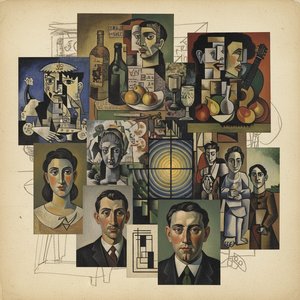
Šumanović's artistic trajectory wasn’t linear; it mirrored the shifting currents of 20th-century art itself. His early canvases pulsed with the dynamism of Cubist fragmentation, reflecting the intellectual fervor of the era. However, recognizing the limitations of this stylistic approach, he swiftly transitioned towards Classicism—a deliberate embrace of form and proportion inspired by Renaissance ideals. This stylistic shift wasn’t merely a matter of preference; it represented a deeper engagement with humanist values and a desire to convey grandeur and serenity. As time progressed, Šumanović further refined his technique, incorporating vibrant colors and expressive brushstrokes that imbued his landscapes and portraits with palpable emotion.
Notable Works and Style
Šumanović's artistic output stands as testament to his versatility and unwavering dedication to capturing the essence of human experience. “The Shepherdess,” housed in the Museums of Serbia collection in Belgrade, exemplifies his masterful command of tonal modulation—a technique honed during his Parisian studies—to depict rural tranquility with remarkable sensitivity. Similarly, “Šid Under Snow” (the Pavle Beljanski Memorial Collection), Novi Sad, showcases Šumanović’s ability to evoke profound emotion through atmospheric landscapes, utilizing a palette rich in blues and whites to convey the stark beauty of winter scenery. These paintings are not simply representations of visual reality; they are imbued with psychological depth—a hallmark of Šumanović's artistic vision.
Tragic End and Historical Significance
Sava Šumanović’s life tragically concluded in 1942 during the horrific events of the Independent State of Croatia—a period marked by systematic persecution and violence against Serbian intellectuals and artists. His untimely demise represents a profound loss for Serbian art history, silencing a voice that had bravely confronted the complexities of its time. Despite this devastating fate, Šumanović’s legacy persists through his enduring artworks—visual records of a bygone era that continue to inspire contemplation and admiration. They serve as poignant reminders of the human spirit's capacity for creativity amidst adversity and stand as symbols of Serbian artistic resilience.
Explore More at TopImpressionists
To delve deeper into Sava Šumanović’s world and discover more about his life and oeuvre, visit
Sava Šumanović's page on TopImpressionists. For a broader understanding of Serbian art history, explore the timeline at
Wahoo Art Timeline to trace the evolution of Western artistic traditions.