


The Digital Dilemma: The Ephemeral Nature of the Pixelated Image
 From Blurry to Brilliant: The Definitive Guide to Transforming Low-Quality Photos into Bespoke Oil Masterpieces
The Digital Dilemma: Why Your Best Memories Deserve More Than Pixels Turn Your Photos into Custom Oil Paintings: A Professional Guide to Bespoke Art Commissions The Value of Transformation: Moving Beyond Digital Pixels to Timeless Oil Masterpieces Fr...
In our hyper-connected, high-speed era, we find ourselves drowning in a relentless deluge of ephemeral imagery. We scroll through glass screens with clinical precision, documenting the exact shade of a summer sunset or the precise geometry of a wedding gown, yet these moments often remain trapped in a state of digital decay. A photograph, for all its technological advancement, is frequently just a frozen, crystalline arrangement of pixels—a flat, glowing record that captures an event but rarely its true essence. There is a profound, quiet difference between seeing a moment and truly feeling it.
Digital files are inherently ephemeral; they lack the breath, the pulse, and the tactile resonance required to turn a fleeting second into a lasting legacy. When we rely solely on digital archives, we risk losing the soul of the memory. A screen cannot convey the weight of history or the warmth of a loved one's presence. These high-resolution snapshots are subject to the degradation of technology and the fleeting nature of trends. Your most cherished milestones—the soft glow of a grandchild’s smile or the tranquil light of a summer afternoon—deserve more than a digital archive that sits forgotten in a cloud server. They deserve to be held captive within something far more enduring than light emitted from a liquid crystal display.
The Alchemy of Artistry: Reconstructing Light and Texture through Oil Pigment
 Oil paint
Oil paint is a type of slow-drying paint that consists of particles of pigment suspended in a drying oil, commonly linseed oil. Oil paint also has practical advantages over other paints, mainly because it is waterproof. The earliest surviving example...
To move beyond the pixel is to enter the realm of true alchemy, where the artist reconstructs reality using the physical resistance of pigment and the slow-drying grace of oils. Unlike the digital realm, where color is manipulated with mathematical precision, the medium of oil paint offers a depth that no screen can replicate. Using particles of pigment suspended in drying oils, such as linseed or safflower, an artist can sculpt light itself. This process allows for the creation of a surface that breathes, ridges, and undulates with sculptural intent.
The magic lies in the physical architecture of the paint. Through techniques such as impasto, artists build layers of pigment to create a richly tactile surface that captures and reflects light beautifully. This creates a dynamic interplay between light and shadow across the canvas, inviting close inspection and emotional engagement. When we transform a digital memory into an oil masterpiece, we are not merely copying an image; we are translating it into a language of texture and volume. The addition of specialized mediums ensures longevity, with flexible gesso preventing cracks and fine varnishes protecting the surface from the atmospheric pollutants of time, ensuring the memory remains as vibrant for future generations as it was the moment it was captured.
Beyond Reproduction: The Renaissance of Custom Portraiture and 'Period Shifts'
Oil painting reproductions are paintings that have been created by copying in oils an original oil painting by an artist. Oil painting reproductions are distinct from original oil painting such as are often of interest to collectors and museums. Oil ...
The history of art has always been defined by the dialogue between the student and the master. Since the 16th century, the tradition of reproduction has allowed artists to learn through the mimicry of greatness. Today, this tradition undergoes a profound metamorphosis through the concept of the "period shift." We no longer simply reproduce the past; we reimagine our present through its lens. Imagine the ability to take a contemporary photograph—perhaps a modern wedding portrait or a simple family snapshot—and have it reimagable in the heavy, expressive impasto style of Vincent van Gogh, or bathed in the ethereal, light-drenched atmosphere of Claude Monet.
This "remixing" of art history allows for a personalized expression that transcends simple documentation. We can even transform a modern selfie into a 17th-century masterpiece, adopting the dramatic chiaroscuro and regal dignity characteristic of Rembrandt. This service is not about mere imitation; it is about an intentional aesthetic choice to elevate a personal milestone into a work of high art. Through our Professional Digital Mockup Service, clients can witness this transformation before a single drop of paint touches the canvas, ensuring that the color palette and composition align perfectly with their vision, effectively bridging the gap between the silicon age and the golden age of classical painting.
The Tactile Legacy: Why Hand-Painted Impasto Surpasses the Digital Screen
 Top 25 Masterpieces by David Moreau: A Journey Through Texture and Light
Introduction To step into the world of David Moreau is to abandon the flat surface of traditional painting and enter a realm where the canvas breathes, ridges, and undulates with sculptural intent. As we prepare to journey through his top twenty-five...
There is a fundamental limitation to the digital image: it is inherently two-dimensional and devoid of physical presence. A canvas print, while an excellent way to reproduce art, remains a flat, printed surface where the "brushstrokes" are often nothing more than a computer-printed illusion. In contrast, a true Handmade Oil Reproduction possesses a soul. It features visible, physical brushstrokes that rise from the cotton canvas, creating a topography of emotion. This tactile depth provides a much deeper tonal range and a sense of permanence that a digital file or a standard inkjet print can never achieve.
When you hold or view a hand-painted oil work, you are engaging in a tactile dialogue with the artist's hand. Every stroke is a testament to the artist's pride and craftsmanship. The subtle variations inherent in manual artistry—the way the light catches a thick ridge of white paint or how a deep shadow recedes into the weave of the canvas—create an immersive presence. This is why collectors seek out the "Master" level of execution; they are looking for that unmistakable human element, the anima, that distinguishes a piece of decor from a true heirloom.
Preserving the Moment: Technical Excellence in Modern Canvas Engineering
 Canvas print
A canvas print is the result of an image printed onto canvas which is often stretched, or gallery-wrapped, onto a frame and displayed. Canvas prints are used as the final output in an art piece, or as a way to reproduce other forms of art. == Printin...
To ensure that these transformed memories endure, the science of preservation must be as rigorous as the art itself. A masterpiece is only as lasting as the materials upon which it is built. Our process utilizes 100% cotton canvas, stretched over sturdy, braced wooden stretcher bars designed to prevent warping over decades of display. The chemistry of the paint is equally vital; we utilize specific oils to ensure that whites do not yellow and that the pigments remain true to their original brilliance.
The engineering extends to the very edges of the work. For those seeking a contemporary, seamless aesthetic, we offer MirrorWrap or ExtendedWrap, where the artist continues the painting around the sides of the frame, turning the artwork into a three-dimensional object. Furthermore, for grand architectural ambitions, we specialize in large-format murals and frescoes, painted on massive canvas rolls that allow individuals to recreate historical wonders, such as the ceilings of the Sistine Chapel, within their own private estates or luxury hotels. This commitment to technical excellence ensures that when you commission a piece, you are not just buying art; you are investing in a legacy.
Curating Your Heritage: Integrating Bespoke Masterpieces into the Modern Interior
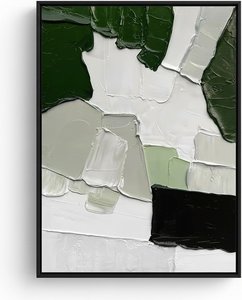 Abstract Impasto Oil Painting on Canvas - Forest Green & White
An Exploration in Green: Handpainted Abstract Canvas Art This striking abstract oil painting offers a compelling study in texture and color, bringing a contemporary sensibility to any interior. The artwork is defined by its bold, irregular shapes ren...
Integrating fine art into a modern living space requires more than mere placement; it requires curation. A well-chosen oil painting acts as a visual anchor, providing a sense of gravity and sophistication to a room. Whether it is an abstract impasto piece in forest greens and golds to ground a minimalist lounge, or a multi-panel group set that spans a grand staircase, the goal is to create a cohesive architectural narrative. The modern trend of "multi-panel" paintings allows for the splitting of iconic compositions across three, four, or even five panels, creating a dynamic, contemporary energy that complements large-scale interior design.
As you build your collection, remember that art is a continuous journey of discovery and preservation. From the initial consultation—where we can digitally "place" a painting on your wall to test its impact—to the final delivery via secure global logistics, every step is designed to integrate seamlessly into your lifestyle. Whether you are seeking to restore a faded family photograph or transform a pet portrait into a regal historical study, the objective remains the same: to move beyond the ephemeral pixels of today and create something that will stand as a timeless testament to your history, long after the screens have gone dark.
For those seeking to explore more of the world's canonical masterpieces and find inspiration for their own collections, visit TopImpressionists.com.


