एटेलियर — दुनिया भर में निःशुल्क शिपिंग — डिलीवरी का समय: 2–6 सप्ताह
      फ़र्नांद लेगर, 1881 – 1955

      फ़र्नांद लेगर: The 100 Best-Known Paintings

      Of all फ़र्नांद लेगर's paintings, Fernand Léger A Life Forged in Form: The World of Fernand Léger Fernand Léger, born Joseph Fernand Henri Léger in 1881 amidst the rural landscapes of Argentan, Normandy, stands as a pivotal figure in the evolution of modern art. His journey from the far (1919) is the most famous. Close behind come द मैकेनिक (1920) and तीन महिलाएँ (1921). Among the 834 works by फ़र्नांद लेगर in our catalogue, these 100 are the most celebrated, each shown with its date, its museum and its story.

      हमारे लोकप्रियता स्कोर के आधार पर रैंक किया गया, जो प्रत्येक कृति के लिए खोज, विज़िट और ऑर्डर को जोड़ता है। अक्टूबर 2026 में अपडेट किया गया। Each painting on this page can be ordered as an oil reproduction painted by hand on linen canvas, or as a fine art print, made to the size you choose.

      फ़र्नांद लेगर का चित्र
      फ़र्नांद लेगर · 1881 – 1955
      जन्म · मृत्यु
      1881 – 1955, अर्गेंटन
      कला आंदोलन
      घनवाद
      हमारी सूची में उपलब्ध कृतियाँ
      834
      सबसे प्रसिद्ध
      Fernand Léger A Life Forged in Form: The World of Fernand Léger Fernand Léger, born Joseph Fernand Henri Léger in 1881 amidst the rural landscapes of Argentan, Normandy, stands as a pivotal figure in the evolution of modern art. His journey from the far (1919)
      सबसे अधिक कृतियाँ
      MOMA - Museum of Modern Art

      फ़र्नांद लेगर's 10 most celebrated paintings

      Fernand Léger

A Life Forged in Form: The World of Fernand Léger

Fernand Léger, born Joseph Fernand Henri Léger in 1881 amidst the rural landscapes of Argentan, Normandy, stands as a pivotal figure in the evolution of modern art. His journey from the far (1919) द्वारा फ़र्नांद लेगर
      1

      Fernand Léger A Life Forged in Form: The World of Fernand Léger Fernand Léger, born Joseph Fernand Henri Léger in 1881 amidst the rural landscapes of Argentan, Normandy, stands as a pivotal figure in the evolution of modern art. His journey from the far

      1919 · कैनवस पर ऑयल पेंटिंग

      1919 में निर्मित, यह विशाल चित्र फर्नांड लेगर की परिपक्व शैली का एक परिभाषित उदाहरण है और तेजी से बढ़ते औद्योगिक युग पर एक शक्तिशाली बयान है। यह सिर्फ एक शहरी दृश्य का चित्रण नहीं है; बल्कि यह रूप, रंग और आधुनिक जीवन के सार की एक गतिशील खोज है। लेगर ने अपनी कला में मशीनों और औद्योगिकीकरण को एकीकृत करने की तीव्र इच्छा व्यक्त की, जो उस समय के…

      द मैकेनिक (1920) द्वारा फ़र्नांद लेगर
      2

      द मैकेनिक

      1920 · कैनवस पर ऑयल पेंटिंग · नेशनल गैलरी ऑफ़ कनाडा, ओटावा

      फ़र्नांद लेगर का "द मैकेनिक": आधुनिकता और रूप की एक उत्कृष्ट कृति फ़र्नांद लेगर का 1920 में बनाया गया "द मैकेनिक" केवल एक चित्र नहीं है, यह प्रारंभिक 20वीं सदी के कलात्मक प्रयोगों की भावना को समाहित करता है। यह रचना मानव आकृतियों और अमूर्त ज्यामितीय रूपों को सहजता से मिलाकर एक गतिशील संतुलन बनाती है जो औद्योगिक क्रांति और यांत्रिक सौंदर्यशास्त्र के प्रति कलाकार के आकर्षण को दर्शाती है।…

      तीन महिलाएँ (1921) द्वारा फ़र्नांद लेगर
      3

      तीन महिलाएँ

      1921 · कैनवस पर ऑयल पेंटिंग · MOMA - Museum of Modern Art, न्यूयॉर्क सिटी

      परिचय फ़र्नांद लेजर की "थ्री विमेन" (1921) आधुनिक कला की एक ऐसी उत्कृष्ट कृति है जो क्यूबिज्म और आर्ट डेको प्रभावों को सहजता से आपस में बुनती है। यह जीवंत और गतिशील रचना 20वीं सदी की शुरुआत की आधुनिकता के सार को अपने भीतर समेटे हुए है, जो इसे किसी भी समकालीन कला संग्रह या परिष्कृत आंतरिक सज्जा के लिए एक मंत्रमुग्ध कर देने वाला हिस्सा बनाती है। विषय और…

      जंगल में नग्न महिलाएँ (1910) द्वारा फ़र्नांद लेगर
      4

      जंगल में नग्न महिलाएँ

      1910 · कैनवस पर ऑयल पेंटिंग · Kröller-Müller Museum, ओटरलो

      फ़र्नांड लेजर की कृति Nudes in the Forest (1909-1910) क्यूबिज्म के विकास में एक महत्वपूर्ण मील का पत्थर मानी जाती है। यह केवल पेड़ों के बीच आकृतियों का चित्रण मात्र नहीं है, बल्कि रूप और परिप्रेक्ष्य का एक साहसिक विखंडन है जो एक सदी बाद भी दर्शकों को मंत्रमुग्ध करने की क्षमता रखता है। यह पेंटिंग इस बारे में नहीं है कि क्या दर्शाया गया है, बल्कि इस बारे में…

      महान परेड (1954) द्वारा फ़र्नांद लेगर
      5

      महान परेड

      1954 · कैनवस पर ऑयल पेंटिंग

      फ़र्नांद लेजर की उत्कृष्ट कृति "महान परेड" एक ऐसा दृश्य है जो दर्शकों को आधुनिक जीवन के उत्साह और अराजकता में डुबो देता है। यह कलाकृति, 1954 में बनाई गई, मानव आकृतियों और यांत्रिक तत्वों का एक अद्भुत मिश्रण है, जो एक जीवंत सर्कस या नाट्य प्रदर्शन की ऊर्जा को दर्शाती है। लेजर ने कुशलता से जैविक रूपों और औद्योगिक रूपांकनों को जोड़ा है, जिससे सामंजस्य और असंगति दोनों का…

      शादी द्वारा फ़र्नांद लेगर
      6

      शादी

      कैनवस पर ऑयल पेंटिंग

      विषय और संरचना यह मंत्रमुग्ध कर देने वाली कलाकृति एक मानवीय आकृति का खंडित और अमूर्त चित्रण प्रस्तुत करती है, जो संभवतः एक महिला है, जो ज्यामितीय आकृतियों और अमूर्त रूपों के जटिल अंतर्संबंधों में डूबी हुई है। इसकी संरचना दर्शकों को एक साथ कई दृष्टिकोणों का अन्वेषण करने के लिए आमंत्रित करती है, जो घनवाद (Cubism) के प्रभाव की एक प्रमुख विशेषता है। यह आकृति किसी अंतरंग या चिंतनशील…

      नाश्ता (1921) द्वारा फ़र्नांद लेगर
      7

      नाश्ता

      1921 · कैनवस पर ऑयल पेंटिंग · MOMA - Museum of Modern Art, न्यूयॉर्क सिटी

      20वीं सदी की शुरुआत के आधुनिकतावाद के जीवंत परिदृश्य में, फ़र्नांद लेगर की "नाश्ता" जितनी प्रभावशाली ढंग से बदलते युग की लयबद्ध धड़कन को पकड़ती है, ऐसे बहुत कम कार्य हैं। 1921 में चित्रित, यह उत्कृष्ट कृति एक ऐसी दुनिया की खिड़की के रूप में कार्य करती है जहाँ घरेलू और औद्योगिक जीवन एक एकल, गतिशील दृष्टि में विलीन होने लगे थे। यह दृश्य एक डाइनिंग टेबल के चारों ओर…

      फूलों के गुलदस्ते के साथ महिला (1920) द्वारा फ़र्नांद लेगर
      8

      फूलों के गुलदस्ते के साथ महिला

      1920 · कैनवस पर ऑयल पेंटिंग · Staatsgalerie Stuttgart, स्टटगार्ट

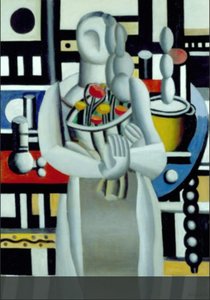
      भारी काली रेखाओं के एक जाल से एक महिला उभरती है, जिसका स्वरूप बेलनों (cylinders) और गोलों (spheres) से निर्मित है। उसने एक गुलदस्ता पकड़ा हुआ है, फिर भी वे फूल कोमल पंखुड़ियाँ नहीं बल्कि लाल, पीले और नीले रंगों के अंश हैं। प्रत्येक आकार भारी महसूस होता है, जैसे कि उसे स्टील से तराशा गया हो या लोहे में ढाला गया हो। ये मोटी रूपरेखाएँ एक ऐसे शरीर को…

      Composition in Blue द्वारा फ़र्नांद लेगर
      9

      Composition in Blue

      कैनवस पर ऑयल पेंटिंग · आर्ट इंस्टीट्यूट ऑफ शिकागो, शिकागो

      Fernand Léger’s "Composition in Blue" is a quintessential example of modernist art, showcasing his unique blend of Cubism and Futurism. The painting features a striking composition dominated by shades of blue, with a central figure – seemingly a woman or humanoid form – rendered in various hues of the color. This figure is partially obscured by a large blue headpiece, creating an enigmatic and somewhat mechanical appearance. The artwork incorporates…

      पुल (1923) द्वारा फ़र्नांद लेगर
      10

      पुल

      1923 · कैनवस पर ऑयल पेंटिंग · थिसन-बर्निसमा संग्रहालय, मैड्रिड

      इस कलाकृति के करीब आकर देखें कि कैसे स्थान को विभाजित किया गया है। 1923 में रचित पुल में, किसी एक निश्चित परिप्रेक्ष्य पर टिके रहने का कोई विकल्प नहीं है। इसके बजाय, हमें एक ऐसी रचना मिलती है जो स्पष्ट क्षैतिज और ऊर्ध्वाधर क्षेत्रों में विभाजित है, जो एक खंडित वास्तुशिल्प वास्तविकता का संकेत देती है। दो मोटे, पन्ना हरे रंग के स्तंभ ऊपरी मध्य-भूमि को थामे हुए हैं,…

      फ़र्नांद लेगर paintings ranked 11 to 100

      smokers - - ) (1912) द्वारा फ़र्नांद लेगर
      #11

      smokers - - )

      1912

      Fernand Léger's "Smokers," painted in 1912, isn’t merely a depiction of men enjoying a cigarette; it’s a vibrant manifesto of early Cubism and a bold assertion of modernity.…

      Bring this light home →
      Mural (1951) द्वारा फ़र्नांद लेगर
      #12

      Mural

      1951

      Fernand Léger’s "Mural," completed in 1951, stands as an arresting embodiment of Cubist principles interwoven with a palpable fascination for the burgeoning machine age. This masterpiece does not…

      Have it painted by hand →
      Reading (1924) द्वारा फ़र्नांद लेगर
      #15

      Reading

      1924

      In the quietude of an ambiguous interior, two figures sit side-by-side, lost in the profound intimacy of shared silence and individual discovery. Fernand Léger’s 1924 masterpiece, Reading, is…

      Order this canvas →
      नृत्य (1942) द्वारा फ़र्नांद लेगर
      #16

      नृत्य

      1942

      A Rhythmic Celebration of Form and Color Fernand Léger’s Dance is far more than a mere depiction of movement; it is a vibrant, pulsating symphony of color and…

      Order this canvas →
      द डिस्क (1910) द्वारा फ़र्नांद लेगर
      #17

      द डिस्क

      1910 · लॉस एंजिल्स काउंटी म्यूज़ियम ऑफ़ आर्ट

      कैनवास पर एक के ऊपर एक आते-जाते वृत्तों की एक श्रृंखला भारी, चित्रित संकेतों की तरह तैरती हुई प्रतीत होती है। तेल के मोटे परतों में रचे गए…

      Order this canvas →
      The Bather (1932) द्वारा फ़र्नांद लेगर
      #18

      The Bather

      1932

      In the quiet intersection of Surrealist dreamscapes and the rigid precision of Cubism lies Fernand Léger’s 1932 masterpiece, The Bather. This is not merely a painting of a…

      Order this canvas →
      Three musicians (1930) द्वारा फ़र्नांद लेगर
      #19

      Three musicians

      1930

      In the pantheon of twentieth-century modernism, few works capture the pulse of the machine age with as much vibrant vitality as Fernand Léger’s "Three Musicians." Completed in 1930,…

      Order this canvas →
      The Man with the Pipe (1920) द्वारा फ़र्नांद लेगर
      #20

      The Man with the Pipe

      1920 · Musee d'art Moderne de la Ville de Paris

      The man sits within a grid of sharp edges and heavy lines. His body is not composed of soft skin, but of cylinders and metallic volumes that suggest…

      Have it painted by hand →
      Contrast of Forms (1918) द्वारा फ़र्नांद लेगर
      #21

      Contrast of Forms

      1918

      The canvas breathes with an energy that transcends mere pigment; it pulsates with the rhythm of industrial progress, captured in the bold strokes and vibrant hues of Fernand…

      Have it painted by hand →
      Dance (1929) द्वारा फ़र्नांद लेगर
      #22

      Dance

      1929

      Two nude female figures move through a landscape of interlocking shapes, their bodies caught in a moment of dynamic instability. The scene unfolds with a flattened perspective, where…

      Order this canvas →
      फूलदान के साथ महिला (1924) द्वारा फ़र्नांद लेगर
      #23

      फूलदान के साथ महिला

      1924 · Statens Museum For Kunst

      1924 के इस कैनवास पर बने तेल चित्र में, हमारा सामना एक ऐसी आकृति से होता है जो अपनी बनावट में असाधारण रूप से ठोस और लगभग मूर्तिकला…

      Bring this light home →
      The Builders (1920) द्वारा फ़र्नांद लेगर
      #24

      The Builders

      1920 · मेट्रोपॉलिटन म्यूज़ियम ऑफ़ आर्ट

      Fernand Léger’s “The Builders,” completed in 1920, stands as a cornerstone of Cubist aesthetics and embodies the fervent optimism surrounding technological advancement during the tumultuous years of World…

      Order this canvas →
      चलने वाला फूल (La fleur qui marche) (1952) द्वारा फ़र्नांद लेगर
      #25

      चलने वाला फूल (La fleur qui marche)

      1952 · Kimbell Art Museum

      Fernand Léger’s “Walking Flower”: A Symphony of Color and Form Against Industrial Backdrop The ceramic sculpture "Walking Flower (La fleur qui marche)" by Fernand Léger, completed in 1952,…

      Woman with Mirror (1920) द्वारा फ़र्नांद लेगर
      #27

      Woman with Mirror

      1920 · Musee d'art Moderne de la Ville de Paris

      The painting Woman with Mirror, created in 1920, presents a configuration of geometric shapes that deconstruct the human figure and its surroundings. The composition relies on an arrangement…

      Have it painted by hand →
      The man with the pipe (1918) द्वारा फ़र्नांद लेगर
      #29

      The man with the pipe

      1918

      In the transformative landscape of early twentieth-century modernism, few works capture the rhythmic pulse of a changing world as vibrantly as Fernand Léger’s “The Man with the Pipe.”…

      Have it painted by hand →
      Project for a mural (1952) द्वारा फ़र्नांद लेगर
      #30

      Project for a mural

      1952 · सिनसिनाटी आर्ट म्यूजियम

      In the vast landscape of twentieth-century modernism, few works capture the rhythmic pulse of the machine age as vibrantly as Fernand Léger’s "Project for a mural." Completed in…

      Order this canvas →
      Mechanical Elements द्वारा फ़र्नांद लेगर
      #31

      Mechanical Elements

      मेट्रोपॉलिटन म्यूज़ियम ऑफ़ आर्ट

      Fernand Léger’s “Mechanical Elements,” painted in 1924, stands as a striking testament to the burgeoning fascination with technology during the interwar period. More than just a depiction of…

      Bring this light home →
      The City (1919) द्वारा फ़र्नांद लेगर
      #32

      The City

      1919 · MOMA - Museum of Modern Art

      Step closer and observe how the canvas seems to move even when you remain still. In 1919, Fernand Léger captured something far more visceral than a mere urban…

      Bring this light home →
      Le Petit Djeuner (1919) द्वारा फ़र्नांद लेगर
      #33

      Le Petit Djeuner

      1919 · Minneapolis Institute of Art

      In the 1919 painting Le Petit Djeuner, Fernand Léger presents a breakfast scene through a fragmented, Cubist lens. Two stylized human figures occupy a space that merges with…

      Have it painted by hand →
      The Dance - 1st Stage (1929) द्वारा फ़र्नांद लेगर
      #34

      The Dance - 1st Stage

      1929 · Hiroshima Museum of Art

      The oil painting titled The Dance - 1st Stage presents two stylized female figures positioned in an intertwined pose. These figures are rendered with thick, continuous lines that…

      Bring this light home →
      Contrast of Forms (1910) द्वारा फ़र्नांद लेगर
      #35

      Contrast of Forms

      1910 · फिलाडेल्फिया म्यूज़ियम ऑफ़ आर्ट

      Step closer to observe how the canvas begins to pulse with a rhythmic, mechanical energy. In Contrast of Forms, we find ourselves looking at a fragmented landscape where…

      Have it painted by hand →
      Komposition (1920) द्वारा फ़र्नांद लेगर
      #36

      Komposition

      1920

      A heavy red rectangle anchors the center, pressed against thick black lines that slice through white and yellow planes. Circles overlap like the interlocking teeth of a gear,…

      Have it painted by hand →
      Sunflowers (1953) द्वारा फ़र्नांद लेगर
      #37

      Sunflowers

      1953

      This striking black and white drawing of sunflowers by Fernand Léger, created in 1953, offers a compelling glimpse into the artist's unique vision – a synthesis of observed…

      Order this canvas →
      Reclining Woman द्वारा फ़र्नांद लेगर
      #39

      Reclining Woman

      आर्ट इंस्टीट्यूट ऑफ शिकागो

      The painting is a Cubist artwork by Fernand Léger featuring a woman lying on her side with a yellow snake wrapped around her body. The snake appears to…

      Have it painted by hand →
      The man in the blue hat (1937) द्वारा फ़र्नांद लेगर
      #40

      The man in the blue hat

      1937

      A Portrait of Quiet Contemplation Amidst Mechanical Forms Fernand Léger’s “The Man in the Blue Hat,” painted in 1937, stands as a striking embodiment of Purism – an…

      Order this canvas →
      Reading (1948) द्वारा फ़र्नांद लेगर
      #41

      Reading

      1948

      Created in 1948, Reading is a portrait that captures a moment within an interior space. The painting features a woman sitting on the floor with her legs crossed,…

      Have it painted by hand →
      गोताखोर (1943) द्वारा फ़र्नांद लेगर
      #42

      गोताखोर

      1943 · हार्वर्ड कला संग्रहालय

      सफेद रिक्त स्थान से आकृतियों के उभरने के तरीके को देखने के लिए थोड़ा करीब आएं। गोताखोर में, हम हवा में फंसे व्यक्तियों के एक समूह से मिलते…

      Bring this light home →
      Two Profiles (1928) द्वारा फ़र्नांद लेगर
      #43

      Two Profiles

      1928 · अल्बर्टिना

      Two profiles occupy the center of this 1928 composition. These two faces are rendered in stark black and white shapes, positioned so they face one another across the…

      Have it painted by hand →
      Mechanical Element (1920) द्वारा फ़र्नांद लेगर
      #44

      Mechanical Element

      1920 · Kröller-Müller Museum

      Step closer and observe how the canvas seems to hum with a quiet, industrial energy. In Mechanical Element, created in 1920, there is no attempt to depict a…

      Have it painted by hand →
      Dancer Blue (1930) द्वारा फ़र्नांद लेगर
      #45

      Dancer Blue

      1930

      To encounter Fernand Léger's "Dancer Blue" is to step directly into the rhythmic, metallic heartbeat of the twentieth century. Created in 1930, this masterpiece serves as a crystallized…

      Bring this light home →
      Adam and Eve (1937) द्वारा फ़र्नांद लेगर
      #46

      Adam and Eve

      1937 · Kunstsammlung Nordrhein-Westfalen

      To stand before this work is to witness a moment of profound, unformed energy. Completed in 1939, Adam and Eve presents a landscape that feels less like a…

      Have it painted by hand →
      बिल्ली के साथ महिला (1921) द्वारा फ़र्नांद लेगर
      #48

      बिल्ली के साथ महिला

      1921 · हम्बर्ग कला हलले

      एक महिला बैठी है, जिसका स्वरूप गोलों और नलिकाओं से निर्मित है। उसने अपनी गोद में एक काली बिल्ली को थाम रखा है, जो उसके शरीर के चमकीले…

      Order this canvas →
      मचान (प्रथम अवस्था) (1919) द्वारा फ़र्नांद लेगर
      #49

      मचान (प्रथम अवस्था)

      1919 · फिलाडेल्फिया म्यूज़ियम ऑफ़ आर्ट

      एक धात्विक बेलन रंग के एक सपाट तल को काटता हुआ निकल जाता है। 1919 में, पेरिस पुनर्निर्माण का शहर था, और प्लेस डी क्लिची उद्योग की कंकाल…

      Order this canvas →
      Umbrella and Bowler (1926) द्वारा फ़र्नांद लेगर
      #50

      Umbrella and Bowler

      1926 · MOMA - Museum of Modern Art

      A deconstructed arrangement of everyday objects defines this 1926 composition. An open umbrella and parts of a chair are integrated into a complex grid of shapes, utilizing strong…

      Have it painted by hand →
      Two Women and still life 1st state (1920) द्वारा फ़र्नांद लेगर
      #51

      Two Women and still life 1st state

      1920 · Building of the Winterthur Museum of Art

      Fernand Léger's “Two Women & Still Life” stands as a cornerstone of Cubist aesthetics and a testament to the artist’s unwavering commitment to capturing the dynamism of the…

      Bring this light home →
      Composition (Definitive State) (1925) द्वारा फ़र्नांद लेगर
      #52

      Composition (Definitive State)

      1925

      A large, dark reddish-brown oval anchors the center of the canvas, acting as a heavy weight amidst a sea of shifting planes. Around this central anchor, thick black…

      साइकिल (1930) द्वारा फ़र्नांद लेगर
      #53

      साइकिल

      1930 · आर्ट गैलरी ऑफ़ न्यू साउथ वेल्स

      कैनवास के केंद्र में एक सफेद बहुभुज है, जिसके भीतर गहरे नीले रंग का एक तरल आकार है जो तेल के कुंड की तरह प्रतीत होता है। इस…

      Order this canvas →
      स्थिर जीवन (1928) द्वारा फ़र्नांद लेगर
      #54

      स्थिर जीवन

      1928 · आर्ट इंस्टीट्यूट ऑफ शिकागो

      थोड़ा करीब आएं और देखें कि कैसे मेज पर रखी वस्तुओं का एक परिचित विन्यास संरचनात्मक सटीकता के लेंस से पूरी तरह बदल जाता है। 1928 की इस…

      Order this canvas →
      The three musicians द्वारा फ़र्नांद लेगर
      #56

      The three musicians

      In the vibrant tapestry of early twentieth-century modernism, few works resonate with as much structural vitality as Fernand Léger’s "The Three Musicians." This masterpiece is far more than…

      Have it painted by hand →
      दो आकृतियाँ, लाल पृष्ठभूमि पर नग्न (1923) द्वारा फ़र्नांद लेगर
      #57

      दो आकृतियाँ, लाल पृष्ठभूमि पर नग्न

      1923

      1923 में रचित फ़र्नांद लेगर की कृति "दो आकृतियाँ, लाल पृष्ठभूमि पर नग्न" केवल दो महिलाओं का चित्रण मात्र नहीं है; यह यांत्रिक घनवाद (Mechanistic Cubism) आंदोलन का…

      Bring this light home →
      Ballet mécanique (1924) द्वारा फ़र्नांद लेगर
      #58

      Ballet mécanique

      1924

      Fernand Léger's "Ballet Mécanique," painted in 1924, isn’t merely a depiction of a scene; it’s a vibrant, pulsating embodiment of the machine age and its impact on human…

      Have it painted by hand →
      Still Life (1927) द्वारा फ़र्नांद लेगर
      #59

      Still Life

      1927 · National Museum of Art, Architecture and Design

      Step closer to observe how the familiar objects on this table have been transformed. In this 1927 composition, we find a quiet arrangement that rejects the soft edges…

      Have it painted by hand →
      The Mechanic (1918) द्वारा फ़र्नांद लेगर
      #60

      The Mechanic

      1918 · Munson-Williams-Proctor Arts Institute

      A rhythmic energy surges through the canvas as geometric shapes collide and overlap in a dense, industrial dance. Cylinders, cones, and flat planes interlock, creating a landscape where…

      Order this canvas →
      Nude Model in the Studio द्वारा फ़र्नांद लेगर
      #61

      Nude Model in the Studio

      Fernand Léger's "Nude Model in the Studio," painted in 1912-13, stands as a cornerstone of Cubist art and embodies the movement’s radical departure from traditional artistic conventions. More…

      Have it painted by hand →
      Head constructor (1950) द्वारा फ़र्नांद लेगर
      #62

      Head constructor

      1950

      Fernand Léger’s “Head Constructor,” painted in 1950, isn't merely a portrait; it’s a distilled essence of the burgeoning modernity that gripped Europe after World War I. This striking…

      Bring this light home →
      Machine elements (1920) द्वारा फ़र्नांद लेगर
      #63

      Machine elements

      1920

      A Symphony of Steel and Geometry The year 1920 marked a profound shift in the visual language of modernity, and few works capture this seismic transition as vibrantly…

      Order this canvas →
      Three Characters (1924) द्वारा फ़र्नांद लेगर
      #64

      Three Characters

      1924

      A Symphony of Form and Feeling: Exploring Fernand Léger’s “Three Characters” Fernand Léger's 1924 painting, *“Three Characters,”* is a pivotal work exemplifying his distinctive contribution to Cubism –…

      Order this canvas →
      Characters in the City (1919) द्वारा फ़र्नांद लेगर
      #66

      Characters in the City

      1919 · Solomon R. Guggenheim Museum

      The Rhythms of an Urban Symphony Fernand Léger’s 1919 masterpiece, Characters in the City, is far more than a mere depiction of metropolitan life; it is a vibrant…

      Have it painted by hand →
      Contrast of Forms (1913) द्वारा फ़र्नांद लेगर
      #67

      Contrast of Forms

      1913

      A fragmented landscape emerges through a complex vocabulary of cones, cylinders, cubes, and planes. The composition deconstructs reality into overlapping geometric shapes that intersect across a shallow, flattened…

      Have it painted by hand →
      Mural Painting (1920) द्वारा फ़र्नांद लेगर
      #69

      Mural Painting

      1920 · Solomon R. Guggenheim Museum

      To stand before this 1924 canvas is to encounter the very pulse of a changing era. There is a certain structural honesty in how the composition unfolds, utilizing…

      Bring this light home →
      Smoke (1912) द्वारा फ़र्नांद लेगर
      #70

      Smoke

      1912

      Created in 1912 by Fernand Léger, Smoke is an oil on canvas painting that belongs to the Cubism style. This cityscape features various buildings and structures characterized by…

      Bring this light home →
      The rider acrobat juggler (1921) द्वारा फ़र्नांद लेगर
      #71

      The rider acrobat juggler

      1921

      A Dynamic Synthesis: Fernand Léger’s “The Rider Acrobat Juggler” (1921) Subject & Composition: This captivating work presents a stylized figure – a synthesis of rider, acrobat, and juggler…

      Order this canvas →
      Smoke on the Roofs (1911) द्वारा फ़र्नांद लेगर
      #73

      Smoke on the Roofs

      1911

      The composition deconstructs an urban landscape into a rhythmic arrangement of overlapping planes and intersecting lines. Through a Cubist lens, the city is stripped of its traditional perspective,…

      Bring this light home →
      Contrast of form (1914) द्वारा फ़र्नांद लेगर
      #74

      Contrast of form

      1914

      In the heart of the early twentieth century, as the gears of industry began to turn with an unstoppable rhythm, Fernand Léger captured the very pulse of modernity…

      Order this canvas →
      Untitled द्वारा फ़र्नांद लेगर
      #75

      Untitled

      A Life Forged in Form: The World of Fernand Léger Fernand Léger, born Joseph Fernand Henri Léger in 1881 amidst the rural landscapes of Argentan, Normandy, stands as…

      Have it painted by hand →
      Woman with a Book (1923) द्वारा फ़र्नांद लेगर
      #77

      Woman with a Book

      1923 · MOMA - Museum of Modern Art

      Fernand Léger: A Pioneer of Mechanistic Cubism Fernand Léger stands as one of the most distinctive figures in twentieth-century art, a painter who relentlessly pursued his own vision…

      Order this canvas →
      Sacred Heart of Audincourt (1951) द्वारा फ़र्नांद लेगर
      #78

      Sacred Heart of Audincourt

      1951

      In the quiet, hallowed atmosphere of the Saint-Joseph Chapel in Audincourt, France, lies a masterpiece that defies the traditional boundaries between the sacred and the industrial. Fernand Léger’s…

      Transport forces (1937) द्वारा फ़र्नांद लेगर
      #79

      Transport forces

      1937

      Fernand Léger's "Transport Forces," completed in 1937, stands as a cornerstone of Purism – an artistic movement that vehemently rejected Impressionism’s fleeting effects and embraced instead the bold…

      Bring this light home →
      The King of Cards (1927) द्वारा फ़र्नांद लेगर
      #80

      The King of Cards

      1927

      A Glimpse into Modernity’s Rhythm: Deconstructing Léger's “The King of Cards” Fernand Léger’s 1927 painting, “The King of Cards,” is not merely a depiction of an interior scene;…

      Bring this light home →
      'The album ''Circus''' (17) (1950) द्वारा फ़र्नांद लेगर
      #81

      'The album ''Circus''' (17)

      1950

      In the landscape of twentieth-century modernism, few works capture the rhythmic pulse of life with as much structural integrity and vibrant energy as Fernand Léger's 1950 masterpiece, 'The…

      Order this canvas →
      Still Life with Arm द्वारा फ़र्नांद लेगर
      #82

      Still Life with Arm

      Geometric Fragments and Industrial Logic A vase brimming with apples occupies the center of this 1916 composition, though the fruit has been stripped of its organic softness. In…

      Have it painted by hand →
      Study for the (1954) द्वारा फ़र्नांद लेगर
      #83

      Study for the

      1954 · Museu do Caramulo

      A Symphony of Form and Feeling: Exploring Fernand Léger’s “Study for Breakfast” Fernand Léger's "Study for Breakfast," completed in 1954, transcends mere representation; it embodies the very spirit…

      Have it painted by hand →
      Two Women Holding Flowers द्वारा फ़र्नांद लेगर
      #84

      Two Women Holding Flowers

      Fernand Léger: Capturing the Rhythm of Industry Through Geometric Abstraction Fernand Léger’s artistic legacy rests upon a singular achievement – transforming the anxieties and exhilarations of the burgeoning…

      Bring this light home →
      The three companions (1920) द्वारा फ़र्नांद लेगर
      #85

      The three companions

      1920

      A Geometric Echo of Modernity: Delving into Léger’s “The Three Companions” Fernand Léger's 1920 painting, *The Three Companions*, isn’t merely a depiction of figures; it is a bold…

      Bring this light home →
      The Sacred Heart of audincourt (1950) द्वारा फ़र्नांद लेगर
      #86

      The Sacred Heart of audincourt

      1950

      In the quiet, hallowed spaces of Audincourt, France, there exists a window that does not merely permit light to pass through, but rather transforms it into a rhythmic…

      The Sacred Heart of audincourt (1950) द्वारा फ़र्नांद लेगर
      #87

      The Sacred Heart of audincourt

      1950

      In the quiet, hallowed atmosphere of Audincourt, France, light does not merely illuminate; it transforms. Fernand Léger’s The Sacred Heart of Audincourt, completed around 1950-1951, stands as a…

      Sacred Heart of Audincourt (1951) द्वारा फ़र्नांद लेगर
      #88

      Sacred Heart of Audincourt

      1951

      In the quiet, hallowed atmosphere of post-war Europe, Fernand Léger’s "Sacred Heart of Audincourt" emerged not merely as a religious ornament, but as a profound philosophical manifesto. Completed…

      Opera द्वारा फ़र्नांद लेगर
      #89

      Opera

      The painting is a colorful depiction of people in various positions. There are three main figures in the scene, with one person standing on top of another figure…

      Bring this light home →
      Factories (1918) द्वारा फ़र्नांद लेगर
      #90

      Factories

      1918

      In the wake of the First World War, as Europe grappled with the profound tremors of a changing era, Fernand Léger captured something far more enduring than mere…

      Bring this light home →
      Abstract Composition (1952) द्वारा फ़र्नांद लेगर
      #91

      Abstract Composition

      1952

      In the vast landscape of twentieth-century modernism, few artists captured the rhythmic heartbeat of the industrial age as vibrantly as Fernand Léger. His 1952 masterpiece, Composition, serves as…

      Have it painted by hand →
      untitled (8601) द्वारा फ़र्नांद लेगर
      #92

      untitled (8601)

      The Geometry of Sustenance A monochrome human face occupies the center of this composition, captured in the act of consuming an apple, a banana, and grapes. These organic…

      Have it painted by hand →
      Contrast of Forms (1918) द्वारा फ़र्नांद लेगर
      #94

      Contrast of Forms

      1918

      The canvas breathes with an energy that defies stillness—a palpable pulse emanating from Fernand Léger’s 1918 masterpiece, "Contrast of Forms." More than just a depiction of a man…

      Bring this light home →
      The Sacred Heart of audincourt (1950) द्वारा फ़र्नांद लेगर
      #95

      The Sacred Heart of audincourt

      1950

      In the quiet aftermath of a world reshaped by conflict, Fernand Léger’s "The Sacred Heart of Audincourt" emerges as a luminous testament to resilience and renewal. Completed around…

      Three Musicians (1930) द्वारा फ़र्नांद लेगर
      #96

      Three Musicians

      1930

      In the pantheon of modernist masterpieces, few works capture the rhythmic pulse of the machine age as vibrantly as Fernand Léger’s “Three Musicians.” Created in 1930, this iconic…

      Have it painted by hand →
      The wedding (1910) द्वारा फ़र्नांद लेगर
      #97

      The wedding

      1910

      Fernand Léger's "The Wedding," painted in 1911, isn’t merely a depiction of a social event; it’s a vibrant manifesto of the burgeoning modern age. Born amidst the rural…

      Have it painted by hand →
      The staircase (1913) द्वारा फ़र्नांद लेगर
      #98

      The staircase

      1913

      In the vibrant landscape of early twentieth-century modernism, few works capture the pulse of a changing world as electrifyingly as Fernand Léger’s “The Staircase.” Painted in 1913, this…

      Order this canvas →
      Red Pot (1926) द्वारा फ़र्नांद लेगर
      #99

      Red Pot

      1926

      In the vibrant landscape of early twentieth-century modernism, few works capture the rhythmic pulse of the machine age as elegantly as Fernand Léger’s Red Pot. Created in 1926,…

      Have it painted by hand →

      फ़र्नांद लेगर's canvases, period by period

      परिपक्व काल

      1921 – 1942 · 3 कृतियाँ इस सूची में

      What फ़र्नांद लेगर painted most

      The four subjects that return most often on these canvases, each with its best-loved example.

      Where फ़र्नांद लेगर's canvases hang

      वे 8 संग्रहालय जिनमें इस पृष्ठ की सर्वाधिक पेंटिंग्स मौजूद हैं।

      संग्रहालय शहर फ़र्नांद लेगर की कृतियाँ इस सूची की पेंटिंग्स
      MOMA - Museum of Modern Art, न्यूयॉर्क सिटीMOMA - Museum of Modern Art न्यूयॉर्क सिटी 14 तीन महिलाएँ, नाश्ता, The City
      फिलाडेल्फिया म्यूज़ियम ऑफ़ आर्ट, फिलाडेल्फियाफिलाडेल्फिया म्यूज़ियम ऑफ़ आर्ट फिलाडेल्फिया 8 शहर (अंश, तीसरी अवस्था), Contrast of Forms, मचान (प्रथम अवस्था)
      आर्ट इंस्टीट्यूट ऑफ शिकागो, शिकागोआर्ट इंस्टीट्यूट ऑफ शिकागो शिकागो 6 Composition in Blue, Reclining Woman, स्थिर जीवन
      मेट्रोपॉलिटन म्यूज़ियम ऑफ़ आर्ट, न्यूयॉर्कमेट्रोपॉलिटन म्यूज़ियम ऑफ़ आर्ट न्यूयॉर्क 6 The Builders, Mechanical Elements
      Musee d'art Moderne de la Ville de Paris, पेरिसMusee d'art Moderne de la Ville de Paris पेरिस 5 The Man with the Pipe, Woman with Mirror
      Kröller-Müller Museum, ओटरलोKröller-Müller Museum ओटरलो 4 जंगल में नग्न महिलाएँ, Mechanical Element
      Solomon R. Guggenheim Museum, न्यूयॉर्कSolomon R. Guggenheim Museum न्यूयॉर्क 4 Characters in the City, Mural Painting
      थिसन-बर्निसमा संग्रहालय, मैड्रिडथिसन-बर्निसमा संग्रहालय मैड्रिड 3 पुल

      Decade by decade: फ़र्नांद लेगर's most celebrated canvas

      1. 1910s
        Fernand Léger

A Life Forged in Form: The World of Fernand Léger

Fernand Léger, born Joseph Fernand Henri Léger in 1881 amidst the rural landscapes of Argentan, Normandy, stands as a pivotal figure in the evolution of modern art. His journey from the far (1919) द्वारा फ़र्नांद लेगर
        Canvas 1 of 100

        Fernand Léger A Life Forged in Form: The World of Fernand Léger Fernand Léger, born Joseph Fernand Henri Léger in 1881 amidst the rural landscapes of Argentan, Normandy, stands as a pivotal figure in the evolution of modern art. His journey from the far

        आयु 29 – 38

        1919 में निर्मित, यह विशाल चित्र फर्नांड लेगर की परिपक्व शैली का एक परिभाषित उदाहरण है और तेजी से बढ़ते औद्योगिक युग पर एक शक्तिशाली बयान है। यह…

      2. 1920s
        द मैकेनिक (1920) द्वारा फ़र्नांद लेगर
        Ranked 2 of 100

        द मैकेनिक

        आयु 39 – 48 · नेशनल गैलरी ऑफ़ कनाडा

        फ़र्नांद लेगर का "द मैकेनिक": आधुनिकता और रूप की एक उत्कृष्ट कृति फ़र्नांद लेगर का 1920 में बनाया गया "द मैकेनिक" केवल एक चित्र नहीं है, यह प्रारंभिक…

      3. 1930s
        The Bather (1932) द्वारा फ़र्नांद लेगर
        18 of 100

        The Bather

        आयु 49 – 58

        In the quiet intersection of Surrealist dreamscapes and the rigid precision of Cubism lies Fernand Léger’s 1932 masterpiece, The Bather. This is not merely a painting of a…

      4. 1940s
        नृत्य (1942) द्वारा फ़र्नांद लेगर
        16 of 100

        नृत्य

        आयु 59 – 68

        A Rhythmic Celebration of Form and Color Fernand Léger’s Dance is far more than a mere depiction of movement; it is a vibrant, pulsating symphony of color and…

      5. 1950s
        महान परेड (1954) द्वारा फ़र्नांद लेगर
        5 of 100

        महान परेड

        आयु 69 – 74

        फ़र्नांद लेजर की उत्कृष्ट कृति "महान परेड" एक ऐसा दृश्य है जो दर्शकों को आधुनिक जीवन के उत्साह और अराजकता में डुबो देता है। यह कलाकृति, 1954 में…

      Your questions on फ़र्नांद लेगर's paintings, answered

      Which is the most celebrated painting by फ़र्नांद लेगर?Read the answer

      Fernand Léger A Life Forged in Form: The World of Fernand Léger Fernand Léger, born Joseph Fernand Henri Léger in 1881 amidst the rural landscapes of Argentan, Normandy, stands as a pivotal figure in the evolution of modern art. His journey from the far (1919), followed by द मैकेनिक (1920) and तीन महिलाएँ (1921).

      How old was फ़र्नांद लेगर at the time of Fernand Léger A Life Forged in Form: The World of Fernand Léger Fernand Léger, born Joseph Fernand Henri Léger in 1881 amidst the rural landscapes of Argentan, Normandy, stands as a pivotal figure in the evolution of modern art. His journey from the far?Read the answer

      फ़र्नांद लेगर, born in 1881, was 38 years old: Fernand Léger A Life Forged in Form: The World of Fernand Léger Fernand Léger, born Joseph Fernand Henri Léger in 1881 amidst the rural landscapes of Argentan, Normandy, stands as a pivotal figure in the evolution of modern art. His journey from the far dates from 1919.

      Which ten paintings is फ़र्नांद लेगर most famous for?Read the answer

      Fernand Léger A Life Forged in Form: The World of Fernand Léger Fernand Léger, born Joseph Fernand Henri Léger in 1881 amidst the rural landscapes of Argentan, Normandy, stands as a pivotal figure in the evolution of modern art. His journey from the far, द मैकेनिक, तीन महिलाएँ, जंगल में नग्न महिलाएँ, महान परेड, शादी, नाश्ता, फूलों के गुलदस्ते के साथ महिला, Composition in Blue और पुल. Each canvas in the ranking above comes with its year and its museum.

      How many paintings by फ़र्नांद लेगर are known?Read the answer

      834 works by फ़र्नांद लेगर are in our catalogue, dated 1910 to 1954.

      Which museums hold फ़र्नांद लेगर's best-known canvases?Read the answer

      Mostly in MOMA - Museum of Modern Art (न्यूयॉर्क सिटी), फिलाडेल्फिया म्यूज़ियम ऑफ़ आर्ट (फिलाडेल्फिया) और आर्ट इंस्टीट्यूट ऑफ शिकागो (शिकागो); the list above names each museum and its canvases.

      In which years did फ़र्नांद लेगर paint the most celebrated canvases?Read the answer

      In 1920s, which gave 36 of the 100 works on this page, द मैकेनिक among them.

      What are the first and the last of फ़र्नांद लेगर's famous canvases?Read the answer

      The earliest canvas here is जंगल में नग्न महिलाएँ (1910); the latest is महान परेड (1954).

      Which subjects return most often in फ़र्नांद लेगर's paintings?Read the answer

      Geometric shapes (29), Geometric forms (16) और Modernity (11), across the 100 works on this page.

      What did फ़र्नांद लेगर usually paint with?Read the answer

      Oil On Canvas, used in 45 of the 100 works on this page.

      To which art movement does फ़र्नांद लेगर belong?Read the answer

      घनवाद, as the canvases on this page show.

      What can I see by फ़र्नांद लेगर at the MOMA - Museum of Modern Art?Read the answer

      The MOMA - Museum of Modern Art, न्यूयॉर्क सिटी holds 5 of the works on this page, among them तीन महिलाएँ, नाश्ता और The City.

      Can I order a hand-painted copy of a painting by फ़र्नांद लेगर?Read the answer

      Yes. Every painting on this page can be ordered from its own page as an oil reproduction painted by hand, or as a fine art print, in the size you choose.

      फ़र्नांद लेगर: the painter's story

      फ़र्नांद लेगर का जीवन

      फ़र्नांद लेगर की कहानी लोअर नॉर्मंडी के ऑर्न क्षेत्र में स्थित अर्जेंटन गाँव से शुरू होती है। उनका जन्म 4 फरवरी, 1881 को एक इकलौते बेटे के रूप में हुआ था। उनके शुरुआती वर्ष फ्रांसीसी ग्रामीण इलाकों की शांति और उनकी माँ, मैरी-एडेले डॉनू के सानिध्य में बीते। उनके पिता, जो पशु व्यापारी के रूप में अपना जीवन यापन करते थे, तब चल बसे जब फ़र्नांद अभी एक छोटे बच्चे थे, जिससे इस बालक का पालन-पोषण उनकी माँ द्वारा एक ऐसे घर में किया गया जो उनकी धार्मिकता और एक सरल स्वभाव से ओतप्रोत था।

      नॉर्मंडी के ग्रामीण परिदृश्यों में हुए इस पालन-पोषण ने उनके जीवन में एक गहरा विरोधाभास पैदा किया, जो आगे चलकर फ्रांसीसी संस्कृति के हलचल भरे केंद्रों में उनके जीवन का आधार बना। जहाँ उनकी जड़ें मिट्टी और कृषि जीवन की भौतिकता से जुड़ी थीं, वहीं उनकी आत्मा आधुनिक युग की जटिलताओं की ओर आकर्षित थी। धीरे-धीरे उन्होंने अर्जेंटन की सीमाओं से बहुत आगे तक अपना विस्तार किया और कई विधाओं के माहिर व्यक्ति बने। उन्होंने खुद को केवल कैनवास तक सीमित नहीं रखा, बल्कि मूर्तिकला और फिल्म के गतिशील चित्रों के माध्यम से अपने दृष्टिकोण को व्यक्त करने का प्रयास किया।

      उनका जीवन उनके बचपन की जैविक बनावट और शहरों की संरचित, यांत्रिक लय के बीच एक निरंतर गतिशीलता था। यह द्वैत उनके अस्तित्व को परिभाषित करता था, क्योंकि उन्होंने एक बदलते हुए युग के उतार-चढ़ाव को करीब से देखा। उनका मार्ग कभी भी सरल नहीं था, जो उनके बचपन की पारंपरिक दुनिया और उस भविष्य की तीव्र, औद्योगिक धड़कन के बीच के तनाव से चिह्नित था, जिसे उन्होंने अंततः अपनी कला के माध्यम से परिभाषित करने में मदद की।

      प्रारंभिक जीवन, परिवार और प्रशिक्षण

      फ़र्नांद लेगर के दृष्टिकोण की जड़ें फ्रांस के लोअर नॉर्मंडी क्षेत्र के ऑर्न में स्थित अर्जेंटन के ग्रामीण परिदृश्यों में समाई हुई थीं। पशुपालन की दुनिया में जन्मे, उनके शुरुआती वर्ष भूमि की भौतिकता और कृषि जीवन की निरंतर लय से आकार लेते रहे। वास्तविक और श्रमसाध्य दुनिया का यह अनुभव उनके बाद के अधिक जटिल अन्वेषणों की सतह के नीचे एक शांत उपस्थिति के रूप में बना रहा। वह अपने माता-पिता की एकमात्र संतान थे, जिनका पालन-पोषण एक ऐसी माँ द्वारा किया गया जो धार्मिक और सरल स्वभाव की थीं। उनका प्रारंभिक जीवन वास्तुकला के अनुशासित ढांचे की ओर मुड़ गया। 1897 से 1899 तक, उन्होंने इस तकनीकी शिल्प को समर्पित किया, जहाँ उन्होंने स्थान के तर्क और सटीक रेखांकन की आवश्यकता को सीखा।

      वर्ष 1900 तक, शहर का आकर्षण इतना प्रबल हो गया कि उसे अनदेखा करना असंभव था, और वे पेरिस चले गए। उन्होंने एक वास्तुशिल्प ड्राफ्ट्समैन के रूप में काम करके अपना गुजारा किया, एक ऐसी भूमिका जिसमें रेखा और अनुपात के लिए एक सूक्ष्म दृष्टि की आवश्यकता होती थी। हालाँकि वास्तुकला में उनके औपचारिक प्रशिक्षण ने संरचनात्मक समझ की नींव प्रदान की, लेकिन उनका हृदय धीरे-धीरे कैनवास की ओर झुकने लगा। उन्होंने प्रतिष्ठित इकोले डेस ब्यूक्स-आर्ट्स में प्रवेश पाने का प्रयास किया, लेकिन संस्थान ने उन्हें एक नामांकित छात्र का आधिकारिक दर्जा नहीं दिया। फिर भी, वे विचलित नहीं हुए और एक गैर-नामांकित छात्र के रूप में स्कूल में आते रहे, जहाँ उन्होंने अकादमिक जगत की सीमाओं के भीतर रहते हुए महान उस्तादों से शिक्षा प्राप्त की। अध्ययन का यह दौर, जिसे कभी-कभी खोज का समय कहा जाता है, उस तकनीकी कौशल को निखारने में महत्वपूर्ण था जिसका उपयोग उन्होंने अंततः दुनिया को अपने स्वयं के स्वरूप में विघटित करने और पुनर्गठित करने के लिए किया।

      सेज़ेन का प्रभाव और क्यूबिज्म

      वर्ष 1907 में कला के प्रति उनके दृष्टिकोण में एक गहरा और क्रांतिकारी बदलाव आया, जब सैलून डी'ऑटम (Salon d'Automne) में उनकी मुलाकात सेज़ेन की रेट्रोस्पेक्टिव प्रदर्शनी से हुई। यह मुलाकात एक उत्प्रेरक की तरह साबित हुई, जिसने उन्हें उनके बचपन के कोमल और धुंधले अनुभवों से दूर खींचकर देखने के एक अधिक संरचनात्मक और सुव्यवस्थित तरीके की ओर मोड़ दिया। अब वे वस्तुओं की केवल बाहरी सतह को नहीं, बल्कि उसके पीछे छिपी उस अंतर्निहित ज्यामिति को खोजने लगे जो इस दुनिया को परिभाषित करती है। 1909 तक, पेरिस के रचनात्मक हलकों में उनकी उपस्थिति और भी मजबूत होती गई, जहाँ उनकी मुलाकात अलेक्जेंडर अर्चिपेंको, जैक्स लिप्सिट्ज़, मार्क चागल और रॉबर्ट डेलाने जैसी महान विभूतियों से हुई। ये मुलाकातें केवल सामाजिक मेलजोल तक सीमित नहीं थीं; बल्कि ये नए विचारों का ऐसा संगम थीं, जिन्होंने उनके विकसित होते दृष्टिकोण को एक नई दिशा प्रदान की।

      जैसे-जैसे वर्ष बीतते गए, फ़र्नांद लेगर पुटॉउ समूह (Puteaux Group) के प्रभाव क्षेत्र में आते गए, जिसे 'सेक्शन डी'ओर' (Section d'Or) के नाम से भी जाना जाता है। जीन मेटज़िंगर और हेनरी ले फॉकोनियर के साथ मिलकर, उन्होंने इस नई कलात्मक भाषा की गणितीय और संरचनात्मक संभावनाओं को टटोला। वे केवल दूसरों द्वारा बनाए गए रास्तों पर चलने से संतुष्ट नहीं थे, बल्कि उन्होंने उस युग को परिभाषित करने वाले खंडित तलों (fractured planes) और एक-दूसरे के ऊपर चढ़ते रूपों के माध्यम से अपना स्वयं का मार्ग खोजने का प्रयास किया। प्रयोगों के इस गहन दौर ने उन्हें 1911 में 'सैलून डेस इंडिपेंडेंट्स' में उनकी पहली बड़ी प्रदर्शनी तक पहुँचाया, जहाँ उन्होंने Nudes in the Forest को प्रस्तुत किया।

      • Nudes in the Forest (1911)

      युद्ध और यांत्रिक युग

      प्रथम विश्व युद्ध की उथल-पुथल ने कलाकार को पेरिस के शांत स्टूडियो से दूर खींचकर युद्ध के मोर्चे की कठोर वास्तविकताओं के बीच ला खड़ा किया। 1914 से 1917 तक, उन्होंने फ्रांसीसी सेना में सेवा की, जिसमें उन्होंने अर्गोन में दो अत्यंत कठिन वर्ष बिताए। यह संघर्ष उनके जीवन के लिए केवल एक पृष्ठभूमि मात्र नहीं था, बल्कि एक परिवर्तनकारी शक्ति थी जिसने रूप (form) के प्रति उनके दृष्टिकोण को ही बदल कर रख दिया। 1916 में, मस्टर्ड गैस के एक हमले ने लगभग उनके प्राण ही ले लिए थे, जिससे वे तब तक उबरने के संघर्ष में रहे जब तक कि उनके चारों ओर की दुनिया औद्योगिक विनाश की असीम शक्ति से नया आकार नहीं ले रही थी। उसी वर्ष एक संक्षिप्त अवकाश के दौरान भी, उन्होंने खुद को चित्रकारी करने के लिए मजबूर पाया, जिसके परिणामस्वरूप Soldier with a Pipe जैसी कृति का जन्म हुआ। इस कार्य ने एक नई वास्तविकता के अहसास को कैद किया, जहाँ मानव आकृति उन मशीनों के गुण अपनाने लगी थी जो युद्ध के मैदान पर हावी थीं।

      1917 तक, उनकी रचनात्मक चेतना में एक स्पष्ट बदलाव आ चुका था, जिसने उस दौर की शुरुआत की जिसे उनके 'यांत्रिक काल' के रूप में जाना जाता है। उन्होंने आधुनिक युद्ध और उद्योग के उपकरणों और तकनीक में एक अजीब, लयबद्ध सुंदरता पाई। चिकने, बेलनाकार आकार और यांत्रिक पुर्जों की सटीकता उनकी नई दृश्य भाषा बन गई। उन्होंने इन वस्तुओं को ठंडा या निर्जीव नहीं माना; बल्कि, उन्होंने उनकी शक्ति और आधुनिक अस्तित्व की अराजकता को व्यवस्थित करने की उनकी क्षमता को अपनाया। युद्ध ने उनके पिछले कार्यों की कोमलता को छीन लिया था, और उसके स्थान पर एक कठोर, संरचनात्मक स्पष्टता को स्थापित कर दिया था, जो बदलते युग के स्टील और पिस्टन का प्रतिबिंब थी।

      तकनीक और शैली

      फ़र्नांद लेगर के ब्रश की गति में एक लयबद्ध, लगभग औद्योगिक सटीकता थी, जो बदलते युग की धड़कन को पकड़ने का प्रयास करती थी। उन्होंने अतीत की कोमल और मिश्रित छायाओं को त्याग दिया और इसके बजाय मजबूत, ज्यामितीय शक्ति की भाषा के माध्यम से अपनी रचनाओं को गढ़ना चुना। इसी दृष्टिकोण ने घनवाद (क्यूबिज्म) के एक व्यक्तिगत रूप को जन्म दिया, जिसे आलोचकों ने "ट्यूबिज्म" के रूप में पहचाना। इस शैली में, दुनिया को बेलनाकार, शंक्वाकार और घन आकृतियों के माध्यम से पुनर्कल्पित किया गया था, जिससे एक ऐसी मात्रात्मक अनुभूति पैदा होती थी जो ठोस होने के साथ-साथ गतिशील भी महसूस होती थी। वे केवल वस्तुओं का चित्रण नहीं करते थे; बल्कि वे उनके आवश्यक, संरचनात्मक तर्क को खोजने का प्रयास करते थे।

      उनके द्वारा चुने गए रंग उतने ही मुखर थे जितने कि वे आकार जिन्हें वे भरते थे। वे प्राथमिक रंगों के प्रभुत्व वाले पैलेट को पसंद करते थे, जिसे अक्सर गहरे काले और सफेद रंगों द्वारा रेखांकित किया जाता था, जिससे उनके विषयों की स्पष्ट सीमाएं परिभाषित होती थीं। पारंपरिक भ्रमवाद (इल्युजनिज्म) पर भरोसा करने के बजाय, उन्होंने रंगों के साहसी और सपाट तलों का उपयोग किया। वे अक्सर 'इम्पास्टो' (thick impasto) तकनीक का उपयोग करते थे, जो कैनवास पर माध्यम की भौतिक उपस्थिति पर जोर देती थी। इस बनावट संबंधी दृष्टिकोण ने यह सुनिश्चित किया कि उनका काम जमीनी और भौतिक महसूस हो, जो उन मशीनों और शहरी संरचनाओं का प्रतिबिंब था जिन्हें वे इतना पसंद करते थे। उनके पात्र अक्सर चिकने, यांत्रिक दिखने वाले आकार ले लेते थे, जो जैविक मानव रूप और आधुनिक युग की इंजीनियरिंग सटीकता के बीच की रेखा को धुंधला कर देते थे।

      • Nudes in the Forest (1910)
      • The Woman in Blue (1912)
      • Soldier with a Pipe (1916)
      • The Mechanic (1920)

      जीवन के अंतिम वर्ष और निधन

      वैश्विक संघर्षों के बदलते ज्वार ने अंततः कलाकार को उनके पेरिस के कला-मंडलों से दूर अटलांटिक पार ले गया। 1940 और 1945 के बीच, उन्होंने संयुक्त राज्य अमेरिका में समय बिताया, यह एक ऐसा काल था जिसने उस आधुनिक दुनिया के प्रति एक नया दृष्टिकोण प्रदान किया जिसे उन्होंने लंबे समय से कैनवास पर उतारने का प्रयास किया था। विदेश में बिताए इस समय ने उनके लंबे कलात्मक विकास में एक ठहराव की तरह काम किया, जो फ्रांस की अपनी मिट्टी पर लौटने से पहले उनके जीवन का एक संक्रमणकालीन क्षण था।

      अपनी मातृभूमि लौटने पर, उनके व्यक्तिगत जीवन में एक महत्वपूर्ण परिवर्तन आया। फरवरी 1952 में, उन्होंने नादिया खोडासेविच से विवाह किया। यह मिलन उनके जीवन के अंतिम अध्याय का प्रतीक बना, जिसे उन्होंने अपनी विविध कृतियों के निरंतर सृजन के बीच जिया—चाहे वे विशाल भित्ति चित्र (म्यूरल) हों या रंगीन कांच (स्टेन्ड-ग्लास) की नाजुक कलाकृतियाँ। उम्र के साथ, अंतरराष्ट्रीय स्तर पर उनकी प्रतिष्ठा और पहचान अडिग बनी रही। 1955 में, उन्होंने साओ पाउलो द्विवार्षिक (Bienal) में ग्रैंड प्राइज जीता, जो एक अत्यंत उच्च सम्मान था, और यह गौरव उन्हें उसी वर्ष प्राप्त हुआ जिस वर्ष उन्होंने अंतिम सांस ली। 17 अगस्त, 1955 को फ्रांस के गिफ़-सुर-यवेट (Gif-sur-Yvette) में उनका निधन हो गया।

      विरासत और प्रभाव

      फ़र्नांद लेगर ने कला जगत में एक ऐसी अमिट छाप छोड़ी जो उनके अपने समय के अति-अग्रणी (avant-garde) हलकों से कहीं आगे तक फैली हुई थी। अमूर्त कला और आलंकारिक चित्रण के बीच की खाई को पाटते हुए, उन्होंने कलाकारों को मानव विषय को पूरी तरह से त्यागे बिना आधुनिक दुनिया के साथ जुड़ने का एक नया मार्ग दिखाया। उनके दृष्टिकोण ने ज्यामिति के संरचनात्मक तर्क और लोगों एवं वस्तुओं की पहचानने योग्य उपस्थिति के बीच एक संवाद स्थापित किया। शुद्ध रूप से वैचारिक और मूर्त वास्तविकता के बीच एक मध्य मार्ग खोजने की उनकी इस क्षमता ने आने वाले समय की कला की दिशा को आकार देने में महत्वपूर्ण भूमिका निभाई।

      रूपों के उनके साहसी सरलीकरण और बड़े पैमाने पर उत्पादन (mass production) के सौंदर्यशास्त्र के प्रति उनके आकर्षण ने पॉप आर्ट आंदोलन के अग्रदूत के रूप में कार्य किया। उन्होंने मशीन युग की दोहराव वाली और कार्यात्मक प्रकृति में एक विशेष सुंदरता देखी, एक ऐसा दृष्टिकोण जो बाद में रचनाकारों की एक नई पीढ़ी के साथ गहराई से जुड़ा। रॉय लिकेंस्टीन और एंडी वारहोल जैसे कलाकारों ने बोल्ड रूपरेखाओं और यांत्रिक कल्पनाओं के साथ उनके प्रयोगों से लेकर लोकप्रिय संस्कृति के अपने अन्वेषणों तक एक स्पष्ट कड़ी स्थापित की। उन्होंने उस युग की दृश्य भाषा को तैयार करने में मदद की, जो अंततः उन्हीं औद्योगिक और व्यावसायिक तत्वों का उत्सव मनाने वाला था, जिन्हें उन्होंने कभी कैनवास पर उतारने का प्रयास किया था।

      आज उनकी कृतियों को कहाँ देखें

      उनकी दृष्टि की भौतिक उपस्थिति का अनुभव करने के लिए, कोई फ्रांस के दक्षिण में, विशेष रूप से आल्प्स-मैरीटाइम के बायोट (Biot) की यात्रा कर सकता है। यहाँ, म्यूज़ियम नेशनल फ़र्नांद लेगर स्थित है, जो पूरी तरह से उनके रचनात्मक कार्यों के अध्ययन और संरक्षण को समर्पित एक स्थान है। यह संग्रहालय 'मास सेंट-एंड्रे' में स्थित है, जो कभी स्वयं कलाकार का अपना विला हुआ करता था। इन दीवारों और आसपास के बगीचों के भीतर, उनकी बहुchromic (बहुरंगी) सिरेमिक मूर्तियाँ अपने वास्तविक परिवेश में जीवंत हो उठती हैं, जिससे दर्शक यह देख पाते हैं कि उनके रूप भूमध्यसागरीय परिदृश्य के प्रकाश और स्थान के साथ कैसे तालमेल बिठाते हैं।

      इस विशिष्ट अभयारण्य के अलावा, उनके कैनवास और मूर्तियाँ विभिन्न महत्वपूर्ण संस्थानों में सुरक्षित हैं। फ्रांस में म्यूज़ियम डी'आर्ट एट डी'हिस्टोइर उनके कार्यों का एक संग्रह रखता है, जो फ्रांसीसी कला के व्यापक इतिहास में उनकी उपस्थिति को सुनिश्चित करता है। ये संग्रह इस बात के निरंतर अध्ययन का अवसर देते हैं कि कैसे उन्होंने मशीन युग की ऊर्जा को स्थिर, फिर भी स्पंदित, दृश्य रूपों में अनुवादित किया। उनकी विशिष्ट सौंदर्यशास्त्र की तलाश करने वाले यात्री कई प्रमुख संग्रहों में उनके पदचिह्न पा सकते हैं, जिनमें शामिल हैं:

      उनका प्रभाव दूसरों के कार्यों में भी बना हुआ है, लेकिन उनके प्रत्यक्ष कौशल को देखने का प्राथमिक तरीका ये स्थापित संग्रहालय ही हैं। चाहे संग्रहालय के वातावरण में उनके साहसी, बेलनाकार आकारों को देखना हो या किसी बगीचे की शांति में उनकी मूर्तियों को निहारना हो, दर्शक का सामना उसी संरचनात्मक स्पष्टता से होता है जिसने उनके जीवन भर के कार्य को परिभाषित किया था। उनकी विरासत इन्हीं विशिष्ट स्थानों में निहित है, जहाँ उनके चित्रों की भारी, यांत्रिक लय उन लोगों के लिए संरक्षित है जो उनकी ज्यामिति के सत्य की खोज में हैं।

      फ़र्नांद लेगर की सभी 834 कृतियाँ →