


Pregled u kratkim crtama
- Works on this site: 21
- Died: 1891
- Copyright status: Public domain
- Lifespan: 54 years
- Museums on this site:
- Russell-Cotes Art Gallery - Museum
- Metropolitan Museum of Art
- Musée Victor Hugo
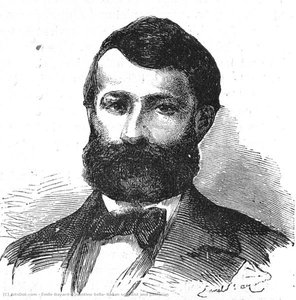
- Top-ranked work: Quentino Sella, Italian scientist and politician
- Top 3 works:
- Quentino Sella, Italian scientist and politician
- Raffaele Conforti, Italian politician
- Mohamed Saïd Pasha, Viceroy of Egypt and Ethiopia
- Also known as:
- Emile Bayard
- Émile-Antoine Bayard
- Abel De Miray
Kratki kviz
Svako pitanje ima samo jedan točan odgovor.
Pitanje 1:
Émile Bayard was a student of which artist?
Pitanje 2:
Bayard is well known for illustrating which literary masterpiece?
Pitanje 3:
Besides novels, what other type of events did Bayard initially illustrate for magazines?
Pitanje 4:
Bayard's illustrations for Jules Verne’s *From the Earth to the Moon* are considered pioneering in what artistic field?
Pitanje 5:
Under what pseudonym did Bayard publish his first cartoons at the age of fifteen?
Priče

10 Remek-djela Impresionizma koji su definirali umjetnički pokret | TopImpressionists
Uronite u svijet impresionizma! Otkrijte 10 remek-djela Claude Moneta, Renoir-a i Van Gogha. Povijest umjetnosti, tehnike slikanja i inspiracija za dekoraciju interijera čekaju vas na TopImpressionists.com. Pronađite reprodukcije vrhunske kvalitete!


Capturing Light: A Journey Through the Soul of 19th-Century Impressionism
Rediscover the magic of 19th-century Impressionism. Explore the revolution of light and plein air painting through our expert art history journey, featuring exquisite hand-painted oil reproductions and bespoke commissions from TopImpressionists.com.

Simon Vouet: A Baroque Master's Journey from Italian Influence to French Classicism
Explore the life & art of Simon Vouet, a pivotal French Baroque painter who introduced Italian styles to France. Discover his masterpieces and lasting influence on 17th-century art.


Pitanja i odgovori
Pod kojim drugim imenima ili pseudonimima poznat je/poznata je Émile Bayard?
Émile Bayard poznat/a je i pod drugim imenima: Emile Bayard, Émile-Antoine Bayard, Abel De Miray.
Kako mogu pronaći djela umjetnika Émile Bayard prema određenoj temi?
Djela umjetnika Émile Bayard možete istražiti putem ključnih riječi na njegovoj stranici Pretraživanje po ključnim riječima, gdje svaka ključna riječ grupirala pripadajuća djela.
Koliko su popularna umjetnička djela umjetnika Émile Bayard?
Stranica Statistika posjeta umjetnika Émile Bayard prikazuje statistiku izračunatu na temelju umjetničkih djela tog umjetnika navedenih na ovaj web-mjesto.
Kako mogu pratiti radove umjetnika Émile Bayard kronološki?
Djela umjetnika Émile Bayard možete pregledati kronološkim redoslijedom na stranici Kronologija umjetnina umjetnika.
Mogu li posjetiti virtualni muzej djela umjetnika Émile Bayard?
Djela umjetnika Émile Bayard možete pogledati u 3D galeriji na njegovoj stranici 3D galerija.
Koliko je umjetničkih djela autora Émile Bayard dostupno u katalogu?
Možete pregledati 21 umjetničkih djela djela autora Émile Bayard na stranici Sva umjetnička djela.
Koje je boje Émile Bayard najčešće koristio/la?
Upotrebu boje u djelima umjetnika Émile Bayard koja su navedena na ovaj web-mjesto moguće je proučiti na umjetnikovoj stranici Genom palete.
U kojem je povijesnom razdoblju stvarala/radio Émile Bayard?
Émile Bayard je stvarala u razdoblju 19th Century. To razdoblje smješta umjetnikov rad u povijesni kontekst.
Gdje je i kada je rođen/a Émile Bayard?
Émile Bayard rođen/a je u gradu La Ferté-sous-Jouarre 1837. godine.