Atelier — Besplatna dostava širom svijeta — Rok isporuke 2–6 tjedana
      Emanuel De Witte, 1617 – 1692

      Emanuel De Witte: The 99 Best-Known Paintings

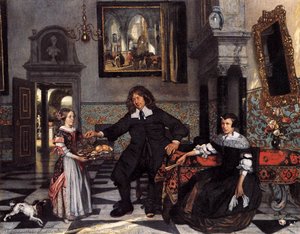
      Of all Emanuel De Witte's paintings, Portrait of a Family in an Interior (detail) (1678) is the most famous; it hangs in the Alte Pinakothek, München. Close behind come The Interior of a Dutch Church (1680) and Interior of the Nieuwe Kerk in Delft (1664). Among the 99 works by Emanuel De Witte in our catalogue, these 99 are the most celebrated, each shown with its date, its museum and its story.

      Rangirano prema našoj ocjeni popularnosti, koja objedinjuje broj pretraživanja, posjeta i narudžbi za svako djelo. Ažurirano Listopad 2026. Each painting on this page can be ordered as an oil reproduction painted by hand on linen canvas, or as a fine art print, made to the size you choose.

      Portret Emanuel De Witte
      Emanuel De Witte · 1617 – 1692
      Rođen · umro
      1617 – 1692, Alkmaar
      Pokret
      Dutch golden age
      Djela u našem katalogu
      99
      Najpoznatije
      Portrait of a Family in an Interior (detail) (1678)
      Najviše djela u
      Museum Boijmans Van Beuningen

      Emanuel De Witte's 10 most celebrated paintings

      Portrait of a Family in an Interior (detail) (1678) od Emanuel De Witte
      1

      Portrait of a Family in an Interior (detail)

      1678 · Oil On Canvas · Alte Pinakothek, München

      Emanuel de Witte's “Portrait of a Family in an Interior” (1678) isn’t merely a depiction of a wealthy household; it’s a carefully constructed tableau vivant, a frozen moment brimming with quiet dignity and subtle narrative. Painted during the height of the Dutch Golden Age, this oil on canvas offers a rare glimpse into the lives of a prosperous family within their richly appointed home—a space designed to project status, comfort,…

      Interior of the Nieuwe Kerk in Delft (1664) od Emanuel De Witte
      3

      Interior of the Nieuwe Kerk in Delft

      1664 · Oil On Canvas · Residenzgalerie, Salzburg

      To stand before an interior scene like this depiction of the Nieuwe Kerk in Delft is to step across a threshold, leaving the clamor of the outside world behind. The artwork does not merely show us a church; it envelops us within its monumental silence. Emanuel de Witte masterfully captures that unique atmosphere found only in grand, aged sacred architecture—a place where history seems palpable in the very dust motes…

      The Interior of the Oude Kerk, Amsterdam, during a Sermon (1658) od Emanuel De Witte
      5

      The Interior of the Oude Kerk, Amsterdam, during a Sermon

      1658 · Oil On Canvas · National Gallery, London

      To stand before this depiction of The Interior of the Oude Kerk in Amsterdam is to step across the threshold of time itself. This painting, executed in 1658 by Emanuel de Witte, is far more than a mere record of an architectural space; it is a meticulously crafted meditation on faith, community, and the sublime interplay between human life and divine structure. The high-angle perspective immediately envelops the viewer, drawing…

      Portrait of a woman (1648) od Emanuel De Witte
      6

      Portrait of a woman

      1648 · Oil On Canvas · Museum Boijmans Van Beuningen, Rotterdam

      A single female figure occupies the center of this oval vignette, presented in a bust-length view. She wears a dark garment, accented by a prominent white collar with scalloped edges and a small black bow. The composition draws the eye directly to her face, where a calm and composed expression suggests a dignified emotional tone. Light originates from the upper left, casting gentle shadows across the right side of her…

      Portrait of a man (1648) od Emanuel De Witte
      7

      Portrait of a man

      1648 · Oil · Museum Boijmans Van Beuningen, Rotterdam

      is an oil painting by the Dutch artist Emanuel de Witte. Executed about 1648, the work represents a significant example of the artist's early engagement with portraiture before his later specialization in church interiors. The sitter is presented in a bust-length composition, positioned slightly off-center to create a sense of depth and presence.

      Interior of a Protestant Gothic Church (1669) od Emanuel De Witte
      8

      Interior of a Protestant Gothic Church

      1669 · Oil On Canvas · Rijksmuseum, Amsterdam

      Emanuel de Witte's "Interior of a Protestant Gothic Church," painted in 1669, isn’t merely a depiction of a sacred space; it’s an immersive experience. This remarkable work transcends the simple act of recording architecture, instead capturing the very *feeling* of being within a grand, dimly lit cathedral – a testament to de Witte's unique artistic vision. Unlike his contemporary Pieter Saenredam, who meticulously documented architectural details with photographic precision, de…

      Emanuel De Witte paintings ranked 11 to 99

      Interior of the Oude Kerk, Delft (1650) od Emanuel De Witte
      #38

      Interior of the Oude Kerk, Delft

      1650 · Metropolitan Museum of Art

      Despite its profusion of realistic details, de Witte’s interior view of Delft’s Oude Kerk (Old Church) takes considerable liberties with the actual architecture of the church—omitting, for example,…

      Order this canvas →
      Interior of a Church (1674) od Emanuel De Witte
      #67

      Interior of a Church

      1674 · Wallraf-Richartz-Museum

      In this work, titled Interior of a Church, we encounter a significant example of the Dutch Golden Age. Painted by Emanuel de Witte in 1660, the oil on…

      Bring this light home →
      Old Church in Delft (1642) od Emanuel De Witte
      #71

      Old Church in Delft

      1642 · Ermitaž

      In the quiet corners of the Dutch Golden Age, where light performs its most delicate dances, Emanuel de Witte captured something far more profound than mere architecture. His…

      Order this canvas →
      Interior of the Oude Kerk, Delft (1650) od Emanuel De Witte
      #73

      Interior of the Oude Kerk, Delft

      1650 · Metropolitan Museum of Art

      Emanuel de Witte's “Interior of the Oude Kerk, Delft” isn’t merely a depiction of a church; it’s an immersive experience. Painted in 1650, this remarkable work transports us…

      Order this canvas →
      Interior of a Baroque Church (1660) od Emanuel De Witte
      #74

      Interior of a Baroque Church

      1660 · Staatliche Museen zu Berlin

      To step into Emanuel de Witte’s Interior of a Baroque Church is to leave the clamor of the physical world behind and enter a realm of profound, whispered…

      Order this canvas →
      Interior of a Church (1660) od Emanuel De Witte
      #81

      Interior of a Church

      1660 · Ermitaž

      Emanuel de Witte's "Interior of a Church," painted around 1669, isn’t merely a depiction of a sacred space; it’s an immersive experience, a carefully constructed invitation to contemplate…

      Have it painted by hand →
      Interior of a Gothic church od Emanuel De Witte
      #86

      Interior of a Gothic church

      Museum Boijmans Van Beuningen

      The scene unfolds within the quiet, soaring reaches of an Interior of a Gothic church. This work, painted by Emanuel de Witte, captures a moment of stillness amidst…

      Order this canvas →

      What Emanuel De Witte painted most

      The four subjects that return most often on these canvases, each with its best-loved example.

      Where Emanuel De Witte's canvases hang

      8 muzeja u kojima se nalazi najviše djela s ove stranice.

      Muzej Grad Djela autora Emanuel De Witte Slike iz ovog popisa
      Museum Boijmans Van Beuningen, RotterdamMuseum Boijmans Van Beuningen Rotterdam 11 Portrait of a woman, Portrait of a man, Vertumnus and Pomona
      Rijksmuseum, AmsterdamRijksmuseum Amsterdam 8 Interior of a Protestant Gothic Church, Interior of a Protestant Gothic Church, Interior of the Portuguese Synagogue in Amsterdam
      National Gallery, LondonNational Gallery London 4 The Interior of the Oude Kerk, Amsterdam, during a Sermon, The Interior of the Oude Kerk, Amsterdam, The Interior of the Oude Kerk, Amsterdam, during a Sermon
      Amsterdam Museum, AmsterdamAmsterdam Museum Amsterdam 3 Interior of the Oude Kerk in Amsterdam, Interior of the Oude Kerk in Amsterdam, Interior of the Oude Kerk in Amsterdam
      Gemäldegalerie, BerlinGemäldegalerie Berlin 3 Interior View of a Synagogue, Interior of a Gothic Church, Interior of the Nieuwe Kerk in Amsterdam
      Ermitaž, Sankt PeterburgErmitaž Sankt Peterburg 3 Square in front of the Palace in an Italian Town, Old Church in Delft, Interior of a Church
      Metropolitan Museum of Art, New YorkMetropolitan Museum of Art New York 3 Interior of the Oude Kerk, Delft, Interior of the Oude Kerk, Delft (detail), Interior of the Oude Kerk, Delft
      Detroit Institute of Arts, DetroitDetroit Institute of Arts Detroit 3 The Nieuwe Kerk at Delft with the Tomb of Willem the Silent, Interior of a Protestant Church, Interior of the Oude Kerk in Amsterdam

      Decade by decade: Emanuel De Witte's most celebrated canvas

      1. 1640s
        Portrait of a woman (1648) od Emanuel De Witte
        Canvas 6 of 99

        Portrait of a woman

        Godine 23 – 32 · Museum Boijmans Van Beuningen

        A single female figure occupies the center of this oval vignette, presented in a bust-length view. She wears a dark garment, accented by a prominent white collar with…

      2. 1650s
        Rest During the Flight (1654) od Emanuel De Witte
        Canvas 4 of 99

        Rest During the Flight

        Godine 33 – 42 · Bavarske državne slikopisne zbirke

        The oil painting titled Rest During the Flight by Emanuel de Witte depicts a specific narrative from religious history. Created about 1654, the work presents a scene likely…

      3. 1660s
        Interior of the Nieuwe Kerk in Delft (1664) od Emanuel De Witte
        3 of 99

        Interior of the Nieuwe Kerk in Delft

        Godine 43 – 52 · Residenzgalerie

        To stand before an interior scene like this depiction of the Nieuwe Kerk in Delft is to step across a threshold, leaving the clamor of the outside world…

      4. 1670s
        Portrait of a Family in an Interior (detail) (1678) od Emanuel De Witte
        Ranked 1 of 99

        Portrait of a Family in an Interior (detail)

        Godine 53 – 62 · Alte Pinakothek

        Emanuel de Witte's “Portrait of a Family in an Interior” (1678) isn’t merely a depiction of a wealthy household; it’s a carefully constructed tableau vivant, a frozen moment…

      5. 1680s
        The Interior of a Dutch Church (1680) od Emanuel De Witte
        Canvas 2 of 99

        The Interior of a Dutch Church

        Godine 63 – 72 · Scottish National Gallery

        The Interior of a Dutch Church is an oil on canvas by Emanuel de Witte. Created about 1680, the work reflects the artist's specialization in the architectural spaces…

      6. 1690s

      Your questions on Emanuel De Witte's paintings, answered

      Which is the most celebrated painting by Emanuel De Witte?Read the answer

      Portrait of a Family in an Interior (detail) (1678), Alte Pinakothek, München. The Interior of a Dutch Church (1680) and Interior of the Nieuwe Kerk in Delft (1664) follow.

      How old was Emanuel De Witte at the time of Portrait of a Family in an Interior (detail)?Read the answer

      Emanuel De Witte, born in 1617, was 61 years old: Portrait of a Family in an Interior (detail) dates from 1678.

      Which ten paintings is Emanuel De Witte most famous for?Read the answer

      Portrait of a Family in an Interior (detail), The Interior of a Dutch Church, Interior of the Nieuwe Kerk in Delft, Rest During the Flight, The Interior of the Oude Kerk, Amsterdam, during a Sermon, Portrait of a woman, Portrait of a man, Interior of a Protestant Gothic Church, Danaë and the Shower of Gold i Vertumnus and Pomona. Each canvas in the ranking above comes with its year and its museum.

      How many paintings by Emanuel De Witte are known?Read the answer

      99 works by Emanuel De Witte are in our catalogue, dated 1641 to 1692.

      Which museums hold Emanuel De Witte's best-known canvases?Read the answer

      Mostly in Museum Boijmans Van Beuningen (Rotterdam), Rijksmuseum (Amsterdam) i National Gallery (London); the list above names each museum and its canvases.

      In which years did Emanuel De Witte paint the most celebrated canvases?Read the answer

      In 1650s, which gave 27 of the 99 works on this page, Rest During the Flight among them.

      What are the first and the last of Emanuel De Witte's famous canvases?Read the answer

      The earliest canvas here is Danaë and the Shower of Gold (1641); the latest is The Nieuwe Vismarkt (New Fish Market) in Amsterdam, Emanuel de Witte, 1655 - 1692 (1692).

      Which subjects return most often in Emanuel De Witte's paintings?Read the answer

      Church interior (16), 17th century (10) i Architecture (10), across the 99 works on this page.

      What did Emanuel De Witte usually paint with?Read the answer

      Oil On Canvas, used in 22 of the 99 works on this page.

      To which art movement does Emanuel De Witte belong?Read the answer

      Dutch golden age i Baroque, as the canvases on this page show.

      What can I see by Emanuel De Witte at the Museum Boijmans Van Beuningen?Read the answer

      The Museum Boijmans Van Beuningen, Rotterdam holds 11 of the works on this page, among them Portrait of a woman, Portrait of a man i Vertumnus and Pomona.

      Can I order a hand-painted copy of a painting by Emanuel De Witte?Read the answer

      Yes. Every painting on this page can be ordered from its own page as an oil reproduction painted by hand, or as a fine art print, in the size you choose.

      Emanuel De Witte: the painter's story

      Život u Perspektivi: Svijet Emanuela de Wittea

      Emanuel de Witte, ime koje možda nije odmah prepoznatljivo kao nekih njegovih kolega iz Zlatnog doba Nizozemske, ipak zauzima značajnu i fascinantnu nišu unutar panteona majstora 17. stoljeća. Rođen u Alkmaaru 1617. godine, de Witteov umjetnički put bio je obilježen kako izvanrednim talentom tako i značajnom osobnim turbulencijom – dualitet koji se čini da se neprimjetno prožima kroz samu atmosferu njegovih slika. Nije ga vođena pažljiva arhitektonska dokumentacija poput Pietra Saenredama; umjesto toga, tražio je uhvatiti osjećaj prostora, kvalitet svjetlosti i suptilni dramati koji se razvijaju unutar svetih interijera. Njegovi platni nisu samo prikaz crkava; oni su uranjiva iskustva, koja posjetitelje pozivaju u svijet tihe kontemplacije i duhovne rezonancije.

      Od Obuke u Delftu do Oslobođenja u Amsterdamu

      De Witteov rani život pružio je čvrst temelj za njegove umjetničke težnje. Njegov otac, učitelj, usadio mu je naklonost učenju i intelektualnoj znatiželji – kvalitete koje će kasnije projačit u njegovom pažljivom posmatranju perspektive i svjetlosti. Formalno je ušao u svijet umjetnosti pridruživanjem Gildiji sv. Luke u Alkmaaru 1636., ali njegova naknadna pripravnica kod Evrta van Aelsta u Delftu pokazala se kao posebno oblikujuća. Van Aelst, poznati slikar mrtvih prikaza, usadio je de Witteu oštar pogled za detalje i majstorski vladanje svjetlošću i sjajem – vještine koje će postati znakovi njegovog zrelog stila. Iзначаlno je de Witte istraživao različite žanrove – portrete, mitološke scene, vjerske narative – ali tek kada se preselio u Amsterdam 1651., pronašao je svoj pravi poziv. Bogatstvo veličanstvenih crkava grada pružilo je neiscrpiv izvor inspiracije, i počeo je specijalizirati se za prikaz njihovih zadivljujućih interijera.

      Majstor Atmosfere i Maštovitih Prostora

      Amsterdam se pokazao ključnim za umjetnički razvoj de Wittea. On nije samo replikovao postojeće crkvene prostore; umjesto toga, vješto je sintezirao elemente iz različitih zgrada, stvarajući idealizirane interijere koji su djelovali istovremeno i poznato i blago nezemaljski. Oude Kerk u Amsterdamu postala je učestica, pojavljujući se ponovno na njegovim plićima s raznih preglednih točaka. Ali ovo nisu bili jednostavni prikazi. De Witte manipulirao perspektivom, igrao sa svjetlošću i sjajem, popunjavajući prostore pažljivo aranžiranim likovima kako bi izazvao određeno raspoloženje ili atmosferu. Kao što je zapažio Walter Liedtke, njegov glavni interes nije bio u samoj arhitekturi, već u „samom prostoru – njegovoj svjetlosti, boji, čisto obimu i raspoloženju“. Ovaj naglasak na atmosferskom efektu razlikuje ga od topografskih slikarica tog doba koji su bili rigidniji. Nije ga brinula precizna točnost; zanimalo ga je stvaranje osjećaja veličanstvenosti, poštovanja i duhovne dubine.

      Život Obeleženjen Sjajem

      Unatoč umjetničkom uspjehu, de Witteov privatni život bio je proganut nevoljama. Smrt njegove prve žene donijela mu je duboku tugu, a naknadni pravni problemi koji su uključivali njegovu drugu ženu i kćerkicu bacili su dug sjaj na njegove kasnije godine. Financijske poteškoće dovele su ga do ponižavajuće pozicije u stanovanju kao službenik umjetničkog trgovca, Joris de Wijs, situacija koju je na kraju prekršio, što je dovelo do daljnjih komplikacija. Savremeni izvori sliču sliku nestabilnog temperamenta – čovjeka sklonog vikanju klijentima i upuštanju svađa. Ova unutarnja nemirica možda je doprinijela neravnomjernosti njegovog kasnijeg rada, ali dodaje i još jedan sloj složenosti našem razumijevanju umjetnika i njegovih stvorenja. Tragično, de Witteov život došao je do razarajućeg kraja 1692. godine kada je navodno pokušao samoubojstvo obješenjem s mosta nad kanalom; konopca se puknuo i utopio je. To je bilo mračno zaokružje za čovjeka koji je posvetio svoj život hvatanju ljepote i spokojstva svetih prostora.

      Naslijeđe i Trajni Utjecaj

      Emanuel de Witte stoji kao važna figura u posljednjoj fazi arhitektonskog slikarstva u Nizozemskoj, premošćujući jaz između pažljive dokumentacije i atmosferske interpretacije. Njegova inovativna upotreba svjetlosti i perspektive utjecala je na kasnije generacije umjetnika, a njegove slike i dalje nude vrijedne uvide u nizozemski vjerski život i društvene običaje 17. stoljeća. Danas se djela de Wittea čuvaju u prestižnim kolekcijama širom svijeta – u Metropolitan Museum of Artu, National Gallery of Art i Rijksmuseumu, između ostalih – svjedočanstvo njegovog trajne naslijeđa kao majstora perspektive, atmosfere i emocionalne rezonancije. Podsjeća nas da umjetnost nije samo ono što vidimo, već kako se osjećamo kada gledamo.

      Sva 99 djela umjetnika Emanuel De Witte →
