Atelier — Besplatna dostava širom svijeta — Rok isporuke 2–6 tjedana
      Georges Braque, 1882 – 1963

      The 100 Most Famous Georges Braque Paintings, Ranked

      The best-loved painting by Georges Braque is Mandola (1910), which hangs in the Tate Gallery, London. Čovjek s gitarom (1914) and Kuće u L'Estaqueu come next among the canvases readers know best. Our catalogue holds 700 works by Georges Braque: here are the 100 most famous, each with its year, its museum and what makes it memorable.

      Rangirano prema našoj ocjeni popularnosti, koja objedinjuje broj pretraživanja, posjeta i narudžbi za svako djelo. Ažurirano Listopad 2026.

      Portret Georges Braque
      Georges Braque · 1882 – 1963
      Rođen · umro
      1882 – 1963, Argenteuil
      Pokret
      Kubizam
      Djela u našem katalogu
      700
      Najpoznatije
      Mandola (1910)
      Najviše djela u
      The Phillips Collection

      Top 10 Georges Braque paintings: the canvases everyone knows

      Mandola (1910) od Georges Braque
      1

      Mandola

      1910 · Ulje na platnu · Tate Gallery, London

      Mandola: Analitički Kubizam u Svjetlu Geometrije i Tišine Georges Braqueova "Mandola", nastala 1910. godine, nije samo slika glazbenog instrumenta; to je duboka meditacija o percepciji, obliku i samoj prirodi gledanja. U doba kada se umjetnost mijenjala u nevjerojatnom ritmu, Braque je s Picassom vodio revolucionarni pokret poznat kao analitički kubizam – stil koji je razbio tradicionalne konvencije i ponudio novu perspektivu na svijet oko nas. Umjesto da prikazuje mandolu na…

      Čovjek s gitarom (1914) od Georges Braque
      2

      Čovjek s gitarom

      1914 · Ulje na platnu

      "Čovjek s gitarom": Razbijanje stvarnosti i harmonija fragmentacije Georges Braqueovo djelo "Čovjek s gitarom" (1914.) nije samo slika glazbenika; to je kamen temeljac analitičkog kubizma, revolucionarnog umjetničkog pokreta koji je u početku 20. stoljeća zauvijek promijenio način na koji percipiramo i predstavljamo svijet oko nas. Umjesto tradicionalnog portreta, Braque nas poziva na intelektualni izazov – dekonstrukciju stvarnosti u složenoj mreži geometrijskih ravnina. Ova slika, tražena od kolekcionara i izvanredan ukras…

      Kuće u L'Estaqueu od Georges Braque
      3

      Kuće u L'Estaqueu

      Ulje na platnu

      Kuće u L'Estaqueu: Predubok Pogled u Proto-Kubizam Georges Braqueovo "Kuće u L'Estaqueu" nije samo slika; to je vizualni manifest, prekretnica u povijesti umjetnosti koja najavljuje dolazak kubizma. Ova djela, nastala 1908., prikazuje obalno selo L'Estaque s neobičnom jasnoćom i fragmentacijom. Umjesto tradicionalnog realizma, Braque nas poziva da razložimo svijet na temeljne geometrijske elemente – kocke, stožere, trokute – i ponovno ih složimo u novu, dinamičnu kompoziciju. Pogledajte kako se kuće…

      Lukobran u Normandiji (1909) od Georges Braque
      4

      Lukobran u Normandiji

      1909 · Ulje na platnu · Art Institute of Chicago, Chicago

      Remek-djelo kubističke inovacije Braqueovo "Luka u Normandiji" (1909.) očaravajući je primjer ranog kubizma, koji prikazuje revolucionirani pristup umjetnika formi i perspektivi. Ovo živo umjetničko djelo hvata samu bit užurbane scene u luci kroz fragmentirane oblike i odvažne linije, pozivajući gledatelje u svijet u kojem se tradicija susreće s inovacijom. Dinamična kompozicija i živopisne boje Kompozicija je simfonija preklapajućih geometrijskih oblika koji stvaraju dubinu i složenost. Jedrenjaci, prikazani s kutnom preciznošću,…

      Žena čitajući (1911) od Georges Braque
      5

      Žena čitajući

      1911 · Ulje na platnu

      Remek-djelo kubističke inovacije Braqueovo djelo "Žena čitajući" (1911.) očaravajući je primjer ranog kubizma, revolucionarnog pokreta koji je iz temelja promijenio svijet umjetnosti. Ova zamršena kompozicija prikazuje Braqueovu vještinu oblikovanja i perspektive, pozivajući gledatelje da istraže fragmentiranu ljepotu modernog života. Subjekt i kompozicija Umjetničko djelo prikazuje ženu potpuno uronjenu u čitanje, iako je njezina figura apstrahirana u složeni niz geometrijskih oblika i preklapajućih ravnina. Ova namjerna fragmentacija prkosi tradicionalnom predstavljanju, odražavajući…

      Violina i paleta (1910) od Georges Braque
      6

      Violina i paleta

      1910 · Ulje na platnu · Solomon R. Guggenheim Museum, New York City

      Istraživanje teme i kompozicije Ovo očaravajuće umjetničko djelo predstavlja dinamičnu scenu mrtve prirode, koja vjerojatno prikazuje glazbene instrumente poput violine i palete, raspoređene na fragmentiran, apstraktiran način. Kompozicija poziva gledatelje da istraže složenu interakciju formi, gdje su poznati predmeti dekonstruirani u geometrijske plošne. Sama tema slavi umjetničko i glazbeno stvaralaštvo, simbolizirajući harmoniju, kreativnost i međusobnu povezanost umjetničkih elemenata. Njezin intrigantni raspored potiče kontemplativno sudjelovanje, otkrivajući ljepotu svakodnevnih predmeta kroz modernističku…

      The Musician (1918) od Georges Braque
      7

      The Musician

      1918 · Ulje na platnu

      Georges Braque i "The Musician": Fragmentirana Simfonija Modernog Vremena U srcu umjetnosti 20. stoljeća, Georges Braque je bio ne samo sudionik, već i arhitekt revolucionarnog pokreta koji je promijenio način na koji percipiramo svijet – Kubizma. Njegova "The Musician" iz 1918., više od samo slika, predstavlja trenutak intelektualne i vizualne transformacije, zapanjujuće prikazan u fragmentiranom, ali snažno dinamičnom obliku. Ova djela, svedočanstvo je vremena posrednih između dva rata, izražava notu…

      Duo (Le Duo) (1937) od Georges Braque
      8

      Duo (Le Duo)

      1937 · Ulje na platnu · Centre Pompidou, Pariz

      Simfonija geometrije i elegancije U tišini 1937. godine, Georges Braque usvijetlio je više od samog glazbenog trenutka; zabilježio je samu bit skladnog dijaloga. Duo (Le Duo) poziva promatrača u intimno utočište gdje su dvije figure isprepletene s ritmičkim pulsom klavira. Na prvi pogled, scena se čini kao nježna vignetka zajedništva, no ispod te površine leži duboka intelektualna rigoroznost kubističkog pokreta. Braque pedantno dekonstruira fizički svijet, razbijajući subjekte i njihovo okruženje…

      Žena s gitarom (1913) od Georges Braque
      9

      Žena s gitarom

      1913 · Akril na platnu

      Revolucionarna fuzija: Istraživanje Braqueovog djela Žena s gitarom (1913) Georges Braqueovo djelo Žena s gitarom, naslikano 1913. godine, stoji kao ključno umjetničko djelo koje povezuje vibrantnu energiju fauvizma s revolucionarnim inovacijama kubizma. Ovo nije samo prikaz glazbenice; to je radikalna dekonstrukcija forme i percepcije koja je neopozorno promijenila smjer moderne umjetnosti. Slika utjelovljuje Braqueovu jedinstvenu sposobnost sintetiziranja umjetničkih utjecaja, rezultirajući kompozicijom koja je istovremeno intelektualno stimulativna i emocionalno snažna. Dekonstrukcija…

      Heracles od Georges Braque
      10

      Heracles

      Lithograph

      The Deconstruction of Heroism In the dawn of the twentieth century, Georges Braque embarked on a visual revolution that would forever alter the trajectory of modern art. His work, Heracles, stands as a profound testament to this era of radical reimagining. Executed around 1910, this monochrome lithograph does not merely recount the legendary exploits of the Greek hero; instead, it embodies the very essence of Cubism’s departure from traditional representation.…

      More Georges Braque canvases, 11 to 100

      Kuće u L'Estaque, Umjetnički muzej u Bernu (1908) od Georges Braque
      #11

      Kuće u L'Estaque, Umjetnički muzej u Bernu

      1908

      U tihim brdima Provance, gdje mediteranski povjetarac susreće nepristupačeni teren L’Estaquea, Georges Braque uhvatio je nešto više od samog pejzaža; uhvatio je trenutak u kojem se ogledalo tradicionalne…

      Violin and candlestick (1910) od Georges Braque
      #12

      Violin and candlestick

      1910

      Georges Braque's "Violin and Candlestick," painted in 1910, isn’t merely a depiction of objects; it’s an architectural exploration of perception itself. This pivotal work, rendered in the heart…

      Zaljev, Les Lecques (1906) od Georges Braque
      #13

      Zaljev, Les Lecques

      1906 · Centre Pompidou

      U annalsima moderne umjetnosti, malo koji trenutak dočarava sirovu, neobuzdanu energiju stilske revolucije poput djela Georges Braquea The Gulf, Les Lecques. Naslikano 1906. godine, ovo remek-djelo služi kao…

      Guitar and Sheet Music (1919) od Georges Braque
      #14

      Guitar and Sheet Music

      1919

      In the quiet revolution of early 20th-century modernism, few works capture the delicate tension between structure and soul as poignantly as Georges Braque’s “Guitar and Sheet Music.” Painted…

      Viaduct at L_Estaque (1908) od Georges Braque
      #15

      Viaduct at L_Estaque

      1908

      In the sun-drenched landscapes of southern France, a revolution was quietly brewing, captured forever in the vibrant strokes of Georges Braque’s Viaduct at L’Estaque. Painted during a pivotal…

      Čovjek s gitarom (1911) od Georges Braque
      #16

      Čovjek s gitarom

      1911 · MoMA - Museum of Modern Art

      Braqueovo remek-djelo „Čovjek s gitarom“, dovršeno 1914. godine, stoji kao temeljni stup analitičkog kubizma—pokareta koji je neopozorno promijenio smjer umjetničke povijesti. Više od puke prikazivanja pojedinačnog glazbenika, ova…

      Still-life with Guitar (Still-life with Mandolin) (1912) od Georges Braque
      #17

      Still-life with Guitar (Still-life with Mandolin)

      1912 · Museo del Novecento

      Georges Braque's "Still Life with Guitar (Still-life with Mandolin)," painted in 1912, is more than just a depiction of musical instruments; it’s a pivotal snapshot of the burgeoning…

      Still life with harp and violin (1911) od Georges Braque
      #18

      Still life with harp and violin

      1911

      To gaze upon Georges Braque’s Still Life with Harp and Violin is to witness the very moment the mirror of traditional art was shattered and reassembled into something…

      Fox od Georges Braque
      #19

      Fox

      In the quiet, monochromatic depths of Georges Braque’s Fox, we encounter a profound moment in the evolution of modern vision. Created in 1911 and published the following year,…

      Violin and pitcher, Kunstmuseum Basel (1910) od Georges Braque
      #20

      Violin and pitcher, Kunstmuseum Basel

      1910

      In the quiet halls of the Kunstmuseum Basel, a profound dialogue between light and shadow unfolds within Georges Braque’s 1910 masterpiece, Violin and Pitcher. To gaze upon this…

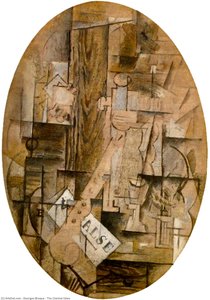
      The Clarinet Valse (1912) od Georges Braque
      #21

      The Clarinet Valse

      1912

      To gaze upon Georges Braque’s 1912 masterpiece, The Clarinet Valse, is to step into a world where the boundaries between sound and sight begin to dissolve. This is…

      Stil života s harfom i violinom (1912) od Georges Braque
      #22

      Stil života s harfom i violinom

      1912

      Fragmentirana vizija modernog života Georges Braqueovo djelo Stil života s harfom i violinom, naslikano 1912. godine, predstavlja ključno remek-djelo koje utjelovljuje vrhunac analitičkog kubizma. Ovo nije tradicionalna mrtva…

      Veliki golotinja (1908) od Georges Braque
      #23

      Veliki golotinja

      1908

      Pogled u senzualnost ranog modernog doba: *Velika goja* Georgesa Braquea (1908.) Ova očaravajuća slika Georgesa Braquea, stvorena 1908. godine, nudi uvjerljiv prozor u umjetničku fermentaciju ranog dvadesetog stoljeća.…

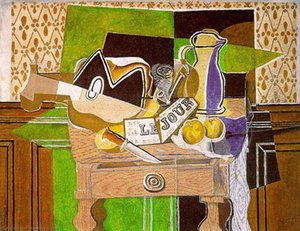
      Still-Life Le Jour (1929) od Georges Braque
      #24

      Still-Life Le Jour

      1929

      Georges Braque’s “Still Life Le Jour,” painted in 1929, stands as a cornerstone of Fauvist art—a movement that irrevocably altered the course of twentieth-century painting. More than just…

      Metronom (1909) od Georges Braque
      #25

      Metronom

      1909 · Statens Museum For Kunst

      Metronom se nalazi u gornjem lijevom kutu, kao piramidalna težina od oker i sienna tonova. Njegovo drveno kućište razbijeno je u trapezoidne fasetne dijelove koji se preklapaju s…

      Bottle, Glass, and Newspaper (1914) od Georges Braque
      #26

      Bottle, Glass, and Newspaper

      1914

      In Georges Braque’s 1914 masterpiece, Bottle, Glass, and Newspaper, the boundaries between reality and representation dissolve into a captivating visual conversation. This work is not merely a depiction…

      Plums, Pears, Nuts and Knife (1926) od Georges Braque
      #27

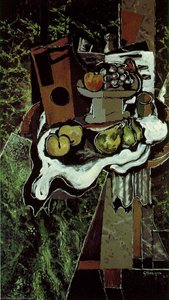
      Plums, Pears, Nuts and Knife

      1926 · The Phillips Collection

      In this 1926 oil on canvas, we find a composition that feels remarkably intimate, as if we have just stepped into a private moment of stillness. The subject…

      L'Estaque (1906) od Georges Braque
      #28

      L'Estaque

      1906

      In the sun-drenched landscape of 1906, Georges Braque captured something far more profound than a mere Mediterranean vista; he captured the very moment art began to break free…

      Bottle and Fishes (1910) od Georges Braque
      #29

      Bottle and Fishes

      1910

      In the quiet revolution of early twentieth-century modernism, few works capture the intellectual tension between reality and perception as poignantly as Georges Braque’s “Bottle and Fishes.” Executed around…

      Still Life with Guitar (1935) od Georges Braque
      #30

      Still Life with Guitar

      1935

      In the quietude of 1935, Georges Braque captured a moment of profound stillness that transcends the simple arrangement of domestic objects. Still Life with Guitar is not merely…

      Still Life with Grapes (1918) od Georges Braque
      #31

      Still Life with Grapes

      1918

      A Fragmented Reflection of Modernity In 1918, as the world emerged from the profound shadows of the Great War, Georges Braque was busy redefining the very essence of…

      Dvije ptice (1955) od Georges Braque
      #32

      Dvije ptice

      1955 · Tel Aviv Museum of Art

      Djelo Georgesa Braquea „Dvije ptice”, dovršeno 1955. godine, nije samo prikaz ptičjih formi; to je destilirana esencija umjetničke revolucije koja se kuhala u Francuskoj početkom i sredinom 20.…

      Fruitdish and Glass (1912) od Georges Braque
      #33

      Fruitdish and Glass

      1912

      Georges Braque’s Fruitdish and Glass stands as a pivotal work in the history of art, marking a significant milestone in the development of Cubism. Created in 1912, this…

      Still Life: The Table (1928) od Georges Braque
      #34

      Still Life: The Table

      1928

      Georges Braque’s “Still Life: The Table,” painted in 1928, isn't merely a depiction of objects; it’s an invitation into a carefully constructed world of fragmented perception and deliberate…

      Portrait of a Woman (1911) od Georges Braque
      #35

      Portrait of a Woman

      1911

      In the annals of modern art, few moments are as transformative as the birth of Cubism, and few works capture this seismic shift with such intimate grace as…

      Still Life with a Guitar (1919) od Georges Braque
      #36

      Still Life with a Guitar

      1919

      Georges Braque's "Still Life with a Guitar," painted in 1919, isn’t merely a depiction of objects; it’s a profound exploration of perception and the very nature of representation.…

      Pojedinačna činija za voće, As špila (1913) od Georges Braque
      #37

      Pojedinačna činija za voće, As špila

      1913

      Kubistički Natuž: Dekonstrukcija Realnosti u Braqueovom „Pojedište za Voće, As Špilaša“ Georges Braqueov „Pojedište za Voće, As Špilaša“, naslikano 1913. godine, je arhetipski primjer Analitičkog kubizma – revolucionarnog…

      Leaves in color of light (1953) od Georges Braque
      #38

      Leaves in color of light

      1953

      A Symphony of Verdant Light To gaze upon Georges Braque’s Leaves, Color, Light is to step into a quiet sanctuary of color and form. Created during the artist's…

      Portuguese (1911) od Georges Braque
      #39

      Portuguese

      1911

      In the quiet, fractured landscape of 1911, Georges Braque achieved something far more profound than a mere depiction of a musician; he captured the very vibration of sound…

      Persephone od Georges Braque
      #40

      Persephone

      The Fragmented Echo of Myth In the quiet, striking depths of Georges Braque’s Persephone, we encounter more than just a depiction of a Greek deity; we witness the…

      Landscape od Georges Braque
      #41

      Landscape

      A Pivotal Moment in Modernity In 1906, the tranquil hills of L’Estaque became the stage for a quiet revolution that would forever alter the trajectory of Western art.…

      At Sunset, Bird XVI (1958) od Georges Braque
      #42

      At Sunset, Bird XVI

      1958

      In the quiet, evocative depths of Georges Braque’s "At Sunset, Bird XVI," we encounter a moment where the boundaries between the physical world and abstract emotion begin to…

      Staklo ljiljana od Georges Braque
      #43

      Staklo ljiljana

      Djelo Georgesa Braquea, "Staklo ljiljana", stoji kao svjedočanstvo transformativne moći kubizma. Danas, visokokvalitetne reprodukcije uljanih slika nude pristupačan način da izravno doživite ovo revolucionarno umjetničko djelo. AllPaintingsStore.com specijalizira…

      Nature Morte (1926) od Georges Braque
      #44

      Nature Morte

      1926 · Art Gallery of Hamilton

      Georges Braque’s “Nature Morte,” painted in 1926, stands as a cornerstone of Cubist exploration and a testament to the artist's profound engagement with visual perception. More than just…

      Dead nature od Georges Braque
      #45

      Dead nature

      To gaze upon Georges Braque’s “Dead Nature” is to witness a profound moment of stillness within the turbulent currents of modern art history. Created in 1930, this work…

      Still Life on a Table Gillette (1914) od Georges Braque
      #48

      Still Life on a Table Gillette

      1914

      Georges Braque’s Still Life on a Table Gillette: A Fragmented Reflection of Modern Consciousness Still Life on a Table Gillette by Georges Braque stands as a cornerstone of…

      Portrait of a woman 1 od Georges Braque
      #49

      Portrait of a woman 1

      To stand before Georges Braque’s "Portrait of a Woman 1" is to witness the very moment the mirror of traditional art was shattered and reassembled into something far…

      Big Nude (1908) od Georges Braque
      #50

      Big Nude

      1908

      In the annals of modern art, few moments are as transformative as the birth of Cubism, and few works capture this seismic shift as viscerally as Georges Braque’s…

      Still Life with a Violin (1911) od Georges Braque
      #51

      Still Life with a Violin

      1911

      To gaze upon Georges Braque’s “Still Life with a Violin,” painted in the transformative year of 1911, is to witness the very moment the mirror of traditional art…

      Factory of Rio Tinto in the L'estanque od Georges Braque
      #52

      Factory of Rio Tinto in the L'estanque

      To gaze upon Georges Braque’s Factory of Rio Tinto in the L'estanque is to witness the very moment the mirror of traditional art was shattered and reassembled into…

      Ceiling: The Birds (1953) od Georges Braque
      #53

      Ceiling: The Birds

      1953

      High above the floor of the Salle Henri II in the Louvre, a monumental vision unfolds within an oval frame. The air feels thick with the weight of…

      Seated woman 1 od Georges Braque
      #54

      Seated woman 1

      The studio overlooks the Normandy coast, yet the view is broken into shards. A woman sits at her easel, her form caught in a web of grey planes…

      Guitar ''Program statue d'epouvante'' (1913) od Georges Braque
      #55

      Guitar ''Program statue d'epouvante''

      1913

      A Cubist Still Life: Deconstructing Form in Braque’s ‘Guitar ''Program statue d'epouvante''’ Georges Braque’s *Guitar ''Program statue d'epouvante''* (1913) is a pivotal example of Analytical Cubism, showcasing the…

      Limunovi, breskve i činija za voće (1927) od Georges Braque
      #56

      Limunovi, breskve i činija za voće

      1927 · The Phillips Collection

      Svjetlost hvata rub činije za voće, otkrivajući svijet u kojem predmeti postoje u stanju tihe fragmentacije. U ovoj kompoziciji iz 1927. godine, limunovi, breskve i činija za voće…

      Ceiling: The Birds (1953) od Georges Braque
      #58

      Ceiling: The Birds

      1953

      To stand beneath this oval expanse is to witness a moment where the heavy weight of architecture dissolves into something far more fluid. Created between 1952 and 1953,…

      Studija za krov Louvrea od Georges Braque
      #59

      Studija za krov Louvrea

      Georges Braqueova „Studija za krov Louvrea”, očaravajući istraživački put kroz avijarne oblike i nebesnu čudesnost, nadilazi puku reprezentaciju kako bi postala duboka meditacija o prostoru, svjetlu i inherentnoj…

      Churth at Carrieres Saint-Denis (1909) od Georges Braque
      #60

      Churth at Carrieres Saint-Denis

      1909

      The painting is a depiction of a village with buildings and stairs. The scene features a muted palette dominated by earthy tones—greens, yellows, and browns—creating an atmosphere of…

      The Round Table (1929) od Georges Braque
      #61

      The Round Table

      1929

      Georges Braque’s “The Round Table”: A Dialogue Between Tradition and Innovation Subject Matter and Composition: Cubist Style and Technique: Historical Context – The Birth of Cubism: Symbolic Resonance…

      Glass, Pipe and Playing Cards (1918) od Georges Braque
      #62

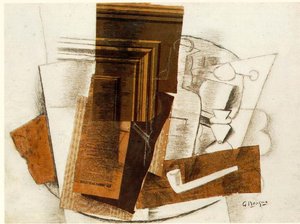
      Glass, Pipe and Playing Cards

      1918 · Des Moines Art Center

      A Study in Fragmented Reality Glass, Pipe and Playing Cards presents us with a quiet, intellectual puzzle. At first glance, one might see only the remnants of a…

      Landscape at L'Estaque (1907) od Georges Braque
      #63

      Landscape at L'Estaque

      1907

      In the annals of modern art, few moments capture the raw, unbridled energy of a revolution quite like Georges Braque’s Landscape at L'Estaque. Painted in 1907, this oil…

      Yellow Seacoast od Georges Braque
      #64

      Yellow Seacoast

      In the quiet evolution of modern art, few works capture the delicate balance between structural revolution and serene observation as masterfully as Georges Braque’s Yellow Seacoast. This evocative…

      Pedestal Table (1913) od Georges Braque
      #66

      Pedestal Table

      1913

      The painting Pedestal Table is a collage that presents a seemingly chaotic arrangement of various objects. Within the composition, a vase is positioned in the middle of the…

      Still Life with Grapes and Clarinet (1927) od Georges Braque
      #67

      Still Life with Grapes and Clarinet

      1927 · The Phillips Collection

      The eye wanders across a surface where wood grain and marble appear to ripple through layers of oil paint. A clarinet rests within this arrangement, its dark, slender…

      Woman with a Mandolin (1910) od Georges Braque
      #68

      Woman with a Mandolin

      1910

      In the quiet revolution of early twentieth-century modernism, few works capture the seismic shift in human perception as profoundly as Georges Braque’s Woman with a Mandolin. Created in…

      Kartice i kocke (1914) od Georges Braque
      #69

      Kartice i kocke

      1914 · Museo Nacional Centro de Arte Reina Sofía

      Slika ulje na platnu Kartice i kocke predstavlja kompoziciju smještenu unutar ovalnog oblika, postavljenu na tamnu, pravokutnu pozadinu obilježenu vertikalnim stanjima. Površina je organizirana kroz niz geometrijskih i…

      White Bird od Georges Braque
      #70

      White Bird

      In the vast landscape of early twentieth-century modernism, few works possess the quiet, arresting power of Georges Braque’s “White Bird.” To gaze upon this piece is to witness…

      Port of La Ciotat (1907) od Georges Braque
      #71

      Port of La Ciotat

      1907

      A Harbor in Fragments The water at La Ciotat holds a heavy, fractured light. In this 1907 scene, sailboats and yachts drift through a landscape broken into geometric…

      Tithonos od Georges Braque
      #72

      Tithonos

      In the quiet evolution of modernism, few moments are as profound as the emergence of Analytical Cubism, and few works capture this seismic shift with such poetic restraint…

      Bottle (1914) od Georges Braque
      #73

      Bottle

      1914

      In this 1914 work, we find ourselves looking at a scene that has been carefully dismantled and reassembled. The composition centers on a bowl and various bottles, yet…

      Still Life with a Pair of Banderillas (1911) od Georges Braque
      #74

      Still Life with a Pair of Banderillas

      1911

      In this 1911 oil on canvas, the surface is occupied by a collection of everyday items arranged upon a dining table and near a chair. Two banderillas, used…

      A Table Grise od Georges Braque
      #75

      A Table Grise

      A Window Into Cubist Still Life: Georges Braque’s “A Table Grise” Georges Braque's "A Table Grise" (1930) isn’t merely a depiction of an arrangement; it’s a carefully constructed…

      Violin and Glass (1913) od Georges Braque
      #76

      Violin and Glass

      1913 · Kunstmuseum Basel

      In this 1913 composition, we find ourselves observing a quiet arrangement of everyday objects that have been carefully deconstructed. A violin rests upon a wooden bow, positioned near…

      Nature Morte a la Guitare (1938) od Georges Braque
      #77

      Nature Morte a la Guitare

      1938

      The scene unfolds through a fractured lens, where the boundaries between objects and space dissolve into a rhythmic dance of planes. A guitar neck and body emerge from…

      Saint-Pol Roux od Georges Braque
      #78

      Saint-Pol Roux

      The composition is defined by a stark, graphic tension between deep black silhouettes and a cream-colored ground. A profile face, rendered as a solid dark form, is integrated…

      The Violin Valse (1913) od Georges Braque
      #79

      The Violin Valse

      1913

      Created in 1913, The Violin Valse is a still life painting that utilizes charcoal, oil, and canvas. The artwork features the contour of a violin, including its f-holes…

      Viaduct At L'estaque. Le Viadue De L'estaque od Georges Braque
      #80

      Viaduct At L'estaque. Le Viadue De L'estaque

      Georges Braque’s “Viaduct At L’Estaque,” painted in 1907, stands as a pivotal moment in the burgeoning Cubist movement—a bold assertion of artistic innovation that simultaneously honors and departs…

      untitled od Georges Braque
      #81

      untitled

      In the quiet revolution that redefined the boundaries of modern vision, Georges Braque’s “untitled (7718)” emerges as a profound meditation on the nature of sight itself. This seminal…

      untitled (928) od Georges Braque
      #83

      untitled (928)

      In the realm of modern art, few moments are as profoundly transformative as the birth of Cubism, and Georges Braque’s “untitled (928)” stands as a breathtaking testament to…

      The Painter and His Model (1939) od Georges Braque
      #84

      The Painter and His Model

      1939

      In the quiet, contemplative atmosphere of 1939, Georges Braque captured more than just a moment in time; he captured the very essence of perception itself. The Painter and…

      embattled head od Georges Braque
      #85

      embattled head

      In the quiet intensity of Georges Braque’s embattled head, we encounter a profound meditation on the human condition, captured through the radical lens of Cubist innovation. Executed in…

      Pitchet, Glass And Lemons od Georges Braque
      #86

      Pitchet, Glass And Lemons

      Georges Braque’s 1942 painting, “Pitchet, Glass and Lemons,” isn’t merely a depiction of everyday objects; it’s a profound exploration of perception itself. Born in Argenteuil, France, in 1882,…

      untitled (3508) od Georges Braque
      #87

      untitled (3508)

      The painting features a guitarist playing an instrument set against a red background. The scene depicts a crowd, with several individuals visible throughout the composition.

      L'Estaque (1906) od Georges Braque
      #88

      L'Estaque

      1906

      In the quiet landscape of 1906, a profound transformation was taking place within the confines of a canvas. Georges Braque’s L'Estaque is far more than a mere depiction…

      Terrace Of Hotel Mistral od Georges Braque
      #89

      Terrace Of Hotel Mistral

      The painting Terrace Of Hotel Mistral captures a sunlit scene featuring a group of trees positioned in front of the hotel. Some trees appear closer to the foreground,…

      Still Life with Ace of Hearts (1914) od Georges Braque
      #90

      Still Life with Ace of Hearts

      1914

      To stand before Georges Braque’s Still Life with Ace of Hearts is to step directly into the crucible of early 20th-century modernism. This painting, executed in 1914, is…

      The large trees od Georges Braque
      #91

      The large trees

      In the quiet, sun-dappled groves of the French countryside, Georges Braque captured something far more profound than a mere landscape; he captured the very pulse of nature. “The…

      The Chariot II od Georges Braque
      #92

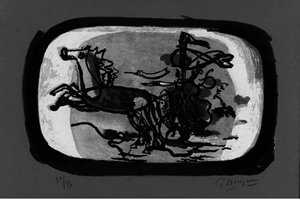
      The Chariot II

      In The Chariot II, we encounter a profound exploration of movement and structural deconstruction, a piece that serves as a window into the radical shifts of early twentieth-century…

      Head Of A Woman od Georges Braque
      #93

      Head Of A Woman

      A Fragmented Gaze: Exploring Braque’s “Head of a Woman” Georges Braque’s “Head of a Woman” is a compelling example of Analytical Cubism, a revolutionary style he pioneered alongside…

      The Studio (III) (1949) od Georges Braque
      #94

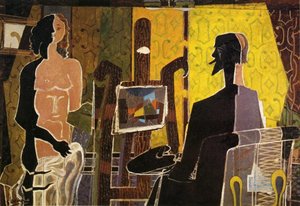
      The Studio (III)

      1949

      The painting The Studio (III), executed by Georges Braque in 1949, presents a room viewed through a fractured lens. The composition is built from geometric planes, primarily rectangular…

      Landscape at L'Estaque (1906) od Georges Braque
      #95

      Landscape at L'Estaque

      1906

      In the quiet coastal reaches of Provence, where the Mediterranean sun warms the earth, Georges Braque captured a moment that would forever alter the trajectory of Western art.…

      The Bottle of Rum (1914) od Georges Braque
      #96

      The Bottle of Rum

      1914

      In the quiet, revolutionary atmosphere of 1914, Georges Braque captured more than just a still life; he captured the very fracturing of modern perception. The Bottle of Rum…

      The Birds (1953) od Georges Braque
      #97

      The Birds

      1953

      Georges Braque’s “The Birds”: A Symphony of Geometric Abstraction “The Birds,” completed in 1953, stands as a testament to Georges Braque's unwavering commitment to Cubist principles even amidst…

      untitled (9288) od Georges Braque
      #98

      untitled (9288)

      Georges Braque’s “untitled (9288)” stands as a testament to the transformative power of artistic experimentation during the early years of the 20th century. Executed in 1974, this photolithograph…

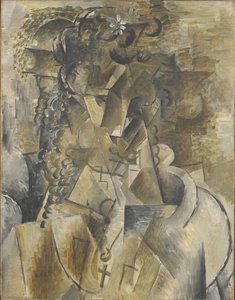
      Girl with a Cross (1911) od Georges Braque
      #99

      Girl with a Cross

      1911 · Kimbell Art Museum

      In the quiet, fractured landscape of Georges Braque’s 1911 masterpiece, Girl with a Cross, the viewer is invited into a world where reality is not merely observed, but…

      Guitar and Still Life on a Guéridon (1922) od Georges Braque
      #100

      Guitar and Still Life on a Guéridon

      1922

      A Moment Frozen in Time: Georges Braque’s “Guitar and Still Life on a Guéridon” Georges Braque's "Guitar and Still Life on a Guéridon" isn’t merely a depiction of…

      Georges Braque's canvases, period by period

      What Georges Braque painted most

      The four subjects that return most often on these canvases, each with its best-loved example.

      Where Georges Braque's canvases hang

      8 muzeja u kojima se nalazi najviše djela s ove stranice.

      Muzej Grad Djela autora Georges Braque Slike iz ovog popisa
      The Phillips Collection, Washington, D.C.The Phillips Collection Washington, D.C. 11 Plums, Pears, Nuts and Knife, Limunovi, breskve i činija za voće, Still Life with Grapes and Clarinet
      Centre Pompidou, ParizCentre Pompidou Pariz 4 Duo (Le Duo), Zaljev, Les Lecques, Little Bay at La Ciotat (also known as Cove at La Ciotat)
      Art Institute of Chicago, ChicagoArt Institute of Chicago Chicago 5 Lukobran u Normandiji, Still Life with Glass, Dice, Newspaper and Playing Card
      Statens Museum For Kunst, KopenhagenStatens Museum For Kunst Kopenhagen 8 Metronom
      Kunstmuseum Basel, BaselKunstmuseum Basel Basel 5 Violin and Glass
      Kunstsammlung Nordrhein-Westfalen, DüsseldorfKunstsammlung Nordrhein-Westfalen Düsseldorf 2 Still life with fruit bowl, bottle and mandolin (Nature morte au compotier, bouteille et mandoline)
      Tate Gallery, LondonTate Gallery London 1 Mandola
      Solomon R. Guggenheim Museum, New York CitySolomon R. Guggenheim Museum New York City 1 Violina i paleta

      Georges Braque's best-loved canvas of each decade

      1. 1900s
        Lukobran u Normandiji (1909) od Georges Braque
        Canvas 4 of 100

        Lukobran u Normandiji

        Godine 18 – 27 · Art Institute of Chicago

        Remek-djelo kubističke inovacije Braqueovo "Luka u Normandiji" (1909.) očaravajući je primjer ranog kubizma, koji prikazuje revolucionirani pristup umjetnika formi i perspektivi. Ovo živo umjetničko djelo hvata samu bit…

      2. 1910s
        Mandola (1910) od Georges Braque
        Ranked 1 of 100

        Mandola

        Godine 28 – 37 · Tate Gallery

        Mandola: Analitički Kubizam u Svjetlu Geometrije i Tišine Georges Braqueova "Mandola", nastala 1910. godine, nije samo slika glazbenog instrumenta; to je duboka meditacija o percepciji, obliku i samoj…

      3. 1920s
        Still-Life Le Jour (1929) od Georges Braque
        Ranked 24 of 100

        Still-Life Le Jour

        Godine 38 – 47

        Georges Braque’s “Still Life Le Jour,” painted in 1929, stands as a cornerstone of Fauvist art—a movement that irrevocably altered the course of twentieth-century painting. More than just…

      4. 1930s
        Duo (Le Duo) (1937) od Georges Braque
        Ranked 8 of 100

        Duo (Le Duo)

        Godine 48 – 57 · Centre Pompidou

        Simfonija geometrije i elegancije U tišini 1937. godine, Georges Braque usvijetlio je više od samog glazbenog trenutka; zabilježio je samu bit skladnog dijaloga. Duo (Le Duo) poziva promatrača…

      5. 1940s
        The Studio (III) (1949) od Georges Braque
        Ranked 94 of 100

        The Studio (III)

        Godine 58 – 67

        The painting The Studio (III), executed by Georges Braque in 1949, presents a room viewed through a fractured lens. The composition is built from geometric planes, primarily rectangular…

      6. 1950s
        Dvije ptice (1955) od Georges Braque
        32 of 100

        Dvije ptice

        Godine 68 – 77 · Tel Aviv Museum of Art

        Djelo Georgesa Braquea „Dvije ptice”, dovršeno 1955. godine, nije samo prikaz ptičjih formi; to je destilirana esencija umjetničke revolucije koja se kuhala u Francuskoj početkom i sredinom 20.…

      About Georges Braque's canvases: your questions answered

      What is the best-known painting by Georges Braque?Read the answer

      Mandola (1910), Tate Gallery, London. Čovjek s gitarom (1914) and Kuće u L'Estaqueu follow.

      What age was Georges Braque when Mandola was painted?Read the answer

      Georges Braque, born in 1882, was 28 years old: Mandola dates from 1910.

      What are the 10 most famous paintings by Georges Braque?Read the answer

      Mandola, Čovjek s gitarom, Kuće u L'Estaqueu, Lukobran u Normandiji, Žena čitajući, Violina i paleta, The Musician, Duo (Le Duo), Žena s gitarom i Heracles. Each canvas in the ranking above comes with its year and its museum.

      How many works did Georges Braque paint in all?Read the answer

      700 works by Georges Braque are in our catalogue, dated 1906 to 1958.

      Where can I see Georges Braque's most famous canvases?Read the answer

      Mostly in The Phillips Collection (Washington, D.C.), Centre Pompidou (Pariz) i Art Institute of Chicago (Chicago); the list above names each museum and its canvases.

      When did Georges Braque paint the best-loved canvases?Read the answer

      In 1910s, which gave 37 of the 100 works on this page, Mandola among them.

      Which are Georges Braque's earliest and latest famous canvases?Read the answer

      The earliest canvas here is Zaljev, Les Lecques (1906); the latest is At Sunset, Bird XVI (1958).

      What did Georges Braque paint most often?Read the answer

      Geometric forms (20), Geometric (12) i Geometric shapes (12), across the 100 works on this page.

      Which medium did Georges Braque paint in most often?Read the answer

      Oil On Canvas, used in 49 of the 100 works on this page.

      Which movement is Georges Braque's painting part of?Read the answer

      Kubizam, as the canvases on this page show.

      Which Georges Braque canvases hang at the The Phillips Collection?Read the answer

      The The Phillips Collection, Washington, D.C. holds 3 of the works on this page, among them Plums, Pears, Nuts and Knife, Limunovi, breskve i činija za voće i Still Life with Grapes and Clarinet.

      Georges Braque: a life in paint

      Rano djetinjstvo, obitelj i školovanje

      Georges Braque rođen je u Argenteuilu u Francuskoj 1882. godine. Njegove rane godine provedene su u Le Havru, u kućanstvu koje je bilo definirano praktičnim aspektima dekoracije i boje. Odrastajući u obitelji kućnih molera i dekoratora, od rane mladosti bio je uronjen u taktilne stvarnosti svog zanata. Ovo odgojno iskustvo pružilo je temelj tehničke vještine i zanatskog umeća koji će kasnije izravno oblikirati njegov pristup platnu.

      Prije nego što se posvetio likovnim umjetnostima, slijedio je utabani put svojih predaka, radeći kao pripravnik kućni moler i dekorator. To razdoblje manuelnog rada u njemu je usadilo specifično razumijevanje materijala i fizičkih svojstava površina. Takvo praktično školovanje pružilo je utemeljenu perspektivu o tome kako pigmenti komuniciraju s različitim teksturama, što je bila osjetilnost koja će na kraju izdvojiti njegove kasnija eksperimente s materijalnošću.

      Prelazak iz zanata u formalno školovanje odveo ga je u Pariz 1902. godine. Upravo je tamo nastavio svoje studije na Académie Humbert, nastojeći rafinirati svoje urođeno sklonosti kroz akademsku disciplinu. Ovo razdoblje formalnog poučavanja pružilo je neophodnu strukturu njegovoj razvojnoj viziji, premošćujući jaz između manuelne primjene boje i intelektualne potrage za kompozicijom.

      Fauvistno razdoblje i Cézanneov utjecaj

      Rane godine Braqueove karijere oblikovani su dugovječnim sjenama impresionizma i postimpresionizma. Njegova početna istraživanja nastojela su uhvatiti prolazne kvalitete svjetla i atmosfere, no u njima je počela izbijati dublja, strukturna glad. Do 1905. godine okrenuo se principima fauvizma, prihvaćajući intenzivniju i neprirodističku upotrebu boje kako bi prenio emociju. To razdoblje obilježeno je odmakom od puke opservacije, dok je počeo davati prednost ekspresivnoj snazi palete u usporedbi s doslovnim prikazivanjem svojih subjekata.

      Ta novopokrenuta koloristička sloboda pronašla je nužni sidro u radovima umjetnika Paul Cézanne. Georges Braque osjetio je privlačenje načinu na koji je Cézanne koristio čvrste strukture i promišljen pristup boji kako bi organizirao vizualno polje. Upravo je ta sjecišna točka fauvističke boje i Cézanneove geometrije definirala njegov prijelaz u radikalniji način gledanja. Težio je pomiriti emocionalnu intenzitet svojih boja sa osjećajem arhitektonske trajnosti.

      Rezultati te sinteze vidljivi su u njegovom djelu iz 1908. godine, Houses at L'Estaque. U ovom kompoziciji pejzaž više nije skup mekih dojmova, već niz šarenih, nagnutih ravnina i geometrijskih oblika. Cézanneov utjecaj je ovdje nepogrešiv, jer je teren sveden na svoje esencijalne volumene. Počeo je dekonstruirati tradicionalnu perspektivu pejzaža, zamjenjujući je fragmentiranom, strukturiranom stvarnošću koja je davanju prednosti dala temeljnoj formi svijeta.

      Razvoj kubizma

      Između 1907. i 1914. godine, Pariz je postao mjesto duboke vizualne restrukturacije koja je proizašla iz suradnje koju su vodili Georges Braque i Pablo Picasso. Ovo partnerstvo nadilazilo je emocionalnu intenzitet fauvizma, te se usmjerilo prema cerebralnijem istraživanju forme. Razvili su analitički kubizam, metodu koja je disekciono rastavljala predmete u fragmentirane geometrijske oblike. Umjesto pokušaja da repliciraju iluziju trodimenzionalnog prostora, težili su predstaviti cjelovitost predmeta prikazujući više gledišta istovremeno. Taj je pristup skinuo okove tradicionalnoj perspektivi, zamjenjujući je složenim rasporedom ravnina i linija.

      Do otprilike 1912. godine, pokret je prošao kroz značajnu tranziciju u sintetički kubizam. Ta je faza odmaknula od disekcije formi prema konstrukciji novih slika kroz sastavljanje raznolikih elemenata. Georges Braque bio je primarni inovator u tom preokretu, budući da je stvorio prvi papier collé pričavanjem tapicije na crtež. Taj je čin lijepljenja fizičkih materijala na površinu izazvao granice platna, potvrđujući sliku kao autonomni objekt, a ne kao prozor u drugi svijet. Njegov rad tijekom tog razdoblja fokusirao se na odnos između reprezentacije i opipljive stvarnosti materijala koji su se koristili.

      Tehnika i umjetničke inovacije

      Georges Braque pristupio je platnu s nemirnom znatiželjom prema fizičkim svojstvima svojih materijala. Nadilazio je tradicionalne granice slikarstva uljanim bojama uvođenjem elemenata koji su izazivali iluziju dubine. Uključivanjem materijala iz stvarnog svijeta, poput isječaka iz novina, tapeta i tkanina, narušio je jedinstvenu perspektivu slikovne ravnine. To eksperimentiranje dovelo je do razvoja tehnike papier collé, metode lijepljenja papira koja omogućila integraciju tekstura svakodnevnog života izravno u njegove kompozicije. Težio je premostiti jaz između naslikane slike i opipljivog objekta.

      Njegov tehnički repertoar obilježen je taktilnom, gotovo skulpturalnom senzibilitetnošću. Često je miješao pigmente s pijeskom kako bi promijenio teksturu površine, stvarajući zrnatost koja je na neočekivane načine hvatala svjetlost. Kako bi dodatno manipulirao percepcijom prostora i materijalnosti kod promatralja, eksperimentirao je s kopiranjem vizualnih uzoraka drvenih vlakana i mramora. To nije bio samo dekorativni izbor, već način istraživanja kako različite površine komuniciraju sa svjetlom i formom. Također je na svojim djelima koristio šablonska slova, tehniku koja je dodala sloj grafičke dimenzije i pomogla usidriti kompoziciju unutar moderne, čitljive stvarnosti.

      Rat i stilski evolucija

      Izbijanje Prvog svjetskog rata 1914. godine donijelo je iznenadnu, nasilnu prekidnu točku intelektualnoj rigoroznosti kubističkog pokreta. Georges Braque pozvan je u vojnu službu, razdoblje koje će temeljito promijeniti i njegovo fizičko stanje i njegov kreativni temperament. Godine 1915. zadobio je tešku ranu na glavi u tr trenchesima, ozljedu koja je rezultirala privremenim slijepilom i zahtijevala trepanaciju kako bi povratio vid. Taj susret s mrakom prisilio je promjenu u njegovoj percepciji. Krute, analitičke strukture koje su definirale njegove ranije godine počele su omekšavati, zamijenjene osobnijim i lirskim pristupom njegovim temama.

      Nakon povratka iz rata, stroga geometrijska ograničenja njegove prethodne suradnje s Picassom više nisu bila njegov jedini fokus. Njegov stil evoluirao je kako bi uključio elemente klasične kompozicije, tražeći osjećaj ravnoteže i harmonije koji je djelovao utemeljenije u fizičkom svijetu. Odmaknuo se od čisto intelektualne disekcije forme, prihvaćajući suptilniji i kontemplativniji način gledanja. Njegovo djelo prestalo se baviti fragmentacijom prostora i počelo usredotočavati na tihu, spokojnu atmosferu samih objekata.

      • Still Life with Playing Cards (1919)

      Ključna djela i značajna pladna

      Putem karijere Georges Braque je obilježen specifičnim kompozicijama koje signaliziraju njegove promjene u razmišljanju i tehnici. Godine 1908. pojavio se rad Houses at L'Estaque, koristeći šarene, nagnute ravnine i geometrijske oblike koji su odražavali odmak od tradicionalne perspektive. To razdoblje eksperimentiranja nastavilo se 1910. godine s djelom Violin and Palette, umjetničkim izrazom koji je koristio papir i miješane tehnike kako bi proučavao interakciju boje i forme. Do 1911. godine, njegov fokus se premjeo prema disekciji prostora u djelu Man with a Guitar, kompoziciji koja je exemplificirala analitički pristup koji je razvijao uz svoje suvremenike.

      Kako su se njegove metode razvijale, uvođenje novih materijala promijenilo je samu teksturu njegovih platana. Djelo iz 1912. godine, Fruit Dish and Glass, demonstriralo je prijelaz u stil u kojem su prepoznatljivi motivi ponovno integrirani kroz upotrebu kolaža. Čak i nakon ratnih poremećaja, njegov stvaralački rad zadržao je poveznica s njegovim ranijim istraživanjima. The Musician, nastojeno 1918. godine, odražava razdoblje osobajnog prijelaza, dok njegova mnogo kasnija slika iz 1955., Two Birds, pokazuje neprestano zanimanje za fundamentalna svojstva odabranih motiva.

      Naslijeđe i trajni utjecaj

      Do trenutka svoje smrti 31. kolovoza 1963. godine, Georges Braque je temeljito promijenio razumijevanje načina na koji doživljavamo i predstavljamo svijet. Kao suosnivač kubizma, pomogao je u razgradnji dugogodišnje ovisnosti o tradicionalnoj perspektivi, zamjenjujući je fragmentiranom, višedimenzionalnom stvarnošću. Njegovo djelo nadmašilo je puku imitaciju prirode, te je umjesto toga težilo uhvatiti samu esenciju predmeta kroz rigorozno proučavanje forme i prostora. Taj je pomak nametnuo trajnu promjenu u vizualnom jeziku dvadesetog stoljeća.

      Njegov utjecaj na izdanje umjetnika ostaje neizmjeren. Uvođenjem tehnike papier collé i integracijom svakodnevnih materijala u svoje kompozicije, on je premostio jaz između platna i opipljivog svijeta. Ova je inovacija prkosila granicama onoga što bi slika mogla biti, paveći put za buduća istraživanja teksture i materijalnosti. Čak i kada se njegov stil u kasnijim godinama razvio prema liričnijim i vedrijim temama, strukturna integritet njegovih kubističkih temelja ostao je stalno prisutan u njegovom stvaralaštvu.

      • Houses at L'Estaque
      • Man with a Guitar
      • Fruit Dish and Glass
      • Violin and Pipe

      Sva 700 djela umjetnika Georges Braque →