Atelier — Besplatna dostava širom svijeta — Rok isporuke 2–6 tjedana
      Sir William Nicholson, 1872 – 1949

      Sir William Nicholson's 100 Most Famous Paintings

      Sara Bernhardt (1844–1923) (1897) is the painting Sir William Nicholson is best remembered for. Chairing the Feathers The Eynsham Morris at the Gates of Blenheim Palace (1902) and Album Copies of Old Masters and other Paintings (no.28, p.13) complete the trio of best-loved canvases. Our catalogue counts 242 works by Sir William Nicholson. Here are the 100 most famous, with the year, the museum and the story of each canvas.

      Rangirano prema našoj ocjeni popularnosti, koja objedinjuje broj pretraživanja, posjeta i narudžbi za svako djelo. Ažurirano Listopad 2026. Each painting on this page can be ordered as an oil reproduction painted by hand on linen canvas, or as a fine art print, made to the size you choose.

      Portret Sir William Nicholson
      Sir William Nicholson · 1872 – 1949
      Rođen · umro
      1872 – 1949, Newark
      Pokret
      Impressionistic realism
      Djela u našem katalogu
      242
      Najpoznatije
      Sara Bernhardt (1844–1923) (1897)
      Najviše djela u
      Royal Scottish Academy of Art - Architecture

      The ten best-loved paintings by Sir William Nicholson

      Sara Bernhardt (1844–1923) (1897) od Sir William Nicholson
      1

      Sara Bernhardt (1844–1923)

      1897 · Woodcut

      In this evocative monochrome portrait from 1897, Sir William Nicholson captures the magnetic presence of the incomparable Sara Bernhardt. The painting transcends a mere photographic likeness, offering instead a soulful meditation on fame, elegance, and the ephemeral nature of performance. As Bernhardt stands poised upon the stage, draped in an exquisite long dress and crowned with a sophisticated hat, the viewer is transported to the height of the Belle Époque.…

      Chairing the Feathers The Eynsham Morris at the Gates of Blenheim Palace (1902) od Sir William Nicholson
      2

      Chairing the Feathers The Eynsham Morris at the Gates of Blenheim Palace

      1902 · Oil On Canvas · English Folk Dance And Song Society, London

      This captivating scene, "Chairing the Feathers The Eynsham Morris at the Gates of Blenheim Palace," transports the viewer directly into a moment of genteel celebration from the early twentieth century. One can almost hear the murmur of conversation and the rustle of fine fabrics surrounding this gathering. At the heart of the composition sits a distinguished gentleman, his attire suggesting an occasion of considerable importance or festive revelry. The magnificent…

      Album Copies of Old Masters and other Paintings (no.28, p.13) od Sir William Nicholson
      3

      Album Copies of Old Masters and other Paintings (no.28, p.13)

      Sir William Newzam Prior Nicholson, a name perhaps less familiar than some of his contemporaries, nevertheless possessed an extraordinary artistic vision. His "Album Copies" – intimate renderings of masterworks created for private collections – offer a unique window into his meticulous technique and profound understanding of light, composition, and the human form. This particular piece, depicting a man standing beside a dog, is not merely a reproduction; it’s a distillation…

      Album Copies of Old Masters and other Paintings (no.5, p.5) od Sir William Nicholson
      4

      Album Copies of Old Masters and other Paintings (no.5, p.5)

      Sir William Newzam Prior Nicholson's "Album Copies of Old Masters and other Paintings" represent a fascinating intersection of artistic reverence and accessible art production. This particular piece, an exquisite rendition of Anthony van Dyck’s iconic portrait “Charles I with M. de St Antoine,” offers a captivating glimpse into the Victorian era’s fascination with classical art while simultaneously showcasing Nicholson's remarkable skill as both a painter and a keen observer of…

      Glass and Fruit (1938) od Sir William Nicholson
      5

      Glass and Fruit

      In this 1938 oil on canvasboard, titled Glass and Fruit, the British artist William Nicholson explores a highly distilled approach to the still life. The work represents a departure from his more representational tendencies, leaning toward a significant degree of abstraction. It is a piece that demands a quiet, focused attention to understand its formal qualities.

      Sir William Henry Bragg (1862–1942) (1932) od Sir William Nicholson
      7

      Sir William Henry Bragg (1862–1942)

      1932 · Oil On Canvas · The Royal Institution, London

      The room feels still, held in a moment of profound contemplation. Seated in a chair against a wall of subtle, textured plaster, an older gentleman meets the viewer's gaze with a directness that feels both heavy and light. There is a quiet dignity in his posture, a sense of a mind that has spent decades untangling the invisible structures of the universe. The light, streaming in from the upper left,…

      Field Marshal J. C. Smuts (1923) od Sir William Nicholson
      8

      Field Marshal J. C. Smuts

      1923 · Oil On Canvas · Fitzwilliam College, Cambridge

      In the quiet, commanding presence of Sir William Nicholson’s 1923 masterpiece, Field Marshal J. C. Smuts, one finds much more than a mere historical record; one encounters a profound meditation on the weight of leadership and the grace of experience. This evocative oil painting captures the essence of a man who stood at the crossroads of history, portraying the South African statesman not just as a military strategist, but as…

      Lord Horder (1871–1955), FCVC, MD, FRCP, Physician to Five Successive British Monarchs (Edward VII to Elizabeth II) (1938) od Sir William Nicholson
      9

      Lord Horder (1871–1955), FCVC, MD, FRCP, Physician to Five Successive British Monarchs (Edward VII to Elizabeth II)

      In this 1938 portrait, we encounter Lord Horder, a man whose life was defined by a quiet, steadfast proximity to the British monarchy. He sits with a composed, almost guarded posture, legs crossed in a manner that suggests both comfort and a disciplined restraint. His gaze is directed away from the viewer, fixed upon a distant point that implies a mind preoccupied with matters of state or the heavy weight…

      Title (Original): A Reduced Chart of Bombay Harbour, to form as an Index for the large one of Eight Sheets, by William Nichelson, Master of his Majesty’s Ship Elizabeth. (1763) od Sir William Nicholson
      10

      Title (Original): A Reduced Chart of Bombay Harbour, to form as an Index for the large one of Eight Sheets, by William Nichelson, Master of his Majesty’s Ship Elizabeth.

      1763 · Print · Kalakriti Archives, Hyderabad

      To gaze upon "A Reduced Chart of Bombay Harbour" is to embark on a voyage through time, transported back to the mid-1760s when the tides of the Indian Ocean carried the weight of colonial ambition and maritime discovery. This exquisite piece of cartography, derived from the meticulous surveys of Captain William Nichelson around 1763, serves as much more than a mere navigational tool; it is a profound historical document that…

      Sir William Nicholson: canvases 11 to 100 of the ranking

      An Old Glass Bottle (1920) od Sir William Nicholson
      #18

      An Old Glass Bottle

      1920 · Leeds Art Gallery

      In this 1920 composition, we find ourselves in a space of profound quietude. The subject is a humble glass bottle, its surface marked by age and a slight…

      Bring this light home →
      Hampstead Heath, Flagstaff (1908) od Sir William Nicholson
      #28

      Hampstead Heath, Flagstaff

      1908 · Bristol Museum - Art Gallery

      William Nicholson's "Hampstead Heath, Flagstaff," painted in 1908, isn’t merely a depiction of a London landscape; it’s a carefully constructed tableau brimming with quiet observation and subtle emotional…

      Have it painted by hand →
      Mushrooms (1927) od Sir William Nicholson
      #30

      Mushrooms

      1927 · Nottingham Castle Museum And Art Gallery

      To gaze upon Sir William Nicholson’s depiction of mushrooms is to encounter a moment suspended between the wild forest floor and the cultivated elegance of a dining table.…

      Order this canvas →
      Santa Lucia, Malaga (1935) od Sir William Nicholson
      #32

      Santa Lucia, Malaga

      1935

      In the quietude of 1935, Sir William Nicholson captured a moment of profound stillness in his evocative landscape, Santa Lucia, Malaga. This exquisite piece invites the viewer into…

      Have it painted by hand →
      William Henry Davies (1928) od Sir William Nicholson
      #33

      William Henry Davies

      1928

      In this evocative 1928 portrait, Sir William Nicholson captures more than just the likeness of a man; he captures a profound sense of quietude and introspection. The painting,…

      Bring this light home →
      Music (1890) od Sir William Nicholson
      #34

      Music

      1890 · Newark Town Hall Museum And Art Gallery

      To stand before "Music" is to be enveloped in a moment suspended between sound and silence. This exquisite portrait, dating from 1890, captures not merely the act of…

      Have it painted by hand →
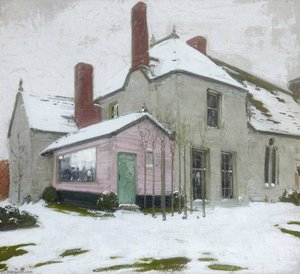
      Sutton Veny in Snow (1924) od Sir William Nicholson
      #35

      Sutton Veny in Snow

      1924 · Royal Scottish Academy of Art - Architecture

      In the quietude of a frozen landscape, Sir William Nicholson captures a moment of profound stillness in Sutton Veny in Snow. Painted in 1924, this evocative oil on…

      Have it painted by hand →
      Still Life (1885) od Sir William Nicholson
      #38

      Still Life

      1885 · Newark Town Hall Museum And Art Gallery

      In the quiet corners of art history, few masters captured the profound beauty of the mundane as gracefully as Sir William Nicholson. His 1885 masterpiece, Still Life, serves…

      Order this canvas →
      Hawking (1902) od Sir William Nicholson
      #39

      Hawking

      1902 · National Trust

      William Nicholson’s “Hawking,” painted in 1902, isn't merely a portrait; it’s a carefully constructed tableau of Victorian sensibilities layered with subtle anxieties and burgeoning modernity. The subject, a…

      Have it painted by hand →
      The stack, Hoar's Fields (1927) od Sir William Nicholson
      #49

      The stack, Hoar's Fields

      1927 · Art Gallery of New South Wales

      The stack, Hoar's Fields is a painting by Sir William Nicholson. Executed in 1927, the work reflects the artist's established approach to form and composition during the interwar…

      Order this canvas →
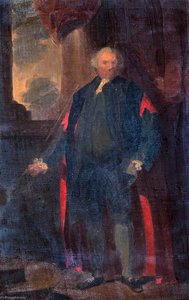
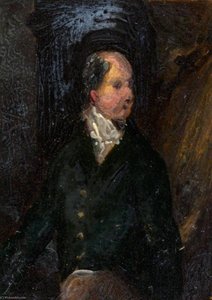
      Portrait of an Unidentified Gentleman od Sir William Nicholson
      #53

      Portrait of an Unidentified Gentleman

      Royal Scottish Academy of Art - Architecture

      Sir William Nicholson’s “Portrait of an Unidentified Gentleman,” painted circa 1868, is more than just a likeness; it's a carefully constructed tableau of understated elegance and contemplative melancholy.…

      Bring this light home →
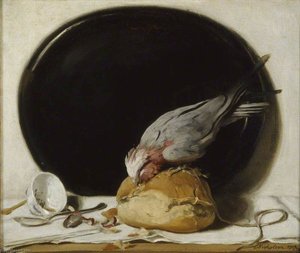
      The Rose crested Cockatoo (1917) od Sir William Nicholson
      #55

      The Rose crested Cockatoo

      1917 · Muzej Ashmolean za umjetnost i arheologiju

      Sir William Nicholson's 1917 painting, “The Rose-Crested Cockatoo,” isn’t merely a depiction of an exotic bird; it’s a carefully constructed meditation on observation, illusion, and the subtle interplay…

      Have it painted by hand →
      The Paper Poppies (1919) od Sir William Nicholson
      #57

      The Paper Poppies

      1919 · The National Trust For Scotland

      In the quietude of “The Paper Poppies,” painted in 1919, Sir William Nicholson invites the viewer into a sanctuary of stillness that belies the profound turbulence of its…

      Bring this light home →
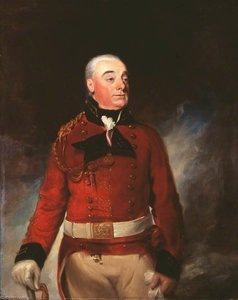
      Thomas Hamilton (1784–1858), RSA od Sir William Nicholson
      #59

      Thomas Hamilton (1784–1858), RSA

      Royal Scottish Academy of Art - Architecture

      Sir William Nicholson’s “Thomas Hamilton (1784–1858), RSA” is more than a mere likeness; it's a carefully constructed tableau of 19th-century British identity, imbued with the quiet strength and…

      Have it painted by hand →
      Matadero, Segovia (1935) od Sir William Nicholson
      #64

      Matadero, Segovia

      1935 · Fitzwilliam College

      William Newzam Prior Nicholson’s “Matadero, Segovia” isn't merely a depiction of a building; it’s a portal. Painted in 1935, this oil on panel captures the essence of a…

      Bring this light home →
      Armistice Night (1918) od Sir William Nicholson
      #86

      Armistice Night

      1918 · Fitzwilliam College

      Sir William Nicholson's "Armistice Night," painted in 1918, isn’t merely a depiction of a wartime scene; it’s a visceral embodiment of the complex emotions swirling within a nation…

      Have it painted by hand →

      Sir William Nicholson's canvases, period by period

      What Sir William Nicholson painted most

      The four subjects that return most often on these canvases, each with its best-loved example.

      Where Sir William Nicholson's canvases hang

      8 muzeja u kojima se nalazi najviše djela s ove stranice.

      Muzej Grad Djela autora Sir William Nicholson Slike iz ovog popisa
      Royal Scottish Academy of Art - Architecture, EdinburghRoyal Scottish Academy of Art - Architecture Edinburgh 102 Album Copies of Old Masters and other Paintings (no.28, p.13), Album Copies of Old Masters and other Paintings (no.5, p.5), Album Copies of Old Masters and other Paintings (no.98, p.43)
      National Trust, LondonNational Trust London 8 Master Anthony Bacon, Aged 3 (Anthony W. Bacon, Son of Thomas W. Bacon, 1873–1950, of Ramsden Hall, Essex), La Place du Petit Enfer, Dieppe, Hawking
      Fitzwilliam College, CambridgeFitzwilliam College Cambridge 7 Field Marshal J. C. Smuts, Matadero, Segovia, Armistice Night
      Newark Town Hall Museum And Art Gallery, NewarkNewark Town Hall Museum And Art Gallery Newark 4 Music, Still Life, Boy with the Caroline Mug
      Nacionalna galerija Kanade, OttawaNacionalna galerija Kanade Ottawa 3 Glass and Fruit, The Blue Gloves
      Fitzwilliam MuseumFitzwilliam Museum 3 Armistice Night, 1918, Still-life, fruit on a dish
      Nottingham Castle Museum And Art Gallery, NottinghamNottingham Castle Museum And Art Gallery Nottingham 3 Mushrooms, Miss Wish Wynne (1882–1931), Actress, in the Character of Janet Cannot for the Play 'The Great Adventure'
      Fenton House, LondonFenton House London 2 Hawking (La chasse au falcon), Francis and Christopher Bacon (Sons of Thomas Walter Bacon (1873-1950) of Ramsden Hall, Essex)

      Sir William Nicholson's most famous canvas, decade after decade

      1. 1880s
        Still Life (1885) od Sir William Nicholson
        38 of 100

        Still Life

        Godine 8 – 17 · Newark Town Hall Museum And Art Gallery

        In the quiet corners of art history, few masters captured the profound beauty of the mundane as gracefully as Sir William Nicholson. His 1885 masterpiece, Still Life, serves…

      2. 1890s
        Sara Bernhardt (1844–1923) (1897) od Sir William Nicholson
        Ranked 1 of 100

        Sara Bernhardt (1844–1923)

        Godine 18 – 27

        In this evocative monochrome portrait from 1897, Sir William Nicholson captures the magnetic presence of the incomparable Sara Bernhardt. The painting transcends a mere photographic likeness, offering instead…

      3. 1900s
      4. 1910s
      5. 1920s
        Field Marshal J. C. Smuts (1923) od Sir William Nicholson
        8 of 100

        Field Marshal J. C. Smuts

        Godine 48 – 57 · Fitzwilliam College

        In the quiet, commanding presence of Sir William Nicholson’s 1923 masterpiece, Field Marshal J. C. Smuts, one finds much more than a mere historical record; one encounters a…

      6. 1930s
        Glass and Fruit (1938) od Sir William Nicholson
        5 of 100

        Glass and Fruit

        Godine 58 – 67 · Nacionalna galerija Kanade

        In this 1938 oil on canvasboard, titled Glass and Fruit, the British artist William Nicholson explores a highly distilled approach to the still life. The work represents a…

      Sir William Nicholson's canvases, question by question

      Which canvas is Sir William Nicholson most remembered for?Read the answer

      Sara Bernhardt (1844–1923) (1897), followed by Chairing the Feathers The Eynsham Morris at the Gates of Blenheim Palace (1902) and Album Copies of Old Masters and other Paintings (no.28, p.13).

      Sara Bernhardt (1844–1923): how old was Sir William Nicholson when it was painted?Read the answer

      Sir William Nicholson, born in 1872, was 25 years old: Sara Bernhardt (1844–1923) dates from 1897.

      What are Sir William Nicholson's ten most famous canvases?Read the answer

      Sara Bernhardt (1844–1923), Chairing the Feathers The Eynsham Morris at the Gates of Blenheim Palace, Album Copies of Old Masters and other Paintings (no.28, p.13), Album Copies of Old Masters and other Paintings (no.5, p.5), Glass and Fruit, The Front Door and Porch of Chartwell, Sir William Henry Bragg (1862–1942), Field Marshal J. C. Smuts, Lord Horder (1871–1955), FCVC, MD, FRCP, Physician to Five Successive British Monarchs (Edward VII to Elizabeth II) i Title (Original): A Reduced Chart of Bombay Harbour, to form as an Index for the large one of Eight Sheets, by William Nichelson, Master of his Majesty’s Ship Elizabeth.. Each canvas in the ranking above comes with its year and its museum.

      How many paintings did Sir William Nicholson create?Read the answer

      242 works by Sir William Nicholson are in our catalogue, dated 1885 to 1938.

      Where do Sir William Nicholson's most famous canvases hang today?Read the answer

      Mostly in Royal Scottish Academy of Art - Architecture (Edinburgh), National Trust (London) i Fitzwilliam College (Cambridge); the list above names each museum and its canvases.

      When did Sir William Nicholson paint the most famous canvases?Read the answer

      In 1910s, which gave 24 of the 100 works on this page, Walter Greaves (1846–1930) among them.

      Which famous Sir William Nicholson canvas came first, and which came last?Read the answer

      The earliest canvas here is Still Life (1885); the latest is Glass and Fruit (1938).

      Which subjects did Sir William Nicholson paint most?Read the answer

      Portrait (22), Victorian era (10) i British art (9), across the 100 works on this page.

      Which medium appears most in Sir William Nicholson's paintings?Read the answer

      Oil On Canvas, used in 19 of the 100 works on this page.

      Which movement is Sir William Nicholson associated with?Read the answer

      Impressionistic realism, as the canvases on this page show.

      Which paintings by Sir William Nicholson are held by the Royal Scottish Academy of Art - Architecture?Read the answer

      The Royal Scottish Academy of Art - Architecture, Edinburgh holds 13 of the works on this page, among them Album Copies of Old Masters and other Paintings (no.28, p.13), Album Copies of Old Masters and other Paintings (no.5, p.5) i Album Copies of Old Masters and other Paintings (no.98, p.43).

      Where can I buy a reproduction of a Sir William Nicholson painting?Read the answer

      Yes. Every painting on this page can be ordered from its own page as an oil reproduction painted by hand, or as a fine art print, in the size you choose.

      Meet the painter: Sir William Nicholson

      Rani život i umjetnički počeci

      Sir William Newzam Prior Nicholson, rođen u Newark-on-Trentu 1872. godine, iznikao je iz okruženja koje je spajalo industrijsku pragmatičnost s umjetničkom osjetljivošću. Njegov otac, uspješan inženjer i konzervativni zastupnik u parlamentu, usadio mu je smisao za disciplinu, dok ga je majčin rodoslov povezivao s estetskim tradicijama Oxfordshirea. Od malih nogu, Nicholson je pokazivao sklonost prema umjetnosti, njegovanu lekcijama Williama Cubleyja, lokalnog slikara koji je i sam tragao za svojim korijenima u Sir Joshui Reynoldsu. Ta rana izloženost postavila je temelj karijeri koja će obuhvatiti raznolike medije i stilove. Kratak boravak na umjetničkoj školi Huberta von Herkomera bio je ključan, ne samo za usavršavanje vještina, već i za upoznavanje s Mabel Pryde, koja će postati njegova supruga i bitna suradnica u njegovom rastućem umjetničkom putovanju. Upravo je kroz Mabel upoznao njezinog brata Jamesa Prydea, partnerstvo koje će uskoro revolucionirati svijet grafičkog dizajna.

      Beggarstaffsi i revolucija u plakatnoj umjetnosti

      Suradnja Williama Nicholsona i Jamesa Prydea, poznata kao “J. & W. Beggarstaff,” označila je prekretnicu u britanskoj vizualnoj kulturi. Odbacujući prevladajuću ukrasnu estetiku viktorijanskih plakata, prihvatili su hrabru jednostavnost karakteriziranu izrazitim siluetama, ravnim površinama boja i namjernim odbacivanjem tradicionalne perspektive. Njihovi dizajni nisu bili samo oglasi; to su bile izjave – snažne, grafičke kompozicije koje su zaokupile javnu maštu. Plakati za predstave poput Don Quixotea i publikacije kao što je Harper’s Magazine postali su odmah prepoznatljivi, utječući na generaciju umjetnika i dizajnera. To razdoblje nije bilo samo o komercijalnoj umjetnosti; radilo se o redefiniranju vizualne komunikacije same po sebi. Rad Beggarstaffsa izazvao je konvencije, otvarajući put modernom grafičkom dizajnu i uspostavljajući Nicholsonovu reputaciju inovatora. Njihov utjecaj odjekivao je daleko izvan svijeta plakata, utječući na ilustraciju, pa čak i slikarstvo naglaskom na snažan oblik i namjernu kompoziciju.

      Od drvoreza do portreta: Razvoj stila

      Nakon raspada partnerstva Beggarstaffsa, Nicholson se upustio u razdoblje stilskog istraživanja. Okrenuo je pažnju prema drvoretu i gravuri, tehnikama koje su mu omogućile da dodatno usavršava majstorstvo linije i oblika. Ohrabren utjecajnim Jamesom McNeill Whistlerom, prihvatio je ove metode, stvarajući složene i evocativne otiske koji su pokazali njegovu rastuću umjetničku zrelost. Ta djela demonstrirala su izvanrednu sposobnost hvatanja bitke s minimalnim detaljima, kvalitetu koja će postati zaštitni znak njegova stila. Istovremeno je Nicholson počeo uspostavljati se kao portretist, primajući narudžbe od istaknutih ličnosti epohe. Njegovi portreti nisu bili samo sličice; to su bile pronicljive studije karaktera, otkrivajuće unutarnje živote svojih subjekata kroz suptilne nijanse izraza i poze. Djela poput *Lady in Furs, Mme. P.* primjer su te vještine, hvatajući ne samo fizički izgled, već i osjećaj osobnosti i društvenog statusa.

      Pejsaži, mrtve prirode i trajno nasljeđe

      U kasnijim fazama svoje karijere, Nicholson se sve više usredotočio na mrtvu prirodu i pejzažno slikarstvo. Njegove mrtve prirode, poput *The Lowestoft Bowl*, slave se zbog izuzetne pažnje posvećene detaljima, skladnih paleta boja i tihe osjećaja intimnosti. U svakodnevne predmete ulio je poetsku kvalitetu, podižući ih iznad pukog prikaza u simbole ljepote i kontemplacije. Njegovi pejzaži, često prikazujući scene s njegovih putovanja u Španjolsku i Italiju, otkrivaju osjetljivost na svjetlo i atmosferu, hvatajući bit mjesta s izvanrednom vještinom. Tijekom cijelog svog života Nicholson je ostao svestran umjetnik, neprestano eksperimentirajući s novim tehnikama i pristupima. Autor je dječjih knjiga, dizajnirao za kazalište i nastavio proizvoditi otiske uz svoja slika. Utjecaj Sir Williama Nicholsona proteže se izvan njegovog vlastitog plodnog opusa; nadahnuo je generacije umjetnika svojom predanošću zanatu, inovativnim duhom i sposobnošću pronalaženja ljepote u običnom. Njegovo djelo ostaje svjedočanstvo moći umjetnosti da osvijetli ljudsko iskustvo i transformira našu percepciju svijeta oko nas. Umro je 1949. godine, ostavljajući iza sebe bogato umjetničko nasljeđe koje nastavlja očaravati i nadahnjivati ​​danas.

      Sva 242 djela umjetnika Sir William Nicholson →