A Life Etched in Light: The World of Zinaida Serebriakova
Zinaida Yevgenyva Serebriakova, a name resonating with the quiet power of early 20th-century Russian art, emerged from a lineage steeped in creative brilliance. Born December 12, 1884, at Neskuchnoye, her family estate near Kharkov in Ukraine, she was destined to inhabit a world where artistry wasn’t merely a profession but a way of life. Her grandfather, Nicholas Benois—a celebrated architect—and uncle, Alexandre Benois—a founding figure of *Mir iskusstva*—laid the foundation for her artistic awakening. This familial embrace of beauty and innovation profoundly shaped young Zinaida’s sensibilities, nurturing an eye for detail and a deep appreciation for form that would define her oeuvre. The untimely death of her father at a tender age propelled her into Saint Petersburg's vibrant artistic community, residing with the Benois family and absorbing the atmosphere of creativity surrounding them.Formative Years and Artistic Pilgrimage
Zinaida’s formal education was rigorous and multifaceted. She began her studies in 1901 at the art school established by Princess Maria Tenisheva—a pivotal patron of the arts—where she first encountered the tutelage of Ilya Repin, a master of Russian realism. This early exposure to Repin's techniques—his masterful handling of light and shadow, his commitment to portraying life with unflinching honesty—left an indelible mark on her artistic approach. Further honing her skills between 1903 and 1905 under Osip Braz, she delved deeper into portraiture and the nuances of capturing human emotion. A transformative journey to Italy from 1902-1903 broadened her horizons, introducing her to the classical traditions that would subtly inform her work. This artistic pilgrimage culminated with studies at the Académie de la Grande Chaumière in Paris (1905-1906), where she absorbed the influences of modern European painting while forging her own unique path—a path marked by a profound connection to Intimism. It was during this period that she married Boris Serebriakov, a union that would provide both personal and artistic support for years to come.A Synthesis of Realism and Intimacy
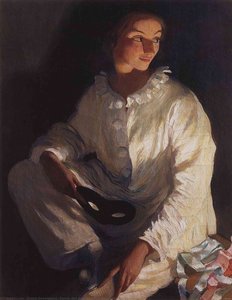
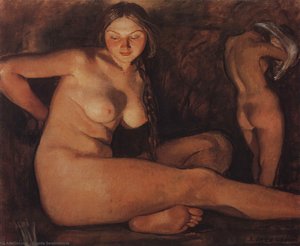
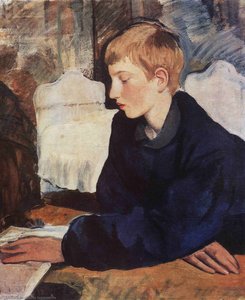
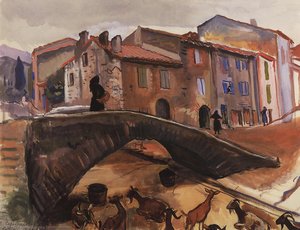
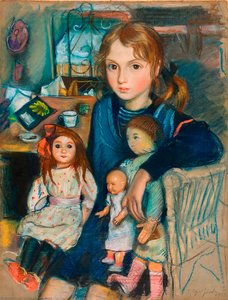
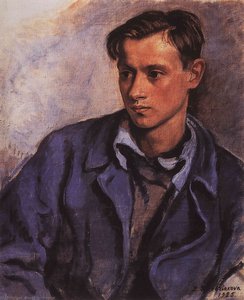
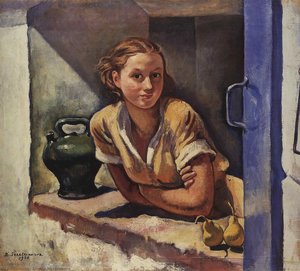
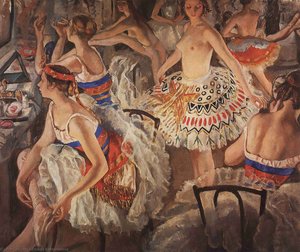
Serebriakova’s style is characterized by a remarkable synthesis of realism, intimacy, and a deep sensitivity to light and form. While often associated with *Mir iskusstva*, she distinguished herself through her focus on everyday life—the lives of women, children, and rural communities—rendered with an honesty and tenderness that resonated deeply with audiences. Her paintings aren’t grand historical narratives or mythological allegories; they are quiet observations of domesticity, motherhood, and the beauty found in simple moments. She possessed a unique ability to imbue her subjects with dignity and grace, even within the context of labor or hardship. *At the Dressing Table* (1909)—perhaps her most iconic work—exemplifies this quality—a strikingly honest self-portrait that established her reputation and garnered significant public acclaim. This painting, born from a period of isolation during a snowstorm, showcases her mastery of light and shadow, creating an atmosphere of quiet contemplation. Other notable works like *Bleaching Cloth* (1917) demonstrate her ability to capture the physicality of labor with both realism and empathy—a testament to her unwavering commitment to portraying the human experience.Influences and Artistic Kinship
- Russian Realism: Serebriakova’s artistic foundation was firmly rooted in Russian realism, inheriting a dedication to accurate representation and social commentary from masters like Ilya Repin and Osip Braz.
- Mir Iskusstva: Though not rigidly adhering to all tenets of *Mir iskusstva*, she shared its aesthetic sensibilities—an emphasis on beauty, refinement, and a rejection of purely utilitarian art.
- Anna Ostroumova-Lebedeva: A contemporary who also focused on portraying women and domestic scenes, Ostroumova-Lebedeva shares stylistic affinities with Serebriakova in her sensitive depiction of female subjects—a kindred spirit in capturing the subtleties of human emotion.
Pitanja i odgovori
Mogu li istražiti djela umjetnika Zinaida Serebriakova prema tematici?
Stranica Atlas tema prikazuje umjetnička djela autora Zinaida Serebriakova prema tematici.
U kojem je povijesnom razdoblju stvarala/radio Zinaida Serebriakova?
Zinaida Serebriakova je stvarala u razdoblju Modernizam. To razdoblje smješta umjetnikov rad u povijesni kontekst.
Mogu li sortirati djela umjetnika Zinaida Serebriakova prema boji?
Stranica Spektar boja organizira djela umjetnika Zinaida Serebriakova prema boji.