


 Előnézet
 Megosztás
 Megosztás
 Részletek
 Útmutató

 Letöltés
 Hasonló darabok
 X-ray felvétel
 Diavetítés
 Statisztika
Self Portrait, , Whitney Museum of American


Edward Hopper's 'Self-Portrait' (1930) captures a solitary figure contemplating urban life through a window, embodying the artist’s signature themes of isolation and modern American realism.
 Tovább olvasom
Edward Hopper: amerikai realizmus mestere, a magány és az urbán élet évtizedeihez illő fényekkel és árnyakkal. Nighthawks, Monhegan Houses ikonikus festményei!
Kézzel készített olajfestmény reprodukció
Kézzel festett olajvastú vászon, az Ön által választott méretben és keretben, művészeink készítik meglévőre. ( Váltás nyomtatványra Áttérés digitális képre)




P118B $10

P118H $10

P118W $10

P438Z $10

P508JH $12

P508YH $12

P805H $10

P805Z $10

P919BZ $10

P919G $10

P919XJ $10

P959ZH $10

P968JZ $12

W106C $8

W218G $10

W218JH $8

W218Y $10

W307PJ $10

W316G $10

W316PJ $8

W316Y $10

W398PJ $8

W4111J $10

W500HY $15

W500JH $15

W692G $12

W849H $8

W940BG $15

W953PJ $8




Standard méret
egyedi
CM
INCH
Válasszon előre meghatározott méreteink közül, amelyek megfelelnek a műalkotás eredeti arányainak.
Loading sizes...

szélesség
magasság
Ön megadhat saját méreteket egy adott kerethez vagy térhez igazításhoz. Ha a kiválasztott méret nem egyezik az eredeti kép arányával, akkor a műalkotást levágjuk, vagy további kézzel festett elemekkel meghosszabbítjuk a festményt. A gyártás megkezdése előtt küldünk Önnek egy digitális előnézetet jóváhagyásra.
Kérjük, vegye figyelembe, hogy a képernyőn megjelenő előnézet nem tükrözi a tényleges vágást vagy kiterjesztést. Csak az előnézet fog pontosan mutatni a végső kompozíciót.
Bár egyedi méretek állnak rendelkezésre, javasoljuk, hogy válasszon egy méretet az előre meghatározott listából az eredeti arányok megőrzése érdekében.
Példák arra, mit lehet módosítani: az arc kicserélése az ügyfél fotójára; háziállat hozzáadása (pl. macska helyett kutya); rejtett üzenet elhelyezése a háttérben; a háttér tájának vagy elemeinek megváltoztatása.
A rendelést követően a TopImpressionists.com csapata e-mailt küld az ügyfélnek az instrukciókért, és biztosít egy előnézeti képet (mockup).
A rendelést követően a TopImpressionists.com csapata e-mailt küld az ügyfélnek az instrukciókért, és biztosít egy előnézeti képet (mockup).
Világszerte elérhető szállítás () 3-4 hét alatt a szokásos 5 hét helyett. (25 szeptember). A minőség nem kérdőjelezhető.

Ingyenes globális expressz szállítás

Prémium minőségű len vászon

Teljes körű szállítási biztosítás

Vámvisszatérítési Garancia

Tökéletes színarányosság garancia

100 napos visszaküldési garancia (csak gyártási hibás termékek esetén)

100% pénzvisszatérítési garancia

Több darab vásárlásakor kedvezmény
 Az üvegkeretes opció csak 110 cm alatti méretben érhető el

Self Portrait, , Whitney Museum of American
Reprodukciós technika
Reprodukció méretei
-


Összesített ár
$ 269
A Solitary Gaze: Edward Hopper’s “Self Portrait” – A Study in Modern Isolation
Edward Hopper's "Self Portrait," painted in 1930, isn’t merely a depiction of an artist; it’s a distilled essence of the anxieties and quietude that defined much of early 20th-century American experience. Held within the Whitney Museum of American Art, this oil on canvas offers a poignant glimpse into Hopper's own psyche – a man wrestling with his identity amidst the burgeoning isolation of modern urban life. The painting immediately draws the viewer in with its stark simplicity: a figure, rendered in muted browns and blues, sits before a window, his gaze fixed directly upon us, an invitation to share in his contemplative stillness.
Hopper’s style during this period firmly anchors itself within New Realism, a movement characterized by its unflinching portrayal of everyday subjects – often ordinary individuals—and the stark realities of their surroundings. He eschewed romanticized notions of beauty or grand narratives, instead favoring a precise and almost photographic realism that captured the subtle details of light, shadow, and human expression. The painting’s composition is deliberately restrained; the figure occupies a small portion of the canvas, emphasizing his vulnerability and drawing attention to the expansive space surrounding him – a space that speaks volumes about loneliness and detachment.
The Language of Light and Shadow
Technically, Hopper masterfully employs light to create a profound sense of mood. The window acts as a crucial element, flooding the interior with an artificial daylight that feels both inviting and unsettling. This light isn’t warm or comforting; it's cool and somewhat harsh, casting sharp shadows across the figure’s face and clothing. The use of chiaroscuro – the dramatic contrast between light and dark – heightens the sense of drama and introspection within the scene. Notice how Hopper subtly suggests a depth to the interior space through careful layering of tones and textures; it's not a fully realized room, but rather an implied one, hinting at a life lived largely in solitude.
The figure’s attire – a brown hat and blue shirt, topped with a tie – is deliberately unremarkable. This deliberate lack of adornment reinforces the painting’s theme of anonymity and detachment. He isn't a celebrated artist or a wealthy patron; he’s simply a man, caught in a moment of quiet reflection. The subtle details, like the worn fabric of his clothing and the slight furrow in his brow, contribute to a sense of lived experience – a life marked by observation and perhaps, a touch of melancholy.
Symbolism and the Poetics of Loneliness
Beyond its technical merits, “Self Portrait” is rich with symbolic meaning. The window itself represents a barrier—a separation between the interior world of the artist and the external reality of the city. It’s through this window that we observe him, but he remains largely detached from our gaze. The partially obscured portrait on the wall – a reference to Hopper's earlier work, “Artist’s Bedroom, Nyack” – adds another layer of complexity, suggesting an ongoing dialogue with his own artistic identity and perhaps, a recognition of the cyclical nature of self-reflection.
Hopper was deeply attuned to the psychological landscape of modern America, capturing the pervasive sense of isolation that accompanied rapid urbanization and social change. “Self Portrait” isn’t simply a portrait; it's a meditation on loneliness, introspection, and the challenges of finding meaning in a world increasingly defined by anonymity. It remains a powerfully resonant image, speaking to our own experiences of solitude and the enduring human need for connection – even when that connection is only reflected back at us through a window.
Interior Design Considerations & Reproduction
When considering incorporating elements inspired by “Self Portrait” into an interior design scheme, it’s crucial to capture the painting's atmosphere of quiet contemplation. Neutral color palettes—particularly browns, blues, and grays—will effectively evoke Hopper’s palette. Incorporating a window as a focal point is essential, allowing natural light to play across the space and creating a sense of depth. Furniture should be simple and functional, avoiding excessive ornamentation. The overall effect should be one of understated elegance and serene solitude – a space that invites reflection and offers respite from the bustle of daily life.
TopImpressionists’s hand-painted reproductions of “Self Portrait” offer an unparalleled opportunity to experience Hopper's masterpiece in exquisite detail. Each reproduction meticulously recreates the painting’s nuanced colors, textures, and atmospheric effects, ensuring that you possess a truly authentic representation of this iconic work of American art.
A művész életrajza
A Solitude Observed: The Life and Art of Edward Hopper
Edward Hopper, a name inextricably linked to the quietude and subtle melancholy that permeated 20th-century American life, wasn’t simply a painter of scenes; he was a poet of light and shadow, a chronicler of modern isolation. Born in Nyack, New York, in 1882, to middle-class parents of Dutch ancestry, Hopper's early years provided a stable upbringing that nurtured his artistic inclinations. From childhood sketches meticulously dated and signed, it became evident that keen observation and an innate talent for drawing were central to his being. Though initially encouraged towards commercial illustration – a pragmatic suggestion from his parents – Hopper’s ambitions leaned toward fine art, leading him to the New York School of Art where he studied under William Merritt Chase and Robert Henri. These formative years instilled not only technical skill but also an appreciation for realism and a commitment to depicting the world as he saw it—unvarnished and honest. The writings of Ralph Waldo Emerson resonated deeply with Hopper, reinforcing his sense of individualism and acute observation – qualities that would become hallmarks of his artistic vision. Early travels to Paris exposed him to Impressionism, yet Hopper quickly diverged from its fleeting brushstrokes, forging a path uniquely his own.Finding His Voice: Realism and the American Scene
Hopper’s artistic journey wasn't immediate or effortless. He grappled with discovering his distinctive voice, experimenting with various styles before settling into the realism that would define his career. This wasn’t mere replication of reality; it was a distillation of its essence, stripping away extraneous detail to reveal underlying emotional truths. His paintings began to focus on everyday scenes – houses, diners, offices, hotel rooms – imbued with a sense of stillness and often, loneliness. He possessed an extraordinary ability to capture the psychological states of his subjects, hinting at narratives without explicitly stating them. The precise rendering of light and shadow became crucial, not merely as descriptive elements but as emotional cues, creating atmospheres that were both captivating and unsettling. House by the Railroad (1925), an early masterpiece, exemplifies this approach—a seemingly simple composition radiating a profound sense of isolation and mystery. Hopper’s printmaking, often overlooked, ran parallel to his painting, sharing similar themes and stylistic qualities, demonstrating his mastery across mediums. He wasn't interested in grand historical narratives or allegorical symbolism; he focused on the mundane, elevating it through careful observation and emotional resonance.Iconic Visions: Nighthawks and Beyond
While Hopper’s career unfolded gradually, certain works catapulted him to widespread recognition. Nighthawks (1942), arguably his most famous painting, became an instant icon of American culture. The late-night diner scene, bathed in stark fluorescent light, perfectly encapsulates the alienation and anonymity of modern urban life. The figures within are lost in their own thoughts, disconnected from one another despite their proximity—a poignant commentary on the human condition. Gas (1940), with its striking portrayal of a roadside gas station, showcases Hopper’s fascination with American landscapes and the burgeoning automobile culture. Other notable works like *Automat*, *Office in a Small City*, and *Summertime* each offer unique insights into the complexities of 20th-century American society. These paintings weren't merely depictions of places; they were explorations of mood, psychology, and the subtle dramas unfolding within ordinary settings. His wife, Josephine Nivison Hopper, played a vital role not only as his lifelong companion but also as a frequent model, contributing significantly to the characterization of his female figures.Themes and Legacy: A Lasting Influence
Several recurring themes permeate Hopper’s oeuvre. Urban isolation is perhaps the most prominent—the sense of loneliness experienced by individuals even amidst crowds. He explored the American landscape, both rural and urban, often emphasizing its starkness and emptiness. His work delves into psychological realism, probing the inner lives of his subjects with a sensitivity that transcends mere representation. There’s also an undercurrent of nostalgia for a simpler past, juxtaposed with an acknowledgement of the complexities and anxieties of modern life. Hopper's influence on subsequent artists is undeniable. His unique style has inspired countless painters, including Pierre Sanford Ross, and continues to resonate with contemporary artists seeking to capture the essence of human experience. His paintings remain highly sought after by collectors and are exhibited in major museums worldwide, solidifying his place as a pivotal figure in American art history. More than just an artist, Edward Hopper was a visual philosopher, offering profound insights into the human condition through his masterful use of light, shadow, and composition.- His legacy lies not only in the beauty of his paintings but also in their enduring ability to provoke thought, evoke emotion, and remind us of the quiet solitude that often defines our lives.
- Hopper’s work continues to captivate audiences because it speaks to universal themes of loneliness, isolation, and the search for meaning in a rapidly changing world.
- His paintings have become iconic representations of American culture, often used to symbolize the anxieties and aspirations of the 20th century—and beyond.
- Hopper’s aesthetic has profoundly influenced filmmakers (like Alfred Hitchcock) and writers, inspiring countless works that explore similar themes of alienation and psychological tension.

Edward Hopper
1931 - 1967 , Egyesült Államok
Gyors információk
- Artistic Movement Or Style: Realista
- Artists Or Movements Influenced By This Artist: ['Pierre Sanford Ross']
- Artists Who Influenced This Artist:
- William Chase
- Robert Henri
- Date Of Birth: 1882. július 22.
- Date Of Death: 1967. május 15.
- Full Name: Edward Hopper
- Nationality: Amerikai
- Notable Artworks:
- Nighthawks
- House by the Railroad
- Gas
- Place Of Birth: Nyack, USA
Kapcsolódó cikkek

The Unvarnished Truth: A Cultural Journey Through the Soul of American Realism
Explore the profound beauty of American Realism. From the Ashcan School's urban grit to intimate portraits, discover how artists captured the authentic soul of a nation through unvarnished truth and masterful observation.
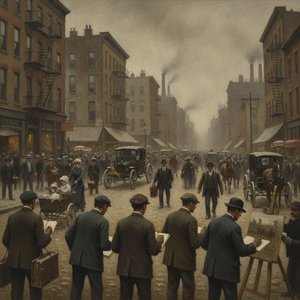
The Ashcan School: Capturing the Raw, Unfiltered Soul of Urban Life through American Realism
Discover the raw beauty of the Ashcan School. Explore how masters like Bellows and Henri captured the gritty, vibrant soul of early 20th-century New York through profound American Realism and evocative urban landscapes.
Fedezze fel a műalkotásokat témák, stílusok és jellemzők szerint csoportosítva.


