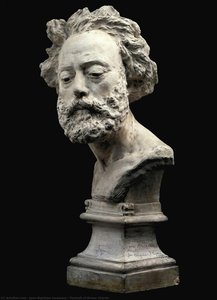
A Life Sculpted in Passion: The World of Jean-Baptiste Carpeaux
Jean-Baptiste Carpeaux, a name synonymous with dynamism and emotional depth in 19th-century French sculpture, emerged from humble beginnings to become one of the most celebrated artists of his time. Born in Valenciennes in 1827, the son of a mason, Carpeaux’s early life was steeped in the physicality of craftsmanship – an influence that would profoundly shape his artistic sensibility. This grounding in tangible creation fostered a deep understanding of materials and form, setting the stage for a career defined by its tactile realism and expressive power. His initial training under François Rude, famed for his dramatic reliefs on the Arc de Triomphe, provided a solid foundation in classical technique, but it was at the École des Beaux-Arts that Carpeaux truly began to hone his unique vision. The academic rigor of the school, combined with his innate talent, propelled him towards winning the prestigious Prix de Rome in 1854 – a pivotal moment that would send him on a transformative journey to Italy.Roman Reveries and the Birth of a New Style
The years Carpeaux spent in Rome were crucial in his artistic development. Immersed in the masterpieces of Michelangelo, Donatello, and Verrocchio, he absorbed their mastery of anatomy, composition, and emotional intensity. However, rather than simply imitating these Renaissance giants, Carpeaux began to forge his own path, rejecting the rigid formality that characterized much of Neoclassical sculpture. He sought a more fluid, spontaneous approach, one that captured the energy and vitality of life itself. This shift was evident in works like *Pêcheur napolitain à la coquille* (Neapolitan Fisherboy), created during this period. The sculpture, depicting a young boy with a shell, is remarkable for its naturalism and sense of movement – qualities that would become hallmarks of Carpeaux’s style. It wasn't merely a representation of a figure; it was an embodiment of youthful exuberance and carefree joy. This work garnered significant attention upon its exhibition in Paris, establishing Carpeaux as a rising star and securing commissions from Empress Eugénie herself. He also studied the works of contemporary artists like Ingres and Delacroix, absorbing their innovative approaches to color and composition.Triumph and Turmoil: The Second Empire Years
Carpeaux’s talent flourished during the Second Empire under Napoleon III, an era characterized by artistic innovation and grand public projects. He became a favorite of the imperial court, receiving numerous commissions for portraits and monumental sculptures. His work on the façade of the Opéra Garnier in Paris, *La Danse*, remains one of his most iconic achievements. This high-relief sculpture is a breathtaking display of dynamic movement and graceful forms, depicting figures caught in a swirling vortex of energy. The subject matter – dancers celebrating life’s joys – was considered scandalous by some conservative critics who found the work overly sensual. Despite the criticism, *La Danse* cemented Carpeaux’s reputation as a bold and innovative artist, unafraid to push boundaries and challenge conventions. Other significant works from this period include *Ugolino and His Sons*, a harrowing depiction of Dante's tragic tale of starvation and despair, showcasing his ability to convey profound emotional depth through sculpted form. He also created numerous portraits of prominent figures, including members of the royal family and leading artists of the time.Breaking with Tradition: A Sculptor’s Vision
Carpeaux distinguished himself from many of his contemporaries by rejecting the idealized forms and serene expressions prevalent in academic sculpture. Instead, he sought to capture the raw emotion and vitality of human experience. His figures are often characterized by a sense of movement, dynamism, and psychological intensity. He employed a technique known as *modello stampato*, which involved creating multiple casts from a single original model, allowing him to refine his work and experiment with different variations. This method also enabled him to produce smaller, more affordable sculptures for a wider audience. His approach was revolutionary at the time, challenging established norms and paving the way for future generations of sculptors. He wasn’t simply replicating reality; he was interpreting it through his own unique artistic vision.A Legacy Forged in Movement and Emotion
Despite facing financial difficulties and health challenges in later life, Carpeaux continued to create until his untimely death in 1875. His influence on subsequent generations of sculptors is undeniable. He broke away from the constraints of academic tradition, embracing a more naturalistic and expressive style that paved the way for artists like Auguste Rodin. Rodin, often considered the father of modern sculpture, acknowledged Carpeaux as a key precursor, recognizing his pioneering efforts in capturing movement and emotion in three dimensions. Carpeaux’s emphasis on realism, combined with his ability to infuse his works with psychological depth, resonated deeply with artists seeking to move beyond mere imitation and explore the complexities of the human experience. His students – including Jules Dalou, Jean-Louis Forain, and Olin Levi Warner – carried forward his legacy, further expanding the boundaries of sculptural expression. Today, Carpeaux’s sculptures are displayed in prominent museums around the world, serving as a testament to his enduring artistic vision and his profound impact on the history of sculpture. His work continues to captivate audiences with its raw emotion, dynamic energy, and timeless beauty.Gyakran Ismételt Kérdések
Hol és 어느 해 született Jean-Baptiste Carpeaux?
Jean-Baptiste Carpeaux Valenciennes városban született, 1827 évben.
Jean-Baptiste Carpeaux műveit műkor movements szerint böngészhetem?
Jean-Baptiste Carpeaux művész alkotásainak különböző irányzatait a művész Összes irányzat oldalán tekintheti meg, ahol a műalkotások stílusirányzat szerinti csoportosításban láthatóak.
Mely történelmi korszakban alkotott Jean-Baptiste Carpeaux?
Jean-Baptiste Carpeaux a 19. század korszakban alkotott. Ez az időszak a művész tevékenységét a történelembe helyezi.
Jean-Baptiste Carpeaux műveit színek alapján is böngészhetem?
Jean-Baptiste Carpeaux műveinek keresése egy adott színpalettában a művész Színpaletták szerint oldalán lehetséges.
Hol és melyik országban született Jean-Baptiste Carpeaux?
Jean-Baptiste Carpeaux Valenciennes városban, Francia országban született.
Milyen más neveken ismert Jean-Baptiste Carpeaux?
Jean-Baptiste Carpeaux más néven is ismert: Carpeaux, Jean-Baptiste, Pigalle.
Hogyan tekinthetném meg minden Jean-Baptiste Carpeaux által készített művet?
Jean-Baptiste Carpeaux minden alkotása a ez a weboldal oldalán megtekinthető az alkotó Összes műalkotás oldalán.
Van-e elérhető 3D virtuális túra Jean-Baptiste Carpeaux művei között?
Virtuális látogatás is lehetséges: Jean-Baptiste Carpeaux 3D Múzeum oldala egy háromdimenziós galériában mutatja be a művész alkotásait.