Műterem — Ingyenes világszerte történő szállítás — Szállítás: 2–6 hét
      Antonis Mor, 1519 – 1575

      Antonis Mor 100 leghíresebb festménye közül 75 darab

      Cardinal Granvelle's Dwarf (1560) az a festmény, amelyre Antonis Mor leginkább emlékeznek; a Louvre Múzeum collectionében található, Párizs városában. Portrait of Mary, Queen of England (1554) és Queen Mary Tudor of England (1554) kiegészítik a legkedveltebb vásznalak háromtagú sorozatát. Katalógusunkban 75 mű található Antonis Mor alkotótól. Íme a 75 leghíresebb alkotás, évszámával, a múzeum megnevezésével és a vászon történetével együtt.

      A rangsorolásunkat a népszerűségi pontszám határozza meg, amely az egyes művek kereséseit, látogatottságát és megrendeléseit ötvözi. Frissítve: október 2026. Az oldalon található festmények bármelyike vászonra vászatra festett olajfestmény-másolatként, vagy az Ön által választott méretben készült minőségi giclée nyomatként rendelhető meg.

      Antonis Mor portréja
      Antonis Mor · 1519 – 1575
      Született · meghalt
      1519 – 1575, Utrecht
      Mozgalom
      Northern renaissance
      A katalógusban szereplő művek
      75
      Legnépszerűbb
      Cardinal Granvelle's Dwarf (1560)
      A legtöbb művel a
      Museo del Prado

      A Antonis Mor tíz legnépszerűbb festménye

      Cardinal Granvelle's Dwarf (1560) szerzője Antonis Mor
      1

      Cardinal Granvelle's Dwarf

      1560 · Oil On Panel · Louvre Múzeum, Párizs

      To stand before Anthonis Mor Van Dashorst’s Cardinal Granvelle's Dwarf is to step directly into the opulent, richly textured world of the sixteenth-century Dutch aristocracy. This oil on panel painting, executed in 1560, transcends a mere portrait; it is a meticulously crafted tableau vivant, whispering tales of power, lineage, and social standing. The subject—a young boy with dwarfism, adorned in clothing of breathtaking extravagance—is presented not just as an individual,…

      Portrait of Mary, Queen of England (1554) szerzője Antonis Mor
      2

      Portrait of Mary, Queen of England

      1554 · Oil On Panel · Szépművészeti Múzeum, Budapest

      Anthonis Mor van Dashorst captured the likeness of Mary Tudor in 1554, a period defined by the shifting religious and political tides of the Northern Renaissance. The subject sits with a stern, direct gaze that meets the viewer without hesitation. Her red hair is framed by a structured, ruffled collar, a detail rendered with meticulous precision. Through the use of chiaroscuro, Mor employs a controlled interplay of light and shadow…

      Queen Mary Tudor of England (1554) szerzője Antonis Mor
      3

      Queen Mary Tudor of England

      1554 · Oil On Panel · Museo del Prado, Madrid

      The portrait of Queen Mary Tudor of England, executed by Antonis Mor in 1554, captures a sovereign at a threshold of history. She sits as the sole surviving child of Henry VIII and Catherine of Aragon, a figure of singular lineage. The oil on panel preserves her likeness during a season of profound political and religious shifts. Her presence is fixed, a quiet anchor amidst the changing tides of the…

      Portrait of William of Orange (1555) szerzője Antonis Mor
      4

      Portrait of William of Orange

      1555 · Oil On Panel · Staatliche Museen, Kassel

      To stand before this portrait of William of Orange is to encounter not merely a likeness, but an embodiment of nascent authority. Rendered in the meticulous vein of the Northern Renaissance, the work captures the sitter in a moment of profound stillness, yet one charged with palpable resolve. The composition immediately draws the eye into the three-quarter view, presenting a figure encased in elaborate armor against a background so deep…

      Joanna of Austria (1560) szerzője Antonis Mor
      5

      Joanna of Austria

      1560 · Oil On Canvas · Museo del Prado, Madrid

      Antonis Mor's Joanna of Austria presents a formal likeness of the princess, who was the daughter of Emperor Charles V and sister to King Philip II of Spain. The subject commissioned this portrait personally, seeking a representation that reflected her specific station and history. In 1552, she married the Portuguese Prince John Manuel, a union that defined her political and personal landscape during the mid-sixteenth century.

      Portrait of a lady (1557) szerzője Antonis Mor
      7

      Portrait of a lady

      1557 · Oil On Canvas · National Gallery of Victoria, Melbourne

      A single light source from the upper left carves the subject out of a dark, indeterminate void. She is a presence of quietude, a three-quarter length figure caught in a moment of poised introspection. The darkness behind her pushes her forward, making the pale skin of her forehead and cheek feel immediate, almost tactile. Her expression is calm, a mask of high social status that hides the pulse of the…

      Catherine of Hapsburg, the Wife of King John III of Portugal (1552) szerzője Antonis Mor
      8

      Catherine of Hapsburg, the Wife of King John III of Portugal

      1552 · Oil On Panel · Museo del Prado, Madrid

      The gaze of Catherine of Hapsburg, the Wife of King John III of Portugal, meets the viewer from within this formal portrait. Painted by Antonis Mor, the work captures the presence of Catherine of Austria in a moment of quiet, regal composure. She occupies the space with a heavy, dignified stillness that speaks to her high station and the weight of her lineage.

      Margaret Duchess of Parma / Mary of Portugal Wife of Alessandro Farnesse (1565) szerzője Antonis Mor
      10

      Margaret Duchess of Parma / Mary of Portugal Wife of Alessandro Farnesse

      1565 · Oil On Panel · Museo del Prado, Madrid

      Two women exist in a state of perpetual prayer, suspended within the dark, velvet silence of a Renaissance interior. Margaret, Duchess of Parma, and Mary of Portugal appear as twin pillars of piety, their profiles or three-quarter views turned toward an unseen divine presence. The air around them feels heavy, thick with the solemnity of their task. They do not look at the viewer; instead, their gazes drift downward or…

      Antonis Mor: vászonművek, a 11 és a 75 helyezés között

      Philip II (1555) szerzője Antonis Mor
      #12

      Philip II

      1555 · Museo del Prado

      The air in the room seems to thicken around the figure of Philip II. He sits in a three-quarter view, his gaze meeting the viewer with a steady,…

      Készíttesse kézzel festve →
      Lady with the Jewel (1552) szerzője Antonis Mor
      #17

      Lady with the Jewel

      1552 · Museo del Prado

      A single woman occupies the center of this 1552 portrait, her presence defined by a quiet, aristocratic poise. She is positioned in a three-quarter length pose, her body…

      Készíttesse kézzel festve →
      Emperor Maximilian II (1550) szerzője Antonis Mor
      #18

      Emperor Maximilian II

      1550 · Museo del Prado

      In this vertical, three-quarter length portrait from 1550, Emperor Maximilian II is presented against a dark, near-black background. The subject stands slightly off-center, positioned with a calm and…

      Készíttesse kézzel festve →
      Lady with Gold Chains (1560) szerzője Antonis Mor
      #22

      Lady with Gold Chains

      1560 · Museo del Prado

      In this three-quarter length portrait from circa 1560, we encounter a woman who commands the space through a profound, self-possessed stillness. She is positioned slightly off-center, emerging from…

      Vidd ide a fényt a tédbe →
      Portrait of a Lady (1538) szerzője Antonis Mor
      #23

      Portrait of a Lady

      1538 · Museo del Prado

      The artwork titled Portrait of a Lady is an oil on canvas painting by the artist Antonis Mor. This portrait depicts a noblewoman, presented in a three-quarter length…

      Rendelje meg ezt a vászonat →
      Sir Thomas Gresham (1560) szerzője Antonis Mor
      #43

      Sir Thomas Gresham

      1560 · Rijksmuseum

      In this portrait, Anthonis Mor Van Dashorst captures the steady presence of Sir Thomas Gresham. The subject sits before us, a man whose influence once shaped the financial…

      Vidd ide a fényt a tédbe →
      Portrait of a Man (1561) szerzője Antonis Mor
      #65

      Portrait of a Man

      1561 · Mauritshuis

      Anthonis Mor van Dashorst came from Utrecht and specialised in portraits. He received commissions from various members of the Habsburg court, for which he travelled extensively in Europe.…

      Vidd ide a fényt a tédbe →

      Amit Antonis Mor a legtöbbször festett

      A négy leggyakoribb motívum ezen a vásznon, mindegyik a legkedvesebb példájával.

      Hol kirakott Antonis Mor vászonai

      A 8 olyan múzeum, amely a legtöbb ezen az oldalon szereplő festményet őrzi.

      Múzeumok Város Antonis Mor művei Ebből a listából származó festmények
      Museo del Prado, MadridMuseo del Prado Madrid 13 Queen Mary Tudor of England, Joanna of Austria, Jane Dormer, Duchess of Feria (?)
      Rijksmuseum, AmsterdamRijksmuseum Amsterdam 5 Portrait of Philippe de Montmorency, Count of Horne, Admiral of the Netherlands, Member of the Council of State, Anthonis Mor (copy after), 1540 - 1650, Sir Thomas Gresham, Anne Fernel, the Wife of Sir Thomas Gresham
      Szépművészeti Múzeum, BudapestSzépművészeti Múzeum Budapest 3 Portrait of Mary, Queen of England, Knight of the Spanish St James Order, Portrait of the Philip II, King of Spain
      Kunsthistorisches Museum, BécsKunsthistorisches Museum Bécs 3 Portrait of Anton Perrenot de Granvelle, Portrait of a man, Anne of Austria, Queen of Spain
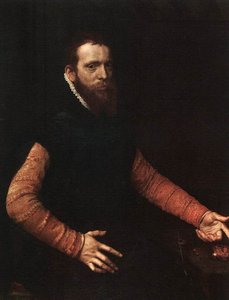
      Mauritshuis, HaagMauritshuis Haag 3 Steven van Herwijck, Portrait of a Goldsmith, Portrait of a Man
      Gemäldegalerie Alte Meister im Schloss Wilhelmshöhe, KasselGemäldegalerie Alte Meister im Schloss Wilhelmshöhe Kassel 2 Portrait of a young prince, Portrait of Jean Lecocq (1559)
      Gemäldegalerie, BerlinGemäldegalerie Berlin 2 The Utrecht canons Cornelius van Horn and Anthonis Taets van Ameronghen, The Corpse of Christ
      Hispanic Society Museum - Library, New YorkHispanic Society Museum - Library New York 2 Fernando Álvarez de Toledo, Third Duke of Alba, Portrait of a Man

      Antonis Mor leghíresebb vászonai, évtizedről évtizedre

      1. 1530s
        Portrait of a Lady (1538) szerzője Antonis Mor
        23 / 75

        Portrait of a Lady

        Kor: 11 – 20 év · Museo del Prado

        The artwork titled Portrait of a Lady is an oil on canvas painting by the artist Antonis Mor. This portrait depicts a noblewoman, presented in a three-quarter length…

      2. 1540s
        Portrait of Anton Perrenot de Granvelle (1549) szerzője Antonis Mor
        9 / 75

        Portrait of Anton Perrenot de Granvelle

        Kor: 21 – 30 év · Kunsthistorisches Museum

        This portrait of Anton Perrenot de Granvelle, also known as Antoine Perrenot, called Granvelle, was executed by the Dutch Renaissance painter Antonis Mor. Painted in 1549, the work…

      3. 1550s
        Portrait of Mary, Queen of England (1554) szerzője Antonis Mor
        2 / 75

        Portrait of Mary, Queen of England

        Kor: 31 – 40 év · Szépművészeti Múzeum

        Anthonis Mor van Dashorst captured the likeness of Mary Tudor in 1554, a period defined by the shifting religious and political tides of the Northern Renaissance. The subject…

      4. 1560s
        Cardinal Granvelle's Dwarf (1560) szerzője Antonis Mor
        1. hely 75 közül

        Cardinal Granvelle's Dwarf

        Kor: 41 – 50 év · Louvre Múzeum

        To stand before Anthonis Mor Van Dashorst’s Cardinal Granvelle's Dwarf is to step directly into the opulent, richly textured world of the sixteenth-century Dutch aristocracy. This oil on…

      5. 1570s

      Antonis Mor vászonai, kérdésenként

      Mely vászonról emlékeznek leginkább Antonis Mor?Olvassda el a választ

      Cardinal Granvelle's Dwarf (1560), Louvre Múzeum, Párizs. Utánuk Portrait of Mary, Queen of England (1554) és Queen Mary Tudor of England (1554) következik.

      Cardinal Granvelle's Dwarf: hány éves volt Antonis Mor, amikor ezt megfestették?Olvassda el a választ

      Antonis Mor, aki 1519 évfolyamán született, 41 éves volt: Cardinal Granvelle's Dwarf 1560 származik.

      Melyek Antonis Mor tíz leghíresebb vászonműve?Olvassda el a választ

      Cardinal Granvelle's Dwarf, Portrait of Mary, Queen of England, Queen Mary Tudor of England, Portrait of William of Orange, Joanna of Austria, Jane Dormer, Duchess of Feria (?), Portrait of a lady, Catherine of Hapsburg, the Wife of King John III of Portugal, Portrait of Anton Perrenot de Granvelle és Margaret Duchess of Parma / Mary of Portugal Wife of Alessandro Farnesse. A rangsorban szereplő vászlakok mindegyike tartalmazza a festvény évszámát és a kiállító múzeumát is.

      Hány festményt alkotott Antonis Mor?Olvassda el a választ

      75 műve Antonis Mor alkotása a katalógusunkban, 1538 és 1574 között.

      Hol láthatóak ma Antonis Mor leghíresebb vászonművei?Olvassda el a választ

      Leginkább Museo del Prado (Madrid), Rijksmuseum (Amsterdam) és Szépművészeti Múzeum (Budapest) helyszíneken; a fenti lista tartalmazza az egyes múzeumokat és a hozzájuk tartozó vászonműveket.

      Mikor festette Antonis Mor leghíresebb vászait?Olvassda el a választ

      1550s időszakban, amely ezen az oldalon található 75 mű közül 30 alkotással szerepel, Portrait of Mary, Queen of England a válogatásban.

      Melyik híres Antonis Mor vászon készült először, és melyik utoljára?Olvassda el a választ

      A legkorábbi vászon itt: Portrait of a Lady (1538); a legutóbb pedig: Portrait of Hubert Goltzius (1574).

      Milyen témaköröket festett a legtöbbször Antonis Mor?Olvassda el a választ

      Woman (14), Black dress (10) és Portrait (8), a jelen oldalon található 75 műművészeti alkotás között.

      Melyik technikát alkalmazza leggyakrabban Antonis Mor festményei?Olvassda el a választ

      Oil On Canvas, amely 14 darabban szerepel a ?>"> 75 műből ezen az oldalon.

      Mely művészeti irányhoz tartozik Antonis Mor?Olvassda el a választ

      Northern renaissance és Renaissance, ahogy azt ezen az oldalon látható vásznemek is mutatják.

      Mely Antonis Mor festmények találhatónak a Museo del Prado gyűjteményében?Olvassda el a választ

      A Museo del Prado, Madrid 13 műve közül rendelkezik ezen az oldalon, köztük ezekkel: Queen Mary Tudor of England, Joanna of Austria és Jane Dormer, Duchess of Feria (?).

      Hol vásárolhatok egy Antonis Mor festményének reprodukcióját?Olvassda el a választ

      Igen. Az oldalon található minden festmény megrendelhető a saját oldalán, kézzel festett olajfestmény-másolatként vagy minőségi giclée nyomtatásként, a választott méretben.

      Ismerje meg a festőt: Antonis Mor

      Antonis Mor van Dashorst: A Királyi Méltóság Festője

      Antonis Mor van Dashorst (1517-1577) a holland reneszánsz portretizmus egyik alapköve, aki korszakának jellemző apróbó részletességes realizizmusát és szimbolikus mélységét testesíti meg. A hollandországi Utrechtben született művész egy művészeti hagyományoktól ösztöngetett családból származott – édesapja szobrász volt, ezzel is alapozta meg a vizuális ábrázoláshoz fogantkozó családi vonalakat. Bár életrajzi részletei viszonylag kevésbé ismertek, Mor hatalmas termése bőségesen beszél a tehetségéről és azután az elszántságról, amellyel témái esszenciáját próbálta megörökíteni. Gyorsan kivívta hírnevét, hiszen egyetemarcsak páratlan pontossággal képes volt megörökíteni a nemesek alakját, ami lehetővé tette számára, hogy Európa egyiket a legbefolyásosabb alakjai is megkérjék munkáját. A művész fejlődése során az antwerpi évek döntő jelentőséget játszottak művészeti érékonkelésében. Bár Mor formálódó éveiről nem tudunk túl sokat Utrecht után, Antwerpenben Pieter Bruegel az öreg mellett tanulhatott, átvenve a mester emberi természet és a táj művészétől való magistrális megfigyelését – ezek az írások később átszösztenyelték Mor saját művészeti látásmódját. A flamandi köztársaság vibráló művészeti környezetében, olyan kortársak mellett, mint Quentin Massys vagy Hendrik Golse, élesítette éles ízét, ami egy kifinomult perspektíva- és chiaroscuro-ismeretet kölcsönzött neki. Ezek a technikák – a fény és az árnyék drámai játs_{[1]__AIG_LINK_1__}átékával – lehetővé tették számára, hogy portréit élettel teli fénnyel világítsa meg.

      Mária Tudor uralkodása: A északi reneszánsz portretizmus remekműve

      Mor hírneve drasztikusan megugrott, amikor befejezte angol királynő, Mária Tudor portréját (1554). Ez a monumentális vászon a művész művészeti tudásának csúcspontját jelenti. Árnyék nélküli, apró részletekkel kidolgozott alkotása megörökíti Mária királyi tartását és belső fegyelmezett nyugalmát – ami tanúbizonysága annak, hogy Mor képes volt a fizikai hasonlóság mellett a pszichológiai árnyalatokat is átadni. A kompozíció rendkívül kiegyensúlyozott, piramidális struktúrát és a ruházat finom ráncait használva hangsúlyozva a királynő tekintélyét és méltóságát. Emellett a chiaroscuro használata lenyűgöző kontrasztot teremt a fény és a sötét között, kiemelve Mária arcát, és ünnepélyes nagorság aura-ját kölcsönözve alkotásnak. Ez a portré megszilárdította Mor hírnevét korabelen egyik legkiemelkedőbb portrézőjeként, és ma is a észak reneszánsz művészet egyik legünnepltebb példájaként áll. A királyi megbízások bővítette művész környékét, hiszen Spanyolország II. Ferdinánd királytól is megkapta a lehetőséget, hogy ambiciózus projektekben vonuljon el, tovább finomítva udvari művészi stílusát. Mária Tudor portréján túl számos fontos állampolitikai, diplomáciai és arisztokrata alakot ábrázolt. Egyedi stílusa – amelyet a precíz realizmus, a mesteri perspektíva és az expresszív fény-árnyék játék jellemzett – azonnal felismerhetővé vált. Mor nem csupán a külső küllem átadását helyezte előtérbe, hanem karakteret és érzelmet is, emelve portréit a puszta hasonlóságok szintjéről az emberi méltóság mélyebb megállapításai felé.

      Hatás és örökség

      Mor hatása messze túlnyúlt kortársain. Portretizálás iránti precíz megközelítése példát állt a következő művészgenerációk számára, ösztönözve őket a nagyobb pontosságra és a pszichológiai mélységre. A reneszánsz humanista idealistákat képviselte, tükrözve azt a rendíthetetlen meggyőződést, hogy a művészet képes felvilágosítani az emberi létezés tapasztalatait. Napjainkban is lenyűgözi a világ közötti közönséget, mint az órával fennmaradó emlékeztetője a holland aranykor művészeti zsenialitásának – egy olyan időszaknak, amelyet az innováció, az ambíció és a szépség iránti mély csodálat határoz meg.

      Minden 75 műmű Antonis Mor alkotása →