Műterem — Ingyenes világszerte történő szállítás — Szállítás: 2–6 hét
      Edward Hopper, 1882 – 1967

      The 100 Most Famous Edward Hopper Paintings, Ranked

      The best-loved painting by Edward Hopper is Edward Hopper (1942), which hangs in the Art Institute of Chicago, Chicago. Automat (small) and Ház a vasút mellett (1925) come next among the canvases readers know best. Our catalogue holds 366 works by Edward Hopper: here are the 100 most famous, each with its year, its museum and what makes it memorable.

      Ranked by our popularity score, which combines the searches, visits and orders for each work. Updated október 2026.

      Portrait of Edward Hopper
      Edward Hopper · 1882 – 1967
      Born · died
      1882 – 1967, Upper Nyack
      Movement
      Kortárs realizmus
      Works in our catalogue
      366
      Most famous
      Edward Hopper (1942)
      Most works at
      MoMA - Museum of Modern Art

      Top 10 Edward Hopper paintings: the canvases everyone knows

      Edward Hopper (1942) by Edward Hopper
      1

      Edward Hopper

      1942 · Olajfestmény vászonon · Art Institute of Chicago, Chicago

      1942-ben született ez az ikonikus festmény, amely egy késő esti jelenetet rögzít egy éjjel nyitva tartó étterem belsejében. Több mint csupán a városi élet ábrázolása; Hopper műve mély kutatás a modern elidegenedésről és a csendes magányról, amelyet még a zsúfolt városok közepén is megtalálhatunk. A *Nighthawks* nem egyszerűen egy kép, hanem egy hangulat, egy érzés – egy pillanatnyi megállás az éjszaka sötétségében.

      Automat (small) by Edward Hopper
      2

      Automat (small)

      Acrylic On Canvas · Des Moines Art Center, Des Moines

      Edward Hopper’s “Automat” (small), a deceptively simple depiction of a woman seated alone at a cafe table, is a masterclass in conveying the profound sense of solitude that characterized much of 20th-century American life. Painted during a period of rapid urbanization and social change, this work resonates with a quiet melancholy that speaks to the alienation inherent in modern existence. Hopper’s ability to capture fleeting moments of human experience –…

      Ház a vasút mellett (1925) by Edward Hopper
      3

      Ház a vasút mellett

      1925 · Olajfestmény vászonon · MoMA - Museum of Modern Art, New York

      Introduction to Edward Hopper and His Work Edward Hopper, a renowned American artist, is celebrated for his captivating oil paintings that often depicted modern life in the early 20th century. One of his most notable works is "House by the Railroad," which is currently housed at the Museum of Modern Art (New York, United States). This painting, created in 1925, showcases Hopper's unique style and ability to evoke a sense…

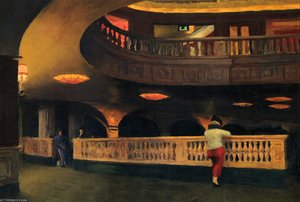
      New York Movie (1939) by Edward Hopper
      4

      New York Movie

      1939 · Akril festmény vászonon · MoMA - Museum of Modern Art, New York

      A festmény "CITE>New York Movie" Edward Hopper művészétől egy megható olajfestmény az aszton vászonra vetítve, melyet 1939-ben készítettek. A mű jelenleg az Egyesült Államok New Yorkซิตitáján található tekintélyes Museum of Modern Art (MoMA) gyűjteményében áll. Ez a remekmű tökéletesen példázza Hopper egyedülálló képességét, hogy megragadja a városi élet lényegét, gyakran fókuszálva az izoláció és az önreflexió témáira. Kompozíció és szimbolika A festmény egy moziterszigeten álló nőt ábrázol, aki egy vörös…

      untitled (5560) by Edward Hopper
      5

      untitled (5560)

      Oil On Canvas · MoMA - Museum of Modern Art, New York

      Edward Hopper's untitled (5560) is far more than a mere depiction of a roadside service station; it is a distilled essence of the American experience, a moment frozen in time that speaks volumes about human connection and the profound weight of isolation. Painted during the transformative years between 1942 and 1945, this monochrome masterpiece captures a scene familiar to the mid-century traveler—the late-night glow of artificial light illuminating a sparsely…

      Early sunday morning Whitney Museum of American (1930) by Edward Hopper
      6

      Early sunday morning Whitney Museum of American

      1930 · Oil On Canvas · Whitney Múzeum, Új-York

      Early Sunday Morning: A Portrait of Quietude Edward Hopper’s “Early Sunday Morning,” painted in 1930, isn't merely a depiction of a New York City street; it’s an arresting distillation of the anxieties and aspirations inherent in the American psyche during the Depression era. Executed in oil paint on canvas, this iconic piece exemplifies Hopper’s signature style – American Scene Painting—characterized by stark realism combined with a palpable sense of solitude…

      Automat (1927) by Edward Hopper
      7

      Automat

      1927 · Olajfestmény vászonon

      Edward Hopper, a 20. század egyik legjelentősebb amerikai festője, nem csupán tájakat és városképeket ábrázolt, hanem a modern ember mélyén rejlő magányt, egyedülélést és belső konfliktusokat is feltárta. A 1927-ben elkészült “Automat” című alkotása – melynek magyar címe gyakran “Automat” vagy “Az Automata” – ennek a jelenségnek a legszínlelő példái közé tartozik, egy olyan pillanatot fagyasztva le, amikor a városi élet és az egyéni sors találkoznak.

      Vasárnap (1926) by Edward Hopper
      8

      Vasárnap

      1926 · Olajfestmény vászonon · The Phillips Collection, Washington, D.C.

      A városi magány esszenciája Edward Hopper „Vasárnap” című alkotása egy városi jelenet csendjét és belső feszültségét örökíti meg egy, amely valószínűleg egy vasárnap reggelen született. A festmény egy magányos férfit ábrázol, amint egy fa padon ül a bezárt üzletek előtt, felidézve az egyedüllét és az elmélkedés érzetét, amely oly jellemző Hopper munkásságára. Ez az alkotás az emberi létezés mesteri vizsgálata, amely a 2mutató évszázad eleji Amerika háttérzetében bontakozik ki. A…

      Gáz (1940) by Edward Hopper
      9

      Gáz

      1940 · Olajfestmény vászonon

      Az amerikai magány időtlen ábrázolása Edward Hopper „Gas” (1940) című műve a magány és a nosztalgia mesteri ábrázolása, amely egy régi típusú benzinkutat örökít meg lágy, természetes fényben elmerülve. Ez az érzelmekkel teli festmény egy az időben megfagyott pillanatba invitálja a nézőt, ahol az amerikai vidéki csend szinte érezhetően körülveszi a tájat. A jelen belső elmélyülésre ösztönző légessége teszi ezt a művet lenyűgöző kincsé bármely művészeti gyűjteményben vagy otthoni térben.…

      Szuszui (1929) by Edward Hopper
      10

      Szuszui

      1929 · Olajfestmény vászonon

      Edward Hopper 1929-es alkotása, a „Chop Suey”, egy lenyűgöző olajfestmény, amely a nézőt a 1920-as évek egy éttermének intimebb, mégis izolált világába invitálja. Ez a remekmű Hopper sajátos stílusának kiváló példája, amely az amerikai realizmust ötvözi finom ekspressionista hatásokkal, hogy nosztalgikus érzetet és mély, csendes önreflexiót keltsen.

      More Edward Hopper canvases, 11 to 100

      Éjjeliségi Ülés (1940) by Edward Hopper
      #11

      Éjjeliségi Ülés

      1940

      Ein pillantás a 20. század közepének Amerikájába Edward Hopper „Office at Night” (Éjjeliségi Ülés, 1940) című műve a mid-century amerikai irodai élet mesteri ábrázolása. Ez a festmény egy…

      Tavaszi Napfény (1943) by Edward Hopper
      #12

      Tavaszi Napfény

      1943

      Edward Hopper’s “Summertime”: A Moment Frozen in Urban Loneliness Edward Hopper's "Summertime," painted in 1943 during the tumultuous years of World War II, isn’t merely a depiction of…

      Napfény egy étteremben (1958) by Edward Hopper
      #13

      Napfény egy étteremben

      1958 · Yale University Art Gallery

      Edward Hopper Napfény egy étteremben (1958) című műve a városi magány mesteri ábrázolása, amelyet olyan pontossággal és érzelmi mélységgel örökített meg, amely meghatározta ikonikus stílusát. Ez az 102…

      Napfényben (1960) by Edward Hopper
      #14

      Napfényben

      1960

      Edward Hopper, a neves amerikai festőművész, neve örökbe fogadta a csendes, finom melankóliát, ami a 20. századi amerikai életet átszallotta. Nem egyszerűen csak tájakat és jeleneteket festett; ő…

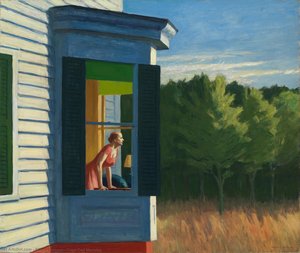
      Cape Cod Morning (1950) by Edward Hopper
      #15

      Cape Cod Morning

      1950

      Egy pillanatnyi csendes megfontolás: Edward Hopper mesterműve A jelenet: Egy nő mély elmerülésben Edward Hopper „Cape Cod Morning” című alkotása egy békés, mégis izgalmas magányos pillanatot örökít meg.…

      Vendégtermek (1945) by Edward Hopper
      #16

      Vendégtermek

      1945 · Yale University Art Gallery

      Edward Hopper's "Rooms for Tourists," painted in 1945, isn’t merely a depiction of a house; it’s an invitation to contemplate the quiet heart of modern America. This masterful…

      nighthawks (1942) by Edward Hopper
      #17

      nighthawks

      1942 · Art Institute of Chicago

      A Window Into Loneliness: Exploring Edward Hopper’s Nighthawks Edward Hopper's "Nighthawks," completed in 1942 during the tumultuous backdrop of World War II, transcends mere representation; it embodies a…

      C compartmense by Edward Hopper
      #18

      C compartmense

      Hopper technikai megközelítése, amely a formák kompozíciójára és a hangulat megidézésére szolgáló fényhasználatra épül, mély bennyomást hagyott a művészettörténetben. Művei, amelyek gyakran New York építészeti tájain vagy New…

      Két Stand-up Vizu (1965) by Edward Hopper
      #19

      Két Stand-up Vizu

      1965

      Edward Hopper 1965-ös vásznolása, "Két Stand-up", nem csupán két alakot ábrázol a színpadon; egy alaposan megtermett meditáció a magányról, a színházi előadás elhasználódottságáról és az átlagos életben rejlő…

      New York Movie, MoMA, NY (1939) by Edward Hopper
      #21

      New York Movie, MoMA, NY

      1939

      A művészeti alkotás egy halványan megvilágított szobát ábrázolja – talán egy szállodai lobbyt vagy egy impoztust lakást –, amelyet néhány alak tölten meg. A kompozíció szándékosan összetett, egyfajta…

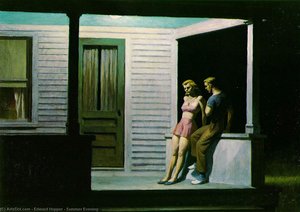
      Summer Evening (1947) by Edward Hopper
      #22

      Summer Evening

      1947

      A Portrait of Quietude: Exploring Edward Hopper’s “Summer Evening” Edward Hopper's "Summer Evening" isn’t merely a depiction of a scene; it’s an exquisitely crafted meditation on human experience—a…

      Hotel room (1931) by Edward Hopper
      #23

      Hotel room

      1931

      The Poignant Stillness of a Private Moment In Edward Hopper’s 1931 masterpiece, Hotel Room, the viewer is invited into a sanctuary of profound introspection. The scene is deceptively…

      Excursion into Philosophy by Edward Hopper
      #24

      Excursion into Philosophy

      A Quiet Drama: Unveiling Edward Hopper’s “Excursion into Philosophy” Edward Hopper's "Excursion into Philosophy" is a profoundly evocative work that encapsulates the core tenets of American Realism, offering…

      The Cat Boat (1922) by Edward Hopper
      #25

      The Cat Boat

      1922 · Smithsonian American Art Museum

      Edward Hopper's “The Cat Boat,” created in 1922, stands as a quintessential emblem of American Modernism—a deceptively simple scene imbued with profound psychological depth. More than just depicting…

      Rooms By The Sea (1951) by Edward Hopper
      #26

      Rooms By The Sea

      1951

      Rooms By The Sea: A Portrait of Quiet Contemplation Edward Hopper’s “Rooms by the Sea” transcends mere depiction; it's a distillation of mood, an embodiment of American Modernism’s…

      Reclining Nude (1927) by Edward Hopper
      #27

      Reclining Nude

      1927

      Introduction Reclining Nude, a watercolour painting by Edward Hopper, is a quintessential example of the artist's unique style and contribution to the New Realism movement. Created in 1927,…

      Rooms by the Sea (1951) by Edward Hopper
      #28

      Rooms by the Sea

      1951

      The Painting: A Representation of Serenity "CITE>Edward Hopper's 'Rooms by the Sea' (1951) is a masterpiece that embodies the essence of stillness and contemplation. The painting, available for…

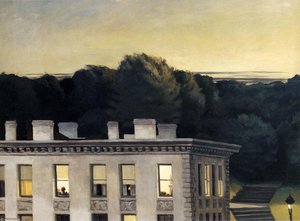
      House At Dusk (1935) by Edward Hopper
      #29

      House At Dusk

      1935

      The Painting: An Overview "CITE>Edward Hopper:CITE>'s House At Dusk, created in 1935, is a quintessential example of the artist's ability to capture the essence of American life through…

      Drug Store (1927) by Edward Hopper
      #30

      Drug Store

      1927 · Művészeti Múzeum, Boston

      Csendes pillanat a városban: Az Edward Hopper-féle „Drug Store” (1927) felfedezése Az amerikai mester, Edward Hopper 1927-ben festett „Drug Store” (Patika) az urbanitás megható ábrázolása – egy életpillanat,…

      Sun on Prospect Street (Gloucester, Massachusetts) (1934) by Edward Hopper
      #31

      Sun on Prospect Street (Gloucester, Massachusetts)

      1934

      Edward Hopper's "Sun on Prospect Street" isn't merely a depiction of a Gloucester street scene; it’s a distilled essence of early 20th-century American experience. Painted in 1934, during…

      Woman in the Sun (1961) by Edward Hopper
      #32

      Woman in the Sun

      1961

      A Moment Frozen in Light: Edward Hopper’s “Woman in the Sun” Edward Hopper's "Woman in the Sun," painted in 1961, isn’t merely a depiction of a nude figure;…

      Second Story Sunlight (1960) by Edward Hopper
      #33

      Second Story Sunlight

      1960

      A Moment Suspended: Unveiling Edward Hopper’s “Second Story Sunlight” Edward Hopper's 1960 oil on canvas, *Second Story Sunlight*, is a quintessential example of American Realism at its most…

      Night Windows (1928) by Edward Hopper
      #34

      Night Windows

      1928 · MoMA - Museum of Modern Art

      A Window Into Solitude: Exploring Edward Hopper’s Night Windows Edward Hopper, a name synonymous with the quiet contemplation of modern existence, wasn't merely capturing landscapes; he was distilling…

      New York Office (1962) by Edward Hopper
      #35

      New York Office

      1962

      Edward Hopper’s “New York Office,” painted in 1962, transcends mere depiction; it embodies the very essence of modern solitude—a feeling profoundly familiar to viewers grappling with the complexities…

      Office in a Small City (1953) by Edward Hopper
      #36

      Office in a Small City

      1953

      In the vast gallery of American Realism, few works possess the haunting, cinematic stillness found in Edward Hopper’s 1953 masterpiece, Office in a Small City. To gaze upon…

      City Roofs (1932) by Edward Hopper
      #37

      City Roofs

      1932

      A Quiet Moment of Urban Existence Edward Hopper’s “City Roofs” (1932) is more than just a depiction of a cityscape; it's a poignant meditation on modern life, isolation,…

      Self-Portrait (1930) by Edward Hopper
      #38

      Self-Portrait

      1930

      This oil on canvas painting depicts a man wearing a brown hat and a blue shirt. He is shown with a serious expression, looking directly at the viewer.…

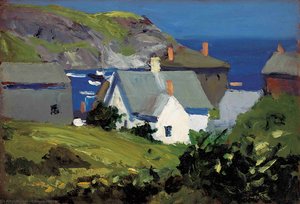
      Monhegan házak, Maine by Edward Hopper
      #39

      Monhegan házak, Maine

      Introduction to American Realism Edward Hopper, a prominent American realist painter, is renowned for his captivating oil paintings that depict urban and rural scenes. His unique style has…

      Four Lane Road by Edward Hopper
      #40

      Four Lane Road

      Edward Hopper's "Four Lane Road," painted in 1956, isn’t merely a depiction of a roadside scene; it’s a distilled essence of the American experience – a poignant meditation…

      Woman at Cafe Table (1907) by Edward Hopper
      #41

      Woman at Cafe Table

      1907 · Whitney Múzeum

      Woman at Cafe Table: A Portrait of Urban Isolation Edward Hopper’s “Woman at Cafe Table,” painted in 1906-1907, stands as a quintessential emblem of New Realism and embodies…

      First Row Orchestra (1951) by Edward Hopper
      #42

      First Row Orchestra

      1951 · Hirshhorn Museum and Sculpture Garden

      A Portrait of Quiet Observation: Exploring Edward Hopper’s “First Row Orchestra” Edward Hopper's "First Row Orchestra," painted in 1951, transcends mere depiction; it embodies the very essence of…

      House by the Railroad by Edward Hopper
      #43

      House by the Railroad

      In his 1925 masterpiece, House by the Railroad, Edward Hopper presents a scene that captures a profound sense of isolation through a meticulously controlled interplay of light and…

      untitled (3714) by Edward Hopper
      #44

      untitled (3714)

      Edward Hopper's "Untitled (3714)," painted in 1942, isn’t merely a depiction of a diner interior; it’s a distilled essence of modern American loneliness. This deceptively simple scene—an elderly…

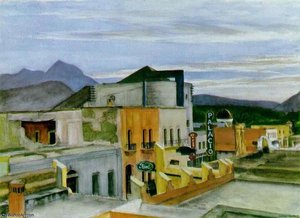
      el palacio (1946) by Edward Hopper
      #45

      el palacio

      1946

      Edward Hopper’s 1946 painting, “El Palacio,” isn’t merely a depiction of a city street; it’s a carefully constructed tableau of urban solitude and the quiet anxieties of modern…

      the city (1927) by Edward Hopper
      #46

      the city

      1927

      The City, painted by Edward Hopper in 1927, is a striking black and white depiction of early 20th-century American urban life. This artwork isn't merely a representation of…

      rooms by the sea by Edward Hopper
      #47

      rooms by the sea

      Edward Hopper’s Rooms by the Sea is a painting from 1951 that depicts an interior space with a doorway opening toward the ocean. The scene features a room…

      The Camel's Hump (1931) by Edward Hopper
      #49

      The Camel's Hump

      1931

      Edward Hopper's "The Camel’s Hump," painted in 1931, isn’t merely a depiction of a mountain range; it’s a distilled essence of American loneliness and the quiet drama unfolding…

      the el station by Edward Hopper
      #50

      the el station

      In the quiet, heavy atmosphere of Edward Hopper’s “The El Station,” we are invited into a moment suspended in time, where the bustling energy of the American metropolis…

      Dawn in Pennsylvania (1942) by Edward Hopper
      #51

      Dawn in Pennsylvania

      1942

      A Solitary Glimpse: Dawn in Pennsylvania by Edward Hopper Edward Hopper’s *Dawn in Pennsylvania*, painted in 1942, isn't merely a depiction of a railroad station; it’s a distilled…

      Corn Hill (1930) by Edward Hopper
      #52

      Corn Hill

      1930

      Edward Hopper's "Corn Hill," painted in 1930, isn’t merely a depiction of a rural landscape; it’s a poignant meditation on isolation and the quiet dignity of human existence…

      tramp steamer (1908) by Edward Hopper
      #53

      tramp steamer

      1908

      A Storm-Tossed Soul: Edward Hopper’s “Tramp Steamer” Edward Hopper's "Tramp Steamer," painted in 1908, isn’t merely a depiction of a ship at sea; it’s a profound meditation on…

      Self Portrait, , Whitney Museum of American (1930) by Edward Hopper
      #54

      Self Portrait, , Whitney Museum of American

      1930

      Edward Hopper's "Self Portrait," painted in 1930, isn’t merely a depiction of an artist; it’s a distilled essence of the anxieties and quietude that defined much of early…

      Rocks at the Fort Gloucester (1924) by Edward Hopper
      #55

      Rocks at the Fort Gloucester

      1924

      Edward Hopper's 1924 painting, “Rocks at the Fort Gloucester,” is more than just a landscape; it’s a quiet meditation on human presence within the vastness of nature and…

      Morning sun, Columbus Museum of Art, Columbus, (1952) by Edward Hopper
      #56

      Morning sun, Columbus Museum of Art, Columbus,

      1952

      A Window into Quietude: Exploring Edward Hopper’s “Morning Sun” Edward Hopper's "Morning Sun," painted in 1952, isn’t merely a depiction of a room; it’s an encapsulation of the…

      Study of a Seated Woman (1899) by Edward Hopper
      #57

      Study of a Seated Woman

      1899

      Edward Hopper's "Study of a Seated Woman," rendered in 1899, isn’t merely a depiction of a figure; it’s a distilled essence of late 19th-century American introspection. This intimate…

      Portrait Of Orleans by Edward Hopper
      #58

      Portrait Of Orleans

      WahooArt offers exquisite hand-painted reproductions of Edward Hopper's "Portrait of Orleans," allowing you to bring this iconic work of American art into your home or office. Each reproduction…

      sun empty room by Edward Hopper
      #59

      sun empty room

      Edward Hopper's "Sun in an Empty Room," painted in 1963, isn’t merely a depiction of a vacant room; it’s a distilled essence of modern American isolation and the…

      The Long Leg (1930) by Edward Hopper
      #60

      The Long Leg

      1930

      A Quiet Drama on the Waves: Edward Hopper’s *The Long Leg* (1930) Edward Hopper's *The Long Leg*, painted in 1930, is more than just a seascape; it’s a…

      Bridle Path (1939) by Edward Hopper
      #61

      Bridle Path

      1939

      Bridle Path: A Portrait of Quietude in Modern America Edward Hopper’s “Bridle Path,” painted in 1939, stands as a quintessential emblem of American Realism—a genre that sought to…

      night windows by Edward Hopper
      #62

      night windows

      In the quietude of a dimly lit room, where the boundaries between the interior soul and the external world begin to blur, lies the profound essence of Edward…

      Hotel by a Railroad (1952) by Edward Hopper
      #63

      Hotel by a Railroad

      1952

      Edward Hopper's "Hotel by a Railroad," painted in 1952, isn’t merely a depiction of an interior scene; it’s a carefully constructed meditation on loneliness, isolation, and the subtle…

      Queensborough-Bridge (1913) by Edward Hopper
      #64

      Queensborough-Bridge

      1913

      In the vast landscape of American modernism, few images capture the quiet tension of urban existence as poignantly as Edward Hopper’s Queensborough Bridge. Painted in 1913, this monumental…

      paris street by Edward Hopper
      #65

      paris street

      In the quiet corners of Edward Hopper’s “Paris Street,” we encounter more than just a cityscape; we find a profound meditation on the human condition. Painted in 1926,…

      cape cod morning by Edward Hopper
      #66

      cape cod morning

      In the quietude of an early summer morning, Edward Hopper captures a moment that feels both profoundly intimate and hauntingly distant. Cape Cod Morning is not merely a…

      sunday by Edward Hopper
      #67

      sunday

      The Painting and Its Context Sunday, a painting by Edward Hopper, is a quintessential representation of modern American life in the early 20th century. Created in 1926, this…

      Evening Wind by Edward Hopper
      #68

      Evening Wind

      Edward Hopper’s “Evening Wind,” executed in 1930, stands as a quintessential emblem of American Modernism—a deceptively simple image brimming with psychological depth and masterful artistic execution. More than…

      cím nélküli (7523) by Edward Hopper
      #69

      cím nélküli (7523)

      Ez a lenyűgöző alkotás Edward Hopper műve, amelynek provizorisán „cím nélküli (7523)” a címe, lenyűgöző ablakot nyit a 20. század eleji Amerika társadalmi dinamikájába. Bár a festménynek nincs…

      People in the Sun (1960) by Edward Hopper
      #70

      People in the Sun

      1960

      Edward Hopper's People in the Sun, completed in 1960, serves as a profound meditation on the human experience, capturing a sense of quietude and the pervasive feeling of…

      The lee shore, private (1941) by Edward Hopper
      #71

      The lee shore, private

      1941

      Edward Hopper's "The Lee Shore," painted in 1941, isn’t merely a depiction of a coastal scene; it’s a distilled essence of American loneliness and the subtle anxieties simmering…

      Rocks and Sea (1919) by Edward Hopper
      #72

      Rocks and Sea

      1919 · Whitney Múzeum

      A Moment Frozen in Azure The sea air feels heavy and salt-laden as the eye meets the deep, blue expanse of this landscape. In this 1919 scene, the…

      Özportré by Edward Hopper
      #73

      Özportré

      Edward Hopper's "Self Portrait," painted between 1925 and 1930, isn't merely a depiction of an artist; it’s a profound meditation on isolation, introspection, and the quiet dignity of…

      Sheridan Theatre by Edward Hopper
      #74

      Sheridan Theatre

      Edward Hopper’s Sheridan Theatre, painted in 1937, isn't merely a depiction of an interior scene; it’s a carefully constructed tableau of loneliness and unspoken narratives. The painting immediately…

      Freight Car at Truro by Edward Hopper
      #75

      Freight Car at Truro

      In the vast, sweeping landscape of American art, few images capture the heavy, cinematic silence of a moment quite like Edward Hopper’s Freight Car at Trurol. Painted in…

      Lighthouse at Two Lights (1929) by Edward Hopper
      #76

      Lighthouse at Two Lights

      1929

      Edward Hopper’s Lighthouse at Two Lights, completed in 1929, presents a striking visual meditation on the interplay between light and shadow. The composition features a tall lighthouse situated…

      summer interior (1909) by Edward Hopper
      #77

      summer interior

      1909

      Edward Hopper’s Summer Interior, painted in 1909, presents a scene of profound stillness within a domestic setting. The composition centers on a young woman positioned on the floor…

      cape cod evening by Edward Hopper
      #78

      cape cod evening

      In the quiet corners of American Modernism, few images resonate with as much profound, whispered intensity as Edward Hopper’s Cape Cod Evening. At first glance, the painting presents…

      rooms for tourists by Edward Hopper
      #80

      rooms for tourists

      A Quiet American Narrative: Exploring Edward Hopper’s “Rooms for Tourists” Rooms for Tourists, painted in 1945 by the master of American Realism, Edward Hopper, is a captivating study…

      Északi-amerikai reggeli by Edward Hopper
      #81

      Északi-amerikai reggeli

      Edward Hopper 1955-ös "South Carolina Morning" című olaszalfalata, egy mélyen érdekes műalkotás, amely Dinah nevű afrikamerikai nőt ábrázolja Charlestonban, Dél-Karolinában. A Whitney Múzeum New Yorki otthonául kapott olajfestmény…

      Intermission (small) by Edward Hopper
      #82

      Intermission (small)

      Edward Hopper’s Solitary Stage: Unpacking “Intermission” Edward Hopper's "Intermission" (1963) isn’t merely a painting; it’s a distilled moment of American solitude, a poignant tableau captured with the artist’s…

      untitled (7096) by Edward Hopper
      #83

      untitled (7096)

      Edward Hopper’s “Untitled (7096),” a painting rendered in the twilight hours, isn’t merely a depiction of a pharmacy storefront; it’s a distilled essence of 20th-century American loneliness. Completed…

      Észembeújtott Együttélés by Edward Hopper
      #84

      Észembeújtott Együttélés

      A Quiet Moment of Urban Solitude: Exploring Edward Hopper’s “Eleven AM” Edward Hopper, a master of American realism, possessed an uncanny ability to distill the essence of modern…

      New York Pavements, (1924) by Edward Hopper
      #85

      New York Pavements,

      1924

      Edward Hopper's "New York Pavements," painted in 1924, stands as a quintessential emblem of American Modernism—a deceptively simple depiction that speaks volumes about the anxieties and quiet contemplations…

      Lighthouse and Building, Portland by Edward Hopper
      #86

      Lighthouse and Building, Portland

      Edward Hopper’s Luminous Solitude: Exploring “Lighthouse and Building” Edward Hopper's "Lighthouse and Building," painted in 1927, isn’t merely a depiction of a coastal scene; it’s a masterful distillation…

      Circle Theatre by Edward Hopper
      #87

      Circle Theatre

      In the quiet, heavy atmosphere of Edward Hopper’s "Circle Theatre," we are invited to witness more than just a street corner in a bustling metropolis; we are invited…

      Room in Brooklyn (1932) by Edward Hopper
      #88

      Room in Brooklyn

      1932 · Művészeti Múzeum, Boston

      Edward Hopper's "Room in Brooklyn," painted in 1932, isn’t merely a depiction of an interior space; it’s a distilled essence of American loneliness and the quiet contemplation that…

      Seven A.M. (1948) by Edward Hopper
      #90

      Seven A.M.

      1948

      In the quiet, early hours of a mid-century morning, Edward Hopper’s "Seven A.M." invites us into a space where time seems to hold its breath. Painted in 1948,…

      The City (1927) by Edward Hopper
      #91

      The City

      1927

      A Quiet Vision of Urban Life: Edward Hopper’s “The City” (1927) Subject and Composition: “The City” presents a strikingly composed street corner scene, a quintessential example of Edward…

      First Row Orchestra (1951) by Edward Hopper
      #92

      First Row Orchestra

      1951

      A Moment Frozen in Time: Edward Hopper’s “First Row Orchestra” Edward Hopper's "First Row Orchestra," painted in 1951, isn’t merely a depiction of an evening at the theater;…

      House with big pine by Edward Hopper
      #93

      House with big pine

      The painting depicts a white house featuring a black roof and a large chimney positioned on its side. Two windows are visible within the structure. The setting includes…

      Valley Of The Seine (1908) by Edward Hopper
      #94

      Valley Of The Seine

      1908

      Edward Hopper's "Valley Of The Seine," painted in 1908, isn’t merely a landscape; it’s a distilled essence of early 20th-century America – a poignant tableau of solitude and…

      Ryder's House (1933) by Edward Hopper
      #95

      Ryder's House

      1933

      Edward Hopper’s “Ryder’s House,” completed in 1933, stands as a quintessential emblem of American Realism during the Depression era. More than just a depiction of a simple farmhouse…

      Intermission by Edward Hopper
      #96

      Intermission

      Edward Hopper’s Intermission, painted in 1963, isn't merely a depiction of a theater lobby; it’s a meticulously crafted tableau of human isolation and the poignant beauty of unspoken…

      Gas, Moma, NY (1940) by Edward Hopper
      #97

      Gas, Moma, NY

      1940

      Edward Hopper’s “Gas,” painted in 1940 and currently residing at MoMA (Museum of Modern Art), isn't merely a depiction of a roadside gas station; it’s a masterful distillation…

      Cape Cod Morning (1950) by Edward Hopper
      #98

      Cape Cod Morning

      1950

      In the vast landscape of American modernism, few images resonate with as much profound stillness as Edward Hopper’s 1950 masterpiece, Cape Cod Morning. This striking canvas serves as…

      Room for tourists, Yale University Art Gallery, (1945) by Edward Hopper
      #99

      Room for tourists, Yale University Art Gallery,

      1945

      A Quiet American Night: Exploring Edward Hopper’s “Room for Tourists” “Room for Tourists,” painted in 1945 by master realist Edward Hopper, is more than just a depiction of…

      Eleven A.M. (1926) by Edward Hopper
      #100

      Eleven A.M.

      1926

      Edward Hopper’s “Eleven A.M.” (1926) is more than just a depiction of a woman in a room; it’s a meticulously crafted meditation on the quiet loneliness inherent within…

      Edward Hopper's canvases, period by period

      What Edward Hopper painted most

      The four subjects that return most often on these canvases, each with its best-loved example.

      Where Edward Hopper's canvases hang

      The 8 museums that hold the most of the paintings on this page.

      Museum City Works by Edward Hopper Paintings from this list
      MoMA - Museum of Modern Art, New YorkMoMA - Museum of Modern Art New York 4 Ház a vasút mellett, New York Movie, untitled (5560)
      Whitney Múzeum, Új-YorkWhitney Múzeum Új-York 10 Early sunday morning Whitney Museum of American, Woman at Cafe Table, Rocks and Sea
      Art Institute of Chicago, ChicagoArt Institute of Chicago Chicago 3 Edward Hopper, nighthawks, Interior (Model Reading)
      Yale University Art Gallery, HartfordYale University Art Gallery Hartford 3 Napfény egy étteremben, Vendégtermek
      Művészeti Múzeum, Boston, BostonMűvészeti Múzeum, Boston Boston 3 Drug Store, Room in Brooklyn
      Hirshhorn Museum and Sculpture Garden, Washington, D.C.Hirshhorn Museum and Sculpture Garden Washington, D.C. 3 First Row Orchestra
      Smithsonian American Art Museum, Washington, D.C.Smithsonian American Art Museum Washington, D.C. 2 The Cat Boat
      Des Moines Art Center, Des MoinesDes Moines Art Center Des Moines 1 Automat (small)

      Edward Hopper's best-loved canvas of each decade

      1. 1890s
        Study of a Seated Woman (1899) by Edward Hopper
        Ranked 57 of 100

        Study of a Seated Woman

        Age 8 – 17

        Edward Hopper's "Study of a Seated Woman," rendered in 1899, isn’t merely a depiction of a figure; it’s a distilled essence of late 19th-century American introspection. This intimate…

      2. 1900s
        Woman at Cafe Table (1907) by Edward Hopper
        41 of 100

        Woman at Cafe Table

        Age 18 – 27 · Whitney Múzeum

        Woman at Cafe Table: A Portrait of Urban Isolation Edward Hopper’s “Woman at Cafe Table,” painted in 1906-1907, stands as a quintessential emblem of New Realism and embodies…

      3. 1910s
        Queensborough-Bridge (1913) by Edward Hopper
        Ranked 64 of 100

        Queensborough-Bridge

        Age 28 – 37

        In the vast landscape of American modernism, few images capture the quiet tension of urban existence as poignantly as Edward Hopper’s Queensborough Bridge. Painted in 1913, this monumental…

      4. 1920s
        Ház a vasút mellett (1925) by Edward Hopper
        3 of 100

        Ház a vasút mellett

        Age 38 – 47 · MoMA - Museum of Modern Art

        Introduction to Edward Hopper and His Work Edward Hopper, a renowned American artist, is celebrated for his captivating oil paintings that often depicted modern life in the early…

      5. 1930s
        New York Movie (1939) by Edward Hopper
        4 of 100

        New York Movie

        Age 48 – 57 · MoMA - Museum of Modern Art

        A festmény "CITE>New York Movie" Edward Hopper művészétől egy megható olajfestmény az aszton vászonra vetítve, melyet 1939-ben készítettek. A mű jelenleg az Egyesült Államok New Yorkซิตitáján található tekintélyes…

      6. 1940s
        Edward Hopper (1942) by Edward Hopper
        Canvas 1 of 100

        Edward Hopper

        Age 58 – 67 · Art Institute of Chicago

        1942-ben született ez az ikonikus festmény, amely egy késő esti jelenetet rögzít egy éjjel nyitva tartó étterem belsejében. Több mint csupán a városi élet ábrázolása; Hopper műve mély…

      7. 1950s
        Napfény egy étteremben (1958) by Edward Hopper
        13 of 100

        Napfény egy étteremben

        Age 68 – 77 · Yale University Art Gallery

        Edward Hopper Napfény egy étteremben (1958) című műve a városi magány mesteri ábrázolása, amelyet olyan pontossággal és érzelmi mélységgel örökített meg, amely meghatározta ikonikus stílusát. Ez az 102…

      8. 1960s
        Napfényben (1960) by Edward Hopper
        Ranked 14 of 100

        Napfényben

        Age 78 – 85

        Edward Hopper, a neves amerikai festőművész, neve örökbe fogadta a csendes, finom melankóliát, ami a 20. századi amerikai életet átszallotta. Nem egyszerűen csak tájakat és jeleneteket festett; ő…

      About Edward Hopper's canvases: your questions answered

      What is the best-known painting by Edward Hopper?Read the answer

      Edward Hopper (1942), Art Institute of Chicago, Chicago. Automat (small) and Ház a vasút mellett (1925) follow.

      What age was Edward Hopper when Edward Hopper was painted?Read the answer

      Edward Hopper, born in 1882, was 60 years old: Edward Hopper dates from 1942.

      What are the 10 most famous paintings by Edward Hopper?Read the answer

      Edward Hopper, Automat (small), Ház a vasút mellett, New York Movie, untitled (5560), Early sunday morning Whitney Museum of American, Automat, Vasárnap, Gáz and Szuszui. Each canvas in the ranking above comes with its year and its museum.

      How many works did Edward Hopper paint in all?Read the answer

      366 works by Edward Hopper are in our catalogue, dated 1899 to 1965.

      Where can I see Edward Hopper's most famous canvases?Read the answer

      Mostly in MoMA - Museum of Modern Art (New York), Whitney Múzeum (Új-York) and Art Institute of Chicago (Chicago); the list above names each museum and its canvases.

      When did Edward Hopper paint the best-loved canvases?Read the answer

      In 1920s, which gave 15 of the 100 works on this page, Ház a vasút mellett among them.

      Which are Edward Hopper's earliest and latest famous canvases?Read the answer

      The earliest canvas here is Study of a Seated Woman (1899); the latest is Két Stand-up Vizu (1965).

      What did Edward Hopper paint most often?Read the answer

      Solitude (46), Isolation (36) and Urban landscape (27), across the 100 works on this page.

      Which medium did Edward Hopper paint in most often?Read the answer

      Oil On Canvas, used in 34 of the 100 works on this page.

      Which movement is Edward Hopper's painting part of?Read the answer

      Kortárs realizmus and American realism, as the canvases on this page show.

      Which Edward Hopper canvases hang at the MoMA - Museum of Modern Art?Read the answer

      The MoMA - Museum of Modern Art, New York holds 4 of the works on this page, among them Ház a vasút mellett, New York Movie and untitled (5560).

      Edward Hopper: a life in paint

      Az amerikai táj csendje

      Edward Hopper az Egyesült Államokban, Upper Nyackban született. Korai éveit a világ megfigyelésével töltötte, folyamatos és megfigyelő tekintettel, egy olyan szokással, amely már gyermekkori vázlatokból indulva, pontos dátumokkal és aláírásokkal jegyzették meg. Bár szülei a grafikai ágazatban látott, praktikusabb utat javasoltak számára, ő a tiszta művészet felé helyezte el elméletét. A New York School of Art-on William Merritt Chase és Robert Henri alatt tanult. Ezek az évek megtanították őt azt a technikai fegyelmet, amely a világ őszinte és csiszolatlan ábrázolásához szükséges volt. Nem a párizsi impresszionisták pillanatnyi, elszálló ecsetvonala mögé törepedett; helyette egy olyan látásmódot fejlesztett ki, amely a tömeg mozgása helyett a pillanat megálltát és megzengető csendjét részesítette előbírnyedet.

      Művészete gyakran a hétköznapi mundus körül forog. Házakat, éttermeket, irodákat és hotelmegszállásokat figyelte meg, és minden felesleges részletet elhagyva próbált meg tízezres mélységű érzelmi igazságot találni a jelenet mögött. Az House by the Railroad (1925) című művében egy egyszerű kompozíció titokzatos izoláltságot áraszt. A fényt és az árnyékot nem csupán a szoba leírására használta, hanem hangulatteremtő eszközként. Egy falon táncoló árnyék pontos megábrázolása vagy a fény módja, ahogy egy ablakon keresztül bezár, az ő módja lett a válságos, belső lelki állapotok közvetítésének.

      A fény és az urbán belső világ

      A fény, amely egy térbe árad, központi szereplővé vált festményeiben. A Nighthawks (1942) című alkotásban az éjszakai étterem éles, fluorescent fénye áttöri az elhagyatott városi utca sötétét. A bent lévő alakok fizikailag közel stojnak egymáshoz, mégis a saját gondolataikba elmerülve, egymástól elszigetelve tűnnek fel. A zsúfolt városban érezhető ez az anonimitas érzése vált műveinek ismétlődő témájává. Megtetszik benne az a feszültség, amely egy nyilvános helyen való egyedüllétből fakad, egy olyan érzés, amely az Automat és az Office in a Small City című műveiben is visszajelző. Különösen érdekli őt az a folyamat, amely során a mesterséges fény találkozásba kerül az éjszaka természetes, ősi sötétjével.

      Felesége, Josephine Nivison Hopper állandó jelenet volt életében. Mint művész, gyakran szolgált modelljeiént is, és jelenléte a női alakok karakterizálásában érezhető. Együtt, szerény életet élték, gyakran töltve az év szüntetéseit Új-Angliában, ami jelentősen befolyásolta a festette tájakat. Amerikai tájképei – legyen szó vidéki vagy urbán környezetről – gyakran egyfajta ridegséget vagy ürességet árasztanak. Legyen szó a Gas (1940) című művben látható útmenti benzinstannapról vagy egy csendes hotelszobáról, a téma mindig az fizikai hely és a privát, belső élmény találkozása.

      Az megfigyelés öröksége

      Hopper hatása a filmek és az irodalom vizuális nyelvét is átszöszteje. Képesége a kompozíción keresztül pszichológiai feszültséget szerezni, azt számos olyan kutatót lenyűgöz, aki a történetmesélést vizuális elemeken keresztül vizsgálja. Festményei a világ számos neves múzeumaiban megtalálhatóak, például a Whitney Museum of American Art és a Museum of Fine Arts kollekcióiban, Bostonban. Nem a nagy történelmi narratívák után kutatott; inkább a hétköznapi élet csendes, elhagyott szegleteit választotta témájának, egy egyszerű ablakot vagy egy elhaladó idegenet is az emberi létezés tanulmányává emelve. Művészete a néma szavazat tanulmányozatának marad, amely az emberek közötti terekben rejlik.

      All 366 works by Edward Hopper →