Műterem — Ingyenes világszerte történő szállítás — Szállítás: 2–6 hét
      Georges Braque, 1882 – 1963

      The 100 Most Famous Georges Braque Paintings, Ranked

      The best-loved painting by Georges Braque is Mandolina (1910), which hangs in the Tate Gallery, London. Man with a Guitar (1914) and Hátelek az Éstákén come next among the canvases readers know best. Our catalogue holds 700 works by Georges Braque: here are the 100 most famous, each with its year, its museum and what makes it memorable.

      Ranked by our popularity score, which combines the searches, visits and orders for each work. Updated október 2026.

      Portrait of Georges Braque
      Georges Braque · 1882 – 1963
      Born · died
      1882 – 1963, Argenteuil
      Movement
      Kubizmus
      Works in our catalogue
      700
      Most famous
      Mandolina (1910)
      Most works at
      The Phillips Collection

      Top 10 Georges Braque paintings: the canvases everyone knows

      Mandolina (1910) by Georges Braque
      1

      Mandolina

      1910 · Olajfestmény vászonon · Tate Gallery, London

      Georges Braque és az Analitikus Kubizmus Személyében Megmutatkozó „Mandola” A Georges Braque által 1910-ben megalkotott „Mandola”, egy mérföldkövét jelentő művért képvisel az analitikus kubizmus mozgalom keretében – egy forradalmi stílus, amely megszakasztotta a hagyományos művészi konvenciókat. Ez a sírlap oltalm alatt álló képregény nem csak egy muzsikális eszköz ábrázolását mutatja be; hanem mélyebb vizsgálatba merül el az alakzatban, érzékelésben és az Örökkövi látás aktusában. Együttesző felületek komplex játékát alkotja meg…

      Man with a Guitar (1914) by Georges Braque
      2

      Man with a Guitar

      1914 · Olajfestmény vászonon

      Georges Braque 1914-es “Man with a Guitar” című műve nem csupán egy zenész portréja, hanem a kubizmus forradalmi útjának kulcselemeze. Ez a darab a kor egyik legjelentősebb művészeti ágát, az analitikus kubizmust definiálta, és a reprezentáció megújításával próbálkozott, mély filozófiai gondolkodásmódot tükrözve. A festmény egyfajta intelligens rejtélyt kínál, melyet Braque a vászonra bontotta, de nem a hagyományos értelemben vett megjelenítésre törekedett, hanem a formák, tér és a percepció komplex vizsgálatára.

      Hátelek az Éstákén by Georges Braque
      3

      Hátelek az Éstákén

      Olajfestmény vászonon

      A proto-kubizmus mesterműve: A házak L'Estaque-ban, Georges Braque tollából Tárgy és kompozíció Georges Braque „A házak L'Estaque-ban” című alkotása a part menti L'Estaque falujának lenyűgöző felfedezése, amelyet egy forradalmi, proto-kubista stílusban állított elő. Ez a tájfestmény megörökíti a mediterrán vidéki élet lényegét jellegzetes házaira és természeti környezetére hivatkozva. A kompozíció dinamikus és fragmentált, egymáshoz egymásra vetődő, geometrikus formákat alkalmazva, amelyek kihívják a hagyományos perspektívát, miközben megőrzi a mélység és a…

      Harbor in Normandy (1909) by Georges Braque
      4

      Harbor in Normandy

      1909 · Olajfestmény vászonon · Art Institute of Chicago, Chicago

      A Masterpiece of Cubist Innovation Georges Braque's "Harbor in Normandy" (1909) is a captivating example of early Cubism, showcasing the artist’s groundbreaking approach to form and perspective. This vibrant artwork captures the essence of a bustling harbor scene through fragmented shapes and bold lines, inviting viewers into a world where tradition meets innovation. The painting exemplifies Braque's transition from Fauvism to Cubism, characterized by its emphasis on geometric abstraction and…

      Női Olvasó (1911) by Georges Braque
      5

      Női Olvasó

      1911 · Olajfestmény vászonon

      A kubista innováció mesterműve Georges Braque „Női Olvasó” (1911) című alkotása a korai kubizmus lenyűgöző példája, egy olyan forradalmi irányzaté, amely alapjaiban változtatta meg a művészet világát. Ez az összetett kompozíció Braque formai és perspektívus mesterművét mutatja be, arra invitálva a nézőt, hogy fedezze fel a modern élet töredékes szépségét. Téma és kompozíció A mű egy olvasásba elmerült nőt ábrázol, bár alakját komplex geometriai formák és egymásra épülő sítek absztrahált…

      Szimfonikus húszaszék és paletta (1910) by Georges Braque
      6

      Szimfonikus húszaszék és paletta

      1910 · Olajfestmény vászonon · Solomon R. Guggenheim Múzeum, New York

      A tárgy és a kompozíció felfedezése Ez a lenyűgöző műalkotás egy dinamikus szugárzó csendédet mutat be, amely valószínűleg musical ékszereket, például egy violint és egy palettát ábrázol, fragmentált, absztrahált módon elrendezve. A kompozíció arra hívja a nézőt, hogy fedezze fel a formák rétegzett kölcsönhatását, ahol a megszokott tárgyak geometriai szeleccsekre bontódnak. A tematikát a művészi és a zenei alkotás ünneplése képviseli, szimbolizálva az összhangot, a kreativitást és a művészeti elemek…

      A Múzsák (1918) by Georges Braque
      7

      A Múzsák

      1918 · Olajfestmény vászonon

      Georges Braque 1918-ban született alkotása, „A Muzsikás”, egy lenyűgöző darab a modern művészet virágzásának csúcspontján. Ez a festmény nem csupán egy kép, hanem egy dinamikus, szinte zeneműszerű vizuális élmény, mely a zene és a látvány örökös találkozóját ünnepli. A darab a kubizmus egyik legkiemelkedőbb példája, különösen a szintetikus kubizmus áramlatának, melyet Braque és Picasso közös munkássága formált meg.

      A Duett (Le Duo) (1937) by Georges Braque
      8

      A Duett (Le Duo)

      1937 · Olajfestmény vászonon · Centre Pompidou, Párizs

      A geometría és az elegancia szimfóniája 1937 csendjében Georges Braque valamineg mást örökített be, mint egy egyszerű zenei pillanatot; ő megörökítette a harmonikus párbeszéd legmélyebb lényegét. A Duett (Le Duo) egy intim szentélybe hívja a nézőt, ahol két alak szervesen kapcsolódik a zongola ritmikus pulzusához. Első pillantásra a jelenet a társaság gyengéd vineteként tűnik, ám e felszín alatt ott rejlik a kubista mozgalom mély intellektuális szigorúsága. Braque aprólékosan dekonstruálja a…

      Nő egy guitárral (1913) by Georges Braque
      9

      Nő egy guitárral

      1913 · Akril festmény vászonon

      A Revolutionary Fusion: Exploring Braque’s *Woman with a Guitar* (1913) Georges Braque's *Woman with a Guitar*, painted in 1913, stands as a pivotal work bridging the vibrant energy of Fauvism and the groundbreaking innovations of Cubism. This isn’t merely a depiction of a musician; it’s a radical deconstruction of form and perception that irrevocably altered the course of modern art. The painting exemplifies Braque's unique ability to synthesize artistic influences,…

      Heracles by Georges Braque
      10

      Heracles

      Lithograph

      The Deconstruction of Heroism In the dawn of the twentieth century, Georges Braque embarked on a visual revolution that would forever alter the trajectory of modern art. His work, Heracles, stands as a profound testament to this era of radical reimagining. Executed around 1910, this monochrome lithograph does not merely recount the legendary exploits of the Greek hero; instead, it embodies the very essence of Cubism’s departure from traditional representation.…

      More Georges Braque canvases, 11 to 100

      Házak L'Estaque-ban, Bern Művészeti Múzeuma (1908) by Georges Braque
      #11

      Házak L'Estaque-ban, Bern Művészeti Múzeuma

      1908

      Provence csendes dombjaiban, ahol a mediterrán szellő találkozik L’Estaque terepének tereptagságával, Georges Braque nem csupán egy tájképet örökített meg; ő megörökítette azt a pillanatot, amikor a hagyományos művészet…

      Violin and candlestick (1910) by Georges Braque
      #12

      Violin and candlestick

      1910

      Georges Braque's "Violin and Candlestick," painted in 1910, isn’t merely a depiction of objects; it’s an architectural exploration of perception itself. This pivotal work, rendered in the heart…

      A öböl, Les Lecques (1906) by Georges Braque
      #13

      A öböl, Les Lecques

      1906 · Centre Pompidou

      A modern művészet annáljaiban kevés pillanat öröklte meg egy stílusforradalom nyers, féktelen energiáját úgy, mint Georges Braque The Gulf, Les Lecques című alkotása. Az 1906-ban festett remekmű lenyűgöző…

      Guitar and Sheet Music (1919) by Georges Braque
      #14

      Guitar and Sheet Music

      1919

      In the quiet revolution of early 20th-century modernism, few works capture the delicate tension between structure and soul as poignantly as Georges Braque’s “Guitar and Sheet Music.” Painted…

      Viaduct at L_Estaque (1908) by Georges Braque
      #15

      Viaduct at L_Estaque

      1908

      In the sun-drenched landscapes of southern France, a revolution was quietly brewing, captured forever in the vibrant strokes of Georges Braque’s Viaduct at L’Estaque. Painted during a pivotal…

      Emberek gitárral (1911) by Georges Braque
      #16

      Emberek gitárral

      1911 · MoMA - Museum of Modern Art

      Georges Braque „Emberek gitárral” című műve, amely 1914-ben készült el, az analitikus kubizmus egyik alapköve, egy olyan irányzat, amely irrevocálisan megváltoztatta a művészettörténet folyományát. Ez a festmény nem…

      Still-life with Guitar (Still-life with Mandolin) (1912) by Georges Braque
      #17

      Still-life with Guitar (Still-life with Mandolin)

      1912 · Museo del Novecento

      Georges Braque's "Still Life with Guitar (Still-life with Mandolin)," painted in 1912, is more than just a depiction of musical instruments; it’s a pivotal snapshot of the burgeoning…

      Still life with harp and violin (1911) by Georges Braque
      #18

      Still life with harp and violin

      1911

      To gaze upon Georges Braque’s Still Life with Harp and Violin is to witness the very moment the mirror of traditional art was shattered and reassembled into something…

      Fox by Georges Braque
      #19

      Fox

      In the quiet, monochromatic depths of Georges Braque’s Fox, we encounter a profound moment in the evolution of modern vision. Created in 1911 and published the following year,…

      Violin and pitcher, Kunstmuseum Basel (1910) by Georges Braque
      #20

      Violin and pitcher, Kunstmuseum Basel

      1910

      In the quiet halls of the Kunstmuseum Basel, a profound dialogue between light and shadow unfolds within Georges Braque’s 1910 masterpiece, Violin and Pitcher. To gaze upon this…

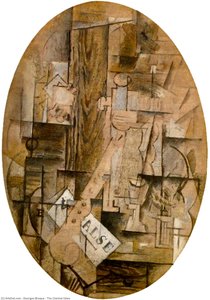
      The Clarinet Valse (1912) by Georges Braque
      #21

      The Clarinet Valse

      1912

      To gaze upon Georges Braque’s 1912 masterpiece, The Clarinet Valse, is to step into a world where the boundaries between sound and sight begin to dissolve. This is…

      Nagystill élet harpával és violinnal (1912) by Georges Braque
      #22

      Nagystill élet harpával és violinnal

      1912

      A modern élet töredelmes látomása Georges Braque 1912-es alkotása, a Nagystill élet harpával és violinnal, egy olyan kulcsfontosságú mű, amely az analitikus kubizmus csúcspontját példázza. Ez nem egy…

      Large nude (1908) by Georges Braque
      #23

      Large nude

      1908

      A Glimpse into Early Modern Sensuality: Georges Braque’s *Large Nude* (1908) This captivating painting by Georges Braque, created in 1908, offers a compelling window into the artistic ferment…

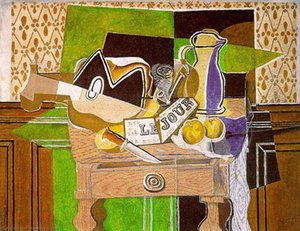
      Still-Life Le Jour (1929) by Georges Braque
      #24

      Still-Life Le Jour

      1929

      Georges Braque’s “Still Life Le Jour,” painted in 1929, stands as a cornerstone of Fauvist art—a movement that irrevocably altered the course of twentieth-century painting. More than just…

      A metronóm (1909) by Georges Braque
      #25

      A metronóm

      1909 · Statens Museum for Kunst

      A metronóm a bal felső sarokban helyezkedik el, oker és sienna árnyalatú piramidális súlyként. Fa házát trapezos felületekre bontották, amelyek átfedik egy mandola szélét. Egy vastag, íves X…

      Bottle, Glass, and Newspaper (1914) by Georges Braque
      #26

      Bottle, Glass, and Newspaper

      1914

      In Georges Braque’s 1914 masterpiece, Bottle, Glass, and Newspaper, the boundaries between reality and representation dissolve into a captivating visual conversation. This work is not merely a depiction…

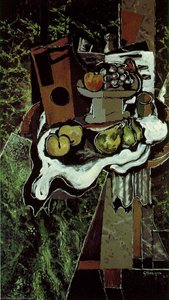
      Plums, Pears, Nuts and Knife (1926) by Georges Braque
      #27

      Plums, Pears, Nuts and Knife

      1926 · The Phillips Collection

      In this 1926 oil on canvas, we find a composition that feels remarkably intimate, as if we have just stepped into a private moment of stillness. The subject…

      L'Estaque (1906) by Georges Braque
      #28

      L'Estaque

      1906

      In the sun-drenched landscape of 1906, Georges Braque captured something far more profound than a mere Mediterranean vista; he captured the very moment art began to break free…

      Bottle and Fishes (1910) by Georges Braque
      #29

      Bottle and Fishes

      1910

      In the quiet revolution of early twentieth-century modernism, few works capture the intellectual tension between reality and perception as poignantly as Georges Braque’s “Bottle and Fishes.” Executed around…

      Still Life with Guitar (1935) by Georges Braque
      #30

      Still Life with Guitar

      1935

      In the quietude of 1935, Georges Braque captured a moment of profound stillness that transcends the simple arrangement of domestic objects. Still Life with Guitar is not merely…

      Still Life with Grapes (1918) by Georges Braque
      #31

      Still Life with Grapes

      1918

      A Fragmented Reflection of Modernity In 1918, as the world emerged from the profound shadows of the Great War, Georges Braque was busy redefining the very essence of…

      Két madár (1955) by Georges Braque
      #32

      Két madár

      1955 · Tel Aviv Művészeti Múzeum

      Georges Braque „Két madár” című műve, amely 1955-ben készült, nem csupán madáralakok ábrázolása; az a művészeti forradalom tömörített esszenciája, amely a 20-as évek elejétől a közepéig Franciaországban zajlott.…

      Fruitdish and Glass (1912) by Georges Braque
      #33

      Fruitdish and Glass

      1912

      Georges Braque’s Fruitdish and Glass stands as a pivotal work in the history of art, marking a significant milestone in the development of Cubism. Created in 1912, this…

      Still Life: The Table (1928) by Georges Braque
      #34

      Still Life: The Table

      1928

      Georges Braque’s “Still Life: The Table,” painted in 1928, isn't merely a depiction of objects; it’s an invitation into a carefully constructed world of fragmented perception and deliberate…

      Portrait of a Woman (1911) by Georges Braque
      #35

      Portrait of a Woman

      1911

      In the annals of modern art, few moments are as transformative as the birth of Cubism, and few works capture this seismic shift with such intimate grace as…

      Still Life with a Guitar (1919) by Georges Braque
      #36

      Still Life with a Guitar

      1919

      Georges Braque's "Still Life with a Guitar," painted in 1919, isn’t merely a depiction of objects; it’s a profound exploration of perception and the very nature of representation.…

      Fruit Dish, Ace of Clubs (1913) by Georges Braque
      #37

      Fruit Dish, Ace of Clubs

      1913

      A Cubist Still Life: Deconstructing Reality in Braque’s ‘Fruit Dish, Ace of Clubs’ Georges Braque's *Fruit Dish, Ace of Clubs*, painted in 1913, is a quintessential example of…

      Leaves in color of light (1953) by Georges Braque
      #38

      Leaves in color of light

      1953

      A Symphony of Verdant Light To gaze upon Georges Braque’s Leaves, Color, Light is to step into a quiet sanctuary of color and form. Created during the artist's…

      Portuguese (1911) by Georges Braque
      #39

      Portuguese

      1911

      In the quiet, fractured landscape of 1911, Georges Braque achieved something far more profound than a mere depiction of a musician; he captured the very vibration of sound…

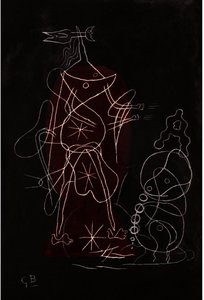
      Persephone by Georges Braque
      #40

      Persephone

      The Fragmented Echo of Myth In the quiet, striking depths of Georges Braque’s Persephone, we encounter more than just a depiction of a Greek deity; we witness the…

      Landscape by Georges Braque
      #41

      Landscape

      A Pivotal Moment in Modernity In 1906, the tranquil hills of L’Estaque became the stage for a quiet revolution that would forever alter the trajectory of Western art.…

      At Sunset, Bird XVI (1958) by Georges Braque
      #42

      At Sunset, Bird XVI

      1958

      In the quiet, evocative depths of Georges Braque’s "At Sunset, Bird XVI," we encounter a moment where the boundaries between the physical world and abstract emotion begin to…

      Liliomok a pohárban by Georges Braque
      #43

      Liliomok a pohárban

      Georges Braque „Liliomok a pohárban” című alkotása a kubizmus transzformatív erejének élő bizonyítékaként áll előttünk. Ma már a kiváló minőségű olajfestmény-reprodukciók megfizethető lehetőséget biztosítanak arra, hogy személyesen is…

      Nature Morte (1926) by Georges Braque
      #44

      Nature Morte

      1926 · Art Gallery of Hamilton

      Georges Braque’s “Nature Morte,” painted in 1926, stands as a cornerstone of Cubist exploration and a testament to the artist's profound engagement with visual perception. More than just…

      Dead nature by Georges Braque
      #45

      Dead nature

      To gaze upon Georges Braque’s “Dead Nature” is to witness a profound moment of stillness within the turbulent currents of modern art history. Created in 1930, this work…

      Still Life on a Table Gillette (1914) by Georges Braque
      #48

      Still Life on a Table Gillette

      1914

      Georges Braque’s Still Life on a Table Gillette: A Fragmented Reflection of Modern Consciousness Still Life on a Table Gillette by Georges Braque stands as a cornerstone of…

      Portrait of a woman 1 by Georges Braque
      #49

      Portrait of a woman 1

      To stand before Georges Braque’s "Portrait of a Woman 1" is to witness the very moment the mirror of traditional art was shattered and reassembled into something far…

      Big Nude (1908) by Georges Braque
      #50

      Big Nude

      1908

      In the annals of modern art, few moments are as transformative as the birth of Cubism, and few works capture this seismic shift as viscerally as Georges Braque’s…

      Still Life with a Violin (1911) by Georges Braque
      #51

      Still Life with a Violin

      1911

      To gaze upon Georges Braque’s “Still Life with a Violin,” painted in the transformative year of 1911, is to witness the very moment the mirror of traditional art…

      Factory of Rio Tinto in the L'estanque by Georges Braque
      #52

      Factory of Rio Tinto in the L'estanque

      To gaze upon Georges Braque’s Factory of Rio Tinto in the L'estanque is to witness the very moment the mirror of traditional art was shattered and reassembled into…

      Ceiling: The Birds (1953) by Georges Braque
      #53

      Ceiling: The Birds

      1953

      High above the floor of the Salle Henri II in the Louvre, a monumental vision unfolds within an oval frame. The air feels thick with the weight of…

      Seated woman 1 by Georges Braque
      #54

      Seated woman 1

      The studio overlooks the Normandy coast, yet the view is broken into shards. A woman sits at her easel, her form caught in a web of grey planes…

      Guitar ''Program statue d'epouvante'' (1913) by Georges Braque
      #55

      Guitar ''Program statue d'epouvante''

      1913

      A Cubist Still Life: Deconstructing Form in Braque’s ‘Guitar ''Program statue d'epouvante''’ Georges Braque’s *Guitar ''Program statue d'epouvante''* (1913) is a pivotal example of Analytical Cubism, showcasing the…

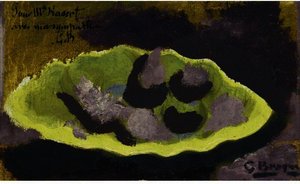
      Citromok, húmok és egy gyümölcstál (1927) by Georges Braque
      #56

      Citromok, húmok és egy gyümölcstál

      1927 · The Phillips Collection

      A fény megcsapja egy gyümölcstál szegélyét, feltárva egy olyan világot, amelyben a tárgyak a csendes fragmentáció állapotában léteznek. Ebben az 1927-es kompozícióban a citromok, a húmok és egy…

      Ceiling: The Birds (1953) by Georges Braque
      #58

      Ceiling: The Birds

      1953

      To stand beneath this oval expanse is to witness a moment where the heavy weight of architecture dissolves into something far more fluid. Created between 1952 and 1953,…

      Színház a Louvre tetejéhez by Georges Braque
      #59

      Színház a Louvre tetejéhez

      Georges Braque's "Study for the Roof of Louvre," a captivating exploration of avian forms and celestial wonder, transcends mere representation to become a profound meditation on space, light,…

      Churth at Carrieres Saint-Denis (1909) by Georges Braque
      #60

      Churth at Carrieres Saint-Denis

      1909

      The painting is a depiction of a village with buildings and stairs. The scene features a muted palette dominated by earthy tones—greens, yellows, and browns—creating an atmosphere of…

      The Round Table (1929) by Georges Braque
      #61

      The Round Table

      1929

      Georges Braque’s “The Round Table”: A Dialogue Between Tradition and Innovation Subject Matter and Composition: Cubist Style and Technique: Historical Context – The Birth of Cubism: Symbolic Resonance…

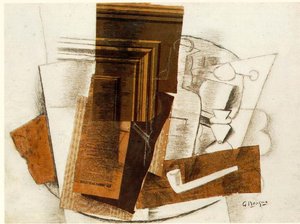
      Glass, Pipe and Playing Cards (1918) by Georges Braque
      #62

      Glass, Pipe and Playing Cards

      1918 · Des Moines Art Center

      A Study in Fragmented Reality Glass, Pipe and Playing Cards presents us with a quiet, intellectual puzzle. At first glance, one might see only the remnants of a…

      Landscape at L'Estaque (1907) by Georges Braque
      #63

      Landscape at L'Estaque

      1907

      In the annals of modern art, few moments capture the raw, unbridled energy of a revolution quite like Georges Braque’s Landscape at L'Estaque. Painted in 1907, this oil…

      Yellow Seacoast by Georges Braque
      #64

      Yellow Seacoast

      In the quiet evolution of modern art, few works capture the delicate balance between structural revolution and serene observation as masterfully as Georges Braque’s Yellow Seacoast. This evocative…

      Pedestal Table (1913) by Georges Braque
      #66

      Pedestal Table

      1913

      The painting Pedestal Table is a collage that presents a seemingly chaotic arrangement of various objects. Within the composition, a vase is positioned in the middle of the…

      Still Life with Grapes and Clarinet (1927) by Georges Braque
      #67

      Still Life with Grapes and Clarinet

      1927 · The Phillips Collection

      The eye wanders across a surface where wood grain and marble appear to ripple through layers of oil paint. A clarinet rests within this arrangement, its dark, slender…

      Woman with a Mandolin (1910) by Georges Braque
      #68

      Woman with a Mandolin

      1910

      In the quiet revolution of early twentieth-century modernism, few works capture the seismic shift in human perception as profoundly as Georges Braque’s Woman with a Mandolin. Created in…

      Kártyák és dobók (1914) by Georges Braque
      #69

      Kártyák és dobók

      1914 · Museo Nacional Centro de Arte Reina Sofía

      A vásznon alkotott olajfestmény, Kártyák és dobók, egy ovális formába zárt kompozícióval hívja fel magunkra figyelmünket, melyet egy függőleges vonalakkal jelölt, sötét, téglalap alakú háttér foglal össze. A…

      White Bird by Georges Braque
      #70

      White Bird

      In the vast landscape of early twentieth-century modernism, few works possess the quiet, arresting power of Georges Braque’s “White Bird.” To gaze upon this piece is to witness…

      Port of La Ciotat (1907) by Georges Braque
      #71

      Port of La Ciotat

      1907

      A Harbor in Fragments The water at La Ciotat holds a heavy, fractured light. In this 1907 scene, sailboats and yachts drift through a landscape broken into geometric…

      Tithonos by Georges Braque
      #72

      Tithonos

      In the quiet evolution of modernism, few moments are as profound as the emergence of Analytical Cubism, and few works capture this seismic shift with such poetic restraint…

      Bottle (1914) by Georges Braque
      #73

      Bottle

      1914

      In this 1914 work, we find ourselves looking at a scene that has been carefully dismantled and reassembled. The composition centers on a bowl and various bottles, yet…

      Still Life with a Pair of Banderillas (1911) by Georges Braque
      #74

      Still Life with a Pair of Banderillas

      1911

      In this 1911 oil on canvas, the surface is occupied by a collection of everyday items arranged upon a dining table and near a chair. Two banderillas, used…

      A Table Grise by Georges Braque
      #75

      A Table Grise

      A Window Into Cubist Still Life: Georges Braque’s “A Table Grise” Georges Braque's "A Table Grise" (1930) isn’t merely a depiction of an arrangement; it’s a carefully constructed…

      Violin and Glass (1913) by Georges Braque
      #76

      Violin and Glass

      1913 · Kunstmuseum Basel

      In this 1913 composition, we find ourselves observing a quiet arrangement of everyday objects that have been carefully deconstructed. A violin rests upon a wooden bow, positioned near…

      Nature Morte a la Guitare (1938) by Georges Braque
      #77

      Nature Morte a la Guitare

      1938

      The scene unfolds through a fractured lens, where the boundaries between objects and space dissolve into a rhythmic dance of planes. A guitar neck and body emerge from…

      Saint-Pol Roux by Georges Braque
      #78

      Saint-Pol Roux

      The composition is defined by a stark, graphic tension between deep black silhouettes and a cream-colored ground. A profile face, rendered as a solid dark form, is integrated…

      The Violin Valse (1913) by Georges Braque
      #79

      The Violin Valse

      1913

      Created in 1913, The Violin Valse is a still life painting that utilizes charcoal, oil, and canvas. The artwork features the contour of a violin, including its f-holes…

      Viaduct At L'estaque. Le Viadue De L'estaque by Georges Braque
      #80

      Viaduct At L'estaque. Le Viadue De L'estaque

      Georges Braque’s “Viaduct At L’Estaque,” painted in 1907, stands as a pivotal moment in the burgeoning Cubist movement—a bold assertion of artistic innovation that simultaneously honors and departs…

      untitled by Georges Braque
      #81

      untitled

      In the quiet revolution that redefined the boundaries of modern vision, Georges Braque’s “untitled (7718)” emerges as a profound meditation on the nature of sight itself. This seminal…

      untitled (928) by Georges Braque
      #83

      untitled (928)

      In the realm of modern art, few moments are as profoundly transformative as the birth of Cubism, and Georges Braque’s “untitled (928)” stands as a breathtaking testament to…

      The Painter and His Model (1939) by Georges Braque
      #84

      The Painter and His Model

      1939

      In the quiet, contemplative atmosphere of 1939, Georges Braque captured more than just a moment in time; he captured the very essence of perception itself. The Painter and…

      embattled head by Georges Braque
      #85

      embattled head

      In the quiet intensity of Georges Braque’s embattled head, we encounter a profound meditation on the human condition, captured through the radical lens of Cubist innovation. Executed in…

      Pitchet, Glass And Lemons by Georges Braque
      #86

      Pitchet, Glass And Lemons

      Georges Braque’s 1942 painting, “Pitchet, Glass and Lemons,” isn’t merely a depiction of everyday objects; it’s a profound exploration of perception itself. Born in Argenteuil, France, in 1882,…

      untitled (3508) by Georges Braque
      #87

      untitled (3508)

      The painting features a guitarist playing an instrument set against a red background. The scene depicts a crowd, with several individuals visible throughout the composition.

      L'Estaque (1906) by Georges Braque
      #88

      L'Estaque

      1906

      In the quiet landscape of 1906, a profound transformation was taking place within the confines of a canvas. Georges Braque’s L'Estaque is far more than a mere depiction…

      Terrace Of Hotel Mistral by Georges Braque
      #89

      Terrace Of Hotel Mistral

      The painting Terrace Of Hotel Mistral captures a sunlit scene featuring a group of trees positioned in front of the hotel. Some trees appear closer to the foreground,…

      Still Life with Ace of Hearts (1914) by Georges Braque
      #90

      Still Life with Ace of Hearts

      1914

      To stand before Georges Braque’s Still Life with Ace of Hearts is to step directly into the crucible of early 20th-century modernism. This painting, executed in 1914, is…

      The large trees by Georges Braque
      #91

      The large trees

      In the quiet, sun-dappled groves of the French countryside, Georges Braque captured something far more profound than a mere landscape; he captured the very pulse of nature. “The…

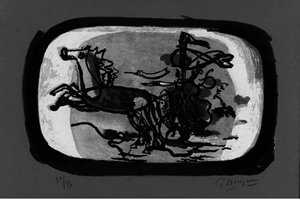
      The Chariot II by Georges Braque
      #92

      The Chariot II

      In The Chariot II, we encounter a profound exploration of movement and structural deconstruction, a piece that serves as a window into the radical shifts of early twentieth-century…

      Head Of A Woman by Georges Braque
      #93

      Head Of A Woman

      A Fragmented Gaze: Exploring Braque’s “Head of a Woman” Georges Braque’s “Head of a Woman” is a compelling example of Analytical Cubism, a revolutionary style he pioneered alongside…

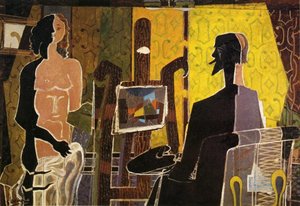
      The Studio (III) (1949) by Georges Braque
      #94

      The Studio (III)

      1949

      The painting The Studio (III), executed by Georges Braque in 1949, presents a room viewed through a fractured lens. The composition is built from geometric planes, primarily rectangular…

      Landscape at L'Estaque (1906) by Georges Braque
      #95

      Landscape at L'Estaque

      1906

      In the quiet coastal reaches of Provence, where the Mediterranean sun warms the earth, Georges Braque captured a moment that would forever alter the trajectory of Western art.…

      The Bottle of Rum (1914) by Georges Braque
      #96

      The Bottle of Rum

      1914

      In the quiet, revolutionary atmosphere of 1914, Georges Braque captured more than just a still life; he captured the very fracturing of modern perception. The Bottle of Rum…

      The Birds (1953) by Georges Braque
      #97

      The Birds

      1953

      Georges Braque’s “The Birds”: A Symphony of Geometric Abstraction “The Birds,” completed in 1953, stands as a testament to Georges Braque's unwavering commitment to Cubist principles even amidst…

      untitled (9288) by Georges Braque
      #98

      untitled (9288)

      Georges Braque’s “untitled (9288)” stands as a testament to the transformative power of artistic experimentation during the early years of the 20th century. Executed in 1974, this photolithograph…

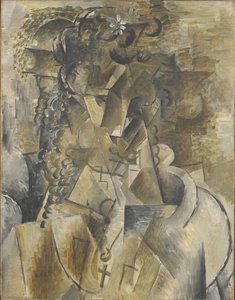
      Girl with a Cross (1911) by Georges Braque
      #99

      Girl with a Cross

      1911 · Kimbell Art Museum

      In the quiet, fractured landscape of Georges Braque’s 1911 masterpiece, Girl with a Cross, the viewer is invited into a world where reality is not merely observed, but…

      Guitar and Still Life on a Guéridon (1922) by Georges Braque
      #100

      Guitar and Still Life on a Guéridon

      1922

      A Moment Frozen in Time: Georges Braque’s “Guitar and Still Life on a Guéridon” Georges Braque's "Guitar and Still Life on a Guéridon" isn’t merely a depiction of…

      Georges Braque's canvases, period by period

      What Georges Braque painted most

      The four subjects that return most often on these canvases, each with its best-loved example.

      Where Georges Braque's canvases hang

      The 8 museums that hold the most of the paintings on this page.

      Museum City Works by Georges Braque Paintings from this list
      The Phillips Collection, Washington, D.C.The Phillips Collection Washington, D.C. 11 Plums, Pears, Nuts and Knife, Citromok, húmok és egy gyümölcstál, Still Life with Grapes and Clarinet
      Centre Pompidou, PárizsCentre Pompidou Párizs 4 A Duett (Le Duo), A öböl, Les Lecques, Little Bay at La Ciotat (also known as Cove at La Ciotat)
      Art Institute of Chicago, ChicagoArt Institute of Chicago Chicago 5 Harbor in Normandy, Still Life with Glass, Dice, Newspaper and Playing Card
      Statens Museum for Kunst, KoppenhágaStatens Museum for Kunst Koppenhága 8 A metronóm
      Kunstmuseum Basel, BázlKunstmuseum Basel Bázl 5 Violin and Glass
      Kunstsammlung Nordrhein-Westfalen, DüsseldorfKunstsammlung Nordrhein-Westfalen Düsseldorf 2 Still life with fruit bowl, bottle and mandolin (Nature morte au compotier, bouteille et mandoline)
      Tate Gallery, LondonTate Gallery London 1 Mandolina
      Solomon R. Guggenheim Múzeum, New YorkSolomon R. Guggenheim Múzeum New York 1 Szimfonikus húszaszék és paletta

      Georges Braque's best-loved canvas of each decade

      1. 1900s
        Harbor in Normandy (1909) by Georges Braque
        Canvas 4 of 100

        Harbor in Normandy

        Age 18 – 27 · Art Institute of Chicago

        A Masterpiece of Cubist Innovation Georges Braque's "Harbor in Normandy" (1909) is a captivating example of early Cubism, showcasing the artist’s groundbreaking approach to form and perspective. This…

      2. 1910s
        Mandolina (1910) by Georges Braque
        Ranked 1 of 100

        Mandolina

        Age 28 – 37 · Tate Gallery

        Georges Braque és az Analitikus Kubizmus Személyében Megmutatkozó „Mandola” A Georges Braque által 1910-ben megalkotott „Mandola”, egy mérföldkövét jelentő művért képvisel az analitikus kubizmus mozgalom keretében – egy…

      3. 1920s
        Still-Life Le Jour (1929) by Georges Braque
        Ranked 24 of 100

        Still-Life Le Jour

        Age 38 – 47

        Georges Braque’s “Still Life Le Jour,” painted in 1929, stands as a cornerstone of Fauvist art—a movement that irrevocably altered the course of twentieth-century painting. More than just…

      4. 1930s
        A Duett (Le Duo) (1937) by Georges Braque
        Ranked 8 of 100

        A Duett (Le Duo)

        Age 48 – 57 · Centre Pompidou

        A geometría és az elegancia szimfóniája 1937 csendjében Georges Braque valamineg mást örökített be, mint egy egyszerű zenei pillanatot; ő megörökítette a harmonikus párbeszéd legmélyebb lényegét. A Duett…

      5. 1940s
        The Studio (III) (1949) by Georges Braque
        Ranked 94 of 100

        The Studio (III)

        Age 58 – 67

        The painting The Studio (III), executed by Georges Braque in 1949, presents a room viewed through a fractured lens. The composition is built from geometric planes, primarily rectangular…

      6. 1950s
        Két madár (1955) by Georges Braque
        32 of 100

        Két madár

        Age 68 – 77 · Tel Aviv Művészeti Múzeum

        Georges Braque „Két madár” című műve, amely 1955-ben készült, nem csupán madáralakok ábrázolása; az a művészeti forradalom tömörített esszenciája, amely a 20-as évek elejétől a közepéig Franciaországban zajlott.…

      About Georges Braque's canvases: your questions answered

      What is the best-known painting by Georges Braque?Read the answer

      Mandolina (1910), Tate Gallery, London. Man with a Guitar (1914) and Hátelek az Éstákén follow.

      What age was Georges Braque when Mandolina was painted?Read the answer

      Georges Braque, born in 1882, was 28 years old: Mandolina dates from 1910.

      What are the 10 most famous paintings by Georges Braque?Read the answer

      Mandolina, Man with a Guitar, Hátelek az Éstákén, Harbor in Normandy, Női Olvasó, Szimfonikus húszaszék és paletta, A Múzsák, A Duett (Le Duo), Nő egy guitárral and Heracles. Each canvas in the ranking above comes with its year and its museum.

      How many works did Georges Braque paint in all?Read the answer

      700 works by Georges Braque are in our catalogue, dated 1906 to 1958.

      Where can I see Georges Braque's most famous canvases?Read the answer

      Mostly in The Phillips Collection (Washington, D.C.), Centre Pompidou (Párizs) and Art Institute of Chicago (Chicago); the list above names each museum and its canvases.

      When did Georges Braque paint the best-loved canvases?Read the answer

      In 1910s, which gave 37 of the 100 works on this page, Mandolina among them.

      Which are Georges Braque's earliest and latest famous canvases?Read the answer

      The earliest canvas here is A öböl, Les Lecques (1906); the latest is At Sunset, Bird XVI (1958).

      What did Georges Braque paint most often?Read the answer

      Geometric forms (20), Geometric (14) and Geometric shapes (12), across the 100 works on this page.

      Which medium did Georges Braque paint in most often?Read the answer

      Oil On Canvas, used in 49 of the 100 works on this page.

      Which movement is Georges Braque's painting part of?Read the answer

      Kubizmus, as the canvases on this page show.

      Which Georges Braque canvases hang at the The Phillips Collection?Read the answer

      The The Phillips Collection, Washington, D.C. holds 3 of the works on this page, among them Plums, Pears, Nuts and Knife, Citromok, húmok és egy gyümölcstál and Still Life with Grapes and Clarinet.

      Georges Braque: a life in paint

      Korai élet, család és képviselet

      Georges Braque 1882-ben született Argenteuil-ben, Franciaországban. Korai éveket Le Havre-ban töltötte, egy olyan háztartásban, amelyet a dekoráció és a színek gyakorlatias világága határozott meg. Egy házfestőből és dekoratőrből származó család tagjaként már fiatal korától fogva a szakmája haptikus valóságában merült el. Ez a nevelés olyan technikai tudás alapját feleltette meg, amely később meghatározta megközelítését a vászon felé.

      Mielőtt a finomművészetek felé fordult volna, családtagai etabblált útját követte, és házfestőként és dekoratőrként szakképzést fogadott magát. Ez a fizikai munka olyan anyagokról és a felületek fizikai tulajdonságairakról kialakított speciális megértést impartált bele, amely később meghatározóvá vált. Ez a gyakorlati tapasztalat megalapozott nézetet adott arról, hogyan lépnek kapcsolatba a pigmentek a különböző textúrákkal, egy olyan érzékenység, amely végül megkülönböztette későbbi, anyaghasználatukra fókuszált kísérleteit.

      A szakmából a formális tanulmányok felé való átmenet 1902-ben vitte őt Párizsba. Itt folytatta tanulmányait az Académie Humbert-en, ahol az akadémiai fegyelem révén törekedett veleszületett művészi ösztöneinek finomítására. Ez a hivatalos oktatás szükséges keretet biztosított fejlődő látásmódjához, áthidalva a különbságot a festék manuális alkalmazása és a kompozíció intellektuális megvalósítása között.

      A fauvista korszak és Cézanne hatása

      Georges Braque pályájának korai éveit még az impresszionizmus és a posztimpresszionizmus lenyugvó árnyékai formálták. Első kísérletei még a fény és a légkör vergényes pillanatainak megörökítésére irányultak, ám egy időn belül egy mélyebb, strukturális éhség kezdett megnyilvánulni művészetében. 1905-re Gérez Braque már a fauvizmus alapelvei felé fordult, és az érzelmek kifejezésére az intenzívebb, nem természetbarát színek használatáta fogadott be. Ez a korszak a puszta megfigyelésről való távozását jelente, mivel a művész a színek kifejezző erejét kezdte előtérbe helyezni a tárgyak szó szerinti ábrázolása helyett.

      Ez az új, színes szabadság egy elengedhetetlen támaszt talált Paul Cézanne művészetében. Georges Braque megvonzotta őt az a módszer, ahogyan Cézanne szilárd struktúrákat és tudatos színelméletet alkalmazott a vizuális mező rendszerezésére. Pont az a találkozás a fauvista színhasználat és a Cézanne-i geometria között, amely meghatározta a művész radikálisabb látásmódjába való átmenetelét. Georges Braque a színei érzelmi intenzitását egyfajta építészeti állandossággal próbálta összehangolni.

      Ennek a szintézisnek a gyümölcsei láthatóak az 1908-as alkotásában, a Houses at L'Estaque című festményben. Ebben a műben a táj már nem a lágy impressziók gyűjteménye, hanem színes, eltolt sílaki és geometrikus formák sorozata. Cézanne hatása itt megkérdésezhetetlen, hiszen a tereget az esszenciális volumentek reduzálja. Georges Braque elkezdte lebontani a táj festészetének hagyományos perspektíváját, és helyébe egy fragmentált, strukturált valóságot helyezett, amely a világ zugtalan formáját helyezte a középpontba.

      A kubizmus fejlődése

      1907 és 1914 között Paris a vizuális átalakulás színtere lett, amelyet Georges Braque és Pablo Picasso együttműködése határozott meg. Ez a partnerség a fauvizmus érzelmi intenzitásáról a formák inkább szellemi, gondolkodásmódos vizsgálata felé mozdult el. Kidolgozták az analitikus kubizmust, egy olyan módszert, amely a tárgyakat fragmentált, geometrikus formákra dissektálta. Ahelyett, hogy a háromdimenziós tér illúzióját próbálták volna megmásolni, a tárgy totalitását akarták ábrázolni azáltal, hogy egyszerre több nézetpontot is bemutatnak. Ez a megközelítés leromolta a hagyományos perspektíva szabályait, és helyébe egy síkokból és vonalakból álló, összetett rendszert helyezett.

      Az 1912-es évek körül a mozgalom jelentős átalakuláson ment keresztül, a szimbolikus szintű átmenet a szimbolikus kubizmus felé irányult. Ez a fázis már nem a formák felbontására, hanem az új képek felépítésére összpontosított a különböző elemek összeillesztésén keresztül. Georges Braque kulcsfontosságú innovátora volt ennek a váltásnak, hiszen ő alkotta meg az első papier collé technikát, amikor tapétát ragasztott egy rajz felé. A fizikai anyagok felületre való ragasztása kihívást állított a vászon határainak, megertebbítve a festményt egy önálló objektumként, nem pedig egy másik világba néző ablakként. Ebben az időszakban művészete a reprezentáció és a használt anyagok haptikus, megfogasztható valósága közötti kapcsolatra összpontosított.

      Technika és művészeti innováció

      Georges Braque a vászonhoz való viszonyulása a művei fizikai tulajdonságai iránti nyugtalanító kíváncsialomból fakadt. Az olajfestészet hagyományos határai túlra lépve olyan elemeket vezetett be, amelyek kihívták a mélység illúzióját. A valóságos világ tárgyait, például újságdarabokat, tapétákat és textíliákat integrálva felborította a képplapon állló egyértelmű perspektíva-rendszert. Ez az kísérletezés vezetett a papier collé technika kialakulásához, amely lehetővé tette számára, hogy a mindennapi élet textúráit közvetlenül a kompozíciói részeként alkalmazza. Célja az volt, hogy áthidalja a szakadékot a festett kép és a megfogható, hús-vér tárgy között.

      Technikai repertoárját egy taktilistus, szinte szobrászakti érzékiség jellemezte. Gyakran keverte a pigmenteket homokkal, hogy megváltoztassa a felület textúráját, olyan szemcsézettséget hozva létre, amely váratlan módon fogta vissza a fényt. Annak érdekében, hogy még inkább manipulálja a néző térbeli és anyagbeli érzékelését, kísérletezni kezdte a faerezet és a mármor vizuális mintáinak utánzó stílusával. Ez nem csupán dekoratív választás volt, hanem egy olyan módszer a különböző felületek fény és forma közötti interakciójának felfedezésére. Emellett stencillelt betűket is alkalmazott művein, egy olyan technika, amely grafikus dimenziót adott a kompozíciónak, és segített azt egy modern, olvasható valóságba ágyazni.

      • Fruit Dish and Glass (1912)
      • Violin and Pipe (1912)
      • Clarinet and Bottle of Rum on the Mantlepiece (1912)

      Háború és stilisztikai fejlődés

      A 1914-es első világháború kitörése hirtelen, erőszakos megszakítást hozott a kubizmus intellektuális szigorúságában. Georges Braque katonai szolgálatba vonulták, egy olyan időszak, amely alapjaiban változtatta meg mind fizikai jóllétét, mind alkotói temperamentumát. 1915-ben súlyos fejsérülést szenvedett a lövészárokban, egy olyan sérülés, amely ideiglenes kebutoltsággal jár, és amelyhez trepanációra volt szüksége a látásának visszaszerzéséhez. Ez a találkozás a sötétséggel kényszerű átalakulásra tervelte a perceptícióját. Az a merev, analitikus struktúra, amely korábbi éveit meghatározta, elkezdte lágyulni, az alkotási témáihoz való viszonyulása pedig személyesebb és líraisabb irányba veda el.

      A háborúból való visszatérés után a korábbi, Picassóval folytatott együttműködésből fakadó szigorú geometriai korlátok már nem jelentették egyedüli foglalkozási tárgyát. Stílusa fejlődve integrálta a klasszikus kompozíció elemeit, egy olyan egyensúly és harmónia érzetét keresve, amely jobban a fizikai világ talaján nyugszik. Elszállt a formák tisztán intellektuális felbontásától, és egy árnyaltabb, kontemplatív látásmódot fogadott el. Művészete már nem a tér felbontásáról szólott, hanem maguk a tárgyak csendes, békés atmoszférájáról.

      • Still Life with Playing Cards (1919)

      Kulcsfontosságú alkotások és meghatározó művek

      Georges Braque pályafutatása olyan specifikus kompozíciók vonalán húzódik végig, amelyek a gondolkodásmódja és technikája folyamatos változását jelzik. 1908-ban született meg az Houses at L'Estaque, amely színes, domboros, eltolt síkokból és geometrikus formákból építkezett, tükrözve a hagyományos perspektíva elhagyását. Az eksperimentalizmus ez időszaka 1910-ben folytatódott az Violin and Palette című művel, amely a papír és a mixed media használatával vizsgálta, hogyan lép interakcióba a szín a formával. 1911-re az irányfoka a tér felbontására irányult a Man with a Guitar című alkotásban, amely a kortársaival együtt kifejlesztett analitikus megközelítés tökéletes példája.

      Ahogy módszerei fejlődtek, az új anyagok bevezetése alapjaiban változtatta meg vásznal látható textúráját. A 1912-es Fruit Dish and Glass című alkotás megmutatta azt a transzíciót, amelyben a kolzáz technika révén a felismerhető tárgyak ismét bekerültek a kompozícióba. Még a háború okozta zűrzavarok után is alkotásai megtartották kapcsolatot korábbi kutatásaival. A 1918-ban megalkotott The Musician a személyes átalakulás egy idejét tükrözi, míg a jóval későbbi, 1955-ös festménye, az Two Birds, a választott témái alapvető tulajdonságai iránti folyamatos érdeledet mutatja.

      Örökség és maradandó hatás

      Amikor Georges Braque 1963. augusztus 31-én elhunyt, alapjaiban változtatott meg minden olyan felfogást, amely szerint a világot érzékeljük és ábrázoljuk. A kubizmus egyik megalakítójaként segített lebontani a hagyományos perspektíva hosszú távú dominanciáját, helyébe állítva egy fragmentált, többdimenziós valóságot. Művészete túlmutatott a természet egyszerű utánzásán; inkább az objektumok esszenciáját akarta megörökíteni a forma és a tér szigorú tanulmányozásán keresztül. Ez a paradigmaváltás végérintetleg átalakította a XX. század vizuális nyelvét.

      Hatása a művészet következő generációira mérhetetlen marad. A papier collé technika bevezetésével és a hétköznapi anyagok integrálásával a vászon és a hús-vér, megfogtouchatós világ közötti szakadékot gyógyította meg. Ez az innováció kihívást akadt a festészet határainak meglévő értelmezésére, utat nyitva a textúra és a materialitás későbbi felfedezéseinek. Még akkor is, amikor későbbi éveiben stílusát líraisabb és nyugodtabb témák felé mozdította el, a kubista alapok szerkezeti integritása folyamatosan jelen volt alkotásai mögött.

      • Houses at L'Estaque
      • Man with a Guitar
      • Fruit Dish and Glass
      • Violin and Pipe

      All 700 works by Georges Braque →