Műterem — Ingyenes világszerte történő szállítás — Szállítás: 2–6 hét
      Hans Arp, 1886 – 1966

      Hans Arp: A 100 legismertebb festménye

      Hans Arp összes festményei közül a Human Concretion (1935) a leghíresebb; a MoMA - Museum of Modern Art múzeumában található, New York városában. A közvetlen követőket Forest és Head with mustache (1926) alkotja. A Hans Arp katalógusában található 156 mű közül ezek a 100 a legelismertebbek, amelyeket dátummal, múzeummal és történetükkel mutatunk be.

      A rangsorolásunkat a népszerűségi pontszám határozza meg, amely az egyes művek kereséseit, látogatottságát és megrendeléseit ötvözi. Frissítve: október 2026.

      Hans Arp portréja
      Hans Arp · 1886 – 1966
      Született · meghalt
      1886 – 1966, Strasbourg
      Mozgalom
      Dadaism
      A katalógusban szereplő művek
      156
      Legnépszerűbb
      Human Concretion (1935)
      A legtöbb művel a
      Izraeli Múzeum

      Hans Arp 10 leghíresebb festménye

      Human Concretion (1935) szerzője Hans Arp
      1

      Human Concretion

      1935 · Photography · MoMA - Museum of Modern Art, New York

      In the hauntingly beautiful photograph "Human Concretion," we are invited into a monochromatic dreamscape where the boundaries between the physical and the abstract dissolve. Captured in 1935, this work serves as a profound meditation on the human essence, stripped of its individual identity to reveal something more primal and universal. The composition centers upon a series of smooth, rounded forms that suggest the presence of heads or torsos, yet they…

      Hans Arp festményei 11. helyezéstől 100. helyezésig

      Madarak az akváriumban (1920) szerzője Hans Arp
      #12

      Madarak az akváriumban

      1920 · MoMA - Museum of Modern Art

      Jean Baptiste Le Vieux – Oiseaux dans un Aquarium A francia származású Jean Baptiste Le Vieux művész alkotása, az „Oiseaux dans un Aquarium” egy különleges és néha zavaró…

      Sculpture de Silence, Corneille szerzője Hans Arp
      #32

      Sculpture de Silence, Corneille

      Galleria Civica di Arte Moderna e Contemporanea Torino

      Jean Arp's "Sculpture de Silence, Corneille," a remarkable piece from 1942 crafted in rose-colored limestone, transcends the boundaries of traditional sculpture. It isn’t merely an object occupying space;…

      A Nap körtevétele (1966) szerzője Hans Arp
      #37

      A Nap körtevétele

      1966 · Izraeli Múzeum

      A Nap Újrafordulása – Jean Baptiste Le Vieux Építkezése Jean Baptiste Le Vieux művének megismerésére való kíváncsi lehet az olvasó, egy olyan minimalista absztrakt alkotást, amely egy körös…

      Constellation szerzője Hans Arp
      #38

      Constellation

      A Celestial Dance: Exploring Jean (Hans) Arp’s *Constellation* This captivating artwork, *Constellation*, by Jean (Hans) Arp is a prime example of his pioneering contribution to abstract art. Executed…

      Alou with Talons szerzője Hans Arp
      #39

      Alou with Talons

      Ca' Pesaro - Nemzetközi Kortárs Művészeti Galéria

      Jean Arp’s “Alou with Talons,” created in 1942 during the tumultuous years of World War II, is more than just a sculpture; it's a distilled embodiment of the…

      Amit Hans Arp a legtöbbször festett

      A négy leggyakoribb motívum ezen a vásznon, mindegyik a legkedvesebb példájával.

      Hol kirakott Hans Arp vászonai

      A 7 olyan múzeum, amely a legtöbb ezen az oldalon szereplő festményet őrzi.

      Múzeumok Város Hans Arp művei Ebből a listából származó festmények
      Izraeli Múzeum, JeruzsálemIzraeli Múzeum Jeruzsálem 5 Meeting in the Egg (Rencontre dans l'oeuf), Untitled Project (for a rug or tapestry), Untitled Project
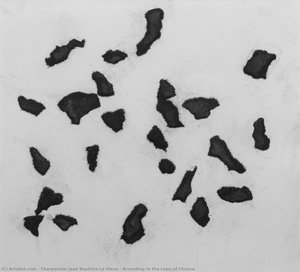
      Tate Modern, LondonTate Modern London 5 Moustaches, Constellation According to the Laws of Chance, According to the Laws of Chance
      MoMA - Museum of Modern Art, New YorkMoMA - Museum of Modern Art New York 2 Human Concretion, Madarak az akváriumban
      Musée d'Art Moderne et Contemporain de Strasbourg, StrasbourgMusée d'Art Moderne et Contemporain de Strasbourg Strasbourg 1 Cravates et tête ou Configuration au chef perdu
      Galleria Civica di Arte Moderna e Contemporanea Torino, TorinoGalleria Civica di Arte Moderna e Contemporanea Torino Torino 1 Sculpture de Silence, Corneille
      Ca' Pesaro - Nemzetközi Kortárs Művészeti Galéria, VelenceCa' Pesaro - Nemzetközi Kortárs Művészeti Galéria Velence 1 Alou with Talons
      Statens Museum for Kunst, KoppenhágaStatens Museum for Kunst Koppenhága 1 Untitled (198)

      Évezredenként: Hans Arp legmeghnomvábált vászonműve

      1. 1910s
      2. 1920s
      3. 1930s
        Human Concretion (1935) szerzője Hans Arp
        1 / 100

        Human Concretion

        Kor: 44 – 53 év · MoMA - Museum of Modern Art

        In the hauntingly beautiful photograph "Human Concretion," we are invited into a monochromatic dreamscape where the boundaries between the physical and the abstract dissolve. Captured in 1935, this…

      4. 1950s
      5. 1960s

      Válaszok Hans Arp festményeivel kapcsolatos kérdéseire

      Melyik Hans Arp leghíresebb festménye?Olvassda el a választ

      Human Concretion (1935), MoMA - Museum of Modern Art, New York. Utánuk Forest és Head with mustache (1926) következik.

      Hány éves volt Hans Arp, amikor Human Concretion készült?Olvassda el a választ

      Hans Arp, aki 1886 évfolyamán született, 49 éves volt: Human Concretion 1935 származik.

      Melyik tíz festményével a leghíresebb Hans Arp?Olvassda el a választ

      Human Concretion, Forest, Head with mustache, Meeting in the Egg (Rencontre dans l'oeuf), Untitled Project (for a rug or tapestry), Untitled Project, Human Concretion 2, Column of dream, Cut No. 10. Shadow Cloud és Nadir. A rangsorban szereplő vászlakok mindegyike tartalmazza a festvény évszámát és a kiállító múzeumát is.

      Hány ismert festménye van Hans Arp művésznek?Olvassda el a választ

      156 műve Hans Arp alkotása a katalógusunkban, 1914 és 1966 között.

      Mely múzeumokban található Hans Arp leghíresebb vászonműve?Olvassda el a választ

      Leginkább Izraeli Múzeum (Jeruzsálem), Tate Modern (London) és MoMA - Museum of Modern Art (New York) helyszíneken; a fenti lista tartalmazza az egyes múzeumokat és a hozzájuk tartozó vászonműveket.

      Mely években festette Hans Arp leghíresebb vásznényeit?Olvassda el a választ

      1920s időszakban, amely ezen az oldalon található 100 mű közül 6 alkotással szerepel, Head with mustache a válogatásban.

      Melyek Hans Arp híres vásznalai közül az első és az utolsó?Olvassda el a választ

      A legkorábbi vászon itt: Before my Birth (1914); a legutóbb pedig: The Sun Recircled (1966).

      Mely témakörök jelennek meg leggyakrabban Hans Arp festményeiben?Olvassda el a választ

      Animals (6), Abstract sculpture (5) és Men (4), a jelen oldalon található 100 műművészeti alkotás között.

      Mely művészeti irányba tartozik Hans Arp?Olvassda el a választ

      Dadaism, ahogy azt ezen az oldalon látható vásznemek is mutatják.

      Mit láthatok Hans Arp műveit a Izraeli Múzeum kiállتományában?Olvassda el a választ

      A Izraeli Múzeum, Jeruzsálem 5 műve közül rendelkezik ezen az oldalon, köztük ezekkel: Meeting in the Egg (Rencontre dans l'oeuf), Untitled Project (for a rug or tapestry) és Untitled Project.

      Hans Arp: a festő története

      A Life Forged Between Worlds: The Early Years of Jean Arp

      Born Hans Peter Wilhelm Arp in 1886 in the contested city of Strasbourg, a place oscillating between French and German identity, the artist who would become known as Jean Arp embodied a fascinating duality from his very beginnings. This geographical and cultural liminality profoundly shaped his artistic vision, instilling within him a sense of displacement and a questioning of fixed boundaries that would permeate his entire oeuvre. His parents – a French mother and a German father – unknowingly laid the foundation for an artist who consistently challenged categorization. Early studies at the École des Arts et Métiers in Strasbourg and later at the Weimarer Kunstschule in Germany provided Arp with a foundational artistic education, but it was the encouragement of his uncle, Carl Arp, a landscape painter, that truly ignited his passion. A move to Paris in 1908, attending the Académie Julian, further broadened his horizons, exposing him to the vibrant currents of the avant-garde. Yet, Strasbourg remained a potent memory – a city steeped in history and symbolic weight, forever influencing his artistic sensibility. This early period wasn’t merely about acquiring technique; it was about absorbing the complexities of identity and belonging, themes that would resonate throughout his life and work.

      Embracing Chaos: Dada and the Birth of Biomorphic Forms

      The outbreak of World War I proved a pivotal moment for Arp. Disillusioned by the senseless violence and the perceived failures of reason, he gravitated towards the burgeoning Dada movement around 1915. This wasn’t simply an aesthetic choice; it was a radical rejection of established norms, a defiant embrace of chaos as a response to a chaotic world. Arp found himself among a group of artists and intellectuals in neutral Switzerland – Hugo Ball, Tristan Tzara, Marcel Janco – who sought to dismantle traditional artistic conventions. He participated actively in exhibitions with the Moderne Bund, an early modern art alliance, and co-founded the Cologne Dada group in 1920 alongside Max Ernst and Alfred Grünwald. It was during this period that Arp began experimenting with chance operations, a technique reflecting Dada’s rejection of artistic control. His “chance collages,” created by dropping paper fragments onto a surface and adhering them where they fell, were revolutionary – an abdication of conscious design in favor of unpredictable outcomes. Simultaneously, he started to explore biomorphic forms—abstract shapes resembling organic life—which would become a defining characteristic of his work. These weren’t merely abstract designs; they hinted at hidden energies, the fundamental building blocks of existence, and a subconscious connection to nature. This exploration was significantly influenced by his profound artistic partnership with Sophie Taeuber-Arp, whom he married in 1922. Their collaborative projects were innovative and mutually inspiring, pushing the boundaries of both their practices.

      Surrealist Visions and Sculptural Explorations

      As Dada began to dissipate, Arp’s artistic trajectory led him towards Surrealism. His work was featured in the first surrealist exhibition at the Galerie Pierre in Paris in 1925, solidifying his connection to this movement that delved into the realm of dreams and the subconscious. However, Arp didn’t simply adopt Surrealism wholesale; he infused it with his own unique sensibility. He began a significant transition from relief sculptures to three-dimensional works, exploring organic abstraction in freestanding forms. The “Human Concretion” series emerged during this period – smooth, rounded sculptures that evoked ambiguous references to both the human form and natural objects. Arp’s material exploration was equally important. He experimented with marble, bronze, glass, and wood, each medium offering different textures and effects, allowing him to further refine his vision of organic abstraction. His biomorphic forms profoundly influenced the development of Surrealism, particularly its fascination with automatism and subconscious imagery. Arp wasn't interested in depicting recognizable objects; he sought to capture the essence of life itself – its growth, its fluidity, its inherent mystery.

      Legacy and Enduring Influence

      Jean Arp’s impact on 20th-century art is undeniable. His pioneering role in organic abstraction, his embrace of chance, and his exploration of biomorphic forms cemented his place as a pivotal figure in the avant-garde. Notable works like *Trousse d'un dada*, the *Dada Heads* series, *Human Concretion without Oval Bowl*, *Le Soleil recerclé*, and *The Three Graces* continue to captivate audiences with their elegant simplicity and profound symbolism. He received increasing recognition in the post-World War II era, culminating in the Grand Prize for Sculpture at the Venice Biennale in 1954, and major retrospective exhibitions at the Museum of Modern Art in New York (1958) and the Musée National d’Art Moderne in Paris (1962). His creation of a relief sculpture for the Harvard Graduate Center stands as a testament to his enduring legacy. Arp's emphasis on organic forms resonated with subsequent generations of artists, influencing movements like Abstract Expressionism and beyond. His embrace of chance operations continues to inspire those exploring randomness and unconventional creative methods. The collaborative work he shared with Sophie Taeuber-Arp is now recognized as some of the most significant contributions to the Dada movement, highlighting the power of artistic partnership. Jean Arp’s innovative approach, his willingness to challenge convention, and his unwavering commitment to exploring the fundamental forces of life ensure that his art will continue to inspire and provoke for generations to come.

      Minden 156 műmű Hans Arp alkotása →