Műterem — Ingyenes világszerte történő szállítás — Szállítás: 2–6 hét
      Thomas Couture, 1815 – 1879

      Thomas Couture: A 100 legismertebb festménye

      Thomas Couture összes festményei közül a The Romans of the Decadence a leghíresebb; a Musée d'Orsay múzeumában található, Párizs városában. A közvetlen követőket Romans of the Decadence (1847) és Lust for Gold (1844) alkotja. A Thomas Couture katalógusában található 221 mű közül ezek a 100 a legelismertebbek, amelyeket dátummal, múzeummal és történetükkel mutatunk be.

      A rangsorolásunkat a népszerűségi pontszám határozza meg, amely az egyes művek kereséseit, látogatottságát és megrendeléseit ötvözi. Frissítve: október 2026. Az oldalon található festmények bármelyike vászonra vászatra festett olajfestmény-másolatként, vagy az Ön által választott méretben készült minőségi giclée nyomatként rendelhető meg.

      Thomas Couture portréja
      Thomas Couture · 1815 – 1879
      Született · meghalt
      1815 – 1879, Senlis
      Mozgalom
      Academicism
      A katalógusban szereplő művek
      221
      Legnépszerűbb
      The Romans of the Decadence
      A legtöbb művel a
      Művészeti Múzeum, Boston

      Thomas Couture 10 leghíresebb festménye

      The Romans of the Decadence szerzője Thomas Couture
      1

      The Romans of the Decadence

      Oil On Canvas · Musée d'Orsay, Párizs

      The painting The Romans of the Decadence by Thomas Couture is a quintessential representation of the Academic art movement, which dominated the 19th century. This large-scale oil on canvas work, measuring 472 cm x 772 cm, was completed in 1847 and is now housed at the Musée d'Orsay in Paris. Historical Context The Academic art movement emerged as a response to the Romanticism that preceded it. It emphasized traditional forms…

      Romans of the Decadence (1847) szerzője Thomas Couture
      2

      Romans of the Decadence

      1847 · Oil On Canvas · Musée d'Orsay, Párizs

      In the hallowed, quiet corridors of the Musée d'Orsay, there exists a window into a world of fading glory, captured through the masterful lens of Thomas Couture. His 1847 masterpiece, Romans in Their Decadence, is far more than a mere historical tableau; it is a visceral exploration of an empire in its twilight. This colossal oil on canvas, measuring an imposing 466 x 773 cm, stands as an arresting testament…

      Lust for Gold (1844) szerzője Thomas Couture
      3

      Lust for Gold

      1844 · Oil On Canvas · Rijksmuseum, Amsterdam

      The air in the room feels heavy, thick with the scent of unwashed linen and the metallic tang of coin. A group of figures huddles around a table draped in a deep red cloth, their bodies pressing into a tight, claustrophobic circle. Light falls sharply across the scene, catching the pale curve of a woman's shoulder and the glint of yellow metal, while the rest of the room dissolves into…

      Reverie szerzője Thomas Couture
      5

      Reverie

      Oil On Canvas

      In this monochromatic portrait, we find ourselves drawn into a private moment of introspection. The subject, a young woman, is captured in a bust-length composition that feels deeply intimate. Her gaze is directed downward and slightly to the left, a posture that suggests a mind turned inward, perhaps lost in a memory or a quiet melancholy. The darkness of the background recedes, ensuring that the viewer's attention remains fixed upon…

      La Noblesse szerzője Thomas Couture
      6

      La Noblesse

      Charcoal

      This study reflects an academic approach that bridges the gap between classicism and romanticism. It prioritizes the exploration of light and shadow to establish volume, moving away from rigid, sterile rules toward a more intuitive method of execution. The work functions as a visual investigation into how symbolic elements—such as the tools of labor and the architecture of the throne—interact to convey a specific social or mythological concept. Through these…

      La commandite szerzője Thomas Couture
      8

      La commandite

      Oil On Canvas

      La commandite is an oil on canvas work by the French history painter and teacher Thomas Couture. Created about 1860-1869, the painting reflects the artist's established presence in the mid-nineteenth-century art world. Couture, born in Senlis, France, was a significant figure in the transition between Romanticism and Realism, known for his ability to bridge these movements through his instruction and his own historical compositions.

      The Prodigal Son (1850) szerzője Thomas Couture
      9

      The Prodigal Son

      1850 · Oil On Canvas · Walters Art Museum, Baltimore

      The heavy atmosphere of the scene centers on The Prodigal Son, a work by the French artist Thomas Couture. This painting, dating to 1850, captures a moment of profound emotional weight. It exists as a replica of a previous composition that once appeared before the public at the Paris Salon of 1841. The figures remain frozen in their dramatic tension, caught in a cycle of shadow and light that defines…

      Timon of Athens (1857) szerzője Thomas Couture
      10

      Timon of Athens

      1857 · Oil On Canvas · Wallace Collection, London

      The oil on canvas known as Timon of Athens emerges from the brush of Thomas Couture, a painter who captures a heavy, dramatic moment of human frailty. Created in 1857, this work presents a profound allegory of greed. The scene draws its lifeblood from the themes of Shakespeare's play, transforming a literary tragedy into a visual meditation on the corrupting nature of wealth. Every figure within the frame seems caught…

      Thomas Couture festményei 11. helyezéstől 100. helyezésig

      Drummer Boy (1857) szerzője Thomas Couture
      #11

      Drummer Boy

      1857 · Detroit Institute of Arts

      This impressively scaled oil on canvas, titled Drummer Boy, was executed by the French painter Thomas Couture in 1857. It belongs to the genre art tradition, focusing on…

      Készíttesse kézzel festve →
      A Zouave (1859) szerzője Thomas Couture
      #12

      A Zouave

      1859 · Yale University Art Gallery

      In this oil on canvas, titled A Zouave, the artist Thomas Couture presents a study of a single figure. The work is a painting that captures a soldier…

      Vidd ide a fényt a tédbe →
      Alice Ozy (1855) szerzője Thomas Couture
      #14

      Alice Ozy

      1855 · Toledo Művészeti Múzeum

      In this 1855 portrait, Thomas Couture presents us with Alice Ozy. The work captures a seated woman in a moment of quietude, a subject that allows the artist…

      Rendelje meg ezt a vászonat →
      Young Italian Girl (1877) szerzője Thomas Couture
      #43

      Young Italian Girl

      1877 · Bristol Museum - Art Gallery

      Thomas Couture’s Young Italian Girl, painted in 1877, immediately draws the viewer into its intimate sphere. It is a portrait that transcends mere likeness; it captures a moment…

      Készíttesse kézzel festve →
      Horace and Lydia (1843) szerzője Thomas Couture
      #45

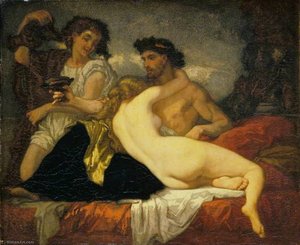
      Horace and Lydia

      1843 · Wallace Collection

      Thomas Couture’s Horace and Lydia, painted in 1843, invites the viewer into an intimate tableau steeped in the rich, enveloping warmth of red. This is not merely a…

      Rendelje meg ezt a vászonat →
      Caught by the Tide (1875) szerzője Thomas Couture
      #46

      Caught by the Tide

      1875 · National Gallery

      The oil painting depicts a group of three figures positioned upon a dark, jagged rock formation in the foreground. These figures are arranged in a triangular formation, creating…

      Rendelje meg ezt a vászonat →
      Horace and Lydia (1843) szerzője Thomas Couture
      #57

      Horace and Lydia

      1843 · Wallace Collection

      Thomas Couture's "Horace and Lydia," painted in 1843, is more than just a portrait; it’s a carefully constructed tableau brimming with unspoken narratives and a subtle defiance against…

      Vidd ide a fényt a tédbe →

      Amit Thomas Couture a legtöbbször festett

      A négy leggyakoribb motívum ezen a vásznon, mindegyik a legkedvesebb példájával.

      Hol kirakott Thomas Couture vászonai

      A 8 olyan múzeum, amely a legtöbb ezen az oldalon szereplő festményet őrzi.

      Múzeumok Város Thomas Couture művei Ebből a listából származó festmények
      Művészeti Múzeum, Boston, BostonMűvészeti Múzeum, Boston Boston 8 Two Soldiers, Nymph and Cupids, Head of a Woman in Profile
      Wallace Collection, LondonWallace Collection London 6 The Young Drummer, Timon of Athens, Harlequin and Pierrot
      Musée d'Orsay, PárizsMusée d'Orsay Párizs 6 The Romans of the Decadence, Romans of the Decadence, Romans of the Decadence (detail)
      Walters Art Museum, BaltimoreWalters Art Museum Baltimore 4 The Prodigal Son, Horace and Lydia, Daydreams
      National Gallery of Ireland, DublinNational Gallery of Ireland Dublin 3 A Sleeping Judge, La Peinture Réaliste, Pifferaro
      Rhode Island School of Design Museum of Art, ProvidenceRhode Island School of Design Museum of Art Providence 4 Gamin, The Little Confectioner
      Petit Palais, ParisPetit Palais Paris 3 Study Made After Jules Michelet, Detail Study for "Les Romains de la décadence": The Two Philosophers
      Bavári Állami Festırménygyűjtemények, MunchenBavári Állami Festırménygyűjtemények Munchen 2 Female Head (Study of a Model), Odalisque

      Évezredenként: Thomas Couture legmeghnomvábált vászonműve

      1. 1840s
        Romans of the Decadence (1847) szerzője Thomas Couture
        2. hely 100 közül

        Romans of the Decadence

        Kor: 25 – 34 év · Musée d'Orsay

        In the hallowed, quiet corridors of the Musée d'Orsay, there exists a window into a world of fading glory, captured through the masterful lens of Thomas Couture. His…

      2. 1850s
        The Young Drummer (1857) szerzője Thomas Couture
        4. hely 100 közül

        The Young Drummer

        Kor: 35 – 44 év · Wallace Collection

        The Young Drummer is an oil on canvas painting by the French artist Thomas Couture. Created in 1857, this work is also recognized by the alternative title Drummer…

      3. 1860s
        Nymph and Cupids (1860) szerzője Thomas Couture
        32. hely 100 közül

        Nymph and Cupids

        Kor: 45 – 54 év · Művészeti Múzeum, Boston
      4. 1870s
        Pifferaro (1877) szerzője Thomas Couture
        38. hely 100 közül

        Pifferaro

        Kor: 55 – 64 év · National Gallery of Ireland

      Válaszok Thomas Couture festményeivel kapcsolatos kérdéseire

      Melyik Thomas Couture leghíresebb festménye?Olvassda el a választ

      The Romans of the Decadence, Musée d'Orsay, Párizs. Utánuk Romans of the Decadence (1847) és Lust for Gold (1844) következik.

      Melyik tíz festményével a leghíresebb Thomas Couture?Olvassda el a választ

      The Romans of the Decadence, Romans of the Decadence, Lust for Gold, The Young Drummer, Reverie, La Noblesse, Portrait de jeune fille, La commandite, The Prodigal Son és Timon of Athens. A rangsorban szereplő vászlakok mindegyike tartalmazza a festvény évszámát és a kiállító múzeumát is.

      Hány ismert festménye van Thomas Couture művésznek?Olvassda el a választ

      221 műve Thomas Couture alkotása a katalógusunkban, 1840 és 1879 között.

      Mely múzeumokban található Thomas Couture leghíresebb vászonműve?Olvassda el a választ

      Leginkább Művészeti Múzeum, Boston (Boston), Wallace Collection (London) és Musée d'Orsay (Párizs) helyszíneken; a fenti lista tartalmazza az egyes múzeumokat és a hozzájuk tartozó vászonműveket.

      Mely években festette Thomas Couture leghíresebb vásznényeit?Olvassda el a választ

      1850s időszakban, amely ezen az oldalon található 100 mű közül 22 alkotással szerepel, The Young Drummer a válogatásban.

      Melyek Thomas Couture híres vásznalai közül az első és az utolsó?Olvassda el a választ

      A legkorábbi vászon itt: A Widow (1840); a legutóbb pedig: Le Petit Gilles (1879).

      Mely témakörök jelennek meg leggyakrabban Thomas Couture festményeiben?Olvassda el a választ

      Woman (10), Man (5) és Portraiture (5), a jelen oldalon található 100 műművészeti alkotás között.

      Milyen anyagokkal festett Thomas Couture általában?Olvassda el a választ

      Oil On Canvas, amely 18 darabban szerepel a ?>"> 100 műből ezen az oldalon.

      Mely művészeti irányba tartozik Thomas Couture?Olvassda el a választ

      Academicism és Romantic & realism, ahogy azt ezen az oldalon látható vásznemek is mutatják.

      Mit láthatok Thomas Couture műveit a Művészeti Múzeum, Boston kiállتományában?Olvassda el a választ

      A Művészeti Múzeum, Boston, Boston 7 műve közül rendelkezik ezen az oldalon, köztük ezekkel: Two Soldiers, Nymph and Cupids és Head of a Woman in Profile.

      Megrendelhetek egy kézzel festett másolatot Thomas Couture festményéről?Olvassda el a választ

      Igen. Az oldalon található minden festmény megrendelhető a saját oldalán, kézzel festett olajfestmény-másolatként vagy minőségi giclée nyomtatásként, a választott méretben.

      Thomas Couture: a festő története

      A Rebel in the Atelier: The Life and Legacy of Thomas Couture

      Thomas Couture, born in Senlis in 1815, stands as a fascinating bridge between the Romanticism of the early 19th century and the burgeoning Realism that would follow. His journey wasn’t one of immediate acclaim; instead, it was marked by persistent rejection from the prestigious Prix de Rome competition – an obstacle he skillfully transformed into fuel for his artistic independence. This determination ultimately led him to establish his own atelier, a sanctuary for artists seeking alternatives to the rigid structures of the École des Beaux-Arts, and profoundly shaped his unique approach to painting.

      The Decadence of Empires and a New Artistic Vision

      Couture’s career truly ignited with *Romans During the Decadence* (1847), a monumental work that caused a sensation at the Paris Salon. Far from a simple historical depiction, this painting served as a biting social commentary, drawing inspiration from the satirical writings of Juvenal. It presented a stark portrayal of Roman society’s moral decay and opulent excess, juxtaposing luxurious fabrics and classical ruins with figures embodying unrestrained indulgence. Couture masterfully employed tonal contrasts – rich dark hues punctuated by dramatic highlights – to amplify the painting's emotional impact and symbolic weight. This deliberate choice wasn’t merely about technical skill; it was a bold declaration about the state of civilization itself, resonating powerfully with contemporary audiences grappling with the changes sweeping across France. The success of *Romans During the Decadence* firmly established Couture as a leading artist and a formidable force within the art world.

      A Teacher of Titans: Shaping Future Generations

      Beyond his own artistic achievements, Couture’s influence extended profoundly through his role as an educator. He opened his atelier to a diverse group of aspiring artists, rejecting the rigid constraints of the École des Beaux-Arts and fostering an environment of experimentation and critical thinking. Among his most celebrated pupils were names that would become synonymous with modern art: Édouard Manet, whose revolutionary approach to painting owed much to Couture’s emphasis on tonal values and expressive brushwork; Henri Fantin-Latour, renowned for his still lifes and portraits of fellow artists; Pierre Puvis de Chavannes, a pioneer of Symbolism; and John La Farge, an innovator in stained glass. Couture's teaching methods were unconventional, encouraging students to develop their individual voices while grounding them in the fundamentals of draftsmanship and composition. He championed “quick painting,” anticipating techniques later embraced by the Impressionists, and stressed the importance of direct observation from life.

      Later Years and Enduring Influence

      In 1860, disillusioned with the Parisian art scene, Couture retreated to his hometown of Senlis, where he continued to teach and paint. He codified his artistic philosophy in *Méthode et entretiens d'atelier* (Method and Workshop Interviews), published in 1867—a treatise that offered a radical critique of academic dogma and advocated for a more intuitive and expressive approach to art-making. This work, later translated into English as *Conversations on Art Methods*, provided invaluable insights into his pedagogical principles and artistic beliefs. Though he faced criticism throughout his career for challenging established norms, Couture’s impact on the development of modern art is undeniable. He fostered a generation of artists who dared to break free from convention, paving the way for the radical innovations that would define the late 19th and early 20th centuries. His legacy endures not only through his own compelling paintings but also through the enduring influence he exerted on some of the most important figures in art history.

      Key Works

      • Romans During the Decadence (1847): Couture’s masterpiece, a searing critique of Roman society.
      • The Duel After Masked Ball: A dramatic depiction of violence and intrigue.
      • A Lawyer Going to Court: An example of his historical genre paintings.

      Additional Information

      * Born: Senlis, France (1815) * Died: Villiers-le-Bel, France (1879) * Notable Pupils: Édouard Manet, Henri Fantin-Latour, Pierre Puvis de Chavannes, John La Farge. * Key Influences: Antoine-Jean Gros, Paul Delaroche.

      Minden 221 műmű Thomas Couture alkotása →